
Heidi Anne Heiner's Blog, page 106
October 8, 2013
Release Date: Beauty and the Beast Tales From Around the World


Beauty and the Beast Tales From Around the World
is officially released today but only the ebook version is listed on Amazon. I expect the paperback to be listed by tomorrow or Thursday at the latest. Small press distribution is slow but it will also start appearing at your favorite book retailers in the next few weeks.


Beauty and the Beast and Gabrielle-Suzanne de Villeneuve
Beauty and the Beast Tales From Around the World
was a challenging book to edit since it has an even wider scope of stories than Cinderella Tales From Around the World does. What do I include and what do I discard (at least until a companion book, maybe) and how do I organize it all?
Over the next several days I will be discussing the types of tales that appear within, but I know that the straightforward ATU 425C: Beauty and the Beast tales are of the highest interest to everyone here. There are less of these tales and for an excellent reason since they have a definite, known literary start. And, yes, the ATU 425C is the most familiar tale thanks to all of the many iterations from Disney to Cocteau to thousands of versions in print.
From my introduction to Beauty and the Beast Tales From Around the World
:It has a discernible birth and history, beginning in 1740 with Madame Gabrielle-Suzanne de Villeneuve, a French writer influenced by the fairy tales written by women and men, such as Marie-Catherine d’Aulnoy and Charles Perrault, in the French salons during the earlier part of the century. Perrault, in fact, is sometimes mistakenly credited with writing the tale.
Villeneuve’s work is more novella than simple tale with its elaborate prose and numerous details, including stories told within stories. Her narrative is far from complete upon the Beast’s transformation into a man. Then we meet his mother and learn his backstory as well as Beauty’s own hidden history, for she is not the true daughter of a merchant, but a princess in disguise herself. All of this combines into an elaborate literary creation, not a traditionally truncated folktale. Villeneuve imagined new material, uniquely her own, while incorporating traditional folklore elements, many of which exist in the version we are most familiar with today. She writes about romantic love and marriage while exploring themes like women’s marital rights, although those themes are somewhat hidden in most English translations of the tale.
Two different English translations of Villeneuve’s tale are presented in this collection. The first one, by Ernest Dowson, was first published in 1908. It is one of the most accurate translations of Villeneuve’s content into English, including elements often changed or omitted in other translations. However, Dowson’s language is less ornate than Villeneuve’s and doesn’t capture the same essence as another favored translation, one by J. R. Planché, first published in 1858.
Planché’s translation includes footnotes by the present editor to show where he modified the text, changes he briefly touches upon in his comments to his Victorian audience. The changes, although small, are far from minor for they change an essential element of the tale. Instead of asking Beauty to marry him each night—a familiar refrain in modern versions of the story—the Beast asks Beauty, “May I sleep with you tonight?”
The question, while risqué, is not merely suggestive or erotic. It implies control and choice for Beauty over her own body and sexuality, something that was not legally hers or that of any woman who was handed over as property in marriage to a husband in centuries past. The Beast is no true beast since he never forces his physical desires upon her despite any rights implied by her presence in his home in what today may be considered a common law marriage, although the construct didn’t exist in Villeneuve’s time.
Another important change is in the Beast’s transformation scene. Beauty finally agrees to sleep with the Beast and marry him in the original Villeneuve. The Beast then sleeps beside her during the night, although no other activities beyond Beauty’s mysterious dreams are described. When she awakens the next morning, a man—one whom she has come to love in her dreams—is sleeping beside her instead of the Beast.
Including both translations felt important, so I gave up 121 pages in Beauty and the Beast Tales From Around the World
to them, 15% of the book. So now they are in one place for comparison and contrast. I even added footnotes to help cross reference the transformation scene in both which is significantly different as I described in my intro.Planché's translation is the more common one--it is the basis for the version that appears in Beauties, Beasts and Enchantments: Classic French Fairy Tales
 edited by Jack Zipes, which has the "Marry me?" instead of the "Sleep together?" question.
I very briefly considered a brand new translation but realized I wasn't going to be adding or enhancing what these two together do. My French translation skills are adequate but they aren't going to compete with either of these worthy versions. I did translate other stories for the collection though and am tempted to do several more in the future, especially from the French, where the varieties are surprising.
As I edited and proofed both translations, I grew to appreciate Villeneuve's artistry and desire to wrap up all the loose ends of the story. In her version, we know why the Beast is a beast. We know why Beauty is chosen for him--for she is--and there is no sense of malice from the Beast at all. Everything except for Beauty's ultimate choice of her husband is planned. She still has freedom of choice there, but all else is orchestrated behind the scenes by a powerful fairy.
But I'll admit to my greatest disappointment in Villeneuve's story--Beauty is not a commoner, but a hidden away princess, the daughter of a forbidden marriage between a king and a fairy. Romantic, yes, but disappointing for those of us who often revel in her middle class status. She has no idea who she really is and I feel sympathy for her adopted family who learn she is not really theirs, but essentially a changeling for a dead baby. But Beauty doesn't fail to love and include them in her joy and future so there is a redeeming message for those in families with adoption in them.
While we're here, too, I'll add links and discussion to Tales of Faerie and Kristin's post about the Beauty and the Beast epilogues. Those are not included in Beauty and the Beast Tales From Around the World although I am considering them for the potential companion book I keep mentioning. They are less about the story-- and although fascinating to fans--they don't greatly enhance the study of Animal Bridegroom tales themselves.
New Release on DVD: The Beautiful Beast
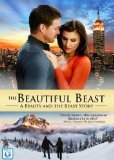

The Beautiful Beast
is a new independent film released today to DVD. It has a different twist on Beauty and the Beast. The film is marketed to a family audience. All I really have to share is the description and a trailer.Description:
In a twist on the classic Beauty and the Beast tale, Isabelle is all beauty on the outside. A glamour-queen socialite, she spends her days spoiling herself and spending money like it s going out of style. When Isabelle injures herself and gets lost in an isolated winterland, she stumbles on the solitude of Jeremy, a man hiding from both the world and his past. He s the first person to put Isabelle in her place, and Isabelle realizes she might be more beast than she wants to admit. Through Jeremy s influence, she begins to change and fall in love. But will she revert to the beast and give up her chance at real love when she returns home?
October 7, 2013
New Book: The Grimm Conclusion by Adam Gidwitz
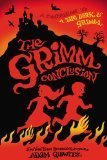
The Grimm Conclusion
 by Adam Gidwitz is officially released tomorrow. I heart Gidwitz for writing about fairy tales, especially more obscure ones, in a way that children and adults enjoy. He's edgy but not over the top for most kids. And, really, not any more than the tales themselves. I can't wait to see which tales he uses in this concluding book. He provided more info in his afterwords, so I'm sure this one will do the same.
 Book description:
Once upon a time, fairy tales were grim.
Cinderella’s stepsisters got their eyes pecked out by birds.
Rumpelstiltskin ripped himself in half.
And in a tale called “The Mouse, the Bird, and the Sausage,” a mouse, a bird, and a sausage all talk to each other. Yes, the sausage talks. (Okay, I guess that one’s not that grim…)
Those are the real fairy tales.
But they have nothing on the story I’m about to tell.
This is the darkest fairy tale of all. Also, it is the weirdest. And the bloodiest.
It is the grimmest tale I have ever heard.
And I am sharing it with you.
Two children venture through forests, flee kingdoms, face ogres and demons and monsters, and, ultimately, find their way home. Oh yes, and they may die. Just once or twice.
That’s right. Fairy talesAreAwesome.
Very fitting October release, I'm sure. I've raved often enough about the prior books, but here are cover images all the same because I also heart those:


October 6, 2013
Sunday Image: La Belle et la Bête / Beauty and the Beast

The original source link for this image is gone, but it is titled 'La Belle et la Bête'/'Beauty and the Beast' which implies a French origin, such as an early French film perhaps. I originally saw it here at Polar Bear's Tale, but she has no further source information either. And I am too busy to research it further for now. So I'm just sharing and perhaps one of you will recognize it anyway.
Anyway, an unusual image to prepare us for another week of Beauty and the Beast starting on Monday.
October 5, 2013
Today Only: A Tale Dark and Grimm by Adam Gidwitz for $2.99
A Tale Dark and Grimm
by Adam Gidwitz is discounted to $2.99 in ebook format today only as Kindle Daily Deal on Amazon. If you haven't read this one yet, please read it. It's so very fun. I have fond memories of reading it aloud with my niece. Well, at least the first half because she couldn't wait to finish it with me. I thought I had it in ebook already, but no, I only had a hardcover copy, but now I own both.And I know exactly why this is inexpensive today. It's because Gidwitz's third book, The Grimm Conclusion
, will be released on Tuesday. Yippee! In a Glass Grimmly, the second book, is currently $5.99, not quite bargain book status, but a nice price all the same.Book description for A Tale Dark and Grimm
:Hansel and Gretel walk out of their own story and into eight other classic Grimm (and Grimm-inspired) fairy tales. An irreverent, witty narrator leads us through encounters with witches, warlocks, dragons, and the devil himself. As the siblings roam a forest brimming with menacing foes, they learn the true story behind the famous tales, as well as how to take charge of their destinies and create their own happily ever after. Because once upon a time, fairy tales were awesome.
New Book: New Fairy Tales edited by John Patrick Pazdziora and Defne Cizakca

New Fairy Tales
edited by John Patrick Pazdziora and Defne Cizakca was released in September. I haven't obtain my own copy of it yet, so this is what I can share:Book description:
New Fairy Tales unites critical research and creative retelling of the fairy tale tradition from the Early Modern period to the present day. Academic essays intersect with new fiction and poetry, to create a unique, polyvalent discourse. The essays discuss influential works from authors including Hans Christian Andersen, George MacDonald, Oscar Wilde, J. R .R Tolkien, J. K. Rowling, Neil Gaiman, and Tifli. Original literary fairy tales by Katherine Langrish, Elizabeth Reeder, and others, appear alongside, discovering and re-creating the art form while as is being discussed. The result is an audacious and innovative dialogue about fairy tales and storytelling.
Here is the Table of Contents:
Introduction
John Patrick Pazdziora and Defne Çizakça
Chapter 0. Galantha
Joshua Richards
Part I. Minatures
Chapter 1. Glass, Bricks, Dust
Claire Massey
Chapter 2. Robert Herrick’s Fairy Epithalamium and Natural Religion
Jesse Sharpe
Chapter 3. Anti-Fairy Tale Taxidermy: The Animations of Tessa Farmer
Catriona McAra
Chapter 4. Gnomes
Katherine Langrish
Part II. Storytellers
Chapter 5. Are there Fairies Nowadays? Modern Fairy Tales in Hebrew
Hanna Livnat and Gaby Cohn
Chapter 6. Deciphering the Ottoman Fairy Tale: Tayyarzade throughout the Centuries
Defne Çizakça
Chapter 7. Cloud Catching in the Realm of the Drought King
Fiona Thackeray
Chapter 8. “On Fairy-stories” and Tolkien’s Elvish Tales
Christopher MacLachlan
Chapter 9. “Oh, You Wicked Storytellers!”
John Patrick Pazdziora
Part III. Shadows and Reflections
Chapter 10. A Prevailing Wind
Elizabeth Reeder
Chapter 11. Not for Children: The Development of Nihilism
in the Fairy Tales of Oscar Wilde
Colin Cavendish-Jones
Chapter 12. Radiant Mysteries: George MacDonald, G.K. Chesterton, and
the Claritas of Fairy Tales
Daniel Gabelman
Chapter 13. The Land with No Stories
Eric M. Pazdziora
Part IV. Fairy Brides
Chapter 14. In the Midst of Metamorphosis: Yōko Tawada’s The Bridegroom Was a Dog
Mayako Murai
Chapter 15. A Gothic Fairy-Bride and the Fall: A Lecture on “The End of the World”
in Kenjirō Hata’s Hayate no Gotoku
Joshua Richards
Chapter 16. Dante
Joshua Richards
Part V. Fairy Tale Pedagogy
Chapter 17. Footsteps in the Classroom: “The Little Mermaid” and First-Year Writing
Kate Wolford
Chapter 18. Dragons in Hereville: Comics as a Vehicle for Fairy Tales
Orlando Dos Reis and Emily Midkiff
Chapter 19. Little Sparrow
Kirstin Zhang
Chapter 20. Beedle’s Moral Imagination
Travis Prinzi
Chapter 21. The Sea in the Hat
Tori Truslow
October 4, 2013
Beauty and the Beast and Me
It's Friday! I won't be regularly posting about Beauty and the Beast over the weekend--I've decided only special sales or other prompts will merit weekend posts going forward. I need a break! (I've thought this repeatedly as I've sat past midnight editing the next book. For months.) Starting Monday, I will begin my discussion on Beauty and the Beast, Villeneuve, Beaumont, and Animal Bridegroom tale types. There's a lot to discuss there! But that's too weighty to begin on a Friday.
Gypsy, from Once Upon a Blog--who has thankfully been writing wonderful posts about fairy tale news the last few months, relieving my guilt over not doing so myself as often as I would love to--asked the other day why Beauty and the Beast is my favorite fairy tale.
I don't know.
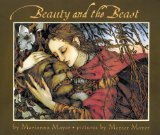
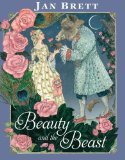
I should clarify that. I don't know why it started. I have developed plenty of reasons since then. But my earliest memories about the tale are shared in my Acknowledgements in Beauty and the Beast Tales From Around the World:
IT HAS been no secret for years that Beauty and the Beast was my favorite fairy tale as a child. It remains my favorite although many other tales have fought for that honor over the years.The thing is, I don't remember first hearing the tale--it must have been at school, from a friend, or on tv, although my tv viewing was extremely limited at age 6 and under. The tv lived in closet quite often. My first memory is latching onto it and wanting a copy to read so there obviously wasn't one in my home. I have a feeling it had been resonating for a while, perhaps even a year or two, and that is what led me to asking for a copy, my frustration in not being able to read it or hear it over and over again. That would also explain why my first hearing of the tale is lost in shadows.
When I was six years old, my dear grandmother—Elizabeth “Betty” Johnson—spent a few months hunting down a copy of the tale for me when our searches during her Christmas visit failed to produce one, long before the days of online searches facilitated such work. She had asked me what I wanted and that was my single request, seemingly simple, but frustratingly not. Fortunately, she finally found it at a bookstore, not in a beast’s garden where the price may have been too high. I still have that original anthology she sent me as an Easter gift a few months later which nurtured my love for both fairy tales and the Golden Age of Illustration, for the illustrations of Walter Crane, Gustave Doré, and others graced its pages, too.
But that anthology from Grams had Walter Crane's illustrations which still define the tale for me despite so many other beloved editions since then. First exposure has such grand power. And it was repeated exposure for I loved that book and managed to keep it to this day. Not an easy task with younger siblings and a mom who sorts out the house frequently.

Years later, I discovered Robin McKinley's Beauty, which resonated. She loved books! He was kind! It was a fairy tale for someone over the age of five! After all, society in general was telling me that fairy tales were for little children.

And, yes, there was even the original Beauty and the Beast television series. I watched that avidly the first two seasons until bad production choices turned me off it. Killing off Catherine killed the show. They should have quit while they were ahead. (And high school had begun and become very demanding, too, so again, not much tv.)
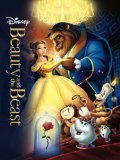

I was so very excited when Disney's film was announced and released. Then I saw it opening night. I was a sophomore in college. That's really the first time my critic jumped in. Don't get me wrong. There were parts I adored--the library, the music--but Gaston! and the Angry Beast! No siblings! Yikes. It was not my Beauty and the Beast. I've had a love/hate with it ever since.
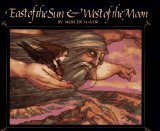
Honestly, I didn't learn about East of the Sun and West of the Moon and the rest until after that. My fairy tale education really came rather late, past childhood. I knew the basics like almost any child but the resources simply weren't there and the attitudes of those around me were not positive. Fairy tales were for little kids. Even fantasy was a questionable genre in the mainstream world I grew up in. It didn't stop me from reading it and loving it, but I was different. I would have been obsessed with a place like SurLaLune which is why I created it. And, well, I guess I am obsessed.
But as I have studied the tale and the many Animal Bridegroom tales, I have never doubted that the messages of seeing beyond the surface of a person are a vital part of my personal philosophy and makeup. We are all subject to the visual--I'm married to a visual creative who is VERY keyed into the visual and my mother is the same--but I have a hard time remembering what people look like despite my Sherlockian dedication to other details. I tend to remember people according to what I found interesting about them, how they made me feel, who they seem to be below their physical surface. I've trained myself to be better about that but I still usually only retain nebulous information such as hair and eye color and general size. Heaven forbid I actually ever have to identify someone in a line-up. And that's why I may have a hard time remembering who you are until I am reminded of a conversation I've had with you or some other helpful information beyond your physical appearance. Even when I am reading, I don't tend to create images of characters in my head, I have a funny way of looking outward from their gaze, not looking at them. I rarely visualize them physically unless their physicality is critical to their character, such as Anne of Green Gables and her red hair.
And for the other Search for the Lost Husband tales closely related to Beauty and the Beast, I am also charmed by the heroine's lack of perfection--she makes mistakes--and her desire to rectify them. She endures hardships. She attempts the impossible. She quests. She may be pretty but it isn't what defines her in the end. Often, she is rather clever by the end of the tale, too. Although if she is Psyche, she is still way behind the curve about listening to instructions. (I'll be discussing those differences between ATU 425A and 425B soon.) She isn't passive but acts, especially to correct her mistakes. She is quite inspirational that way. There may be magical help, but it's not as overwhelming as an overly generous Fairy Godmother, I'm looking at you Cinderella. And she doesn't sleep for years or repine in a tower or take a bite of that apple after multiple mishaps and warnings. And I love those tales, too, but not the same way I adore Beauty and the Beast. It took writing a book to make me really appreciate Snow White and like her, too.
Finally, I am always sad when Beauty and the Beast is interpreted as justifying abuse in relationships. The Beast is never abusive of Beauty in the tales--in fact, the prince in many Cinderellas is downright horrendous, run away, fast, Cindy! And you haven't been around the early Sleeping Beauty if that is romantic to you. Do you want to marry someone who impregnated you while you were asleep? No!
Beauty doesn't try to change him. Her initial goal is to spare her father's life, not change a beast. She tolerates him with compassion and comes to love him as she grows to know him. Then ONLY his physical is changed and he becomes who he truly was all along. Sometimes he is enchanted to appear dumb, too, but he isn't and she learns to sense even that. Really, Villeneuve and Beaumont wrote a lovely story. Beauty is never afraid of the Beast after that initial first appearance. She doesn't feel threatened and he is even patient, never forcing himself upon her, especially physically. She wouldn't say no to him repeatedly if she were afraid for her safety.
So what are your reasons for loving this tale? Or what is your favorite tale and why?



October 3, 2013
Beauty and the Beast: Recommended Reading Part III
If you missed them, don't miss Beauty and the Beast: Recommended Reading Part I (which introduces these posts) and Beauty and the Beast: Recommended Reading Part II.
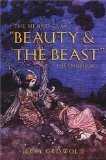

Yesterday I recommended Beauty and the Beast: Visions and Revisions of an Old Tale by Betsy Hearne but lightly lamented that it is missing discussion of the works produced since it was published in 1989. However, one book helps to fill that gap and it is one of today's recommended reads for avid Beauty and the Beast fans. That book is The Meanings of "Beauty & The Beast" A Handbook
by Jerry Griswold.Book description:
Using Beaumont’s classic story as a touchstone, this work shows how "Beauty and the Beast" takes on different meanings as it is analyzed by psychologists, illustrated in picture books, adapted to the screen, and rewritten by contemporary writers. The Meanings of "Beauty and the Beast" provides expert commentary on the tale and on representative critical approaches and contemporary adaptations. This book also includes a variety of original source materials and twenty-three colour illustrations. The Meanings of "Beauty and the Beast" is for any reader who wishes to explore this classic, endlessly rich fairy tale.
Griswold's work explores more recent iterations of the tale, especially Disney. He discusses some of the more popular variants, as well as the tale's history, then moves on to more modern renditions. Perhaps worth the entire price of admission alone is the included reprint of "Beauty" by Tanith Lee, one of the favorite modern adaptations of the tale for many fans, including Griswold and myself. If you have never read the story, stop now, go find it in this book or in the original volume, Red as Blood or Tales from the Sisters Grimmer
 , which is long out of print. Lovely, lovely, lovely.
My only real complaint about this book? There is no index. I would have LOVED an index in this one. But the bibliography is a great tool for reading more and includes more recent scholarship.
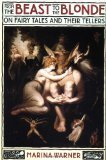

From the Beast to the Blonde: On Fairy Tales and Their Tellers
by Marina Warner is recommended on this blog all the time, although there has been a long gap. The book is out of print but readily available used. It is also a very important book for those wanting to read about women and folklore, especially fairy tales. Two chapters of the book are devoted to Beauty and the Beast type tales. Other chapters are devoted to other tales, so don't expect an entire book devoted to Beauty and the Beast itself despite what the title may imply to you. Book description:
In this landmark study of the history and meaning of fairy tales, the celebrated cultural critic Marina Warner looks at storytelling in art and legend-from the prophesying enchantress who lures men to a false paradise, to jolly Mother Goose with her masqueraders in the real world. Why are storytellers so often women, and how does that affect the status of fairy tales? Are they a source of wisdom or a misleading temptation to indulge in romancing?
And those are the books I list in my introduction to Beauty and the Beast Tales From Around the World. My bibliography is much longer than this, but these are the books that kept me from panicking over my short introduction. I didn't need to reinvent the wheel, the work had been done for me. My job was to anthologize and bring some of the more obscure tales to light again, to collect and gather and simplify the search for many others.
And I am still contemplating a second volume since I agonized over the tales that weren't included, as well as other scholarship and interpretations that are not often mentioned.
Back in Print: The Woman Who Flummoxed the Fairies
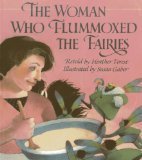

August House, the publisher, recently sent me a short stack of books to consider for reviewing here. I'll share them in the coming weeks, but had to start with one of my favorites, one that thrilled me immediately to see.
The Woman Who Flummoxed the Fairies
by Heather Forest (Author) and Susan Gaber (Illustrator) was originally published in 1990 and received awards and recommendations from many sources at the time. But, like many books, it eventually went out of print anyway. August House has rescued it from increasing obscurity with this reprint.
Book description:
According to this Scottish folktale, long ago sweet-toothed fairies flew into people’s homes and feasted on leftover cake crumbs. But the King of the Fairies was annoyed that crumbs never remained from the very best cakes baked by the talented bakerwoman so he orders the fairies to capture her and bring her down to the Fairy Kingdom. The resourceful woman requests items from her kitchen at home, where her bewildered husband looks on as utensils and ingredients float out of the window, borne by invisible fairies. Eventually she strikes a clever bargain with the impatient Fairy King to win her freedom and return home in return for sharing her tasty cakes.
The story originally appeared in Heather and Broom: Tales of the Scottish Highlands
 by Sorche Nic Leodhas in 1960 and was reprinted in Womenfolk and Fairy Tales
 by Rosemary Minard in 1975. I haven't traced an earlier version but I haven't tried either. But I wanted to share the history I do know in case the tale sounds familiar and the picture book doesn't.
I had forgotten about this tale and I am so happy it has been reprinted. A common SurLaLune request is for tales with strong mothers and this tale fits the bill. We have a mother who is a talented baker, caring mother, and overall clever woman. She is kidnapped by the fairies for the Fairy King who wants to eat her wonderful cakes. The story will especially resonate with mothers of young children since the chaos of a child-filled home provides the solution and much of the story's humor. Although watching her baking tools and child and pets float away on invisible wings is a definite early highlight in the story.
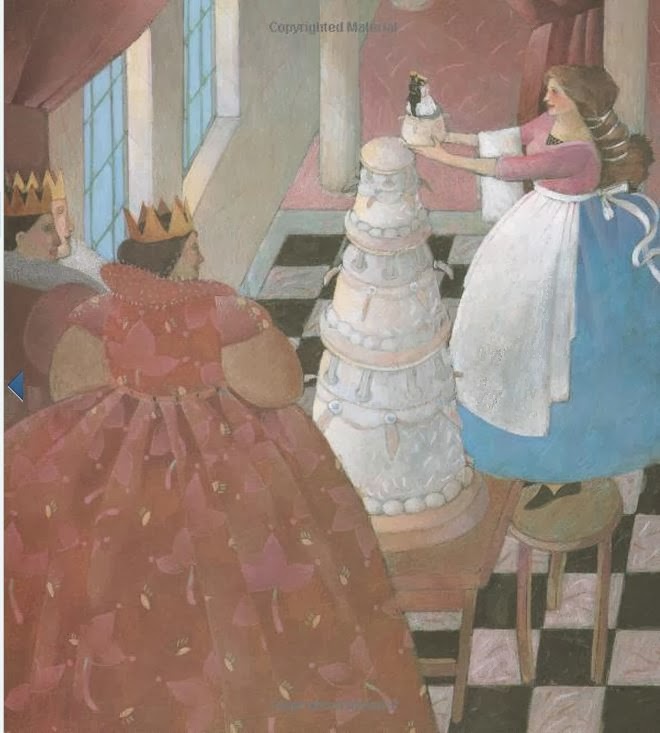
And Gaber's illustrations speak for themselves. Lovely and feminine without being twee.

Heidi Anne Heiner's Blog

- Heidi Anne Heiner's profile
- 44 followers
Heidi Anne Heiner isn't a Goodreads Author
(yet),
but they
do have a blog,
so here are some recent posts imported from
their feed.

