
Heidi Anne Heiner's Blog, page 102
November 25, 2013
Bargain Ebook Monday Only: The Thief (Attolia) by Megan Whalen Turner
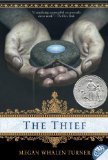

The Thief (Attolia)
by Megan Whalen Turner is on sale in ebook format TODAY ONLY for $1.99. It's usually in the $6 range. This book--which starts a series--is not fairy tale based although Whalen definitely draws inspiration from various mythologies. However, this series is one of those that--for me--ruins you for other books until time passes and you forget a little just how special it was to you. It provides an intense literary high. Not everyone has that reaction, but I know many who have said similar, a larger majority than usual, especially for a lesser known non-blockbuster book made into a box office breaking movie adaptation. Not that this book is obscure--it received a Newbery Honor Medal. And I do not want it made into a movie. Never, please.
Anyway, I adore it and had to share. I first read the series seven years ago--I came to it late--when I returned from my first trip to Europe, very jet lagged, life lagged, and headed directly into the holidays. I remember reading it far into the night when I couldn't sleep and was trying to process the previous three weeks of adventures in foreign lands.
Whalen is a master storyteller and wordsmith. You'd enjoy her stories even if they weren't so exquisitely written. But her prose is lovely all in itself, too. Combined it's the work of a master.
Book description:
Nothing is overdone and not a word is out of place in this auspicious debut," wrote Kirkus in a starred review of Instead of Three Wishes, the first book by Megan Whalen Turner. Her second book more than fulfills that promise.
The king's scholar, the magus, believes he knows the site of an ancient treasure. To attain it for his king, he needs a skillful thief, and he selects Gen from the king's prison. The magus is interested only in the theif's abilities. What Gen is interested in is anyone's guess. Their journey toward the treasure is both dangerous and difficult, lightened only imperceptibly by the tales they tell of the old gods and goddesses.
Megan Whalen Turner weaves Gen's stories and Gen's story together with style and verve in a novel that is filled with intrigue, adventure, and surprise.
These books, especially the rest in the series, are really better suited to older readers than the middle school implied. Overall, the content is safe enough but the nuances are best appreciated by older readers. A shocking event in the second book is a little rough, but not too much for the average preteen today. The third, The King of Attolia
 , is my favorite for this reason and because it builds so well on the previous titles. In other words, these books are ageless.



November 21, 2013
The Enchanted Tsarévich: A Beauty and the Beast Tale from Russia
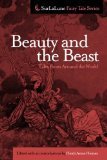

"The Enchanted Tsarévich" is an ATU 425C: Beauty and the Beast tale from Russia. This tale also describes the beast as a snake, but a winged one, perhaps more of a dragon image although snake is used in the translation by Leonard Magnus from Alexander Afanasyev. It is included in Beauty and the Beast Tales From Around the World
.Here's the opening of the tale:
So he ran up and broke it [a flower] off, and as soon as he had done it, in that very instant a boisterous wind arose and thunder thundered, and a fearful monster stood in front of him, a formless, winged snake with three heads. “How dared you play the master in my garden!” cried the snake to the merchant. “Why have you broken off a blossom?”
The merchant was frightened, fell on his knees and besought pardon.
“Very well,” said the snake, “I will forgive you, but on condition that whoever meets you first, when you reach home, you must give me for all eternity; and, if you deceive me, do not forget, nobody can ever hide himself from me. I shall find you wherever you are.”
This version of the tale does not vary too much from a standard Beauty and the Beast, except in the sleeping arrangements. There is also no nightly marriage proposal:
Darkness now came on, and the merchant’s daughter went into the bedroom, wishing to lie down and sleep. Then a boisterous wind rustled round and the three- headed snake appeared in front of her.
“Hail, fair maiden! Put my bed outside this door!”
So the fair maiden put the bed outside the door and herself lay on the bedstead.
She awoke in the morning, and again in the entire house there was not a single soul to be seen. And it all went well with her. Whatever she wished for appeared on the spot.
In the evening the snake flew to her and ordered, “Now, fair maiden, put my bed next to your bedstead.”
She then laid it next to her bedstead, and the night went by, and the maiden awoke, and again there was never a soul in the palace.
And for the third time the snake came in the evening and said, “Now, fair maiden, I am going to lie with you in the bedstead.”
The merchant’s daughter was fearfully afraid of lying on a single bed with such a formless monster. But she could not help herself, so she strengthened her heart and lay down with him.
In the morning the serpent said to her, “If you are now weary, fair maiden, go to your father and your sisters. Spend a day with them, and in the evening come back to me. But see to it that you are not late. If you are one single minute late I shall die of grief.”
I would love to see some illustrators' images of this "formless, winged snake with three heads," wouldn't you? There are perhaps some out there, but I didn't find any with a cursory search.
Amazon.com Widgets
Today Only Sale: Ravensburger Labyrinth Game
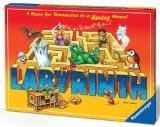

Ravensburger Labyrinth
is another Ravensburger game on sale today and it is very well reviewed. It also looks unique and fun. Since it deals with mythology, I thought I'd share it, too. I am looking forward to trying it out with my nephew and niece (the ones old enough to play) during the holidays. My niece went through her mythology fascination stage a few years ago and my nephew is the right age to perhaps get interested himself, especially since so many sports teams reference myth, like my hometown Tennessee Titans.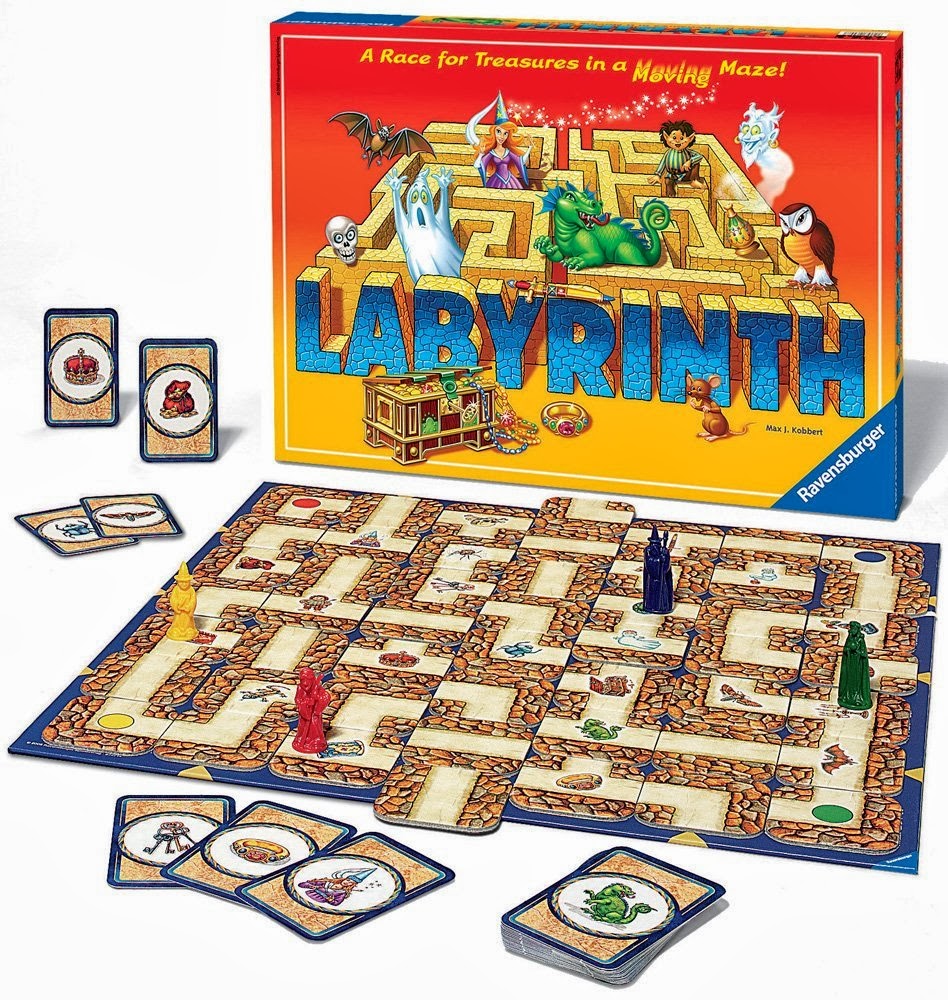
Game description:
A Race for Treasures in a Moving Maze
Labyrinth from Ravensburger is a shifting maze board game for players ages 8 and up. Race for treasures in the moving maze and try to foil your opponents! Players strategically shift the walls of the Labyrinth’s maze to find the perfect route to their treasure card. The first player to collect all their treasures and return to the starting point wins.
Product Features:
A family-friendly, shifting maze game
Suitable for 1 to 4 players
Fun for adults and kids ages 8 and up
Combines strategy and chance
Constantly moving game board makes every game round unique
Versatile playing fun
Versatile Playing Fun for the Whole Family
A family-friendly board game for ages 8 and up, Labyrinth can be played with various levels of strategy and is a great game to play with children who are just becoming more advanced with strategic playing patterns, as well as a stimulating game for adults. The game board moves as players create the pathways they need to travel through the maze and collect their treasures which can be quickly altered when opponents take their turn. Since the game requires no reading and game rules are straightforward and easy to explain, young children are able to play alongside older siblings and adults.
Thanks to the constantly moving game board that creates a new game every time it’s played and the many strategic options to foil your opponents, Labyrinth captures the attention of a wide range of ages. Immersive, hands-on game play promotes concentration, hand-eye coordination as well as social interaction which makes playtime more educational for the younger ones but also entertaining for older members of the family. Labyrinth provides a fully-engaging, interactive gaming experience with an element of excitement as each game play differs depending on the number of players involved and the way players react to the challenge of the moving game board in unpredictable ways.

Amazon.com Widgets
Today Only Sale: Ravensburger Enchanted Forest Game and More
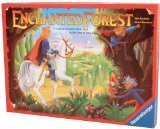

Today only Amazon has many Ravensburger games and puzzles on sale in their Gold Box. One offering is a classic, cult favorite fairy tale game: Ravensburger Enchanted Forest - Family Game
. It is $12.49 today only or until the sale quantity sells out. The items will dwindle as the day progresses, disappearing from the list once a quota is met.Here's a larger image of the game box with some fairy tale characters more apparent.

Game description:
Explore the Kingdom and Discover Magical Items
Combining memory and strategy, Ravensburger's Enchanted Forest is a challenging game in an engaging medieval setting. Designed for two to six players, each participant ventures across the map in search of items from your favorite fairy tales. These items include the gingerbread man from Hansel and Gretel, one of the dwarves' hats from Snow White, one of Cinderella's glass slippers, and many more.
As you travel across the kingdom, the King will ask for the location of a certain item. Each player must then quickly venture to the castle to be the first to inform the King and win his approval in the form of a card--three cards win the game.
Use Your Memory and Imagination to Outwit Other Players
Enchanted Forest is a turn-based game that develops counting, memory, and imagination as you venture across the kingdom. Younger players will enjoy the colorful, illustrated game board and fairy-tale-based story, while older players can practice their strategic thinking by observing other players' movements and anticipating their actions.
Detailed Illustrations Transport Players to a Medieval Kingdom
Constructed from thick, sturdy cardboard, the Enchanted Forest game board is covered in colorful images of the magical kingdom. Each item card features a fun portrait of a character from common fairy tales.
Engaging Game Offers Simple Rules with Competitive Excitement
Our testers enjoyed the simple rules to Enchanted Forest and found the game to be both fun and challenging. Finding and remembering the locations of the items provided some nice mental stimulation, and observing opponent's moves added a layer of complexity to this straightforward game.
What's in the Box
Game board, 6 player pieces, 13 tree figurines, 13 item medallions, 13 item cards, and instructions.


Amazon.com Widgets
November 20, 2013
New Book: Fairy Tales Transformed?: Twenty-First-Century Adaptations and the Politics of Wonder by Cristina Bacchilega
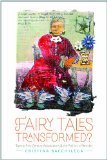

Fairy Tales Transformed?: Twenty-First-Century Adaptations and the Politics of Wonder (Series in Fairy-Tale Studies)
by Cristina Bacchilega was released this month. I received a review copy from the publisher as part of the full disclosure, but as always, the words here are my own. Also, the book discusses the SurLaLune site in brief as part of the modern presentation of fairy tales in our culture in the introduction. That's fun for me. It's a relatively short mention, but there all the same.But with or without that reference to SurLaLune, Bacchilega shares some fascinating viewpoints and discussion of how fairy tales are present and used in our modern culture. From her introduction:
In Jack Zipes’s words, “Fairy tales are informed by a human disposition to action—to transform the world and make it more adaptable to human needs, while we try to change and make ourselves fit for the world” (Zipes 2012, 2). This statement is not, given Zipes’s project in The Irresistible Fairy Tale (2012), to be understood as a definition that encompasses the genre of the fairy tale, but it identifies transformation as central to what most fairy tales do or anticipate. Like Zipes, I am interested in exploring how fairy tales affect the making of who we are and of the world we are in, and I agree that thinking about transformation—within the tales’ storyworlds; in the genre’s ongoing process of production, reception, reproduction, adaptation, and translation; in the fairy-tale’s relation to other genres; and more generally as action in the social world—offers a spacious and productive way into that exploration.
This is not light, casual reading, but it is fascinating and if you are a regular SurLaLune reader, you will find references to many of the things that have appeared on this blog and on the main site over the last fifteen years. I don't offer much analysis, I just share fairy tale news. In this book, Bacchilega analyzes and considers why fairy tales are so prevalent and useful. For me as a reader, there was some nostalgia rather like reading through a scrapbook. I admit it is just plain fun to read her text and be familiar with the materials she references. I've been watching it rather closely for years.
And when the description says 21st century, it's true. Granted the last few years aren't as well represented due to the time frame of publishing a print book--it would be fun to throw all of the recent TV shows better into the mix, for example, such as the unexpected continued success of both ABC's Once Upon a Time and NBC's Grimm--but most of the texts/products considered here are recent. You won't be reading yet another in depth analysis of Cocteau's or Disney's Beauty and the Beast but of Pan's Labyrinth instead or even Disney's Enchanted.
And less I forget, here's the book description:
Fairy-tale adaptations are ubiquitous in modern popular culture, but readers and scholars alike may take for granted the many voices and traditions folded into today's tales. In Fairy Tales Transformed?: Twenty-First-Century Adaptations and the Politics of Wonder, accomplished fairy-tale scholar Cristina Bacchilega traces what she terms a "fairy-tale web" of multivocal influences in modern adaptations, asking how tales have been changed by and for the early twenty-first century. Dealing mainly with literary and cinematic adaptations for adults and young adults, Bacchilega investigates the linked and yet divergent social projects these fairy tales imagine, their participation and competition in multiple genre and media systems, and their relation to a politics of wonder that contests a naturalized hierarchy of Euro-American literary fairy tale over folktale and other wonder genres.
Bacchilega begins by assessing changes in contemporary understandings and adaptations of the Euro-American fairy tale since the 1970s, and introduces the fairy-tale web as a network of reading and writing practices with a long history shaped by forces of gender politics, capitalism, and colonialism. In the chapters that follow, Bacchilega considers a range of texts, from high profile films like Disney's Enchanted, Guillermo del Toro's Pan's Labyrinth, and Catherine Breillat's Bluebeard to literary adaptations like Nalo Hopkinson's Skin Folk, Emma Donoghue's Kissing the Witch, and Bill Willingham's popular comics series, Fables. She looks at the fairy-tale web from a number of approaches, including adaptation as "activist response" in Chapter 1, as remediation within convergence culture in Chapter 2, and a space of genre mixing in Chapter 3. Chapter 4 connects adaptation with issues of translation and stereotyping to discuss mainstream North American adaptations of The Arabian Nights as "media text" in post-9/11 globalized culture.
Bacchilega's epilogue invites scholars to intensify their attention to multimedia fairy-tale traditions and the relationship of folk and fairy tales with other cultures' wonder genres. Scholars of fairy-tale studies will enjoy Bacchilega's significant new study of contemporary adaptations.
Amazon.com Widgets
November 19, 2013
Revisioning Red Riding Hood Around the World by Sandra L. Beckett and the LRRH Genealogy Hullabaloo, Too
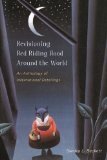

Revisioning Red Riding Hood Around the World: An Anthology of International Retellings (Series in Fairy-Tale Studies)
edited by Sandra L. Beckett was released earlier this month by Wayne State University Press. I received a review copy and was planning to share it this week when the media went all crazy about Little Red Riding Hood (LRRH).Gypsy wrote a great blog entry about the "newly" discovered genealogy of Little Red Riding Hood that is burning up the media right now. I won't repeat it here but just refer you to her wonderful summary and such at Once Upon a Blog at Grandma, What a Big History You Have! This new scholarship is the work of anthropologists who seldom interact with folklorists and vice versa. (A pity really. On both sides.) Folklorists were obsessed with fairy tale genealogies in the 19th and 20th centuries. In other words, this is a wonderful piece of scholarship but it isn't exactly offering groundbreaking new ideas. The media just wants you to think so, as they so often do.
I'm reminded of the 2012 fairy tale media craze discussed here and here on the blog. Quick summary: 500 LOST FAIRY TALES FOUND! They weren't so lost really although they were relatively forgotten. And I always celebrate when forgotten tales are remembered again. But there are THOUSANDS of tales sitting lost in archives, let me tell you that do NOT exist in any language on the internet at this time. Those particular lost ones had been on the internet in German for years before the media went nuts. I ache for the other ones that are truly buried and unknown to us, hundreds of Beauty and the Beasts, Cinderellas, and Kind and Unkind Girls (and many other tale types) that we even know about since previous scholars have identified them but someone must dig through musty shelves and boxes to find since they have never been formally published at all but only exist in single, raw manuscripts. Hopefully they will be digitized before they are lost forever.
Still, the new articles and theories about LRRH should be read and considered and added to the Little Red Riding Hood scholarship for it is fascinating all the same and builds upon centuries of folklore scholarship, too. And as I read it I imagine Andrew Lang and Joseph Jacobs and many of their contemporaries having a grand old debate over it all. And, to be fair, their debates were more centered over Cinderella and other tales. LRRH didn't seem to capture their imaginations as well as other tales did since not as many variants were known to provide scope for their theories.
Anyway, if you are a fan and/or student of Little Red Riding Hood, Revisioning Red Riding Hood Around the World: An Anthology of International Retellings (Series in Fairy-Tale Studies)
is a must add to your library. It's excellent. There are versions of LRRH--old and new--found within that I was not familiar with and so I'm sure there will be new ones to you, too. And it is perfect timing to be released during this hullabaloo. Book description:
Across various time periods, audiences, aesthetics, and cultural landscapes, Little Red Riding Hood is a universal icon, and her story is one of the world's most retold tales. In Revisioning Red Riding Hood Around the World: An Anthology of International Retellings, Sandra L. Beckett presents over fifty notable modern retellings, only two of which have appeared previously in English. The tales include works published in twenty-four countries and sixteen languages, in texts that span more than a century, but with the majority written in the last fifty years. They include retellings for children, adolescents, and adults, as well as crossover works intended for an audience of all ages.
The tales in this volume progress from works that recast the story of Little Red Riding Hood from traditional perspectives through more playful versions to more unconventional approaches. Seven sections are arranged thematically: Cautionary Tales for Modern Riding Hoods, Contemporary Riding Hoods Come of Age, Playing with the Story of Red Riding Hood and the Wolf, Rehabilitating the Wolf, The Wolf's Story, The Wolf Within, and Running with the Wolves. Beckett provides an interpretative introduction to each text and insightful information on its author and/or illustrator. A variety of genres are represented, including fairy tale, short story, novella, novel, poetry, illustrated books, and picture books. More than 90 illustrations, both color plates and black-and-white images, reveal further narrative layers of meaning.
The number and diversity of retellings in Revisioning Red Riding Hood demonstrate the tale's remarkable versatility and its exceptional status in the collective unconscious and in literary culture, even beyond the confines of the Western world. This unique anthology contributes to cross-cultural exchange and facilitates comparative study of the tale for readers interested in fairy-tale studies, cultural studies, and literary history.
About the Author:
Sandra L. Beckett is professor of French at Brock University. She is the author of Red Riding Hood for All Ages: A Fairy-Tale Icon in Cross-Cultural Contexts (Series in Fairy-Tale Studies)(Wayne State University Press, 2008), Crossover Picturebooks: A Genre for All Ages, Crossover Fiction: Global and Historical Perspectives, Recycling Red Riding Hood (Children's Literature and Culture)
, and De grands romanciers écrivent pour les enfants, among others. She has also edited several books, including Beyond Babar: The European Tradition in Children's Literature, Transcending Boundaries: Writing for a Dual Audience of Children and Adults, and Reflections of Change: Children's Literature Since 1945.
I don't have the extensive table of contents to share, but it is viewable on Amazon with the Look Inside the Book feature. Essentially, this collection expands upon Jack Zipes' The Trials and Tribulations of Little Red Riding Hood
 , first published in 1983. So thirty years later we have another anthology that builds upon that one. Both of these books are why you probably won't see a Little Red Riding Hood anthology from SurLaLune. There is no need. It has been done by two experts in the field. If you look closely, this is Beckett's THIRD foray into Little Red Riding Hood.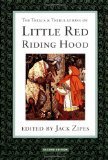
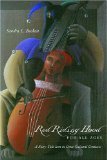
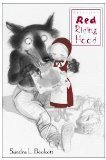
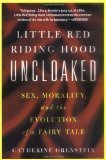
And while we're here, if you are a Little Red Riding Hood fan and scholar, you should round out your library with Little Red Riding Hood: A Casebook edited by Alan Dundes and Little Red Riding Hood Uncloaked: Sex, Morality, And The Evolution Of A Fairy Tale
 by Catherine Orenstein. That'll round out your scholarly library into a nice cohesive wonder. That's not even including all of the many articles about LRRH out there, these are just the six primary books devoted to her.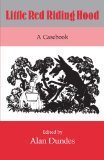

Amazon.com Widgets
A Basque Beauty and the Beast Tale--With Another Serpent Beast, Too
I shared an ATU 425C: Beauty and the Beast tale with a snake as the beast yesterday--The Prince Who Was Changed into a Snake: A Beauty and the Beast Tale from Cyprus--from Beauty and the Beast Tales From Around the World
and I have another for today. This one is from the French side of the Basque region, collected by Wentworth Webster and published in 1877. The title is quite simply, "Beauty and the Beast," which isn't very helpful is it?This tale varies in many way from the original tale we know so well. The youngest daughter is neglected by her father who never brings her gifts until the one time he thinks to ask her. She asks for flowers and trouble, of course, ensues.
This is also a rare tale that offers names for the heroine and hero. Here's an excerpt:
The youngest, after some days, said to him, “What is the matter with you, my father, that you are so sad? Has someone done you some hurt?”
He said to her, “When I went to get your nosegay, a voice said to me, ‘I must have one of your daughters, before the year be completed,’ and now I do not know what I must do. It told me that I shall be burned.”
This daughter said to him, “My father, do not be troubled about it. I will go.”
And she sets out immediately in a carriage. She arrives at the castle and goes in, and she hears music and sounds of rejoicing everywhere, and yet she did not see anyone. She finds her chocolate ready (in the morning), and her dinner the same. She goes to bed, and still she does not see anyone. The next morning a voice says to her: “Shut your eyes; I wish to place my head on your knees for a moment.”
“Come, come; I am not afraid.”
There appears then an enormous serpent. Without intending it, the young lady could not help giving a little shudder. An instant after the serpent went away; and the young lady lived very happily, without lacking anything. One day the voice asked her if she did not wish to go home.
She answers, “I am very happy here. I have no longing for it.”
“Yes, if you like, you may go for three days.”
He gives her a ring, and says to her, “If that changes colour, I shall be ill, and if it turns to blood, I shall be in great misery.”
The young lady sets out for her father’s house. Her father was very glad (to see her). Her sisters said to her: “You must be happy there. You are prettier than you were before. With whom do you live there?”
She told them, “With a serpent.” They would not believe her. The three days flew by like a dream, and she forgot her serpent. The fourth day she looked at her ring, and she saw that it was changed. She rubs it with her finger, and it begins to bleed. Seeing that she goes running to her father, and says to him that she is going. She arrives at the castle, and finds everything sad. The music will not play—everything was shut up. She called the serpent (his name was Azor, and hers Fifine). She kept on calling and crying out to him, but Azor appeared nowhere. After having searched the whole house, after having taken off her shoes, she goes to the garden, and there too she cries out. She finds a corner of the earth in the garden quite frozen, and immediately she makes a great fire over this spot, and there Azor comes out, and he says to her:
“You had forgotten me, then. If you had not made this fire, it would have been all up with me.”
The transformation scene is quite different, too. If you are interested, you can read the entire tale on the SurLaLune site, too, without the book. Read it at Beauty and the Beast.
Amazon.com Widgets
New Book: The Princess in the Opal Mask by Jenny Lundquist
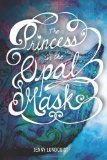

The Princess in the Opal Mask
by Jenny Lundquist was released a few weeks ago. And for me, it is one of the prettiest book covers of the year. I don't see the mask quite clearly but that combination of blues and greens on the cover--without a water theme!--make it very eye-catching. And this is apparently the first in a series.Book description:
Every Fairy-Tale Ending Has a Price. . . .
Orphaned as a child in the crumbling village of Tulan, Elara is determined to learn her true identity, even if it means wielding a dagger. Meanwhile, in Galandria's royal capital, Princess Wilha stands out as someone to either worship or fear. Though no one knows why the king has always made her conceal her face--including Wilha herself.
When an assassination attempt threatens the peace of neighboring kingdoms, Elara and Wilha are brought face to face . . . with a chance at claiming new identities. However, with dark revelations now surfacing, both girls will need to decide if brighter futures are worth the binding risks.
But that doesn't highlight that the book is considered a Cinderella story of sorts thus bringing it to SurLaLune attention.
Review highlights courtesy of Amazon:
“...the story shines with potential. Light romance and strong female characters make it an ideal choice for tween girls, and the dual viewpoint narration aids the plot's momentum. This delightfully fanciful tale will find a captive audience among fans of Gail Carson Levine.”
-School Library Journal
“Lundquist’s debut YA novel combines elements of Cinderella with The Man in the Iron Mask to create a page-turner about twin princesses separated at birth. …With its swift pace, charismatic heroines, and all kinds of intrigue, Lundquist sets up a compelling and detailed history for her kingdoms, with legends of strong women rulers. Fantasy readers will eagerly await the promised second title."
-Booklist
“A novel of royal intrigue.”
-Kirkus Reviews
Of course, Lundquist has written another book Seeing Cinderella
 which was published last year. So she likes Cinderella themes and plays with them from high fantasy to contemporary settings, for YA and middle readers. Yay her!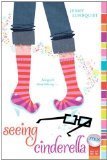
Book description:
Magical realism and a modern Cinderella story makes for a fun and relatable M!X read.
Sixth grade is not going well for Calliope Meadow Anderson. Callie’s hair is frizzy, her best friend, Ellen, is acting weird, and to top things off, she has to get glasses. And her new specs aren’t even cute, trendy glasses—more like hideously large and geeky. But Callie soon discovers that her glasses have a special, magical perk: When she wears them, she can read people’s thoughts. Crazy glasses aside, Callie has more drama to face when she’s cast as the lead in the school play—and instead opts to be an understudy, giving the role of Cinderella to Ellen. Can Callie’s magic glasses help her see her way to leading lady, or is she destined to stay in the background forever?
Amazon.com Widgets
November 18, 2013
New Book: Rags & Bones: New Twists on Timeless Tales
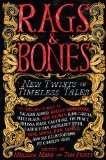

Rags & Bones: New Twists on Timeless Tales
by Melissa Marr (Editor), Tim Pratt (Editor) was released a few weeks ago. It is a collection of story retellings, not all of them are fairy tales, but there are sufficient to merit sharing the book here. And there are Charles Vess illustrations and favorite authors even if they aren't all retelling fairy tales, so I'm sure this is of interest to many readers here.
Book description:
The best writers of our generation retell classic tales.
From Sir Edmund Spenser's The Faerie Queene to E. M. Forster's "The Machine Stops," literature is filled with sexy, deadly, and downright twisted tales. In this collection, award-winning and bestselling authors reimagine their favorite classic stories, the ones that have inspired, awed, and enraged them, the ones that have become ingrained in modern culture, and the ones that have been too long overlooked. They take these stories and boil them down to their bones, and reassemble them for a new generation of readers.
Written from a twenty-first century perspective and set within the realms of science fiction, dystopian fiction, fantasy, and realistic fiction, these short stories are as moving and thought provoking as their originators. They pay homage to groundbreaking literary achievements of the past while celebrating each author's unique perception and innovative style.
Today's most acclaimed authors use their own unique styles to rebuild the twelve timeless stories:
Sir Edmund Spenser's The Faerie Queene - Saladin Ahmed
W. W. Jacobs's "The Monkey's Paw" - Kelley Armstrong
Joseph Sheridan Le Fanu's "Carmilla" - Holly Black
"Sleeping Beauty" - Neil Gaiman
The Brothers Grimm's "Rumpelstiltskin" - Kami Garcia
Kate Chopin's The Awakening - Melissa Marr
Rudyard Kipling's "The Man Who Would Be King" - Garth Nix
Henry James's "The Jolly Corner" - Tim Pratt
E. M. Forster's "The Machine Stops" - Carrie Ryan
Horace Walpole's The Castle of Otranto - Margaret Stohl
William Seabrook's "The Caged White Werewolf of the Saraban" - Gene Wolfe
Nathaniel Hawthorne's "The Birth-Mark" - Rick Yancey
And six illustrations by Charles Vess

The Prince Who Was Changed into a Snake: A Beauty and the Beast Tale from Cyprus
Time for another Beauty and the Beast tale, this time "The Prince Who Was Changed into a Snake" from Cyprus. There are papers and discussions in various places about the different forms the Beast takes in Beauty and the Beast tales. After working on Beauty and the Beast Tales From Around the World
, I can readily say that one of the most common beast forms is of a snake, although the form is rare in the ATU 425C: Beauty and the Beaset tales where the form tends to be more ambiguous.But there are many, many snake tales in the Animal Bridegroom group. Beyond the obvious phallic symbolism, it's not surprising that snakes are so common to these tales. After all, they are some of the most feared creatures on the planet. My brother-in-law has one of the strongest phobias of them I've ever witnessed but I don't know many people who care for them all that much even when they are not scared of them.
"The Prince Who Was Changed into a Snake" is a rare ATU 425C with a snake beast. It also has some interesting variations to the usual story, so I will share the final paragraphs of the tale.
“Put the ring on thy tongue and thou wilt find thyself on the bed in thy chamber.”
The girl lay down on the mattress, and put the ring on her tongue, and she was in her own chamber. Her servants, in passing, heard her breathing, and went and told her sisters, “Our mistress is in her chamber.”
The sisters hastened in and found her asleep, and they awoke her, and she got up. Then the maiden praised God when she found that she had come home to her father. When her father saw her, he began to ask her how it had happened, and what had become of the Snake. And she began to tell him what the Snake had said to her when she was eating bread, how he had sat on her knees and said, “Wilt thou take me for thy husband?” and how she had said, “I am afraid of thee!”
Then her father answered and said to her, “My daughter, tell him that thou wilt take him, and we shall see.”
Then the maiden resolved that she would say that. But her sisters advised her not to go back, so that he might die. The girl replied, “How could I leave my Beast to die, who have received such help from him?”
She remained with her father for as many days as she had leave, and then she rose, saluted her sisters and her father, laid down on her bed, put the ring in her mouth, and went back to the Snake. When the Snake saw her, he said, “Hast thou come, my Rose?”
When the coffee came for her to drink, the Snake lay down in her lap, and when he said, “Wilt thou take me for thy husband?” the girl replied, “I will take thee!”
His skin fell off, and he became a Prince, and the earth opened, and the whole world was seen within. Then the maiden began to ask him what manner of man he was, and how he had become a Snake. Then the Prince told her that he had loved an orphan, and she had laid him under a curse to become a Snake and never cast his skin until he should find a woman who would consent to marry him. Then he wrote a letter to tell his father-in-law and her sisters that she was going to be married. So her father came with her two sisters. But, as they dismounted in the porch, he turned them into two pillars. When their father and their sister saw it, they wept. But the Prince bade them not to weep, for, as they had deserved, so it had befallen them.
Then they were married, and he made his father-in-law his Vizier. And we will leave them well, and return and find them better—God be praised!
The tale was published in 1896 and collected in the 19th century by Lucy Mary Jane Garnett.
Heidi Anne Heiner's Blog

- Heidi Anne Heiner's profile
- 44 followers
Heidi Anne Heiner isn't a Goodreads Author
(yet),
but they
do have a blog,
so here are some recent posts imported from
their feed.

