
Heidi Anne Heiner's Blog, page 105
October 18, 2013
Favorite and Recommended Fairy Tale Films?
I haven't finished my Beauty and the Beast entry for today, so I'm going to save it for Monday, maybe Sunday. Instead, let's start a weekend conversation. I recently received an email with a question I thought I should open up to the community at large:
"If you could tell me, in your opinion, the best non-Disney fairy tale adaptations people should watch?"
My list is long, and I really don't want to list them all since I want to encourage everyone else to share. But I'll get the ball rolling.
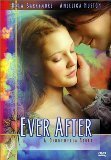

Ever After - A Cinderella Story
is first on my list, not necessarily because it is my top favorite, but because about 70% of the reader recommendations will be for this one. So if you agree, yes, say so, but try to add a second and third choice, too, not just this as a top pick. Let's make it interesting.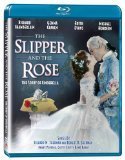

My sentimental favorite is The Slipper and the Rose: The Story Of Cinderella [Blu-ray], which is being re-released to Blu-Ray in November. Hoorah! This is the film I grew up with. It's the one that made me never give up on Cinderella. Be warned it's a musical and Richard Chamberlain "sings." The happy ever after is worked for a little harder in this one. And I LIKE the music by the Sherman Brothers (who also wrote Mary Poppins). No apologies from me, but I admit it's not for everyone. But this is perfect for many Disney fans. And Annette Crosbie is the Fairy Godmother I want.
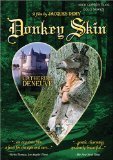

I also offer up Donkey Skin
as a very important fairy tale film. Not to everyone's taste but very beloved by those who do. It's French. It's Donkeyskin. It's a classic. It's an iconic film in France, actually. I see it referenced every time I am in that country. And I'm not looking for it either, despite being, well, SurLaLune.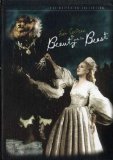

Beauty and The Beast (The Criterion Collection)
is the most important film to watch in the fairy tale canon. Outside of Disney, it is the most discussed and analyzed by scholars. Pretty much every paper or article about fairy tales and film will cover this one. If it doesn't, it better have an excellent reason or it won't be taken very seriously by those in the know. Again, it's French. Expect subtitles or dubbing.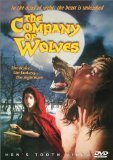

Ditto for The Company of Wolves
. The other most analyzed film outside Disney fairy tales. Thanks to it being strange and an adaptation of Angela Carter. Not for the faint of heart. And not in French, but sometimes you'll wonder if you are watching a foreign film. This isn't for converting friends unless they are goth or their tastes veer far away from popular culture. Think more horror art house style. Personally, I'll admit not an entertaining favorite, but it's an important film.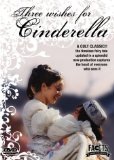

Three Wishes for Cinderella (Tri Orisky Pro Popelku) [DVD]
is another fan favorite and was the most asked about film for the first five or so years that SurLaLune existed. I wasn't aware of it when I started SurLaLune. Now I know. Not your Perrault Cinderella, more like all the other versions that aren't known in pop culture.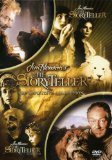

Jim Henson's the Storyteller - The Definitive Collection
is a cult classic for a reason. While I personally find the Shelley Duvall's Faerie Tale Theatre: The Complete Collection a little too campy and slightly tedious, there are few flaws to be found in this series of tales from Jim Henson and several other heavy hitters from the 80s, including narrator John Hurt (most recently known here in the US for the voice of the dragon in the BBC Merlin series.) I love these but some may disturb younger children, so know your audience. Highly recommended all the same.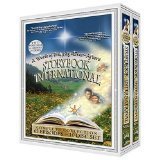

On the more educational side, I also like Storybook International Collection 10 Disc Set
. It is a series by different filmmakers, usually made in the country of origin for the tale. The quality is inconsistent, but we've enjoyed several of these and I still haven't watched them all, more from time than interest limits. There are a lot in here. Expect slower pacing than the average child is used to these days.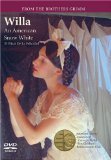



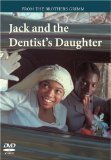

Finally, I enjoy the Brothers Grimm series by Tom Davenport. Again, not always consistent and these have older production values (as do most of the films on this list), but these linger in your brain. Of course, I am slightly biased since I'm from below the Mason Dixon line and Southern in all the best ways, but these are great renditions of tales, somewhat unexpected. My husband remembers watching them when he was in grade school, but I was never that fortunate. Our sentimental favorite is From the Brothers Grimm: Soldier Jack: The Man Who Caught Death in a Sack
. John just referenced it a few weeks ago in casual conversation even though is has been years since we watched it. From the Brothers Grimm: Willa: An American Snow White is one of the best and unexpected ones, also the last one produced, I believe. These are also inconsistent in appropriateness for younger age levels. Come to think of it, both the Brothers Grimm and Storyteller series offered darker renditions of tales 20+ years ago. This is not a new trend in the film industry just happening now.


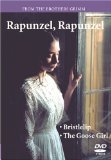

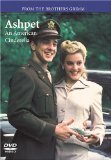

Oh, I almost forgot!
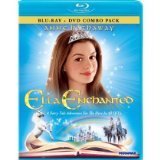

Just kidding! Ella Enchanted [Blu-ray]
is my absolute LEAST favorite fairy tale film. I ADORE the book and hate the film which removed anything lovely from the text. There are worst movies out there but none with as big of stars and budget as this clunker. Perhaps if I had been three years old when it was released, I may have liked it briefly. But this was painful. Very painful. And I had a 3-year-old niece who did enjoy it when it was released so I sat through it several times. Never improved with multiple exposures. The loathing only increased. And, yes, it may be okay if you've never read the book, but the book would have made an excellent movie just as it was. Yes, that is a common refrain with readers but this movie, yuck. Prime example of horrid Hollywood rewriting.I'm sure I've forgotten 20 or so titles, but this is a start. Now what do you readers recommend?


October 17, 2013
Beauty and the Beast and ATU 425: The Search for the Lost Husband
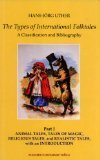

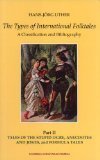

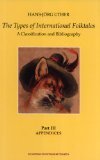

Yesterday I began a series of posts about ATU tale typing of Animal Bridegroom tales. Today I will continue by focusing solely on ATU 425, the behemoth of the Animal Bridegroom tales. As I mentioned yesterday, Swahn and Thompson broke ATU 425 down into sixteen distinct subtypes. The new Uther revision has consolidated these into eight subtypes, combining several of the very small ones into the larger types.
ATU 425 The Search for the Lost Husband is the main title for the type and those tales which don't easily fall into one of the subtypes--the indeterminate ones which are still obvious 425--are kept at ATU 425 and are not further classified. ATU 425C is the subtype for Beauty and the Beast, considered the "short" version of the tale since it usually ends after the Beast's broken enchantment. These usually are obvious derivatives of the Villeneuve and Beaumont versions of the tale. It is a significant subset with its differences from the other types which are much longer and have a solid literary history with an overwhelming popularity in popular culture.
The largest groups, however, are ATU 425A: The Animal as Bridegroom and ATU 425B: Son of the Witch (previously The Disenchanted Husband: the Witch’s Tasks). These two have been switched around a few times and can be confusing.


From my introduction to Beauty and the Beast Tales From Around the World
:The most common subtypes are 425A and 425B, which are very similar and have had their defining elements switched back and forth across assorted studies. Uther clarified their differences with his revisions, stating, "Essential for Type 425A are the motifs 'wife's quest and gifts' and 'nights bought'" in which the heroine uses gifts she has received along her quest in trade to spend the night in her estranged husband's room. He also states for ATU 425B, "The essential feature of this type is the quest for the casket, which entails the visit to the second witch’s house. Usually the supernatural bridegroom is the witch’s son, and he helps his wife perform the tasks." In these tales, the heroine performs impossible tasks culminating in retrieving a box from a dangerous witch who is expected to kill her. In the updated system, Cupid and Psyche is in essence the original ATU 425B tale. A popular example of 425A can be found in the Norwegian "East of the Sun and West of the Moon" (1845) collected by Peter Christen Asbjornsen and Jorgen Moe although one of the earliest versions can be found in "Pinto-Smauto" by Giambattista Basile. Many examples of these tales are provided in this anthology for comparison and analysis.
ATU 425A is the largest of them all, rather surprising since it is apparently newer than ATU 425B's Cupid and Psyche. There are 34 examples of it in Beauty and the Beast Tales From Around the World
. There are only 14 ATU 425B tales in the collection.I will share more ATU 425 subsets tomorrow so stay tuned.
October 16, 2013
Tale Typing Beauty and the Beast and Other Animal Husband Tales
I receive occasional emails about the ATU system of folktale typing. I am far from an expert although I know how to use the system for research. I have a black belt in that small part of it. I hate typing tales on my own, because it is rarely a slam dunk decision.
Tale typing is helpful for finding similar tales but there is very much an art and science to tale typing, one that can be intimidating when tales fail to meet the criteria comfortably or sufficiently. And what about when the groom is not an animal? But everything else fits the type criteria? I'll be sharing more of those soon when I begin sharing individual tales. But let's start at the beginning today's post. Since I decided to include tales from ATU 425-449, I ended up dealing with over 40 tale types for this book, including all of the subtypes and previous iterations of the system. I had only dealt with up to six or seven previously for Cinderella Tales From Around the World
 . Child's play and I didn't even know it then.
From my introduction to Beauty and the Beast Tales From Around the World
:In 1910, Antti Aarne created a system to classify types of Scandinavian folktales and published it with the title, Verzeichnis der Märchentypen (Index of Folktale Types). Stith Thompson later adapted the system in 1928 and again in 1961 with the title, The Types of the Folktale: A Classification and Bibliography. Although other folklore classification systems exist, this system has become the most widely used in folklore scholarship despite its flaws, especially its European-centric limitations. Tale types are designated in this system with the AT designation followed by a classification number, such as AT 425.
In 2004, Hans-Jörg Uther further revised the system, both streamlining and expanding it, with the publication of The Types of International Folktales: A Classification and Bibliography. The system has been adopted in current scholarship and now most tale typing includes the ATU designation to denote usage of the updated tale types. The system groups Animal Husband tales—including Beauty and the Beast—in a range of types: 425-449. The ATU index and bibliography is not limited to English language versions—they are in the minority in the bibliography—so the index is a critical tool for anyone searching for a large listing of Animal Bridegroom variants. The Animal Bridegroom listings are far from comprehensive and further direct the researcher to external sources, such as the work of Jan Öjvind Swahn.
In his book, The Tale of Cupid and Psyche (1955), Swahn compiled a list and studied over 1,100 Animal Bridegroom tales. Concentrating on AT 425: The Search for the Lost Husband—which includes Cupid and Psyche as well as Beauty and the Beast—Swahn subdivided the tales into seven sections and provided a list of motifs for each section of the tale. The seven sections include: I. Introductory Motifs, II. The Supernatural Husband, III. The Marriage, IV. The Breaking of the Taboo, V. The Search for the Husband, VI. The Reunion, and VII. Final Motifs.
Swahn determined the sixth section, The Reunion, to have the most variety across all AT 425 tales and so he divided it into fifteen subtypes, designated with the letters A-O—except for I—and the letter X for indeterminate. Discussing each of these subtypes in detail is not the goal of this introduction, but a chart has been provided in the appendix to help readers learn more about each by referencing representative tales in this collection.
Swahn’s work, in turn, influenced Thompson’s revisions in The Types of the Folktale in 1961. Some of the classifications chosen by Swahn and adopted by Thompson were very narrow, containing a low number of tales limited to a small geographical area. During his revisions in 2004, Uther folded several of these back into the larger type classes, primarily ATU 425A and 425B, making the system more functional but less refined for studying this specific tale type.
I mention the chart from the back of my book--it was one of the greatest challenges of the book. Tale typing Animal Bridegroom tales is a brainteaser--I think this book staved off Alzheimer's for at least five extra years of my life--and then there have been significant changes to the system over the years, too. Whenever a tale in the collection fit in one of the old tale types--say an AT 425L The Padlock on the Enchanted Husband which is now folded into ATU 425E The Enchanted Husband Sings Lullaby--I chose the older, more precise type with a reference to the new type. With most of these, I only have 1-3 representative tales, mostly because there are so few to begin with. They were steamlined for good reasons.
And then there is all the confusion over the two largest types, ATU 425A and ATU 425B. But that will be tomorrow's discussion. This post is long enough!
October 15, 2013
Fairy Tales in Advertising: Flodilocks and Progressive
That is a recent commercial from Progressive Insurance using Goldilocks for inspiration. Saw it a few weeks ago while I was watching something with the husband. He turned to me and said, "You're going to blog that, right?"
Ah, marriage. He knows me so well.
Anyway, I actually like the commercial for what it is and it has a great ending line for the bears. Poor bears. They almost always get the short end of the stick.
I am always reminded about how I want to do a series of posts on Goldilocks and those bears. I don't think I will ever do a SurLaLune book collection for the tale but I have learned a lot more than is on the SurLaLune site over the years.
The weekend--spent at the Southern Festival of Books!--wiped me out and I am still catching up. So Beauty and the Beast posts should resume on Wednesday after I can do some final edits on posts. Never fear, I am still going to write lots more about the tale. I am regrouping since I had to refill my brain with Cinderella for the book festival--thanks to the 25+ souls who came and listened to me on Friday for an hour. It was fun although I was a little worried about the young ones in the audience. Cinderella is not always for the Princess set! I told about her murderous history--well, one of the tamest versions in the most understated way. I didn't touch the Greek Cinderellas which are perhaps the most disturbing.
October 11, 2013
Amazon Kindle Book Deals for This Weekend
Amazon is having one of their The Big Deal: Kindle Books Up to 80% Off
 sales for the Columbus Day weekend. There are a few books that may interest readers here, so I'll share. Most are $1.99.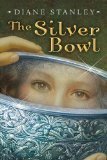

The Silver Bowl
by Diane Stanley hasn't been on sale before to my knowledge and was on my alert list.Unwanted at home, Molly goes to work for the king of Westria as a humble scullery maid. She arrives at the castle with no education, no manners, and a very disturbing secret: She sees visions, and those visions always come true.
One day, while she's working in the king's great hall, young Prince Alaric passes by. Molly finds him unbearably handsome—but also unbearably rude. But what does it really matter? She'll probably never see him again.
In time Molly is promoted to polishing silver and is given a priceless royal treasure to work on: the king's great ceremonial hand basin. But there's something odd about it. The silver warms to her touch, a voice commands her to watch and listen, and then the visions appear. They tell the story of a dreaded curse that has stalked the royal family for years. There have already been deaths; soon there will be more.
As tragedy after tragedy strikes the royal family, Molly can't help but wonder: Will the beautiful Alaric be next? Together with her friends Tobias and Winifred, Molly must protect the prince and destroy the curse. Could a less likely champion be found to save the kingdom of Westria?
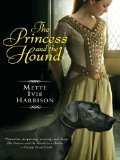

The Princess and the Hound
by Mette Ivie Harrison.He is a prince and heir to a kingdom threatened on all sides, possessor of the forbidden animal magic.
She is a princess from a rival kingdom, the daughter her father never wanted, isolated from all except her hound.
In this lush and beautifully written fairy-tale romance, a prince, a princess, and two kingdoms are joined in the aftermath of a war. Proud, stubborn, and bound to marry for duty, George and Beatrice will steal your heart—but will they fall in love?
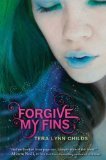

Forgive My Fins
by Tera Lynn ChildsLily Sanderson has a secret, and it's not that she has a huge crush on gorgeous swimming god Brody Bennett, who makes her heart beat flipper-fast. Unrequited love is hard enough when you're a normal teenage girl, but when you're half human, half mermaid, like Lily, there's no such thing as a simple crush.
Lily's mermaid identity is a secret that can't get out, since she's not just any mermaid—she's a Thalassinian princess. When Lily found out three years ago that her mother was actually a human, she finally realized why she didn't feel quite at home in Thalassinia, and she's been living on land and going to Seaview High School ever since, hoping to find where she truly belongs. Sure, land has its problems—like her obnoxious biker-boy neighbor, Quince Fletcher—but it has that one major perk: Brody. The problem is, mermaids aren't really the casual dating type—the instant they "bond," it's for life.
When Lily's attempt to win Brody's love leads to a tsunami-sized case of mistaken identity, she is in for a tidal wave of relationship drama, and she finds out, quick as a tailfin flick, that happily ever after never sails quite as smoothly as you planned.
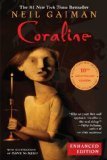

Coraline 10th Anniversary Enhanced Edition
by Neil GaimanWhen Coraline steps through a door to find another house strangely similar to her own (only better), things seem marvelous.
But there's another mother there, and another father, and they want her to stay and be their little girl. They want to change her and never let her go.
Coraline will have to fight with all her wits and courage if she is to save herself and return to her ordinary life.
This enhanced edition contains the full text of the novel, plus the following bonus content:
Original Coraline manuscript pages
Coraline's Many Houses: A Retrospective
Video: The official Coraline Movie Trailer
An excerpt from the Coraline Graphic Novel, adapted and illustrated by P. Craig Russell
Audio: Coraline Graphic Novel Podcast
Audio: An excerpt from the Coraline audiobook, read by Neil Gaiman
Audio: Music from the Coraline audiobook, performed by the Gothic Archies
Excerpts from other books by Neil Gaiman with illustrations by Dave McKean: The Graveyard Book, The Wolves in the Walls, The Day I Swapped My Dad for Two Goldfish, Crazy Hair
Coraline Foreign Edition Cover Gallery
October 10, 2013
Repost: Heidi's Wishlist: Psyche Revived by Cupid's Kiss
I originally posted this almost a year ago and thought it would be fitting to share again today since I discussed Cupid and Psyche earlier. Still don't know if I am going to acquire this statue....
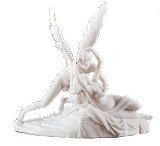

Eros (Cupid) & Psyche by Antonio Canova Greek Roman Mythology Lovers Statue, Marble Finish 11-inch
is another item on my personal wishlist. The statue is actually titled Psyche Revived by Cupid's Kiss.
There are a few pieces of art in the world that are beloved by many. While it sometimes feels trite to love them when they are so popular, there are some that have such power that no apologies can really be expected. And, of course, several of these are in the Louvre. No, I don't mean the Mona Lisa. She leaves me cold. But Cupid and Psyche by Antonio Canova and the Victory of Samothrace are two of my favorites. Another favorite is the Unicorn Tapestries in the Cloisters in New York. Their power over me quite shocked me but that is another entry for another day.

I have been to see the real Canova piece in the Louvre several times, but this is a wonderful statue and I hope to see it many more times. Since I am currently working on Beauty and the Beast Tales from Around the World, Cupid and Psyche is particularly frequent in my thinking these days. I've always been drawn to these ATU 425 tales more than any other so I am really loving working on this book.

These images are my own from my 2008 trip. It is so hard to get good pictures of this piece because it is large, it's corner can be dark, and it is usually swamped by tourists. I am actually surprised I got photos this good, although my desired close-up studies overall turned out too blurry to share. In these situations, I'm an amateur photographer and tired tourist with a basic touristy camera trying to get some shots before someone jostles me or steps into my view range. Very frustrating. But the statue makes me forget.
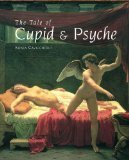

The statue may have to be my reward for when I finish the Beauty and the Beast tales book. And if you, too, love Cupid and Psyche in art, I highly recommend The Tale of Cupid and Psyche: An Illustrated History
. It costs more than the replica statue, but it is a pleasure.Cupid and Psyche and Beauty and the Beast
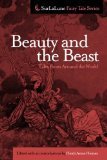

So far, in my discussion about Beauty and the Beast Tales From Around the World
(and ebook link), I have talked about the early history of the tale and the versions by Villeneuve and Beaumont. I have also been busily updating the Beauty and the Beast and East of the Sun and West of the Moon pages at SurLaLune. I am very much behind, but the History of Beauty and the Beast and Tales Similar to Beauty and the Beast pages are pretty much done. Of course, these will be supplemented by the same pages on East of the Sun once I have completed those updates. The Beauty and the Beast Bibliography is also under reconstruction and about a third of the way done.To sum up, we've established that Beauty and the Beast is firmly a literary tale with definite, traceable origins. But hey, this is folklore. Things are never that simple. Because writers have been drawing inspiration forever from artistic creations that preceded them and folklore, especially myth and fairy tales, has been a primary source for just as long.
So for today, we go back, way back, in history to the second century A.D. to what can be considered one of the genesis--if not the genesis--Animal Bridegroom tale. Absolutes are always open for debate and I'm not starting one here.
Again, from my introduction to Beauty and the Beast Tales From Around the World:
Although there are valid arguments for some Greek and Roman myths as sources—such as the stories of “Zeus and Semele,” “Europa and Zeus,” and “Kallisto and Zeus”—they require complicated analysis for comparing to Beauty and the Beast. One of the best discussions about early mythic Beauties and Beasts can be found in Graham Anderson’s Fairytale in the Ancient World(2000).
The earliest traceable literary source for Beauty and the Beast is the story of Cupid and Psyche. The tale appears in Metamorphoses, commonly known as The Golden Ass, written by Apuleius in the second century AD. Cupid and Psyche is the best known and most enduring story from The Golden Ass. Speculation over Apuleius’s work supposes that he, too, derived the story from an earlier source. Examples of Cupid and Psyche appear in visual art centuries prior to Apuleius, but no literary examples exist, either because they never did or because they have been lost in the ravages of history. An excellent compendium and study of the tale can be found in The Tale of Cupid and Psyche: An Illustrated History (2002) by Sonia Cavicchioli. Whatever Apuleius’s influences may have been, his version of Cupid and Psyche is the one that primarily influenced future literary and artistic interpretations of the tale for the two millennia that followed, especially when it was embraced during the Renaissance and after.
Cupid and Psyche—of which two versions are offered in this collection, one a direct translation of Apuleius—shares many elements with Beauty and the Beast, but the stories are quite different. In truth, Cupid and Psyche has influenced a large range of Animal Bridegroom tales—as they are commonly labeled—and Beauty and the Beast tales are only a small, albeit very popular, portion.
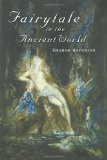
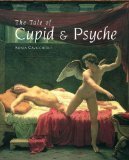

Anderson discusses Cupid and Psyche the most in his chapter on Beauty and the Beast, but he also has some useful discussion of other myths I listed above. I didn't include those myths in my book since the connections are rather tenuous and other stories gained priority. They would be included in a companion book if I do it.
A quick read of a version of Cupid and Psyche for children--if you are not overly familiar with the tale--may be helpful since it is a quick read although significantly shorter than the original. The story has been interpreted and referenced over and over again. I've collected a nice library of poetry and visual art over the years.
Significant things to note about Cupid and Psyche--he's a god, not a beast. But the story elements are so influential that there is no doubt about it being part of the Animal Bridegroom folktale type. Also, Psyche is rather frustratingly stupid at times. While the heroine grows and makes less mistakes as the story progresses in other tales of this type, Psyche makes mistakes pretty much up to the end although her heart is in the right place. There is certainly the air of myth instead of fairy tale to the story, for the humans have to be lesser than the gods.
New Book: The Scarecrow King: A Romantic Retelling of the King Thrushbeard Fairy Tale by Jill Myles
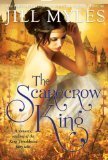

The Scarecrow King: A Romantic Retelling of the King Thrushbeard Fairy Tale
by Jill Myles was released in September. This one caught my attention because it is a novel-length retelling of King Thrushbeard. It's a romance, but when I think about it, there is a romance genre trope that could easily be considered King Thrushbeard although it isn't as common since it usually means the heroine isn't very likeable for at least part of the novel.Book description:
Princess Rinda of Balinore knows of only one way to get her cold father’s attention – to be an obnoxious, spoiled princess. When she finds out that the king plan to marrying her off to a far-flung nobleman, she puts on her best bratty show in front of the entire court. But Rinda’s plan backfires, and she soon finds herself married to the most ineligible man ever. Her new husband is monastery raised, poor as dirt, and a traveling minstrel.
A very, very bad traveling minstrel.
But Alek isn’t what he seems like on the surface, and neither is Rinda. She won’t take this marriage lying down, and schemes to find herself a new husband – a king. But as she and Alek travel together, they learn that not only are appearances deceiving, but goals can change in the blink of an eye, and love can get in the way of the strongest plans…
The Scarecrow King is a romantic retelling of the King Thrushbeard fairy tale.
For those who care: Myles is the pen name for Jessica Clare who is traditionally published. From what I can tell, she self-publishes under the Myles name, especially those books that don't fit in her traditional publishing of erotic romance. I don't know how erotic this particular title is.
I am extremely picky about the self-pubbed titles I promote here, not because I am against them but because they would take up too much of my time and there is often problems with a high percentage of them, from editing to simple formatting. Several new fairy tale themed self-pubs show up every day now and most of them are erotic in nature which is not the focus of SurLaLune. There are plenty of other places on the web for that. Just look to see the sales in Kindle Store: Fairy Tales
on Amazon and you'll appreciate the power of fairy tales and self-pubbing.
October 9, 2013
Beauty and the Beast and Madame Beaumont
Beauty and the Beast Tales From Around the World
(and ebook link) is moving out into the world so I'll keep discussing it here. Yesterday I talked about Villeneuve's Le Belle et la Bete and the significant changes to the story we see in most English translations of her original story, namely the nightly question being "May I sleep with you?" instead of "Will you marry me?" as well as the transformation scene.Well, it would be tempting to think those changes were made due to Victorian sensibilities and moral codes. It certainly happened over and over again with other tales. And, to be realistic, there was some influence from that arena in James Planché's translation. Side note: Planché is an interesting man who wrote two volumes of French fairy tale translations but he is best known as an influential playwright in London with 176 plays to his name, 104 of which were adapted from other sources, primarily folklore and French fairy tales, including a "Beauty and the Beast Fairy Extravaganza" in 1841. Just look as his body of work to realize this isn't the first time the entertainment industry has used fairy tales as fodder. That has been happening for centuries with regular ebbs and flows.
However, the precedent had been set much earlier by the woman we should credit with bringing Beauty and the Beast to the masses. In 1757--seventeen years after Villeneuve's publication and two years after Villeneuve's death--Jeanne-Marie Leprince de Beaumont published her adaptation of Villeneuve's Beauty and the Beast.
Beaumont was a teacher and author who worked as a governess in her early years. Her personal impetus was towards teaching children. She drew inspiration from Villeneuve but changed the story considerably, abridging it to end soon after the Beast's transformation. Her theme was virtue and emphasized Beauty's fine qualities that ultimately brought her happiness. Gone are the backstories, Beauty is a commoner raised in social status through her virtue. Gone are the references to sleeping together. Here is the introduction of the "Will you marry me?" The tone is much more didactic--think early children's literature with a message--but the story rises above it for the language is still lovely.
From my introduction to Beauty and the Beast Tales From Around the World
:It can be argued Beaumont prepared the tale to enter oral folklore with her concise edits, for her story is the one easily recognized by modern audiences. Her version of the tale was quickly translated into several languages and published all over Europe, where it grew in popularity, insuring its dissemination across many European cultures and beyond. One translation of Beaumont’s tale is provided in this collection as well as two other retellings by Andrew Lang and Sir Arthur Quiller-Couch that draw from both her adaptation and Villeneuve’s original tale, although Villeneuve’s version receives the primary credit it should. Yet many of the editorial choices resemble those of Beaumont.
So while Villeneuve wrote the original, we may not know the story so well today if Beaumont had not adapted it to her own purposes. The Beaumont translation I include in Beauty and the Beast Tales From Around the World
is from 1783. Can you imagine the lawsuits over such an endeavour today? Of course, Villeneuve was already dead by the time Beaumont adapted her story, but copyright issues would hinder this type of legacy. Although fan fiction has a similar connotation. Today I choose to credit both women with the story as one wrote the original and the other made it famous.
October 8, 2013
Paperback Available of Beauty and the Beast Tales From Around the World
There it is! Beauty and the Beast Tales From Around the World
is now available for purchase in paperback, too. The book pages on Amazon will be populated with more descriptions, look inside features, and show both ebook and paperback on the same page within a few days, but at least they are both on the site now. And already slightly discounted.It is also up on Amazon.co.uk at Beauty and the Beast Tales From Around the World
 .
.It will start appearing with other retailers over the next several days.
And if you prefer, the ebook is at Beauty and the Beast Tales From Around the World
.Enjoy everyone! I really did. This was the hardest one to let go cause I really didn't want it to be finished. And it still isn't in my head... At 548,000 words, it was a massive undertaking.
Heidi Anne Heiner's Blog

- Heidi Anne Heiner's profile
- 44 followers
Heidi Anne Heiner isn't a Goodreads Author
(yet),
but they
do have a blog,
so here are some recent posts imported from
their feed.

