
Heidi Anne Heiner's Blog, page 104
November 9, 2013
Bargain Ebook: A Long, Long Sleep by Anna Sheehan For $2.99
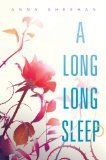

A Long, Long Sleep
by Anna Sheehan is $2.99 for ebook format as part of Amazon's November Big Ebook Deals . This has been discounted previously, but not often. It is science fiction with a Sleeping Beauty theme as you can read in the description below.
Book description:
Rosalinda Fitzroy has been asleep for sixty-two years when she is woken by a kiss. Locked away in the chemically induced slumber of a stasis tube in a forgotten subbasement, sixteen-year-old Rose slept straight through the Dark Times that killed millions and utterly changed the world she knew. Now, her parents and her first love are long gone, and Rose— hailed upon her awakening as the long-lost heir to an interplanetary empire— is thrust alone into a future in which she is viewed as either a freak or a threat. Desperate to put the past behind her and adapt to her new world, Rose finds herself drawn to the boy who kissed her awake, hoping that he can help her to start fresh. But when a deadly danger jeopardizes her fragile new existence, Rose must face the ghosts of her past with open eyes— or be left without any future at all.


October 30, 2013
Beauty and the Beast: Unhappy Endings

So, as always, there are some versions of Beauty and the Beast with unhappy endings in Beauty and the Beast Tales From Around the World
. I actually gave "Unhappy Endings" an index entry and there are three page numbers, thus three tales. And, no, I don't mean unhappy because the transformation occurs as some modern readers like to feel. Some of you want to keep your beast in his original form. But these tales are for audiences in a different time and that was not a consideration for them, at least not obviously to us.The most familiar tale with an unhappy ending will be Madame d'Aulnoy's Le Mouton (in French) or The Ram (in English) which is thought to have partially inspired Villeneuve's original Beauty and the Beast story. The tale is also known as The Wonderful Sheep in Andrew Lang's Fairy Book.
That tale, in Lang's version ends like this:
She threw herself out of the chariot and ran to him, crying bitterly, for she realized that her broken promise had cost him his life, and for a long, long time she was so unhappy that they thought she would have died too.
So you see that even a princess is not always happy-- especially if she forgets to keep her word; and the greatest misfortunes often happen to people just as they think they have obtained their heart's desires!
Another translation is just a preachy:
The king and Merveilleuse in the meanwhile were not aware of the sad tragedy that had just taken place. He proposed to his daughter to ride in a coach, so that all the town might see her by the light of the thousand torches in the windows and in the great squares. But what a sight did she see on her way out of the palace--her dear ram stretched on the pavement, all the life gone out of him! Throwing herself out of the coach, she ran to him, weeping and groaning for she knew her delay had caused the death of the royal ram. In her despair, she was like to die herself.
This was taken as a striking example, therefore, that people of the highest rank are subject, like others, to fortune's blows, and that often the worst luck comes to them just when they think all their wishes are about to be fulfilled.
It's amusing, is it not, that Villeneuve in some ways rewrote Aulnoy's tale to give us a happy ending? 18th century fan fiction? Not really, but it's fun to imagine.
Another unhappy ending in the collection comes from South Africa and The Story of Long Snake.
They went out of the house that the bridegroom might sleep in it. While he was eating, the people of the village piled up bundles of grass, and the bridegroom was burned in the house. In this manner he died.
This one, in truth, is not so sad since the heroine is not interested in keeping her bridegroom. He is a snake and there is no hint that he will be disenchanted.
Long Snake, however, is reminiscent of another Animal Bridegroom tale with an unhappy ending, Eglė the Queen of Serpents. There is not a version of this tale in Beauty and the Beast Tales From Around the World
because I didn't find one satisfactory for translating and including. It is on my list for a second volume if that comes about, however. There are a few versions on the internet with dubious copyrights as well as a fine Wikipedia entry at Eglė the Queen of Serpents. The Lithuanian tale, a popular one, is about Eglė who marries a serpent. She bears him children and is quite happy with him. However, one day she visits her family, and while she is separated from her husband, her brothers kill her husband out of fear and disgust. From Wikipedia:
After meeting the long lost family members, Eglė's relatives do not wish to let them back to the sea and decide to kill Žilvinas. His sons are forced by Eglė's brothers to tell the secret calling of their father. The boys are threatened and beaten by their uncles, however they remain silent and do not betray their father. Finally, a frightened daughter discloses it:
"Žilvinas, dear Žilvinas,
If alive – may the sea foam milk
If dead – may the sea foam blood…"
The twelve brothers call Žilvinas the Serpent from the sea and kill him using scythes.
Worried Eglė calls her husband, but unfortunately only foams of blood return from the sea. When Eglė discovers that her beloved is dead, as a punishment for betrayal she turns her children and herself into trees. The sons were turned into strong trees, an oak, ash and birch, whereas the daughter was turned into a common aspen. Finally, Eglė transformed herself into a spruce.
Finally, the third and final unhappy ending in Beauty and the Beast Tales From Around the World
is found in a tale that I translated myself for the book, The White Wolf. There are three tales by that title in the book, but this version was originally "Le Loup blanc” from Contes populaires de Lorraine by Emmanuel Cosquin, a French tale. To my knowledge it has never been published in English translation before.It is a short tale and is a straightforward ATU 425C (Beauty and the Beast) tale. But it is especially abbreviated for it ends like this:
After spending another night at the castle, the father returned home. The girl remained and soon began to enjoy the castle. She discovered all that she could desire, each day there were music concerts and nothing was forgotten for her entertainment.
However, her mother and her sisters were filled with anxiety. They said, “Where is our poor child?” and “Where is our sister?”
The father, upon his return, at first would not tell what had transpired, but in the end he yielded to their entreaties and told them where he had left his daughter.
One of the eldest visited the sister and asked her what had happened. The girl resisted for a long time, but her sister persisted and ultimately she revealed her secret.
Immediately, they heard horrible screams. The girl stood up, shuddering with fright. As soon as she went outside, the white wolf came to die at her feet. She then comprehended her mistake, but it was too late and she was unhappy for the rest of her life.
That one is particularly brutal for she has no second chances, no way to redeem herself for simply revealing the secret which most tales in this group provide so she can find redemption. Which makes it all the more fascinating.
October 29, 2013
New Book: Roses by G. R. Mannering
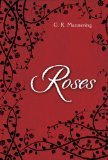

Roses
by G. R. Mannering will be released next week.Book description:
A dark, modern rendition of the classic fairy tale Beauty and the Beast!
"As the gates clicked shut behind them, she heard the distant roar of a beast."
She bears no name. Her silvery appearance is freakish to the numerous inhabitants of Sago, the cosmopolitan capital of Pevorocco in a fantasy realm. With her mother vanishing at the instance of her birth, she is regrettably sent to live with the nouveau riche Ma Dane, where she is punished daily for something, though she knows not what. Tauntingly named Beauty, she flees Sago in a violent uprising that sets out to massacre all Magics and journeys to the furthest point of the country.
But Beauty cannot hide in the grassy Hillands forever. Before long, the State officials find her and threaten to take her back to war-torn Sago where death surely awaits. In a midnight blizzard she escapes them, running into a deep, enchanted forest to a great and terrible beast who will bargain for her life. But can Beauty accept Beast? Eternity is a long time.
G. R. Mannering's eloquent style and creative retelling of a timeless classic illuminates the plight of Beauty and the Beast and is sure to captivate fans of Cinder, Beauty, and others.
October 28, 2013
ATU 433B King Lindorm and ATU 440 The Frog Prince, Too

One of the most fascinating to me of the Animal Bridegroom tale types is ATU 433B King Lindorm. The tale type has been combined from several earlier AT types (AT 433, 433A and 433C), pretty much all involving serpents, snakes, dragons, lindworms, etc. Wikipedia has an adequate article about Lindworms in general if you are unfamiliar with the term. D.L. Ashliman has several tales of this type listed on his Snake and Serpent Husbands in Folktales page.
And really, when we start thinking of all the possibilities of snake and reptile imagery, they are logical choices for Animal Bridegrooms. Many readers may find some romance in an enchanted bear, wolf, dog, goat, rabbit, etc. They resemble pets and can be less fear-inspiring. Well, maybe not so much the goat, but snakes are some of the most feared creatures on the planet. And then there is the phallic symbolism, too. Marriage to a serpent is not very appealing to an innocent maiden.
Since this tale type has been combined from several previous, it is a little more difficult to describe. It is tempting to just copy the description from the Uther text entirely! But I won't! Essentially the family of tales describe a young woman marrying a snake. After she marries him, she discovers that he is an enchanted prince. There are not many prohibitions put upon her--her primary goal is to survive her wedding night since in some versions previous brides have failed to do that much. Sometimes simply kissing him (a la Frog Prince which is another tale type) or sleeping beside him will break the spell, but usually the snakeskins must be destroyed in some way.
In my favorite versions, the new bride goes to the bridal chamber wearing several layers of clothes, but not from maidenly modesty, but from advice given by a wise benefactor. When her groom tells her to remove a layer of clothing, she demands he do the same, too. She is wearing enough clothing to manage to get him out of his last snakeskin. For some reason, this scene always plays out wonderfully in my head. I can just see her making her own defiant demands as she secretly trembles in fear and strips to her own skin. Sometimes she bathes him in milk once he is naked, or sleeps beside him, or something else, but the snakeskins are also destroyed, thus preventing him from returning to his snake form. Those heroines and plucky and brave and quite fun to read.
Often the prince is snake from a childless couple wishing for a child in any form as long as they have a child. A common fairy tale trope. The snake's intelligence and often magical powers are never in doubt, but he is terrifying to even his family who knows him best.
And, for once, there is not a Grimms version of this tale. The best known versions are usually Swedish and Danish, although one of the earliest is The Serpent from Basile's Pentamerone in Italy with some strong resemblance to Straparola's even earlier The Pig King, too. There are 19 versions of the tale in Beauty and the Beast Tales From Around the World
.And on that note, since I mentioned it already in this post, ATU 440: The Frog King or Iron Henry is also an Animal Bridegroom tale and it bears little resemblance to King Lindorm. I only included one tale from ATU 440 in Beauty and the Beast Tales From Around the World
, however, but because the very first SurLaLune collection was The Frog Prince and Other Frog Tales From Around the World: Fairy Tales, Fables and Folklore about Frogs. Occasionally I will use the same tale in multiple collections, especially ones I have translated myself, but I didn't want to take a whole chunk of one book and put it in another one. I now have enough material to expand that original Frog Prince collection, but it will be a little while before a second edition is considered.
New Fairy Tale Short Story Anthology: Once Upon a Time: New Fairy Tales
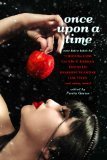

I'm way behind on announcing new book releases for October and November. There are a lot! So I will work at catching up this week.
Once Upon a Time: New Fairy Tales
edited by Paula Guran was released earlier this month in paperback and ebook. The list of authors and tales is a happy one. I haven't read this yet and I have to admit the cover is my least favorite part--it looked self-published at first glance. But these are all new stories from established authors and many SurLaLune favorites (and a few of its readers, too).Book description:
Eighteen extraordinary authors devise all-new fairy tales: imaginative reinterpretations of the familiar, evocative new myths, speculations beyond the traditional realm of "once upon a time." Often dark, occasionally humorous, always enthralling, these stories find a certain Puss in a near-future New York, an empress bargaining with a dragon, a princess turned into a raven, a king's dancing daughters with powerful secrets, great heroism, terrible villainy, sparks of mischief, and a great deal more. Brilliant dreams and dazzling nightmares with meaning for today and tomorrow...
And because it's always important, here is the Table of Contents:
“The Giant In Repose” by Nathan Ballingrud
“Eat Me, Drink Me, Love Me” by Christopher Barzak
“Tales That Fairies Tell” by Richard Bowes
“Warrior Dreams” by Cinda Williams Chima
“Blanchefleur” by Theodora Goss
“The Road of Needles” by Caitlín R. Kiernan
“Below the Sun Beneath” by Tanith Lee
“The Coin of Heart’s Desire” by Yoon Ha Lee
“Sleeping Beauty of Elista” by Ekaterina Sedia
“Egg” by Priya Sharma
“Lupine” by Nisi Shawl
“Castle of Masks” by Cory Skerry
“Flight” by Angela Slatter
“The Lenten Rose” by Genevieve Valentine
“The Hush of Feathers, the Clamour of Wings” by A.C. Wise
“Born and Bread” by Kaaron Warren
“The Mirror Tells All” by Erzebet YellowBoy
“The Spinning Wheel’s Tale” by Jane Yolen
October 24, 2013
ATU 432: The Prince as Bird
ATU 432: The Prince as Bird is a more common Animal Bridegroom tale type. There are seventeen versions of this tale type in Beauty and the Beast Tales From Around the World
. The tale type generally begins like 425B: Beauty and the Beast with a youngest daughter's request for an unusual gift. After much searching, the father finally obtains the gift from a faraway, unknown prince and brings it home to his daughter. She then uses it to summon the prince to her room at night, usually in the form of a bird. (Fill in the blanks there, the tales often let you do so.) The sisters--or in rare cases a jealous husband in less innocent and happy versions!--discovers the reason for the woman's joy and sabotage the window with jagged glass, etc., thus wounding the bird during his next visit. The prince flees home, almost mortally wounded and deathly sick. The daughter discovers the treachery and sets out in search of him. When she finds his kingdom, in disguise, she cures the prince when everyone else has failed. Eventually her disguise is penetrated, she is exonerated, and reunited with her lover. And they live happily ever after.
The earliest known version is "The Lay of Yonec" by Marie de France, a tale from the late 12th century. This tale, in turn, is thought to have influenced The Blue Bird by Madame d'Aulnoy in the late 17th century.
A version also appears in the 16th century in Basile's Pentamerone as "Verde Prato" which directly translates as "Green Meadow" but is sometimes called The Three Sisters, as one translator explained that Green Meadow has nothing to do with the story.
All of these versions appear in Beauty and the Beast Tales From Around the World
, but I also included variants from Greece, England, Denmark, Russia, and India. The Russian version may be more familiar to readers, too, as it is commonly known as Finist the Falcon.
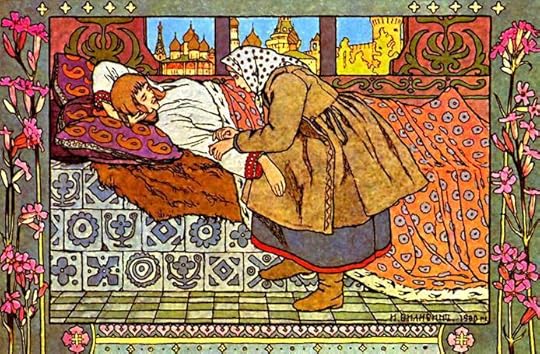
I enjoy this tale type since the heroine is usually spunky and often guiltless--she never betrays her lover, but still fights hard to save him when she herself is betrayed and falsely accused of the betrayal.
Birds are also a common form for Animal Bridegrooms, often in stories where the prince comes to the heroine who is safely tucked away home. A bird shape is one of the more obvious ways for the hero to gain access to a family home and an innocent maiden.
October 23, 2013
ATU 431: The House in the Forest
One more for today since I hope to finish up the Beauty and the Beast tale types this week. Another less common but a little more beloved Animal Bridegroom tale is ATU 431: The House in the Forest. It can be The Hut in the Woods or any other variation of that title with hut/house, forest/woods, etc. This tale is also a cousin to the Kind and Unkind Girls (ATU 480) tales. This one also has a strong "be kind to animals" message, too.
Again, this one is best known from the Grimms. I have long considered making it the 50th tale annotated on SurLaLune. (It is tied with a Grateful Dead tale, actually.) You can read the tale on the SurLaLune site at The Hut in the Forest and it also appears in Beauty and the Beast Tales From Around the World
. But with this one I also found another version from Poland for the book titled, "The Bear in the Forest Hut." According to Uther, the earliest known documentation of this tale is the 19th century, so its history is either shorter than many or just not documented. Here is Arthur Rackham's illustration for the story:

Another Animal Bridegroom: ATU 431: The Donkey
As I have mentioned before, the Grimms provided many different types of Animal Bridegroom tales in their collection, many the best know representatives of tale types in the ATU 425-449 Animal Husband range. Several of these appear in Beauty and the Beast Tales From Around the World
. ATU 431: The Donkey is one such example. The description for the tale type is a synopsis of the Grimm tale, The Donkey. The tale is not widely distributed and is apparently sourced, according to Uther, from:
...a versified novella from southern Germany of ca. 1200, which was much read in courtly circles. The donkey with human sensibilities is traced to the ancient novelle of Psuedo-Lucian and Apuleius. Prose versions were popularized by the Grimms' text. Oral versions are often so much abbreviated that they are difficult to distinguish from Type 425A.The tale is more recognizable in the Animal Bridegroom family because it contains many common elements, including the nightly changing from beast to human by removing the animal skin and the ultimate burning of the animal skin to end the enchantment. The beginning also starts with a childless couple wishing for a child, any child, and receiving a donkey child as a result.
And isn't it fascinating to see that some tales are old and kept a long life from ca. 1200 but still didn't gain the same popularity level of other tales. I have to admit, a donkey is less appealing or enticingly dangerous than many other animals. This tale even emphasizes more of this entertainment qualities--from playing musical instruments, etc.
The only representative of this tale in Beauty and the Beast Tales From Around the World is the Grimms' The Donkey. There are more variants, but few are available in English translation.
ATU 426: The Two Girls, the Bear, and the Dwarf
This was supposed to post yesterday. Better late than never!
Did you realize that Snow White and Rose Red is an Animal Bridegroom tale? I know it is--I even say so in my history of the tale on the SurLaLune main site--but I often don't think of it as such. I know I am often focused on the two sisters and their relationship with each other as much as the bear. But that bear is an enchanted prince and he is disenchanted by the sisters and then one marries him. The tale is classed as ATU 426: The Two Girls, the Bear, and the Dwarf is very, very rare actually. The best know version is the Grimms, although their version is based on a tale, "The Ungrateful Dwarf," written by Karoline (or Caroline) Stahl. I include the tale for this reason in Beauty and the Beast Tales From Around the World
. Most other variants are most likely derived from the Grimms version since it was disseminated all over Europe and beyond.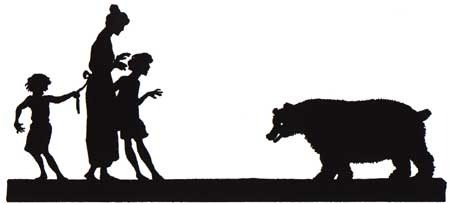
October 21, 2013
Minor ATU Subtypes of Beauty and the Beast


Last week I discussed the ATU 425 subtypes A, B, and C. I wanted to share a listing of the other minor subtypes D-P, etc.
These subtypes remain in the new ATU system:
ATU 425D The Vanished Husband (previously Vanished Husband Learned of by Keeping Inn [Bath-house]): There are three of these tales in Beauty and the Beast Tales From Around the World
ATU 425E The Enchanted Husband Sings Lullaby (Including the previous type 425L): There are three of these tales in Beauty and the Beast Tales From Around the World
ATU 425M The Snake as Bridegroom (previously Bathing Girl’s Garments Kept): There are three of these tales in Beauty and the Beast Tales From Around the World
ATU 425* The Insulted Bridegroom Disenchanted (previously Enchanted Animal Husband Insulted by Guests)--None of these tales are included in my book.
These were folded into other subtypes or tale types, using the AT designation:
AT 425F Bird Steals Jewel from Girl--Folded into ATU 425D: This tale is very rare. The only English translation of any version I have read appears as "The Prince and the Daughter of the Thornseller" in Folktales of Iraq (Dover Books on Anthropology and Folklore)
 by E. S. Stevens (Editor)
AT 425G False Bride Takes Heroine’s Place--Folded into ATU 425A: There are four of these tales in Beauty and the Beast Tales From Around the World
AT 425H Short form of the tale--Folded into ATU 425C: There is one tale of this type in Beauty and the Beast Tales From Around the World
AT 425J Service in Hell to Release Enchanted Husband--Folded into ATU 425B: There is one tale of this type in Beauty and the Beast Tales From Around the World
AT 425K Search in Men’s Clothing--Folded into ATU Type 884 The Forsaken Fiancee: Service as Menial: There are two of these tales in Beauty and the Beast Tales From Around the World
AT 425L The Padlock on the Enchanted Husband--Folded into ATU 425E: There is one tale of this type in Beauty and the Beast Tales From Around the World
AT 425N Bird Husband--Folded into ATU 425B: There are four of these tales in Beauty and the Beast Tales From Around the World
AT 425P Enchanted Wife Lost and Found--Folded into ATU 425B--None of these tales are included in my book. These, as you can see from the title, are hero tales or Animal Bride tales which I did not include in the book. There simply wasn't room. That book will come someday, primarily as Swan Maidens since that is the most popular Animal Bride type.
I won't go into descriptions for each of these, mostly the significant variation is described in the type title, especially those that were folded into larger types were limited to a small geographic region of Europe. For example, AT 425J Service in Hell to Release Enchanted Husband appears strictly in Ireland as an Irish-Gaelic variant. All of them are fascinating variants of the tales.
Heidi Anne Heiner's Blog

- Heidi Anne Heiner's profile
- 44 followers
Heidi Anne Heiner isn't a Goodreads Author
(yet),
but they
do have a blog,
so here are some recent posts imported from
their feed.

