
Paul Garrigan's Blog, page 15
November 19, 2014
Mindfulness for Addiction Cravings
My inability to deal with addiction cravings meant I repeatedly broke my promises to myself and other people. The urge to drink would just become too much for me, so it was always only a matter of time before I caved in. Mindfulness gave me the ability to manage my addiction cravings so they no longer had any control over me.
“…an urge is like an ocean wave that grows bigger and bigger as it approaches the shore. As it grows, there’s the desire to just give in, but if you do, you’ll reinforce the power of the addiction.”
Alan Marlatt
I talk about my experiences with using mindfulness to deal with addiction cravings in this video (you will find the podcast version below).
Press play to listen to the podcast of this episode:
Useful Resources for Mindfully Dealing with Addiction Cravings
Urge Surface Relapse Prevention
Surfing the Urge (Inquiring Mind article)


November 13, 2014
How Mindfulness Helped Me Find My Purpose in Life
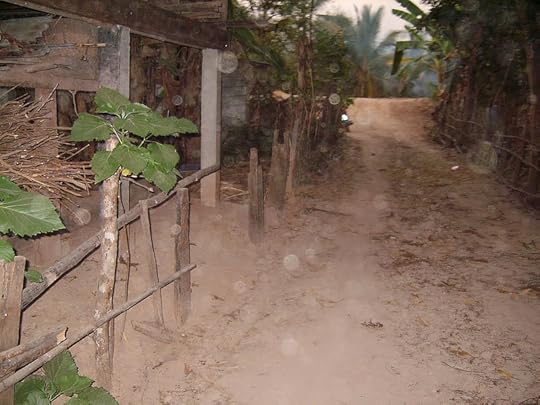
Phra Hans was a Buddhist monk who helped me give up alcohol (I say ‘was’ because he died a few years ago). At our first meeting, Phra Hans promised me if I quit drinking, I would find my purpose in life, and the need to get drunk would disappear completely.
I wanted to believe what Phra Hans was telling me, but it all sounded too good to be true. If I hadn’t felt do desperate, I would have dismissed his promise as fanciful nonsense.
Ideas like ‘life purpose’ sounded a bit too New-Agey for my liking. Anyway – I’d already stopped drinking for two years once before, and despite believing that I’d found my life purpose during that time (I became a nurse), I still ended up drinking again.
Phra Hans suggested I had turned to alcohol because I had lost my purpose in life. This lack of meaning created inner-discomfort that I self-medicated by getting drunk. What he said did make sense to me – I used to call it my ‘fuck-it’ button.
This explanation for why I drank isn’t just a Buddhist idea. The psychologist Abraham Maslow talked about a hierarchy of needs with self-actualization is at the top. Maslow once said:
“If you plan on being anything less than you are capable of being, you will probably be unhappy all the days of your life.”
I was desperate enough to believe what Phra Hans was telling me. I put my faith in his claim that my life purpose would reveal itself so long as I stayed sober.
I knew the Buddhist idea of giving up intoxicants wasn’t simply about me becoming a good boy so the universe could shower me with goodies. It wasn’t that alcohol was evil, it was just that it prevented me from being mindful.
What Phra Hans was really telling me was that my life purpose would reveal itself if I became more mindful.
I’m not sure there is anything supernatural about mindfulness. It was just a way for me to escape the habitual patterns that were fucking up my life. It also calmed the raging storm in my head just enough so that insights and creative thoughts could be heard above the din.
There is all this potential trapped inside all of us and mindfulness releases it – it doesn’t happen overnight, but once this stuff starts to surface, life becomes full of purpose and meaning.
The things Phra Hans told me that day turned out to be true. I got sober, and my life became full of purpose. The need to get drunk disappeared.
November 9, 2014
Is Mindfulness Just Swapping One Addiction for Another?
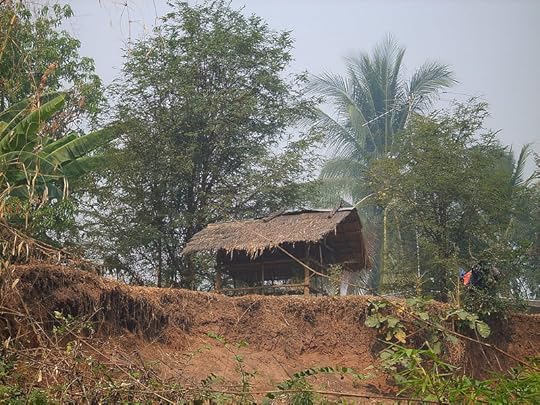
The thing I love most about my new role as a mindfulness coach in rehab is it gets me to think more about my own practice – I remember reading somewhere that the best subject to teach is the one you most desperately need to learn, and this makes perfect sense to me.
The questions I get from rehab clients sometimes catch me off-guard, and I need to reflect on my own experience to give an honest answer. In practice, it can mean not being able to give a clear reply until the next session.
The question that forced me to think deeply this week was this one – is mindfulness just swapping one addiction for other?
The Danger of Addiction Substitution
I’ve definitely been guilty in the past of addiction substitution. I can become obsessed about my work and comfort eating has been a real issue for me.
Alcohol was my drug of choice, but I know that all mind-altering substances are off limits to me because I would so easily become hooked.
I’m not sure if ultimately there is such a thing as an addictive personality, but for all practical purposes, I have one.
During the nineties, there was a 2 year period where I want to at least one AA meeting per day. One day it hit me that I was just replacing one addiction with another. I shared my concerns with an old-timer, but he assured me it was a beneficial addiction – his answer left me a bit uneasy.
I would prefer not to be addicted to anything.
Is Mindfulness Addictive?
“Mindfulness meditation, in its pure and classic sense, is about finding your true self. It’s about waking up to the true nature of the present moment”
Andrew Weiss (Beginning Mindfulness: Learning the Way of Awareness)
My knee-jerk response to the question of whether mindfulness is addictive would be to say that “I wish it was”.
Mindfulness differs from alcohol or drugs in that I can never overdo it. How could I overindulge in being present for my own life? The problem is never being too mindful but in remembering to be mindful.
I turn to addictive behaviors in an attempt to escape what is happening right now. It is always about running away from reality.
It starts off with the thought ‘I shouldn’t be feeling this way’, and I need something to make me not feel this way.
Mindfulness is the complete opposite of addictive behavior because it is about accepting whatever is happening in this moment. If there are uncomfortable feelings, I feel them – if there is pain, I experience it.
I’m willing to deal with life as it is served because I now know that suffering is what happens when I try to hide from reality.
Mindfulness can never be addictive but….
…it is possible to become addicted to mindfulness practices such as meditation,
Tai-chi, or yoga. This happens when I obsess about these activities as a way to avoid dealing with life (see my previous post Real Mindfulness in Thailand).
If I use something like meditation to escape my problems, it stops being a mindfulness practice and becomes an addiction substitute.
November 8, 2014
ประสบการณ์ของผมที่วัดถ้ำกระบอก
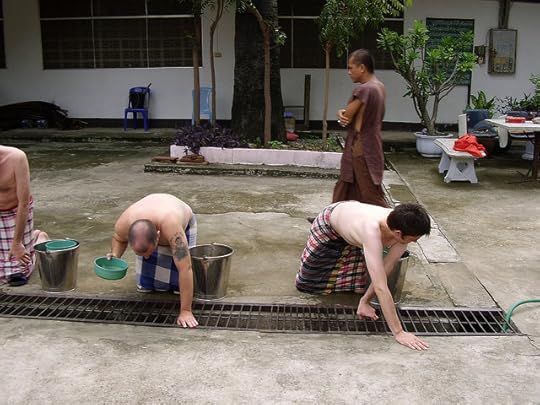
สวัสดีครับ ผมชื่อพอล
วันนี้ผมอยากพูดเกี่ยวกับประสบการณ์ของผมที่วัดถ้ำกระบอก
แปดปีที่แล้วผมไปที่โน้นเพราะต้องการเลิกดื่มแอลกอฮอล์
ผมรู้สึกขอบคุณ มากกับการบำบัดของวัดถ้ำกระบอกมันทำให้ผมรู้สึกดีขึ้น
ผมอยากอธิบายว่าทำไมจำเป็นต้องไปที่โน่น
ผมเกิดที่ประเทศไอร์แลนด์ ตอนเป็นเด็กมีความสุขมาก แต่ชอบวิตกกังวลและคิดไปเอง
ตอนอายุสิบสี่ พ่อแม่หย่ากัน ผมหดหู่มาก
คืนหนึ่งผมขโมยขวดวอดก้าจากตู้พ่อแม่
ผมดื่มจนเมามากและอาเจียน
ผมชอบเพราะว่าตอนเมาไม่ต้องห่วง
ตอนเมาไม่คิดไปเอง
หลังจากนั้นผมหาเพื่อนใหม่ชอบดื่มแอลกอฮอล์ด้วยกัน
เวลานั้นผมคิดว่าแอลกอฮอล์วิเศษเพราะว่าทำให้ผมมั่นใจและสบายใจ
เมื่อก่อนนั่นผมเรียนรู้เก่งที่่โรงเรียนแต่ตอนเริ่มดื่มแอลกอฮอล์ไม่สนใจโรงเรียน
ตอนอายุสิบห้าผมถูกไล่ออกจากโรงเรียน
ทุกเสาร์อาทิตย์ผมไปดื่มแอลกอฮอล์กับเพื่อนที่ชายหาด
พวกเราขโมยแอลกอฮอล์จากพ่อแม่ของพวกเราหรือให้ชายสูงอายุซื้อ
ผมหน้าตาเหมือนเด็กแต่บางครั้งไปผับดื่มแอลกอฮอล์ ได้
ผมรักผับมากคิดว่าพับสวรรค์
เมื่อก่อนนั่นผมขี้อายกับสาวแต่ตอน เมาไม่ขี้อายเลย
ตอนอายุสิบแปดผมย้ายไปที่ อ๊อกซฟอร์ดในประเทศอังกฤษ
ผมทำงานเป็นบาร์เทนเดอร์ที่ผับ
ผมชอบมากเพราะว่าตอนทำงานดื่มเบียร์ได้
เวลานั้นไม่สนใจเกี่ยวกับวันหยุดเพราะว่าที่ทำงานดื่มแอลกอฮอล์ฟรี
เพื่อนที่อ๊อกซฟอร์ดเริ่มห่วงเพราะว่าผมเมาประจำผมดื่มจนสิ้นสติ
พ่อแม่ได้ยินผมมีปัญหาพวกเขาชวนผมไปหาหมอ
หมอพูดว่าผมติดสุราและเขาแนะนำไห้ผมพักที่ศูนย์การบำบัด
ผมไม่เชื่อว่าผมติดสุราเพราะว่าผมแค่อายุสิบเก้าแต่ผมยอมไปศูนย์การบำบัด
ผมเลิกดื่มแอลกอฮอล์ประมาณหกเดือน
ผมตัดสินใจกลับมาโรงเรียนนอกเวลา
ผมขยันเรียน
หลังจากสามปีผมเป็นที่ยอมรับของมหาวิทยาลัย
พ่อแม่ภูมิใจผมภูมิใจ
แต่ต่อมาสามอาทิตย์ถูกไล่ออกจากงานเสียอพาร์ทเมนท์และเสียโอกาสที่ไป มหาวิทยาลัย
ผมไม่สามารถหยุดดื่มแอลกอฮอล์ ผมเศร้าซึมมาก
ผมอยากตาย
ผมกลับไปศูนย์การบำบัด และเลิกดื่ม แอลกอฮอล์ สองปี
ผมไปมหาวิทยาลัยและเรียนคณะพยาบาล
ชีวิตของผมดีขึ้นและคิดว่าปลอดภัยถ้าดื่ม แอลกอฮอล์อีกครั้ง
ผมสัญญากับตัวเองว่าผมจะดื่มแอลกอฮอล์เฉพาะวันหยุด
แต่ในหนึ่งปีผมเสียการควบคุมอีกครั้ง
ผมไปหาหมอสำหรับตรวจสุขภาพ หมอพูดว่าตับมีความผิดปกติจากติดสุรา
ผมตัดสินใจไปทำงานที่ซาอุดีอาระเบียเพราะผมได้ยินว่าแอลกอฮอล์ผิดกฎหมายที่โน่น
แต่มีเหล้าเถื่อนเยอะมันแรงมาก
ผมรู้ว่าถ้าอยู่ในที่ซาอุดิอาระเบียผมตายแน่ๆ
ผมไปเที่ยวที่เมืองไทยและตัดสินใจไม่กลับที่ซาอุดิอาระเบีย
ผมพักที่วัดและนั่งสมาธิผมเลิกดื่มแอลกอฮอล์ตอนพักที่วัดแต่ดื่มอีกครั้งตอนออกนอกวัด
ผมพบภรรยาของผมและย้ายไปที่พิษณุโลก
เวลานั้นไม่มีหวังเลิกดื่มแอลกอฮอล์ จนกระทั่งวันหนึ่งผมได้ยินเกี่ยวกับวัดถ้ำกระบอก
ผมรู้วัดถ้ำกระบอกเป็นโอกาสสุดท้ายของผม
ผมตัดสินใจทำสิ่งที่พระบอกให้ผมทำ
ผมทำ สัจจะว่าจะไม่ดื่มอีกครั้ง
ยาของถ้ำกระบอกช่วยรักษาร่างกายของผม
ตอนเสร็จการบำบัด วัด ถ้ำกระบอกผมรู้ว่าจะไม่ดื่มอีกครั้งผมรู้สึกเป็น อิสระ
ผมเลิกดื่ม แอลกอฮอล์ แปดปีกว่าแล้ว
ชีวิตของผมมีการเปลี่ยนแปลงมาก – มันเป็นสิ่งปาฏิหาริย์
ผมเรียนรู้ว่าจะไม่ คิดไปเอง
November 5, 2014
How Mindfulness Helped Me Regain the Wonder of Childhood

I love being a father, but I do get nostalgic for my own childhood. I experienced life so differently back then and every day was full of possibilities. One of the biggest rewards of practicing mindfulness is it allows me to once again experience life through the eyes of a child.
The world felt more real when I was a younger. I wasn’t so afraid of my feelings back then, so I didn’t waste time building mental barriers to hide behind. I also hadn’t yet developed the opinions, beliefs, and other mental garbage that sucks the wonder out of life.
As I child, when I heard a song, I didn’t care about the political, cultural, or religious affiliations of the singer – I just heard the song.
As I child, I didn’t do things on automatic pilot so even brushing my teeth felt like an event.
It is scary how time passes more quickly as I get older, and I believe this happens because I have become increasingly separated from reality. So much of my behavior is driven by habit energy, and my growing store of knowledge just means more filters between me and reality.
Moving from childhood to adulthood is like moving from a clear sunny day to living in a thick fog – with less to grab my attention, it is hardly any wonder that time appears to pass more quickly.
Practicing mindfulness means I can once again see the world like a child. I temporarily escape the stories in my head to just see what is actual there right in front of me. It is a ridiculously simple thing to do, yet it is so easy to forget to do it.
My ability to appreciate the present moment is strengthened when I recognize that most (probably all) of my beliefs and opinions are basically bullshit. It is only by letting these go of these stories that I can get close to seeing what is actually there.
It is possible to go through life and never really be here. My mind just loves to fantasize and get caught up in stories about the past or future – anything other than experience what is right here in front of me.
It scares me how fast my little boy is growing up, but what is most disturbing is how little time I spend with him. I’m not talking here about being physically in the same place. The real problem is I can be standing right beside him, yet my mind is away with the fairies.
I have to make an effort to focus on the present moment because otherwise it means I miss the most precious thing I have.
Some days, I only manage a few moments of being mindful but each of these visits to reality is a gift. I could so easily slip back into my dream fog of modern adulthood and never wake up again. If there is such a thing as enlightenment/awakening, I guess it would mean experiencing this state most of the time.
Play is one way I can reconnect with the present moment. I sometimes pick up one of my son’s toy cars and just try to experience it with the wonder of a child. This makes no sense to my adult mind, but it allows me to time travel and I can see the world through my childhood eyes once again.
October 26, 2014
Learning Thai Does Not Need to Be So Much of a Challenge
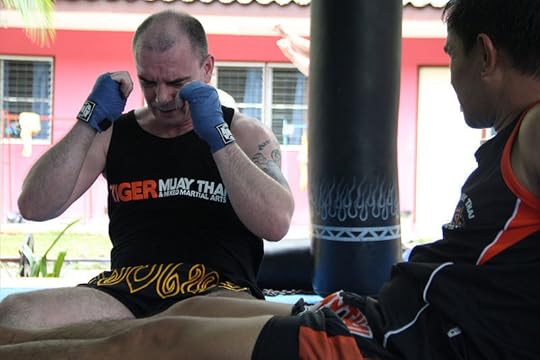
Week 23 of My Six Month Challenge to Become Fluent in Thai
I am now almost at the end of my six month challenge to become fluent in Thai, so it is a good time to evaluate the experience. I’m definitely pleased with my progress, and I don’t regret my decision to put so much effort into learning Thai, but I can also see that I made this more of a challenge than it needed to be.
Have I Achieved My Goal of Thai Fluency?
I like the idea of having ambitious goals because it gets me out of my comfort zone, and this is why I gave myself the target of fluency. Six months ago, I defined fluency as :
1. You can have a long conversation with a stranger on the phone without them realizing you are a foreigner
2. You are as comfortable reading a book in Thai as you are in English
3. You can talk in-depth about almost any subject you are interested in
I’m making good progress with number 3, and I’m well on my way to achieving number 2 (although I think reading Thai as comfortably as English might be unrealistic), but the pizza fiasco a couple of months ago shows I’m nowhere near achieving number 1. To be honest, I struggle speaking in English on the phone, and my hearing isn’t great due to years of listening to loud music with headphones, so maybe I’ll never achieve number 1.
Back in August, I redefined my goal of fluency as being able to make a video where I tell my life story in Thai. This is what I’ve been working on for the last few weeks, and I plan on releasing this video soon.
So, do I speak fluent Thai? I have made significant progress in recent months, but I wouldn’t class myself as fluent and maybe that’s a good thing – I love learning Thai now, a passion I’d lost before the beginning of this challenge, and I don’t want this journey to end.
Learning Thai Doesn’t Need to Be So Much of a Challenge
I developed the idea in childhood that if something comes too easily, it can’t be of much value. I enjoy the struggle, and this means I’m sometimes guilty of making things harder than they need to be.
My approach to learning Thai has been to see it as a challenge, and this has meant that I’ve needed to fight to make progress. I’ve pushed myself to study six hours a day, and I’ve bullied myself to keep going even when it is obvious I’m not absorbing information. The only thing I’ve been fighting has been myself, and it is an unnecessary and fruitless battle – I probably would have made the same amount of progress without pushing myself so hard. I need to stop seeing struggle as a good thing.
When I look at my progress over the last six months, I see that most of the improvements have happened despite me and not because of me. I remember the day when I walked out my door and effortlessly fell into a conversation with my neighbor – this was easy because I wasn’t trying to achieve anything at the time. There have also been so many occasions when I’ve been enjoying the process of learning and things have just clicked.
What Happens After the Challenge?
My six month challenge officially ends in a couple of weeks, but it is not really the end of anything. I will continue to devote a least an hour per day to learning Thai (mostly using the Glossika approach), and I plan to make a number of addiction videos in Thai. I’m also hoping to do the pratom six equivalency exam within the next few years.
I plan to post the video with my life story in Thai in about two/three weeks, and this will officially mark the end of my six month challenge.
Other posts in this series on learning Thai
Week 0- My Quest to Speak Fluent Thai in Six Months
Week 1 -Creating the Right Mental Conditions for Learning Thai
Week 2- Maybe Just Getting Out There and Speaking Thai is Not Enough
Week 3 – 5 Improvements in My Approach to Learning Thai
Week 4 – Generating Enough Passion to Learn Thai
Week 5 – Undoing the Damage from Speaking Thai Badly for Thirteen Years
Week 6 – Early Impressions of Glossika Thai Fluency Course
Week 7 – Introverts Can Learn Thai Too
Week 8 – Winning Strategy for Achieving Fluency in Thai
Week 9 – Thai Fluency in 10,000 Sentences
Week 10 – Problems with Staying Focused Prevent Me from Learning Thai
Week 11 – Importance of Cracking Thai Fundamentals
Week 12 – Painful Lessons while Ordering Pizza in Thai
Week 13- If I Can Become Fluent in Thai, So Can Anyone
Week 14 – How I Make Time to Study Thai
Week 15 – Redefining Fluency After Losing My Way While Learning Thai
Week 16 – My Learn Thai Fitness Challenge
Week 17 – Talking about Myself in Thai
Week 18 – No Need to Force Myself to Speak Thai
Week 19 – 5 Factors that Improve My Ability to Learn Thai
Week 21- Review of My Learning Thai Resources
October 22, 2014
The Story of How I Found Real Mindfulness in Thailand
I first started messing around with mindfulness when I was in my early teens. I’d always been a bit of a worrier, but my stress levels were off the scale back then because I was living in the midst of my parent’s marriage meltdown – it wasn’t a nice time, and there were many occasions when it felt as if the pressure would cause my head to explode.
The Limitations of My Teenage Mindfulness Practice
I found out about mindfulness though practicing martial arts (Lau Gar Kung Fu). Initially, I viewed it as an exotic state of consciousness, but as I started to focus more on the present moment, I realized it was a familiar state. I turned to mindfulness as a way to escape the shitty things happening at home – I would spend hours practicing martial art forms, and at those times I would be so focused on the movements that I wasn’t thinking about everything else. I also started meditating – I would experience strange states of consciousness that allowed me to escape my stressful reality.
My teenage mindfulness practice did help me cope, but it was more a type of escapism. I was focusing on the present moment, but in an overly selective way. As soon as the thoughts and feelings I didn’t like started to appear, I would become resistant and full of self-pity. I didn’t realize that mindfulness was more than just putting my focus on the present moment – it was also about accepting whatever was happening in the present moment without resistance.
I couldn’t practice martial art forms and meditation 24-hours a day, so I still felt overwhelmed by life much of the time. One night when I was fourteen years of age, I stole a bottle of vodka from my parent’s drink cabinet. I got so drunk that I vomited everywhere, but for a few hours, I felt free of the turmoil in my head. I’ve heard people claim how they became an alcoholic after their first ever drink, and I can believe that – or maybe it would be more accurate to say it was ‘love at first sight’.
The Mindless Years
I was a drunk for almost two decades. I went to my first rehab at age 18, I ended up homeless at age 25, and I was in and out of treatment programs like a yo-yo. I would return to mindfulness during my sober periods. During my mid-twenties, I stopped drinking for two year, and I took up tai-chi and intensive meditation, but I was just never able to achieve the state of mental freedom I was looking for –even though I had a particularly intense spiritual experience during this time. I still felt convinced the answer was mindfulness, but I just couldn’t make it work for me.
Finding Mindfulness in Thailand
I moved to Thailand in 2001, and I went through a strange few years of going on crazy drinking binges followed by trips to local Buddhist temples for meditation instruction – sometimes I would turn up drunk. In 2003, I went on a 28-day retreat at Wat Rampoeng, and I had my first real taste of what I had always been looking for. As part of their program, they have something called a determination where I was expected to meditate (walking and sitting meditation) for 72-hours without sleep or any other type of break.
After I completed the determination, I experienced an amazing state of mental freedom that lasted for a few days. It wasn’t so much that I was blissed-out or anything, I was just experiencing the world without judgments and resistance. The world hadn’t changed, but it was a completely different place for me – it was like I was seeing everything for the first time.
I drank again following Wat Rampoeng, but the fact that I had tasted what I was looking for meant it was only a matter of time before I quit for good. The next few years were pretty miserable until I managed to stop drinking for good at a temple called Wat Thamkrabok in 2006. The desire to drink completely disappeared during my stay at Thamkrabok.
Mindfulness and the Depression Years
My first five years as a non-drinker were amazing – it felt like I had the golden touch. I made mindfulness practice the cornerstone of my new life, and it felt like I was on this amazing spiritual journey where my life would just keep getting better and better. Then things started to fall apart. I had started a small business, and it seemed certain that it was about to go bust, and I’d be left with nothing. I became depressed, and I found it hard to even look at my wife and son because I felt so ashamed. The idea of drinking never entered my head, but the idea of jumping off a cliff did.
When the shit hit the fan, my mindfulness practice became ineffective. This is because my approach was still polluted by my teenage ideas about how I should be feeling – I understood the theory of accepting whatever was happening in the present moment, but in reality, I only wanted to be mindful of the nice stuff.
Things had to become incredibly painful for me before I was able to finally just be mindful. It was a Sunday afternoon, and I was hiding in the bedroom because I couldn’t face the world – I was basically wallowing in self-pity. It felt like there was this large stone in my stomach, and I just started to put my attention on it without judgment but with kindness. Then something amazing started to happen, the tension began to unravel and the racing thoughts in my head began to slow down.
I can now see that my episodes of depression were as a result of refusing to accept feelings of sadness. I had developed a conditioned response to resist this feeling, and this resistance pulled me deeper and deeper into depression. For me, the unpleasant feelings are like quicksand, and the more I resist them, the further I will be pulled down into them – real mindfulness is all about no longer resisting anything.
More Mindful in Thailand
I am still mindless most of the time, but I have periods every day when I am fully present, and these periods are happening more frequently and lasting for longer. I cherish all of these breaks into reality because it is the only time when I’m truly alive. I no longer fear negative emotions, and there is this pool of inner-peace that I can always tap into whenever I feel overwhelmed. I am now also in the privileged position of being able to teach mindfulness to other people dealing with addiction problems.
October 11, 2014
Review of My Learning Thai Resources
Week 21 of My Six Month Attempt to Learn Thai
My schedule for learning Thai went off the rails during the last 10 days. Last week, my niece come to stay with us, then I picked up a bad cold that put me out of action for 72 hours, and I also started a new job. To be honest, it was actually nice to take a break from studying, and it has put me in a better frame of mind for the last few weeks of this challenge.
I am now down to just two Thai learning activities. I’m using the Glossika with my exercise regime, and I’m preparing for my video. I’ve also cut the time I spend learning Thai down each day to just three hours (it was over five hours for most of the challenge) – I need to make this reduction because of my new work commitments. At the end of the challenge, I intend to continue with one hour of Thai per day.
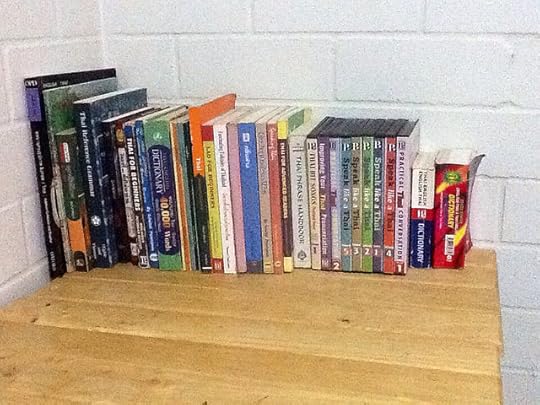
Seeing as there isn’t much to report back on my recent studies, I thought this would be a good time to talk about the resources I have been using. I’ve spent a fortune on Thai books and courses over the years, but here are the ones that I’ve been using during the last few months.
Pimsleur Thai
I first played around with Pimsleur Thai about six years ago, and I used it during the first week of this challenge just to practice my pronunciation. I do think it is a good course for beginners, but it’s a pity it doesn’t go much beyond the lower intermediate level. It uses an audio spaced-repetition system, and this is the approach I prefer, but I have found Glossika Thai (see below) to be far superior – although it probably isn’t a good option for complete beginners.
Cracking Thai Fundamentals
I would not have made as much progress during the early part of this challenge if it hadn’t been for the help of Stuart Jay Raj – they guy is a phenomenal teacher. I wish that I’d had access to his Cracking Thai Fundamentals course when I first started learning Thai because it would have made things so much easier for me. His course provides instruction on how to reproduce Thai sounds like a native speaker, and his instructions are easy to understand and easy to follow.
Benjawan Poomsan Becker Thai Learning Series
The Benjawan Poomsan Becker books were the first resource I used when I began learning Thai, and I still use them today. I found Thai for Advanced Readers to be perfect for practicing reading out loud, and I listen to the Speak Like a Thai
 in the car.
Learn Thai Podcast
The Learn Thai Podcast is another resource that I’ve been using for years, and it is most comprehensive course I’ve found – there is something for all levels of language learning. I love the video format and the fact that the material can also be downloaded as audio podcasts for when I’m on the go.
Glossika Thai
I feel so lucky that Glossika Thai became available right at the start of this challenge. It is the resource I’ve used most over the last few months. There are 3,000 audio sentences in this course, and I find the spaced-repetition approach to be the most effective for me. I’ve been creating my own audio sentences tracks, so I can continue with this approach even after I reach the end of the Glossika course (I’d like to have 10,000 sentences eventually).
Websites
I’ve also got a lot of help and encouragement from websites and social media groups including:
Farang Can Learn Thai Facebook Group
A Woman Learning Thai … and some men too
Thai Recordings
Pantip
Glossika Facebook Discussion Group
Other posts in this series on learning Thai
Week 0- My Quest to Speak Fluent Thai in Six Months
Week 1 -Creating the Right Mental Conditions for Learning Thai
Week 2- Maybe Just Getting Out There and Speaking Thai is Not Enough
Week 3 – 5 Improvements in My Approach to Learning Thai
Week 4 – Generating Enough Passion to Learn Thai
Week 5 – Undoing the Damage from Speaking Thai Badly for Thirteen Years
Week 6 – Early Impressions of Glossika Thai Fluency Course
Week 7 – Introverts Can Learn Thai Too
Week 8 – Winning Strategy for Achieving Fluency in Thai
Week 9 – Thai Fluency in 10,000 Sentences
Week 10 – Problems with Staying Focused Prevent Me from Learning Thai
Week 11 – Importance of Cracking Thai Fundamentals
Week 12 – Painful Lessons while Ordering Pizza in Thai
Week 13- If I Can Become Fluent in Thai, So Can Anyone
Week 14 – How I Make Time to Study Thai
Week 15 – Redefining Fluency After Losing My Way While Learning Thai
Week 16 – My Learn Thai Fitness Challenge
Week 17 – Talking about Myself in Thai
Week 18 – No Need to Force Myself to Speak Thai
Week 19 – 5 Factors that Improve My Ability to Learn Thai
October 10, 2014
Hope Rehab Thailand Review
I gave up alcohol at a detox temple called Thamkrabok, and this is the first destination I recommend to anyone considering Thailand as a venue for addiction treatment. It is a wonderful program, and I owe it my life. I also know from email exchanges with readers of my blog that this is not an option that appeals to everyone – I also realize there are some ex-patients who just weren’t able to get what they needed at Thamkrabok. To these people I would like to suggest Hope Rehab Thailand
Why Do I Recommend Hope Rehab Thailand?
I work part-time at Hope Rehab as a mindfulness coach, and this has given me the opportunity to assess the program and the facilities firsthand. My opinion is obviously going to be biased, but I am impressed by what they offer.
Simon Mott is the founder of Hope Rehab. I first met him a few months ago at his office in Sri Racha. I get cynical about the western approach to addiction, but he clearly explained the benefits of his program. I did try to be argumentative, but there was nothing he was saying that I could disagree with. Simon is not only an addiction expert, but also a recovering heroin addict – this isn’t just a job for him. The thing that most impressed me was his emphasis on mindfulness training because it is this more than anything else that has allowed me to build a wonderful life free of alcohol.
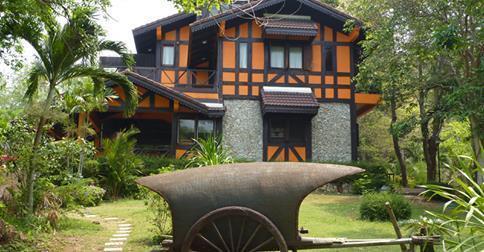
Hope Rehab is located in Sri Racha in a secluded area on a hill overlooking the sea – the clients have a nice spacious balcony where they can chill-out and admire the view. The amenities are similar to what you would see in a nice resort – there is a swimming pool, gym, meditation room, and landscaped gardens. It’s not like any rehab I ever went to. It feels a bit like a family because the therapists and clients eat and socialize together
Special Hope Rehab Deal for Readers of my Website
Simon Mott has agreed to give a special deal to readers of my website. If you can arrange your own flight, he will give you a discount of $1,500 on the listed price on their website ($9000). If you would prefer them to arrange your flight, you can still get a discount of $500.
Just contact me at info@paulgarrigan.com to find out more.
October 1, 2014
How to Use Mindfulness to Overcome Anxiety
“It started off with tightness in my stomach – a familiar sign that something is amiss. I then got hit by a torrent of negativity. I managed to keep things together in front of my wife and son, but it really did feel like my world was falling apart…my fears engulfed me. I felt on the verge of panic, and I wasn’t able to sleep – this led to deterioration in my concentration levels…”
This is an example of an episode in my life where I felt overcome by anxiety. I wrote about it a couple of years ago in a post called ‘I Will Not Allow My Life to Fall Apart’. At the time, it seemed certain that I was going be financially ruined, and I felt so guilty that I could barely look at my wife and son. I’d given up alcohol five years before this, and I’d assumed the bad days behind me, but this was equal to my worst days as a drunk. The thought of drinking never crossed my mind, but there were a couple times when I felt tempted to jump off a cliff to escape the mental torture.
I’m sure I would have had a complete breakdown, if I had not remembered to use mindfulness to deal with the situation.
“The stress of the last couple of weeks has caused so much internal tension that it feels like there is a huge lump of coal around my abdomen area. I spent a few hours last night just focusing my attention on this. I imagine that I’m massaging it and creating space for it. I believe that this tension has reached such a state because of my resistance. I’ve now stopped resisting it, and I’m just feeling it.”
By mindfully putting my attention on a physical sensation in my body, I was able to pull myself out of a pit of despair. It was an impressive demonstration of the power of this technique, and it left me in no doubt that mindfulness is the perfect tool for dealing with my anxiety.
What is Mindfulness?
I would describe mindfulness as being focused on the present moment without resistance or judgements. There is nothing magical about it, and it is not something that was invented by the Buddha or anyone else. Mindfulness is our natural state – it’s how young kids experience their world.
Mindfulness practice is a deliberate attempt to generate more mindfulness. There are lots of techniques for doing this, and the most popular approach in the west at the moment is Mindfulness Based Stress Reduction. It seems to be a fairly effective programme, but completing an 8-week course is no guarantee that we are going to be mindful when the shit hits the fan. I thought I knew all about mindfulness before my financial crisis, but I still suffered for weeks before I remembered to use it.
Becoming More Mindful
The problem with mindfulness practice is it can just become something I do. I went to martial arts classes for years, but as soon as I’m faced with real-life aggression, all that training is forgotten. Mindfulness practice can be the same unless it becomes part of who I am. This is why I practice mindfulness throughout the day by repeatedly bringing my attention to the present moment – the more I do this, the better my life becomes.
Most mindfulness programs use breath-focus meditation and body scan techniques for developing mindfulness. I’m not saying there is anything wrong with this, but I find it more effective to use moving meditation. The technique I prefer is Mahasati Meditation, and it was developed here in Thailand. It is performed with the eyes open, and it requires putting attention on physical movements of the arms. I find this makes it much easier for me to continue being mindful at the end of the session. (I intend to write a post in the near future explaining my reasons for why Mhasati meditation is a great choice for developing mindfulness).
It is important for me to remember that mindfulness practice is just a tool to encourage me to become more mindful. It is being mindful and not practicing mindfulness that is completely transforming my life for the better. Every time I bring my attention back to the moment, I rediscover the peace I’ve always longed for. The escape from anxiety I once believed could be found with alcohol is waiting for me every time I choose to be here right now.
Paul Garrigan's Blog

- Paul Garrigan's profile
- 3 followers

