Foster Dickson's Blog, page 75
September 1, 2016
September’s Southern Movie of the Month
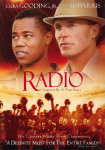 In honor of another football season in the Deep South, this month’s Southern Movie has to be the feel-good film of 2003: “Radio.” Based on a true story from Anderson, South Carolina, the movie stars Cuba Gooding, Jr. as a mentally challenged black man who loves small portable radios and Ed Harris as the white high school football coach who embraces the cause of this major underdog. To put it bluntly, “Radio” is basically a tear-jerker for dudes.
The film opens with the title character pushing his grocery cart along the railroad tracks, and he has to step aside as a train comes. It is 1976 in small-town South Carolina, so that’s normal enough. He then heads to the two-lane highway where he manages a joyride down the hill in his cart. As the man we will soon call Radio moves into town and along a fence, he sees football practice and stops to gander. We already know that this ambling, awkward man is not like the rest of us. And when he takes a football that has been kicked over the fence, despite the protestations of a player, the groundwork is lain for a change in fortunes.
It is late summer, and football season will start soon. Coach Jones is hard at work, watching film and drawing up plays, but his wife has to take a moment to give him a mild scolding about how he is neglecting his teenager daughter, who is entering her junior year. The busy coach can’t be bothered though, not with such trivial things.
The next time we see the team, practice has ended. Coach Jones notices Radio’s grocery cart sitting all by itself, and then a few boys catch his eye, horsing around outside the equipment shed. This odd circumstance requires that he go and check it out. As the boys proclaim shyly that nothing is going on, a rumbling in the shed says otherwise. Coach Jones and his assistant, Coach Honeycutt, find the mentally challenged man, tied up with athletic tape, quaking and sobbing in fear. Coach Jones cuts him loose, and the man runs for his life. The boys get off with a brief moralistic admonition, and the coach heads home to ponder their fate. (In typical coach fashion, his answer is to run the hell out of the them.)
From here, the plot builds around Coach Jones and his efforts to help the man they will call Radio. Despite the confusion of the whole community, including the gossipy men at the local barbershop and Radio’s mother who works long shifts at the local hospital, Coach Jones makes baby steps toward bringing Radio into the fold. First, the coach brings him in to help with practice and buys him a Whopper. Then, he gives him a ride home. Slowly, slowly, the quiet, fearful man opens up, as do the skeptical townspeople— except for the snide small-town banker, Frank Clay, who will be our villain.
Frank Clay’s beef with Coach Jones, though, is not about the coach or about Radio. His son is the star athlete of the town. Johnny Clay leads both the football team and the basketball team– and only winning will do, especially Clemson is considering him for a scholarship. Frank Clay and his son want championships. Yet, it is Johnny, with all of his vainglorious arrogance, who instigates the harassment of Radio. It was Johnny who put him in the shed, and it is Johnny who will trick him into going in the girls’ locker room during shower time. So it is Coach Jones who takes action against Johnny.
However, Frank Clay and his son are not Coach Jones only obstacles. The coach loses some support when Radio calls out to the opposing team about a super-secret reverse play, and even he knows that a five-and-five season is not OK with any of the people in town. Coach Jones also crosses a line when begins to bring Radio into the building during classes: a major safety concern says his principal and a major legal liability says the squirrelly bureaucrat from the school board. But Coach Jones knows that what he is doing is right . . . so sure that he sets up Coach Honeycutt to take Radio as an assistant with the basketball team after football season is over.
As we see the unlikely duo of Coach Jones and Radio ascend, drawing in more and more supporters, Radio suffers tragedy. First, as Radio is going house to house on Christmas day, giving away the many present he was given, the town’s new young cop arrests him and takes him to jail! The other officers quickly recognize him and call Coach Jones. That crisis is averted. But then his hard-working mother dies of a heart attack. Radio is devastated, and now Coach Jones’ must take on an even greater role in Radio’s life.
As “Radio” comes to close, all is put right in Anderson, South Carolina. Despite Johnny Clay’s mean tricks, he realizes that Radio is a true friend to the whole town and befriends the timid man at last. Though, his father is not so thoroughly redeemed. When Frank organizes an informal town hall meeting at the barbershop to discuss ridding the town of Radio’s deleterious influence, Coach Jones crashes the party. He tells the small gathering. who weren’t expecting him to be there, that he has gotten his priorities straight, that Radio has taught him more than he ever taught Radio, and that he will resign as head football coach.
However, his resignation must not have lasted long. In closing, “Radio” shows us the real people behind this fictional portrayal. We meet the real Radio, whose name is James Robert Kennedy, and the real Coach Jones, who both enjoyed a long and storied career in TL Hanna High School.
As a document of the South, “Radio” gives a glimpse into the importance of high school sports – and in particular, high school coaches – in our small towns. In these isolated places, where few opportunities exist, the possibility of a championship team is a great reason to have hope for the future generations. We haven’t won at anything yet . . . but we might! Maybe this year . . . maybe these boys . . .
And of the man, Radio, we see an underdog story. In The Air Conditioned Nightmare, Henry Miller wrote that the South was the last place in America where people were interesting. That’s because we don’t isolate or ostracize those people who don’t fit in. We let them walk among us in day-to-day life, and even though we may be cruel at times to our outsiders and freaks, we never refuse them the right to come out and participate like everyone else. As nuanced and complicated as that may be, there is truth in the story of Radio: even a mentally retarded man with the mind of child can become one small town’s most beloved eleventh grader.
Filed under: South Carolina, Teaching, The Deep South, The South



August 28, 2016
A writer-editor-teacher’s quote of the week #134
Now I am terrified at the Earth, it is that calm and patient,
It grows such sweet things out of such corruptions,
It turns harmless and stainless and its axis, with such endless successions of diseas’d corpses,
It distills such exquisite winds out of such infused fetor,
It renews with such unwitting looks its prodigal, annual, sumptuous crops,
It gives such divine materials to men, and accepts such leavings from them at last
– from section 2 of Walt Whitman’s poem, “This Compost”
Filed under: Gardening, Literature, Teaching, Writing and Editing



August 23, 2016
Listening: Margo Price’s “Midwest Farmer’s Daughter”
As a longtime fan of Saturday Night Live!, two aspects of the show are outrunning me, generationally. The first is the humor – the new cast have pinned their hopes on aimless stupidity and uncomfortable irony about race prejudice – and the other is the music. I finally accepted last season that I’m out of the show’s demographic now, and didn’t watch many whole episodes. In a cultural era wherein Kanye West is considered a “genius,” I’ve been consistently disappointed by the musical guests— except for the week they had Margo Price.
Price’s debut album, “Midwest Farmer’s Daughter,” came out earlier this year, in March, on Jack White’s Third Man Records. (Although Jack White looks what would happen if Robert Smith and Jello Biafra had a love child, he must have some sense about country music, since Loretta Lynn’s latter-day Van Lear Rose album is a damn fine one.) The album combines traditional country style with a sprinkling of other styles we know and recognize from the past: a little early ’70 R&B/Soul and even a twinge of the 1950s. But it’s the lyrics, the storytelling, and the gritty honesty that make “Midwest Farmer’s Daughter” a winner. Anybody whose sick of pop country’s tired plastic emptiness will find a reprieve here.
The album opens with the six-minute “Hands of Time,” a thoughtful little narrative that smacks of 1960s country-rock with vocals that reminded me immediately of a young Emmylou Harris. In the opener, Price sings about leaving home with a few dollars and old suitcase, but now wanting to get her family farm back and bring her mama home. However, the trappings of the nightlife and an affair with a married man gave her a “couple of babies” and stood in the way of her best-laid plans. In the song, we hear the musings of a woman who didn’t really seem to have ever had a chance, but is still trying to “make something honest with my own hands.” Wouldn’t it be nice just to turn back the hands of time?
In track two, “About to Find Out,” Price swings around and picks up the tempo. With a two-step beat and a some good ol’ twang, the lyrics this time are about letting some guy have it. This is a song to get up and dance to, and if you don’t have anybody dance with, you at least have to sing along.
Next, the album shift gears again. The drums thump and Price wails, “Let’s go back to Tennessee!” before the band kicks in joins her. Where track one is sentimental and track two is biting, this one is heavy. As I listened to “Midwest Farmer’s Daughter” through, it had become clear by the third track, Margo Price is versatile.
Track four is the lost-love song we’ve been waiting for on a classic country album: “Since You Put Me Down.” Price sings, “I killed the angel on my shoulder with a fifth of Evan Williams . . .,” and we know where this is going. Her man has left her for another woman, and what is there to do but weep . . . and drink.
After that one, I thought I had accidentally switched over Curtis Mayfield on shuffle, but it was just “Four Years of Chances,” an invective against unreliable men, which followed by “This Town Gets Around,” another invective – this one tongue-in-cheek – about the correlation between success in country music and sleeping with the right people. In the chorus, Price sings,
I can’t count all the times I been had.
Now I know much better than to let that make me mad.
I don’t let none of that get me mad.
From what I’ve found, this town get around.
About halfway through “Midwest Farmer’s Daughter,” I had fallen in love with Margo Price’s worldly sense of humor. As I listened, I couldn’t help but think that song after song was saying, Life is just plain hard, what’re ya’ gonna do? Heck, Margo, I don’t know . . . Get through it, I guess.
In “How the Mighty Have Fallen,” Price switches gears again, this time to 1950s doo-wop, but what follows that one is much stronger. “Weekender” is an old-school country number that whimsically strips bare the ugly realities of jail, who ends up there, and why. In one of the best songs on the album, Price channels the gritty social problems that result in short-term jail sentences and funnels them to us in a most unlucky form. The honesty here is heartbreaking and lovable and witty and darkly humorous— in short, it’s real.
The album’s first hit comes late, at track nine: “Hurtin’ (on the Bottle),” a rip-rarin’ number straight out of the tough bar scene of the 1970s. This is one of those songs that could be an instant classic. The way that Price belts out the first line – “I put a hurtin’ on the bottle!” – with the band breaking in is just as powerful as Conway Twitty’s “Hello darling . . . it’s been a long time . . .” What makes me sad for Margo Price is that country music establishment today has only a bare-ass hint of a clue what good country music actually sounds like.
To close out, Price goes quietly but not without consequence. The very short “World’s Greatest Loser” comes in at just over a minute long, and reminded me once again of classic Emmylou Harris, and the bonus track, “Desperate and Depressed” takes us out with an Americana twinge, tinkly dobro and all.
Maybe I’m a throwback. Call me a neophobe. Regard me as someone who is out of touch. But I’m far more interested in good music than in new music. Here’s the plain and simple truth: overly polished Luke Bryan may sell tickets, and squinty-eyed Kenny Chesney may describe places we’d rather be, but in a few years, we’re going to laugh at them like we laugh at Joe Diffie’s mullet. I really hate that acts like Margo Price (and Sturgill Simpson and Shovels & Rope) get less air play than cheesy, formula-driven acts like Jason Aldean or Toby Keith. Call me old-fashioned, but I expect music to be good.
And Margo Price is damn good. The qualities that the great female country singers of the past had – honesty, wit, charm, humor – are all there in Price’s music. Her lyrics are as true as “Stand By Your Man” or “Coal Miner’s Daughter” or “Love Hurts,” and they are built on classic American styles (that don’t include 1980s soft rock). While pop country fans spend their time arguing over which singer will be among People‘s Sexiest Man Alive, or wondering which one will be a guest judge on “The Voice,” the rest of us who actually like country music can dig in with some Margo Price.
Filed under: Music, Tennessee, The Deep South



August 21, 2016
A writer-editor-teacher’s quote of the week #133
[Austrian-British philosopher Karl] Popper had called it a “critical rationalism”: the belief that human knowledge was limited and fallible, and therefore any search for truth required the exercise of reason in an open-minded, collective effort without end. [Abdolkarim] Soroush noted that to believe the opposite – that there was such a thing as certain truth known to particular men – was to render some questions unanswerable, even unaskable. [ . . . ] Faith that came from open disputation and reason, Soroush believed, was far superior. Critical debate would make theology stronger and truer, while dogmatism would encourage demagoguery, opportunism, and greed.
Soroush believed that to be a critical rationalist was to be a pluralist, in matters of religion as well as philosophy. He argued that a true religion was one that pointed out the right path, but the same path was not right for every seeker; therefore, one religion might be true for one person, while a different religion was true for another. Soroush likened the prophets of the three monotheisms to trees in an orchard, each bearing different fruit.
For those who thrilled to his theories, Soroush liberated religion from the clergy, politics from religion, faith from prejudice, rational debate and criticism from theological dogmatism. If no one could claim to speak for God, there could be no religious grounds for silencing one another. [ . . . ] In Soroush’s pluralistic view, a self-confident culture was a dynamic and open one capable of recognizing the dazzling variety of its influences.
– from chapter five, “Expansion and Contraction,” in Children of Paradise: The Struggle for the Soul of Iran by Laura Secor
*The excisions that were made here and are marked by a [ . . . ] are intended to cull portions that relate to some specifics of this very complex narrative, which would not have made sense out of context. For those who might be interested in those specifics, Secor’s book is quite a good one, and I recommend reading it.
Filed under: Critical Thinking, Teaching, Writing and Editing


August 18, 2016
August’s Southern Song of the Month
I know that most people associate Lynyrd Skynyrd with “Sweet Home Alabama,” or maybe “Freebird,” but the band had a lot of good songs that never got radio play. While I debated on which song to pick for this month, wavering among “Things Goin’ On” and “Ballad of Curtis Loew” and “Swamp Music,” I settled on one that I can’t believe was never a hit: “All I Can Do Is Write About It,” from the 1976 album Gimme Back My Bullets, a song that addresses a Southerner’s love of place, love of nature, and disdain for suburban sprawl.
There’s not a lot to say about this song, because it says everything it’s going to. To my knowledge, it was never a hit or even a single, but it’s one of my favorite Skynyrd songs— and that’s enough for me.
Filed under: Music, Northern Florida



August 16, 2016
Why #ImWithHer
Twenty four years ago this month, I turned 18 and became eligible to vote, and I have distinct memories of Bill Clinton mobilizing my generation into caring about politics. That year, George HW Bush was running for a second term and during a reluctant interview on the back of a train car with MTV’s Tabitha Sorenson the elder Bush made it clear what he thought of us: young people don’t matter because they don’t vote. Clinton won that 1992 election, clinching nearly half of the 18–24 vote, with Bush and Ross Perot splitting the other half. Though I wasn’t much into our new First Lady Hillary Clinton back then – frankly, I was a little suspicious of her, considering the PMRC shenanigans put on by Vice President Gore’s wife Tipper – I remember her gaining national attention quickly when she led the universal-healthcare effort.
In the early to mid-1990s, I paid attention to those efforts because I was one of the people who lacked adequate healthcare coverage. As a child of divorced parents, I was off of my dad’s health insurance the day I turned 19— in 1993. So when Hillary Clinton began work on crafting a universal healthcare system that same year, she was trying to help people like me: my mother was a hard-working single mom, and I worked a part-time job and lived at home while I went to college. Truth be told, with the exception of periods when I had an emergency-coverage plan, I went without health insurance from 1993 until 1998, then again for short periods from 1998 until 2003, when I began teaching. During that ten-year stretch, had I gotten really sick or badly hurt, I’d have been screwed, especially since I worked mostly manual labor jobs. So when Hillary Clinton and those who spoke before her at the Democratic National Convention said that she has been working to help disadvantaged people for decades, I knew that to be true. She may not have won that time, but she did get in there and fight.
Because she gained national attention first as a spitfire of a First Lady, Hillary Clinton’s opponents love to connect her to her husband’s political life, so I want to remind readers that Bill Clinton did two important things in the 1990s: he achieved budget surpluses for five of his eight years, and he raised taxes on the wealthiest Americans. As Bernie Sanders likes to put it, he had multimillionaires to “pay their fair share.” While their opponents continue to demonize both Bill Clinton and his wife for an array of grievances, even fiscal conservatives who disdain the federal deficit have to recognize that Bill Clinton’s economic policies worked better in that area than the policies of either Bush I or II. Right now, we need economic policies that reduce federal deficits and drive job growth. Bill Clinton – the potentially first First Man – has a proven track record of doing both.
Back to Hillary Clinton herself: most First Ladies disappear from the public eye after their husbands leave office, but not Hillary. After Bill Clinton left the White House in 2000, she was elected to be a US Senator from New York in 2001 and served in that role until 2009. Even though she lost in the 2008 Democratic primary to Barack Obama, when he took office, Obama had the wherewithal to include her in his administration as Secretary of State. When Barack Obama spoke at the 2016 DNC, he said that no one – no one – is more qualified to be the President than Hillary Clinton. And that is true. Some presidents come into office having served as governors or in Congress, but no one running today has Hillary Clinton’s range of experience. Sixteen US senators have been elected President before her, and six Secretaries of State have become president, but having served as both . . . in this election, she’s it. (By contrast, her main opponent has no experience in any public office at all.)
And since we’re voting for the presidency, not for the prom court, I’m not worried who makes the best snappy smart remarks to play the crowd. I’m supporting a person who has been around Washington, who has worked in many different roles on many different projects and with many different people, and who has a proven track record of working hard to help ordinary people. That’s why #ImWithHer. (Personally, I’m barely influenced by the fact that she’s a woman, though I do agree that it’s high time that we broke that “glass ceiling.” I’m more interested in having a good president than having a female president, and it’s coincidental for me that Hillary Clinton will be both.)
About the common criticisms of Hillary Clinton, here’s how I answer them.
Though some ordinary Americans repeat the tired claim that Hillary Clinton is untrustworthy, I say that many of those nay-sayers probably don’t understand why they think that. The simple fact is: most Americans don’t understand politics, and thus base their opinions on gut reactions to news clips and conversations with equally uninformed friends. I will admit freely that I don’t have much of a grasp on foreign policy, but I’ve had conversations with people who didn’t even know what country Benghazi is in, much less what happened at the US embassy there. I would bet that most Americans don’t know why her private email server might be a problem. About those controversies, let’s be frank: the woman was investigated both by Congress and by the FBI, and she was not indicted, charged, or even censured; in a country where a person is innocent until proven guilty, the issues were investigated by powerful entities and are now over. The people who are keeping those scandals going are people who refuse to accept those conclusions.
Second, Hillary Clinton has been active in American politics since the 1970s, and when you’re engaged in something as messy as national politics for that long, you’re going to have some dirt (and some blood) on your hands. This woman has been making powerful enemies for three decades. She forced a debate on universal healthcare in the 1993 – something that insurance companies and many doctors opposed – and she proclaimed at the UN in 1995 that “women’s rights are human rights,” which flew in the faces of sexists and misogynists. And she didn’t stop there. She kept going in the 2000s and the 2010s, and has aligned herself with America’s first black president, a man whose every move has been opposed by certain factions. The fact that she’s not only still standing, but has continually ascended, despite her detractors’ unceasing efforts to derail her, and despite her championing difficult causes, shows a tenacity and a vigor that that is incredibly rare. That’s why #ImWithHer.
I want a tough President who knows both the game and the players and who has plenty of experience in both domestic and foreign policy. I don’t want an “outsider” with no political experience, because our country can’t afford to have a President that learns as he goes. Do I trust Hillary Clinton? Yes. Is Hillary Clinton a saint? No. But she’s not running for saint. She’s running for president.
Even if a person views this election as a lesser-of-two-evils scenario, I believe that Hillary Clinton is still the right choice. Donald Trump is, as President Obama put it, “unfit to serve” by any measure: he has no political experience, and he is tactless and crude. Moreover, about being untrustworthy, in an August 7 piece in The New York Times titled “Clinton’s Fibs vs. Trumps Huge Lies,” Nicholas Kristof wrote this about each candidate’s propensity for falsehoods:
One metric comes from independent fact-checking websites. As of Friday, PolitiFact had found 27 percent of Clinton’s statements that it had looked into were mostly false or worse, compared with 70 percent of Trump’s. It said 2 percent of Clinton’s statements it had reviewed were egregious “pants on fire” lies, compared with 19 percent of Trump’s. So Trump has nine times the share of flat-out lies as Clinton.
For those who preferred Bernie Sanders and wanted him to be the nominee— he lost. That’s what happens in elections: one person wins, and everyone else does not. And Hillary Clinton’s ideas are so much closer to what Bernie Sanders proposed than what we would get if the Republican candidate wins. Sanders himself said so in an LA Times op-ed on August 5.
The rhetoric of political campaigns is regrettably nasty. That’s not new. The Democrats’ donkey mascot originated in the 1828 election when Andrew Jackson’s detractors called him a jackass. Because of the nature of American democracy, one of the best ways to convince the unwashed masses to side with a candidate is to make the other candidate so unappealing that there’s only one choice left, thus we get “Crooked Hillary.” Who in their right mind would vote for a candidate who is crooked, right? But Donald Trump is banking on people thinking no deeper than that— Trump is running on the idea that we will yield to sensationalism, name-calling, and bullying. (He took last week to claiming that Barack Obama and Hillary Clinton are the “founders of ISIS.”) What each voter has to do, especially those of us walking-around folks don’t have access to classified information about a crisis at a US embassy in Libya, is pay attention, really listen to what is being said by each candidate, and think critically about whether it makes sense. I’d like to think that I’ve done that, which is why #ImWithHer.
*As a sad corollary here, even though I intend to vote for Secretary Clinton, I understand what my vote means in the context of electoral politics. Her opponent, Donald Trump, will likely win the state of Alabama, thus claiming our nine electoral votes. However, that won’t stop me from casting my one little popular vote for the candidate who I believe will make the best president. I hope all Americans will do the same thing, especially those stolid supporters of our nation’s “third parties.” Voting is a privilege, and democracy is best served when each and every one of us genuinely makes our choice from among those on the ballot.
If you disagree with what I wrote here, don’t bother saying so in the comments below. Instead, say so in the voting booth in November. Rather than bickering with each other, let’s see if we can have 100% voter turnout, and elect the president – with all of his or her imperfections – that the true majority of Americans want to have.
Filed under: Critical Thinking, Multiculturalism, Social Justice



August 14, 2016
A writer-editor-teacher’s quote of the week #132
We know it is a matter of association and sympathy, not reasoning and examination; that hardly a man in the world has an opinion upon morals, politics or religion which he got otherwise than through his associations and sympathies. Broadly speaking, there are none but corn-pone opinions. And broadly speaking, corn-pone stands for self-approval. Self-approval is acquired mainly from the approval of other people. The result is conformity. Sometimes conformity has a sordid business interest – the bread-and-butter interest – but not in most cases, I think. I think that in the majority of cases it is unconscious and not calculated; that it is born of the human being’s natural yearning to stand well with his fellows and have their inspiring approval and praise— a yearning which is commonly so strong and so insistent that it cannot be effectually resisted, and must have its way.
– from “Corn-pone Opinions” by Mark Twain, re-published in The Best American Essays of the Century, edited by Joyce Carol Oates and co-edited by Robert Atwan
Filed under: Critical Thinking, Teaching, Voting, Writing and Editing



August 11, 2016
Forthcoming
With the summer behind me now, the remaining months of 2016 will be busy ones. The 2016–2017 school year, which is my fourteenth year in the classroom, began yesterday. I will be teaching four levels of creative writing magnet classes, one section of English 12, and one creative writing elective class again this year. And I’ve already been up to the school, cleaning up the School Garden since the grass and weeds have had couple weeks to undo our work to date. My students and I will continue some of our longstanding projects, like interviewing artists at the Kentuck Festival of the Arts and putting on a sketch comedy show, but we’re also going to do some new things too, most notably our new blog, newsprung: art, writing, gardening, education.
The summer was a good and fun and productive one. We managed to lounge around Lake Martin a good bit and to get out to Texas on vacation – to see The Alamo, to spend a day at the Schlitterbahn water park, and to have a drink or two with an old friend at The Esquire – but I did some work, too. I read The Lexicographer’s Dilemma by Jack Lynch, The Great Divorce by CS Lewis, Seamus Heaney’s translation of Beowulf, and the first section of Clear and Simple as the Truth by Francis-Noel Thomas and Mark Turner, as well as a smattering of the essays in Joyce Carol Oates’ collection of The Best American Essays of the Century, in John Jeremiah Sullivan’s Pulphead, and in Daphne Merkins’ The Fame Lunches. More recently, I’ve begun reading Laura Secor’s book on Iran, Children of Paradise, and am about two hundred pages into it.
Though I had planned on finishing my book on the Whitehurst Case this month, the pace of the interviews just didn’t allow for that. There were some people who I couldn’t seem to pin down with a date and time, and of course, those elusive case files . . . but I’ll have the manuscript done by the fall. I know now what I’m working with, so that sense of finality in the research portion of the book will give me the ability to work only on the writing and revisions that will tell the story in the best possible way. My understanding is that a publication date will be in 2017, but of course, NewSouth Books can’t name a date until I finish the darn thing! As the old saying goes, the ball is in my court.
In addition to teaching at the high school and finishing my book, I will also return to two other duties that I volunteered for last school year: teaching Sunday school at St. Bede Catholic Church, and representing my daughter’s school at the Montgomery County Council of PTAs.
During the last week of October, I will be presenting at the Arts Schools Network conference in Dallas. The conventions these is Partnerships, which are the bread and butter of my teaching and writing work. My talk will center on how a teacher has to know the community, the place, and the people before taking his or her students to engage in a real-world scenario. An ill-prepared teacher trying to do community-centered work with students can cause a lot of damage; to be a guide for students, a teacher has to know the way. I don’t know yet which day I will be presenting, but I’m sure that the conference schedule will be posted soon.
Finally, I’m stoked about the upcoming elections, and though I’m trained as a poll watcher and have done that in the past, I haven’t been asked to work the polls for the November elections. We’ll see. I’ve typically worked summertime primaries, when I’m off from school, but it would be exciting to work the polls for a presidential election.
Now . . . it’s time to get back to work. My creative writing students are taking their summer reading tests tomorrow, so there are already papers to grade . . . three days in.
Filed under: Arts, Catholicism, Civil Rights, Education, Forthcoming, High School, Literature, Local Issues, Race, Social Justice, Teaching, The Deep South, Writing and Editing



August 9, 2016
The power of social media
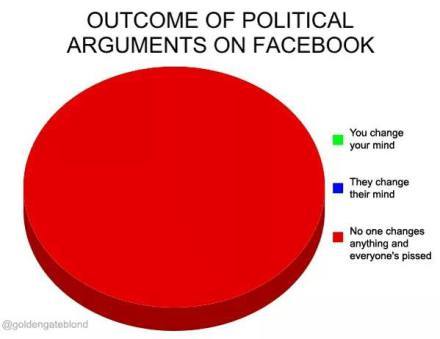
This utterly brilliant (and true) pie-chart infographic from @goldengateblond showed up on my Facebook feed, and I had to share it.
Filed under: Critical Thinking, Random



August 7, 2016
A writer-editor-teacher’s quote of the week #131
Those week’s quote is in honor of back-to-school:
Is this not what we ask from a teacher, to provoke us to invent ideas?
– from the “Introduction to the 1985 Edition” of How to Write a Thesis by Umberto Eco
Filed under: Critical Thinking, Education, Teaching, Writing and Editing