Radhanath Swami's Blog, page 27
June 8, 2015
Tuesday Night Sanga at The Bhakti Center, NYC
Radhanath Swami will speak and lead kirtan as part of the Tuesday Night Sanga program at The Bhakti Center, NYC.
More details at http://bhakticenter.org/tuesday-night-sangha/
Date: June 23, 2015
Time: 6:15 pm to 8:00 pm


Tuesday Night Sanga at The Bhakti Center, NYC
Radhanath Swami will speak and lead kirtan as part of the Tuesday Night Sanga program at The Bhakti Center, NYC.
More details at http://bhakticenter.org/tuesday-night-sangha/
Date: June 16, 2015
Time: 6:15 pm to 8:00 pm
June 3, 2015
Program at ISKCON DC
Radhanath Swami will lead kirtan and deliver a lecture at ISKCON DC.
Address: 10310 Oaklyn Dr, Potomac, MD 20854
Date: June 9, 2015
Time: 7pm – 9:30pm
Contact:info@iskconofdc.org / (301) 299 – 2100
Sacred Sounds Program
Sacred Sounds with HH Radhanath Swami
Address: 1308 Patuxent Dr, Ashton, MD 20861
Date: June 8, 2015
Time: 7pm -9:30pm
Contact: vinvanodia[@]gmail.com for more information
Bhakti Yoga Retreat – Washington DC
Radhanath Swami will participate in a Bhakti Yoga Retreat – details as follows:
Date: June 5-7, 2015
Address: Sevenoaks Retreat Center, VA (http://sevenoaksretreat.org/)
Note: Registration Closed
May 25, 2015
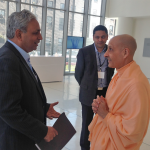
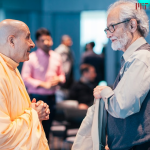
Radhanath Swami Addresses the MIT University India Conference
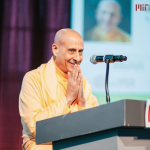
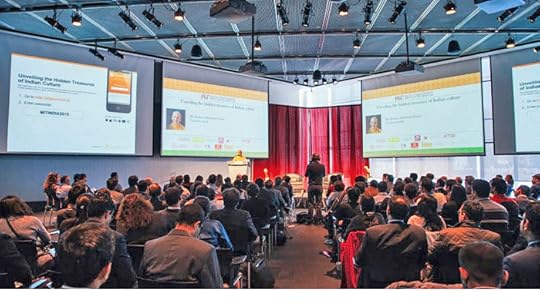 On May 2, 2015 the graduate students of MIT University in Cambridge, Massachusetts hosted one of the largest India conferences in the US. The MIT India conference, in its 11th year, has established itself as an important forum for leaders in industry, academia, and policy to discuss current issues and future innovations in the context of India, in the region and abroad. Radhanath Swami was invited as a distinguished speaker to participate in MIT India conference.
This year the conference brought together business leaders, government officials, spiritual leaders, philanthropists and many other professionals to engage in a conversation about leading business and socio-economic opportunities and challenges in one of the world’s largest economies.
Radhanath Swami began his talk on the topic “Unveiling the Hidden Treasures of Indian Culture“ be telling his extraordinary story, beginning from a trip to Europe with a friend. Swami travelled abroad as a young man, often hitchhiking, through Europe, Turkey, Iraq, Afghanistan and Pakistan, finally reaching India. When he was allowed to enter India he immediately felt at home and as if his own mother was embracing him.
In his quest of finding the purpose of life and answers to some important questions he studied Judaism, Islam, Buddhism, Christianity and various sects of Hinduism. He visited the caves of the Himalayas and eventually transformed from a young seeker to an ascetic. He recounted his interactions and relationship with his parents during his expedition and later as a renounced monk in the Krishna-bhakti tradition. His parents did not understand what he was doing until they went to India and experienced the spiritual culture and hospitality of Indian people. When his mother passed away, his siblings and father decided to cremate her and spread her ashes in the sacred rivers of India. When Swami immersed her ashes in river Ganges, in the presence of two thousand Krishna devotees, he said, “I was crying that the mother of my biological physical birth is now uniting with the mother of my spiritual birth, Mother Ganges, Mother India. To me that integration of our body, mind, and heart aspirations was so meaningful and so significant.”
Radhanath Swami mentioned an interview his spiritual teacher, Srila Prabhupada, had with a London journalist in 1969. Asked about the purpose of his visit to London, Srila Prabhupada replyed that the British ruled over India for almost two centuries and took away many valuables, forgetting the most valuable treasure – the spiritual culture of India. He had returned to England, giving it to them for free.
In his exposition, Rahanath Swami pointed out the essence of all spirituality by reciting and explaining the Bhagavad Gita’s Text 5.18. At schools, colleges and universities throughout the world we seek technical knowledge, but this is the foundational knowledge that actually brings real meaning and inner prosperity to our lives – the ability to see every living being with equal vision, whether one is Hindu, Muslim, Jain, Jew, Christian, Zoroastrian, or Buddhist; whether one is agnostic, atheistic, black or white; whether one is male or female’ whether one is rich or poor; whether one is human or elephant or cow or dog or cat, wherever there is life, it is sacred. When we understand the sacredness within ourselves, then we can naturally appreciate it wherever the life exists. To love God is not just a concept, it is expressed through compassion and the larger the sphere of our compassion, the deeper our love grows for each other.
Radhanath Swami also shared his thoughts on simple living and high thinking. “Simple living and high thinking is not about what we have or what our position is – it is about having a simple well-wishing heart. Simple living and high thinking means whatever knowledge, influence, skills or any other possession we have should be utilized with compassion and not with arrogance or envy. We are not proprietors of anything but caretakers and should use our possessions, especially our knowledge, with the sense of true responsibility to each other.”
As he wrapped up his talk, Radhanath Swami emphasized that our character is the most important principle of the legacy that we can pass down to the generation. “We can’t do that unless we embrace it in our lives. Everybody is ultimately looking for happiness, if we do not find happiness within ourselves then we cannot find it anywhere else. Real knowledge or science is finding that happiness and peace within us. For thousands of years people from all over the world have gone to India, to find that hidden treasure that is actually within us.”
In conclusion, Radhanath Swami said if we can somehow or other keep hold of that foundational culture – to be connected to our true self, to be instrument of compassion with whatever we do, we can truly make a wonderful difference in the world.
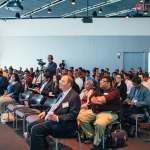
His speech was well received by the audience of 300 intellectuals from different disciplines and cross sections. The event included an array of eminent panel speakers such as Shiv Shankar Menon – an Indian diplomat, Nikhil R. Meswani – Executive Director and a Board Member of Reliance Industries, Sanjay Kirloskar – Chairman and MD of Kirloskar Brothers Ltd, Dr. Yatindra Prashar – CEO of Symmetrix Pharmaceuticals, CP Gurnani – CEO and MD of Tech Mahindra, Neeraj Singhal – Head of Expansion for India and the Subcontinent at Uber, Rishi Jaitly – India Market Director at Twitter Inc, Srikanth Nadhamuni – CEO and Co-Founder of Khosla Labs, Dr. Isher Judge Alhuwalia – Chairperson, Board of Governors (ICRIER) and many luminaries from business and academic world.

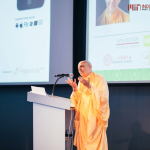
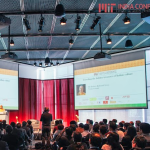
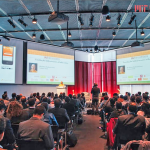
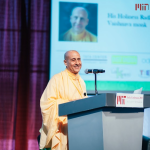
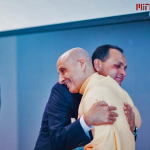
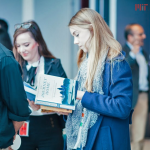
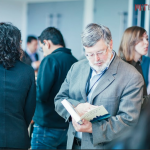
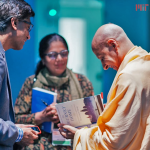
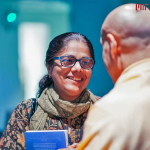
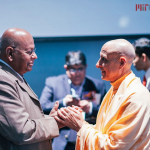
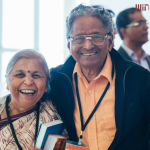
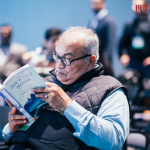


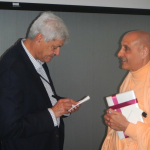
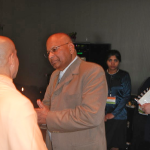
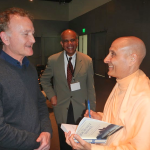
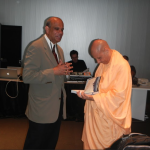
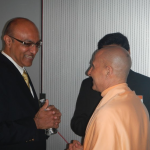
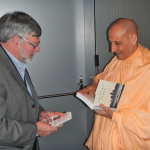
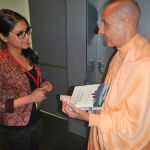
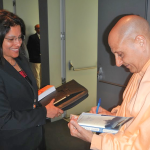
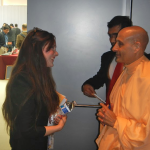
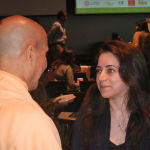
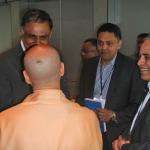
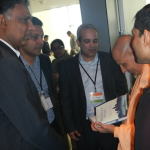
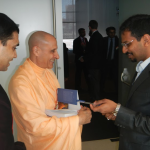
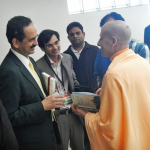
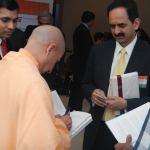
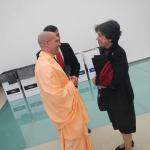
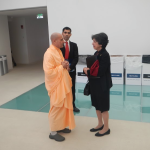
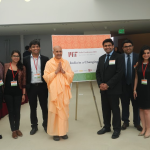
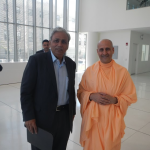
Radhanath Swami Addresses the MIT India Conference
On May 2, 2015 the graduate students of MIT University in Cambridge, Massachusetts hosted one of the largest India conferences in the US. The MIT India conference, in its 11th year, has established itself as an important forum for leaders in industry, academia, and policy to discuss current issues and future innovations in the context of India, in the region and abroad. Radhanath Swami was invited as a distinguished speaker to participate in MIT India conference.
This year, the conference brought together business leaders, government officials, spiritual leaders, philanthropists and many other professionals to engage in a conversation about leading business and socio-economic opportunities and challenges in one of the world’s largest economies.
Radhanath Swami began his talk on the topic “Unveiling the Hidden Treasures of Indian Culture“ be telling his extraordinary story, beginning from a trip to Europe with a friend. Swami travelled abroad as a young man, often hitchhiking, through Europe, Turkey, Iraq, Afghanistan and Pakistan, finally reaching India. When he was allowed to enter India, he immediately felt at home and as if his own mother was embracing him.
In his quest of finding the purpose of life and answers to some important questions, he studied Judaism, Islam, Buddhism, Christianity and various sects of Hinduism. He visited the caves of the Himalayas and eventually transformed from a young seeker to an ascetic. He recounted his interactions and relationship with his parents during his expedition and later as a renounced monk in the Krishna-bhakti tradition. His parents did not understand what he was doing until they went to India and experienced the spiritual culture and hospitality of Indian people. When his mother passed away, his siblings and father decided to cremate her and spread her ashes in the sacred rivers of India. When Swami immersed her ashes in river Ganges, in the presence of two thousand Krishna devotees, he said, “I was crying that the mother of my biological physical birth is now uniting with the mother of my spiritual birth, Mother Ganges, Mother India. To me that integration of our body, mind, and heart aspirations was so meaningful and so significant.”
Radhanath Swami mentioned an interview his spiritual teacher, Srila Prabhupada, had with a London journalist in 1969. Asked about the purpose of his visit to London, Srila Prabhupada replyed that the British ruled over India for almost two centuries and took away many valuables, forgetting the most valuable treasure – the spiritual culture of India. He had returned to England, giving it to them for free.
In his exposition, Rahanath Swami pointed out the essence of all spirituality by reciting and explaining the Bhagavad Gita’s Text 5.18. At schools, colleges and universities throughout the world we seek technical knowledge, but this is the foundational knowledge that actually brings real meaning and inner prosperity to our lives – the ability to see every living being with equal vision, whether one is Hindu, Muslim, Jain, Jew, Christian, Zoroastrian, or Buddhist; whether one is agnostic, atheistic, black or white; whether one is male or female’ whether one is rich or poor; whether one is human or elephant or cow or dog or cat, wherever there is life, it is sacred. When we understand the sacredness within ourselves, then we can naturally appreciate it wherever the life exists. To love God is not just a concept, it is expressed through compassion and the larger the sphere of our compassion, the deeper our love grows for each other.
Radhanath Swami also shared his thoughts on simple living and high thinking. “Simple living and high thinking is not about what we have, what our position is; it is about having simple well-wishing heart. Simple living and high thinking means whatever knowledge, influence, skills or any other possession we have should be utilized with compassion and not with arrogance or envy. We are not proprietors of anything but caretakers and should use our possessions especially our knowledge with the sense of true responsibility to each other.”
As he wrapped up his talk, Radhanath Swami emphasized that our character is the most important principle of the legacy that we can pass down to the generation. “We can’t do that unless we embrace it in our lives. Everybody is ultimately looking for happiness, if we do not find happiness within ourselves then we cannot find it anywhere else. Real knowledge or science is finding that happiness and peace within us. For thousands of years people from all over the world have gone to India, to find that hidden treasure that is actually within us.”
In conclusion, Radhanath Swami said if we can somehow or other keep hold of that foundational culture – to be connected to our true self, to be instrument of compassion with whatever we do, we can truly make a wonderful difference in the world.
His speech was well received by the audience of 300 intellectuals from different disciplines and cross sections. The event included an array of eminent panel speakers such as Shiv Shankar Menon – an Indian diplomat, Nikhil R. Meswani – Executive Director and a Board Member of Reliance Industries, Sanjay Kirloskar – Chairman and MD of Kirloskar Brothers Ltd, Dr. Yatindra Prashar – CEO of Symmetrix Pharmaceuticals, CP Gurnani – CEO and MD of Tech Mahindra, Neeraj Singhal – Head of Expansion for India and the Subcontinent at Uber, Rishi Jaitly – India Market Director at Twitter Inc, Srikanth Nadhamuni – CEO and Co-Founder of Khosla Labs, Dr. Isher Judge Alhuwalia – Chairperson, Board of Governors (ICRIER) and many luminaries from business and academic world.
May 16, 2015
Edward Mortimer
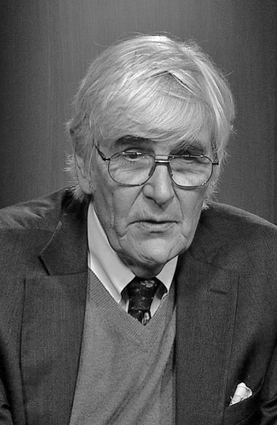 “The Journey Home is an extraordinary story of how a Jewish boy from 1950s Chicago migrated through the counterculture of the early 70s in search of his inner self, and emerged as an outstanding Hindu thinker and spiritual leader. Worth reading no matter what your own starting-point or destination may be.” Edward Mortimer CMG,
Edward Mortimer CMG is the former Director of Communications in the Executive Office of the United Nations Secretary-General. He is an author, journalist, and fellow of All Souls College Oxford.
May 15, 2015
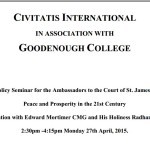
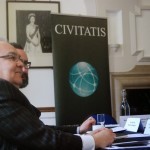
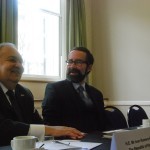
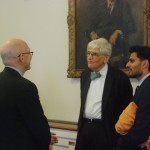
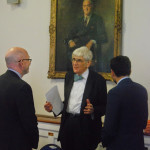
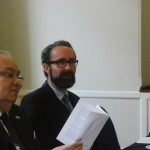
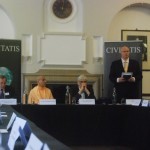
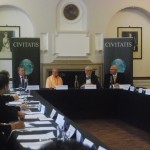
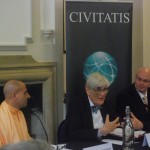
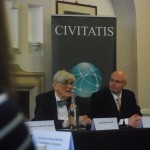
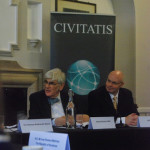
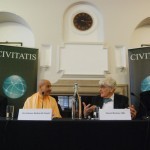
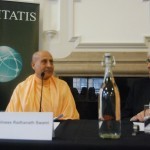
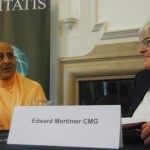
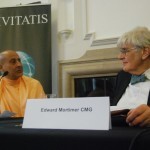
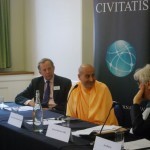
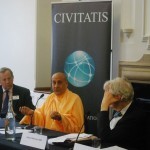
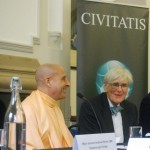
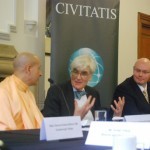
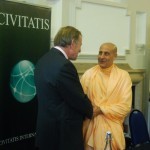
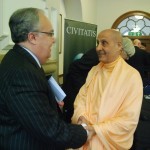
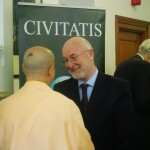
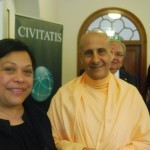
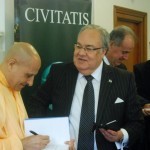
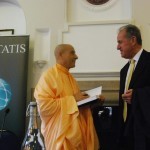
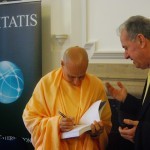
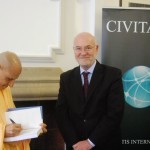
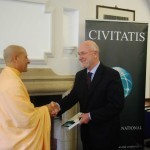
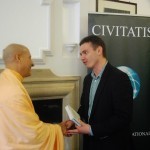
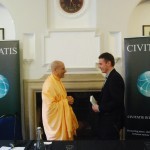
Radhanath Swami Discusses “Peace and Prosperity in the 21st Century” Before International Ambassadors
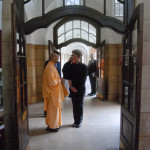
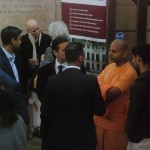
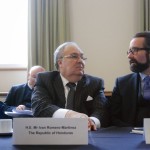
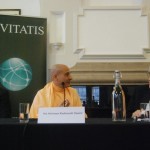
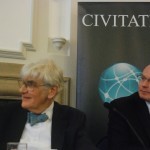
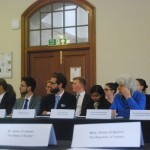
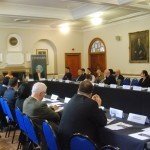
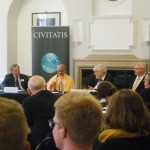
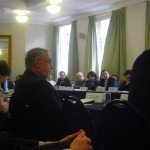
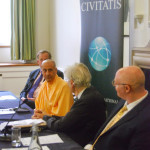
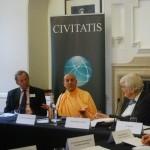
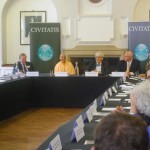
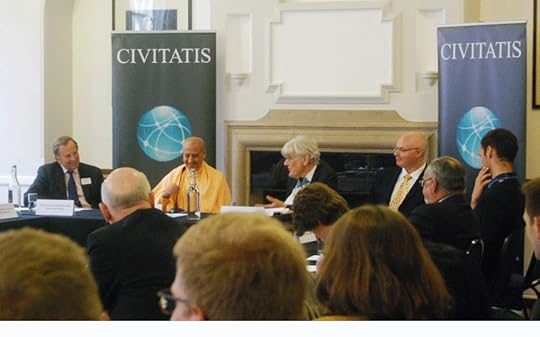 On the 27th of April, 2015, Radhanath Swami was interviewed at Goodenough College in London on the topic “Peace and Prosperity in the 21st Century” as part of a dedicated international forum for the promotion of peace and cooperation between nations. The event was attended by more than one hundred esteemed guests, including lords, professors and thirty-seven plenipotentiary representatives and ambassadors of various nations. All were eager to hear the unique perspective of a globally renowned spiritual leader of the 21st century.
The event began with a warm welcome for Radhanath Swami from the Director of Goodenough College, Major General Andrew Ritchie CBE. The interview itself was conducted by the preeminent author, journalist and fellow of All Souls College Oxford, Edward Mortimer CMG. With his wealth of experience as a Director of Communications in the Executive Office for the United Nations Secretary-General and as a former columnist and leader writer for the Financial Times, Mr Mortimer was well equipped to ignite from the Swami his wholesome perspective on the topic of international harmony in the stormy climate of the modern age.
Radhanath Swami responded to a wide range questions, extolling the practical virtues of spiritual knowledge in a modern context. He emphasized the inherent prosperity of love and internal peace, key tools in the cultivation of global peace and cooperation. He called upon the wisdom of sages of bygone ages and the modern era alike, citing both Mother Teresa and ancient books of knowledge such as the Bhagavad-gita. In response to a query regarding world conflicts and discrimination he shared from the Gita a verse which argued that true wisdom is not a function of information but rather the capacity to see all beings equally, and that true maturity was not measured by one’s ability to tolerate differences but rather one’s capacity to respect and appreciate them. This remained a prominent theme in the Swami’s responses.
The natural rapport between Radhanath Swami and Edward Mortimer was captivating to witness, and the audience deeply appreciated the Swami’s unwavering conviction that international peace was not merely a dream but an accessible reality that could be achieved through the assimilation of essential spiritual truths. The evening ended with heartfelt appreciation and renewed inspiration for all, with a number of state representatives inviting Radhanath Swami to be their guest in their respective countries.