Radhanath Swami's Blog, page 18
January 11, 2016
On Fear
Fear is the most prominent human quality. Its either behind the scenes or very much in front motivating people in so many ways. Fear of disappointment, failure, disease, death, poverty – and the more you have the more you have to fear losing. But if we just pray to our mind to take shelter of Krishna, this beautiful cowherd boy who charms us into the realm of love beyond the temporary conditions of this world, then we become fearless.
When we recognize the beauty of God and love God, then we actually see that loving beautiful hand behind every situation. And that doesn’t make us hard hearted, it makes us very soft hearted on every level – body, mind and soul. It equips us to serve people in the highest most comprehensive way. Not only to resolve the suffering of the physical and mental state, but to help people to resolve suffering forever, so that they can see through the lens of truth that the soul is eternal and nothing can destroy it.
Even in this world, where there is danger at every step, our nature is to find complete shelter and complete happiness in remembering Krishna. In this age of Kali Yuga Krishna has made himself so available to everyone and anyone, whoever we are, by chanting the holy names. Krishna is non different from his name and He has given us complete love and shelter in his name. If we love God we will understand that even the fear will be an incentive to help us to love and to be instruments to help others to love. – Radhanath Swami


January 4, 2016
I Find No Greater Pleasure, No Greater Wealth, Than the Opportunity To Serve
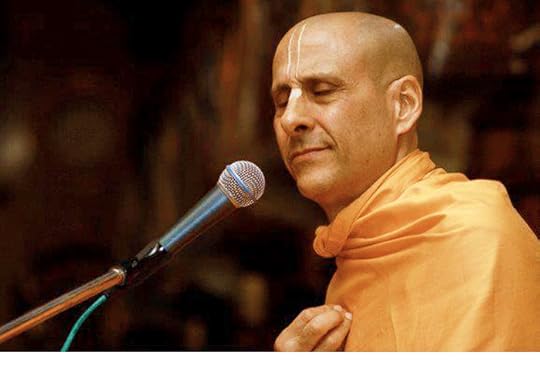 Question: How do you consider yourself: Do you consider yourself a monk? Do you consider yourself a particular enlightened spiritual guide? How do you consider yourself in terms of your mission in life?
Radhanath Swami: I consider myself very fortunate. I have role of a swami and a monk, and that is the service I have taken in my life. The concept of a swami or a monk in our tradition is that we accept the vow of celibacy and we accept a life where we don’t have any property or anything that is our own as far as material things are concerned. The idea is that, in order to give our whole energy to the whole world, according to our capacity, we give up the responsibility of a small family so that we can serve the whole human family. So the idea of renunciation is for the purpose of seva or service. Now you can do the same service practically living in the family life.
In Chowpatty Temple (Mumbai), there is a congregation of about 10,000 and there is one swami who lives here and there are around 200 monks. So the monks and swami encourage and inspire the congregation. In a way the congregation is doing so much to help us and we are doing so much to help them and the combination is something very beautiful. Those who are in the renounced life help the family people remain focused. So, in this way, that is a service. This is my role as a swami on the spiritual path that I follow, which is bhakti or the path of devotion, specifically Krishna devotion.
But how do I consider myself? I consider myself very grateful that I have been given the opportunity to dedicate my life to this service.
I find no greater pleasure, no greater wealth than the opportunity to serve, to really try to make some difference in other people’s lives, especially in the spiritual way. So I would just like to be the servant of the servant of the servant of all other servants, whatever role I may be in. That is how I see myself.
December 29, 2015
On Gratitude
 Gratitude is a divine virtue that is so important that other divine virtues could not exist without it. Spirituality grows like seeds within our heart. The goodness of our lifestyle protects that seed. Our spiritual practice of chanting God’s names, reading scriptures, doing seva for God and others waters that seed. But gratitude is what makes the ground fertile so that all these other virtues will actually have its maximum effect. A fertile soil allows the seed to have deep roots and grow very strong and for that a grateful heart is essential.
Gratitude is to see beyond the immediate circumstances that comes upon us. But to actually seek the essence of that situation, which is real wisdom, we need to see every situation as a beautiful opportunity to grow if we are to be grateful. All the dualities in life, success or failure, honor and dishonor, are all opportunities to learn something, to become better and grow. Ultimately, in every situation there is an opportunity to take shelter of the higher power of God and in doing so we find that life has inconceivable treasures in every moment. Therefore, to seek the essence means to look for the hand of God in every situation. This is the spiritual definition of success.
If we simply lament when things go wrong nothing is accomplished. But if, in a difficult situation, we really sincerely take shelter of the Lord and with our God given ability try to fix and improve that situation, then we can reverse a curse into a blessing. The story of the greatest success in life often involves a person who hits rock bottom only to discover something so beautiful and precious that if they didn’t go through it they would have lived just a mediocre spiritual life and not have accomplished much within. – Radhanath Swami
December 28, 2015
On Extended Family
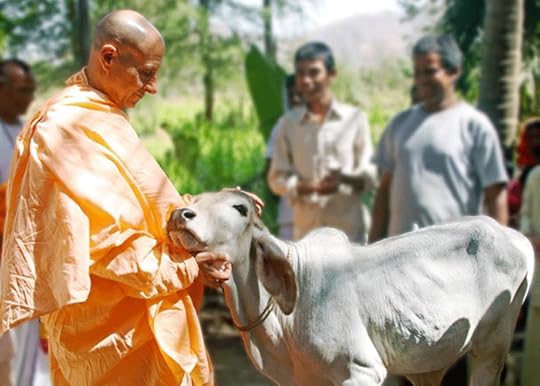
To the extent we develop broader and broader vision and appreciation of who our family is, to that extent we can actually experience the reality of who we are. Under the misconception we are material bodies only, we have a very small family. And even within those families there are so many things to disagree and fight about. The bodies are just temporary vehicles for the eternal soul.
On the spiritual platform we understand our relationship with Krishna. He is the father and mother of every living being and in that we see the animals, birds, trees, reptiles and all variety of human beings as our family. The association of devotees, sat-sanga, is there to inspire this realization of life and to take this precious understanding wherever we go and remember our connection to the divine, to Krishna.
The family of devotees is very intimate because we share that realization with each other and the world. That realization, beyond theory, is actually realized according to our enthusiasm to serve without material motivations or selfish ego. To the degree our service attitude is unconditional, to that degree we are liberated from the shackles of mundane limitations. It’s the only happiness. Happiness is when the love of our heart is awakened through unconditional service. – Radhanath Swami
December 24, 2015
Varanasi: Reflections on Dharma
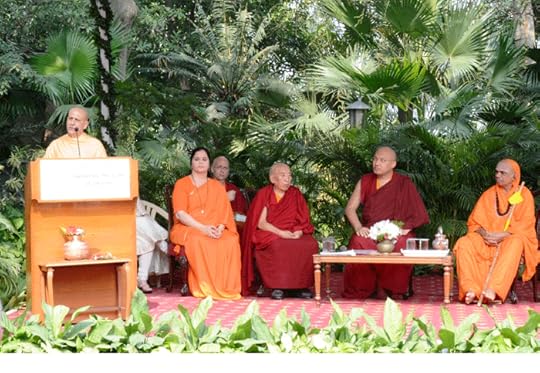 On the 6th and 7th of November 2015 Radhanath Swami delivered talks at the international interfaith event Awakening the Light of Dharma: How to Uphold Dharma in the World Today. The event was held at the Jnana Pravaha Centre for Cultural Studies and Research, Varanasi. Spiritual leaders from the Hindu, Buddhist, Islamic and Jewish traditions explored ways to create greater awareness of the concept of Dharma in the public consciousness. They also discussed how this heightened awareness of Dharma would help address many of the crises we are facing today including environmental pollution, increasing economic disparity and abuse of women. Experts from the fields of environment, development and education also shared their thoughts.
While sharing the stage in a keynote session with His Holiness Karmapa Lama Ogyen Trinley Dorje and His Holiness Shankaracharya Chandrashekar Shivacharya Mahaswamy, Radhanath Swami spoke on the topic Supreme Dharma is to Awaken Our Love for the Supreme Lord, quoting from the Srimad Bhagavatam. “When we make that connection with the Lord, we can live in harmony with the environment and with each other” he added. Radhanath Swami further explained how life at Govardhan Eco Village is attempting to exemplify this principle.
Environmental activist and anti-globalization author Dr. Vandana Shiva, spiritual leader Anandmurti Gurumaa, and chairman of Chishty Foundation Syed Salman Chishty also participated. The program was organized by Global Peace Initiative of Women founded by Dena Merriam.

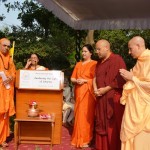

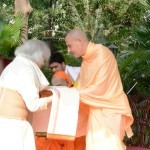
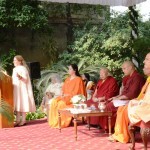
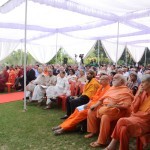
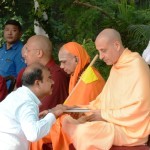
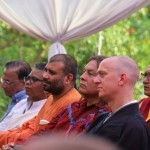
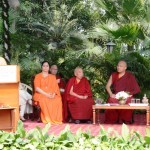
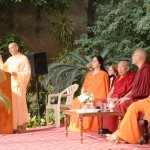

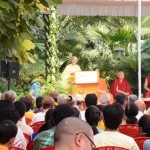
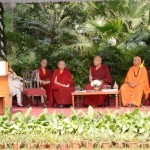
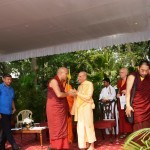
Radhanath Swami Speaks at International Interfaith Event in Varanasi
On the 6th and 7th of November 2015 Radhanath Swami delivered talks at the international interfaith event Awakening the Light of Dharma: How to Uphold Dharma in the World Today. The event was held at the Jnana Pravaha Centre for Cultural Studies and Research, Varanasi. Spiritual leaders from the Hindu, Buddhist, Islamic and Jewish traditions explored ways to create greater awareness of the concept of Dharma in the public consciousness. They also discussed how this heightened awareness of Dharma would help address many of the crises we are facing today including environmental pollution, increasing economic disparity and abuse of women. Experts from the fields of environment, development and education also shared their thoughts.
While sharing the stage in a keynote session with His Holiness Karmapa Lama Ogyen Trinley Dorje and His Holiness Shankaracharya Chandrashekar Shivacharya Mahaswamy, Radhanath Swami spoke on the topic Supreme Dharma is to Awaken Our Love for the Supreme Lord, quoting from the Srimad Bhagavatam. “When we make that connection with the Lord, we can live in harmony with the environment and with each other” he added. Radhanath Swami further explained how life at Govardhan Eco Village is attempting to exemplify this principle.
Environmental activist and anti-globalization author Dr. Vandana Shiva, spiritual leader Anandmurti Gurumaa, and chairman of Chishty Foundation Syed Salman Chishty also participated. The program was organized by Global Peace Initiative of Women founded by Dena Merriam.
December 11, 2015
Radhanath Swami Speaks at King’s College Dental Institute, London
 King’s College London Dental Institute, often found at the top of the national leaderboards for Dentistry, regularly invites speakers to inspire their students. On November 30th, 2015 they hosted Radhanath Swami alongside Ash Parmar, a world-famous cosmetic dentist (who has appeared on shows such as This Morning and Extreme Makeover), to give a seminar on the art of decision-making. Professor Mark Woolford, Dean of Education at the Institute, shared his reasoning for the talks: “One of the things that I feel very dearly about is that we have to instill into students that it isn’t just about dentistry, it isn’t just about learning to work with this [your head], it’s about learning to work with this [your head] and this [your heart]. If you haven’t got all of that together, it doesn’t matter how good you are at cutting crown preparation or holes in teeth or recreating shapes, you’re not really going to do a benefit to the patient, you’re not really going to be a useful part of society.”
To give students an insight into how to make clinical decisions in dentistry, Ash Parmar gave a presentation on different patients he’s treated in the past. “I was honoured to be here. This was a chance for me to share, through my career, decisions I have had to make through my practice, giving the students an opportunity to think about their options ahead. The learning curve gets steeper when you leave dental school” he said. “The more you learn, the more you find out you don’t know.” His main message to the students was “It’s all about picking the right mentors, going on the right courses, and really working out what work or career you want to go down. There are so many different fields. You need to think carefully.” He ended by urging students to introspect and aim to become the best people they can possibly be, so they can carry out the most caring treatment.
Divya Pathak, fourth year dental student at King’s College London and Vice President of the Dental Society, felt the same way: “I took away that work-life balance is really important. Dental students sometimes have the perception that it should be all about the money, all about selling their skills to patients. I felt that Ash was different. He wasn’t trying to sell his skills. More, he was trying to inspire us to produce a positive change in people’s lives.”
Due to his experiences, elaborated on in his autobiography, The Journey Home, Radhanath Swami was requested to speak about ethics, morality and compassion in relation to medically treating people.
From the outset, Professor Woolford was impressed: “It was fascinating to hear the silence when the Swami was talking. The fact that people were genuinely listening; I wish I had that much silence in my lectures when I give them on crown and bridge work!” he laughed.
Radhanath Swami told the students “cleaning our teeth is natural, but we also have to clean our heart.” He added that “If we don’t examine the deeper principles in life, we will develop the plaque of bad habits.”
Professor Woolford thought this a fitting message, responding “You’ve got to look at life in a deeper way. It isn’t just about dentistry. If you don’t start thinking about those things early on, you’re not going to be complete and you won’t make a great dentist. I think you’ll make a good dentist, but you won’t make a great dentist. And doesn’t everybody want to be great at everything they do? Not in terms of wealth and power, but great in the sense that you really made a genuine difference in another’s life. And I think that’s what his talk left with me: making a difference. Ash said ‘You smile with your eyes.’ From the Swami, I learnt you can do dentistry with your heart.”
“When he said ‘when you lose your character you lose everything.’ That really hit me. You should always remember who you are and stay true to yourself” said Manny Abdullah Naser, a second year dental undergraduate at King’s College. His friend, Ria Kanani, mentioned “His demeanor and taking it back to your roots. You have to be humble and grateful about everything you have in your life. Wealth is not about money, but your inner being. It’s about your soul.”
Radhanath Swami spoke briefly about the dental and eye camps he founded in Barsana, India. The Barsana Healthcare Centre is an initiative that sprung from the overwhelming need for eye and dental treatment in the poor district of Barsana. “90% of people there have never seen a dentist in their life!” said Radhanath Swami. “The wealthiest doctors and dentists give up their life of luxury to come together to serve these people with the intention of making them happy. They are in great need” he added.
The project started from Bhaktivedanta Hospital & Research Institute, a state-of-the-art facility in Mumbai based on the values Radhanath Swami promotes like compassion, integrity and spirituality. Professor Woolford was eager to send his students to such camps, admitting “An awful lot of dentists have been seriously challenged by attending those kind of camps. They challenge their own beliefs, perceptions and lifestyle. It’s so important to take on board that there are people out there who cannot afford what we can do, who have never seen what we can do and have no perception of what’s possible by having normal oral health. And isn’t oral health something everyone should have? Two weeks a year, it’s not a bad thing. And our students come back better people, I know they do.”
Ash ended the day by telling us that “Radhanath Swami is a very special soul. It’s very humbling to have the honour to lecture alongside him. What I like about him is that he uses great analogies and stories so that the audience can really question how we can be happiest with our careers and our life in general.” Ash was so impressed with the Swami that he ordered 30 copies of his book, The Real You, to give to his patients in his practice as well as his close friends.
December 5, 2015
December 4, 2015
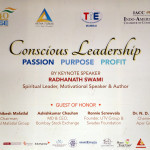
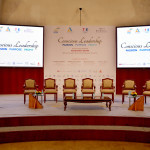
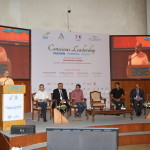
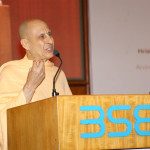
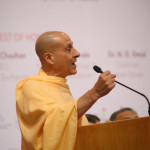
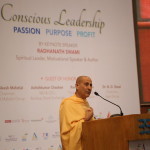
Radhanath Swami Speaks at Conscious Leadership Conference at the Bombay Stock Exchange

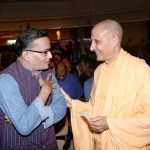
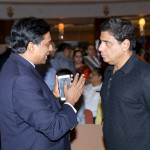
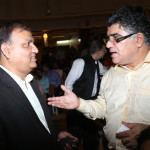
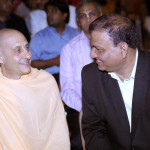
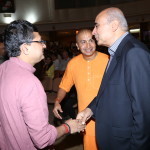
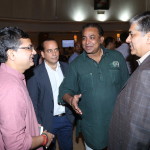
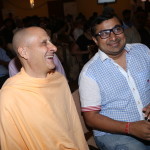
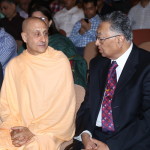
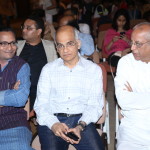
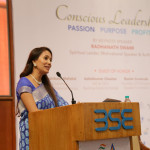
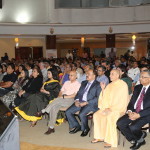
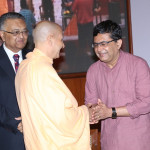
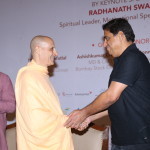
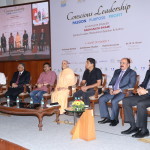
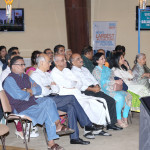
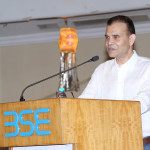
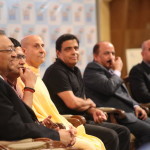
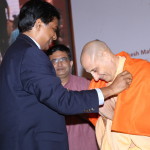
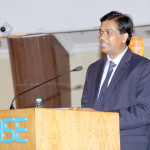
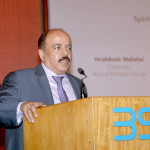
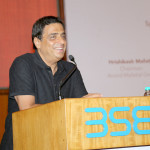
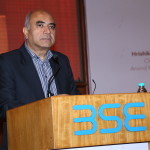
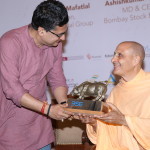
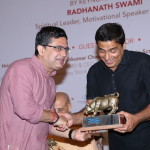
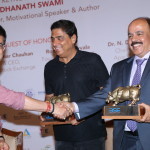
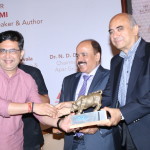
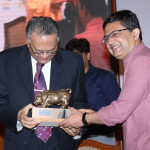
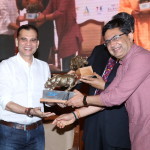
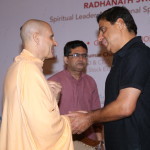
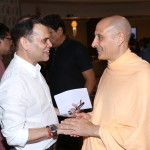
On November 21, 2015, over 400 industrialists, SME entrepreneurs, investors and corporate leaders converged at the International Convention Centre of the Bombay Stock Exchange in Mumbai for a conference on “Conscious Leadership” organized by the Artha Forum, (a community dedicated to providing healthy work-life balance and holistic world view to entrepreneurs, business and thought leaders) in partnership with the BSE, TiE Mumbai & the Indo American Chamber of Commerce. Radhanath Swami was invited to give the Keynote Speech. Eminent figures from corporate India, government officials and industry regulators shared the dias including Mr. Ronnie Screwvala, Founder – UTV & Swades Foundation, Mr. N. N. Kumar, Chief Commissioner of Income Tax, Mr. Ashishkumar Chauhan, MD & CEO – BSE, Mr. Sunil Shaghai, MD & Head of Banking – HSBC India, Dr. N. D. Desai, Chairman – Apar Group & Mr. Hrishikesh Mafatlal, Chairman – Arvind Mafatlal Group.
Mr. Ashishkumar Chauhan spoke of how businesses need to be not only ‘compliant legally’, but ethically and legally right as well. Guests shared their joyful responses of his analysis of the internal push-pull dynamics of a typical player in the market riding the wave of an ocean of opportunities. Mr. Chauhan exclaimed that, of the over 200 conferences that are conducted in this conventional hall, this one was the one with a difference.
Sharing his experiences in business, Mr. Ronnie Screwvala emphasized on concept of giving back to society and how he introduced this culture in early days of his organization. Mr. Screwvala explained how he evolved from making movies to adopting villages and making a difference is in the lives of millions.
Radhanath Swami shard the message that it is imperative in business to earn with integrity and spend with compassion. He said that as a child raised in United States he saw so much wealth and luxury. “But all these technologies, power and road systems, seemed so shallow to so many people in my generation. Because greed can never satisfy the heart.”
He further explained that poverty in society is simply an extension of the inner poverty of the human heart. “When there is a poverty of compassion, poverty in society manifest, and when there is wealth within the hearts our leaders, there is prosperity emotionally, physically and spiritually,” he said.
Radhanath Swami cited the example of Yankees baseball Manager Joe Torre. Under his leadership, the Yankees were the most successful team ever winning many titles. But none of this fame and honor were particularly meaningful to him. Due to his difficult childhood and the abuses from his alcoholic father, he would go out and hit the ball hard to take his stress out. But after he retired he started working with ghetto schools to help children from abusive homes. Radhanath Swami quoted Mr. Torre as saying, “When I see those children who went through what I went through – lost confused and alone, and then I see them smile and I see that they feel loved, that is meaningful. Not the money, not the awards.”
Radhanath Swami concluded his talk with the message that if we understand that our wealth, our beauty and our influence belongs to the Lord, and we are just care takers, we will naturally use it in a principle of seva (service). “It’s the leadership the world needs.”
See Radhanath Swami’s talk at The Bombay Stock Exchange below:













December 3, 2015
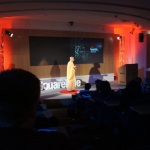
Radhanath Swami Opens TEDxSquareMile at London Business School
 On November 28th, 2015 Radhanath Swami was given the opportunity to open the TEDx talk at London Business School. Last year, Radhanath Swami gave his first TEDx talk at the same event on the chosen topic of “Magic”. This year’s theme was “Get Connected”, so he spoke about the principles of “Unity in Diversity”.
Choosing a monk in flowing saffron robes to open a technology conference at a business school is unusual. However, Alexandru Dobre, organizer of TEDxSquareMile, gave his reasoning: “It’s always difficult to open an event. It’s only at the end of the day that everyone feels like a community. In the morning, it was cold. We needed a powerful start and somebody to break the ice.” He paused and added “And that somebody was the Swami! His demeanour was remarkably calm. Not that I’m particularly spiritual, but he did have an aura about him. He changed the room with his presence.”
Tedx events are widely appreciated for their passionate speakers, and thought-provoking videos. They are independently planned and coordinated “TED-like” seminars, meant to inspire ideas and conversation within a community. The talks are hailed by many as a new way of learning; a sophisticated approach to hearing about the projects and feats of the extraordinary. The only catch is that the speaker has 18 minutes, and no longer, to share their message.
Radhanath Swami shared, “The joy of life is expressing our compassion in all that we do. Seeing every living being with equal vision.” This idea was echoed in an interview with fellow speaker, Craig Twyford, director of Octopus Analytics: “His point about compassion being the key to connection was the perfect message.”
The TEDxSquareMile committee left no stone unturned in organising the event. They hired a professional visual coach, Bethany Rivett-Carnac, to illustrate the talks live (see the illustration of Radhanath Swami’s talk in the gallery below.) After the event, she mentioned her keen interest in meditation and yoga, praising the Swami: “He really speaks to my soul. He completely resonates with everything I stand for and his message of spreading peace through technology was music to my ears. I believe if more people in the world could see each other with equality and as part of them, not in competition with them, the world would just be the most harmonious of places. That’s what he makes me feel. Really inspirational!” When asked about how he connected with her, she replied “The way in which he spreads his message and connected with everyone is so peaceful. It’s beautiful that you can ‘see it in motion’ within him.”
It wasn’t only Radhanath Swami who spoke on compassion. Erik Fairbairn, CEO of POD Point (the company behind the electric car chargers popping up in the UK and Europe), also spoke on the same topic. He related compassion to social responsibility and entrepreneurship. “Millennials won’t engage with you unless they understand why you’re doing something. If your mission is right, they will engage doubly! Entrepreneurs shouldn’t just think about making money, they should be responsible for effecting global change; they should leave the world in a better place than they found it.” He argued that “Entrepreneurs should build their business around a social mission of helping others. That will drive more business in the future.” When asked how his message is similar to the Swami’s, he said “I’m not religious at all, but we shared perspectives on society and the environment. His field is well outside my knowledge and comfort zone, but we seem to have the same objectives and destination. It’s amazing how there are different ways and mechanisms to tackle the same problems.” Erik was also impressed by Radhanath Swami’s initiatives to protect the environment.
Radhanath Swami concluded his talk by revealing three principles that can help us develop spiritually.
Positive association of like-minded people
Determined spiritual practice and values-based character.
Investment banker Rahul Ahuja said, “Towards the end of the talk, he folded his hands, there was this moment of calm. We were all applauding, but you just felt, for me anyway, this calm and serenity. Just to be in the presence of someone like that…that was powerful.” He added his dismay of not being able to meet Radhanath Swami: “I wanted to speak to him for a couple of minutes afterwards, but so did everybody else and unfortunately I was last in the queue!”
Ending the day, Aurore Hochard, Head of Entrepreneurship at Cass Business School and organiser of TEDxSquareMile, told me “He spoke truth. It was nothing complicated, it was no jargon, he was basically talking about trying to connect with the easy, simple things in life and I thought it was a nice way to start the day.” Passionate about what TEDx stands for, she said “At the end of the day, there are doctors, there are musicians and even swamis sharing their wisdom. That is the spirit of TEDx. To learn, to share, to be inspired. Starting on a high note with the Swami, people really felt inspired. I love TED talks and this university and school is all about learning and sharing.”