Andrew Huang's Blog, page 32
February 22, 2016
Winner, Name that Ware January 2016
The Ware for January 2016 was a TPI model 342 water resistant, dual-input type K&J thermocouple thermometer. Picking a winner was tough. Eric Hill was extremely close on guessing the model number — probably the only difference between the TPI 343 and the 342 is a firmware change and perhaps the button that lets you pick between K/J type thermocouples, neither of which would be obvious from the image shown.
However, I do have to give kudos to CzajNick for pointing out that the MCU in this is a 4-bit microcontroller. Holy shit, I didn’t know they made those anymore, much less be useful for anything beyond a calculator. This is probably the only functional 4-bit machine that I have in my lab. All of a sudden this thermometer got a little bit cooler in my mind. He also correctly identified the ware as some type of double-input thermocouple thermometer in the course of his analysis.
Despite not citing a specific make/model, I really appreciated the analysis, especially the factoid about this having a 4-bit microcontroller, so I’ll declare CzajNick the winner. Congrats and email me for your prize!
Also, I’ll have to say, after tearing apart numerous pieces of shoddy Chinese test equipment to fix stupid problems in them, it was a real sight for sore eyes to see such a clean design with high quality, brand-name components. I guess this is 90’s-vintage Korean engineering for you — a foreshadowing of the smartphone onslaught to come out of the same region a decade later.


February 3, 2016
Help Make “The Essential Guide to Electronics in Shenzhen” a Reality
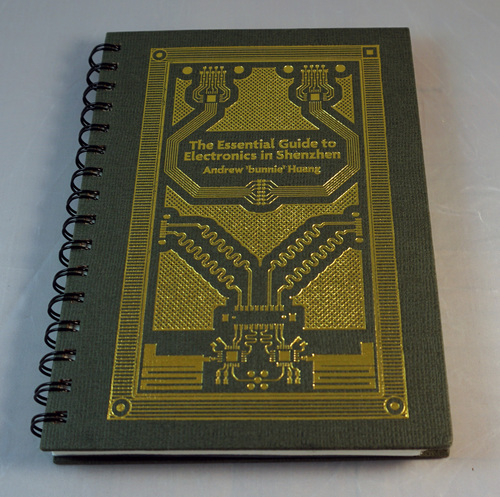
Readers of my blog know I’ve been going to Shenzhen for some time now. I’ve taken my past decade of experience and created a tool, in the form of a book, that can help makers, hackers, and entrepreneurs unlock the potential of the electronics markets in Shenzhen. I’m looking for your help to enable a print run of this book, and so today I’m launching a campaign to print “The Essential Guide to Electronics in Shenzhen”.
As a maker and a writer, the process of creating the book is a pleasure, but I’ve come to dread the funding process. Today is like judgment day; after spending many months writing, I get to find out if my efforts are deemed worthy of your wallet. It’s compounded by the fact that funding a book is a chicken-and-egg problem; even though the manuscript is finished, no copies exist, so I can’t send it to reviewers for validating opinions. Writing the book consumes only time; but printing even a few bound copies for review is expensive.
In this case, the minimum print run is 1,000 copies. I’m realistic about the market for this book – it’s most useful for people who have immediate plans to visit Shenzhen, and so over the next 45 days I think I’d be lucky if I got a hundred backers. However, I don’t have the cash to finance the minimum print run, so I’m hoping I can convince you to purchase a copy or two of the book in the off-chance you think you may need it someday. If I can hit the campaign’s minimum target of $10,000 (about 350 copies of the book), I’ll still be in debt, but at least I’ll have a hope of eventually recovering the printing and distribution costs.
The book itself is the guide I wish I had a decade ago; you can have a brief look inside here. It’s designed to help English speakers make better use of the market. The bulk of the book consists of dozens of point-to-translate guides relating to electronic components, tools, and purchasing. It also contains supplemental chapters to give a little background on the market, getting around, and basic survival. It’s not meant to replace a travel guide; its primary focus is on electronics and enabling the user to achieve better and more reliable results despite the language barriers.
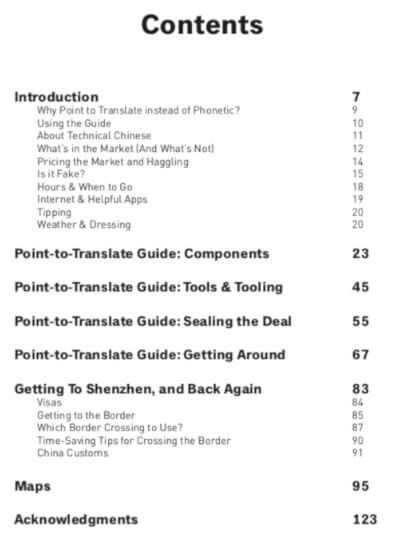
Below is an example of a point-to-translate page:
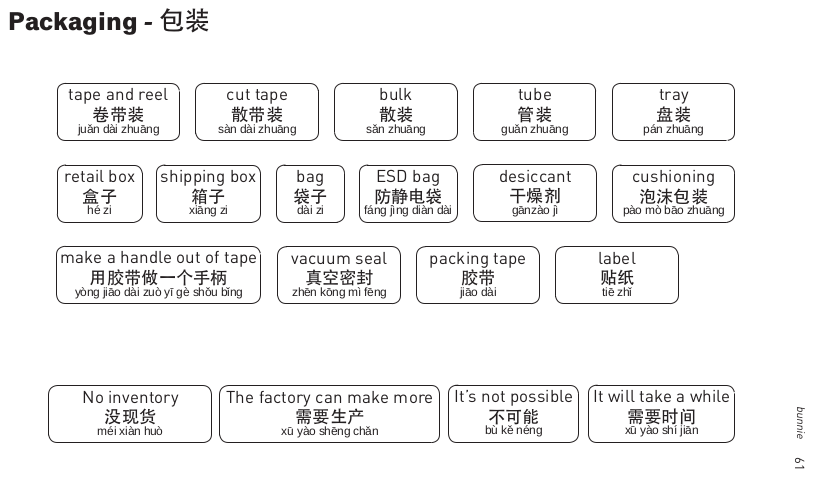
For example, the above page focuses on packaging. Once you’ve found a good component vendor, sometimes you find your parts are coming in bulk bags, instead of tape and reel. Or maybe you just need the whole thing put in a shipping box for easy transportation. This page helps you specify these details.
I’ve put several pages of the guide plus the whole sales pitch on Crowd Supply’s site; I won’t repeat that here. Instead, over the coming month, I plan to post a couple stories about the “making of” the book.
The reality is that products cost money to make. Normally, a publisher takes the financial risk to print and market a book, but I decided to self-publish because I wanted to add a number of custom features that turn the book into a tool and an experience, rather than just a novel.
The most notable, and expensive, feature I added are the pages of blank maps interleaved with business card and sample holders.


Note that in the pre-print prototype above, the card holder pages are all in one section, but the final version will have one card holder per map.
When comparison shopping in the market, it’s really hard to keep all the samples and vendors straight. After the sixth straight shop negotiating in Chinese over the price of switches or cables, it’s pretty common that I’ll swap a business card, or a receipt will get mangled or lost. These pages enable me to mark the location of a vendor, associate it with a business card and pricing quotation, and if the samples are small (like the LEDs in the picture above) keep the sample with the whole set. I plan on using a copy of the book for every project, so a couple years down the road if someone asks me for another production run, I can quickly look up my suppliers. Keeping the hand-written original receipts is essential, because suppliers will often honor the pricing given on the receipt, even a couple years later, if you can produce it. The book is designed to give the best experience for sourcing components in the Shenzhen electronic markets.
In order to accommodate the extra thickness of samples, receipts and business cards, the book is spiral-bound. The spiral binding is also convenient for holding a pen to take notes. Finally, the spiral binding also allows you to fold the book flat to a page of interest, allowing both the vendor and the buyer to stare at the same page without fighting to keep the book open. I added an elastic strap in the back cover that can be used as a bookmark, or to help keep the book closed if it starts to get particularly full.
I also added tabbed pages at the beginning of every major section, to help with quickly finding pages of interest. Physical print books enable a fluidity in human interaction that smartphone apps and eBooks often fail to achieve. Staring at a phone to translate breaks eye contact, and the vendor immediately loses interest; momentum escapes as you scroll, scroll, scroll to the page of interest, struggle with auto-correction on a tiny on-screen keyboard, or worse yet stare at an hourglass as pages load from the cloud. But pull out the book and start thumbing through the pages, the vendor can also see and interact with the translation guide. They become a part of the experience; it’s different, interesting, and keeps their attention. Momentum is preserved as both of you point at various terms on the page to help clarify the transaction.
Thus, I spent a fair bit of time customizing the physical design of the book to make it into a tool and an experience. I considered the human factors of the Shenzhen electronics market; this book is not just a dictionary. This sort of tweaking can only be done by working with the printer directly; we had to do a bit of creative problem solving to figure out a process that works to bring all these elements together that can also pump out books at a rate fast enough to keep it in the realm of affordability. Of course, the cost of these extra features are reflected in the book’s $35 cover price (discounted to $30 if you back the campaign now), but I think the book’s value as a sourcing and translation tool makes up for its price, especially compared to the cost of plane tickets. Or worse yet, getting the wrong part because of a failure to communicate, or losing track of a good vendor because a receipt got lost in a jumble of samples.
This all bring me back to the point of this post. Printing the book is going to cost money, and I don’t have the cash to print and inventory the book on my own. If you think someday you might go to Shenzhen, or maybe you just like reading what I write or how the cover looks, please consider backing the campaign. If I can hit the minimum funding target in the next 45 days, it will enable a print run of 1,000 books and help keep it in stock at Crowd Supply.
Thanks, and happy hacking!
January 22, 2016
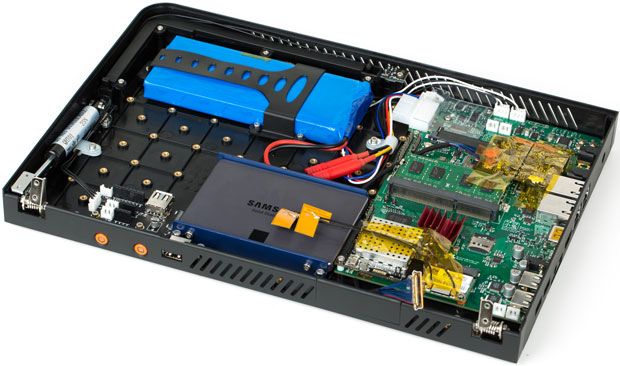
Novena on the Ben Heck Show
The one true @novenakosagi Hacker's Laptop is done but not without tricky soldering! https://t.co/fMSQcdxcXg pic.twitter.com/t4cDlcZaf1
— The Ben Heck Show (@thebenheckshow) January 22, 2016
I love seeing the hacks people do with Novena! Thanks to Ben & Felix for sharing their series of adventures! The custom case they built looks totally awesome, check it out.
January 21, 2016
Name that Ware January 2016
The Ware for January 2016 is shown below.
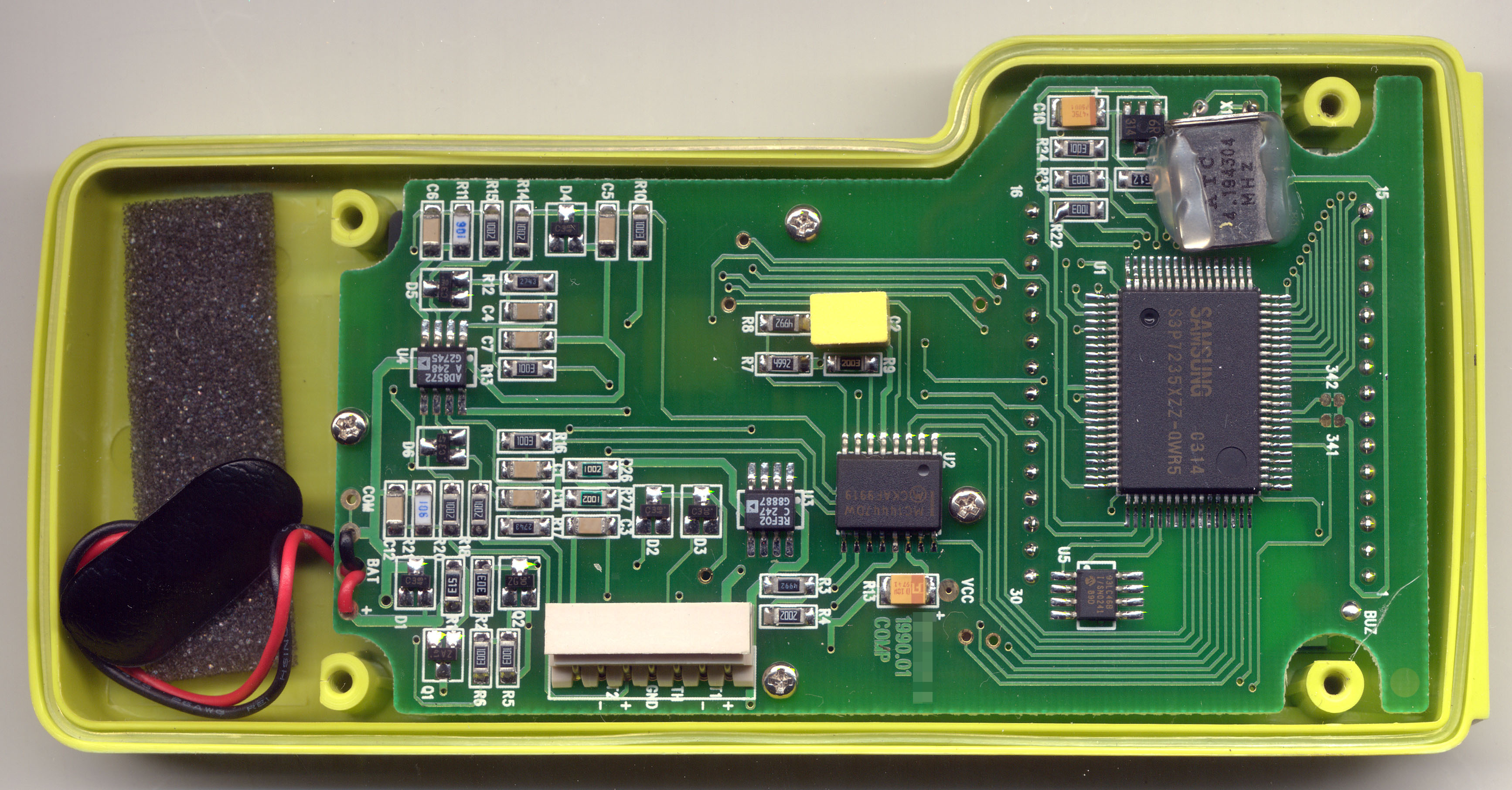
I just had to replace the batteries on this one, so while it was open I tossed it in the scanner and figured it would make a fun and easy name that ware to start off the new year.
Winner, Name that Ware December 2015
The ware for December 2015 was a Thurlby LA160 logic analyzer. Congrats to Cody Wheeland for nailing it! email me for your prize. Also, thanks to everyone for sharing insights as to why the PCBs developed ripples of solder underneath the soldermask. Fascinating stuff, and now I understand why in PCB processing there’s a step of stripping the tin plate before applying the soldermask.
January 15, 2016
Making of the Novena Heirloom
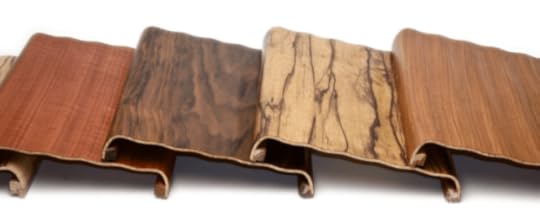
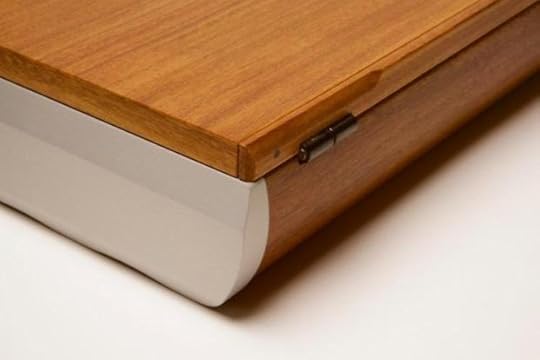
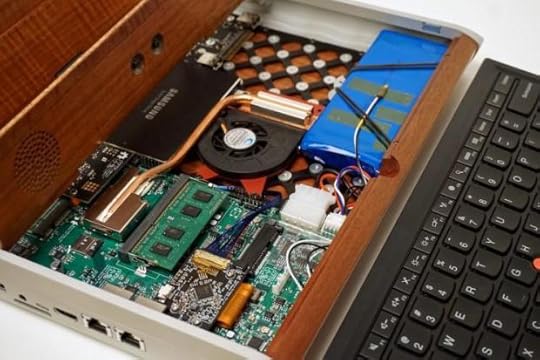
Make is hosting a wonderfully detailed article written by Kurt Mottweiler about his experience making the Novena Heirloom laptop. Check it out!
December 21, 2015
Name that Ware December 2015
The Ware for December 2015 is shown below.

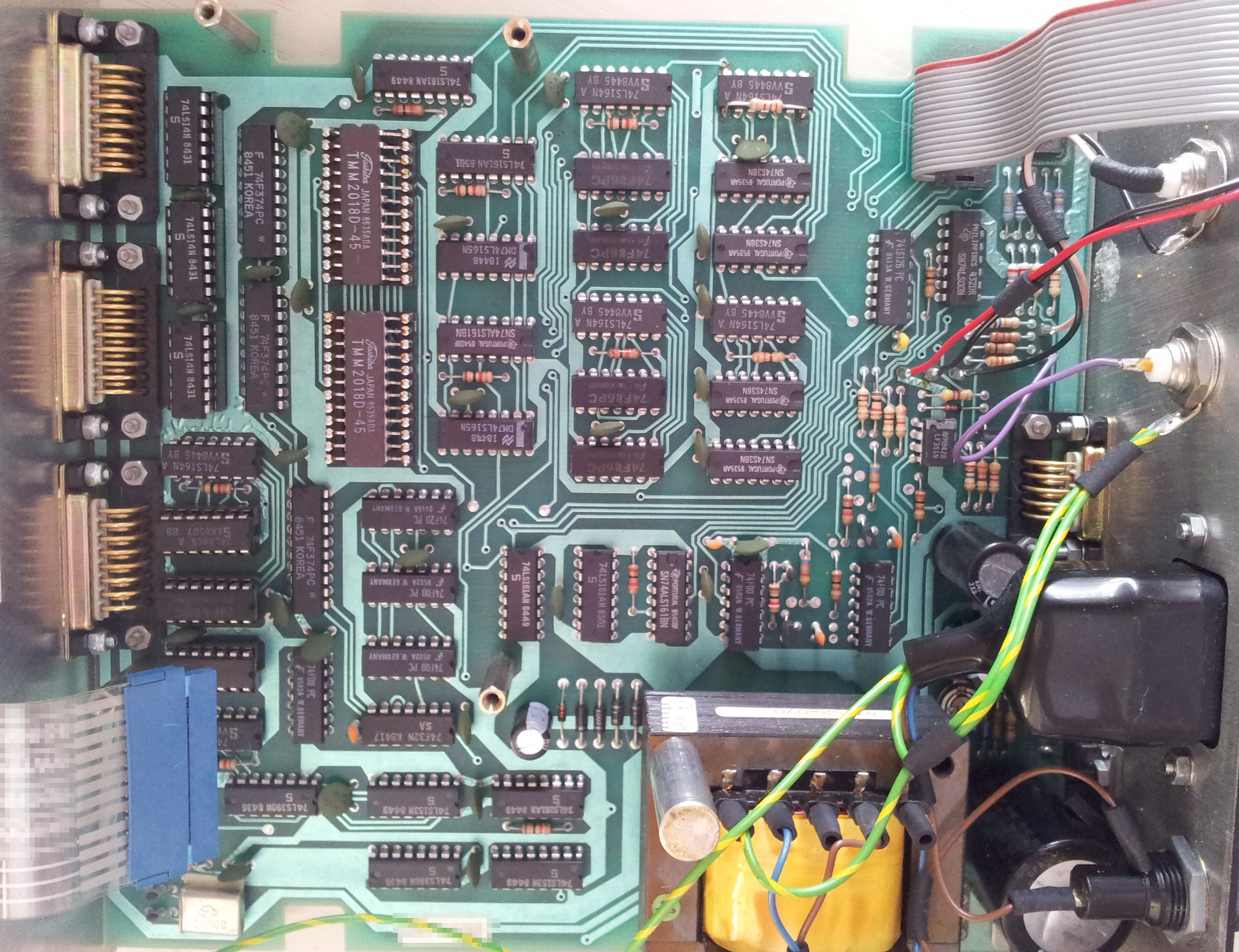
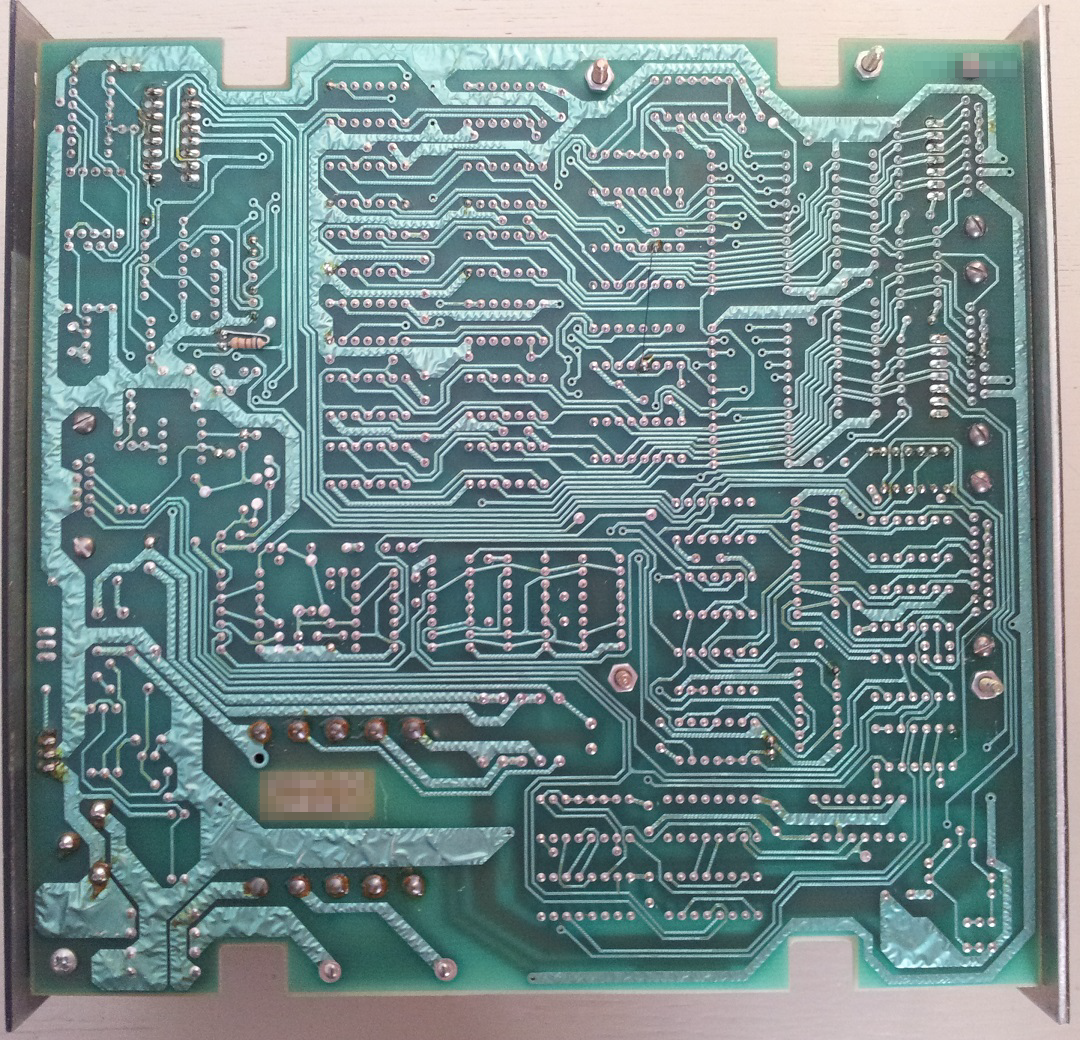
This ware got me at “6502”. Thanks to DavidG Cape Town for contributing this specimen!
One question for the readers (separate from naming the ware!), it’s been something I’ve wondered about for decades. On the back side of this board, one can see ripples on the fatter traces. My original assumption is this is due to a problem with hot air leveling after the application of a solder finish to the bare copper board, before the soldermask is applied. However, the top side is almost entirely smooth, so clearly the process can supply a flatter finish.
So here’s my quandary: are the ripples intentional (for example, an attempt to increase current capacity by selectively thickening fat traces with a solder coating), or accidental (perhaps microscopic flaws in the soldermask allowing molten metal to seep under the soldermask during wave soldering)?
Been wondering about this since I was like 15 years old, but never got around to asking anyone…
Happy holidays to everyone! I’ll be at 32C3 (thankfully I have a ticket), haunting the fail0verflow table. Come enjoy a beer with me, I’m not (officially) giving any talks so I can actually sit back and enjoy the congress this year.
Winner Name that Ware November 2015
The Ware for November 2015 was an RS-482 interface picomotor driver of unknown make and model, but probably similar to one of these. It’s designed to drive piezo (slip stick) motors; the circuits on board generate 150V waveforms at low current to drive a linear actuator with very fine positional accuracy.
This one was apparently a stumper, as several guessed it had something to do with motor control or positioning, but nobody put that together with the high voltage rated parts (yet with no heatsinking, so driving low currents) on the board to figure that it’s meant for piezo or possibly some other electrostatic (e.g. MEMS) actuators. Better luck next month!
November 28, 2015
Products over Patents
NPR’s Audrey Quinn from Planet Money explores IP in the age of rapid manufacturing by investigating the two-wheel self balancing scooter. When patent paperwork takes more time and resources than product production, more agile systems of idea sharing evolve to keep up with the new pace of innovation.
If the embedded audio player above isn’t working, try this link. Seems like the embed isn’t working outside the US…
November 27, 2015
MLTalk with Joi Ito, Nadya Peek and me
I gave an MLTalk at the MIT Media Lab this week, where I disclose a bit more about the genesis of the Orchard platform used to build, among other things, the Burning Man sexually generated light pattern badge I wrote about a couple months back.
The short provocation is followed up by a conversation with Joi Ito, the Director of the Media Lab, and Nadya Peek, a renowned expert in digital fabrication from the CBA (and incidentally, the namesake of the Peek Array in the Novena laptop) about supply chains, digital fabrication, trustability, and things we’d like to see in the future of low volume manufacturing.
I figured I’d throw a link here on the blog to break the monotony of name that wares. Sorry for the lack of new posts, but I’ve been working on a couple of books and magazine articles in the past months (some of which have made it to print: IEEE Spectrum, Wired) which have consumed most of my capacity for creative writing.
Andrew Huang's Blog

- Andrew Huang's profile
- 32 followers