
Kevin Power's Blog, page 9
July 19, 2018
Letters to Vera by Vladimir Nabokov
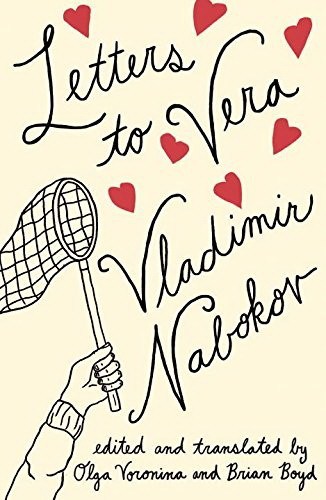
This review originally appeared in The Sunday Business Post in October 2014.
*
Vladimir Nabokov – the Cambridge-educated son of Russian aristocrats displaced by the Bolshevik Revolution; the author of glittering, gamesome books about savage subjects; the hard-up lepidopterist who spent his retirement in a suite of rooms on the sixth floor of the west wing of the Montreux Palace Hotel in Switzerland – seems an almost preposterously unlikely figure. He seems, in fact, to be a character from one of his own novels: remote, imposingly learned, glacially condescending.
Martin Amis once remarked upon the “novelettish glamour” of Nabokov’s life. And the life of the author of Lolita is almost indecently good fun to read about. He was a child prodigy, chatting away in English, French and Russian in the nursery of his family’s estate (“I was a perfectly normal trilingual child in a family with a large library”). As an adolescent he wrote lyric verse of astonishing maturity. In the 1920s, when Berlin became a centre of Russian émigré life, Nabokov established himself as one of the central writers of the emigration, publishing his first novels under the pen-name V. Sirin. These novels – long since translated into English, and including the extraordinary black comedies King, Queen, Knave (1928) and Laughter in the Dark (1933) – now open a window to that vanished world: a world of cultured Russians suffering the agonies of genteel poverty and exile. The Berlin of Nabokov’s early novels is long gone – it was one of the earliest casualties of the Second World War. But it lives on in the pages of books like Despair (1934), a vivid and antic precursor to Lolita (1959).
It was in Berlin that Nabokov first met Vera Evseevna Slonim, the woman who was to become his wife. Vera’s father ran a small publishing firm, and approached Nabokov with the idea of translating Dostoyevsky into English. The project came to nothing, but at a charity ball on the 8th or 9th of May 1923 (biographers disagree about the date), Nabokov was introduced to Vera. It seems to have been love at first sight, or something very near. Vera wore a mask that she refused to take off – which is, of course, the sort of thing that might happen in a novel of Nabokov’s. (This is what amazes you, as you read about Nabokov’s life: the sheer frequency with which incredibly Nabokovian things kept happening to him.) Though of course, in a Nabokov novel, the woman beneath the mask would turn out to be a vain and boorish coquette. And Vera was neither of these things. She, too, was literary: she knew Nabokov’s poetry and had heard him read. Vladimir was 24; Vera 21. They were married two years later.
“And there,” wrote Martin Amis in 1981, when Vladimir was dead and Vera in her eighth decade, “the visible story ends.” By which he meant that there was no way of seeing into the private recesses of the Nabokovs’ marriage. With the publication of this hefty volume of correspondence, this is no longer the case. Reading the letters a writer composes for his partner’s eyes can be a queasy business: who can forget their first encounter with the scatological fantasies that James Joyce sent to Nora Barnacle? Very properly, while the principals are still alive (or cushioned by the lingering respect of living memory), we regard the inner workings of a marriage as none of our business. But time and prurience have a way of eroding propriety. So here – handsomely accoutred with prefatory matter, and exhaustively annotated – are the letters that Vladimir sent to Vera, whenever they were apart, over the five decades of their love.
The first was sent soon after their encounter at the masquerade ball. Plainly Vladimir had been struck by a lightning bolt: “I won’t hide it: I’m so unused to being – well, understood, perhaps, that in the very first minutes of our meeting I thought: this is a joke, a masquerade trick… I need you, my fairy-tale. Because you are the only one I can talk with about the shade of a cloud, about the song of a thought.” If Nabokov’s character was an admixture of the romantic and the sinister, then it is the romantic Vladimir who predominates in these pages. The letters are full of lyrical flashes and flights of fancy: “Angels themselves smoke – in their sleeves. But when the archangel goes by, they throw their cigarettes away: this is what falling stars are.”
With the exception of Vladimir’s single adulterous affair – with a young woman who worked as a dog-groomer, another seamlessly Nabokovian detail – Vladimir and Vera enjoyed a cloudless marriage. The letters collected here testify to a shared lifetime of openness and generosity. Those looking for dirty secrets will be disappointed; but anyone in search of yet another reason to admire Vladimir Nabokov will be hugely rewarded.


July 8, 2018
Figures in a Landscape by Paul Theroux

My review of Paul Theroux’s new essay collection (Hamish Hamilton) appears in today’s Sunday Business Post Magazine. Here’s an excerpt:
Paul Theroux’s Wikipedia page solemnly informs us that the author of The Great Railway Bazaar (1975) and The Mosquito Coast (1981) was once a Boy Scout. But we hardly needed to be told. Theroux is still a Boy Scout: an intrepid outdoorsman, a wide-eyed respecter of nature and culture, he has never met a “bus or train or cattle truck” he didn’t like.
“Name a Chinese train and I took it,” he gushes, of the travels recorded in his 1988 book Riding the Iron Rooster. Give him a wartorn border and he’s already filing copy: “Anyone can land at the airport in the capital and be fooled by modernity, but it takes a certain nerve to ride a bus or train to the frontier, always the haunt of the rabble, the dispossessed, people struggling to leave, trying to get in.”
July 7, 2018
Cynical Ballyhoo
“[S]incere enthusiasm for a mediocre work is more damaging to literary standards than any amount of cynical ballyhoo. One can guard against the Philistines outside the gates. It is when they get into the Ivory Tower that they are dangerous.” – Dwight Macdonald, “By Cozzens Possessed,” in Against the American Grain (1962).
July 1, 2018
Superhuman by Rowan Hooper
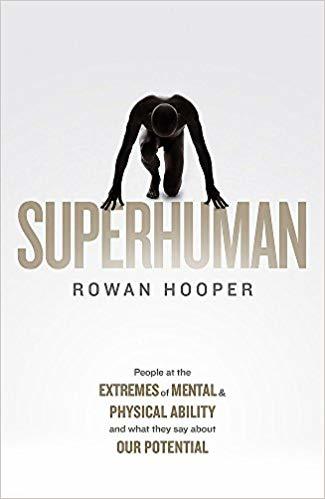 My review of Superhuman: Life at the Extremes of Mental and Physical Ability (Little, Brown) by Rowan Hooper appears in today’s Sunday Business Post Magazine. Here’s an excerpt:
Superhuman is another entry in the burgeoning genre of self-help books that draw their lessons from the social sciences. You know the kind of thing: discussions of MRI data, citations of recent papers, and some self-deprecating accounts of interviews with the relevant boffins.
Hooper has one big thing going for him: his material is genuinely beguiling. Most of us, after all, don’t excel at anything in particular (most of us don’t get into Oxford at all, let alone in our mid-teens). It’s perennially interesting to ask: what distinguishes the excellent from the rest of us? Hooper – laudably methodical – sorts his high achievers into those who think. those who do, and those who are. In Part One, “Thinking,” he assembles case studies representing “intelligence, memory, language ability and focus.” Part Two, “Doing,” examines “bravery, singing, and endurance.” Part Three deals with “longevity, resilience, sleeping and happiness” – all areas in which people apparently excel (I’m pretty good at sleeping, myself, actually).
June 25, 2018
Anne Enright in Conversation

Back in May the lovely people at Words Ireland asked me to attend Anne Enright’s event at the National Day for Writers in the Royal Hospital, Kilmainham, and write about it for their website. The piece is available here.
June 17, 2018
The President is Missing by James Patterson and Bill Clinton
[image error]
My review of James Patterson & Bill Clinton’s new thriller (Century) appears in today’s Sunday Business Post Magazine. Here’s an excerpt:
The President is Missing: A Novel, says the cover. This is inaccurate in two senses. For one thing, the Presidential hero of The President is Missing doesn’t actually go missing (he does, as the parlance has it, “go rogue” for a while, but his Secret Service team knows exactly where he is at every second, which does spoil things a bit). And for another, The President is Missing is only a novel in the sense that it has chapters and sentences and dialogue and things like that. It’s actually just the sort of disposable flotsam you buy in the airport on your way to a beach holiday, like those miniature tubes of toothpaste or those inflatable pillows for the plane. Suntan lotion? Check! Gimmicky book? Check!
The Unique Selling Point of The President is Missing is that it promises to disclose (testify, O blurb!) “details only a President could know.” So, does our protagonist and narrator, manly war hero President Jonathan Lincoln Duncan, let us in on some juicy official secrets? Well, no, actually. Unless it thrills you to learn that the tunnel connecting the White House to the Treasury Building next door “was designed in a zigzag pattern precisely to mitigate the impact of a bomb strike,” you will come away from The President is Missing disappointed. Things you might actually want to know – like, what’s the protocol when the President needs the loo? Do Secret Service agents stand guard outside? – never crop up.
June 11, 2018
Good Trouble by Joseph O’Neill
[image error]
I reviewed Joseph O’Neill’s superb new collection of short stories, Good Trouble (Fourth Estate), for this month’s issue of Literary Review. This might also be a good opportunity to recommend O’Neill’s most recent novel, The Dog (2012), which is excellent and sorely underrated.
June 10, 2018
My Brother Jason by Tracey Corbett-Lynch with Ralph Riegel
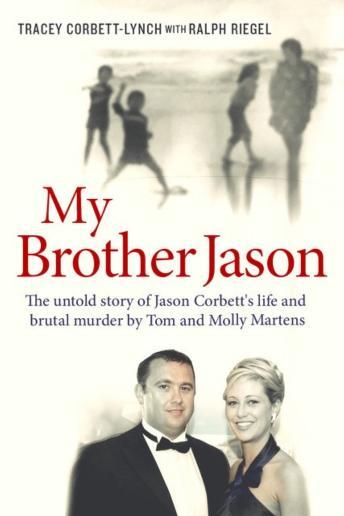
My review of Tracey Corbett-Lynch’s memoir about the life and death of her brother Jason Corbett (Gill Books) appears in today’s Sunday Business Post Magazine. Here’s an excerpt:
In 1941 an American psychiatrist named Hervey Cleckley published a book called The Mask of Sanity, in which he proposed a new theory of human evil. Living amongst us, Cleckley said, were psychopaths: people who, by any standard psychometric criteria, appeared perfectly normal, but who secretly lacked both empathy and guilt.
Cleckley’s belief in the existence of psychopaths has not been universally accepted. In The Journalist and the Murderer (1990), her classic study of the convicted murderer Jeffrey McDonald, Janet Malcolm pointed out that a diagnosis of psychopathy is largely in the eye of the beholder.
Malcolm has a point. Despite the popularisation of clinical ideas about psychopathy, we are still left with the mystery of evil – the question of why certain human beings spread emotional and physical destruction wherever they go, often disguising their cruelties behind a façade of energy, charisma, and glamour.
June 8, 2018
Thundering in The Times
[image error]
I’ve contributed a Thunderer column to the Irish edition of today’s Times about how writers should be skeptical of new national narratives about a liberal Ireland. It’s online & you can read it by registering for 2 free articles a month over at the Times website.
May 27, 2018
Fat Old Dad Versus the Chess Club

In April 2014 I was invited to give a keynote talk at “The Writer and the Nation,” a conference organised by the English department of St. Patrick’s College, Drumcondra (where I would later end up working for two happy years, and which has now been incorporated into the School of English, DCU, my current and very lovely place of work). My talk was about the perennially vexed question of Irish identity. In the aftermath of Ireland’s wonderful and transformative decision to repeal its constitutional ban on abortion, it seems like an interesting time to post it here.
*
Yesterday morning I was in Court 19 of the Criminal Courts building to see for myself the trial of former Anglo Irish Bank executives Sean Fitzpatrick, Willie McAteer, and Pat Whelan. Looking at the three of them sitting in the dock like three bold boys in the naughty corner, I felt that Court 19 – with its polished dark walnut panelling and its dormant flatscreen TVs reflecting the defendants like dull black mirrors – was where a certain set of narratives about Ireland had come to die. Partly this feeling derived from the sense of belatedness you find in any courtroom in the ninth week of a complex trial. By now the barristers and the judge are so familiar with one another that they begin proceedings with murmured banter and big broad smiles (presiding Judge Martin Nolan as he took his seat grinned encouragingly at everyone like a priest at a confirmation). There was a smattering of gawkers – retired men with shopping bags, mostly, the fate of the Anglo Three being, for various reasons, of particular concern to the demographic to which the three accused themselves belong. The mood was like the mood of any office on a Friday morning – discreet high spirits, generous bonhomie.
Only the three men in the dock seemed not to be having a good time. Willie McAteer kept putting on his spectacles and taking them off again as he peered at his copy of the Companies Act, and stroking his face in a gesture of self-comfort. Sean FitzPatrick held a trembling hand over the screen of his smartphone. His mouth has developed a twitch and he sat there wincing, like a man expecting nothing but more bad news.
Once the prosecution, in the person of Una Ni Raifeartaigh SC, began re-outlining the fundamentals of the state’s case against the accused (the facility letters, the last-minute flights to Portugal and France), FitzPatrick began writing in a spiral notebook, looking up often – not at the bench, but at the members of the public at the back of the room. Why were they there? Why was I there? Well, I was curious – not about the details of the trial but about the people, and about one person in particular. I find Sean FitzPatrick interesting, for reasons that have very little to do with feeling outraged about the crimes he did or did not commit. He interests me because he’s a man of a certain type – my friends refer to this type as Fat Old Dad – under a very particular set of pressures. I found myself trying to look at the trial through Seanie’s eyes – how did he feel about us, the gawkers? Did he hate us? Was he still angry or did he just want the whole nightmare to be over at last? What mixture of boredom and terror was he feeling, as he scribbled on his spiral notepad? Seanie is Fat Old Dad in extremis. What he represents, on one level, is the end of Fat Old Dad as a teller of the Irish story.
Fat Old Dad ruled the roost for a time. He was a man in late middle age who exuded something that was not quite authority and not quite charisma but had elements of both, as if he had read about these concepts in a book and determined to simulate them without the benefit of any real-world models. He wore bespoke pinstripe suits and he shot his cuffs as he sat down, the better to discreetly flash his costly cufflinks. He didn’t slap backs, but he did make a point of leaning in and grasping your elbow as he shook your hand, nodding as he made a mental note of your name. He knew everyone and was surprised to find you didn’t, but this wasn’t the surprise of a genuine aristocrat who assumes everyone is as privileged as he is, it was the feigned surprise of the arriviste. He had grown up on a farm or in what he recollected as poverty and made a point of telling you how driven this made him, how he may have come very far but he still knew what it was like to have no arse in your trousers. Fat Old Dad was competitive to a fault and he saw the other bank, the other developer, the other investor as just the latest incarnation of the team from the next town in a Sunday hurling match. He understood that the real news was to be found in the business pages and he always kept a pair of wellies in the trunk of his aging Mercedes to keep his suit from getting muddy on building sites. His business was transacted in brief, allusive conversations, and was generally concluded with the phrase “We’ll sort it out.” The seemingly permanent world of concrete and glass through which we all move every day Fat Old Dad saw through; to him this world was epiphenomenal, a shadow cast by movements in the real world, which was the world of money.
The story Fat Old Dad told about Ireland was a story about a country released from repression and stagnation by the miraculous intervention of globalized free-market economics. It was a story about money and belonging: now we had money, we belonged to the contemporary world. People agreed with this story or they didn’t, but the story was there, and it had tremendous shaping power. When, round about September 2008, this story became impossible to tell in its classic form, it became fashionable to say that the story had been a deception all along, cultivated deliberately by Fat Old Dad for his own malicious ends. But this response was merely another interpretation of a powerful national story – the final interpretation, as it were. When we tell this story now, we have to tell it as history. Even to satirise it would now seem beside the point.
We are living through a peculiar historical moment – not just in Ireland, but in the West in general. What makes this moment strange is the absence of powerful, shaping narratives from our public life. The re-organisation of regimes brought about by the financial crisis of 2008 was not the radical re-alignment of priorities that the crisis might seem to have demanded. Instead we have found ourselves ruled by technocratic, managerial elites. Watching Fine Gael sweep to power in February 2011, I said to myself: The Chess Club takes charge. The Chess Club: nerds with MAs in obscure branches of the social sciences, policy wonks who have pictures of Michael Collins on their wall, who go mountain-climbing on the weekends, who somehow always seem malnourished despite their consciously-cultivated air of ruddy good health, who played chess in school and who think the Irish Times is a newspaper for hippies.
Government by Chess Club has its advantages, but vision isn’t one of them. If the Labour-Fine Gael coalition have a signal failing, it’s their inability to offer a convincing counter-narrative to the one espoused by the government of Fat Old Dads that preceded them. Even at the very hour of his demise, Fat Old Dad was a fount of story. Suddenly our national story became the account of how we were exploited and betrayed by Fat Old Dad. But even that story seems to have lost its power to convince. This is what I felt in Court 19 yesterday. The trial of these three particular Fat Old Dads was meant to be cathartic. But it felt like housekeeping. Some people will, I suppose, experience a certain amount of satisfaction if FitzPatrick, McAteer and Whelan are found guilty. But what will that satisfaction mean? Will it mean Ireland is “ours” again? Having dispatched Fat Old Dad to outer darkness, will we feel better, more free, more in charge? What will the Chess Club have to say about it all? One of the expectations of the Anglo Trial was that it would put a failed vision of Ireland in the dock and reject it, once and for all. But the power of that vision has evaporated so thoroughly that the trial now seems like an historical vestige, a weird throwback to a time when we had an authoritative story that we could tell or untell as we chose. Now our national story – the Chess Club’s best effort – is, aren’t we good little boys? Not like those three chancers in the naughty corner. We do what Mario Draghi tells us and we don’t rock the boat. And maybe – just maybe – everything will be grand.
The Chess Club aren’t entirely to blame for their inability to tell a powerful story about the country they’re managing. The problem is general. The financial crisis of 2008 revealed incontrovertibly that the systems we believed could shape our world were delusions. But these systems have demonstrated a kind of zombie resilience. We know they don’t work; but they go on anyway. This is because we have been unable to think of anything better. Across the West, leaders have come to power who see themselves primarily as managers of these zombie systems. The story they tell, implicitly, is one of inaction: if we do nothing, and if we tinker with the broken systems for long enough, maybe everything will go back the way it was. There has been a failure of political imagination on a global scale. Fat Old Dad has been replaced by the Chess Club not just in Ireland, but in America, Italy, Germany – take your pick. (Some examples: George W. Bush is a classic Fat Old Dad. Barack Obama is unquestionably a member of the Chess Club. Gordon Brown is Fat Old Dad; David Cameron is the Chess Club. Sylvio Berlusconi may be the apotheosis of Fat Old Dad; Mario Monti is Chess Club, Italian-style.)
Our collective response to this situation has been a kind of numb bewilderment. In search of authoritative interpretations of our current crisis, we have turned to the only people who profess to understand the delusional systems that failed us (but for which we can find no replacement): the economists. Tasked with diagnosing cultural phenomena, we now reach instinctively for the economic explanation. But the explanatory power of economics as it’s currently practiced is, it seems to me, dismally limited. There are what Saul Bellow called “higher spheres,” sources of meaning and motive that cannot easily be analysed using economic categories. We all know this; and when someone offers you an economic explanation for some new cultural turn, some new revolt of the spirit, you can usually see the internal demurral, the embarrassed shrug, that tells you they know what they’re saying is inadequate. Money – to quote Saul Bellow again – is one of those evils that has managed to survive its identification as an evil. And economics, it seems, is one of those pseudosciences that has managed to survive its identification as a pseudoscience. But in the absence of anything more persuasive, it’s what we’ve got. Economics is the language of the Chess Club: it is a jargon, rather than a narrative. And jargons foreclose interpretation, while stories inspire it.
Fat Old Dad told a story about Ireland that was deeply problematic – as problematic, in its way, as the American narrative of the militant market-state that it shadowed. It was in no sense a true story – no national narrative is ever a true story, in the strictest sense. But it was coherent. And in this, the Age of Vanished Coherence, its seductive power can be poignantly discerned.
So what led us to settle for the technocratic geekery of the Chess Club, in place of a story that offered us a sense of power? Has the collapse of Fat Old Dad and the world he built left us so bewildered that we have lost faith completely in the very idea of a national story? Or are we simply telling a very different kind of story – a cautionary tale whose moral might be summed up as, Don’t think you can get above your station? On my way in to the Criminal Courts yesterday morning I passed the unfinished Anglo building on Spencer Dock, that big dark hulk with its stacked wafers of empty floor space, lurking like the Ancient Mariner among the happy steel-and-glass Wedding Guests of the rejuvenated docklands. It seems like part of the old story but it is actually part of the new one – the one about an aborted future, the one nobody wants to admit we’re telling.
Implicit in a powerful national story is a set of permissions: to believe or disbelieve, to reject or amend, to offer new versions, to write and rewrite. The story we are telling now offers few permissions. It is a story about powerlessness, about going through the motions of faith in a set of systems we know to be illusions. It is the kind of story a depressed person tells about himself and his future. To experience depression is to feel that one has apprehended clearly the terrible final truth about reality: that it is meaningless, a grey void without hopefulness or love. This, too, is a story – a story whose meaning is that there is no meaning. But it is a story that is almost impossible to alter or subvert. How can you begin to tell meaningful stories when the final story, the story about the world having no meaning, has already been told? If Ireland is a depressed patient, then the rise of the Chess Club begins to make a kind of sense; depressed people don’t want a potentially dangerous visionary, they want a competent doctor who will put everything back the way it was. Depressed people want the old story, the familiar one about how everything was going to be okay; but what they need is a new one, one that offers permissions, one that reminds them that they are in charge of making everything okay, or at least of trying. This is the kind of story we so conspicuously lack.
It’s hard to tell where such a story might come from. Speaking to a conference about “The Writer and the Nation,” I’m tempted to offer some grand generalisations about literature and the national story. But I won’t. Writers are not in the business of supplying national narratives, and once you start telling writers what to do, you’re already making a fool of yourself. Not all writers care about the national story anyway, although in Ireland it can be oppressively difficult to get away from it. And then there’s the long-standing Irish tendency to hug our writers close – to put them on the ten-pound note, to send them abroad as representatives of the Gathering, to export their work like Aran sweaters or kegs of Guinness – to subsume them, in other words, in the conception of Ireland as a business, the only national story permitted by the jargons of economics. Writers would do well to avoid becoming merely ambassadors of the state. But then, a lot of writers are the sort of people who joined the school Chess Club, too.
Watching Sean FitzPatrick discreetly sucking on a Polo Mint as he sat in the dock in Court 19, I felt very clearly that a certain story of Ireland has been told, and awaits a successor. I can offer no predictions about what that successor might be. We can’t go back; we may not have any money, but we are nonetheless marooned in market-state modernity for good and ill. Our response to this has been disheartening. But perhaps there are ways of being Irish and modern that haven’t been tried yet. There are always more stories – this is what the depressed person, who tells only one story, tends to forget. The only way a writer can know if a story is a good one is to sit down and start telling it. We have very little to lose.
Kevin Power's Blog

- Kevin Power's profile
- 29 followers

