
Jared C. Wilson's Blog, page 40
April 6, 2015
Good News for the Fearful and Tired
 Now the angel of the Lord came and sat under the terebinth at Ophrah, which belonged to Joash the Abiezrite, while his son Gideon was beating out wheat in the winepress to hide it from the Midianites. And the angel of the Lord appeared to him and said to him, “The Lord is with you, O mighty man of valor.”
— Judges 6:11-12
There is Gideon, laying low. The Midianites have infiltrated and oppressed. There is widespread fear and Gideon is not untouched. So there he is pity-partying, nursing his wounds and his grudges, hunkering down in the winepress writing that hit song “Alone With My Principles.”
The greeting from the angel of the Lord, who may be the preincarnate Christ himself (in vv.14-16 the angel of the Lord becomes “the LORD”), is strange. Would you call a hiding man a “mighty man of valor”? You would if the Lord was with him.
A legal climate cannot empower courage. Even if it is instructing positively. For instance, just as God did not answer Moses’ objections to his calling by telling him he was good enough, smart enough, and doggone it people liked him, the Lord does not tell Gideon to get in touch with his inner victor. He makes a statement of present tense fact: “You, cowering Gideon, hunkered down in the winepress, are a mighty man of valor.” Because, as God tells Moses, “the Lord is with you.”
For by you I can run against a troop, and by my God I can leap over a wall.
— Psalm 18:29
What then shall we say to these things? If God is for us, who can be against us?
— Romans 8:31


The Attitude and Latitude of Christ’s Kingdom
 Mission begins with a kind of explosion of joy.
— Lesslie Newbigin
The juggernauty growth of the gospel (Col. 1:6) requires newness all around. It is bursting through our lives and structures. It is utterly transformative. This is what we see in the breakneck pace with which Mark records the Gospel of Jesus’ life and work. He wants us to see (1) the absolute depths of joy and (2) the extraordinary wideness of transformation this joy has. The sheer authority of Jesus’ teaching results in deliverance, healing, restoration, and resurrection. How come?
Now John’s disciples and the Pharisees were fasting. And people came and said to him, “Why do John’s disciples and the disciples of the Pharisees fast, but your disciples do not fast?” And Jesus said to them, “Can the wedding guests fast while the bridegroom is with them? As long as they have the bridegroom with them, they cannot fast. The days will come when the bridegroom is taken away from them, and then they will fast in that day. No one sews a piece of unshrunk cloth on an old garment. If he does, the patch tears away from it, the new from the old, and a worse tear is made. And no one puts new wine into old wineskins. If he does, the wine will burst the skins—and the wine is destroyed, and so are the skins. But new wine is for fresh wineskins.”— Mark 2:18-22
How is this talk of cloths and wineskins connected to the question about fasts? I think it goes something like this:
The Mosaic Law only really required one regular fast. The others that occupied the Jewish calendar grew up around traditions. Not bad things in and of themselves. It is possible that John’s disciples were fasting because he had either already been imprisoned or executed. They likely fasted out of mourning. The disciples of the Pharisees likely fasted out of tradition, which became an idol for many of them (see Luke 18:12). One kind of fasting (grief, expectation) was legitimate, the other not. But Jesus’ disciples weren’t going with the flow of the traditions mainly because they had nothing to grieve (yet) and no merit to glory in. They had Messiah, and having Messiah means having fullness of joy (John 15:11).
Jesus goes on to connect the man-made traditions and ceremonies to outdated structures not suitable for the new wine of the gospel. This joy is growing, going forth into the world and bearing fruit. It cannot be grafted onto brittle, inflexible institutions. The gospel is not just for Jews, but for Greeks as well. It is for the unclean, the ungodly, and the outcasts. All that came before is fulfilled now in Christ. The light by nature cannot be confined to the shadows. It must spill out, shine forth.
There is a time to fast (Ecclesiastes 3), but those united to Christ are not to be typefied by grief but by joy, even in hardship (Hab. 3:17-18, Rom. 12:12, Phil. 4:4, 1 Thess. 5:16, 1 Pet. 4:13). This means that joy must run deep. And if joy runs deep, it will overflow and run wide.
When we have this deep joy, we navigate seasons of suffering and brokenness with both the firmness of faith and the flexibility of it. We are able to confidently say, “This day” — with all its troubles — “is the day the Lord has made; I will rejoice and be glad in it” (Psalm 118:24) Because we know that the joy is so deep, it will buoy our souls for all eternity.
The ferment of the gospel needs the wineskin of the church, which shall be made up of every tongue, tribe, and nation. The Jewish ceremonial laws and temple system are no longer sufficient for the purposes of God’s glory covering the whole earth like the waters cover the sea.
The ferment of the gospel needs the wineskin of missional adaptability. Our traditions and structures must serve the joy of Christ and his kingdom, not the other way around.
The ferment of gospel joy needs the wineskin of new hearts (Psalm 119:32, 2 Corinthians 6:13, Ezekiel 36:26). We must be born again to be a new creation.
As we look to however many more days God will grant us, for ourselves as Christians and for our churches, let us commit to proclamation of the gospel, that it would settle deep into our bones, soaking into the marrow, enlarging our hearts that we might run in spreading the news that Christ is King, casting aside all that hinders us, including even religious, churchy things.
And when the gospel changes our attitude to depths of joy, it will change the latitude of our missional boundaries to widespread transformation. This is the joy inexpressible and full of glory (1 Peter 1:8).
April 5, 2015
The Proper Response to Easter
 “So they departed quickly from the tomb with fear and great joy, and ran to tell his disciples.” – Matthew 28:8
“And they went out and fled from the tomb, for trembling and astonishment had seized them, and they said nothing to anyone, for they were afraid.” – Mark 16:18
“But Peter rose and ran to the tomb; stooping and looking in, he saw the linen cloths by themselves; and he went home marveling at what had happened.” – Luke 24:12
“They said to each other, ‘Did not our hearts burn within us while he talked to us on the road?'” – Luke 24:32
“Then the other disciple, who had reached the tomb first, also went in, and he saw and believed” – John 20:8
“Thomas answered him, ‘My Lord and my God!'” – John 20:28
The proper response to Easter is not warm fuzzies, but awe.
April 3, 2015
The Friday That is Good
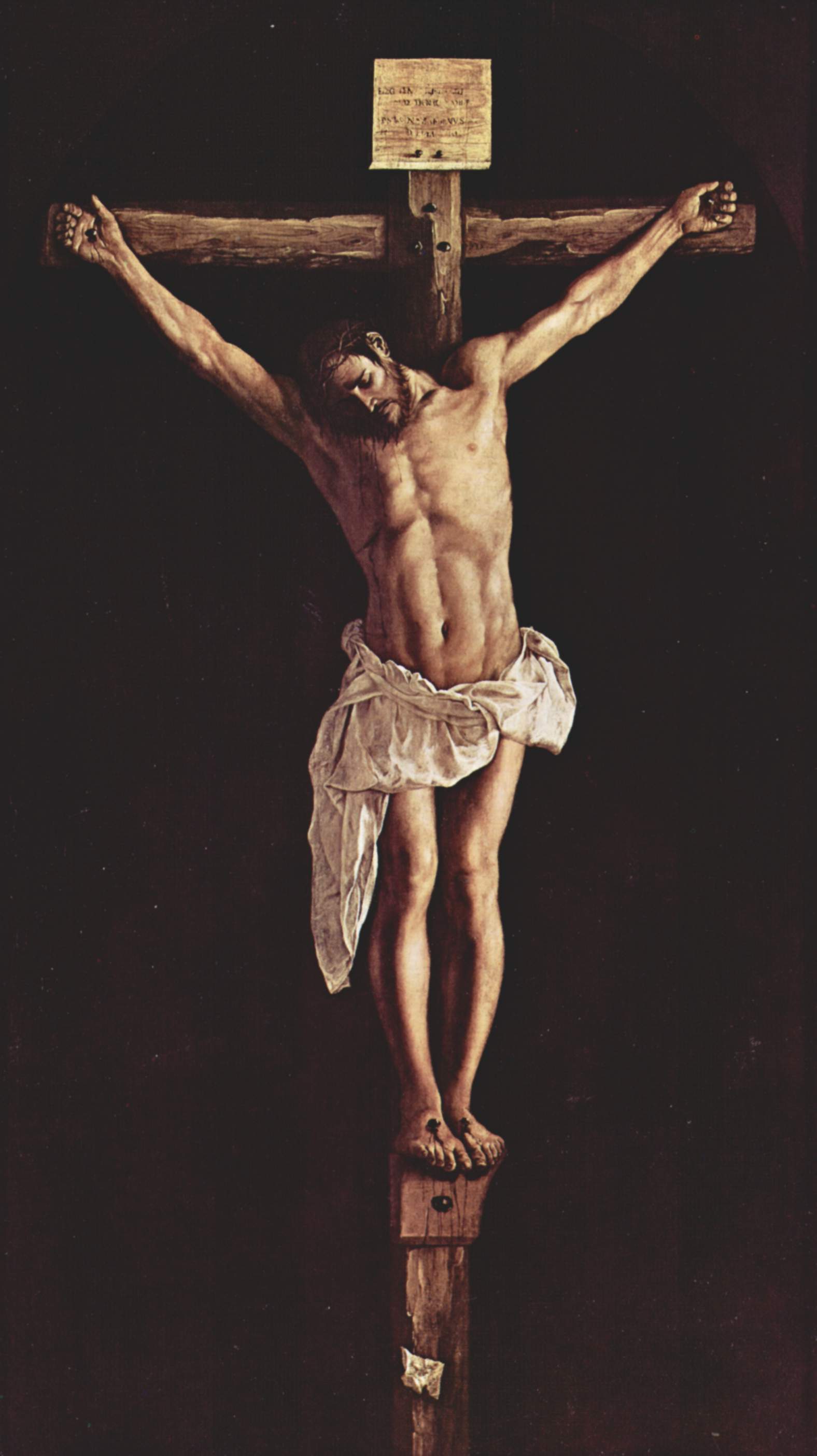 Today is Good Friday. Good Friday. The day of Christ on the cross — we mark this day as good.
In a day when alleged proclaimers of the Word define “life abundantly” as material goods and finite pleasures, a battered king nailed to a cross is still a stumbling block. And it is still a mandate.
But rejoice that you participate in the sufferings of Christ, so that you may be overjoyed when his glory is revealed.
— 1 Peter 4:13
Rejoice in sufferings?
This is not possible except for those who see being like Christ, who see being in Christ as the greatest good, the highest value, the best pleasure of all pleasures.
Many things can and will make us happy.
There is no joy but in Jesus Christ.
Let us fix our eyes on Jesus, the author and perfecter of our faith, who for the joy set before him endured the cross, scorning its shame, and sat down at the right hand of the throne of God.
— Hebrews 12:2
April 2, 2015
Revival Interrupts Our Little Programs
 “Every time we drive by a church with a sign out front announcing, ‘Revival meetings here next week,’ we are confronted with an understanding of revival that exaggerates the human dynamic. It may seem a small point, and I do not wish to be unfair. But how can we advertise a revival and expect to retain credibility? Presumably we do this because the very idea of revival has been diminished to an event on the church calendar. Evangelistic meetings — maybe that’s all people mean when they announce a revival — are a legitimate program. But true revival is not a scheduled program. It is a gift from the Throne wonderfully interrupting our little programs. The Holy Spirit blows like the wind, unpredictably, mysteriously, uncontrollably, wherever he pleases (John 3:8). We can’t announce him in advance. We can only pray that he will blow our way.”
– Raymond C. Ortlund, Jr., When God Comes to Church (Grand Rapids, Michigan: Baker, 2000), 19-20.
Let Him Who Thinks He Stands, Take Heed
 “Why has Peter expended so much powder and shot on the false teachers? . . . Because he is primarily a pastor. He is concerned to feed his Master’s sheep (cf. John 21:15-17, 1 Peter 5:1ff.), and he is furious to find them being poisoned by lust masquerading as religion. It is only by paying very cursory attention to the contents of this passage that Kasemann can say, ‘The attack on the heretics has taken on a stiff and stereotyped character, because the writer is so no longer conducting the campaign on the basis of his own experience.’ It does our generation little credit that such passion for truth and holiness strikes an alien note in our minds. Peter’s plain speaking . . . has a very practical purpose, just as Jesus’ warnings had: ‘What I say unto you I say unto all, Watch!’ We would be mistaken to assume, ‘It could never happen to us.’ Both Scripture and experience assure us that it could. ‘Let him that thinketh he standeth take heed lest he fall’ (1 Cor. 10:12). Covetousness, sophistical arguments, pride in knowledge, gluttony, drunkenness, lust, arrogance against authority of all kinds, and, most of all, the danger of denying the lordship of the Redeemer — are these not all the paramount temptations of money-mad, sex-mad, materialistic, anti-authoritarian, twentieth-century man?”
– Michael Green, “2nd Peter,” in The Second Epistle of Peter and the Epistle of Jude, TNTC (Grand Rapids, Michigan: Eerdmans, 1982), 122.
April 1, 2015
10 Reasons Big Easter Giveaways Are Unwise
 We are nearing the day many Christians look forward to all year. Yes, there’s the somber reflection and penitence of the Passion week, culminating in the resurrection of Jesus to celebrate on Easter Sunday, but there’s also some fabulous cash and prizes. Every year some churches seek to outdo themselves — and their local competition — by luring unbelievers (and I suppose interested believers) to their Easter service(s) with the promise of big shows and in some cases big giveaways. One guy in Texas made national news a couple of years ago for giving away new cars. More and more churches each year are dropping prize-filled Easter eggs out of helicopters to gathered crowds below. Local churches with more modest budgets sometimes promise door prizes like iPods or iPads or gift certificates to local restaurants.
I’m not against “Easter egg hunts” and kids having fun and all that, but I think the sort of large-scale, giveaway promotion that takes over this time of year in the church calendar is profoundly unwise and in many cases very, very silly. I want to offer ten general reasons why, but first some caveats: I’m not talking about a church giving out gifts to visitors. Gift cards, books, etc. to guests can be a sweet form of church hospitality. What I’m criticizing is the advertised promise of “cash and prizes” to attract people to the church service. Secondly, I know the folks doing these sorts of things are, for the most part, sincere believers who want people to know Jesus. But I don’t think good intentions authorize bad methods. So:
Ten reasons luring people in with cash and prizes is not a good idea.
1. It creates buzz about cash and prizes, not the Easter event. When the media takes notice, nobody wants to interview these pastors about the resurrection. They want them to talk about the loot.
2. It identifies the church not with the resurrection, but with giving toys away. It makes us look like entertainment centers or providers of goods and services, not people of the Way who are centered on Christ.
3. Contrary to some offered justifications, giving prizes away is not parallel to Jesus’ providing for the crowds. Jesus healed people and fed them. This is not the same as giving un-poor people an iPod.
4. It appeals to greed and consumerism. There is no biblical precedent for appealing to one’s sin before telling them to repent of it. This is a nonsensical appeal. We have no biblical precedent for appealing to the flesh to win souls.
5. Yes, Jesus said he would make us fishers of men, but extrapolating from this to devise all means of bait is not only unwarranted, it’s exegetically ignorant. The metaphor Jesus is offering here is just of people moving from the business of fishing to the business of the kingdom. There is likely no methodology being demonstrated in Jesus’ metaphor. (But the most common one would have been throwing out nets anyway, not baiting a hook.)
6. It is dishonest “bait and switch” methodology. Sure, the people coming for the goodies know they’re coming to church. But it’s still a disingenuous offer. The message of the gospel is not made for Trojan horses.
7. It demonstrates distrust in the compelling news that a man came back from the dead!! I mean, if nobody’s buying that amazing news, we can’t sell it to them with cheap gadgets.
8. It demonstrates distrust in the power of the gospel when we think we have to put it inside something more appealing to be effective. What the giveaways really communicate is that we think the gospel needs our help, and that our own community is not attractive enough in and of itself in its living out the implications of the gospel.
9. The emerging data from years of research into this kind of practice of marketing-as-evangelism shows the kind of disciples it produces are not strong. I have no doubt these churches are going to see many “decisions” Easter weekend. We’ll see the running tally heralded on Twitter. As questionable a practice as that can be, I’d be extra interested in how discipled these folks are in a year or two years or three. Hype has always produced “decisions.” Would anyone argue that after 30 years or so of the attractional approach to evangelism the evangelical church is better off, more Christ-centered, more biblically mature?
10. What you win them with is what you win them to.
A Feeble Faith and A Strong Christ
 If you’ve ever heard the name Augustus Toplady, you probably heard it in the context of the great hymn “Rock of Ages,” which Toplady penned. At one of the Together 4 the Gospel conferences a while back, I had the great blessing to find myself in a breakout session taught by Tony Carter called “Proclaiming the Comfort of the Gospel,” in which he quoted a fair bit from Toplady’s writing on assurance. Hungry for more, I did some poking around online and found this fantastic selection, which has become a favorite resource for me. It’s in the public domain and available for free distribution, so I’m posting it in its entirety. I hope it will minister to and bless you like it had me. (I have bolded my favorite lines.)
It has long been a settled point with me, that the Scriptures make a wide distinction between faith, the assurance of faith, and the full assurance of faith.1. Faith is the hand by which we embrace or touch, or reach toward, the garment of Christ’s righteousness, for our own justification.-Such a soul is undoubtedly safe.
2. Assurance I consider as the ring which God puts, upon faith’s finger.-Such a soul is not only safe, but also comfortable and happy.
Nevertheless, as a finger may exist without wearing a ring, so faith may be real without the superadded gift of assurance. We must either admit this, or set down the late excellent Mr. Hervey (among a multitude of others) for an unbeliever. No man, perhaps, ever contended more earnestly for the doctrine of assurance than he, and yet I find him expressly declaring as follows: “What I wrote, concerning a firm faith in God’s most precious promises, and a humble trust that we are the objects of his tender love, is what I desire to feel, rather than what I actually experience.” The truth is, as another good man expresses it, “A weak hand may tie the marriageknot; and a feeble faith may lay bold on a strong Christ.
Moreover, assurance after it has been vouchsafed to the soul may be lost. Peter no doubt lost his assurance, and sinned it away, when he denied Christ. He did not, however, lose the principle of faith; for Christ had before-hand prayed, concerning him, that his faith itself might not fail: and Christ could not possibly pray in vain. — A wife may lose her wedding-ring. But that does not dissolve her marriage relation She continues a lawful wife still. And yet she is not easy until she find her ring again.
3. Full assurance I consider as the brilliant, or cluster of brilliants, which adorns the ring, and renders it incomparably more beautiful and valuable. Where the diamond of full assurance is thus set in the gold of faith, it diffuses its rays of love, joy, peace, and holiness, with a lustre which leaves no room for doubt or darkness. While these high and unclouded consolations remain, the believer’s felicity is only inferior to that of angels, or of saints made perfect above.
4. After all, I apprehend that the very essence of assurance lies in communion with God. While we feel the sweetness of his inward presence, we cannot doubt of our interest in his tender mercies. So long as the Lord speaks comfortably to our hearts, our affections are on fire, our views are clear, and our faces shine. It is when we come down from the mount, and when we mix with the world again, that we are in danger of losing that precious sense of his love, which is the strength of saints militant, and the joy of souls triumphant.
But let not trembling believers forget that faith, strictly so called, is neither more nor less than a receiving of Christ, for ourselves in particular, as our only possible propitiation, righteousness, and Saviour: John i. 12. — Hast thou so received Christ? Thou art a believer, to all the purposes of safety. — And it deserves special notice that our Lord calls the centurion’s faith “great faith;” though it rose no higher than to make him say “Speak the word only, and my servant shall be healed.’.’ Matt. viii. 8-10.
The case likewise of the Canaanitish woman is full to the present point. Her cry was, “Have mercy on me, 0 Lord, thou Son of David!” And, a little after, -Lord, help me!” Jesus at first gave her a seeming repulse: but her importunity continued, and she requested only the privilege of a dog, viz., to eat of the crumbs which fell from the master’s table. What were our Saviour’s answer and our Saviour’s remark? An answer and a remark which ought to make every broken sinner take down his harp from the willows: — “O woman, great is thy faith.” Matt. x. 22-28.
5. The graces which the blessed Spirit implants in our hearts (and the grace of faith among the rest) resemble a sun-dial; which is of little service except when the sun shines upon it. The Holy Ghost must shine upon the graces he has given, or they will leave us at a loss (in point of spiritual comfort), and be unable to tell us where-abouts we are. May he, day by day, rise upon our souls with healing in his beams! Then shall we be filled with all joy and peace in believing, and abound in hope, through the power of the Holy Ghost. Rom. xv. 13.
6. Are there any weak in faith who come under the denomination of bruised reeds and smoking flax? Let them know that God will take care of them. The former will not be broken: the latter shall not be quenched. Bless God for any degree of faith; even though it be as the smallest of all seeds, sooner or later it will surely expand into a large and fruitful tree.However, stop not here; but, as the apostle advises, covet earnestly the best gifts: and the gift of assurance, yea, of fullest assurance among the rest. The stronger you are in faith, the more glory you will give to God, both in lip and life. Lord, increase our faith! Amen.
March 31, 2015
Preaching that Changes Orbits
 “Our greatest challenge in training motives is to change the believer’s orbit. Under the full control of their sinful nature, people are self-centered. They have the planetary mass of Jupiter, with God and other people orbiting around them like tiny moons. When people turn to Christ in faith, God begins the revolutionary process of transforming them to be other-centered and God-centered. They begin to see themselves in proper relation to the value of others and the greatness of God. Increasingly they orbit the massive, glorious sun of God’s will.
“Self-centered deeds do not please God. ‘All a man’s ways seem innocent to him, but motives are weighed by the LORD’ (Proverbs 16:2). ‘[The Lord] will bring to light what is hidden in darkness and will expose the motives of men’s hearts’ (1 Corinthians 4:5). The harmful side effect of some preaching is we appeal to self-interest in a way that encourages hearers to continue in an utterly self-centered way of life.”
– Craig Brian Larson, “Preaching That Promotes Self-Centeredness,” in The Art and Craft of Biblical Preaching (ed. H. Robinson)
Cursed be the Cheat; Blessed be the Name
 God through Malachi comes to the end of a series of rebukes of the priests of Israel (for offering polluted and blemished sacrifices) and says this:
Cursed be the cheat who has a male in his flock, and vows it, and yet sacrifices to the Lord what is blemished. For I am a great King, says the LORD of hosts, and my name will be feared among the nations.
— Malachi 1:14
This is a curse you and I bear. We are — every one of us — cheats. Hucksters. Phonies. Charlatans. Hypocrites. We go through the religious motions, we muddle through. We soak in lukewarmness. We vow our best to God and then give him half our heart (or less). And truth be told, there is not a single one of us whose best would not be blemished anyhow, total depravity being what it is.
So there we have it. We sinful, scheming cheats are under a curse. And God, as R.C. Sproul says, “will not negotiate his holiness.”
But he will have his glory one way or another. That is not up for debate. His name “will be feared among the nations.” He has predetermined this, and our sin, though great and total, is not some kind of kryptonite for God’s plans for his own fame. His glory will cover the earth like the waters cover the seas. That’s a promise.
So what to do? Nothing we can do. Just be cursed cheats, I s’pose. Something must give, though. God won’t negotiate the price but he will have his own glory. Could it be — oh my goodness, dare we think it? — that he’d paid the price himself?
And here we see in the harsh tones of Malachi the whispers of the Messiah. Between the lines of the heavy words of rebuke ride the heavy beams of the cross. These old covenant shadows are cast by the emergence of the new.
God vows a male from his own flock, but an unblemished one. The spotless lamb of God bears the curse for us. (As the Scriptures say, cursed is anyone who hangs on a tree. And while he hangs there, cheaters play beneath his feet.)
Because he is a great King. And his name will be feared among the nations.
Blessed be the name of the Lord.


