
Jared C. Wilson's Blog, page 39
April 14, 2015
When the Wilderness Seems a Paradise and the World a Wilderness
 Beautiful and logical, from Thomas Chalmers’s sermon The Expulsive Power of a New Affection (pdf):
“Conceive a man to be standing on the margin of this green world; and that, when he looked towards it, he saw abundance smiling upon every field, and all the blessings which earth can afford scattered in profusion throughout every family, and the light of the sun sweetly resting upon all the pleasant habitations, and the joys of human companionship brightening many a happy circle of society—conceive this to be the general character of the scene upon one side of his contemplation; and that on the other, beyond the verge of the godly planet on which he was situated, he could descry nothing but a dark and fathomless unknown. Think you that he would bid a voluntary adieu to all the brightness and all the beauty that were before him upon earth, and commit himself to the frightful solitude away from it? Would he leave its peopled dwelling places, and become a solitary wanderer through the fields of nonentity? If space offered him nothing but a wilderness, would he for it abandon the homebred scenes of life and of cheerfulness that lay so near, and exerted such a power of urgency to detain him? Would not he cling to the regions of sense, and of life, and of society? — and shrinking away from the desolation that was beyond it, would not he be glad to keep his firm footing on the territory of this world, and to take shelter under the silver canopy that was stretched over it?
“But if, during the time of his contemplation, some happy island of the blest had floated by; and there had burst upon his senses the light of its surpassing glories, and its sounds of sweeter melody;—and he clearly saw, that there, a purer beauty rested upon every field, and a more heartfelt joy spread itself among all the families; and he could discern there, a peace, and a piety, and a benevolence, which put a moral gladness into every bosom, and united the whole society in one rejoicing sympathy with each other, and with the beneficent Father of them all.—Could he further see, that pain and mortality were there unknown; and above all, that signals of welcome were hung out, and an avenue of communication was made for him—perceive you not, that what was before the wilderness, would become the land of invitation; and that now the world would be the wilderness?”


April 13, 2015
Called into the All-Surpassing Awesomeness of Jesus Christ
 John 1:35-51 is John’s account of Jesus’ calling some of his first disciples. The thing that strikes me as I look at this passage is the array of titles ascribed to Jesus. There are at least 7 titles/descriptors given to Jesus here:
1. The Lamb of God, ultimately referring to his atoning sacrifice
2. Rabbi, ascribing to him the place of teaching and wisdom
3. Messiah (the Christ), acknowledging him as the answer to Israel’s expectation
4. Jesus of Nazareth, son of Joseph, which reminds us of his incarnate humanity
5. Son of God, referring not just to Jesus positional relationship with the Father but his unique nature shared with the Father
6. King, which is pretty self-explanatory
7. Son of Man, an earthy title which actually belies its prophetic and apocalyptic meaning, in v.51 connected to his exaltation
Seven titles, seven facets of Jesus’ identity. Seven angles at his all-surpassing awesomeness.
In just 17 short verses, in just one short narrative recounting Jesus calling men into the radical life of following him, we see a big picture of all that Jesus is.
And it occurs to me that this is not just a great picture of this call to discipleship, but that it’s a wonderful picture of our call to discipleship. We tag along and Jesus asks, “What do you want?” and so many of us answer with a piddlin’ amount of expectation compared to the all-satisfying goodness he is actually drawing us into.
Think about the mentors you’ve had throughout your life. What would you say if they were to ask you, “What do you want out of this relationship?” The expectations we have vary: guidance, information, affirmation of gifts, encouragement.
We go to Jesus asking for these slices of wholeness, as well.
The titles in John 1 speak to these needs — he is the Rabbi for those needing wisdom, he is the Messiah for those needing fulfillment, he is the Lamb for those needing forgiveness — but the truth is that we need all that Christ is, and the truth is that in becoming his disciples we actually receive all that Christ is!
We settle too easily. As C.S. Lewis says, “We are far too easily pleased.” We want and expect Jesus the information desk, Jesus the ATM, Jesus the boyfriend, Jesus the socially conscious vegetarian, Jesus the culture warrior, Jesus the chest-thumping ultimate fighter, Jesus the tea drinking beatnik, and he is none of those things (but perhaps, in some way, all of those things). He is all of God, and he is all of life.
There are two instances of “evangelism” in this account, also. The Baptizer’s disciples ask Jesus where he’s staying and Jesus responds, “Come along and see what’s happening.” Philip doesn’t just tell Nathanael about Jesus; he says to him, “Come and see.”
Clearly it is one thing to impart information about the goodness of Jesus, but the real affect, the real impact upon those desperate for life, occurs when someone “sees” the fullness of Christ in action. If discipleship means embracing the fullness of Christ, the community of disciples should radiate the wonder and worship life in the fullness of Christ really evokes.
We worship an amazing God who supplies all our needs according to his riches in King Jesus.
April 11, 2015
Lay Off, Mr. Law!
 From Martin Luther’s Commentary on Galatians, commenting on 3:19:
“[T]he Law is not to operate on a person after he has been humbled and frightened by the exposure of his sins and the wrath of God. We must then say to the Law: ‘Mister Law, lay off him. He has had enough. You scared him good and proper.’ Now it is the Gospel’s turn. Now let Christ with His gracious lips talk to him of better things, grace, peace, forgiveness of sins, and eternal life.”
April 10, 2015
They Will Know You Are Conference Christians By Your Porn?
 A gentle word of warning for the thousands entering Orlando this weekend for next week’s Gospel Coalition Conference: what you do in the privacy of your hotel room can be a witness against the gospel. Seriously.
From Steve Farrar’s Finishing Strong:
A number of years ago a national conference for church youth directors was held at a major hotel in a city in the mid-west. Youth pastors by the hundreds flooded into that hotel and took nearly every room. At the conclusion of the conference, the hotel manager told the conference administrator that the number of guests who tuned into the adult movie channel broke the previous record, far and away outdoing any other convention in the history of the hotel.
I wondered if this was not a bit of an urban legend of sorts, so I asked my friend Justin Holcomb to help me look into this phenomenon, and recalling from his own research, he wrote in an email to me:
I interviewed hotel managers about this when I was teaching in the sociology department at Univ of Virginia. All managers said that porn rates increase during conferences in general. That’s normal because they have more guests. A few admitted that it seems to be the same or a bit more when Christian conferences come to town. One manager was a Christian and he said a line I’ll never forget: “Unfortunately, ‘they know you are Christians by your…porn consumption’ is more truthful than ‘love’ when it comes to this.”
Friends, this should not be.
We may flood to the area hotels next month and outwardly demonstrate a solid witness for the gospel, and then put a black eye on the church, thinking viewing pornography in our hotel room is easy, confidential, and inconsequential. Will the church stun the managers of the Rosen Shingle Creek with its porn consumption next month?
If you believe you are susceptible to this, take precautions now. Secure a roommate, have your TV removed or stations blocked, whatever you have to do. Don’t assume now it won’t be an issue, especially since if you already have filters and accountability software on your personal devices, you may in the moment think viewing PPV porn is “safe.”
And of course you shouldn’t not view porn next week merely because you could contribute to a black eye to the bride of Christ. You should not view it any time because it dishonors God and because the joys of Christ and his gospel are stronger and more fulfilling than lustful indulgence.
Blessings, TGC’ers. Watch your life and your doctrine closely, because your private life gives public witness, whether you realize it or not.
And a final warning for those convicted by their succumbing to this temptation or the lure: Don’t give in to despair. Christ is for you. Repent and cast your cares on him, because he really does – truly and really — care eternally for you.
The Right Kind of Christ-Centeredness
 Now I would remind you, brothers, of the gospel I preached to you, which you received, in which you stand, and by which you are being saved, if you hold fast to the word I preached to you— unless you believed in vain. For I delivered to you as of first importance . . .
– 1 Corinthians 15:1-3
To be gospel-centered is to be Christ-centered. But as it pertains to the pursuit of holiness and obedience to God’s commands we may opt more often for the terminology “gospel-centered,” because without more qualifications, “Christ-centered obedience” can be misconstrued to imply simply taking Jesus as a moral example.
Jesus is our moral example, of course, but the power for enduring, joyful obedience comes not from trying to be like him, but in first believing that he has become like us, that he has died in our place, risen as our resurrection firstfruits, ascended to intercede for us, and seated to signal the finished work of our salvation.
Christ-centeredness properly qualified is truer than true. But many unbelievers have accepted (some of) Jesus’ teaching as the center of their self-salvation projects. Gospel-centeredness, however, tells us in shorter fashion what of Christ to center on: namely, his finished but eternally powerful atoning work.
Christ’s work is not all of Christ, but it is the doorway to all of him.
[T]he simple focus of my life is to be like Christ. That is why I must let the word about Christ dwell in me richly, as Colossians 3:16 says. That is why I must gaze at the glory of Christ, 2 Corinthians 3:18, so that I can be changed into his image. That is why Christ must be fully formed in me, Galatians 4:19. That is why if I say I abide in Him I must walk the way He walked, 1 John 2. I’m to be like Christ. This is the goal of my life.
So the goal of my life as a Christian is outside of me, it is not in me, it is outside of me, it is beyond me. I am not preoccupied with myself, I am preoccupied with becoming like Christ. And that is something that only the Holy Spirit can do as I focus on Christ. I focus on Him and the Spirit transforms me into His image.
– John MacArthur, Fleeing From Enemies [emph. added]
April 9, 2015
Being the Best is No Cure for Eternity
 “Why do I have three* Super Bowl rings and still think there’s something greater out there for me? I mean, maybe a lot of people would say, ‘Hey man, this is what is.’ I reached my goal, my dream, my life. Me, I think, ‘God, it’s got to be more than this.’ I mean this isn’t, this can’t be what it’s all cracked up to be.” When Kroft asked him, “What’s the answer?” Brady responded, “I wish I knew. I wish I knew. I love playing football and I love being quarterback for this team. But at the same time, I think there are a lot of other parts about me that I’m trying to find.” (– Tom Brady interview with Steve Kroft, 60 Minutes, 12.23.07.)
He has made everything beautiful in its time. Also, he has put eternity into man’s heart, yet so that he cannot find out what God has done from the beginning to the end.
– Ecclesiastes 3:11
*Now four. Just sayin’.
The Forgetfulness That Imperils Nations, Cultures
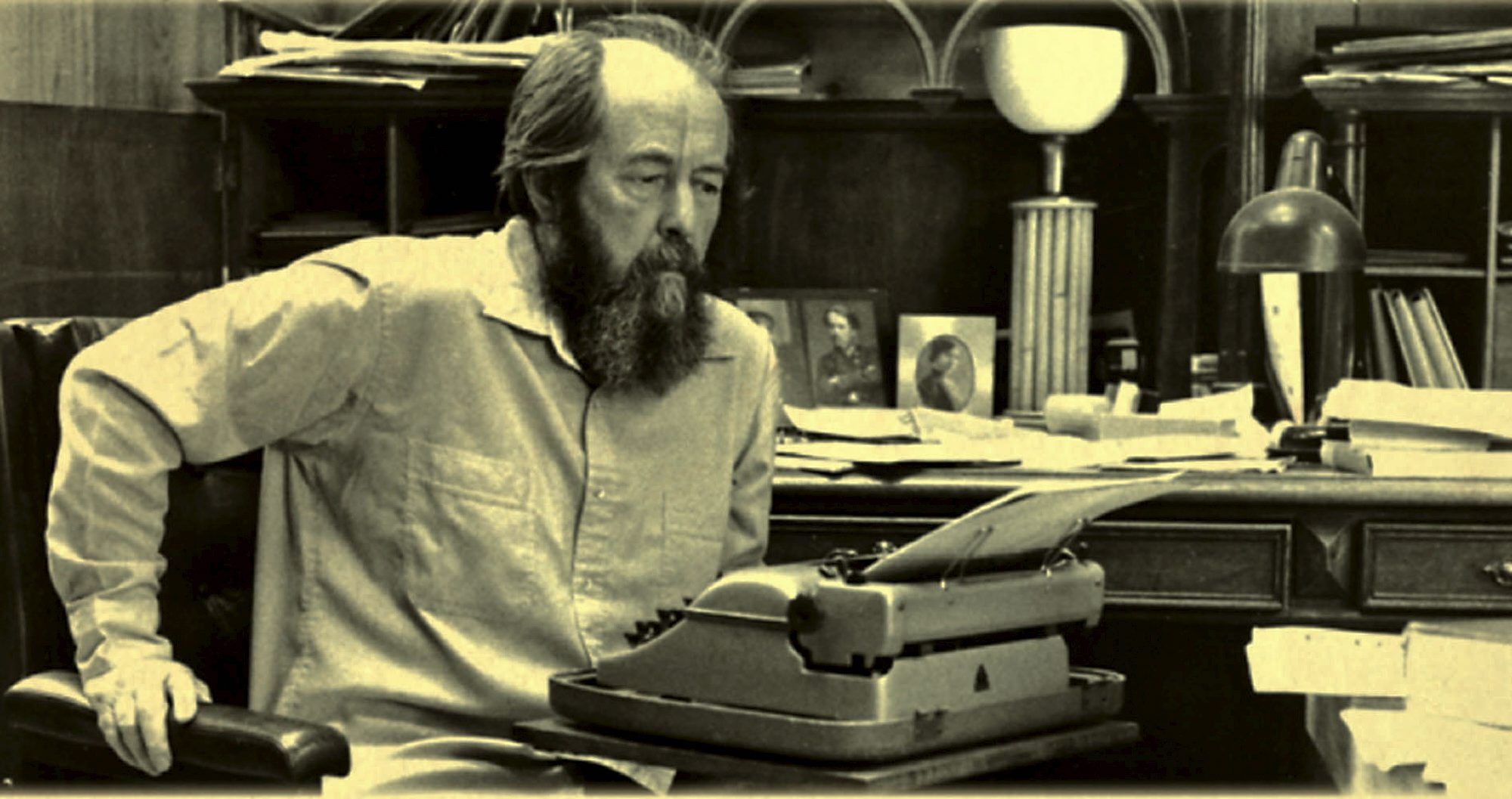 “More than half a century ago, while I was still a child, I recall hearing a number of older people offer the following explanation for the great disasters that had befallen Russia: Men have forgotten God; that’s why all this has happened.
“Since then I have spent well-nigh fifty years working on the history of our Revolution; in the process I have read hundreds of books, collected hundreds of personal testimonies, and have already contributed eight volumes of my own toward the effort of clearing away the rubble left by that upheaval. But if I were asked today to formulate as concisely as possible the main cause of the ruinous Revolution that swallowed up some sixty million of our people, I could not put it more accurately than to repeat: Men have forgotten God; that’s why all this has happened.
“What is more, the events of the Russian Revolution can only be understood now, at the end of the century, against the background of what has since occurred in the rest of the world. What emerges here is a process of universal significance. And if I were called upon to identify briefly the principal trait of the entire twentieth century, here too, I would be unable to find anything more precise and pithy than to repeat once again: Men have forgotten God.”
– Alexander Solzhenitsyn, “Men Have Forgotten God,” The Templeton Address (1983)
April 8, 2015
6 Things Jesus Does With Sin

The next day he saw Jesus coming toward him, and said, “Behold, the Lamb of God, who takes away the sin of the world!”
– John 1:29
John the Baptist commands a beholding of the sin-taking-away Lamb. What do we see in this beholding? How exactly does Jesus take away our sin?
Here are 6 things Jesus does with sin:
1. He Condemns It.
Jesus puts a curse on sin. He marks its forehead.
Romans 8:3 – “For God has done what the law, weakened by the flesh, could not do. By sending his own Son in the likeness of sinful flesh and for sin, he condemned sin in the flesh.”
Jesus says to sin in no uncertain terms, “Sin, you’re going to die.”
2. He Carries It.
Like the true and better scapegoat, Jesus becomes our sin-bearer.
1 Peter 2:24 – “He himself bore our sins in his body on the tree, that we might die to sin and live to righteousness. By his wounds you have been healed.”
2 Corinthians 5:21 – “For our sake he made him to be sin who knew no sin, so that in him we might become the righteousness of God.”
3. He Cancels It.
He closes out the account. (Even better, he opens a new one, where we’re always in the black, having been credited with his perfect righteousness.)
1 Corinthians 13:4-5 – “Love is patient and kind; love does not envy or boast; it is not arrogant 5 or rude. It does not insist on its own way; it is not irritable or resentful”
That word resentful is more directly “to count up wrongdoing,” which is why some translations of this text say that “Love keeps no record of wrongs.”
Colossians 2:13-14 – “And you, who were dead in your trespasses and the uncircumcision of your flesh, God made alive together with him, having forgiven us all our trespasses, by canceling the record of debt that stood against us with its legal demands. This he set aside, nailing it to the cross.”
That last proclamation leads us into this great truth:
4. He Crucifies It
1 Peter 3:18 – “For Christ also suffered once for sins, the righteous for the unrighteous, that he might bring us to God, being put to death in the flesh but made alive in the spirit.”
At the cross, Jesus dies and takes our sin with him. Only the sin stays dead.
5. He Casts It Away
Jesus takes the corpse and chucks it into the void.
Micah 7:19 – “He will again have compassion on us; he will tread our iniquities underfoot. You will cast all our sins into the depths of the sea.”
Psalm 103:12 – “as far as the east is from the west, so far does he remove our transgressions from us.”
6. He Chooses to Un-remember It.
Jesus is omniscient. He is not forgetful. But he wills to un-remember our sin.
Jeremiah 31:34 – “And no longer shall each one teach his neighbor and each his brother, saying, ‘Know the LORD,’ for they shall all know me, from the least of them to the greatest, declares the LORD. For I will forgive their iniquity, and I will remember their sin no more.”
Hebrews 8:12 – “For I will be merciful toward their iniquities, and I will remember their sins no more.”
Hebrews 10:17 – “I will remember their sins and their lawless deeds no more.”
Astonishing. We bring our sin to him, repentant and in faithful confession, and he says, “What’re you talking about?”
This is how Jesus forgives sin: He condemns it, carries it, cancels it, kills it, casts it, and clean forgets it. If we’ll confess it.
1 John 1:9 – “If we confess our sins, he is faithful and just to forgive us our sins and to cleanse us from all unrighteousness.”
If Christ is True, Then Boredom is a Sin
 “If Christ is true, then boredom is a sin.
“Boredom is a sin so long as Christ is infinitely beautiful. Even the angels, for whom the gospel is that strange mystery purposed not for themselves, long to look into the deep, fascinating well of its revelation (1 Pet. 1:12). Because the good news proclaims the unsearchable riches of Christ, who opens the window looking out on the eternal mystery of the Trinity, it is endlessly absorbing, dazzlingly multifaceted. When we are bored, it can only be because we have stopped looking at Jesus. He can’t be boring. If we find him boring, it’s because we are boring. The deficiency is ours, not his.
“Boredom and his twin brother laziness are fundamentally theological failures, which is to say they are failures of belief, of worship. Thomas Aquinas wisely says, ‘Sloth is a kind of sadness.’ He has lifted the hood of the lazybones to peer at what’s beneath. ‘There’s your problem right there,’ he says, pointing. A worshipless heart. A joyless heart. The diagnosis is the same for the bored as for the lazy: a kind of sadness. And the prescription is the same for the bored as for the lazy: rejoice in the Lord.
“Laziness is not rest; this is why there is no joy in it. But when Jesus sets us free, he really sets us free—free to work, free to love, free to rest—with happiness and delight, awe and wonder, fulfillment and satisfaction.
“‘The soul has a palate and a throat, else Jesus would not bid us drink,’ John Piper says. It is not just our bodies that are built for enjoyment, but our spiritual senses, the insidest of our insides, and the problem of course is that we are bent to think our insides will have joy when our outsides do. But it doesn’t work that way. It is the other way around. Food and drink will not truly satisfy the body until the bread and wine of Jesus’s body satisfy our soul.”
– from Gospel Deeps, 80-81
April 7, 2015
Of Whom I Am the Foremost
 The saying is trustworthy and deserving of full acceptance, that Christ Jesus came into the world to save sinners, of whom I am the foremost.
— 1 Timothy 1:15
In Mark 2:14, Jesus calls a man who taxes fishermen to join some of the fishermen who’ve been taxed in his band of merry disciples. Let’s not gloss over this historical-cultural reality. The tax collector Levi (Matthew) is thought to be a dog — a sinner, a thief, a traitor to the faith and the nation — and he is now joined together with those he has betrayed and stolen from. Eventually they’re all reclining together in Levi’s house at the table, and Jesus and his disciples are taking on the stigma of the “tax collectors and sinners.”
I think of Acts 9 when the repentant Paul tries to join the disciples of Christ and the disciples of Christ are thinking, “Um, what?” They’re reasonably afraid. Can you imagine perhaps being someone whose cousin was murdered by Paul and then later being under Paul’s apostolic authority?
Jesus goes around making enemies into friends, of himself and each other. He makes them family. How does this work?
The gospel.
We deduce from the gospel a few important points, things that are personal commitments to remember:
1. I am a sinner like they are sinners. The ground is level at the foot of the cross.
2. My salvation did not come from being better than them but from the finished work of Christ.
3. Because I know me better than I know them, it is true, acknowledged or not, that I am the worst sinner I know.


