
Jared C. Wilson's Blog, page 42
March 23, 2015
Piper on Emotional Blackmail in the Church
 I’ve seen it a lot too. Piper:
“Not feeling loved and not being loved are not the same. Jesus loved all people well. And many did not like the way he loved them. Was David’s zeal for the Lord imbalanced because his wife Michal despised him for it? Was Job’s devotion to the Lord inordinate because his wife urged him to curse God and die? Would Gomer be a reliable witness to Hosea’s devotion? . . . I have seen so much emotional blackmail in my ministry I am jealous to raise a warning against it. Emotional blackmail happens when a person equates his or her emotional pain with another person’s failure to love. They aren’t the same. A person may love well and the beloved still feel hurt, and use the hurt to blackmail the lover into admitting guilt he or she does not have. Emotional blackmail says, ‘If I feel hurt by you, you are guilty.’ There is no defense. The hurt person has become God. His emotion has become judge and jury. Truth does not matter. All that matters is the sovereign suffering of the aggrieved. It is above question. This emotional device is a great evil. I have seen it often in my three decades of ministry and I am eager to defend people who are being wrongly indicted by it.”


For The Church Conference 2015
I hope you’ll make plans to join us in Kansas City on Aug. 31 – Sep. 1 for the 2nd annual For The Church Conference. This year’s theme is “The Church & Truth,” and speakers will include Darrin Patrick, David Platt, Russell Moore, H.B. Charles, Jason Allen, and myself. Come help us enjoy the heart of God in the heartland!
And in the meantime, you can join the exulting on Twitter by following @forthechurch

March 21, 2015
He Reckoned It a Great Success
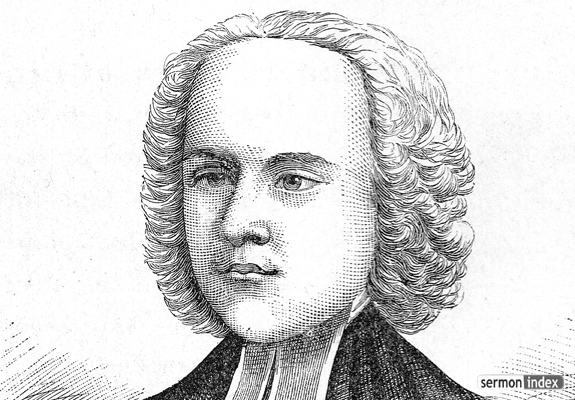 In light of tomorrow’s church gatherings and the subsequent measurements of various kinds of success therein, I feel the nudge to share this passage from Thomas Kidd’s incredible book George Whitefield: America’s Spiritual Founding Father:
On the appointed evening, Whitefield preached with little incident other than a few boys calling him “strange names.” But Whitefield decided that he has to confront the revelers, so he went to the “stage, erected for the wrestlers, and began to show them the error of their ways.” Some youths shouted him down with cries of “huzza,” and one of the brawlers accosted him and hit him with a cudgel. Whitefield, fearing for his life, left the stage, pushed through the shouting crowd, and escaped on his horse. It was a frightening experience, but in his published journal, he reckoned it a great success.– Kidd (Yale, p.82)
Of course, this is same man who once said, “I was honored with having stones, dirt, rotten eggs and pieces of dead cats thrown at me.”
March 20, 2015
An Astonishing Revelation from Another World
 I’m a fan of the kind of UFO movies that tap into that inscrutable human longing for contact with what’s “out there.” Signs was a good one, not really about aliens at all, but really about faith. E.T. is a classic not least for speaking to a growing generation of lonely children. I love the scene in Contact where those long-listening to SETI’s droning broadcast suddenly and startlingly hear an anomaly, a signal at last from another world. But my favorite extraterrestial film is Spielberg’s other classic, Close Encounters of the Third Kind. So much angst throughout, so much mystery, so much hurt and hope, hurtling forward into the climactic moment at the end when all the hopeful longing is met with the arrival of creatures from another world. And there is a sweet, beautiful illustration of the wonder, the transcendence, the “coming home”-ness of the heart that has eternity written upon it finally being filled. If you’re like me, when you see these scenes, you feel stirred in some way. They are playing on a frequency deeper than mere entertainment.
I think this is because there is something essentially human about feeling that we are not alone.
As Christians, we know that God is real, that God is out there, that God is the settler of the restless heart. The “thing” everyone is longing for is God himself. And this God is real! So here we have the God: eternal, immortal, invisible, God only wise. He is utterly transcendent. To him alone be glory, majesty, dominion, and authority, before all time and now and forever. Basically, we’re talking God — like, the God. And he’s written us a book. That we don’t open this divine revelation with eyes wide, mouths gaping, hearts leaping out of our chest is an astonishment of its own.
And that he has revealed himself in the person Jesus Christ, once here and returning soon, is surely faint-worthy. That he has given us his Spirit is thrilling. That the Spirit helps us understand the book is amazing. That he through the Son revealed in the book illuminated by the Spirit presents us blameless before the presence of his glory is too wonderful for words.
The God has made himself known. Staggering.
Come and Die
 Share in suffering as a good soldier of Christ Jesus.
— 2 Timothy 2:3
Have you ever seen a military recruitment poster or TV ad that showed wounded soldiers? Ever seen one that showed soldiers taking bullets, medics administering morphine to blood-gushing comrades, or an array of battle-hardened quadriplegics?
No, you have not. We recruit soldiers by showing shiny weapons, technologically advanced machines and systems, adventurous locales, and strong, healthy men and women using them, engaging in them, and bravely enjoying them.
But not Paul. He will not whitewash the mission. As Christ says, “Count the cost” and “Take up your cross” and “Die to self,” Paul’s recruitment slogan is: Share in suffering.
In 2 Timothy 2:7, he writes, “Think over what I say, for the Lord will give you understanding in everything.” He wants disciples of Jesus to consider what he’s just laid out for them, which is that Christianity is about suffering like a soldier, training like an athlete, and working hard like a farmer. One thing these three examples have in common is a stubborn commitment to a diligent daily grind for a payoff that is not instant or immediate.
“Think over what I say.” Mull this over. Consider this. Count the cost. So that when hardship comes — and as Gary Demarest says, “Following Christ causes problems” — you are not acting as if something strange is happening to you (1 Pet. 4:12). Instead, you have a vision of what will be, of the “eternal glory” (2 Tim. 2:10) that lay ahead.
When Shackleton advertised for recruits for his venture to Antarctica in 1914, he did it this way:
Men wanted for hazardous journey. Small wages, bitter cold, long months of complete darkness, constant danger, safe return doubtful. Honour and recognition in case of success.
“When Christ bids a man,” Dietrich Bonhoeffer says, “he bids him come and die.”
Ah, but then he lives! Really, truly lives. He can’t be stopped. There ain’t hardly nothing you can do to him.
We might rewrite Shackleton’s ad thusly:
Men wanted for hazardous journey. Small wages, bitter cold, long months of complete darkness, constant danger, safe return doubtful. Honour and recognition guaranteed.
Come and die (and live!).
Jesus is a Straight Shooter, For Our Joy
 “Only God is capable of telling us what our rights and needs are. You have to surrender that right to Him.”
— Joni Eareckson Tada
And when they could not get near him because of the crowd, they removed the roof above him, and when they had made an opening, they let down the bed on which the paralytic lay. And when Jesus saw their faith, he said to the paralytic, “Son, your sins are forgiven.”
— Mark 2:4-5
What great friends this helpless man had to have gone to such great lengths to get him before Jesus! Ostensibly, they seek his physical healing. And Jesus delivers that, but not at first. Jesus says to the man first, “Your sins are forgiven.”
Why? Is it because the man’s sin was the cause of his paralysis? I don’t think so. Jesus himself speaks against such notions elsewhere (John 9:1-3; Luke 13:4).
I think it’s the same reason Jesus won’t be distracted by diversionary chit-chat with the Samaritan woman at the well (John 4). I think it’s the same reason why Jesus refuses to condemn the woman caught in adultery but still sends her away with some choice words (John 8:11). I think it’s connected to the way this miracle-working Jesus keeps saying the reason he came was to preach (Mark 1:38, 2:2; Matthew 12:39), not perform miracles. It is because we can always count on Jesus to shoot us straight. He will always be honest with us about what we most need.
Think of how many times in prayer or study we bring a problem or issue to the Lord, and they are not things he won’t deal with or address, but they amount to subterfuges, conscious or unconscious, on our part from the real matters of our hearts. We often present things for Jesus to heal other than what he really means to get at in us. We love for Jesus to fix our circumstances and our pains, but we often don’t want him doing the invasive surgery his gospel is designed for. So we pile up the fig leaves.
What Jesus first says to the paralyzed man presented before him tells us that there are far worse things than being paralyzed all your life. And there are far better things than being healthy all your life.
Jesus gave the man the greatest gift he could receive: eternal pardon. The rest was gravy. Suppose Jesus had only healed the man’s body but not his soul? He might’ve danced until his dying day and then suffered for all eternity. Now suppose Jesus had not ladled that circumstantial miracle upon the eternal one, what would have happened? The man would have lived out his days still paralyzed, only to die and emerge in the resurrection to come with dancing legs he could never imagine.
When Jesus heals us physically and blesses us circumstantially, he is providing signposts to the scope of his atoning work, to the resurrection to come and the infinite bliss of the Lamb-lit new heavens and earth. He does not want us to terminate on the signs but the Signified. And this is also why he often denies us these circumstantial blessings.
The lessons Jesus teaches are hard, as they often involve great suffering, but they are for our joy, as they involve eternal life.
But seek first the kingdom of God and his righteousness, and all these things will be added to you.
— Matthew 6:33
So we do not lose heart. Though our outer self is wasting away, our inner self is being renewed day by day. For this light momentary affliction is preparing for us an eternal weight of glory beyond all comparison, as we look not to the things that are seen but to the things that are unseen. For the things that are seen are transient, but the things that are unseen are eternal.
— 2 Corinthians 4:16-18
March 19, 2015
God Doesn’t Need Your Help
 The fear of man lays a snare,
but whoever trusts in the Lord is safe.
— Proverbs 29:25
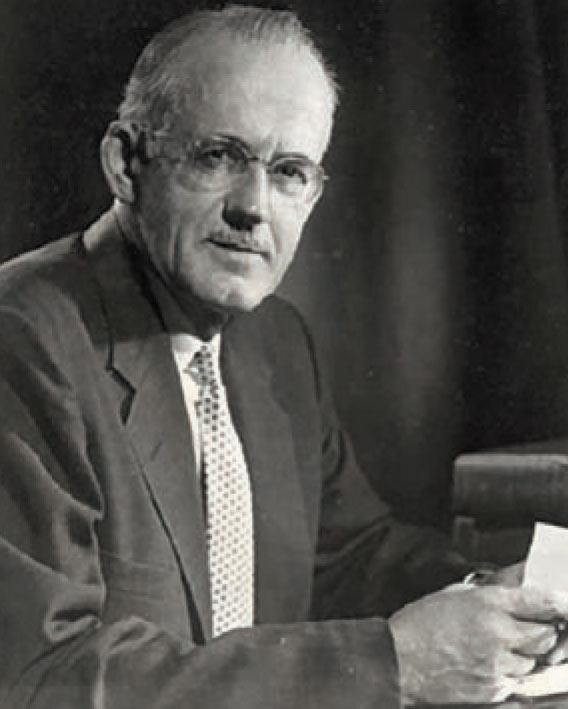
We make equivocations about direct biblical teaching when we are embarrassed by it, when we fear rejection because of it. We think the Bible isn’t very good PR for Jesus, so we want to help it out a little bit. A.W. Tozer in Knowledge of the Holy:
Almighty God, just because he is almighty, needs no support.The picture of a nervous, ingratiating God fawning over men to win their favor is not a pleasant one; yet if we look at the popular conception of God that is precisely what we see.
Twentieth-century Christianity has put God on charity. So lofty is our opinion of ourselves that we find it quite easy, not to say enjoyable, to believe that we are necessary to God . . .
I fear that thousands of younger persons enter Christian service from no higher motive than to help deliver God from the embarrassing situation His love has gotten Him into and His limited abilities seem unable to get Him out of.
When a Man Says This, He is a Child of God Forever
 “Acceptance of the Lord Jesus Christ, as He is offered to us in the gospel of His redeeming work, is saving faith. Despairing of any salvation to be obtained by our own efforts, we simply trust in Him to save us; we say no longer, as we contemplate the Cross, merely ‘He saved others’ or ‘He saved the world’ or ‘He saved the Church'; but we say, every one of us, by the strange individualizing power of faith, ‘He loved me and gave Himself for me.’
“When a man once says that, in his heart and not merely with his lips, then no matter what his guilt may be, no matter how far he is beyond any human pale, not matter how little opportunity he has for making good the evil that he has done, he is a ransomed soul, a child of God forever.”
— J. Gresham Machen, What is Faith? (Banner of Truth, 1991), p.154
March 18, 2015
Getting in Their Face (Pastorally)
 As it is written in Isaiah the prophet,
“Behold, I send my messenger before your face,
who will prepare your way,
the voice of one crying in the wilderness:
‘Prepare the way of the Lord,
make his paths straight,'”
John appeared, baptizing in the wilderness and proclaiming a baptism of repentance for the forgiveness of sins.
— Mark 1:2-4
And this is what preaching is, what pastoring is, really. From the pulpit and in private and all points in between. We are set before their faces, heralding not our ministries, not our gifts, not our talents, not our numbers, not ourselves (2 Cor. 4:5) but him whose sandals we are not fit to untie (Mark 1:7). So we are constantly pointing away in word and deed to the straight path of the Lord, calling all to repent and be baptized for the forgiveness of their sins in Christ.
We are not Jesus. Jesus is Jesus. We are like crazily rational people (2 Cor. 5:13) who won’t shut up about Jesus.
So we must be personal (before actual faces), passionate (crying out), and prophetic (preaching Christ).
He must increase, but I must decrease.
— John 3:30
For The Church at SBC15
If you’re attending the Southern Baptist Convention in Columbus this summer, I hope you’ll join me and others for Midwestern Seminary’s For The Church Regional Conference on June 16.
Stay tuned for more info, and in the meantime, you Twitter folks should follow @forthechurch and @mbts.


