Phil Simon's Blog, page 21
October 5, 2021
Episode 50: A Flux Mind-Set With April Rinne
 April Rinne joins me. She’s the author of the excellent new book Flux: 8 Superpowers for Thriving in Constant Change. We talk about the intensifying rate of change, agency, playlists, and the importance of letting go of the future. (Yeah, you read right.)
The post Episode 50: A Flux Mind-Set With April Rinne appeared first on Phil Simon.


October 4, 2021
On Collaboration Tools, Interview Litmus Tests, and Higher Education
 Interviewing the Interviewer
Ever since declining to re-up with ASU last May, I have said that I’d return to academia on a full-time basis, but only under the right circumstances.1 To that end, this past July I interviewed for a position as a full-time college professor at a midsized university closer to my roots back east.
The timing here is important. In other words, in a little more than one month, a brand-new professor would have to teach four sections of a key prep. Put mildly, the hiring committee was under the gun to quickly fill the slot.2
After making the initial cut, I proceeded to the next step: a full day of Zoom interviews and a presentation to demonstrate my teaching skills. During the former, I made sure to ask each of my would-be future colleagues a simple question: Which applications did they use to communicate and collaborate with each other and their students?
To a person, they all responded with, “E-mail.” Even over Zoom, their tone and body language were unmistakeably quizzical: What else would you use? There are other, maybe even better communication and collaboration options?
The Method to My Madness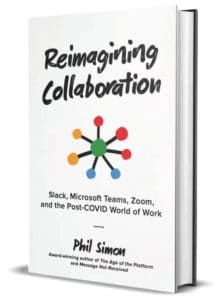 I’m not completely oblivious. Reading the (virtual) room, I could tell that my straightforward query had rattled a few of the interviewers. As we chatted, I explained that I have long communicated just fine with students sans e-mail.
Huh?
I wasn’t advocating some insane experiment or unsafe/unproven e-mail alternative. Rather, I had successfully used Slack in the classroom in my years at ASU as a collaboration hub. That is, I did far more with it than just send and receive text messages. I even wrote a book about the power of internal collaboration hubs. Brass tacks: I wasn’t interested in reverting to e-mail and a world without hubs and spokes.
Now, I’m no absolutist. Say that, at this university, Slack was off the table for whatever reason. No bother. Today, I happily use Microsoft Teams, Zoom, and Google Workspace in similar ways because I like to stay current. Even prior to COVID-19, internal collaboration hubs were becoming more powerful, popular, and important. Individual differences between and among them are waning because software vendors so frequently, er, borrow from each other. As educators, wasn’t it our responsibility to provide students with the skills they need to succeed when they graduate?
You probably see where this little yarn is going.
Microsoft Teams daily active users as of April, 2021.
Million Source: The VergeEducators who refuse to learn new tools and methods fail their students.
I harbored no illusions, however. I knew that my query and the discussions it provoked were risky gambits. Even though they effectively ended my candidacy, I lost zero sleep over the decision.
The interviewers’ universal unwillingness to even consider using new, superior collaboration tools represented to me the reddest of flags. The message couldn’t have been clearer: We don’t want outsiders introducing new ideas into our ivory tower. The words rigid and hidebound come to mind.
Thank You for Your Interest…A few days later, I received the inevitable, canned rejection e-mail—followed by a second one a few days later. The redundant e-mail made me even more confident of my assessment of the school. (Bayes’ theorem in action, baby.)
Reading between the lines, it was obvious that this century-old university:
Continues to struggle with technology, systems, and change.Doesn’t recognize these problems.Would view people like me as intransigent threats to established norms and the powers-that-be.Simon SaysI’ll place my reactions into two buckets. First, ultimately the students will suffer for this unfortunate mind-set. Whoever teaches those courses will fail to expose the class to critical applications used by hundreds of millions of people. (Yes, a little piece of me has just died inside.) How can professors expect students to learn new skills, tools, and concepts if they themselves refuse? Professors need to lead by example.
Second and on a personal level, I don’t regret discussing collaboration during the interview process one bit. As I’ve aged and attained some level of success, I’ve become intentionally and unapologetically picky about professional opportunities. Double that when they require me to quickly uproot my life and move across the country. Certain things I just won’t abide. Relying upon antiquated communication and collaboration methods sits at the top of my list.
As an aside, I know that writing a post like this will make me radioactive to employees at a certain type of organization. To that, I say, “Good.”
FeedbackWhich traits disqualifies employers when you’re searching for new opportunities?
The post On Collaboration Tools, Interview Litmus Tests, and Higher Education appeared first on Phil Simon.
September 28, 2021
Episode 49: The Challenges of Hybrid Work With Dr. Peter Cappelli
 Dr. Peter Cappelli joins me. He is the George W. Taylor professor of management at the University of Pennsylvania’s Wharton School and the author of The Future of the Office: Work From Home, Remote Work, and the Hard Choices We All Face. We talk about the difficulties of hybrid work, how it may impact cities and local businesses, and the challenges of onboarding new employees.
The post Episode 49: The Challenges of Hybrid Work With Dr. Peter Cappelli appeared first on Phil Simon.
September 27, 2021
Solving Tool Overload and the Search Dilemma
“We use Slack in some parts of the organization, but Teams in others. Oh, and I communicate with my sales team in WhatsApp and, of course, there’s still e-mail.”
These are the words of a CEO of a staffing company I met last Thursday before I spoke on a panel at the Collaboration in the Gig Economy conference in Phoenix. (Yes, an actual in-person conference. Weird.) I’ll call him Kirk here but it’s a pseudonym.
I asked Kirk if he and his firm’s employees typically spent a great deal of time trying to find messages and documents. “Oh, you have no idea”, he lamented. “It’s a real problem.” A few of his colleagues at the table nodded their heads and looked to me for answers.
You’ve Got Mail CompanyAt least Kirk and his colleagues are not alone. Recent research reveals the extent to which people have spent an inordinate amount of time on coordination, scheduling, and other low-value activities during the pandemic. Asana’s fascinating Anatomy of Work Index 2021 found the following:
With the evolution of the physical office environment, we now face new collaboration challenges due to a lack of clarity around work practices. Despite organizations’ best efforts to recreate what worked in the office in a remote setting, “work about work”1 continues to rise.
Organizations of every size, and across all industries, are losing countless hours to work about work. As a result, 60% of time is spent on work coordination, rather than the skilled, strategic jobs we’ve been hired to do.
Three-fifths of the time.
Lest you think that the prevalence of low-value work is exclusively an American problem, here’s a breakdown of duplicated work country:
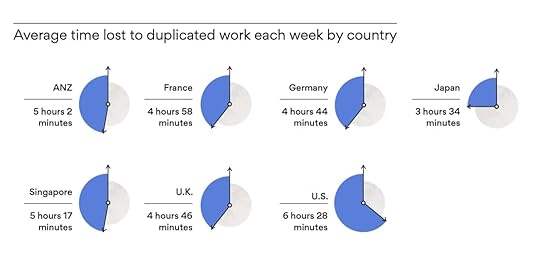
Source: Asana
Most if not all duplicated work stems from our collective inability to find key documents and conversations. Put differently, searching for existing material certainly qualifies as low-value work. To this end, here are two interesting factoids from Elastic on how we haven’t exactly mastered the art of, you know, finding stuff:
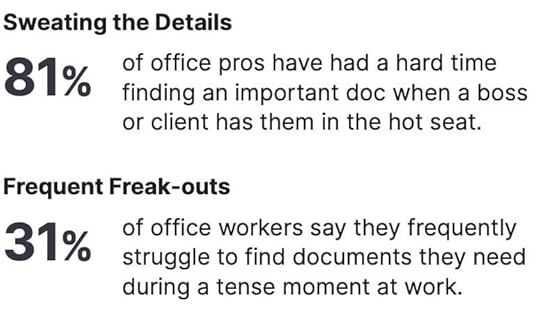
Source: Elastic
In a word, ouch.
This begs the question: Can technology solve these problems?
When it comes to search, booleans are your best friends.
The short answer is a qualified yes—not that this is news. My 2010 book The Next Wave of Technologies contains a chapter on enterprise search and retrieval. #timeflies And if you want to stitch together multiple hubs, go nuts with Mio, Zapier, or another solution.
Make no mistake, however: “Can technology solve these problems?” is the wrong question to ask. And that brings me back to Kirk.
Simon Says: More tech isn’t the solution. Pick a lane and stay in it.I asked him why employees at his firm used so many different tools for collaboration and communication. After all, if everyone used a single internal collaboration hub, then by definition there’d be fewer places to search. Teams, Zoom, Slack, and Google Workspace all sport powerful search functionality. (As I write in my For Dummies books, booleans are your best friends.) Employees will waste less time searching and create fewer duplicate documents. Oh, and Kirk’s firm would be setting the stage AI and machine learning enhancements down the road.
Kirk asked for my contact information and connected with me on LinkedIn later that day. He told me that bought two of my books on to start reading for the flight home. There’s a good chance that I’ll be helping his company to adopt the principles at the heart of Reimagining Collaboration.
I didn’t realize how much I missed real-world conferences.
FeedbackWhat say you?
The post Solving Tool Overload and the Search Dilemma appeared first on Phil Simon.
September 22, 2021
Thoughts on Slack Clips
For a while now, we’ve been using tools such as Loom and GetCloudApp to share quick videos with clients, partners, and friends. Asynchronous communication, baby.
You might have thought that you had to leave Slack to record and share a video. You can, but it’s not necessary. The Loom app for Slack obviates switching.
Still, those companies operate under a freemium model. Power users would run up against the limits of those companies’ free plans. What to do? Purchase another software license?
Yesterday Slack dropped Clips, its Loom equivalent:

I’ve stopped counting the ways in which Slack crushes e-mail when it comes to collaboration. It’s not even close at this point.
Simon Says: Expect many more features from internal collaboration hubs.Two things come to mind. First, this move reminds me of Gmail adding snoozing and scheduling functionality. I suspect that the Boomerang folks were apoplectic when they heard the news. Second, expect similar innovation from Microsoft Teams, Google Workspace, Zoom, and other internal collaboration hubs. Why? Because they steal from each other.
FeedbackWhat say you?
The post Thoughts on Slack Clips appeared first on Phil Simon.
September 21, 2021
Episode 48: The Remote Oracle With Darren Murph of Gitlab
 Rock star and remote oracle Darren Murph joins me today. He serves as the Head of Remote—cool title—for Gitlab. We talk about organizational alignment, Slack, intentionality, the importance of documentation, software development, culture, talent shows, and much more. This conversation was one of my faves.
The post Episode 48: The Remote Oracle With Darren Murph of Gitlab appeared first on Phil Simon.
September 20, 2021
Zillow, Location, and the Beginning of the End of Compensating Wage Differentials?
 At grad school a million years ago at Cornell University’s ILR School (go Big Red), I took a course on labor economics. In it, my classmates and I learned about compensating wage differentials.
Its premise isn’t difficult to comprehend. Because of them, a coal miner earns more than a janitor in the same city or state. The former faces a much more dangerous environment. Ditto for administrative assistants who live in Hawaii compared to their Wyoming and Alabama counterparts.1 Ask Mercer and they’ll tell you: It’s far more expensive for people to live in idyllic environs—and wages need to reflect that reality. Even eggs cost more. Supply and demand, baby.
Put differently, where you work has always affected employee paychecks.
Adam Sandler Is Worth Beaucoup BucksAgainst this backdrop, Zillow’s recent announcement about its location-independent(ish) pay practices is an important one. In the words of chief people officer Dan Spaulding, “When you work for Zillow, your long-term earning potential is determined by how you perform, and will not be limited by where you live.”
To quote the immortal Wendell Pierce, “Sheeeeit.”
Rock stars have always been able to command a premium for their services.
To be sure, rock stars have always been able to command a premium for their services. Anita Elberse’s excellent book Blockbusters: Hit-Making, Risk-Taking, and the Big Business of Entertainment examines this subject with aplomb. Case in point: Adam Sandler is worth $275 million to Netflix. (You read right.)
Still, the idea that location shouldn’t play an outsize role in compensation decisions is a biggie. It undermines centuries of economic orthodoxy. A decade from now, we may marvel at the import of Zillow’s decision.
Simon SaysI for one will be curious to see if more dominoes start to fall here—especially as organizations delay their returns to the office. (Hello, Microsoft.)
Play this out. Say that more companies follow Zillow’s lead. Senior leadership at mature organizations will have to consider doing the same. If I put on my dusty HR hat for a moment, the widespread introduction of location-independent compensation will be a difficult bell to unring.
FeedbackWhat say you?
My site is running faster thanks to another rock star: Jason Champagne.
The post Zillow, Location, and the Beginning of the End of Compensating Wage Differentials? appeared first on Phil Simon.
September 14, 2021
Episode 47: The Whole-Person Workplace With Scott Behson
 Scott Behson joins me. He is a professor at Fairleigh Dickinson University. We talk about his new book
The Whole-Person Workplace: Building Better Workplaces Through Work-Life, Wellness and Employee Support
. WANT EARLY ACCESS TO PODCAST EPISODES?
Scott Behson joins me. He is a professor at Fairleigh Dickinson University. We talk about his new book
The Whole-Person Workplace: Building Better Workplaces Through Work-Life, Wellness and Employee Support
. WANT EARLY ACCESS TO PODCAST EPISODES? The post Episode 47: The Whole-Person Workplace With Scott Behson appeared first on Phil Simon.
September 7, 2021
A Business Novel?
 My favorite artists, writers, actors, and musicians challenge themselves. Bryan Cranston, Rush,1 Marillion,2 Foo Fighters, and Steven Wilson are just a few of the folks whom I admire because they zig when people expect them to zag. No one can ever accuse them of being typecast.
Along these lines, I’ve been thinking quite a bit these folks as I contemplate my next potential book. After two For Dummies guides, I decided to return to a conceptual book with Reimagining Collaboration. For the next, I’m debating going in a slightly different direction: a business novel of sorts.
In case you’re wondering, these types of parables exist. Who Moved My Cheese? certainly comes to mind. The Phoenix Project and The Goal are two others.
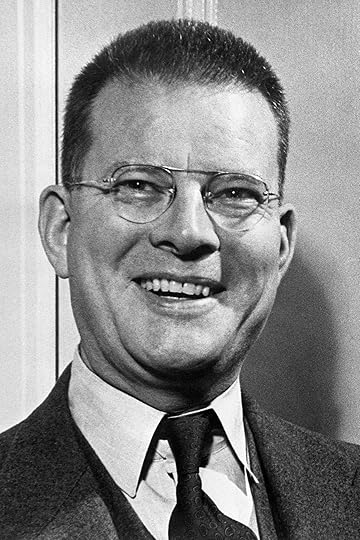
Before I go too far down the road, I’m wondering if others would even consider buying that type of book from me. Smart dude W. Edwards Deming once famously said, “In God we trust. All others must bring data.” Let me know if this direction is worth pursuing by voting in the poll below.
Would you be interested in reading a business novel if I wrote one?
The post A Business Novel? appeared first on Phil Simon.
Episode 46: The Collaborative Nature of Marketing With John Jantsch
 John Jantsch joins me. He is a prominent marketing consultant, speaker, and the author of a bunch of books, most recently
The Ultimate Marketing Engine: 5 Steps to Ridiculously Consistent Growth
. We talk about the collaborative nature of marketing, Monday, customer journeys, automation, and referrals. WANT EARLY ACCESS TO PODCAST EPISODES?
John Jantsch joins me. He is a prominent marketing consultant, speaker, and the author of a bunch of books, most recently
The Ultimate Marketing Engine: 5 Steps to Ridiculously Consistent Growth
. We talk about the collaborative nature of marketing, Monday, customer journeys, automation, and referrals. WANT EARLY ACCESS TO PODCAST EPISODES? The post Episode 46: The Collaborative Nature of Marketing With John Jantsch appeared first on Phil Simon.