Phil Simon's Blog, page 18
February 2, 2022
On Calendly Etiquette
At least I’m not alone. It turns out that mine is hardly the only kerfuffle involving contemporary scheduling tools.
The Calendly ConundrumProtocol published a timely piece on that very subject. The maelstrom that Facebook (Meta?) VP Sam Lessin recently caused on Twitter served as the story’s background:
‘Calendly’ Etiquette is The Most Raw / Naked Display of Social Capital Dynamics in Business. pic.twitter.com/GEdYj6J6Rt
— sam lessin (@lessin) January 26, 2022
Exhibit A that social media doesn’t exactly lend itself to nuance, but I digress.
 At a high level, a person from Company A needs to meet with someone from Company B. Seems innocent enough, right? Yes, but it turns out that there’s often an unspoken power dynamic or flat-out pissing contest taking place.
The Seinfeldeque subtext is often: You want me to use your tool? Who the hell are you?
This is but one of the many issues that plague interorganizational communication and collaboration.
For years, I have happily used others’ scheduling apps because of the time they save. (In keeping with the Hub-Spoke Model of Collaboration, I stitch together Calendly with Zoom and Slack. #practicewhatyoupreach) At the same time, though, I’m not completely oblivious. I understand how my obsession desire for optimal efficiency could put some folks off. Regardless of my benign intent, I can see how a person could balk at having to use my scheduling tool.
ResolutionTo that end and in an effort to have my cake and eat it too, I modified my response about a year ago:
To make scheduling as easy as possible, please look at my [Calendly link] and book a time. Alternatively, if you use a similar scheduling tool, shoot me a link.
I find that the second sentence diffuses any potential tension. I’m happy to report zero dustups since that minor tweak. Thank you again, Homer Simpson.
“Well, Marge. Self-improvement has always been a passion of mine. Bring on the swear jar!” pic.twitter.com/rfjTkRdX61
— SimpsonsQOTD (@SimpsonsQOTD) May 30, 2016
Here’s a typical response:
Wonderful! Just set up some time for tomorrow. Looking forward to it!
FeedbackWhat say you?
The post On Calendly Etiquette appeared first on Phil Simon.


January 31, 2022
Simon’s Laws of Interorganizational Communication and Collaboration
Awhile back, a respected publisher contracted me to write a white paper for one of its international clients. On the surface, the project wasn’t a stretch for me. After all, I’ve called myself a professional scribe for over a decade now. The topics also fell squarely in my wheelhouse: I had to fuse technology, analytics, productivity, and trends.
Still, it didn’t take a rocket surgeon to identify the potential red flags:
Different organizations.Different personnel at each organization.Different time zones.Different preferences for communication and collaboration tools.Different client visions for the content of the white paper.1I expressed my reservations to the publisher and agent from the get-go. “No worries,” the publisher’s rep told me before I signed on. “We’ve got it taken care of.”
During the introductory conference call with the client, I again voiced my concerns. (Reagan said, “Trust, but verify.) The publisher had always used e-mail on these projects—not a proper communication hub. “Fine,” the publisher told me. “We’ll give it a shot.”
We all agreed that Microsoft Teams would serve this essential function. (In theory, this meant that no one would ever send an e-mail.) I would have preferred Slack, but I knew that I wasn’t going to win that battle. In hindsight, I should have also insisted that we follow a RACI Matrix. (#foreshadowing)
Falling Into Old PatternsFast-forward one month: Sadly and despite my best efforts, the short project had quickly devolved into a morass of misunderstandings, e-mail threads, scheduling snafus, and duplicate work. Not surprisingly, we were already well behind schedule. On the client-side, people weren’t staying in their lanes. I could read the room: people were starting to get testy.
I went old school, picked up the phone, and spoke with the publisher. In short, it was high time that everyone talked. Exchanging more asynchronous messages would only exacerbate our issues. I then created and shared a Doodle with different options to account for our time zones.
Everyone responded. I thought that we were on our way to resolving our issues.
The day of the meeting, my primary client contact replied—via e-mail, of course—to everyone on the chain with, “No, that’s 4 a.m. local time here. I can’t meet then.” (Why that person selected that meeting slot is beyond me.)
If this scenario sounds frustrating, trust your judgment.
Brass tacks: The very problems I identified at the start of the project had nevertheless hindered it anyway. (#irony) This was not going to end well.
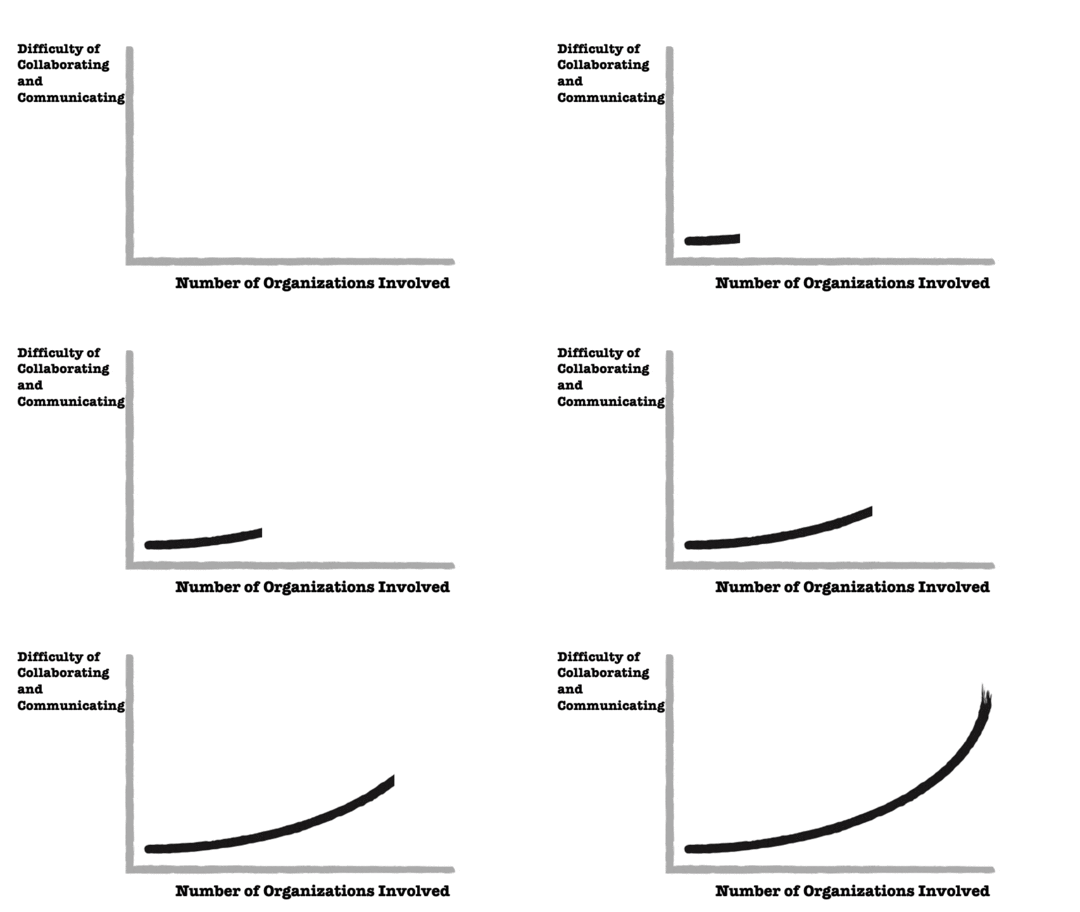
The more organizations involved in a project, the more difficult it is to successfully communicate and collaborate. I started thinking of another one of Simon’s Laws: The more organizations involved in a project, the more difficult it is to communicate and collaborate. (I’ll add this one if and when I update Reimagining Collaboration.) Since I like graphs:
Of course, it doesn’t need to be this way. Early conversations like the one I had—and the ostensible buy-in they produce—can grease the communication wheels. There’s just one caveat, though: If people agree on a set of tools, then they need to actually use them. Mind-blowing, I know…
Reflections Just to put a bow on the story, this straw broke the camel’s back. I had already put in far more work than expected on this flat-rate engagement.2 For example, the publisher had told me that the client had formally signed off on the white paper’s outline. It turned out that no one had even started it; there was nothing for anyone to approve.
At that point, I exited stage left.
As of this writing, that white paper hasn’t seen the light of day—and I would be astonished if it ever does. As I reflected, it was yet another example of how poor communication and collaboration derailed what could have been a promising project.
Simon Says: Project charters are meaningless unless people, you know, follow them.As I write in the new book, the explosions of asynchronous and remote work have accentuated our existing differences in our work styles and preferences. To that end, it’s never been more essential to establish a proper project charter—one that codifies team processes and tools. When no one abides by that charter after repeated reminders, however, it’s only a matter of time before things break bad.
FeedbackWhat say you?
The post Simon’s Laws of Interorganizational Communication and Collaboration appeared first on Phil Simon.
January 25, 2022
Episode 58: Talking Lanes With Sway’s Denise Brouder
 Denise Brouder pops by today. The head of Sway Workplace shares her thoughts on a number of interesting subjects: the future of work, the creator economy, web3, the importance of incessantly asking why, and her five-lane theory of work.
The post Episode 58: Talking Lanes With Sway’s Denise Brouder appeared first on Phil Simon.
January 18, 2022
On Piano Teachers, Windows XP, and Aversion to Change
The interface was unmistakable, but the context threw me for a loop.
Yes, I was looking at Windows XP—the operating system that Microsoft decommissioned a long time ago.
At the freakin’ Apple Store.
Yesterday.
Let Me ExplainCurious and maybe a tad nosy, I struck up a conversation with the kindly woman who had schlepped her massive iMac, SuperDrive, and CDs to the closest Apple pantheon. Let’s call her Betty here.
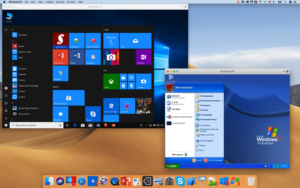 I asked Betty if she was running Parallels—the software that allows users to create virtual machines and run non-Mac programs. Yes, as a matter of fact, she was. (My next guess would have been Bootcamp.)
She seemed interested in chatting for a few minutes while we both waited at the Genius Bar. I asked her which software program required so many Band-Aids. Betty told me that she was a piano teacher. More than a decade ago, she had purchased a program that she still used to teach her students. I knew where she was heading…
Unfortunately, the vendor stopped supporting the legacy version. The company now wanted its customers to upgrade to its latest version and, in the process, pay monthly subscription fees. In other words, welcome to the world of software-as-a-service.
Betty wasn’t having any of it. If her stance meant that she had to jump through hoops to use the old application, so be it. I suspect that she’s hardly the only music teacher to feel that way.
 I understand that mindset all too well. I have seen many organizations stick with what—kind of—still works, even though its technologies were long in the tooth. On a personal level, when I moved to Sin City in 2011, I did something very similar. At the time, I was still relying upon my old PC to run my accounting program. (Oh, Wave, where were you then?) More recently, I only reluctantly upgraded TextExpander because the idea of a monthly charge didn’t sit well with me.
Before departing the store with yet another AirPod case (seriously, Apple?), I wished Betty good luck and told her that, eventually, she’d have to rip the Band-Aid off. At some point, something was going to break—and no single company could offer a solution. For instance, Parallels wouldn’t support XP. It’s not like she could visit the local Microsoft Store for a solution. (Hey, at least she’s not in the ATM business.)
The post On Piano Teachers, Windows XP, and Aversion to Change appeared first on Phil Simon.
January 13, 2022
Does Your Prospective Employer Truly Embrace Remote Work?
Let’s try a thought experiment today. You’re poking around for new opportunities like—oh, I don’t know—possibly two-thirds of the workforce these days. You visit a job board. You find yourself most interested in two companies that I’ll call A and B here. Assume that compensation, title, responsibilities, and other perks are equal at both. One last nugget: For you, remote work is a dealbreaker.
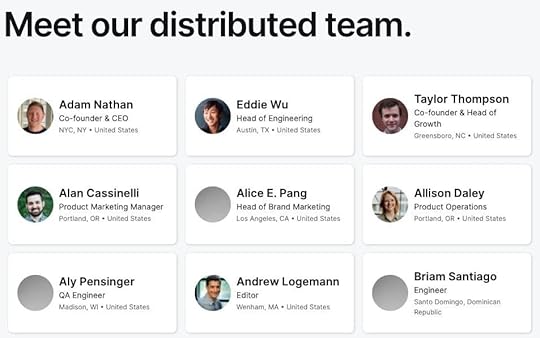
You wisely keep digging and visit each company’s website—specifically its leadership page. Here’s what you see:
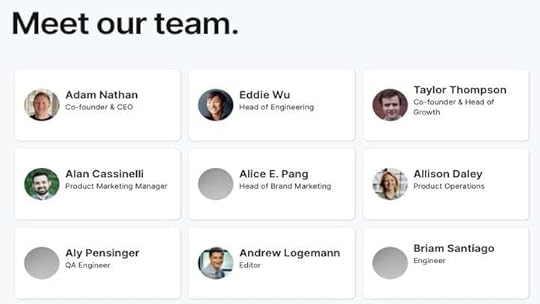
And now, Company B.
 Interviewing the Interviewers
During your first interview at each company, you ask the recruiter about the possibility of long-term remote work. In each case, she confirms that it’s an option.
Equipped with no other information, which company is truly committed to long-term remote? (Hint: It’s not Company A.)
Lest you think that my example above is hypothetical, rest assured: It’s not. The basis for those screenshots is the collaborative document start-up Almanac.io. For the purposes of attracting new talent, its website excels in this regard by prominently displaying:
The word distributed on its leadership page.Smartly, each executive’s current location.This potent combination reinforces the fact that future employees won’t have to schlep to the office every day—something that few people want to do. What’s more, management doesn’t view the idea of remote work as a passing fad or a temporary employee concession.
In any job search, reading tea leaves is invaluable. Now, much like my recent post on Zapier, I don’t possess any insider knowledge about working at Almanac.io. I doubt it, but it’s possible that Almanac’s website is all hat and no cattle. That is rank-and-file employees abide by a different set of rules than the top brass does. (I’m hardly going out on a limb by saying that it wouldn’t be the first time in the history of business that that has happened.)
As someone who once took a job that turned out to be far different than what the company’s recruiters told me, reading tea leaves like these is invaluable in sussing out organizational culture.
Simon SaysBrass tacks: If your company is truly committed to remote work, then make it abundantly clear throughout its website and job boards. Quality applicants will have their pick of the litter for the foreseeable future (💲). Why not conduct interview litmus tests such as these?
Apart from the occasional one-off interview, I haven’t done any formal recruiting in over two decades. Still, I do know this much: Signals (couldn’t resist) such as these can help drive applications, promote successful careers, and minimize issues around employee match quality.
FeedbackWhat say you?
The post Does Your Prospective Employer Truly Embrace Remote Work? appeared first on Phil Simon.
January 11, 2022
Episode 57: Employee Surveys Reimagined With Noah Pusey of Ripple Analytics
 Noah Pusey joins me. He is president and CEO of Ripple Analytics, a company that is redefining performance evaluations and employee surveys. We talk about curiosity, cooperation, traditional performance reviews, Goodhart’s Law, GE, and Air Jordan.
The post Episode 57: Employee Surveys Reimagined With Noah Pusey of Ripple Analytics appeared first on Phil Simon.
January 4, 2022
The Case for a Transparent Hiring Process
It’s not hard to find examples of the downright scalding war for talent right now. Apple’s handing out mind-blowing retention bonuses of—get this—$180,000 to certain engineers. To be sure, few companies possess even a fraction of Apple’s financial resources. Still, that doesn’t mean that the non-Apples of the world have to sit idly by as The Great Resignation continues. In today’s post, I’ll make the case that organizations ought to be more transparent about their hiring processes.
Thank You for Your Interest We’ve all heard horror stories: vivid tales of a company’s opaque or downright inscrutable hiring process. I’m sure that you’ve experienced one firsthand. I certainly have.
I’m talking about recruiters or hiring managers that inexplicably ghosted you. You called and sent e-mails, only to hear crickets. Months later or even years later, you received a cold, automated response from an applicant tracking system telling you that you didn’t get the job. Duh.
The current war for talent makes this unprofessional practice increasingly risky. Aggrieved applicants can quickly vent on Blink, Glassdoor, or other public forums. Beyond that, there’s this uptick explosion in remote jobs:
%
rise in LinkedIn job postings containing the word remote compared to a year ago.
Source: LinkedIn, May 26, 2021If this trend has abated in the last six months, I’ll eat my hat.
Against this environment, how can an organization distinguish itself and get a leg up on the competition? One way involves that very same recruiting process: how a company treats its prospective employees.
Consider this page on the website for the automation company Zapier:
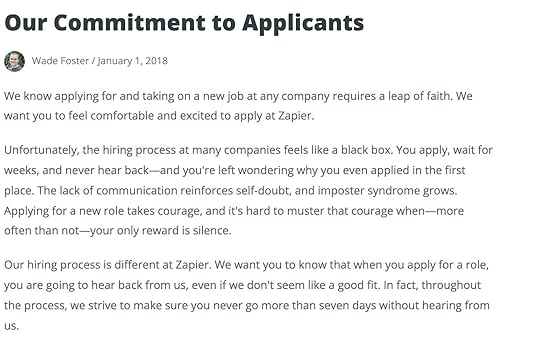
I encourage you to read the whole policy. In all of my years in and around HR, I have never seen an organization demonstrate as much transparency about its hiring process.
This begs the question, Does Zapier walk the walk?
A Remarkable Level of TransparencyI have no idea. I have never applied for a position at Zapier, nor do I know anyone who has. As a curious data geek and ex-recruiter, I’d love to see its applicant and employee surveys. A few things I’d examine include:
How many applicants did Zapier land because of its hiring process? Was it able to get the jump on its competition because it kept job candidates more informed?Is Zapier able to land candidates quicker than its rivals? Are those folks top performers? Do they stay at the company longer?What percentage of applicants who didn’t receive offers hold a positive view of Zapier? And how does that number compare to the company’s peers?What percentage of applicants who didn’t receive offers would recommend Zapier to their peers? And, again, how does that number compare to the company’s peers?How much time do Zapier recruiters save by not having to respond to typical applicant queries? If I were looking for a full-time gig, Zapier’s language would resonate with me. The very fact Zapier’s management decided to adopt this practice is telling. Ditto for publicizing it. Even better, the policy is at least five years old. (Thank you, Internet Archive.) If I were looking for a full-time gig, both the policy and its age would resonate with me.
I’m betting that I’m not alone.
Simon SaysCOVID-19 changed the game. Employees are now firmly in the driver’s seat. Organizations would do well to examine their legacy business processes. It’s high time that they find ways to make them more efficient, automated, transparent, and employee-friendly.
FeedbackWhat say you?
The post The Case for a Transparent Hiring Process appeared first on Phil Simon.
December 13, 2021
What CD Sales Teach Us About the Future of Work
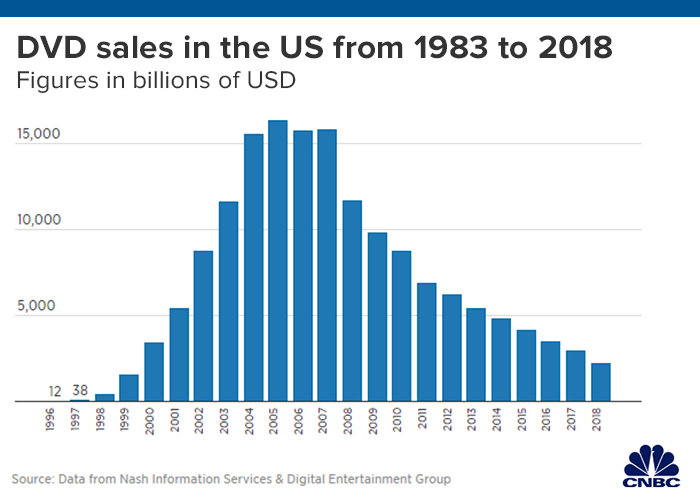
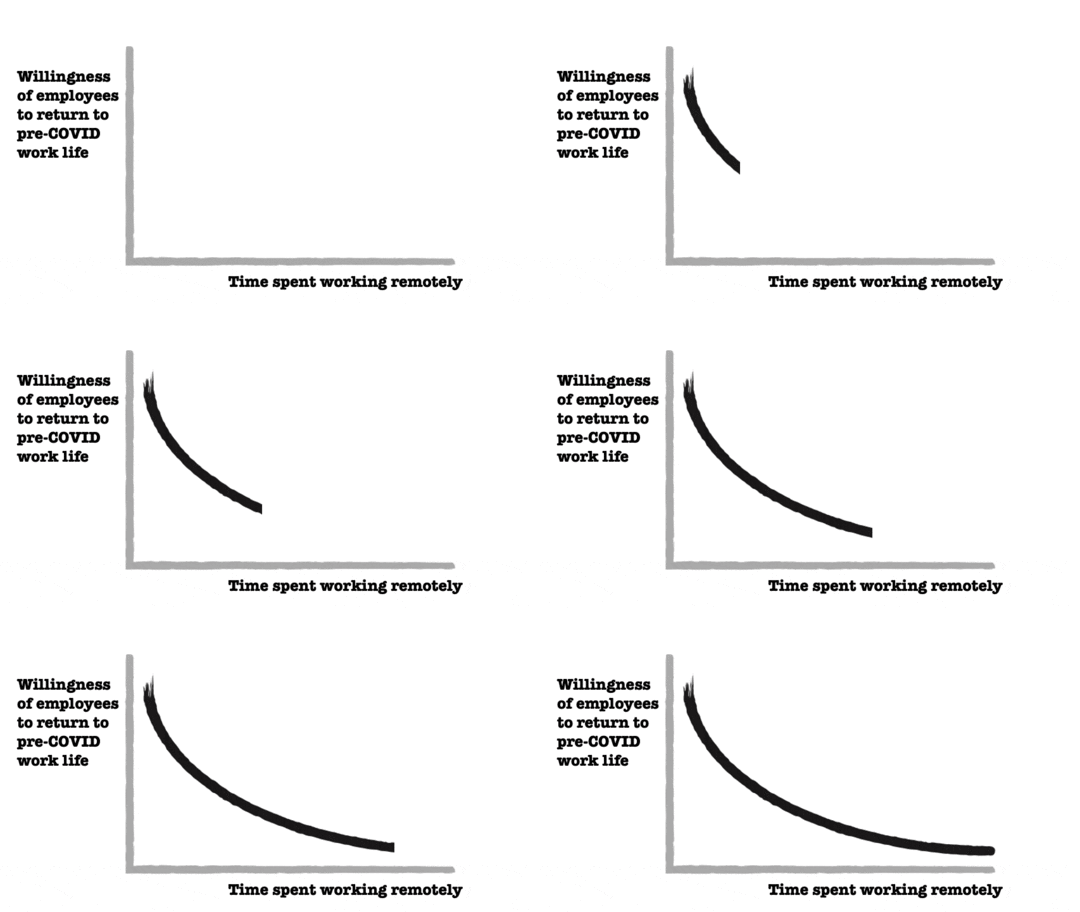
Of course, we know what happened to the CD: Thanks to Napster, the iPod, iTunes, and early streaming services such as Grooveshark and Rhapsody, rare is the individual today who will plunk down any amount of money for a physical album. 1 Today, CD sales have dropped 97 percent from their halcyon days:\n [image error]\n (If you think that DVD sales have followed an eerily similar trajectory, trust your judgment.)\n If you can tolerate ads, then music today is basically free\u2014and it has been that way for a while. (For an excellent history of how this happened, see How Music Got Free: The End of an Industry, the Turn of the Century, and the Patient Zero of Piracy by Stephen Richard Witt.)\n [image error]Musicians aren’t happy with the current state of affairs\u2014and they shouldn’t be. The status quo benefits consumers at their expense.\u00a0Still, a few in the know saw this coming a mile away. Exhibit A: David Bowie famously predicted as much back in 1997 and issued bonds against future song royalties. Also, it’s essential to include Radiohead and Marillion in the pantheon of music pioneers.\n At a high level, these folks and bands saw that low-cost or free music was entering what Steven Johnson calls the adjacent possible in his superb book Where Good Ideas Come From. Fast forward nearly a quarter-century.\u00a0Yeah, vinyl is making a comeback, but when was the last time that you bought a CD? Streaming is a far more convenient, user-friendly, and affordable\u2014if unfair\u2014method of listening to tunes and exploring new genres and artists.\nA Strong Parallel\n The history of the CD is particularly instructive when thinking about the future of work.\n\n The history of the CD is particularly instructive when thinking about the future of work. In both cases, entrenched interests want to preserve an increasingly untenable status quo. These days, it’s not hard to find old-school leaders who think that remote employees are stealing from the company. As a lot, these folks are hoping that employees will soon forget the qualitative life improvements that the pandemic has afforded them.\n Good luck with that.\n We’re no longer willing to buy A Night at the Opera because we like “Bohemian Rhapsody.”\n \n By the same token, we don’t want to commute 35 minutes each way to the office, especially if it’s only or primarily so our bosses can watch us work. (Thanks boss, but you can keep your free lunch.) Put differently, now that hybrid and remote work are legitimate options buttressed by powerful tools, we are loath to forgo what is clearly the better option:\n [image error]\n Say that you changed the axes in the chart above. Replace “time spent working remotely” with “time since the launch of viable streaming services.” Do the same with the other axis, swapping out “willingness of employees to return to pre-COVID work-life” for “willingness to buy a CD.” The trend would be identical.\n Try to cling to the past if you like. Odds are, though, your team, group, department, and\/or company will struggle if it insists upon returning to pre-Covid life. Rather than trying to stem the tide, get on board. Find creative ways to engage your workforce and minimize employee burnout.\n I’m betting that we’ll look back at Automattic, Gitlab, and Basecamp as the work-life trailblazers \u00e0 la Bowie, Marillion, and Radiohead.","tablet":" [image error]Those of us of a certain age remember the compact disc. At the turn of the century, consumers bought about a billion of them per year. Even if you only liked a single song, people grudgingly paid $16.99 for one simple reason: there really wasn't another choice.\n Of course, we know what happened to the CD: Thanks to Napster, iTunes, and streaming services starting with Rhapsody, rare is the individual today who will plunk down any amount of money for a physical album. Today, CD sales have dropped 97 percent from their halcyon days:\n [image error]\n If you can tolerate ads, then music today is basically free\u2014and has been for a while. (For a far more detailed account on this subject, see How Music Got Free: The End of an Industry, the Turn of the Century, and the Patient Zero of Piracy by Stephen Richard Witt.)\n [image error]Musicians aren't happy at the current state of affairs\u2014and they shouldn't be. The status quo benefits consumers at their expense. Still, a few in the know saw this coming a mile away. Exhibit A: David Bowie famously predicted as much back in 1997 and issued bonds against future royalties.\n Yeah, vinyl is making a comeback, but when was the last time that you bought a CD? Streaming is a far more convenient, user-friendly, and more affordable\u2014if unfair\u2014method of listening to tunes and exploring new genres and artists.\nA Strong Parallel\n The history of the CD is particularly instructive when thinking about the future of work.\n\n The history of the CD is particularly instructive when thinking about the future of work. In both cases, entrenched interests want to preserve an increasingly untenable status quo. These days, it's not hard to find old-school leaders who think that remote employees are stealing from the company. As a lot, these folks are hoping that employees will forget the qualitative improvements that the pandemic has afforded them.\n Good luck with that.\n We're no longer willing to buy A Night at the Opera because we like \"Bohemian Rhapsody.\" By the same token, we don't want to commute 35 minutes each way to work, especially if it's only so our bosses can watch us work. (Thanks, but you can keep your free lunch.) Put differently, now that hybrid and remote work are legitimate options buttressed by powerful tools, we are loath to forgo what is clearly the better option:\n [image error]\n Try to cling to the past if you like. Odds are, though, your team, group, department, and\/or company will struggle if you insist upon returning to pre-Covid life. Rather than trying to stem the tide, get on board. Find creative ways to engage your workforce and minimize employee burnout.\nFeedback\n What say you?","phone":" [image error]Those of us of a certain age remember the compact disc. At the turn of the century, consumers bought about a billion of them per year. Even if you only liked a single song, you grudgingly paid $16.99 for one simple reason: there really wasn't another choice.\n Of course, we know what happened to the CD: Thanks to Napster, the iPod, iTunes, and early streaming services such as Grooveshark and Rhapsody, rare is the individual today who will plunk down any amount of money for a physical album. Today, CD sales have dropped 97 percent from their halcyon days:\n [image error]\n (If you think that DVD sales have followed an eerily similar trajectory, trust your judgment.)\n If you can tolerate ads, then music today is basically free\u2014and it has been that way for a while. (For an excellent history of how this happened, see How Music Got Free: The End of an Industry, the Turn of the Century, and the Patient Zero of Piracy by Stephen Richard Witt.)\n [image error]Musicians aren't happy with the current state of affairs\u2014and they shouldn't be. The status quo benefits consumers at their expense. Still, a few in the know saw this coming a mile away. Exhibit A: David Bowie famously predicted as much back in 1997 and issued bonds against future song royalties. Also, it's essential to include Radiohead and Marillion in the pantheon of music pioneers.\n At a high level, these folks and bands saw that low-cost or free music was entering what Steven Johnson calls the adjacent possible in his superb book Where Good Ideas Come From. Fast forward nearly a quarter-century. Yeah, vinyl is making a comeback, but when was the last time that you bought a CD? Streaming is a far more convenient, user-friendly, and affordable\u2014if unfair\u2014method of listening to tunes and exploring new genres and artists.\nA Strong Parallel\n The history of the CD is particularly instructive when thinking about the future of work.\n\n The history of the CD is particularly instructive when thinking about the future of work. In both cases, entrenched interests want to preserve an increasingly untenable status quo. These days, it's not hard to find old-school leaders who think that remote employees are stealing from the company. As a lot, these folks are hoping that employees will soon forget the qualitative life improvements that the pandemic has afforded them.\n Good luck with that.\n We're no longer willing to buy A Night at the Opera because we like \"Bohemian Rhapsody.\"\n \n By the same token, we don't want to commute 35 minutes each way to the office, especially if it's only or primarily so our bosses can watch us work. (Thanks boss, but you can keep your free lunch.) Put differently, now that hybrid and remote work are legitimate options buttressed by powerful tools, we are loath to forgo what is clearly the better option:\n [image error]\n Say that you changed the axes in the chart above. Replace \"time spent working remotely\" with \"time since the launch of viable streaming services.\" Do the same with the other axis, swapping out \"willingness of employees to return to pre-COVID work-life\" for \"willingness to buy a CD.\" The trend would be identical.\n Try to cling to the past if you like. Odds are, though, your team, group, department, and\/or company will struggle if it insists upon returning to pre-Covid life. Rather than trying to stem the tide, get on board. Find creative ways to engage your workforce and minimize employee burnout.\n I'm betting that we'll look back at Automattic, Gitlab, and Basecamp as the work-life trailblazers \u00e0 la Bowie, Marillion, and Radiohead.\nFeedback\n What say you?"}},"slug":"et_pb_text"}" data-et-multi-view-load-tablet-hidden="true" data-et-multi-view-load-phone-hidden="true"> Of course, we know what happened to the CD: Thanks to Napster, the iPod, iTunes, and early streaming services such as Grooveshark and Rhapsody, rare is the individual today who will plunk down any amount of money for a physical album. Today, CD sales have dropped 97 percent from their halcyon days: (If you think that DVD sales have followed an eerily similar trajectory, trust your judgment.) If you can tolerate ads, then music today is basically free—and it has been that way for a while. (For an excellent history of how this happened, see How Music Got Free: The End of an Industry, the Turn of the Century, and the Patient Zero of Piracy by Stephen Richard Witt.) At a high level, these folks and bands saw that low-cost or free music was entering what Steven Johnson calls the adjacent possible in his superb book Where Good Ideas Come From. Fast forward nearly a quarter-century. Yeah, vinyl is making a comeback, but when was the last time that you bought a CD? Streaming is a far more convenient, user-friendly, and affordable—if unfair—method of listening to tunes and exploring new genres and artists. The history of the CD is particularly instructive when thinking about the future of work. The history of the CD is particularly instructive when thinking about the future of work. In both cases, entrenched interests want to preserve an increasingly untenable status quo. These days, it’s not hard to find old-school leaders who think that remote employees are stealing from the company. As a lot, these folks are hoping that employees will soon forget the qualitative life improvements that the pandemic has afforded them. Good luck with that. We’re no longer willing to buy A Night at the Opera because we like “Bohemian Rhapsody.” By the same token, we don’t want to commute 35 minutes each way to the office, especially if it’s only or primarily so our bosses can watch us work. (Thanks boss, but you can keep your free lunch.) Put differently, now that hybrid and remote work are legitimate options buttressed by powerful tools, we are loath to forgo what is clearly the better option: Say that you changed the axes in the chart above. Replace “time spent working remotely” with “time since the launch of viable streaming services.” Do the same with the other axis, swapping out “willingness of employees to return to pre-COVID work-life” for “willingness to buy a CD.” The trend would be identical. Try to cling to the past if you like. Odds are, though, your team, group, department, and/or company will struggle if it insists upon returning to pre-Covid life. Rather than trying to stem the tide, get on board. Find creative ways to engage your workforce and minimize employee burnout. I’m betting that we’ll look back at Automattic, Gitlab, and Basecamp as the work-life trailblazers à la Bowie, Marillion, and Radiohead.\n
\n
\n
 Those of us of a certain age remember the compact disc. At the turn of the century, consumers bought about a billion of them per year. Even if you only liked a single song, you grudgingly paid $16.99 for one simple reason: there really wasn’t another choice.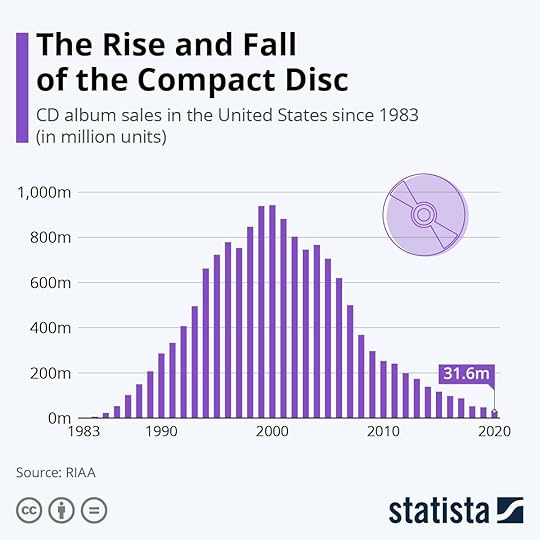
 Musicians aren’t happy with the current state of affairs—and they shouldn’t be. The status quo benefits consumers at their expense. Still, a few in the know saw this coming a mile away. Exhibit A: David Bowie famously predicted as much back in 1997 and issued bonds against future song royalties. Also, it’s essential to include Radiohead and Marillion in the pantheon of music pioneers.
The post What CD Sales Teach Us About the Future of Work appeared first on Phil Simon.
December 7, 2021
Episode 56: Intentionality With Dr. Sahar Yousef of Berkeley and Josh Zerkel of Asana
<\/script><\/p>","tablet":"<p><img class=\"wp-image-273840 alignright \" src=\"https:\/\/www.philsimon.com\/wp-content\/uploads\/2021\/12\/joshuazerkel-300x300.jpg\" alt=\"\" width=\"131\" height=\"131\" \/> <img class=\"wp-image-273841 alignright\" src=\"https:\/\/www.philsimon.com\/wp-content\/uploads\/2021\/12\/Sahar-Yousef.jpg\" alt=\"\" width=\"131\" height=\"131\" \/><a href=\"https:\/\/www.linkedin.com\/in\/saharyousef\/\" target=\"_blank\" rel=\"noopener\">Dr. Sahar Yousef<\/a> of Berkeley and <a href=\"https:\/\/www.linkedin.com\/in\/joshuazerkel\/\" target=\"_blank\" rel=\"noopener\">Josh Zerkel<\/a> of Asana join me. We talk about work about work (that's not a typo), the role technology plays in employee burnout, Slack, context-switching, intentionality, trust, and clarity. We also discuss Asana's fascinating <a href=\"https:\/\/resources.asana.com\/rs\/784-XZD-582\/images\/PDF-FY21-Global-EN-Anatomy%20of%20Work%20Report.pdf\" target=\"_blank\" rel=\"noopener\">Anatomy of Work Report<\/a>.<\/p>\n<hr \/>\n<div id=\"buzzsprout-player-9659156\"> <\/div>\n<p><script src=\"https:\/\/www.buzzsprout.com\/1417927\/9659156-episode-56-intentionality-with-dr-sahar-yousef-of-berkley-and-josh-zerkel-of-asana.js?container_id=buzzsprout-player-9659156&player=small\" type=\"text\/javascript\" charset=\"utf-8\"><\/script><\/p>","phone":"<p><a href=\"https:\/\/www.linkedin.com\/in\/saharyousef\/\" target=\"_blank\" rel=\"noopener\">Dr. Sahar Yousef<\/a> of Berkeley and <a href=\"https:\/\/www.linkedin.com\/in\/joshuazerkel\/\" target=\"_blank\" rel=\"noopener\">Josh Zerkel<\/a> of Asana join me. We talk about work about work (that\u2019s not a typo), the role technology plays in employee burnout, Slack, context-switching, intentionality, trust, and clarity. We also discuss Asana\u2019s fascinating <a href=\"https:\/\/resources.asana.com\/rs\/784-XZD-582\/images\/PDF-FY21-Global-EN-Anatomy%20of%20Work%20Report.pdf\" target=\"_blank\" rel=\"noopener\">Anatomy of Work Report<\/a>.<\/p>"}},"slug":"et_pb_text"}" data-et-multi-view-load-tablet-hidden="true" data-et-multi-view-load-phone-hidden="true"><p><img loading="lazy" class="wp-image-273840 alignright " src="https://www.philsimon.com/wp-content/uploads/2021/12/joshuazerkel-300x300.jpg" alt="" width="131" height="131" srcset="https://www.philsimon.com/wp-content/uploads/2021/12/joshuazerkel-300x300.jpg 300w, https://www.philsimon.com/wp-content/uploads/2021/12/joshuazerkel-150x150.jpg 150w, https://www.philsimon.com/wp-content/uploads/2021/12/joshuazerkel.jpg 400w" sizes="(max-width: 131px) 100vw, 131px" /> <img loading="lazy" class="wp-image-273841 alignright" src="https://www.philsimon.com/wp-content/uploads/2021/12/Sahar-Yousef.jpg" alt="" width="131" height="131" /><a href="https://www.linkedin.com/in/saharyousef/" target="_blank" rel="noopener">Dr. Sahar Yousef</a> of Berkeley and <a href="https://www.linkedin.com/in/joshuazerkel/" target="_blank" rel="noopener">Josh Zerkel</a> of Asana join me. We talk about work about work (that’s not a typo), the role technology plays in employee burnout, Slack, context-switching, intentionality, trust, and clarity. We also discuss Asana’s fascinating <a href="https://resources.asana.com/rs/784-XZD-582/images/PDF-FY21-Global-EN-Anatomy%20of%20Work%20Report.pdf" target="_blank" rel="noopener">Anatomy of Work Report</a>.</p><hr /><div id="buzzsprout-player-9659156"> </div><p><script src="https://www.buzzsprout.com/1417927/9659156-episode-56-intentionality-with-dr-sahar-yousef-of-berkley-and-josh-zerkel-of-asana.js?container_id=buzzsprout-player-9659156&player=small" type="text/javascript" charset="utf-8">
WANT EARLY ACCESS TO PODCAST EPISODES?The post Episode 56: Intentionality With Dr. Sahar Yousef of Berkeley and Josh Zerkel of Asana appeared first on Phil Simon.
Episode 56: Intentionality With Dr. Sahar Yousef of Berkley and Josh Zerkel of Asana

 Dr. Sahar Yousef of Berkley and Josh Zerkel of Asana join me. We talk about work about work (that’s not a typo), the role technology plays in employee burnout, Slack, context-switching, intentionality, trust, and clarity. We also discuss Asana’s fascinating Anatomy of Work Report.
The post Episode 56: Intentionality With Dr. Sahar Yousef of Berkley and Josh Zerkel of Asana appeared first on Phil Simon.