
Jonathan Harnum's Blog, page 38
September 20, 2016
Lady Gaga Channels Bach by way of Fibonacci

Lady Gaga is a consummate performer and a smart composer. She’s a Julliard-trained pianist, after all. Gaga has pulled a neat compositional trick out of the bag for the video below, the title song from her new album, Perfect Illusion. It’s likely she learned about it at Julliard when she studied the work of JS Bach, Beethoven, and other classical composers who use this trick a lot, because it results in beautiful and satisfying creations.
Check out the video, and be ready for the key change at the 111-second mark (or 1:51). Why then? Bach did it, but the reason for it goes back even further, to ancient India.
Learn why after the song.
This is just as static image. If you’ve not seen Lady Gaga perform before, check out the video at the end of the post.
So here’s the trick: That exact spot in the tune happens at a precise point that corresponds to .618, a ratio that we humans find particularly attractive and satisfying. So much so that it’s called “The Golden Ratio.” Lots of composers use it. Here are 5 examples from classical music.
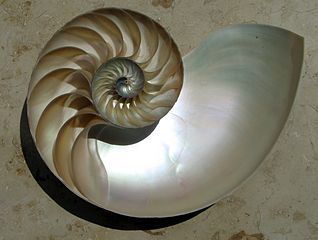
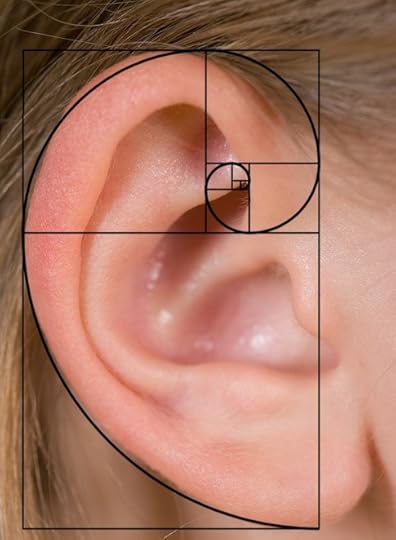
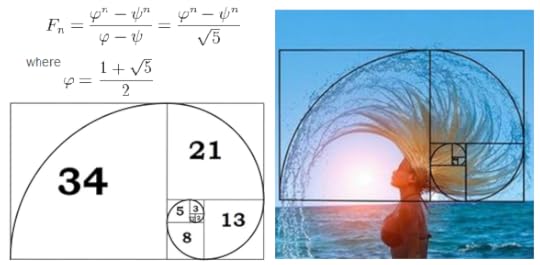
That ratio shows up everywhere, in both living and non-living systems, in things we find particularly beautiful. That proportion is just just one node of a Fibonacci sequence. Here are some examples of the sequence:
The classic example of a Nautilus shell
A Well-formed Ear
Physics
Plant Growth: A Chamomile Flower

and even Galaxy Formation

Pretty smart. Here’s the promised video showing more evidence of Gaga’s sensibilities.


September 15, 2016


September 11, 2016

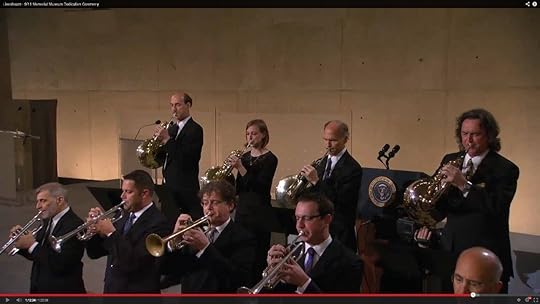


Evidence of Play In Practice: Allen Vizzutti Mugs for the GoPro
Play is how we learn best, or at least the way we learn best that is the most fun and engaging. When practice gets boring, you have nobody to blame but yourself. If you’re tired of playing scales, try them upside down, underwater, or even something as simple as playing with the lights off, or playing barefoot. Play as practice is just one of the many simple but powerful techniques found in The Practice of Practice and Practice Like This.
Most mammals use play and playfulness in practice, including the great trumpeter, educator, and composer, Allen Vizzutti (discography/bibliography) in this clip:


June 21, 2016
Superb Practice Advice from JLCO’s Ted Nash
Trumpeter George Recker used to say, “If you can’t sing it, you can’t play it.” It’s great advice. Here’s some similar great advice about singing and playing a horn, as well as several other great practice suggestions from Ted Nash, one of the great players (they’re all great) in the Jazz at Lincoln Center Orchestra.
In the following video, Mr. Nash mentions The War of Art, by Steven Pressfield. Get a copy by clicking on the image.



May 22, 2016
Why the Best Always Critique Themselves
It’s a curse and a blessing. The only way to get good at anything is to always take a critical look at what you’ve done, and then tweak, change, and improve on what you’ve done before. Anybody who improves does it. Sometimes it’s not easy (or pain-free), but it’s essential to progress.
The trick is to silence that valuable inner critic when it’s showtime, and just before showtime, because that’s not when you need the critique. Charlie Parker said it best: “You’ve got to practice, practice, and practice. And then, when you finally get up to the bandstand, forget all that and just wail.”
That kind of critique is just one of the many things expert practicers do. There are lots of others to be found in The Practice of Practice, or in the shorter version with more pictures, Pracctice Like This.
Here’s George Carlin’s critique of his 1992 performance on David Letterman (video of his appearance below the notes). It’s fascinating to see the mind of a genius critique himself. The nuance of changing “lobster tails” to “rack of lamb” is probably lost to most, but to Carlin, “rack of lamb” is funnier. I think I agree. Here are his notes:
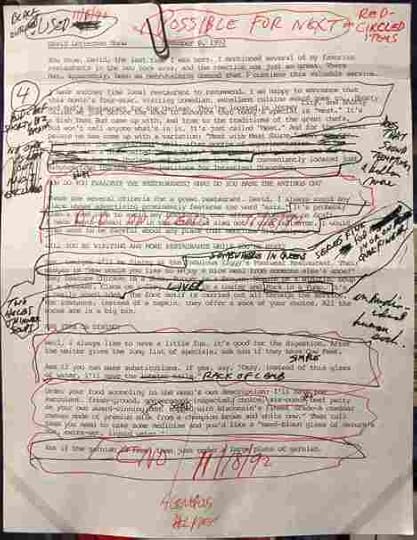
The bit from Carlin’s notes starts at 6:20


May 18, 2016
Evidence of Practice: Music for Brain and Booty
Snarky Puppy doing their amazing thing, on Jazz Night in America, hosted by Christian McBride. Great show. Check out all their episodes.
Sarky Puppy’s discography.


April 26, 2016
Why You Should Beware of Practicing
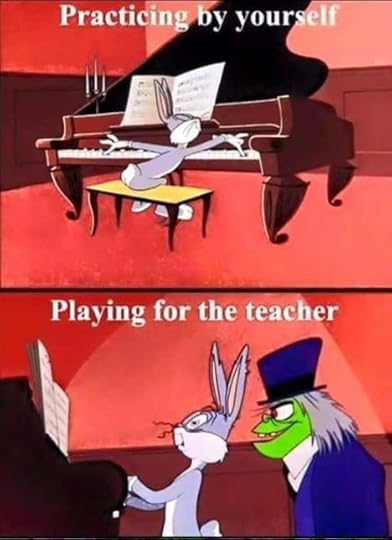
One of the best pieces of advice I got interviewing world-class musicians from many genres of music came from Rex Martin, who got it from Bud Herseth. He told me, “We have to be careful about practice, because we start to practice practicing. We need to practice performing.”
Lots of great players, when they work on something in a room alone, imagine someone they greatly admire, in the room with them, because it can motivate you not only to give your best, but it can also result in advice and perspective from that person, even if they’re not physically present. Try it!


April 13, 2016
Hang Up Your Hangups
How many thousands of hours of practice do you think are represented in the serious groove laid down by the master/monster musicians in this video?
International Jazz Day All-Star Global Concert Osaka 2014
“Hang Up Your Hang Ups”
Herbie Hancock – piano
Roy Hargrove – trumpet
Kenny Garrett – saxophone
John Scofield – guitar
Sheila E – percussion
Terri Lyne Carrington – drums


April 12, 2016
Blues Inflection in Jazz
Saxophonist Todd Williams guides you through Blues inflections, and performs W.C. Handy’s classic St. Louis Blues to illustrate.
Learn more at http://academy.jalc.org
St. Louis Blues is a popular American song composed by W. C. Handy in the blues style and published in September 1914. It remains a fundamental part of jazz musicians’ repertoire. It was also one of the first blues songs to succeed as a pop song. It has been performed by numerous musicians of all styles from Louis Armstrong and Bessie Smith to Count Basie, Glenn Miller, Guy Lombardo, and the Boston Pops Orchestra. It has been called “the jazzman’s Hamlet“.[1]



