Brian Yansky's Blog, page 17
September 12, 2013
Plot and Story: simple and complex
PLOT AND STORYI taught this class on using fairy-tales to more clearly see how plots work. Fairy-tales don’t have much character development so it’s easier to see how a story moves. When I was preparing for the class and as I was teaching it, I began to think that it was helpful to think of plot and story differently.Plot is simple. It’s just what happens in the story. You need to have it to keep things moving along. This happens. That happens. Looking at fairy-tales is very helpful for this.
Story is the complications, complexity, contradictions, desires, obstacles that make a novel the messy thing we all love. These developments give depth to the plot. There’s external character motivation and internal motivation. Often times these drive the story. There’s the subtext that gives greater meaning to the story. There’s what the characters want and what gets in the way of that and the result. There’s the theme: what’s it all about? And more. It’s easy to get lost in all this. So once you have a draft and you’re trying to see what you have might consider the differences between plot and story; it might help to summarize what happens in a chapter by chapter kind of way and analyze plot and then look at what else is going on. It’s one way to see your draft from another perspective.For another way of looking at this see these plot questions from the editor Cheryl Kleinhttp://chavelaque.blogspot.com/2011/06/plot-questions.html


September 10, 2013
Homicidal Aliens & Other Disappointments Released Today
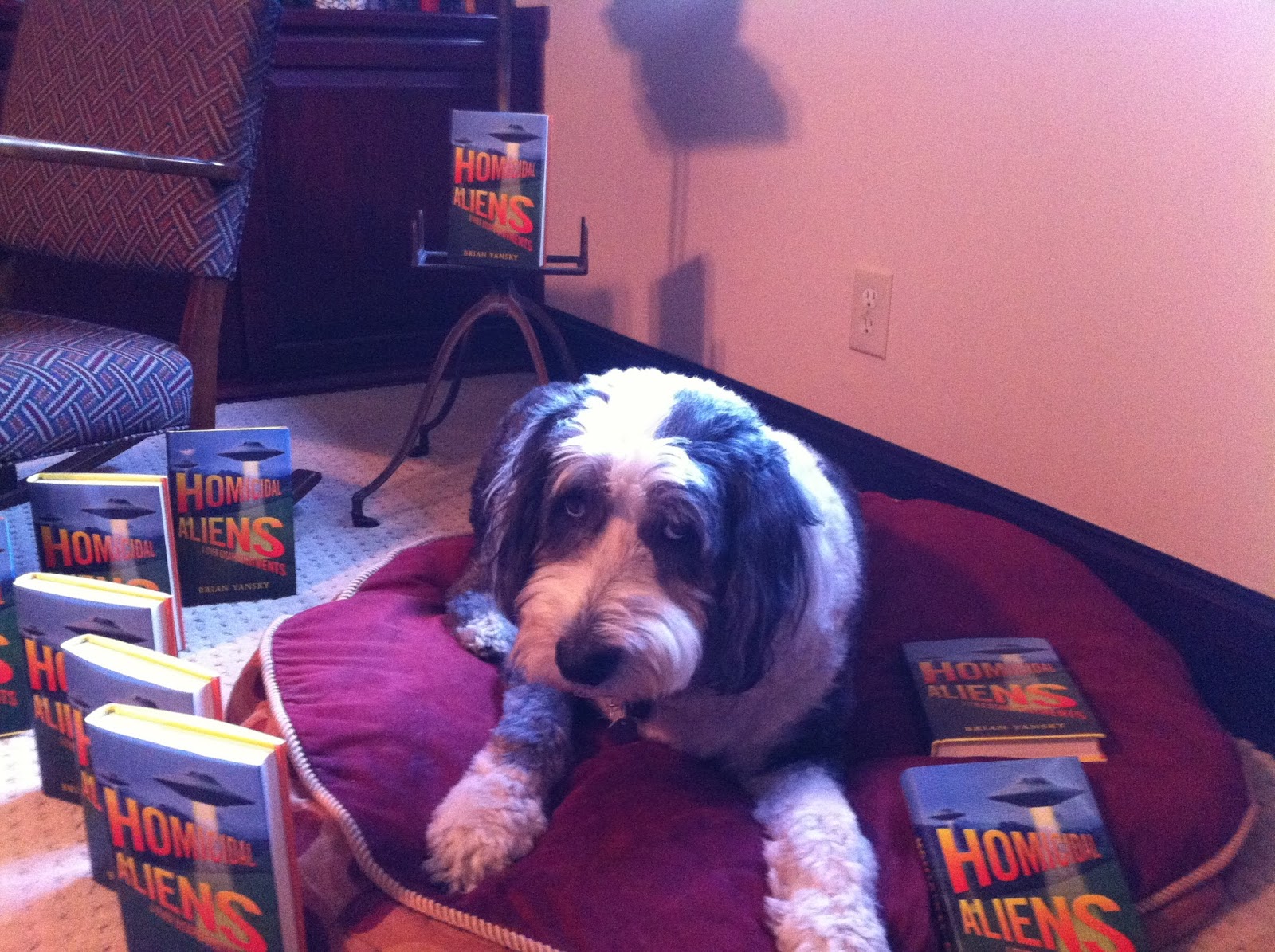
Homicidal Aliens & Other Disappointments has been released after a short sentence and then some longs ones and then some more short ones all got together and made a book.I'm happy to announce that Homicidal Aliens & Other Disappointments--a work of imagination-- has made it into the real world. I love books and I'm proud and happy to have made one. Still I accumulated a lot of rejections along the way --each one, as Steinbeck once said, a little death. Rejection hurts. But all it takes is one acceptance and the rejections don’t really matter. I don’t think that JK Rowling is too broken up over the dozens of rejections of Harry Potter. A few things have happened since that have made those rejections pretty unimportant—except to the people who rejected her book.So here’s a site worthy of a look—always fun to read about the rejections of books that went on to become classics or popular or both...http://www.literaryrejections.com/best-sellers-initially-rejected/AND“Outside of a dog, a book is man's best friend. Inside of a dog it's too dark to read.” Groucho MarxHere’s Merlin excitedly celebrating the release of Homicidal Aliens (hmmm…that doesn’t sound good but is)…
September 5, 2013
To Outline or Not to Outline?
Some people think you must outline. They argue that by having a plan you'll be more likely to have a clear structure to your work. You'll also know your ending and can write toward it. Maybe they're right.
Others say no. Outlining stifles their creativity. They feel like they're forced to follow the outline and so it ends in bad decisions. They think no plan is the way to go.•Some authors who favor this method.•“How can I know what I think till I see what I say?” E.M. Forster•“I do not plan my fiction any more than I normally plan woodland walks; I follow the path that seems most promising at any given point, not some itinerary decided before entry.” ― John FowelsHERE ARE THREE TAKES ON THE IDEA OF OUTLINING: Andre Dubus is against it. Spontaneity is everything. He needs to feel he can go anywhere.Meg Cabot likes a bit of an outline. A little here and there, particularly toward the middle and definitely at the end but with long stretches where she will invent as she goes along.John Irving outlines his whole novel. In fact he spends a year outlining. He won't even start until he knows the last line of the novel. Then he organizes the book backward so that he can get to the first line.
•Andre Dubus (goes with the don’t outline.)•http://www.youtube.com/watch?v=83gqeft_hm8&list=PLC6E6906B8CC75DC5 Meg Cabot (some outline)http://www.youtube.com/watch?v=Quc9gWsxXZ4John Irving (outline the whole novel) http://www.youtube.com/watch?v=I2mId99XQYg&feature=related
My method is something of a hybrid. I begin with a situation. A character who is in a certain situation. Then I write a very rough first draft, putting notes and markers in places rather than writing whole scenes and writing whole scenes in other. I rush to get this first draft done. It will be much shorter than the actual novel. It's kind of a discovery draft; it will be maybe 150 pages. But what it gives me is a true sense of the ending.When I revise I write toward that ending. It might change. Certainly many, many things in the draft will change. But I write toward it, knowing that the ending will be somewhere near that original ending. I build on the novel, deepening character and story, adding more than I take away. That second draft is a real draft. Then I start the process of revision.It works for me. Everyone is different though. The three writers in the vids are all very successful. They just have different ways of working. What's important is that each writer finds his or her way.
August 31, 2013
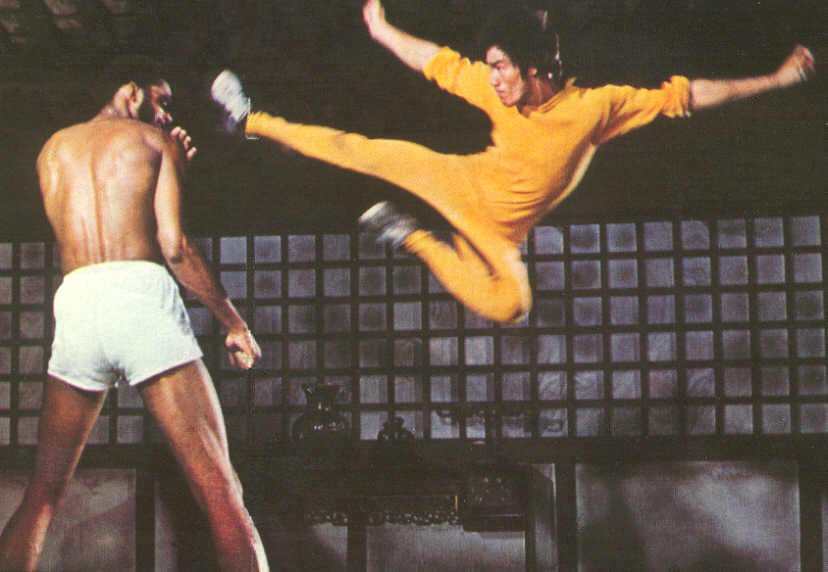
How Writing Fiction Is Like Martial Arts
Martial Arts of Writing
I believe a lot of elements of writing can be taught. An inexperienced writer who finds the right teacher, right for him or her I mean, can learn much about things like characterization, plot, setting, novel landscape, pacing, even to a certain extent paragraphing and sentences. Putting it all together in a unique and powerful way, though, is something the writer has to find himself. And so the reason writing programs give a lot of people MFAs who never publish or who publish very little. I got an MFA after teaching myself writing by reading (to me the most the single most important thing besides writing itself a writer can do to improve) and writing. Did the MFA help my writing? Yes. Is getting an MFA for everybody? No. Some it won’t help. Some don’t need it. But for me it helped me focus on my weaknesses and helped me know myself as a writer better.
When I was learning the martial art Taekwondo I realized the importance of breaking down moves. We’d work on part of a kick and then another part and then another part. It would take a long time to put it all together and be able to do that kick right and then even longer to be able to use the kick in combination with other movements. It would take still longer to be effective sparring with the move. Some people never could get there. They knew what they should do but they couldn’t make their bodies do it. Or they couldn’t let their bodies do it. Some people could do it fairly well. Only a few were really good.
Writing is more difficult. Still, I think writing’s moves can be analyzed in ways and by isolating each aspect of writing that aspect can be improved. Whether the writer does this herself or in a program or with other writers doesn’t really matter. Whatever works.
But are there some parts of writing that can’t be taught? Sure. The writer’s unique way of looking at the world. The writer’s style, too, can’t really be taught though it can be developed. The writer’s particular feel for language is, I think, like personality. And there’s that one very magical part to writing (like with Taekwondo); everything has to work together without the writer consciously forcing it to do so (of course when rewriting the writer will be very conscious about his choices). The writer has to find that unconscious place where he becomes the story. Everything slips away. The room. His fingers moving on the keyboard. Words like setting, plot, language, characters mean nothing to him. He is what he’s writing.
And here’s a blog from LitStack by Lauren Alwan about Robert Olen Butler’s book FROM WHERE YOU DREAM and his method of writing from inside the character…which I think has some similarities to my ideas about martial arts and writing fiction.http://litstack.com/from-where-you-dream-the-process-of-writing-fiction-by-robert-olen-butler/
August 28, 2013
Do Book Trailers Work? Definite Maybe. Some links & my trailer...
Do Book Trailers Work? Definite Maybe.Some links to discussions about book trailers AND my new book trailer.
http://www.huffingtonpost.com/arielle-ford/why-make-a-book-trailer-d_b_478924.html
From the Daily Beasthttp://www.thedailybeast.com/articles/2010/10/16/book-trailers-do-they-work.htmlBlog about how trailers aren’t really worth it.http://rockyourwriting.com/2011/08/do-book-trailers-work/
August 27, 2013
August 24, 2013
The Importance of Taking Risks in Writing &, Zusak interview link about Book Thief and risks, link to specific suggestions
Sometimes you just have to tell the story you have to tell. It may be way out here, like having a dog for a narrator (Who’s going to publish that?) or a story about a spider or one told by a dead girl.
You have to be brave. It’s hard. It’s very hard to write something that you know is pretty far out there. When I began my ALIEN INVASION & OTHER INCONVENIENCES novel about aliens landing and taking over the world and enslaving everyone, I thought—really? Am I really going to try to write this? It’s so, well, weird. Who will publish it? You don’t want to have these thoughts. You just want to write, but most novels take a year or more to finish. It’s a chunk of time and your life. But ultimately we’re writers and that’s what we do and part of that is taking chances, following our passion. I suppose this is the writer’s way of following Joseph Campbell’s advice: follow your bliss.
Every time you write it’s a kind of leap of faith. You have to be brave. If your story is a strange one and it’s going to be told in a strange way, it may be harder to sell to a publisher. That’s true. But who knows what will happen then? An author named Stein did write a book from a dog’s point of view called THE ART OF RACING IN THE RAIN. Great novel. Great reviews. Bestseller. And of course Charlotte’s Web is a great novel about a spider and ELSEWHERE and THE LOVELY BONES are novels with POV narrators who are dead girls. You just never know. You have to write what you have to write. You have to be brave.
Marcus Zusak, writer of the much-honored best-seller, THE BOOK THIEF, talks about taking chances in writing this phenomenal book.http://www.youtube.com/watch?v=m7B8ioiZz7M
Another writer explores the importance of taking risks and gives some specific advice.http://www.adventuresinscifipublishin...http://www.adventuresinscifipublishing.com/2012/01/the-importance-of-risk-taking-in-fiction-writing/
August 21, 2013
DON'T LET WORDS GET IN THE WAY OF WHAT YOU WRITE
Don’t let words get in the way of what you write
“Good writing is supposed to evoke sensation in the reader -- not the fact that it is raining, but the feeling of being rained upon.”― E.L. Doctorow E. L. Doctorow eloquently states what I’m getting at about not letting words get in the way of what you write. It’s easy, as a writer, to get caught up in the sounds words make, in trying to make a perfect sentence, one that sings. The problem is sometimes this becomes more about the sentence than about sticking to this very simple truth: telling us it is raining is fine but going on and on about it because you like the sound of words often leads to indulgence and bad choices. For the reader, if this is done a lot, the whole story begins to feel forced, and they lose confidence in the writing. SO, in my humble opinion,this kind of writing becomes a distraction for both reader and writer and often leads the writer into bad choices about story and sometimes character.
One key point in creating fiction, in my humble opinion, is that the reader experience, with the characters, what's happening. Langauge that makes the reader feel the rain coming down on them instead of language that simply tells the reader that it is raining (and sometimes tells them at great length) is essential to making the reader experience the story. Or so I think today.
***ALSO, along these lines, see editor Cheryl Klein’s blog about not using sense words so much. Instead try to go directly to the feeling.http://chavelaque.blogspot.com/2013/08/an-easy-technique-to-make-your-writing.html***AND ON A PERSONAL NOTEALIEN INVASION & OTHER INCONVENIENCES is an Amazon special this month—which means KINDLE version is very cheap. Here’s the link if interested: http://www.amazon.com/Alien-Invasion-Other-Inconveniences-ebook/dp/B004AM5IFG/ref=tmm_kin_title_And it is also a top ten bestseller-- well, not really---#4 on the teen &ya>Sci fi & fantasy> aliensAmazon Best Sellers Rank: #21,430 Paid in Kindle Store (See Top 100 Paid in Kindle Store) #4 in Kindle Store > Kindle eBooks > Teen & Young Adult > Science Fiction & Fantasy > Science Fiction > Aliens ///If they just added "aliens that are green and very short" to that description the novel would probably be #1 in its category. I'm grateful that people are reading it and all, but I see how easy it is to manipulate the rankings. If you just make the description specific enough there are fewer and fewer books to be ranked with. So now when authors write their books are a top ten amazon seller...I have to wonder how much that really means...Maybe this is old news to some but new to me.
August 16, 2013
Voice/fresh way of seeing/ new novel arrives
Seeing Your FictionI think this has to do with the author’s vision. Whatever your skills with the various aspects of writing a novel, whatever your talents, you have a unique way of looking at the world. Everyone does. If you can imbue your work with the unique vision, find the voice for it, then you’ve done something. Something for you. Something for the person reading. I think this has to do with the strong VOICE that every editor and agent says they're looking for.
I know when I start reading certain books I feel an immediate rapport with the voice of the novel, an immediate interest, because it feels authentic. I get really excited if it also feels different. Your way of seeing the world is what makes your writing yours.
So all the talk about craft and all the various aspects of writing fiction and yadda yadda yadda—all important but the writer needs to put himself/herself into the work. That fresh way of seeing the world is so important and so hard to do.
Or so I think today.ANDhere's a link about seeing the world in a fresh way by an author, Boyd Morrison, who recently got a puppy and observes that the way the puppy engages with the world reminds him he wants to create this same emotional enthusiasm in his fiction. I'd say it's kin to the sensual experience of the fictional world that Robert Olen Butler talks about in his excellent, FROM WHERE WE DREAM.http://killzoneauthors.blogspot.com/2013/08/the-puppy-world-view.html#.Ug52eOCf_zI
AND here's also a picture (OK, I admit I'm a crappy photographer but...) of my new novel coming out Sept. 10--just got an early copy.

August 8, 2013
formulas in fiction
Some thoughts on writing using formulas from Nathan B. with some links to more thoughts on using formulas and a blog I wrote about formula.http://blog.nathanbransford.com/2013/08/storytelling-is-getting-formulaic-this.html
forget the formulaBad Writing Advice #9: Write using a formula.
There are a lot of people out there who have story formulas they're trying to sell. And maybe they do work for some though I don't personally know any writer they work for. In most cases, I don't believe they work because writing is an organic act. You make a story come to life. Having to do X by page 49 and Y by page 61 and so on strangles the life out of your writing. This is not to say a writer shouldn't outline. Some do very well with an outline. It's not to say a writer can't plot and plan, but adherence to any formula throughout a manuscript robs it of the kind of spontaneity it needs to come to life.
You need, as a writer, to come upon surprises while you write and engage in those surprises in a way that they lead you to interesting shifts in story and character. You have to get down deep in yourself when you're writing and make connections between all the elements in your story. This requires intuitive leaps. Forget the formula.
Or so I think today.