
Maggi Andersen's Blog, page 61
April 26, 2013
Details of a Georgian/Regency Round Gown

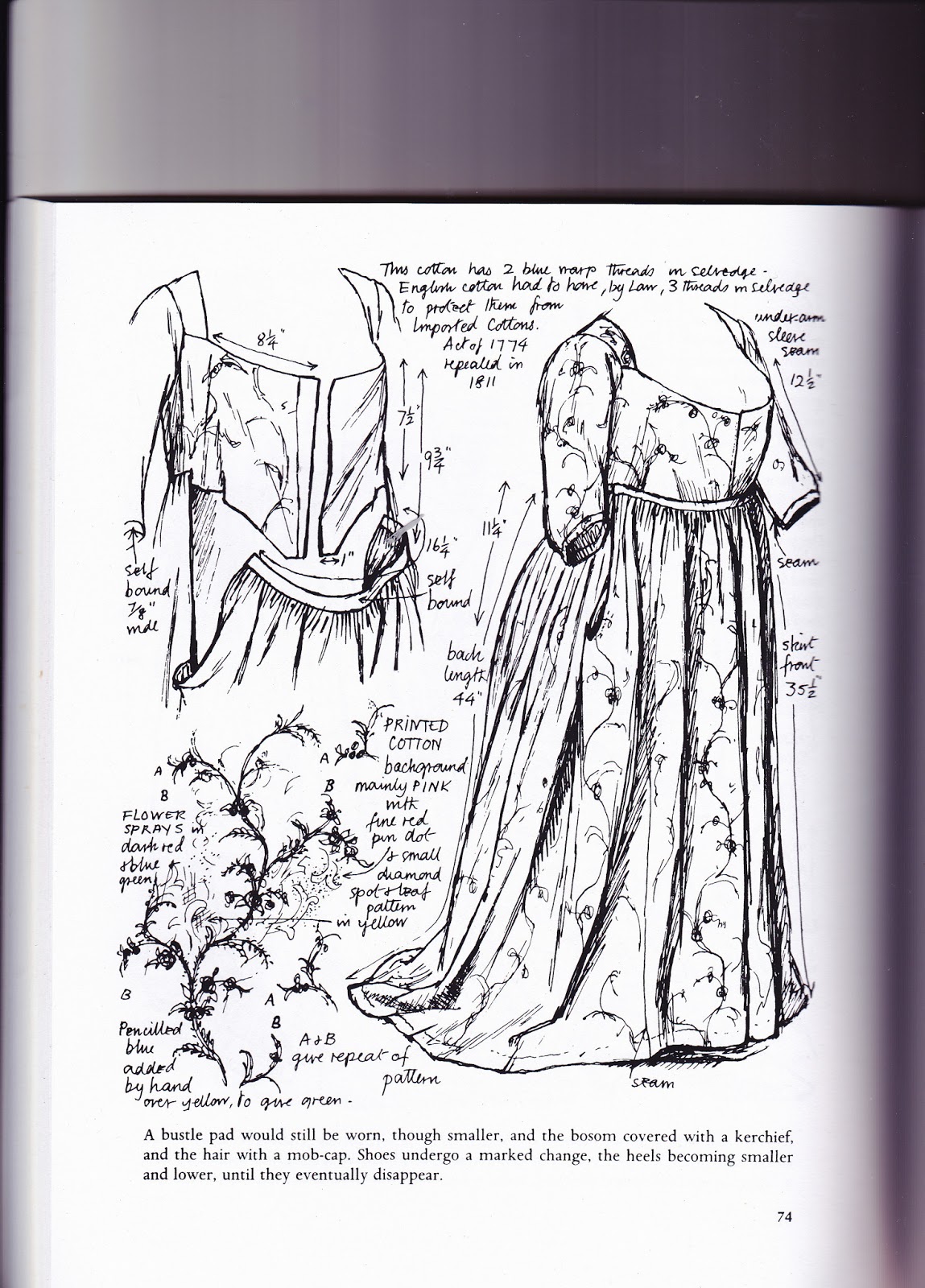 Costume in Detail 1730-1930 Nancy Bradfield


Voting has begun for the RONE Award!
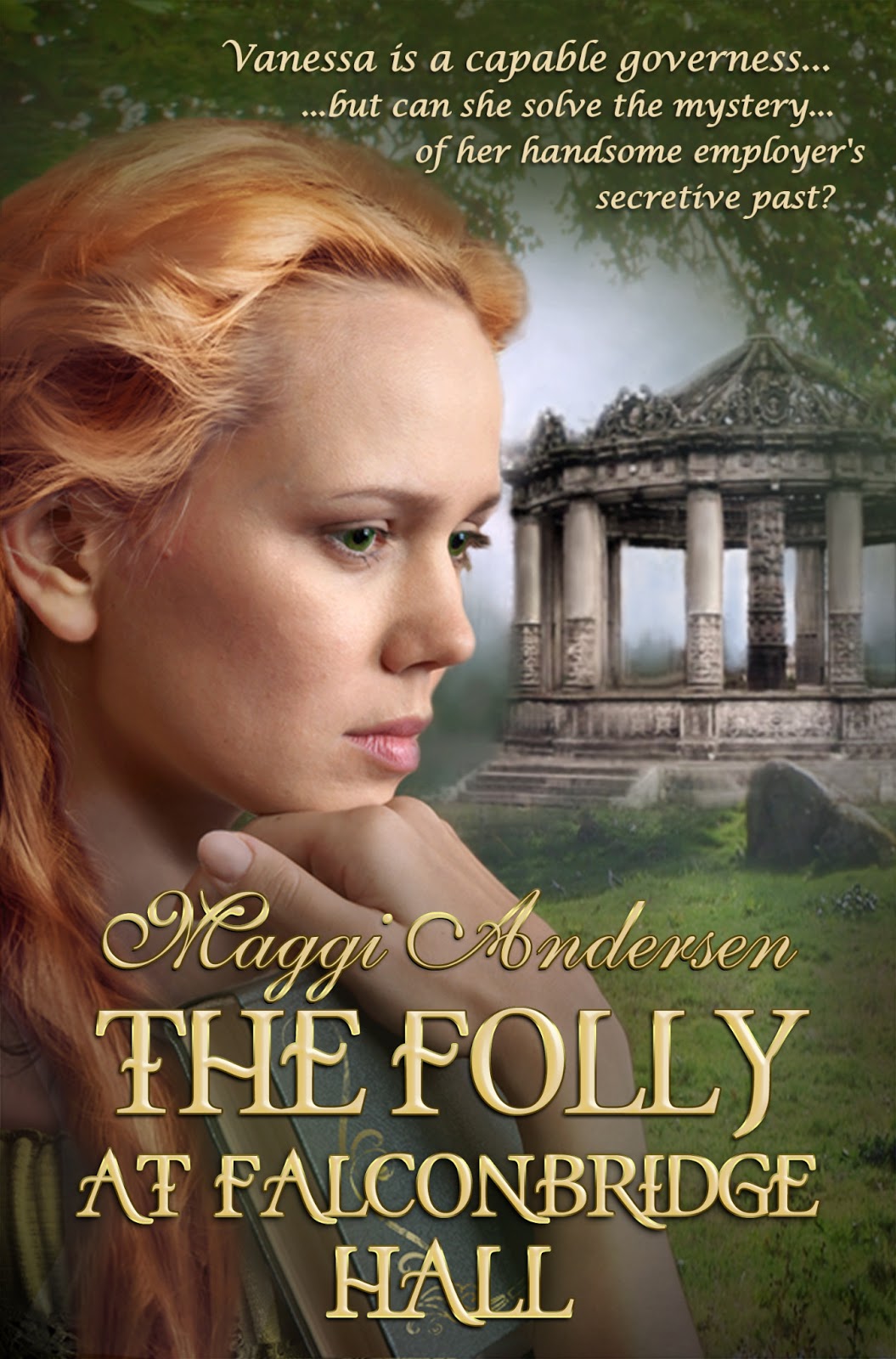
THE FOLLY AT FALCONBRIDGE HALL has reached the second round in the RONE Award. It's in the post Medieval historicals and the voting is open for a week.
For those unfamiliar but curious about the RONE awards, here's a brief run-down:
They have been developed specifically for Indie and small published works and are set to be the most extensive and prestigious award in the industry today. Each book goes through a three tier elimination process (no other award comes close to this exhaustive criteria.)
Phase 1. The books must have been professionally reviewed by InD'Tale magazine and received a 4 star rating or higher.
Phase 2. The public is then allowed to vote for their favorites among those highly reviewed books.
Phase 3. The top books in the public voting are then read and judged by a panel of qualified judges in each genre.
http://indtale.com/rone-awards/2012/week-2

2012-rone-awards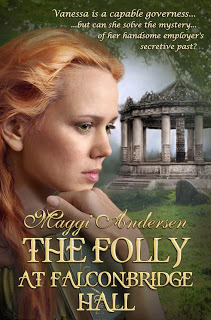
For those unfamiliar but curious about the RONE awards, here's a brief run-down:
They have been developed specifically for Indie and small published works and are set to be the most extensive and prestigious award in the industry today. Each book goes through a three tier elimination process (no other award comes close to this exhaustive criteria.)
Phase 1. The books must have been professionally reviewed by InD'Tale magazine and received a 4 star rating or higher.
Phase 2. The public is then allowed to vote for their favorites among those highly reviewed books.
Phase 3. The top books in the public voting are then read and judged by a panel of qualified judges in each genre.
http://indtale.com/rone-awards/2012/week-2
2012-rone-awards
April 24, 2013
9 Important Things I've Learned to Keep in Mind when Writing a Novel.

1. The Importance of a Great First Line
“The past is foreign country: they do things differently there.” The opening line of L.P Hartley’s The Go Between.
This memorable line comes from a memorable novel. You may not wish to begin this way, but with the fast pace of modern life, it is even more important to capture a reader's interest quickly. Your first consideration when you put pen to paper or fingers to keyboard, is your hook. But don't go for a nonsensical grab line, make it logical, authentic and pertinent to what follows. You can't expect readers to stick with you until your story really begins pages into the book. Grab them with the first line, the first paragraph, the first page and then, if your story is compelling, they'll stick with you.
A good way is to study how the bestselling writer's do it.
This is David Baldacci's first line in HELL'S CORNER:
Oliver Stone was counting seconds, an exercise that had always calmed him. Baldacci builds suspense with the next: And he needed to be calm. He feeds us a few more intriguing details without telling us much at all. The final sentences in the first paragraph: He was not going to run. He was through running. We have begun to ask questions we must read on to discover.
2. Be wary of prologues. I've used them when they seemed to work best for me, but it's important to note that many agent's don't like them. They see them as holding back the story. Or a lazy way of loading backstory into the beginning of the book.
3. Don't be tempted to bog the first chapter down with backstory. Feed past details in slowly throughout the book. Readers want to get into the story as it unfolds.
4. Don't begin with a dream. An exciting beginning suddenly turning out to have been a dream from which the protagonist wakes is a cliche.
5. Write a compelling active scene with active verbs and not too many adjectives. Show rather than tell.
6. Don't describe the character's physical appearance in too much detail up front. We can learn more about them later.
7. Don't build up a minor character in the first scene, and then dump them later.
7. Gone are the days when we can write pages of description of the scene. And don't begin with the weather unless it is important to the story.
9. Unwise to throw your protagonist into battle without introducing them first. Allow readers to become emotionally connected first.
9 Important Things I've Learned to Keep in Mind When Writing a Novel.
1. The Importance of a Great First Line
“The past is foreign country: they do things differently there.” The opening line of L.P Hartley’s The Go Between.
This memorable line comes from a memorable novel. You may not wish to begin this way, but with the fast pace of modern life, it is even more important to capture a reader's interest quickly. Your first consideration when you put pen to paper or fingers to keyboard, is your hook. But don't go for a nonsensical grab line, make it logical, authentic and pertinent to what follows. You can't expect readers to stick with you until your story really begins pages into the book. Grab them with the first line, the first paragraph, the first page and then, if your story is compelling, they'll stick with you.
A good way is to study how the bestselling writer's do it.
This is David Baldacci's first line in HELL'S CORNER:
Oliver Stone was counting seconds, an exercise that had always calmed him. Baldacci builds suspense with the next: And he needed to be calm. He feeds us a few more intriguing details without telling us much at all. The final sentences in the first paragraph: He was not going to run. He was through running. We have begun to ask questions we must read on to discover.
2. Be wary of prologues. I've used them when they seemed to work best for me, but it's important to note that many agent's don't like them. They see them as holding back the story. Or a lazy way of loading backstory into the beginning of the book.
3. Don't be tempted to bog the first chapter down with backstory. Feed past details in slowly throughout the book. Readers want to get into the story as it unfolds.
4. Don't begin with a dream. An exciting beginning suddenly turning out to have been a dream from which the protagonist wakes is a cliche.
5. Write a compelling active scene with active verbs and not too many adjectives. Show rather than tell.
6. Don't describe the character's physical appearance in too much detail up front. We can learn more about them later.
7. Don't build up a minor character in the first scene, and then dump them later.
7. Gone are the days when we can write pages of description of the scene. And don't begin with the weather unless it is important to the story.
9. Unwise to throw your protagonist into battle without introducing them first. Allow readers to become emotionally connected first.
April 21, 2013
April 18, 2013
April 14, 2013

April 1, 2013
A Baron in Her Bed takes the classic regency romance and ...

A Baron in Her Bed takes the classic regency romance and crosses it with a historical thriller/mystery and provides a romantic read that keeps you guessing and on the edge of your seat for the whole book.
Set after the defeat of Napoleon and his exile Guy Fortescue a man who lived through the revolution in France and who is the heir to an English Barony. Guy meets the very unconventional Horatia when she is dresses as a groom so she can take her fathers stallion for a ride alone. We add intrigue to the mix after several attempts on Guy's life.
This book has a lot going for it, long lost Baron's, self professed spinsters, spy's, attempted murder, sex, and rescues. I enjoyed the story and liked the characters, I found at a couple points during my reading I thought the story dragged a bit and some of the "misunderstandings" between hero and heroine were unnecessary and they never gained any ground in the story anyway. I liked that it was a regency with a little steam, not heaps and tons but more in line with how a real couple would feel and act toward each other even within the bounds of regency era morality.
Over all a great trip back to regency England with a dash of spice and a helping of thriller.


Giveaway is a $20 Amazon card plus the winners choice of 2 of her books!!
EXCERPT:
At least two hours had passed before Horatia guided the horse back towards the road. Distracted by her thoughts, she had ridden farther than she intended. A glance at the skies told her the storm bank was almost upon them.
They would have to take their chances and return by the road. She urged The General into a gallop.
They came to the road that led to Malforth Manor but were still some miles away. She would be lucky to reach home before the storm hit. She eased the horse into a trot as they approached a sharp bend in the road, the way ahead hidden by a stand of oaks. Once round the corner, she gasped and pulled the horse up hard.
A body lay in the road.
Highwaymen tried this ruse she’d heard. She edged her horse closer.
With a quick search of the landscape, she saw a horse disappear over a hill with its reins trailing. She dismounted and approached the man with caution. Barely a leaf stirred. It was oddly still, and the air seemed hushed and quiet as death before the coming storm. It matched her mood as she stood wondering what to do about the problem before her.
The man sprawled on his side. Judging by his clothes, he was a gentleman. Beneath his multi-caped greatcoat his brown coat revealed the skill of the tailor. His cream double-breasted waistcoat was of very fine silk. Long legs were encased in tight-fitting buff-colored suede pantaloons. His mud-splattered top boots showed evidence of loving care.
He moaned.
Horatia knelt beside him and grasped his shoulder. “Are you all right?”
When he didn’t answer, she struggled to roll him onto his back. A nasty gash trickled blood over his forehead where a bruise would surely form.
The man’s dark hair was sticky with blood. “Can you hear me, sir?” His eyelids fluttered. She shouldn’t stare at him while he remained unconscious, but she couldn’t draw her eyes away. He had remarkable cheekbones. His dark looks reminded her of Lord Byron. More rugged perhaps, but an undeniably handsome face, his skin more swarthy than one usually saw in an English winter. There was a dimple in his chin and a hint of shadow darkened his strong jaw line. She gingerly picked up his wrist and peeled back the soft leather glove, glad to find his pulse strong. An expensive gold watch had fallen from his pocket. So, he hadn’t been robbed. It must have been an accident. She looked around for some sign of what had happened but could see nothing.
A gust of chill wind made her shiver, and she glanced up at the sky. Ashgrey snow clouds now hovered overhead. “I have to move you, sir.”
Horatia stood and looked around. The road ran along the boundary of the Fortescue estate. Over the hill among the trees was a tiny hunting lodge.
She’d passed it many times when she roamed the woods, although she hadn’t been there for years. Her godfather, Eustace, lived for a part of the year in the Fortescue mansion, but it was some distance away and the snow had begun to fall.
It was by far the closest shelter, but trying to get the motionless man onto a horse unaided would be impossible. She sighed. That was not an option.
Horatia looked back at him. He was large, tall, and broad shouldered.
How on earth could she move him? And what would she do with him if she did? She looked up and down the deserted road with the hope that someone–preferably someone with big, strong arms–would appear to help her, and yet, she dreaded to be found in this invidious position. This was a quiet back road; most folk preferred the more direct route, so she couldn’t expect to be rescued soon.
She wondered if she should drag him under a tree and ride for help. As she considered this, the snow grew heavier. It settled over the ground and the prone man and touched her face like icy fingers. She couldn’t leave him out in the open, prey to the elements while she went for help. In bad weather it would take ages to ride to Digswell village. By the time she located the apothecary and brought him here, the man would be near death. Somehow she had to move him off the road and under shelter, although in the dead of winter, there was little to be had.
Horatia bent down, wrapped his limp arm around her shoulders, and caught a whiff of expensive bergamot. She took hold of his firm waist and tried to pull him towards the trees, but he was too heavy. She eased him down again.
Horatia pulled off her coat and shuddered at the cold. She tucked it around him. The snow had begun to fall in earnest, and worse, the prospect of a blizzard loomed. The wind gathered force. It stirred the tops of the trees around them and whipped the snowflakes into chaotic spirals of white.
Panic forced her to act. She took hold of the man’s arms and tried again to drag him. In small spurts she edged him closer to the scant shelter of the nearest tree, an oak whose dead leaves remained, curled and brown. Forced to pause, she took several deep breaths. He was quite a weight. She broke into a sweat despite the absence of her coat and the frigid air.
Horatia was severely winded and gasping by the time she reached the tree. It was a victory of sorts but afforded very little protection. She propped him against the trunk.
His eyelids rose. Startling pale blue eyes stared uncomprehendingly into hers.
My Reading Obsession
March 29, 2013
5 Star Top Pick! Review of A Baron in Her Bed!
Click the button for the HTML codes

 Author: Maggi Andersen
Publisher: Knox Robinson Publishing
Release Date: September 2012
ISBN: 9781908483348
Book 1 of The Spies of Mayfair Series
Book Genre: Historical Romance
Buy this book from:


A Baron in Her Bed [SUMMARY] [REVIEWS] [COMMENTS] [INTERVIEW] [VIDEO] OFFICIAL REVIEW 1 people found the following review helpful Book Reviewed by Linda Hays-Gibbs (author,reviewer) [ Review Posted: Mar 28, 2013 ] - See all my reviews The characters in A BARON IN HER BED are full-bodied and the plot is very interesting. I enjoyed this so much.
Horatia Cavendish is a tomboy that believes she will never marry. She loves to ride her father's stallion, The General, when she knows she shouldn't and in men's clothing. Her father, Colonel Cavendish, has about given up on making a lady out of her. On one of her outings, she finds an injured man and takes him to an old abandoned building, masquerading as a boy. It was lucky for the baron for he was attacked on his way to his ancestral estates. If Horatia hadn't rescued him, he would have died there in the snow.
Guy Truesdale has been raised on the continent in France. His father, the old baron, fled England after a duel over a woman where he killed a man. He married in France and produced a son. His one dream is for his son to go back to England and reclaim his land and titles. He sends money to the estate manager and relative to keep the estate in order. Over the years, however, the estate has gone to ruin.
Guy is befriended by John Haldane, Earl of Strathairn, a very handy man to have on your side as he rescues Guy more than once from attackers. It is a mystery why Guy is being attacked on all sides from London to the estate in the country. He thinks it is his cousin, the only other person who could inherit the property, but the cousin is also Horatia's godfather, and she swears he is a good man.
They run into one problem after another and a nice mystery unfolds along with a great romance. It takes you back and forth between the characters. You cannot figure out who the bad guy is until the end. I loved this story. It was an exciting read and being Regency was right up my alley.
I give this mysterious Regency romance five out of five stars. I urge anyone with interest in this type of story to read it. I thoroughly enjoyed reading it myself.
Author: Maggi AndersenPublisher: Knox Robinson Publishing
Release Date: September 2012
ISBN: 9781908483348
Book 1 of The Spies of Mayfair Series
Book Genre: Historical Romance
Buy this book from:
A Baron in Her Bed [SUMMARY] [REVIEWS] [COMMENTS] [INTERVIEW] [VIDEO] OFFICIAL REVIEW 1 people found the following review helpful
Book Reviewed by Linda Hays-Gibbs (author,reviewer) [ Review Posted: Mar 28, 2013 ] - See all my reviews The characters in A BARON IN HER BED are full-bodied and the plot is very interesting. I enjoyed this so much. Horatia Cavendish is a tomboy that believes she will never marry. She loves to ride her father's stallion, The General, when she knows she shouldn't and in men's clothing. Her father, Colonel Cavendish, has about given up on making a lady out of her. On one of her outings, she finds an injured man and takes him to an old abandoned building, masquerading as a boy. It was lucky for the baron for he was attacked on his way to his ancestral estates. If Horatia hadn't rescued him, he would have died there in the snow.
Guy Truesdale has been raised on the continent in France. His father, the old baron, fled England after a duel over a woman where he killed a man. He married in France and produced a son. His one dream is for his son to go back to England and reclaim his land and titles. He sends money to the estate manager and relative to keep the estate in order. Over the years, however, the estate has gone to ruin.
Guy is befriended by John Haldane, Earl of Strathairn, a very handy man to have on your side as he rescues Guy more than once from attackers. It is a mystery why Guy is being attacked on all sides from London to the estate in the country. He thinks it is his cousin, the only other person who could inherit the property, but the cousin is also Horatia's godfather, and she swears he is a good man.
They run into one problem after another and a nice mystery unfolds along with a great romance. It takes you back and forth between the characters. You cannot figure out who the bad guy is until the end. I loved this story. It was an exciting read and being Regency was right up my alley.
I give this mysterious Regency romance five out of five stars. I urge anyone with interest in this type of story to read it. I thoroughly enjoyed reading it myself.
March 21, 2013
FRANCES HODGSON BURNETT - The authors who influenced my Victorian novels
The author of one of my favourite books, The Secret Garden.
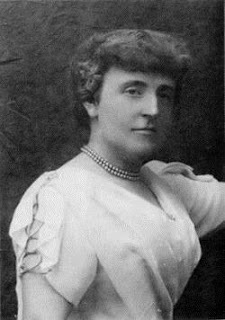 Frances Hodgson Burnett
Some of us write to make sense of the world or deal with personal sadness. While writing wonderful stories of hope and fulfillment, Frances Hodgson Burnett struggled with depression throughout her life, which deepened after her oldest son, Lionel, died of tuberculosis in 1892.
Frances Eliza Hodgson was born in Cheetham, near Manchester, England. After her father died in 1852, the family eventually fell on straitened circumstances and in 1865 emigrated to the United States, settling near Knoxville, Tennessee. There, Frances began writing to help earn money for the family, publishing stories in magazines from the age of 19. In 1870 her mother died and in 1872 she married Swan Burnett, who became a medical doctor after which they lived in Paris for two years where their two sons were born before returning to the US to live in Washington D.C. There she began to write novels, the first of which That Lass o' Lowries , was published to good reviews.
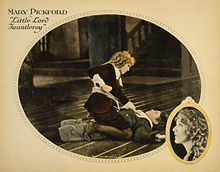 LITTLE LORD FAUNTLEROY
She is best known for her children's stories, Little Lord Fauntleroy (published in 1885-6). Originally published as a serial in the St. Nicholas Magazine between November 1885 and October 1886, then as a book by Scribner's in 1886. The accompanying illustrations by Reginald Birch set fashion trends and Little Lord Fauntleroy, also set a precedent in copyright law when in 1888 its author won a lawsuit against E. V. Seebohm over the rights to theatrical adaptations of the work.
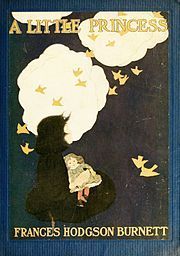 A LITTLE PRINCESS
A Little Princess
is a 1905 children's novel. It is a revised and expanded version of Burnett's 1888 serialized novel entitled Sara Crewe: or, What Happened at Miss Minchin's Boarding School, which was published in St. Nicholas Magazine. According to Burnett, she had been composing a play based on the story when she found out a lot of characters she had missed. The publisher asked her to publish a new, revised story of the novella, producing the novel.
A LITTLE PRINCESS
A Little Princess
is a 1905 children's novel. It is a revised and expanded version of Burnett's 1888 serialized novel entitled Sara Crewe: or, What Happened at Miss Minchin's Boarding School, which was published in St. Nicholas Magazine. According to Burnett, she had been composing a play based on the story when she found out a lot of characters she had missed. The publisher asked her to publish a new, revised story of the novella, producing the novel.
Based on a 2007 online poll, the National Education Association named the book one of its "Teachers' Top 100 Books for Children." It was one of the "Top 100 Chapter Books" of all time in a 2012 poll by School Library Journal.
My personal favourite was The Secret Garden .
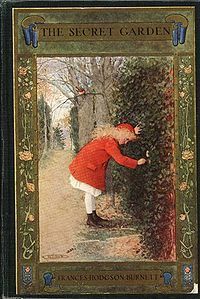 THE SECRET GARDENBurnett enjoyed socializing and lived a lavish lifestyle. Beginning in the 1880s, she began to travel to England frequently and bought a home there in the 1890s where she wrote
The Secret Garden
. The garden is the book's central symbol, inspired by Burnett's interest in Mary Baker Eddy's Christian Science theories. The secret garden at Misselthwaite Manor is the site of both the near-destruction and the subsequent regeneration of a family. Using the garden motif, Burnett explores the healing power inherent in living things. The story constitutes a struggle between common sense and the accepted wisdom of the day, in which common sense wins.
THE SECRET GARDENBurnett enjoyed socializing and lived a lavish lifestyle. Beginning in the 1880s, she began to travel to England frequently and bought a home there in the 1890s where she wrote
The Secret Garden
. The garden is the book's central symbol, inspired by Burnett's interest in Mary Baker Eddy's Christian Science theories. The secret garden at Misselthwaite Manor is the site of both the near-destruction and the subsequent regeneration of a family. Using the garden motif, Burnett explores the healing power inherent in living things. The story constitutes a struggle between common sense and the accepted wisdom of the day, in which common sense wins.
Initially published in serial format starting in the autumn of 1910, The Secret Garden was first published in its entirety in 1911. It is now one of Burnett's most popular novels, and is considered to be a classic of English children's literature. Several stage and film adaptations have been produced.
She divorced Swan Burnett in 1898 and married Stephen Townsend in 1900, and divorced him in 1902. Towards the end of her life, she settled in Long Island, where she died in 1924 and is buried in Roslyn Cemetery, on Long Island.
In 1936 a memorial sculpture by Bessie Potter Vonnoh. (her beautiful sculptures are well worth a look or a visit if you’re fortunate enough. A statue of Bessie Potter Vonnoh's was erected in her honour in Central Park's Conservatory Garden. The statue depicts her two famous Secret Garden characters, Mary and Dickon.
Bessie Potter Vonnoh (1872–1955), was one of the most successful women artists of her generation. She specialized in accomplished images of women and children. At a time when the field of American sculpture was dominated by men creating large, public monuments, she designed intimate works for domestic interiors and gardens, elevating the quality and appeal of small bronze, marble and terra cotta sculptures. Launching her career in the time of industrialization, urbanization and the women’s rights movement, Vonnoh contributed to the dramatic transformation of American society. Yet, while she came to embody the “New Woman,” her characteristic imagery—blissful domestic life—supported conventional ideas of women as icons of beauty and moral guardians of the home.
Wikipedia
Newington-Cropsey Cultural Studies Center.
Maggi Andersen
Maggi Andersen's website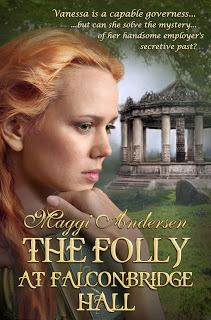 The Folly at Falconbridge Hall released May 8th with Knox Robinson Publishing. Vanessa Ashley felt herself qualified for a position as governess, until offered the position at Falconbridge Hall. Left penniless after the deaths of her artist father and suffragette mother, Vanessa Ashley draws on her knowledge of art, politics, and history to gain employment as a governess. She discovers that Julian, Lord Falconbridge, requires a governess for his ten-year-old daughter Blyth at Falconbridge Hall, in the countryside outside London. Lord Falconbridge is a scientist and dedicated lepidopterist who is about to embark on an extended expedition to the Amazon. An enigmatic man, he takes a keen interest in his daughter's education. As she prepares her young charge, Vanessa finds the girl detached and aloof. As Vanessa learns more about Falconbridge Hall, more questions arise. Why doesn't Blythe feel safe in her own home? Why is the death of her mother, once famed society beauty Clara, never spoken of? And why did the former governess leave so suddenly without giving notice?Tags: Maggi Andersen, Fiction, Historical romance, Victorian literature, Victorian romance, Victorian mystery, Frances Hodgson Burnett, Bessie Potter Bonnoh.
Next, Victoria Holt.
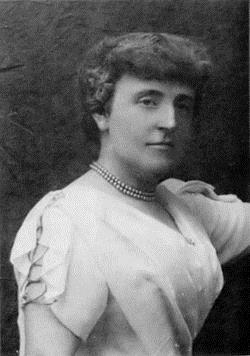 Frances Hodgson Burnett
Some of us write to make sense of the world or deal with personal sadness. While writing wonderful stories of hope and fulfillment, Frances Hodgson Burnett struggled with depression throughout her life, which deepened after her oldest son, Lionel, died of tuberculosis in 1892.
Frances Eliza Hodgson was born in Cheetham, near Manchester, England. After her father died in 1852, the family eventually fell on straitened circumstances and in 1865 emigrated to the United States, settling near Knoxville, Tennessee. There, Frances began writing to help earn money for the family, publishing stories in magazines from the age of 19. In 1870 her mother died and in 1872 she married Swan Burnett, who became a medical doctor after which they lived in Paris for two years where their two sons were born before returning to the US to live in Washington D.C. There she began to write novels, the first of which That Lass o' Lowries , was published to good reviews.
 LITTLE LORD FAUNTLEROY
She is best known for her children's stories, Little Lord Fauntleroy (published in 1885-6). Originally published as a serial in the St. Nicholas Magazine between November 1885 and October 1886, then as a book by Scribner's in 1886. The accompanying illustrations by Reginald Birch set fashion trends and Little Lord Fauntleroy, also set a precedent in copyright law when in 1888 its author won a lawsuit against E. V. Seebohm over the rights to theatrical adaptations of the work.
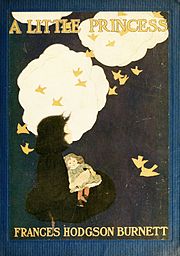 A LITTLE PRINCESS
A Little Princess
is a 1905 children's novel. It is a revised and expanded version of Burnett's 1888 serialized novel entitled Sara Crewe: or, What Happened at Miss Minchin's Boarding School, which was published in St. Nicholas Magazine. According to Burnett, she had been composing a play based on the story when she found out a lot of characters she had missed. The publisher asked her to publish a new, revised story of the novella, producing the novel.
A LITTLE PRINCESS
A Little Princess
is a 1905 children's novel. It is a revised and expanded version of Burnett's 1888 serialized novel entitled Sara Crewe: or, What Happened at Miss Minchin's Boarding School, which was published in St. Nicholas Magazine. According to Burnett, she had been composing a play based on the story when she found out a lot of characters she had missed. The publisher asked her to publish a new, revised story of the novella, producing the novel.Based on a 2007 online poll, the National Education Association named the book one of its "Teachers' Top 100 Books for Children." It was one of the "Top 100 Chapter Books" of all time in a 2012 poll by School Library Journal.
My personal favourite was The Secret Garden .
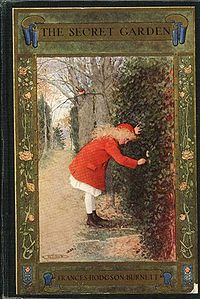 THE SECRET GARDENBurnett enjoyed socializing and lived a lavish lifestyle. Beginning in the 1880s, she began to travel to England frequently and bought a home there in the 1890s where she wrote
The Secret Garden
. The garden is the book's central symbol, inspired by Burnett's interest in Mary Baker Eddy's Christian Science theories. The secret garden at Misselthwaite Manor is the site of both the near-destruction and the subsequent regeneration of a family. Using the garden motif, Burnett explores the healing power inherent in living things. The story constitutes a struggle between common sense and the accepted wisdom of the day, in which common sense wins.
THE SECRET GARDENBurnett enjoyed socializing and lived a lavish lifestyle. Beginning in the 1880s, she began to travel to England frequently and bought a home there in the 1890s where she wrote
The Secret Garden
. The garden is the book's central symbol, inspired by Burnett's interest in Mary Baker Eddy's Christian Science theories. The secret garden at Misselthwaite Manor is the site of both the near-destruction and the subsequent regeneration of a family. Using the garden motif, Burnett explores the healing power inherent in living things. The story constitutes a struggle between common sense and the accepted wisdom of the day, in which common sense wins.Initially published in serial format starting in the autumn of 1910, The Secret Garden was first published in its entirety in 1911. It is now one of Burnett's most popular novels, and is considered to be a classic of English children's literature. Several stage and film adaptations have been produced.
She divorced Swan Burnett in 1898 and married Stephen Townsend in 1900, and divorced him in 1902. Towards the end of her life, she settled in Long Island, where she died in 1924 and is buried in Roslyn Cemetery, on Long Island.
In 1936 a memorial sculpture by Bessie Potter Vonnoh. (her beautiful sculptures are well worth a look or a visit if you’re fortunate enough. A statue of Bessie Potter Vonnoh's was erected in her honour in Central Park's Conservatory Garden. The statue depicts her two famous Secret Garden characters, Mary and Dickon.
Bessie Potter Vonnoh (1872–1955), was one of the most successful women artists of her generation. She specialized in accomplished images of women and children. At a time when the field of American sculpture was dominated by men creating large, public monuments, she designed intimate works for domestic interiors and gardens, elevating the quality and appeal of small bronze, marble and terra cotta sculptures. Launching her career in the time of industrialization, urbanization and the women’s rights movement, Vonnoh contributed to the dramatic transformation of American society. Yet, while she came to embody the “New Woman,” her characteristic imagery—blissful domestic life—supported conventional ideas of women as icons of beauty and moral guardians of the home.
Wikipedia
Newington-Cropsey Cultural Studies Center.
Maggi Andersen
Maggi Andersen's website
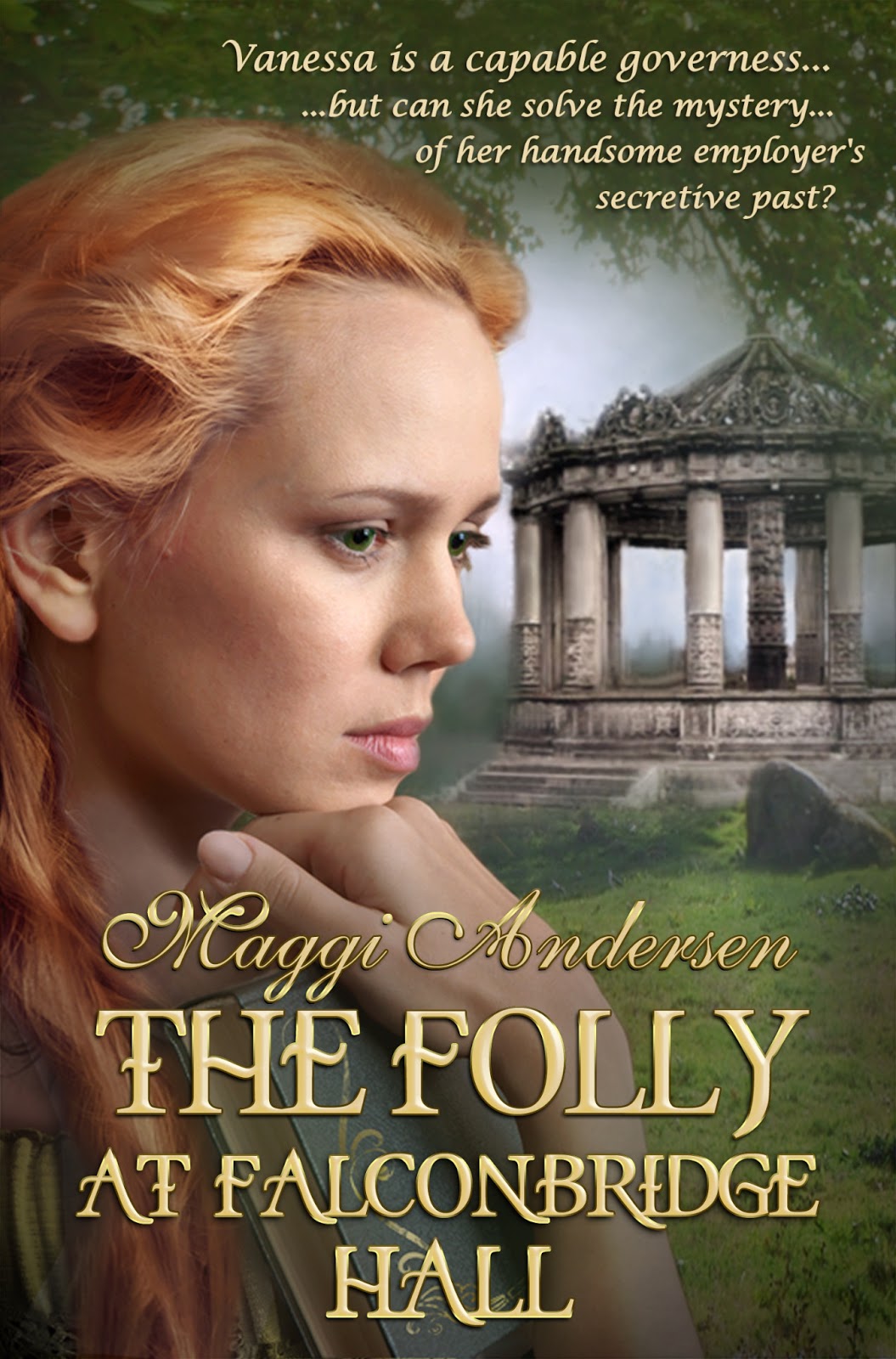 The Folly at Falconbridge Hall released May 8th with Knox Robinson Publishing. Vanessa Ashley felt herself qualified for a position as governess, until offered the position at Falconbridge Hall. Left penniless after the deaths of her artist father and suffragette mother, Vanessa Ashley draws on her knowledge of art, politics, and history to gain employment as a governess. She discovers that Julian, Lord Falconbridge, requires a governess for his ten-year-old daughter Blyth at Falconbridge Hall, in the countryside outside London. Lord Falconbridge is a scientist and dedicated lepidopterist who is about to embark on an extended expedition to the Amazon. An enigmatic man, he takes a keen interest in his daughter's education. As she prepares her young charge, Vanessa finds the girl detached and aloof. As Vanessa learns more about Falconbridge Hall, more questions arise. Why doesn't Blythe feel safe in her own home? Why is the death of her mother, once famed society beauty Clara, never spoken of? And why did the former governess leave so suddenly without giving notice?Tags: Maggi Andersen, Fiction, Historical romance, Victorian literature, Victorian romance, Victorian mystery, Frances Hodgson Burnett, Bessie Potter Bonnoh.
 Next, Victoria Holt.


