Bernadette Simpson's Blog, page 5
January 11, 2012
D is for Donkeys in the Desert

A couple of the donkeys we came across on a recent drive through the mountains of south Sinai ~ A few Bedouin women were at a nearby well, filling dozens of jerkins with the fresh water, which the donkeys (There were around 8 of them.) would later carry home to their encampment.
Many donkeys in (mainland) Egypt live a much more strenuous life. Check out The Donkey Sanctuary´s website and read about how they work to improve the living conditions donkeys in Egypt.
Donkeys and mules constitute a major part of the total animal population in Egypt, standing at over 3,000,000. They are used for everyday tasks, including carrying both goods and people. There are also hundreds of brick kilns in the areas where we work and each kiln has between 10-15 donkeys working on site.
Most donkeys we come across suffer with open wounds caused by poor harnessing. Foot problems are also common, along with eye infections and donkeys beaten by their owners. Our teams visit 11 villages and the brick kilns on a regular basis to offer free routine veterinary care and help owners improve the working conditions for their animals.





January 6, 2012
New Book from Habiba
About a year ago, I posted about my Arabic-speaking alter-ego Habiba. She´s embarrassed it has taken her this long, but she has finally uploaded a new book! The Flying Seed or البِذرة الطايرة follows the seed of the 'ushaar plant (Dead Sea Apple Tree) as he jumps from his pod, flies through the village, and comes to rest in a nearby wadi, where – with the help of the sun and rain – he will complete his life cycle.


Visit Habiba´s web page to download FREE copies of this book in either Egyptian Arabic or Arabic and English.
You can download eBooks or printable versions, all PDFs.





December 11, 2011
S is for Solar Power in Sinai

These solar panels provide the power needed for the pump to bring fresh water from deep underground to the surface. The water then travels through meters and meters of black hose pipe to communities in the area, providing irrigation for gardens and water for general use. This is only one of several solar-powered wells located in Wadi Gharba, South Sinai (in St. Katherine´s Protectorate). The solar water pumps were provided to the local Bedouin communities by an international aid project sponsored by the European Union. If only these were easier to acquire – I´d outfit all of Dahab with solar water pumps! 





November 7, 2011
C is for a Couple of Cute Camels

Yep, camels again. I just can´t resist pulling over to the side of the road and trying to capture their cute little faces. These two came right on over to be pictured up close. Their other family members, including a nursing mother and little one, decided to stay in the background, munching away on desert greens.





November 1, 2011
F is for Food!
If you like Egyptian food and have enjoyed my photos of these yummies, you may be interested in checking out my ¨Food of Egypt 2012¨ Calendar that I created on Zazzle. Makes a nice gift and you can customize size, color, and even the photos!

Food of Egypt 2012 Calendar by bernadettesimpson
Join Zazzle's calendar affiliate program
 [image error]
 [image error]


 [image error]
October 14, 2011
M is for the Marvellous Migration

Autumn is in the air – and so are the birds! It´s prime migration season right now and Egypt lies on one of the busiest flyways in the world. On a recent bird watching trip, a friend lent me a camera with an actual zoom lens so I could try to get some shots. We stopped near Wadi Mandar and also at the ¨Sharm Pools¨ – sewage treatment pools, that is, a popular hang out for all the migrating birds. Besides the obvious White Storks, we also saw ducks, cranes, plovers, and dozens of gorgeous raptors soaring above our heads. Unfortunately, I can´t be more specific than that. I also recently wrote a piece about migration for a local publication in Sharm el Sheikh, MIX Mag, and thought I´d share an excerpt here:
Every autumn thousands of White Storks (Ciconia ciconia) pass through Sharm as they migrate south to Africa for the winter. Like many other birds, storks migrate to find the best place for feeding, breeding, and raising their young. That usually means a journey of thousands of kilometers. When the days begin to get shorter, birds know it is time to start this journey. Their bodies start to produce different hormones and fat accumulates under their skin. This fat provides the energy they will need for all that flying. Most birds, storks included, migrate from their northern summer homes to the south in winter, but some birds breed in the south of Africa and migrate north in the winter. Others migrate east to west to take advantage of the milder coastal climates and several species migrate in altitude, living higher up in the mountains in the summer and spending the winter in lowlands. Scientists do not fully understand how birds migrate, but it is believed to be a combination of sight, smell, monitoring of magnetic fields, observation of the sun and stars, and following their friends. (Most birds migrate in flocks.)
White Storks are only one of many species of migratory birds that pass through Sinai. White Storks are large birds about 100 – 115 cm tall with a wingspan of 155 – 165 cm. They are completely white except for their black wing flight feathers and red bill and legs. Both male and females have the same plumage but males are generally larger. Young birds have black bills and yellowish-gray legs. Storks walk slowly and steadily and fly with their neck outstretched. Usually silent birds, storks will only make noise when annoyed when they will clatter their jaws together.
Storks migrate in large flocks, generally in groups of about 100 birds. Because of their long wings and large bodies, storks do not get very far by flapping their wings. Instead, they soar. The storks use warm air currents, called thermals, that form over land. Since these thermals rarely form over sea, storks choose a migration route that involves the shortest trip across water. Most birds coming from the north cross over the Bosporus, circle around the Mediterranean Sea and through the Middle East where they fly through eastern Sinai and cross the Red Sea near El Tor. Sharm el Sheikh is actually outside of the normal migration route, but many birds – especially the old, tired, sick, or injured ones – are lured to the city by the hotels' green areas…and the garbage.





 [image error]
October 6, 2011
A is for Almonds

Almonds are called ¨luz¨ لوز in Arabic and are available for purchase year round in Egypt. Most of these almonds are imported since almond trees are not cultivated in the Nile Delta. They are, however, grown in south Sinai – in the Bedouin gardens in the mountains around the city of St. Katherine´s. Two varieties of almond (Prunus amygdalus) grow in south Sinai – fark, a small soft-shelled nut, and al-sal, the larger hard-shelled nuts pictured above. A friend recently visited one of the gardens and generously returned with a kilo of almonds for us…so you know what we´ve been snacking on! Well worth the effort.





September 27, 2011
C is for Cuddly Cats!
 Cats, cats, cats! They have been in Egypt since ancient times. Besides being useful in catching mice and other pests, cats were also worshipped by ancient Egyptians. They were believed to have magical powers and to provide protection. While cats may not be as honored today as they once were, visitors to modern Egypt will see a plethora of their descendants roaming the city streets. The cat above, however, is lucky to live in Dahab, where cats are still worshipped, in their own way. The cats roam freely in and out of all the restaurants and cafeterias along the shore, rubbing up against the legs of tourists, curling up in willing laps, and being fed delicious scraps of leftovers from the tourists' meals. If this bothers you, waiters will provide you with a squirt bottle to keep the cats at bay until you clean your plate. They don´t bother me though. They are one of the joys of spending an afternoon on the shore. The kitten pictured here kept my husband and I company for two weeks at Bishbishi camp where we stayed while waiting to move into our house. And I love his pose – he looks just like any visitor to Dahab should after a day of playing in the sun!
If you´re an animal-lover and are interested in helping the animals of Egypt, check out these local organizations:
Egyptian Society for Mercy to Animals
Egyptian Society of Animal Friends
Egyptian Mau Rescue Organization





September 9, 2011
F is for Flag

Not the most exciting of photos, I know, but I found the history of the Egyptian flag fascinating – and not something I had looked into before.
According to the Wikipedia,
The Free Officers who toppled King Farouk in the Revolution of 1952 assigned specific symbolism to each of the three bands of the Arab Liberation flag. The red band symbolises the period before the Revolution, a time characterized by the struggle against the monarchy, and the British occupation of the country. The white band symbolizes the bloodless nature of the Revolution itself. The black band symbolises the end of the oppression of the Egyptian people at the hands of the monarchy, and foreign imperialism.
Egypt's use of the Arab Liberation flag inspired its adoption by a number of other Arab states. The same horizontal tricolour is used by Iraq, Syria, and Yemen (and formerly Libya), the only difference being the presence (or absence) of distinguishing national emblems in the white band.
The wiki has brief descriptions and images of all of Egypt´s past flags, starting with the Muhammed Ali Dynasty.
And while Libya´s recent change of power has led to the creation a new flag…will Egypt´s?!





August 17, 2011
Goodreads Giveaway!
Goodreads Book Giveaway
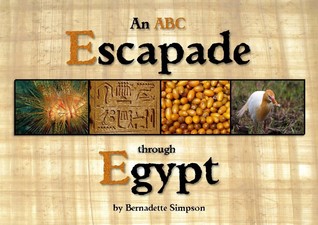
Giveaway ends August 31, 2011.
See the giveaway details
at Goodreads.