Bernadette Simpson's Blog, page 2
May 3, 2013
R is for Random Road Signs

Years ago when I applied for my Egyptian driver’s license, I had to take an a short driving test, as well as an oral examination, which consisted of the examiner pointing to three random road signs on a board of dozens of signs and asking me to identify them. I easily identified the No Parking, No Honking, and Wear Your Seatbelt signs.
I present to you here my own collection of random road signs, seen as I was hiking along a once-paved road that is currently closed to traffic.  (Winter rains washed the road out that runs through Wadi G’Nai and used to be the south entrance into Dahab.)
#1: Slow down.
#2: No passing/overtaking.
#3: Dangerous turn.
#4: Left turn.
#5: Speed limit sign. 60 km/h is about 37 mph and is the posted speed limit on most roads in Dahab.
#6: Incline.



April 23, 2013
Zuara at the tomb of Sheikh Haboos
 Reblogged from Bedouin History Desert Safari:
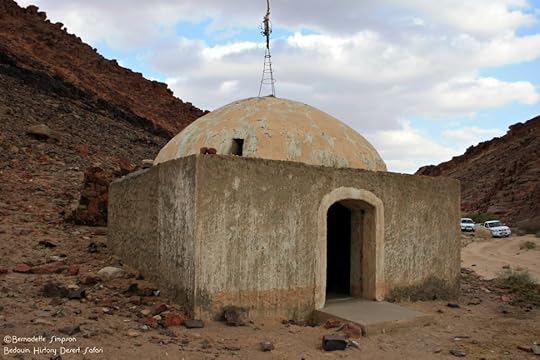
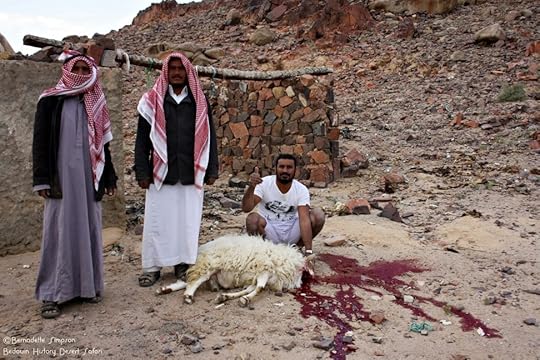
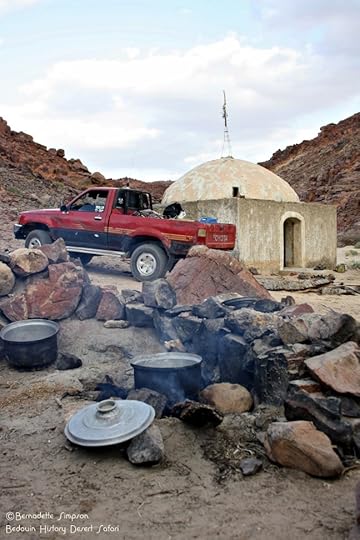
Small, domed tombs, like the one of Sheikh Haboss pictured above, can be found throughout the Sinai peninsula. When Bedouin need guidance, a blessing, or help with a problem - for example if a relative is ill, a wife is pregnant, or good crops desired - many will visit and pray at a holy sheikh's (like a saint's) tomb to ask for an intervention of their behalf from Allah.
Z is for Zuara!
April 9, 2013
W is for Wonderful Wadis

Wandering through the wonderful wadis of south Sinai is one of my favorite pastimes, as you may have figured out by now, and I took this photo on a recent wander through Wadi Kid to the beautifully green oasis of Ain Kid. Rocky mountains, gorgeous blue skies, crisp fresh air and lush fragrant vegetation – the perfect combination for a delightful morning hike!
Ain Kid would make an excellent kid-friendly day-trip destination from Sharm el Sheikh or Dahab, easily arranged with local Bedouin tour operators.


April 7, 2013
S is for Sensational Sinai Sunrises

From the east coast of Sinai, one is often treated to sensational scenery as the sun rises over the mountains of Saudi Arabia across the Gulf of Aqaba, especially on those rare days when there are clouds in the sky. This was the view one recent morning from our bungalow at one of the many camps along the road between Nuweiba and Taba.


February 24, 2013
L is for Lounging Lizard

This colorful lizard is an Ornate Dabb Lizard, Uromastyx ornata, and in Egypt, is found only in the rocky wadis of South Sinai. And while he may look like he is simply lounging in the hot sun, he is quite alert and on the look-out, surveying his territory. Learn more about this spiny-tailed lizard on Arkive.org.


February 20, 2013
D is for Dahab’s Deserts

This isn’t the first scene that usually comes to mind when people think of Dahab. Typically, visions of gorgeous blue waters, golden sandy beaches, and amazing marine life are what draw people to this little town in South Sinai. But just a ten-minute walk from our shores and you can find yourself in the serenity of Dahab’s desert wadis. And since the region has been blessed with (relatively) quite a bit of rain this winter, the desert is already starting to spring into life! Besides these delicate yellows blossoms, there are beetles, birds, butterflies, grasshoppers, and even large Dabb lizards creeping about. Exploring these wadis – and all the incredible wildlife within – has been one of my favorite past-times since moving here. I have been fascinated most by the desert plants and I am happy to announce that I have finally completed my book Wandering through Wadis: A nature-lovers’s guide to the flora of South Sinai.
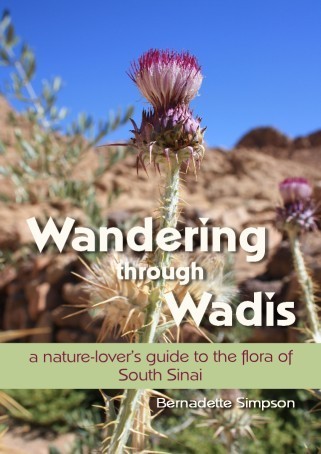
It is currently available as an eBook in PDF format, with plans on Kindle and Nook versions to be completed by spring. Visit the links to learn more about the book, download a free sample, or purchase online.


February 14, 2013
S is for Scrumptious Strawberries

Although not a native crop to Egypt, strawberries thrive in Egyptian soil and weather. These scrumptious strawberries are abundant at the markets during their season between December and March. Besides the fruit, fresh strawberry juice is also popular here. According to one website, farmers can collect 40 to 50 tons of strawberries per hectare, much more than what is grown in other areas. Egypt exports strawberries to Europe, Asia, Africa, and other parts of the Middle East. Read this article for interesting information about the growing of strawberries in Egypt and the low demand this season. Strawberries are sold here in Dahab for about LE 10 ($1.5) a kilo. And they made delicious chocolate-covered treats yesterday. Yum, yum!


February 13, 2013
Happy International Book Giving Day!

It’s February 14th and that means it’s International Book Giving Day, “a day dedicated to getting new, used, and borrowed books in the hands of as many children as possible.” And I, of course, love giving books away! Today, I’ll be donating a copy of An ABC Escapade through Egypt to the waiting room of a local medical clinic, and giving 10 copies of Arabic-language books written by Egyptian author Walid Taher, plus 10 copies of my bilingual books, to young Bedouin children in my neighborhood here in Dahab, South Sinai.
For those children with more access to technology, you’ll find the Kindle version of An ABC Escapade through Egypt available as a free download today on Amazon.com.
Do you have books sitting on your shelf that you have read and are ready to pass on? Consider giving your favorite child a book today!


February 1, 2013
A is for Aloe

A few years ago, a friend gave me some young aloe vera plants. Today, they would take over my garden if I let them! I have used the leaves to cool burns and sunburns, and since I have an abundance of these lovely plants, I recently researched aloe vera a bit more and was surprised by what I learned from one website:
The earliest record of Aloe vera use comes from the Egyptians. There are records of the Egyptians drawing pictures of Aloe vera plants on the walls of the temples. Many cultures such as the Egyptians would have even elevated the plant to a ‘god-like’ status. The healing properties of the Aloe vera were utilized for centuries earning the name “Plant of Immortality”. One of the common myths about the Aloes was that the two Egyptian queens, Nefertiti and Cleopatra used Aloe vera as part of their beauty treatments…The Egyptians used the Aloe vera to make papyrus like scrolls as well as for treatment of tuberculosis. In ancient Egypt when a Pharaoh died, the funeral ceremony was by invitation only with a price tag included: a pound of Aloes. Egyptians used the odorous mixture of Aloe and myrrh for embalming and also placed it with the burial clothes. A man’s wealth and esteem for the king were estimated by the number of pounds of Aloes he brought.
Aloe vera now grows in many places around the world and is a popular decorative garden plant in modern Egypt. I have been using the natural aloe vera gel as a facial cleanser and moisturizer. How do you use aloe vera?


January 24, 2013
25 January – Remembering…and Hoping
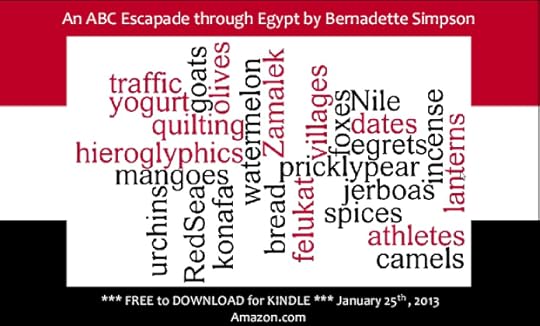
On this second anniversary of the start of the 25 January Egyptian revolution, let us remember the martyrs who lost their lives in the fight against a corrupt and totalitarian regime. And let us hope that the revolutionary spirit continues to work peacefully toward the goals of bread, freedom, and social justice for all Egyptian citizens.
To honor this day and help the world learn more about the (non-political) wonders of modern Egypt, I am offering free Kindle editions of An ABC Escapade through Egypt. Don’t be turned off by the alphabet theme, even adults will enjoy this escapade!