Bernadette Simpson's Blog, page 4
August 13, 2012
F is for Fantastically-colored Fish

My poor attempts at underwater photography do not do justice to the amazing array of colors that I see as I snorkel! If you are lucky enough to take a dip in the Red Sea this summer – in Dahab, Nuweiba, Sharm el Sheikh, Hurghada, or Marsa Alam – be sure to take your mask. You’re likely to see some fantastically-colored fish yourself!
The fish pictured here are:
(along the top, from left to right) - Royal Angel Fish, Pygoplites diacanthus; Bicolor Parrotfish, Cetoscarus bicolor; Threadfin Butterfly Fish, Chaetodon auriga.
(two along the side, from top to bottom) - Arabian Boxfish, Ostracion cyranurus; Crown Butterflyfish, Chaetodon paucifasciatus.
(largest) - Sergeant Majors, Abudefduf saxatilis.
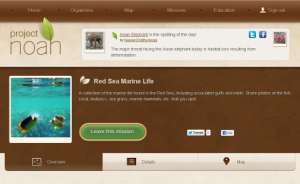
To see more images of fish and other critters in the Red Sea, check out this Red Sea Marine Life mission I’ve started on Project Noah:



June 25, 2012
L is for Luscious Lemon Juice

Yes, another post of one of my favorite summer refreshments – lemon juice! This glass is definitely in more of a traditional Cairo setting than my last lemon juice photo, which had more of a touristy-beach kind of feeling. I enjoyed this particular lemon juice at a local coffee shop on Road 9 in Ma’adi. (Yes, despite the plethora of fancy/foreign coffee shops on this street, it is still possible to partake of something a bit more local and familiar.) That’s some fresh mint, my hubby’s order of a hot fenugreek infusion, and a sugar dish on the tray. Yum, yum.
So grab yourself a cold one today and raise a toast to Egypt’s new President-elect, Mohamed Morsi!





May 30, 2012
R is for Ras Mohamed…from above!

As I mentioned in my last post, I’ve taken a lot of flights recently between Cairo and Sharm el Sheikh. And my favorite thing about this short trip is the view over Sinai, especially as we begin our descent near Sharm. The image above shows Ras Mohamed National Park, the oldest national park in Egypt – and one of my favorite places in Sinai! Although most popular for its snorkeling and diving opportunities, Ras Mohamed is also home to mangroves and wadis hosting a variety of desert plants and animals. The area is also an important stopover for migrating birds, particularly raptors, storks, and pelicans. Egyptians pay only a LE 5 entrance fee per person and LE 10 per car. Camping overnight is allowed in one designated area and does not cost extra! Ras Mohamed is a short drive from Sharm el Sheikh and makes an excellent day trip. And summer is only a few short weeks away…
Read more:
Wikipedia – Ras Muhammad National Park
Egypt Tourism Authority – Ras Mohammed National Park





May 15, 2012
E is for EgyptAir

EgyptAir is the country’s national airline and is celebrating it’s 80th birthday this month! While I have only flown internationally with EgyptAir a handful of times, I am becoming quite a frequent flyer on their Cairo-Sharm El Sheikh route operated by EgyptAir Express. The bilingual in-flight magazine, Horus, ran a feature article on the history of the company.

A few highlights from the historic timeline of EgyptAir:
May 7, 1932 – “Misr Airwork” is founded.
1933 – In two 4-seat passenger planes, regular flights are scheduled between Cairo – Alexandria – Marsa Matrouh.
1936 – First airline to land in Jeddah and El Medinah in Saudi Arabia
1946 – Company is nationalized and renamed “Misr Air”
1960 – Misr Air is renamed “United Arab Airlines”; first long-distance direct flight from Cairo to London
1971 – “EgyptAir” is decided on as the international name for the company
2005 – E-tickets introduced
2007 – EgyptAir Express is established
2008 – Became an official member of the Star Alliance Group, the first Arab airline to do so
Today – EgyptAir flies to 79 international destinations and 12 local cities, with over 1500 weekly flights. The newest fleet of airplanes can carry more than 300 passengers. A big change from the original 4!





May 6, 2012
K is for Konafa
While I wrote about konafa bil gibna (konafa with cheese) in my book, it was not a variety of konafa that I had ever tried myself – until a couple of weeks ago! I have always loved konafa with nuts and/or cream, but I must say – konafa bil gibna is quite a tasty option! Sadly, there are not many shops selling Egyptian sweets here in Dahab – and none up to the standards of my favorite shop in Cairo. I don’t know what took me so long, but I finally decided to buy the frozen konafa pastry strands and make my own.

When I told my mother that I was “making” konafa, she asked surprisingly if I had a tool to make those thin pastry strands. No, I answered, I bought the frozen pastry! (Which is what most Egyptians do, my husband assures me. Frozen or fresh from the baker.) But my mother replied that I was “assembling” konafa, not “making” it. And assembling konafa IS pretty simple, once you have the pastry! A bit of ghee, a bit of cheese and lemon, a rose-water infused syrup and you get this:

Delicious!





April 29, 2012
C is for Culinary Capers
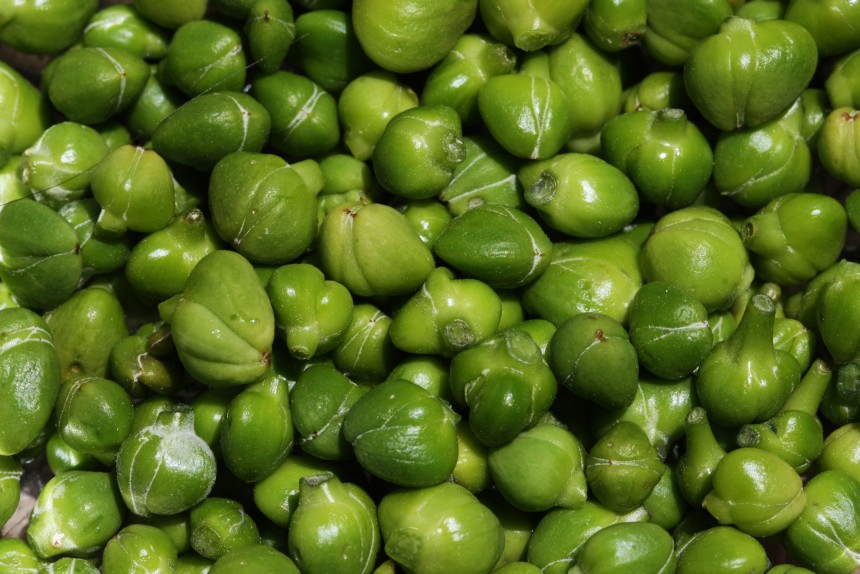
Instead of the usual caper flower photos that I like to post, this year I’d thought I’d share the little, immature flower buds – the culinary capers so often used in Mediterannean cuisine. While capers are not used in traditional Egyptian dishes, the bushes are quite abundant here and Egypt does produce and market pickled capers. (Try the ones from Wadi Food.)
The flower buds pictured here were collected by my husband and I yesterday on a hike through a nearby desert wadi. This is the second year we will harvest and pickle our own capers – and then enjoy them on pizzas, pastas, and more! The Bedouin of South Sinai pickle the caper berries, but not the buds.
Read more:
Capers – New Crop FactSHEET from Purdue University
Do-it-yourself capers – a picking and pickling guide
Homemade Pickled Capers, Caper Leaves, and Caper Berries





April 22, 2012
B is for Beautiful Bee-eaters

Not the best images, but I just wanted to announce their arrival – which for me marks the official start of springtime!  The European Bee-eater, Merops apiaster, flies through Egypt on spring and fall migration. I love waiting for these birds every spring and then alerting my father in Italy, who starts to keep an eye out for his first sighting of the beautiful bee-eaters, usually a few weeks later. The birds in the photos were spotted in Nuweiba, South Sinai yesterday afternoon and I also spotted one in Dahab later in the day. The bee-eaters are more abundant in Cairo so keep your eyes peeled – and listen for their distinctive trill!





March 2, 2012
B is for Biodiversity
If you have been wondering where I´ve been lately, I´d like to introduce you to Project Noah, my latest obsession!

Project Noah is a tool that nature lovers can use to explore and document wildlife and a technology platform research groups can use to harness the power of citizen scientists everywhere. The purpose of the project is to mobilize and inspire a new generation of nature lovers. It began as an experiment to see if we could build an app for people to share their nature sightings and has evolved into a powerful global movement for both amateurs and experts. The name "Noah" is an acronym that stands for networked organisms and habitats.
Basically, after signing in (with your Google account, Facebook, Yahoo, etc.), you can upload photos you take of the wildlife you spot. (Each entry is a ¨spotting¨.) There are fields of information you can enter – common name, scientific name, description, habitat, location, and notes. If you don´t know what that critter or flower is, simply click the ¨Help Me ID this Species¨ and other nature-loving and knowledgeable members will try and help. You can join others on different ¨Missions¨ and contribute your spottings to different themed groups. There´s ¨Butterflies and Moths of the World¨, ¨Nature in Yellow¨, and dozens more. You can even create your own mission! I have been working on adding photos to the Biodiversity in Egypt Mission, started by my nature-loving, image-shooting friend, Nicole B. So, if you´d like to learn more about the flora and fauna of Egypt, visit our mission page and view photos of the birds, lizards, butterflies, bees, snails, mammals, spiders, fish and more. Enjoy taking photos of nature? (There are apps for smartphones.) Join our mission and help others learn about the amazing biodiversity in Egypt. (Wouldn´t that be a fun class project?!)
Visit EgyptHeritage´s Egypt´s Biodiversity website to get a start on identifying the nature around you.





February 18, 2012
F is for Flies

Pesky flies! Not an uncommon complaint made by visitors to Egypt. But they can be quite fascinating to look at up close, like this little guy – a Common Green Bottle Fly (Lucilia sericata). He is one of several different species of flies found in Egypt.





February 1, 2012
W is for White-crowned Black Wheatears

Not the best capture, I realize, but it is not often I get to post under the letter ¨W¨! The White-crowned Black Wheatear (Oenanthe leucopyga) is only one of several different wheatear species found in Egypt – and one of the more common birds seen in Sinai. They are easily spotted as their little black-and-white bodies dart between rocks. In Sinai, you´ll also find the black-and-white Mourning Wheatears and Hooded Wheatears.