
S. Kay Murphy's Blog, page 25
April 28, 2015
Jenner
Diane Sawyer's interview with Bruce Jenner on April 24th left me with much to think about and a lot of residual emotions, the greatest of which was anger.
It has not been that long ago that we ridiculed and tried to humiliate gay men in our society, leering oafs affecting a lisp and limping their wrists to imitate "queers," and all of this done publicly without shame. In 1990, when I first began teaching high school, teen boys regularly used the term "faggot" to jokingly refer to their friends—or anyone they wanted to bully.
In recent times, watching how the tabloids and late night comedians have treated Jenner, as if he is some kind of freak of nature, has reminded me of those benighted times when it was ok to be anti-gay. Part of me knows that, with time, we will get to a place where those who are transgender are welcomed and supported, as gay men and women are now. But we're not there yet, and as we slowly inch toward progress, I'm wondering how we can educate non-transgender members of the community to be sensitive in their speech. (If only I had a dollar for every time I said, "Actually, gay people prefer to be called 'gay'" in the '90s.) It's ok to be confused about gender identification, but let's try not to be cruel as we become educated about it. Here, let me see if I can help with that a bit.
1. As Bruce Jenner said, being transgender is not a mental illness, and it certainly isn't a choice someone decides to make.
2. Yes, transgender people are born that way; from a very early age, they identify with the gender that is the opposite of their genetic determination, often thinking of themselves in the pronoun (he/she) that fits their identity, rather than the one that fits their DNA.
3. Being transgender has to do with who you are, not who you want to sleep with. [Please, grammarians, cut me some slack or give me poetic license there; I'm trying to be consistent.] If it makes it easier, "Gender is not about genitals" has become somewhat of a rallying cry lately (although I have yet to see it on a sign). Thus, Bruce Jenner could say, "I am not a homosexual man. I'm a heterosexual man." How can this be, you ask, if his "soul" is that of a "woman," as he claimed in the interview? Because the same DNA that created his hangy down part and all those beautiful, rippling muscles we couldn't stop staring at in the glory days of the 1976 Olympics also determines which hormones compel him to act on instinctive urges, and for now, his testosterone tells him to bed with women.
Aren't we just "fearfully and wonderfully made," as Dr. Paul Brand says in his book by the same title?
I know that some of my evangelical Christian friends may be doing that "We love everyone, but..." stutter step they did when the ten percent of our population that is gay began to emerge from closets all around the country a while back. I expect to hear decrees against the so-called "sin" of body mutilation (if, in fact, a transgender person decides to do reassignment surgery). Christians will say, "You are in the body God gave you." I wouldn't disagree. But I would gently suggest that this is true of a baby born with a cleft palate or a heart defect. He, too, is in 'the body God gave him,' but we're not going to use that as a rationale to leave him that way, are we? No. Doctors will surgically construct a palate or replace a malfunctioning heart valve, and the infant will grow up to be a "normal," healthy individual. And for a transgender individual? Same. The earlier we allow transgender kids to follow the gender they feel instead of the gender we see, the healthier they are in terms of social adjustment.
Why is that last critically important? Because the suicide rate for our transgender folks is twenty-five times that of the general population.
Which is why Bruce Jenner said, "We're going to change the world." Absolutely. By going public—by opening his door and ushering everyone into his life to watch him transition, as he will be doing over the coming months, he is making a courageous statement. He is standing tall in the face of ignorance and criticism to say, as did (purportedly) Joseph Merrick, "I am not an animal." Jenner is willing to allow the most private aspects of his life to become public so that others will see he is not someone to be feared, but another soul to be embraced. This is what the Dalai Lama tweeted today:
"Deep down we must have a real affection for each other, a clear recognition of our shared status as human beings." Indeed.
It has not been that long ago that we ridiculed and tried to humiliate gay men in our society, leering oafs affecting a lisp and limping their wrists to imitate "queers," and all of this done publicly without shame. In 1990, when I first began teaching high school, teen boys regularly used the term "faggot" to jokingly refer to their friends—or anyone they wanted to bully.
In recent times, watching how the tabloids and late night comedians have treated Jenner, as if he is some kind of freak of nature, has reminded me of those benighted times when it was ok to be anti-gay. Part of me knows that, with time, we will get to a place where those who are transgender are welcomed and supported, as gay men and women are now. But we're not there yet, and as we slowly inch toward progress, I'm wondering how we can educate non-transgender members of the community to be sensitive in their speech. (If only I had a dollar for every time I said, "Actually, gay people prefer to be called 'gay'" in the '90s.) It's ok to be confused about gender identification, but let's try not to be cruel as we become educated about it. Here, let me see if I can help with that a bit.
1. As Bruce Jenner said, being transgender is not a mental illness, and it certainly isn't a choice someone decides to make.
2. Yes, transgender people are born that way; from a very early age, they identify with the gender that is the opposite of their genetic determination, often thinking of themselves in the pronoun (he/she) that fits their identity, rather than the one that fits their DNA.
3. Being transgender has to do with who you are, not who you want to sleep with. [Please, grammarians, cut me some slack or give me poetic license there; I'm trying to be consistent.] If it makes it easier, "Gender is not about genitals" has become somewhat of a rallying cry lately (although I have yet to see it on a sign). Thus, Bruce Jenner could say, "I am not a homosexual man. I'm a heterosexual man." How can this be, you ask, if his "soul" is that of a "woman," as he claimed in the interview? Because the same DNA that created his hangy down part and all those beautiful, rippling muscles we couldn't stop staring at in the glory days of the 1976 Olympics also determines which hormones compel him to act on instinctive urges, and for now, his testosterone tells him to bed with women.
Aren't we just "fearfully and wonderfully made," as Dr. Paul Brand says in his book by the same title?
I know that some of my evangelical Christian friends may be doing that "We love everyone, but..." stutter step they did when the ten percent of our population that is gay began to emerge from closets all around the country a while back. I expect to hear decrees against the so-called "sin" of body mutilation (if, in fact, a transgender person decides to do reassignment surgery). Christians will say, "You are in the body God gave you." I wouldn't disagree. But I would gently suggest that this is true of a baby born with a cleft palate or a heart defect. He, too, is in 'the body God gave him,' but we're not going to use that as a rationale to leave him that way, are we? No. Doctors will surgically construct a palate or replace a malfunctioning heart valve, and the infant will grow up to be a "normal," healthy individual. And for a transgender individual? Same. The earlier we allow transgender kids to follow the gender they feel instead of the gender we see, the healthier they are in terms of social adjustment.
Why is that last critically important? Because the suicide rate for our transgender folks is twenty-five times that of the general population.
Which is why Bruce Jenner said, "We're going to change the world." Absolutely. By going public—by opening his door and ushering everyone into his life to watch him transition, as he will be doing over the coming months, he is making a courageous statement. He is standing tall in the face of ignorance and criticism to say, as did (purportedly) Joseph Merrick, "I am not an animal." Jenner is willing to allow the most private aspects of his life to become public so that others will see he is not someone to be feared, but another soul to be embraced. This is what the Dalai Lama tweeted today:
"Deep down we must have a real affection for each other, a clear recognition of our shared status as human beings." Indeed.


April 22, 2015
Happy Earth Day! Got ice?
So there I was in the grocery store check-out line this morning, gathering up my two reusable bags (which I had, on my way in, forgotten, as I often do, and returned to the truck for, because that's just extra steps on my journey to be fitter and healthier, right?), and as I stepped away I heard the checker's helper ask the lady behind me, "Plastic ok?" Her response: "Can I have extra plastic bags, please? Like, a lot? We're running low on plastic bags at home."
Seriously?!? On Earth Day?!?
ARRRRRRRRRRRGGGGHHHHHHH!!!!!!!!!
Sigh.
Which reminded me that I just wanted to mention a couple of things today:
1. Here in Southern California, where water is scarce, the spring weather has been quite lovely (and mostly without precipitation). Folks can be seen everywhere carrying iced drinks—tea, soda, fancy coffee, fancy water. But ask yourself: Where do all those ice cubes go? I mean, if you think of ice as the water it is, and you imagine how many times a day someone throws a take-out cup in the trash with ice in it, that's a significant amount of water.
I keep an old pitcher out on the back patio that I use to water the potted plants. Now every morning when I give Sgt. Thomas Tibbs fresh water, I dump his day-old water into the pitcher. If I make iced tea (or happen to pick up a lovely tall unsweetened black tea from that one popular place because yet another student has given me yet another gift card), I dump the ice in there as well. And if it is a take-out cup, I rinse out the paper cup and the plastic lid (plastic straw still attached) and toss them in the recycle bin. Yes, I love Mother Earth that much.
2. For those of you who love public radio as much as I do, you still have time to plant a tree today (because you're a good person and you love Mother Earth, too, and you really wanted to do something for Earth Day but you had to go to work) by donating to KPCC in Southern California. Click here, follow the clicky buttons, and when you donate—whatever you can afford—a tree will be planted. (Well, I mean, probably not at the precise moment you enter your card info. I mean, it's not instantaneous—but wouldn't that be cool?!?)
3. Come on. Don't be like Extra-Plastic-Bags-Please lady. Break down and buy yourself a couple of reusable bags. Put them in the trunk of your car. Yes, you will forget them every single time for the first—How many repetitions does it take to "make something a habit"?—30 times or so. Make yourself walk back and get them, and you'll not only start to remember, you'll be able to shave a minute off your boring treadmill time. Over the course of a year, you'll keep hundreds of plastic bags from going into a landfill where they don't break down, they just float around. And if you guilt one other guy into doing the same, and he guilts one other guy, and so on, we could actually begin a true revolution. You know, like we used to talk about back in 1969 when the idea for Earth Day got started.

April 13, 2015
Cautiously yet deliberately defending adverbs
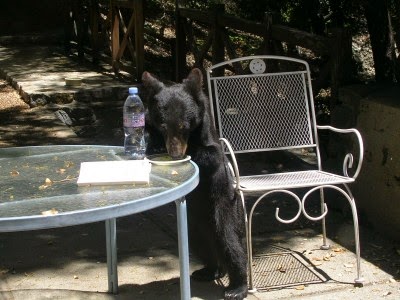 This photo has nothing to do with today's post, I've just never been able to use it here before, so I thought I'd share. Yes, I took it. That's Boo Boo, finishing off my lunch (after the cat and I made a hasty retreat into the cabin when we saw him coming).
Sometime back a small online literary journal rejected a piece I'd written about rattlesnakes, or at least, my reflections following three all-too-close encounters with the deadly reptiles. The editors, who pride themselves on being "kind," sent the manuscript back to me "with notes," which amounted to three sentences. The first sentence questioned the veracity of the "memoir" piece. (I can actually understand this, given how much prevaricating has been going on in the interest of producing lively "true" stories. But my stubborn integrity won't allow me to embellish, so I guess I'm never going to get that big book deal about my risqué prison experiences.) The second sentence stated that the editor also passed on the story "due to the use of adverbs." The third sentence was an invitation to verify, revise and submit again.
Let's go back to that second sentence. Um... what?
So I guess this has been a thing for a while, but since I spend more time reading novels than I do perusing online sites that teach how to write them, I hadn't picked up on the current fad faux pas. Vilifying adverbs has now replaced Never use the passive voice which replaced Show, don't tell. I don't know what the fad was before Show, don't tell because I wasn't born yet. I mean, that fad predates my birth.
My friend and soon-to-be bestselling author, Michael Welker, is half my age and has his finger on the pulse of all that is current in today's publishing world, at least the independent, online aspect of it. Last year I did a quick proofread of the book he's working on, and we talked afterward about his generation's willingness to discard the awkward "his or her" pronouns and simply use "their" even when the antecedent is singular. "From what I read online, I think it's pretty much accepted practice now," he said. Like a knife in my heart....
So when this rejection came, I emailed him, and we began a conversation about those nasty adverbs, how they try to creep in [appear surreptitiously] and ruin everything in an otherwise great piece of writing. Bastards. Michael (because he considers thoughtfully—wait—delete "thoughtfully"—what I say, then goes looking for best practices) sent me an email a few days ago with a link to some chick's blog in which she completely and thoroughly nixes the use of adverbs. (See what I did there... defiantly?)
Sigh.
Yes, I get that a "good writer" (and just what the hell is that? Faulkner? Doctorow? Stephen King? Nicholas Sparks?) will be better served by choosing a strong verb over a "weak" one + adverb:
Kay typed forcefully as she vented.Kay pounded the keyboard as she vented.
And I also get that dialogue will often sound tighter, more powerful, if the writer does not rely on adverbs to make her point:
"Please stop speaking in absolutes," Kay said wearily."Please stop speaking in absolutes," Kay sighed.
But in our quest to delete all adverbs, we can end up sounding amateurish. The English language only contains a finite number of verbs, and sometimes it's impossible to find one that offers a viable substitute:
"Take off your clothes, gorgeous," Jennifer whispered seductively."Take off your clothes, gorgeous," Jennifer... What? "Cooed"? What goes there? Extremists will tell me to simply delete "seductively" and go with "whispered," insisting that the verb is enough to carry her intention. Is it? What if Jennifer is a heroin addict itching for her next fix and she is reciting the litany that has earned her quick money so many times in the past? What if she's the reincarnation of Nurse Ratched and she's being ironic as she preps another inmate for a strip search?
My point is this: As William Zinsser said, "Write tight." (And if you haven't yet read OnWriting Well , you haven't done a thorough study of your craft, in my humble opinion.) I mean, you can use the "Find" option in MSWord (type the letters "ly" in the Find box when prompted) to hunt down and kill every adverb in your manuscript (well, at least those ending in "ly"), but is doing so going to make your writing stronger? While it is important to understand why adverbs should, like salt, be used sparingly (oh snap! I did it again!), it is equally important to work toward a clear, concise flow.
If you're a staunch anti-adverbist and would like to challenge me, feel free to revise any of my sentences here in the comments below. (Be kind, please, or I'll delete you.)
If you're wondering whether I did "verify and revise"—well, of course I did. I rewrote the entire piece sans adverbs and resubmitted with an assurance that everything I said was absolutely (ok, no, I didn't really use "absolutely" in my cover email) true. Within days I received another rejection. But it was kind.
March 31, 2015
What Lies Beneath or Why We Should Encourage Girls To Be Whatever They Want To Be
I always think of yard work and gardening as meditative activities, so I rarely grumble when it's time to clear the flowerbeds of weeds. Armed with my shovel, I move forward happily in anticipation of the time it will afford me to work through plot lines for the book I'm writing, or (more treacherous terrain) try to figure out why I haven't been writing lately, or to contemplate my place in the world. It's monotonous work, weeding. But it's good, physical work, and each time I push the spade into the earth, taking care to avoid tree roots and water lines, I am grateful that at sixty I can still do this.
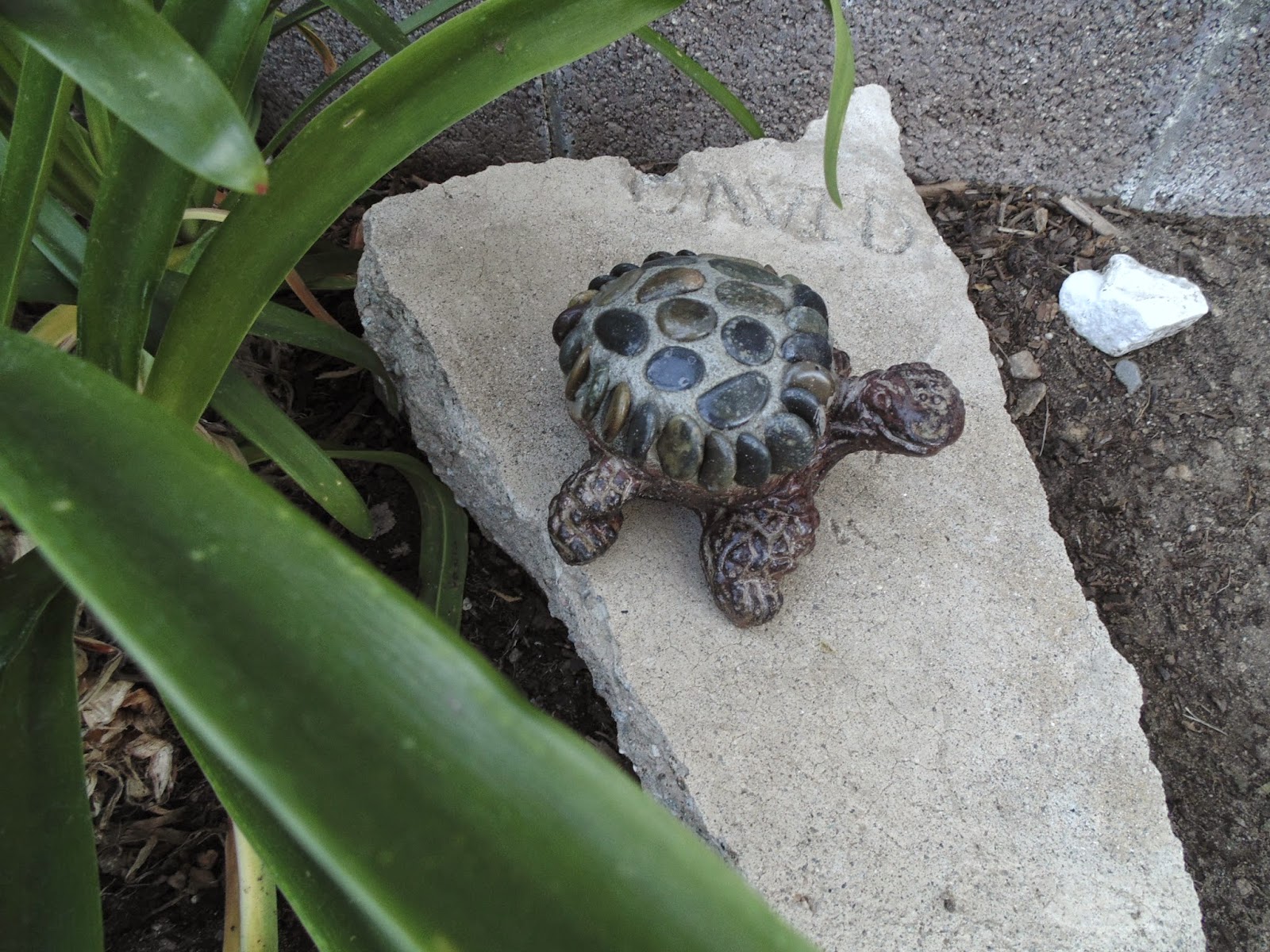
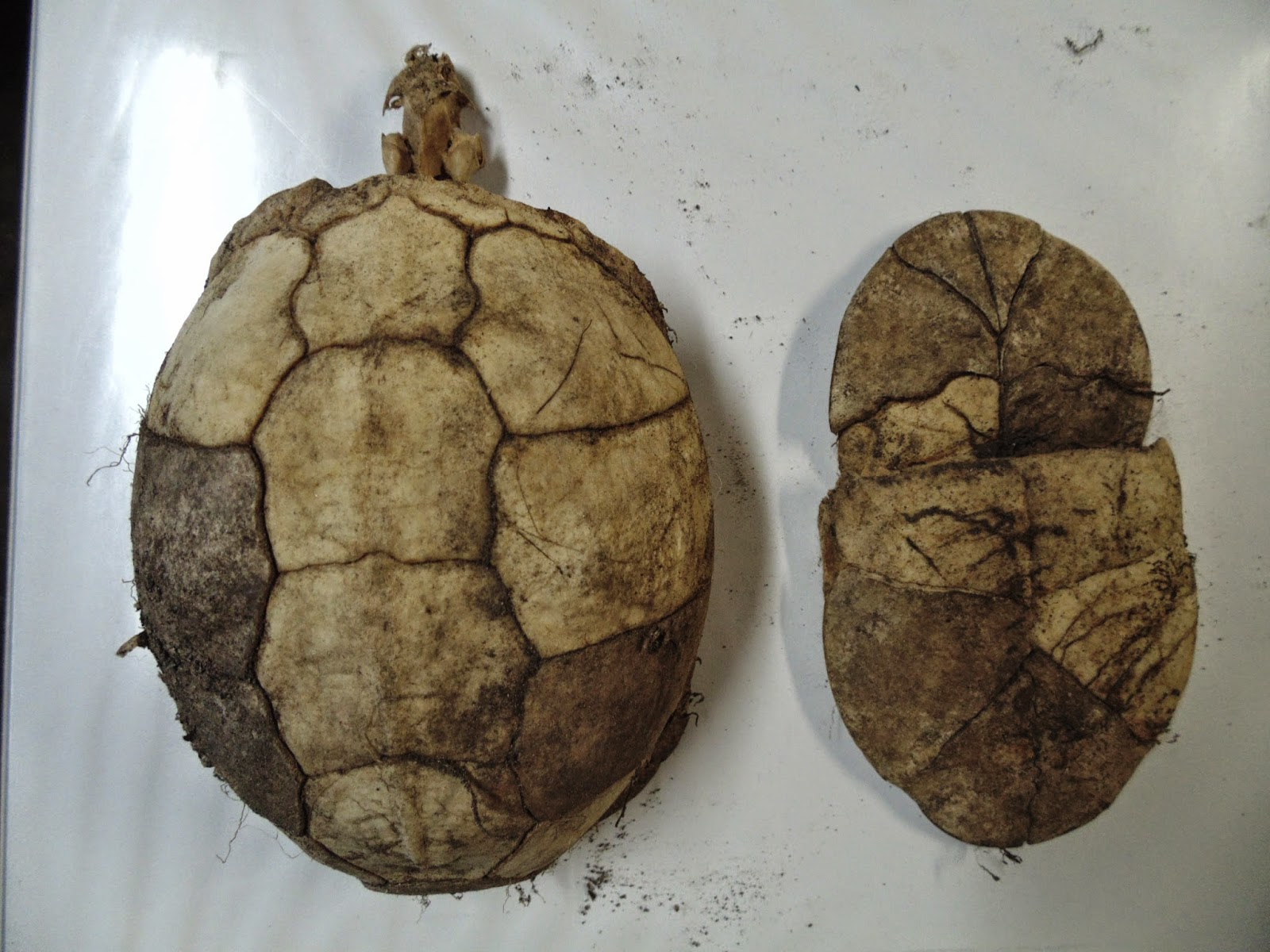
A few days ago, just as I'd begun to tackle a patch of soil near my agapanthus that had become overgrown with stray grass tendrils, I felt the shovel hit something hard. I moved back a bit, then gently pushed the shovel down deep and under, hoping to scoop up what I assumed would be a large rock. What emerged was softball sized. But it certainly wasn't a rock. I had unearthed the shell of a small tortoise.
I'm not squeamish (trust me; I've held freshly delivered human placentas in my bare hands and examined them to make sure everything came out all right), and I love all things reptilian (possibly with the exception of Diamond Back rattlesnakes, which I believe are the spawn of Satan), but I have to confess my stomach did a bit of a turn when I realized what I'd unearthed. After all, it was the body of an animal that had died. So I took a moment to have a quiet meditation over the remains before I began to examine them.
What I discovered was that the body of the tortoise had lain interred long enough to be reduced to a skeleton. As I slowly turned it over, the bottom shell fell away and all the bones sifted down through the dirt into the hollow of the shell. Slowly, carefully, I brushed and sifted away the soil. There was his skull—missing the lower mandible, which I found a few moments later. I recognized the pelvis next, as it was the largest bone. The tiny vertebrae that had once held the tortoise's spinal column in place were a marvel to consider as they rested in my palm.
In those moments of close examination, I was grateful to my college biology teacher who insisted we learn the name of every single bone in the human body. As a young person, I found the exercise tedious. Now I appreciate how well the knowledge has served me over the years. I thought of Annie Dillard and her amazing prose about the biology in her own backyard. And I recalled my first exposure to the writings of anthropologist Ashley Montagu. I was still in junior high (though already a confirmed writer), and I thought how wonderful it would be to spend a lifetime studying the unique zoology of humans and then writing about new discoveries and conclusions that could be drawn from them. Years later, a friend would introduce me to the brilliant illuminations of Loren Eiseley, but by then I'd launched into my college coursework as an English major, and there was no turning back. Still...
If I'd been given direction as a child, if I had not been told repeatedly, "Girls don't... " whenever I leaned toward the boy side, I would not have followed the discipline which seemed practical but has turned out to be a bit static and stuffy, and would instead have followed what always seemed to me to be so dynamic and exciting that it was, perhaps, just beyond the reach of an average tomboy being raised by a single, working class mom.
I have saved my treasure of turtle bones in a large metal tin. Perhaps before I retire I'll come across a student eager to find an engaging science project who will be happy to do the painstaking work of organizing, mounting and identifying this jumble of leftover parts. If I find her, she may have these bones with my blessing.
March 24, 2015
What it's like teaching high school Part I

This will be—What do they call them?—an "occasional series" recording some of the not-so-mundane aspects of my day job. When I established the blog, I did not do so with any intention of ever talking shop, but I realize now that with just a year and ten weeks (but who's counting?) left in my teaching career, I should document some of the good stuff.
The other day at lunch I was chatting with a couple of my seniors about the issues they need to address in order to change the world as soon as they've earned their college degrees. We do this often. Ricky, a young man of strong faith who has a very acute sense of morality, was explaining his idea for an internet search engine that would distinguish between moral and immoral search results. Our conversation was interrupted when Mirella, one of my freshmen, brought me a doughnut. This was a unique and happy occasion. I don't think Mirella has ever ventured into my classroom during lunch before, and I rarely eat doughnuts.
"I brought this for you," she said, "because you didn't get one of Myles' cupcakes. Remember?" Wow. How did she remember? The incident with Myles had occurred way back in early October, just a few weeks into the new school year. In class one day, Myles had mentioned something about being disappointed in not getting cupcakes for his birthday. (High school is quite a transition from elementary school and junior high. My freshmen are always devastated when they find out we take final exams on the last day of school—no party.) Myles sits in the front. At that time, Mirella occupied the last seat in his row. Hearing the note of sadness in his voice, she leaned way out in her seat and called up to the front, "I'll bring you cupcakes tomorrow, bro." She didn't know his name. They'd never had a conversation. She simply offered. He smiled, said "OK!" but none of us were really expecting her to bring cupcakes.
The next morning before school, my door opened and Mirella walked in holding a package of four gorgeous cupcakes.
"These are for—what's his name? Myles? I won't be at school today." Dang, right? A young woman of her word with a great follow-through ethic. I couldn't wait for 5th period.
When Myles came in I showed him the cupcakes—all four just for him—and his face lit up. Of course, I had to tease him and say I might swipe one.
"Oh, go ahead, Ms. Murphy," he said with sincere grace. "I'm sure I'm not going to eat all four of them!"
I thanked him profusely but declined, explaining that the cupcakes no doubt contained ingredients that a sixty-year-old woman with high cholesterol should not be ingesting. "For example," I said, "these probably have... " and I held the package aloft carefully so I could read the ingredients listed on the bottom.
That's when I saw the warning label: "This product manufactured on equipment that processes products containing peanuts." My heart sank. Just that day I'd received a medical alert about Myles from the office. He has a peanut allergy. The cupcakes would not be safe for him.
"Myles," I said slowly, "I'm going to save your life here. You can't have these cupcakes." I explained why, but he wasn't upset (though a little disappointed; they did look tantalizing). "That's OK," he said, "it's the thought that counts. It just makes me happy that Mirella did such a nice thing." He handed the cupcakes off to some friends who eagerly offered to eat them for him.
Mirella heard about it the next day when she returned to school. And here she was, six months later, bakery bag in hand. "You didn't get a cupcake," she said, "so I brought you a doughnut." I opened the bag, extracted a beautifully crafted chocolate doughnut with sprinkles, turned a deaf ear to the screaming sirens of the diet police in my head, and took a bite. It was heaven. Mirella waved a hand over her shoulder as she went out the door.
I continued my conversation with the seniors, chewing slowly, savoring every bite (and silently recalculating what I would eat for dinner). The bell rang, the kids picked up their mess, and as she was about to leave, Katelynn pulled a cookie from her lunch bag and plunked it down in front of me.
"Peanut butter," she said, "with Nutella in the center. I made them last night. See ya later, Murphy."
If you think for one minute I saved that homemade peanut butter cookie with—bonus points!!!—Nutella inside for later, you don't know me well enough to know my weakness for cookies.
And if you think that all the teenagers of this generation are self-absorbed, amoral zombies who are devoid of human emotion, you should come on down at lunchtime and meet my kid crew. They're pretty special.
March 12, 2015
The rest of my crew
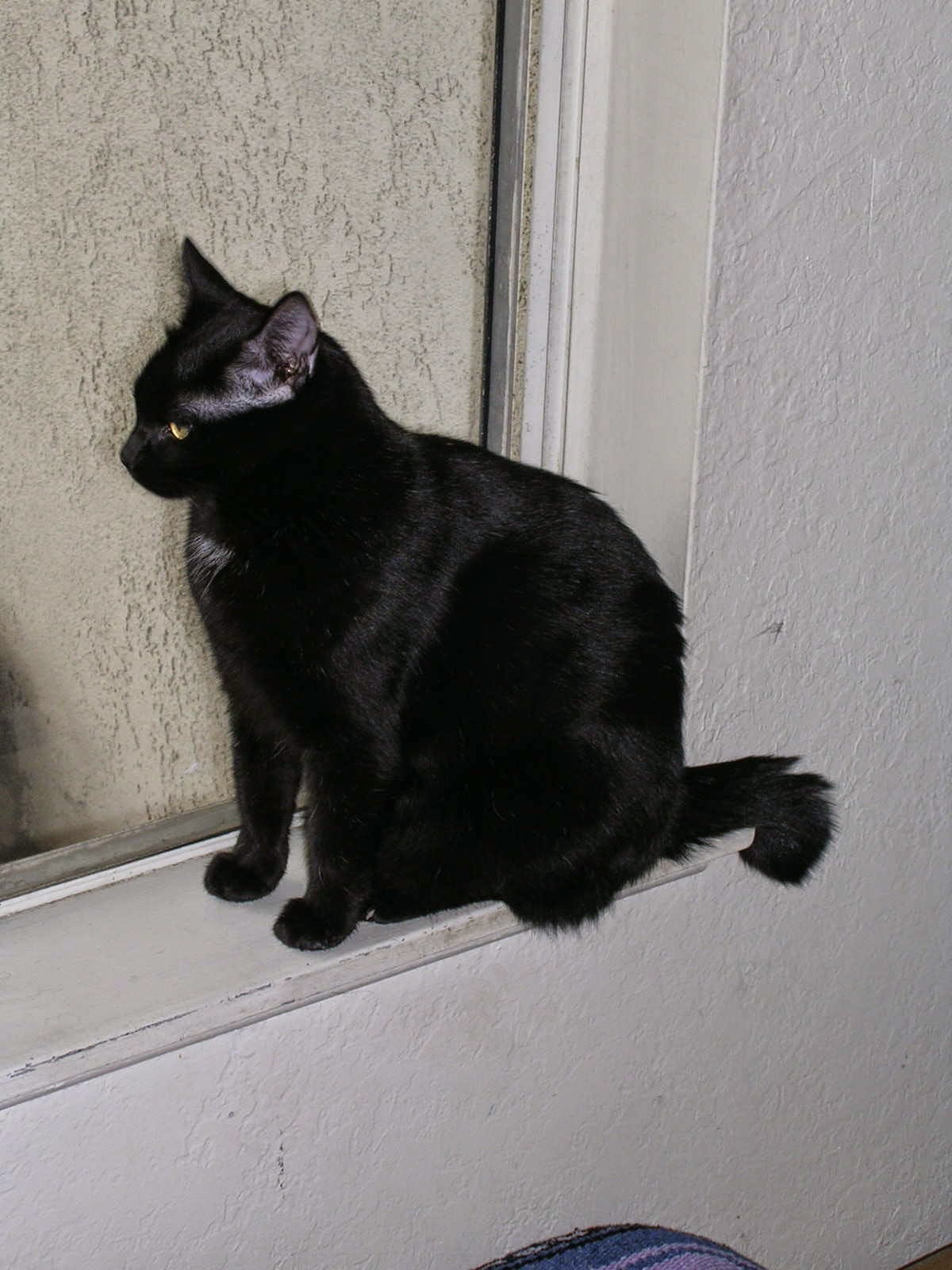
The cats have been demanding equal time on the blog. That's how cats are, I suppose. A dog will ask nicely, hat in hand (so to speak), eyes averted. A cat will make a demand and stare, exasperated, as you apologize for not being able to fulfill her whim more quickly. At least, that's how it is around here.
Eight years ago I brought home a stunted black female cat who'd had her tail chopped off by someone or something evil. For the first year, she'd let me stroke her head and shoulders, but I couldn't reach my hand near her tail or she would (gently) bite me. The rescue had named her "Sugar Plum"—stupidest name ever for a cat, I said. And then I never changed it. She slept curled by my feet but otherwise remained somewhat aloof, which was fine.
We moved to Mt. Baldy with Boo Radley, my black panther of a male cat, but two years later Boo died after a lengthy illness. Sugie and I, bereft, were left to bond with each other through snowy winters and warm summers as we watched bears, bobcats and raccoons scramble onto our deck. I couldn't have a dog up on the mountain, so Sug was my only companion for five years. By the end of that journey, she had learned to crawl under the covers when it was cold, burrowing in against my side like a kitten. This remains her habit now, even when it's warm at night in the summer, and she usually stays long enough to purr me to sleep. One night, after I'd been gone for a week to Missouri and she'd had a housesitter feeding and caring for her, she crawled in beside me, then reached up and licked my face. This has become her habit as well, licking my hands when I come home from work or my face when she purrs me to sleep at night.
Now I can pet her anywhere on her body, stroke the brush all the way down her back and up her stub of a tail, pick her up if I need to and she is never, ever aloof. When I read in the morning, she jumps into my lap, purring loudly and kissing my hands over and over. She is one of the most loving cats I've ever had. And yes, for those of you who are familiar with her story as it appeared in Chicken Soup forthe Soul: I Can't Believe My Cat Did That , she still rolls over happily when I sing "I Can't Help Myself (Sugar Pie, Honey Bunch)" by the inimitable Four Tops to her.
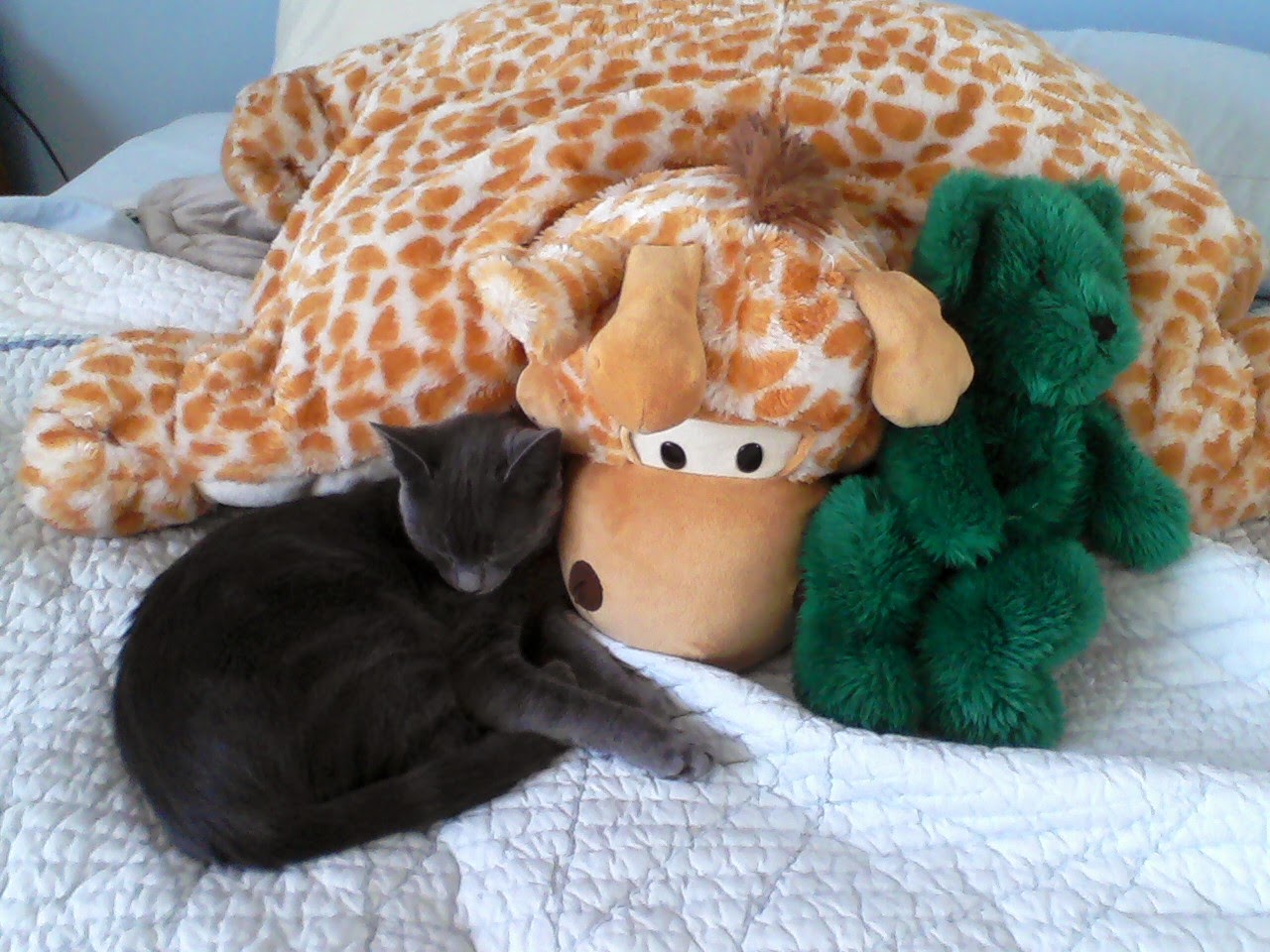
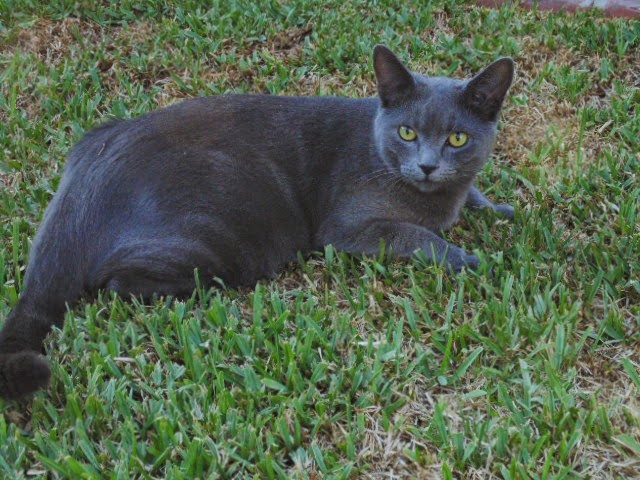
A year and a half ago, a friend posted a photo on Facebook of a tiny gray kitten her sister had found abandoned in a Target parking lot. I had been looking for a black kitten as a companion for Sug, but this gray kitten with her adorable face and urgent plight (in a household where the patriarch was demanding there be "no more cats") kept calling to me. I had named her Purrl before I'd even met her. I brought her home, screaming and crying in the cat carrier, and my life and Sug's have never been the same since. For the first five months, she was quite an impressive eating and pooping machine. I had her claws trimmed when she was spayed, but they grew back with a vengeance, and she has managed to pretty much destroy two very lovely loveseats.
But Sug and I adore her. Purrl (aka Purrlie Girl, Purrl Jam, Jameez, Jamerz and PURRL-STOP-IT) is a bit... quirky. Sug still tries to offer her nose touches and head kisses, but Purrl invariably jumps away, her eyes growing round and stupefied, as if she can't imagine why another cat would ever approach her in such a way—despite the fact that she allows me to regularly pick her up, hug her, kiss her head and otherwise lavish her with affection. She is a bit of a lunatic, and when she's really happy, she celebrates by simply galloping through the house at top speed, her tail crooked and her ears flattened like a kitten.
So when she stopped eating on Valentine's Day, I was more than a bit concerned. I'd been out of town overnight, and when I returned, I noticed she hadn't eaten much. I watched her closely that Sunday and saw that she wasn't very interested in her food. By Monday she was lethargic. As the week progressed, she slowly stopped eating altogether and wanted only to curl in a ball and sleep. I took her to see my vet on Friday and held her while he shaved her neck, drew blood and gave her an IV to hydrate her. When the blood work came back the next day, there was nothing definitive, no infection, no common cat disease. (She is vaccinated against everything). I spent that weekend sitting close to her, stroking her head, asking the Universe to heal her and telling her every hour or so that she had to try to get better because Sug and I couldn't possibly continue our journey without her. For the most part, she remained curled in a ball, getting up to vomit once every four or five hours.
On Sunday, just after I'd been on the phone with the vet discussing methods of hydrating her, she got up, ambled slowly to the water bowl, and drank a few sips. Forty-eight hours passed with no change, but Tuesday when I came home for lunch to check on her, she seemed ever-so-slightly better, just enough to weakly trudge to the backyard and lay in the sun for the time it took me to wolf down a sandwich. I picked her up gently to carry her back in to the couch, and she purred. That night, she ate one single tiny kitty treat, the first sustenance she'd had in nearly a week. She slept beside me all night without getting up to throw up, and the next morning she ate two tiny bites of food. I cried.
We are two weeks past her illness now, and she is back to tearing up the furniture, running around the house for the sheer joy of it and chasing kitty treats across the hardwood floors. I have no idea what made her sick, but I am thrilled that she is still with us. Before Purrlie, Sug and I had become like two old dowagers, set in our ways and clinging to our daily routine. Purrl shook up our lives, made us play with toys and laugh out loud again. And in her fearlessness, she showed Sug how a cat can actually be friends with a dog because when Sgt. Thomas Tibbs came along, Purrl thought he was just one more slightly large plush toy to rub up against and play with. Even Thomas, I think, is glad that Purrlie Girl has survived.
As I have said before, at the close of every day, I spend the last moments before climbing into bed on the floor with Thomas, petting his head and telling him what a great dog he is, and now Purrl joins us, lying quietly beside me, purring and smiling at her big red friend. I feel blessed every day that each of these slightly flawed, slightly quirky characters has come into my life.
March 1, 2015
Finding Sunshine
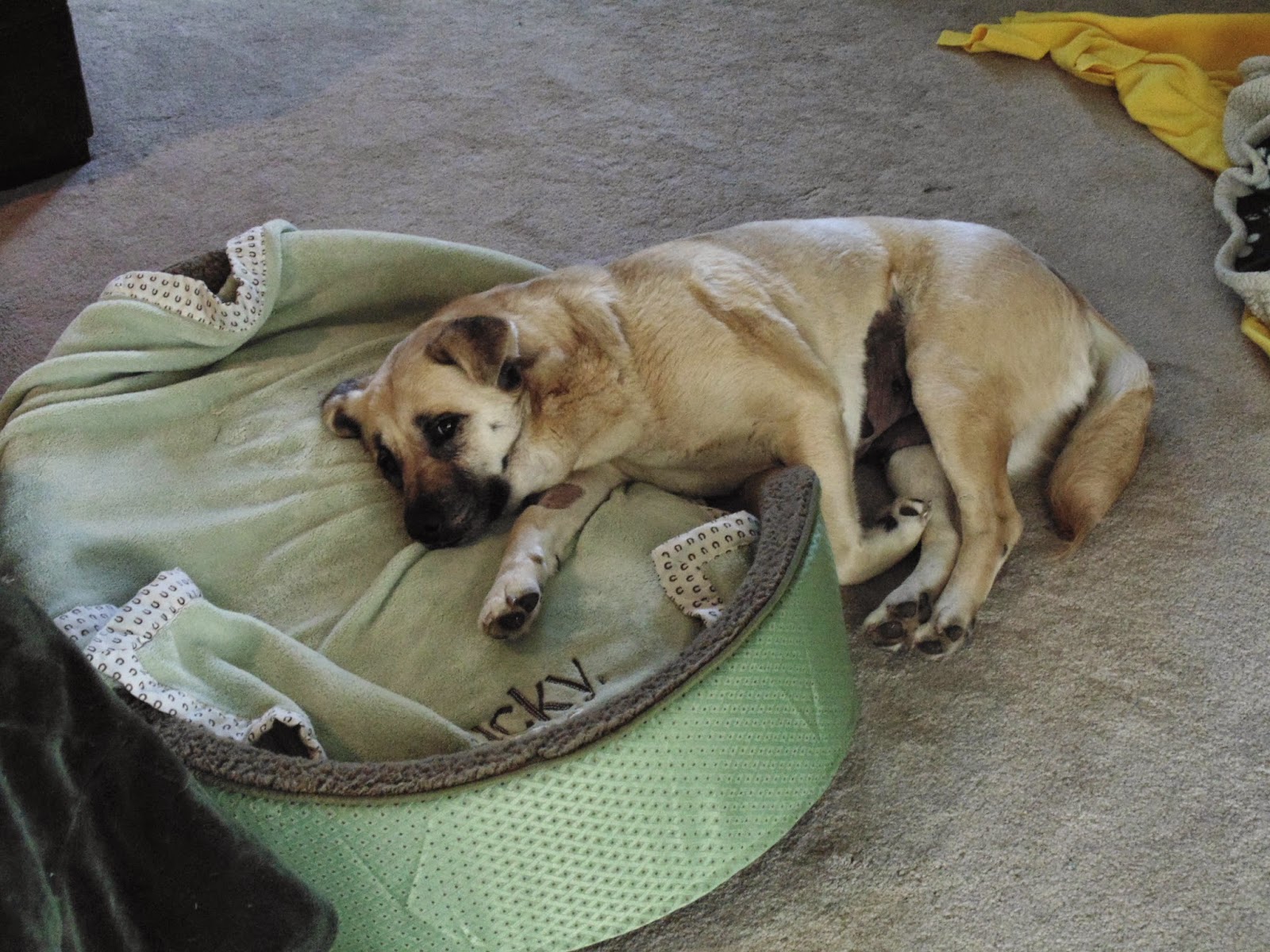 She hasn't quite gotten the hang of climbing inside her bed. And yes, her blanket says "Lucky."
For those who nudge me when I don't post for a while, thank you. About five or six times a day the message "Nobody reads what you write" zings through my brain, and I have to counter it with yoga breathing and some positive affirmations. In those times, I remember those gentle emails from Bob, John and Barbara, and I feel validated.
I do have some great excuses this time, however: Two weeks ago I spent the weekend in Tehachapi, and last weekend nothing in the world mattered except Purrl getting well. (We do not know what made her sick, but she almost left me, and I could do nothing but sit beside her and will her to recover, which she did, eventually.)
And this weekend? This weekend I was finally able to bring Honey/Sunshine "Sunny" West home from the shelter. I adopted her two weeks ago, shortly after my last post about Sgt. Thomas Tibbs, but before her spay surgery the next day she was diagnosed with kennel cough, so she had to remain in quarantine until she was all better and could undergo the surgery. That happened Friday, so I brought her home yesterday. As I write this, she is curled in a dog ball on the floor of my office, as is Thomas about three feet from her. Looks like this is going to work out just fine....
Actually, I've never seen Thom warm up to another dog as he has with her. He'd met her briefly at the shelter a few days before I adopted her, but he was definitely in barely-controlled-panic mode being back on that turf, and he wanted nothing more than to jump back in the truck and return to the safe haven of home, so he paid her little attention. But yesterday when I brought her into the yard, he reached forward to sniff noses with her, and they wagged their tails at each other. They roamed the yard together, ate dinner separately but shared space when it was treat time, and he was comfortable having her in his domain inside the house. This is all good stuff.
"Honey" (her name at the shelter) has a classic lab personality; she just wants to be wherever I am, so I've allowed her to be, for the most part (in when I'm home, outside with Thomas when I leave). She is extremely mellow (thus the hippie name of "Sunshine," with an homage to Mom's side of the family with "West"— and some of you will remember the old TV series, "Honey West," with Anne Francis, which I loved), and she is so sweet even the vet who did her spay surgery fell in love with her a little bit.
Of course, this is all great testimony to how dogs can forgive and move forward, even when life has not been kind. This girl is three or a bit older, but it's clear from her body that she has spent her life as a puppy factory; she had not yet recovered fully from nursing her last litter, yet when the spay surgery was done it was discovered she was pregnant again. Poor babies. Poor mama. She also has a few old scars on her muzzle and leg, wounds that healed but left traces of the trauma. That's okay. She's moved on to a new life now where she will enjoy good food, a soft bed, healthy treats and a daily walk. (The first one was a leisurely stroll around the cul de sac this afternoon, which she enjoyed immensely.) Oh, and lots of love, of course.
January 28, 2015
Sgt. Thomas Tibbs: One Year Later
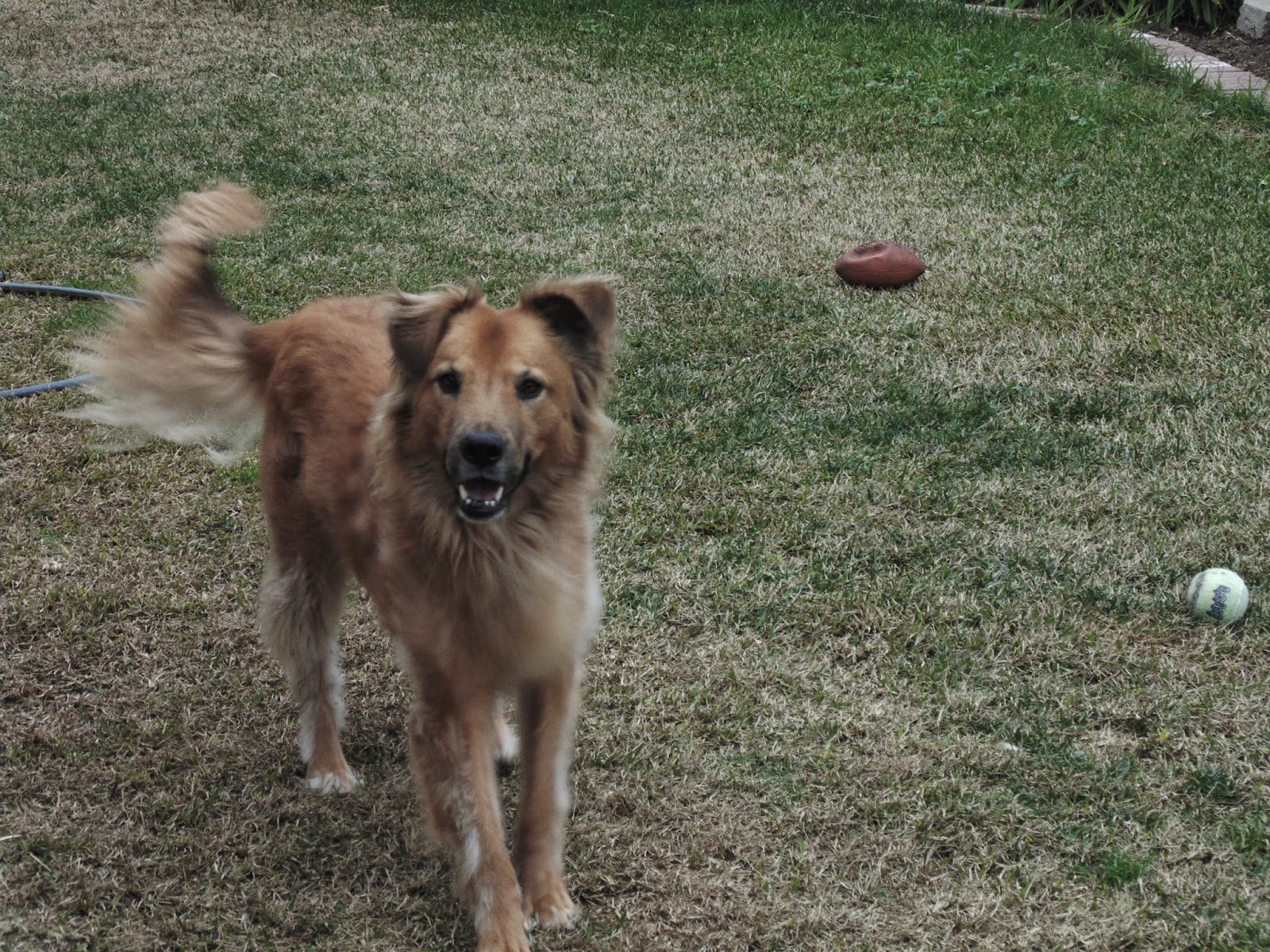
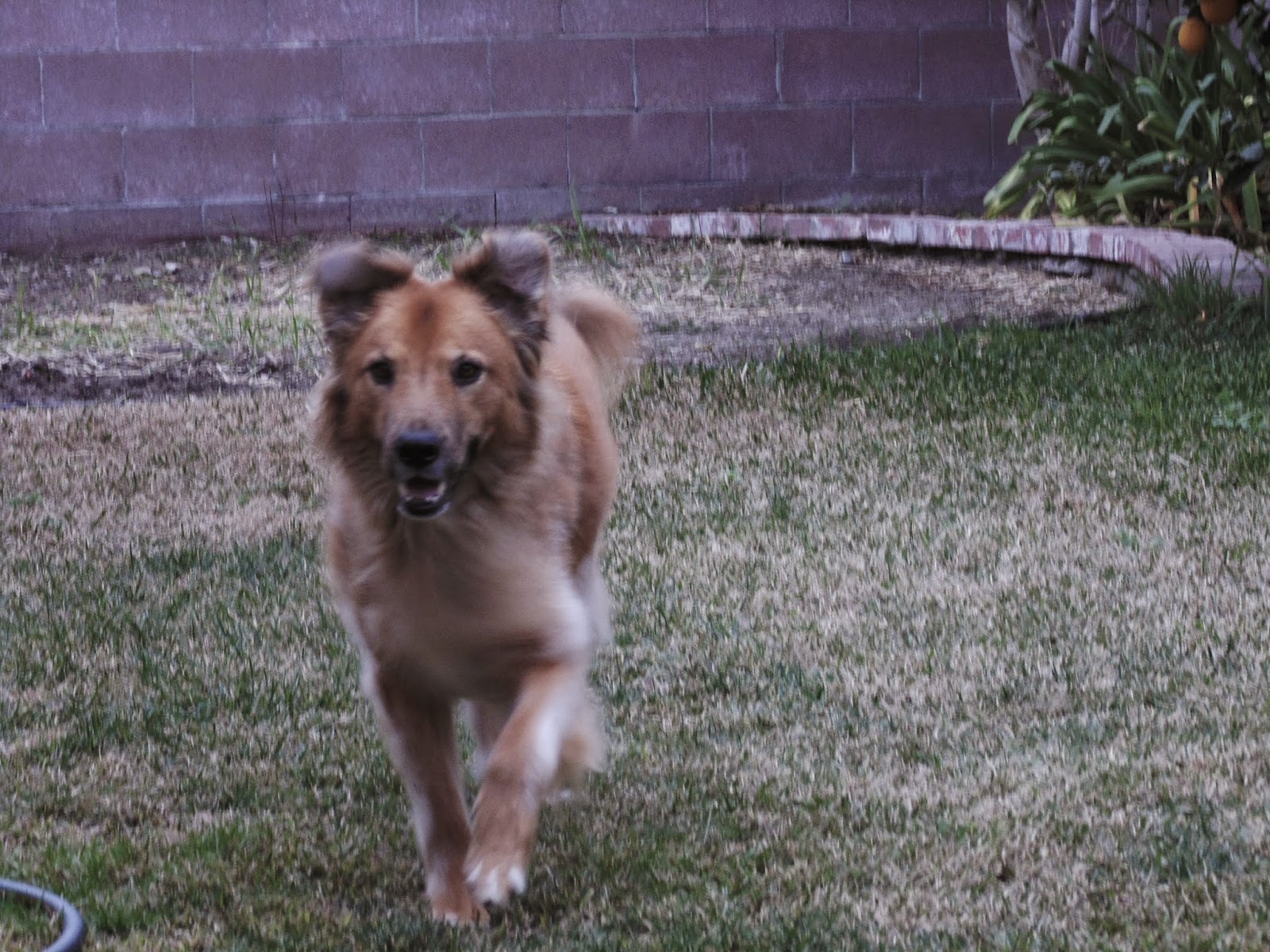 Returning to me after chasing down a treat.
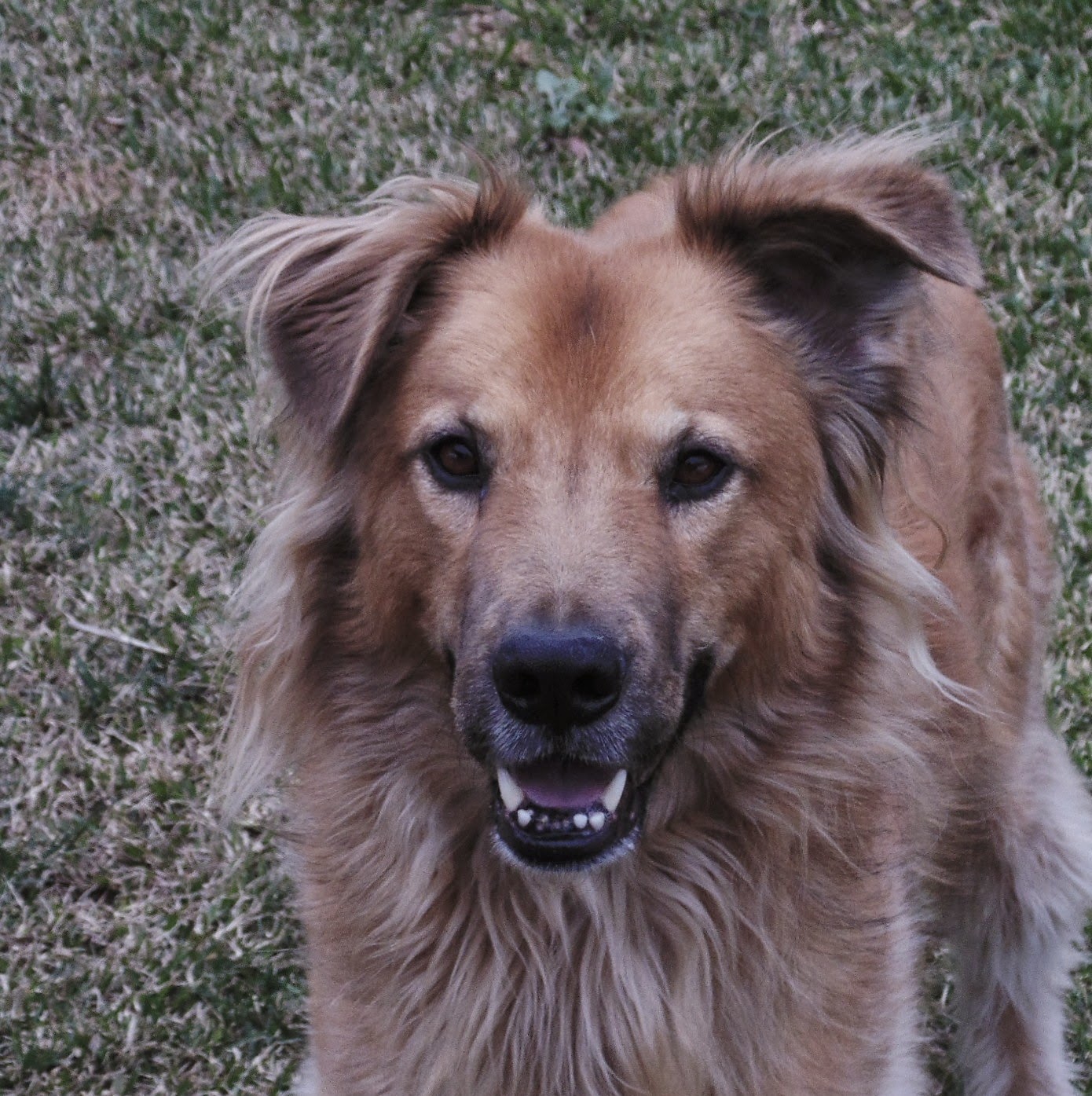
It's hard to believe an entire year has elapsed since my boy Thom came home to live with me and the girls. It's even harder to believe that the happy, prancing, dancing pup who races around the back yard in ecstatic figure eights when I come home from work is the same pathetic waif who could only be dragged out of his safe spot in the corner of the side yard on a leash and wouldn't even make eye contact with me for the first two weeks. Since I haven't posted an update on him since his first bath last July, I thought it might be high time to let his fans know that yes, the dog who was once afraid of his shadow is now starting to realize that this life—his wonderful, cushy dog's life—has quite a bit to offer.
Here are two points for illustration:For an entire year, every time I have gone out to the back yard to work in the garden or pull weeds, I have invited Thomas to come with me (or more precisely, with "us," as Purrl is usually wherever I am, and Sugie will stroll out if it's mid-morning and quiet in the yard and nice weather and if it suits her highness's fancy). And for that entire year, Thomas has been content to remain curled in his corner in the side yard, out of sight but certainly not out of hearing as I usually sing loudly while I'm working in the back yard. But Sunday, miracle of miracles, as I crawled on my hands and knees between the rose bushes, pulling the tiny new shoots of plantain and Canada thistle up by the roots, I heard the now familiar and beloved sound of Thom flapping his ears. (He does this so often I had the vet check him. It's not a medical issue, just a habit.) I looked up to see him sitting, tall and content, in a sun spot a few feet away. "Tommy boy, good job! Hang out with us! We're weeding!" I said to him for at least the fiftieth time. This time, he did, nosing around until he found a sun spot in the dirt about six feet from where I was working. He stayed there for nearly an hour, listening to me sing snatches of song in between saying nice things about him.
Later that same evening, my son arrived, bringing dinner for us and a movie. Thomas had just finished his own dinner and was getting ready to trot inside the open back sliding door when he noticed the tall dark handsome man standing in the kitchen. "Woof," he said. (Thomas, not my son.) "Hey, Thomas. Woof!" said my son. "Wait—what?" I said, walking into the kitchen. "Did he just bark at you?"Up until that moment, the only time I've ever heard Thomas bark is when he's sleeping. "Woof. Woof," Thom said again. This was not an anxious or aggressive bark, and it wasn't loud at all, just his way of saying, 'Hey, who's that in my house with my mom? Do you belong here?' I brought him in, Ezra gave him a treat, and he slept peacefully (no nightmares) on his bed for the duration of my son's visit.
And about those nightmares: He rarely has them now. Whew. Many times in the past year I have been awakened by his anxious pacing and whining after he's had a bad dream. In those times, I have calmed him by talking to him, then made myself comfortable on the couch until he can sleep again. When he wakes now, he is exuberantly happy. Morning is still absolutely his favorite time of day. Before he goes out, he flattens himself on the family room floor so I can spend a few minutes petting him and scratching behind his ears. Recently he discovered that sweet spot, just above his tail, and his eyes close in bliss when I scratch him there.
Over the past year, my mantra to Thom whenever he has withdrawn or recoiled from my touch has been this: "Don't worry, Thom. Someday you'll be a real dog. You just have to be loved enough." This is, of course, an homage to The Velveteen Rabbit. I think he's just about there. He still doesn't come up to me when I call him, but he does trot happily out of the side yard when I get home from work and call him. He now looks forward to his daily walks (instead of resisting them), and he loves riding in the back seat of the truck with the window down. Every night, I look forward to bedtime. The kitties get treats and then Thomas gets a treat... and a chew bone... and Bunny Tibbs... and a back rub.
I am daily grateful to the volunteers at Upland Animal Shelter who never stopped believing in Thom's capacity to recover. They took a feral dog and worked with him for months until he was adoptable, and in doing so they not only gave him a chance at a great life, they also gave me a boon companion who makes me laugh and warms my heart every single day.
January 13, 2015
How Sarah Koenig is helping me stay fit just by telling stories
As some of my readers already know, I seized upon the idea of becoming a writer based on an experience I had when I was given the assignment to write a short story. Upon its completion, that story was read aloud to an audience, and when that audience responded with unsolicited positive feedback ("I liked your story!"), I determined I would spend my life writing stories. My decision was helped along, I will confess, by my fourth grade teacher, Mrs. Walton, who had given the writing assignment and who had read my story to my classmates. Still, the experience was profound and life changing. I mean, here I am, fifty years later, still writing and publishing stories of one sort or another.
What I gained from that event was the experience of having an audience become so wrapped up in a story (in this case, a story about a boy who builds a robot) that they are utterly swept away by it. Ok, it may be a stretch to characterize a passel of nine-year-olds as being "swept away" by anything other than a cupcake party or the last day of school, but they truly were attentive. They laughed in all the right places and were surprised by the plot twists. Mind you, I was nine. The adulation afterward at recess ("Your story was good!") went straight to my head.
Because of that event (and because I am an avid reader of fiction... and a lit major), I have known all my life that a story well told can be powerful indeed. And it is this very power that has been unleashed with the production of "Serial," a new podcast produced by radio station WBEZ in Chicago (which also produces This American Life, a popular weekly radio show on NPR). This is how the podcast is described on its website, www.serialpodcast.org:
Serial is a podcast from the creators of This American Life, and is hosted by Sarah Koenig. Serial tells one story—a true story—over the course of an entire season. Each season, we'll follow a plot and characters wherever they take us. And we won't know what happens at the end until we get there, not long before you get there with us. Each week we bring you the next chapter in the story....
The first season of Serial (which I had greatly anticipated, having been a fan of This American Life for many years) involves a murder that was committed fifteen years ago; a teenage girl was allegedly killed by her former boyfriend. He is now serving time in prison for that crime. But aspects of the prosecution's assertions do not ring true to Koenig as she embarks upon her own exhaustive discovery of the facts surrounding the case, and so with each episode of Season One, we are made privy to the investigation step by step. Knowing that this is not fiction, that a young man's fate hangs in the balance as Koenig attempts to determine if he has been unjustly accused makes this story all the more compelling.
I've been listening to each episode on my iPod as I ride my bike to work. I heard the first episode Monday and honestly, I don't even remember the ride in, I was so riveted by the story. It's only a couple of miles from my house to the campus where I teach, but it's uphill every bit of the way. Having "Serial" to keep my mind off pushing those pedals has been a godsend.
As a reader, I'm a big fan of radio stories, as they challenge us to construct images from words and also to learn to listen attentively. Koenig's friendly, down-to-earth narration coupled with her pointed but never demanding interview skills contribute greatly to the success of this podcast as a whole. I hope it continues with a strong Season Two. I haven't even finished Season One yet, but I'm already looking forward to the next story.
If you're interested in listening to the podcast, you can download it for free from iTunes, or simply go to the website, www.serialpodcast.org(or click on my link) and listen on your computer.

January 7, 2015
If only tears were words
Ever since I was a child and understood the nature of war and conflict, it has been appalling to me that humans would kill each other over ideas. The fact that a man would do violence to another man not to defend himself or others against harm, but because of a thought (God is green/the earth is square/whatever) that the other man might hold in his head just seems incredibly senseless and barbaric.
As a teacher of Journalism, I participate in conversations every day regarding what we should or should not include in our newspaper. [I want my young students to weigh the impact of every story, every idea, every sentence and yes, every word or image we present and that they realize their own responsibility in that impact. But never, ever in any of our conversations have we ever had to consider that we were in danger of being gunned down because of what we might choose to print.
It is my fervent hope that every journalist around the globe tonight will write something--anything--in response to the shootings at Charlie Hebdo in Paris. Consider our words a universal embrace of those who were closest to this tragedy... and a raised fist to those who perpetrated the pointless attack. The pen is mightier than any weapon. Let the resounding thrum of fingers battering keyboards by the thousands be heard in heaven tonight.


