
S. Kay Murphy's Blog, page 28
January 19, 2014
Sgt. Thomas Tibbs: Update
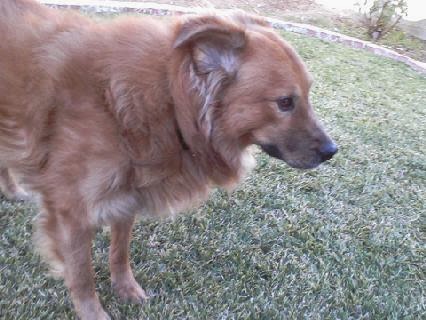
Two days in....
Friends have asked how Thomas is doing, so here is a short post just to document his progress. Note: If you haven't read the previous post here, you might want to scroll down to that one first before reading on.
Two weeks ago when I brought him home (directly from the animal hospital after his neuter surgery) he was loopy, still under the influence of drugs and definitely not happy. (Getting a forty-pound dog into the extra cab of a truck on my own without hurting his sore bottom was quite a feat. I think some angels in the form of the dog-loving spirits of my dad and brother were there to help out.)
Needless to say, he was uncomfortable for the first few days. More critical, though, was his fear of everything. Just putting his collar on traumatized him. He would turn his head as far away from me as he could, his tail tucked so far between his legs it simply disappeared.
During the day, he wanted to stay in the yard, and so I let him. He would go to the far side yard and huddle into the corner between the house and the block wall, remaining there until I came to get him with the leash to lead him to food and water and a chance to pee, which he would do quickly, always seeking to get back to his safe spot.
After five days, we did a short walk around the neighborhood. Again, Thomas was terrified of every person, bike, vehicle or sound we encountered. He panted anxiously, and as soon as we turned for home, he began pulling on the leash to get back to safety again.
Each night from the first I would end my day by sitting beside him, talking or singing to him, brushing his coat and slowly massaging his back. Eventually he began to relax, and he stopped flinching every time I touched him. But he never wagged his tail, would not even try to take a treat from my hand, no matter how tempting.
Last weekend I met some of my neighbors while we were walking. Linda and Pete have a Shih tzu named Gizmo, and I asked if they would mind if Thomas got to know him. They were patient and supportive when I described the life Thomas once lived, and we talked about dog rescue for a while. As we did, Thomas stopped trying to pull away and simply stood beside me, leaning into my leg. "Looks like he's starting to trust you," Pete remarked. I smiled.
I've been coming home for lunch every day to check on Thomas and bring him out of his corner for water and treats. On Wednesday, he heard me calling his name and trotted out on his own. I nearly cried. Evidence in the yard showed that he had finally made himself comfortable.
Several nights ago when we returned from our walk, instead of running for his corner when I unclipped the leash, he trotted over to the spot where I brush him. (It's also near the cupboard where his treats are stored.) I grabbed the brush (and a highly expensive organic all natural peanut butter treat--but he's worth it), and we spent some time together relaxing.
Two mornings ago, after eating his breakfast, instead of retreating to his safe corner, he ran around the backyard just as happy dogs do. That time, I did cry.
I have yet to see him wag his tail. He still won't take a treat from my hand, will not even walk forward to get it. But he no longer turns his head away from me, watching me expectantly when I'm in the yard with him. Today we drove to a park and took a long walk around in the grass, meeting other people with dogs and sniffing all the trees.
And yes, the cats are learning to accept him. Fearless Purrl is leading the way, just as I knew she would, sometimes coming out to creep around on the patio while I am brushing Thomas. While Sugie is not happy about sharing her home and yard with a smelly dog, she has not once fled to hide under the bed. In fact this morning, knowing Thomas was in the yard (though in his corner), she crept out into the backyard and enjoyed a nice, relaxed roll in the grass--nothing short of a miracle to me. Looks like those angels are still hanging around, helping out.
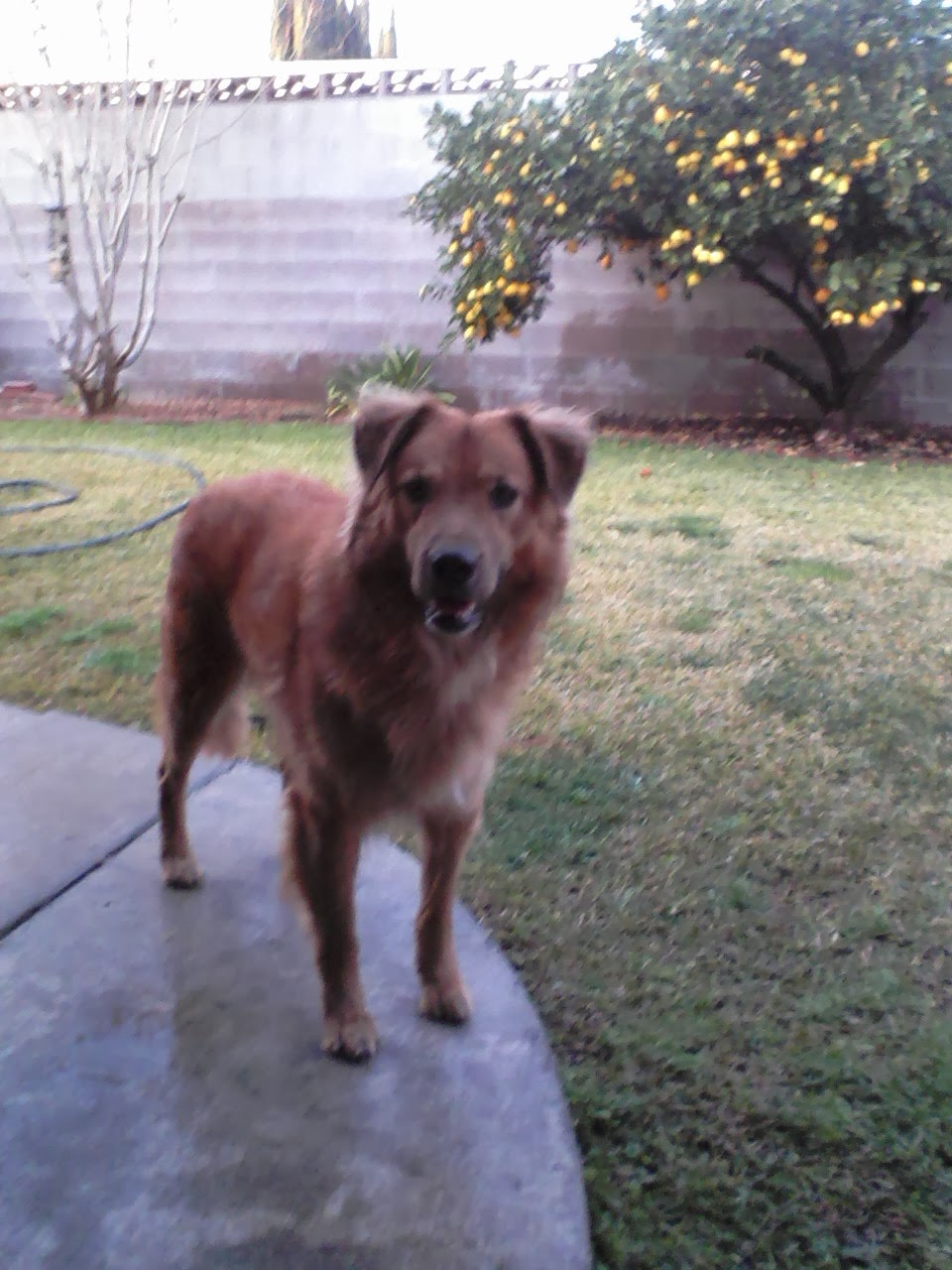 Two weeks in....


January 4, 2014
Saving Sgt. Tibbs
In June of 2013, animal control officers in San Bernardino County, California, evacuated 130 dogs from a dubiously named "sanctuary" in Apple Valley. The owners of the property had left, abandoning the dogs. You can read that story here, but it's a sad one, and I don't recommend it.
Initially, the dogs were taken to Devore shelter, which is notoriously a high-kill, low-compassion facility. But dog rescue groups rallied around, pulling out adoptable dogs and those needing special foster care. And, to their credit, administrators at Devore contacted other local shelters in an attempt to find housing for all the dogs.
Which is how three of the 130 ended up at Upland Animal Shelter. At first, the dogs were so under-socialized that shelter staff members and volunteers couldn't touch them, much less handle or walk them. But eventually, with time and patience and a lot of volunteer love, the dogs were taught to walk on a leash. They also learned that humans can be kind. Over time, two of the three made enough progress to be adopted. That left Sgt. Tibbs.
In July, I happened to stroll through Upland shelter, looking at the adoptable dogs, and I came across Sgt. Tibbs. When I first saw him, I wondered why such a beautiful young dog had not been snatched up by some family. But when I approached his kennel, I could see why; he tucked his tail and ran to the corner, huddling there. As an introvert myself, I happen to know that people don't flock to be your friend if you can show yourself friendly in turn. The dogs who get adopted first are tail waggers and hand lickers, those whose facers say, "I'm so glad you stopped by! Now please take me home!" Sgt. Tibbs' face said, "Please don't hurt me. Just leave me alone." And I walked on.
During Christmas week, though, I went back to the shelter. I couldn't believe Sgt. Tibbs was still there. As I stood outside his kennel, one of the volunteers came by to tell me his story.
"We've worked with him a lot," she told me. "Now he walks on a leash. But he doesn't make eye contact, and he's still very shut down, very afraid." (More on the work of these great volunteers can be found here, and there's a photo of Sgt. Tibbs there as well. He's the one on the left.)
Every day for a week (with the exception of New Year's Day, when the shelter was closed), I spent part of each afternoon with Sgt. Tibbs, just standing outside his kennel. By the third day, he stopped running to the back when I approached. On the fifth day, he made eye contact, just briefly, then looked away. On the seventh day, another volunteer approached, and we discussed his personality again. I told her I was concerned about how he would be with me cats.
"Let's cat test him!" she said, and moments later she had a leash on him. We headed to the front, where he was taken into the office to meet the resident tabby there. He did not alert. He simply sniffed the cat, his tail tucked firmly between his legs, then walked away.
So the next day, which was yesterday, I returned to the shelter to adopt him.
I asked the volunteers (who've been calling him "Tibbs" how he got his name, and one volunteer confessed she had named him after the dog in 101 Dalmatians who looks like this:
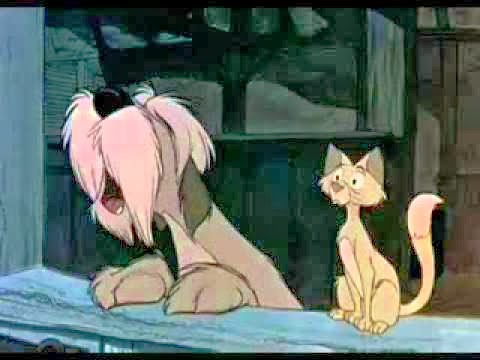
(Most of the images I found for him online show him with a cat, so maybe that's a promising sign from the Universe.)
I don't think the real Sgt. Tibbs looks quite like that, and I don't know that "Tibbs" will work for me as I have no emotional investment in it. But I want to honor the volunteers who spent so much time with this dog to bring about a happy outcome for him, so I'm not going to change it. I'll just augment it a bit. I have two beloved friends named "Tom," so his name henceforward will be Sgt. Thomas Tibbs. Eventually, I'll call him Tom or Tommy.
As I write this, Sgt. Thomas Tibbs is at a nearby veterinary hospital having that minor surgery that he should have had years ago. (He's six.) This afternoon, I'll bring him home. He still has a long way to go in terms of hanging out with me and the cats while I write books or grade papers, but we'll start (when he's recovered from the surgery) with daily walks and getting brushed. I'll keep you posted on our progress. Wish me luck!
And to all of you out there who do the very difficult work of volunteering to go into shelters every day and walk dogs or brush them or socialize them in other ways, may the Universe rain down blessings on you and those you love.
January 1, 2014
The first 455

January 1: I have begun. The hardest part is starting. The second hardest part is continuing. At least I have the starting part completed, and, as some friends suggested, I jumped into the middle of a story. More precisely, this is an account of my first experience with trying to find my way home in blizzard conditions, and I've left out the beginning (which will be added later for the book, though not here). My first 300 (455, actually) words:
The cold was relentless and inescapable. Down in the village, I had been pelted with freezing rain while we struggled to get the cables on the truck. (The experience, if you've never had the pleasure, is like having slush sprayed on you from a fire hose.) Even though my heavy rain jacket had warded off most of the moisture, my jeans were damp, and there was no insulation between the freezing denim and my legs. Ordinarily, the situation would have been uncomfortable but bearable. Now, with the winds blowing thirty miles per hour, the chill pushed deep into my bones, and ice crystals stung my eyes and face.At least I'd had the presence of mind to ask Catherine for a hat. The beanie she'd given me was warm and big enough to cover my ears. By pure luck and an attempt at fashion, I wore a long, thick scarf that had been crocheted lovingly for me by a friend. I wrapped it around my face, slid my backpack onto my shoulders, locked the truck and began the half mile walk up to the cabin.I had never experienced such absolute silence. The soft blanket of snow that covered the road kept me from hearing even my own footfalls. There was no soughing of wind through the soggy and heavily laden branches. No bird call punctuated the air, not a single sound of life anywhere.With the sun already gone behind the western ridge, the deepening dusk pushed me to walk as quickly as I could. Some lights were shining at Snow Crest Inn, but as I turned up our private road, the lights were lost in the thick foliage. I focused my attention on my feet so I wouldn't slip on the steep road. One quarter mile uphill and I'd be home. The folds of yard covering my face were covered in ice and snow. I kept my head down and trudged on.
A light came into view, and I thought I must have reached the Walker's cabin. I looked up to get my bearings so that I'd be sure to follow the sweep of the road to the left. My heart began to pound as I realized the cabin up ahead was not the Walker's. It wasn't familiar at all. Somehow, in watching my feet and not checking for landmarks, I had wandered off the road. In that moment, I was completely disoriented. I had no idea where I was, and it was getting darker by the moment. The fear-induced adrenaline coursing through my veins made my pulse race, and I gasped for breath in the thin air as I fought down instinctive panic and slowly began to retrace my footsteps.
December 30, 2013
How Purrl made it work
2013 turned out to be a transitional year for me, and frankly, I'm so glad it's over.
At the end of 2012 I was diagnosed with "damaged" lungs. To my way of thinking, this is a misnomer, given the fact that I was probably born with holes in my lungs. So I came into 2013 trying to adjust to the truth (no cure, and it's progressive) and limits (uphill climbs beat me like a stick) of my "disease." (Can't we call it a "condition"? "Disease" sounds icky.)
In January, I left my cabin in the wilderness and became a flatlander once again, buying a three-bedroom home built in 1957 (one of my favorite years) with an insurmountable (at least for a six-pound cat with stubby legs) block wall around the back yard. How am I adjusting? I'm saving money toward retirement. But I can't see the stars at night (well, your night, my morning--4:00a.m.). I have a garden growing, and my tomatoes last summer were amazing. But I am without the quiet and serenity of the mountain, and heading out my door for a walk no longer means sighting wildlife or standing underneath a waterfall. Now it means following the sidewalk to the next housing tract... and the next. But I'm eight minutes from work, so I'm no longer spending several hundred dollars a month in gas. "No place is perfect," a friend told me recently. So true.
With my new home and yard came the prospect of getting a dog, which I did last spring. If you follow the blog, you will have read about Suede renamed Seamus, the chocolate lab that was abandoned at my local shelter. Seamus was (almost) the perfect dog and would have been my constant companion... if he just had not been encouraged at some point in his life to chase kitties. I adored him, and we walked every day, and having him beside me filled a void that had been there since 2006. But alas... his presence in our home was terrifying for Sugar Plum. Sugie tried several times to creep out and face her fear, but every time she did he would alert to her and try to chase her. Sug shut down, refusing to come out from under the bed. She wasn't eating or drinking. She ended up very sick, and I ended up on the floor in fetal position, worried for her and heartbroken to know that Seamus would have to adjust to a new home all over again.
But as it turned out, the Universe had special plans for Shay. With the help of my dog-loving friends (thank you forever, Donna Staub!), I found a couple who had recently lost their beloved chocolate lab. They opened their loving arms to Shay and made him a family member overnight, and their yellow lab loved him as she had her previous companion. Through much grief came a happy ending and the best forever home a dog could ever dream of.
After some weeks, Sug recovered. And then I brought Purrl home.
Since losing my beloved Boo, I have made several attempts to bring a new cat into our home, so that Sug could also have a companion. It never worked out because eventually the other cats tried to dominate Sug (and I would awake to the ferocious fury of cats brawling, teeth and claws maiming everything in sight, including me). After three tries, I knew my only hope of making it work was if Sug could still feel like the queen of the house and another cat would defer to her.
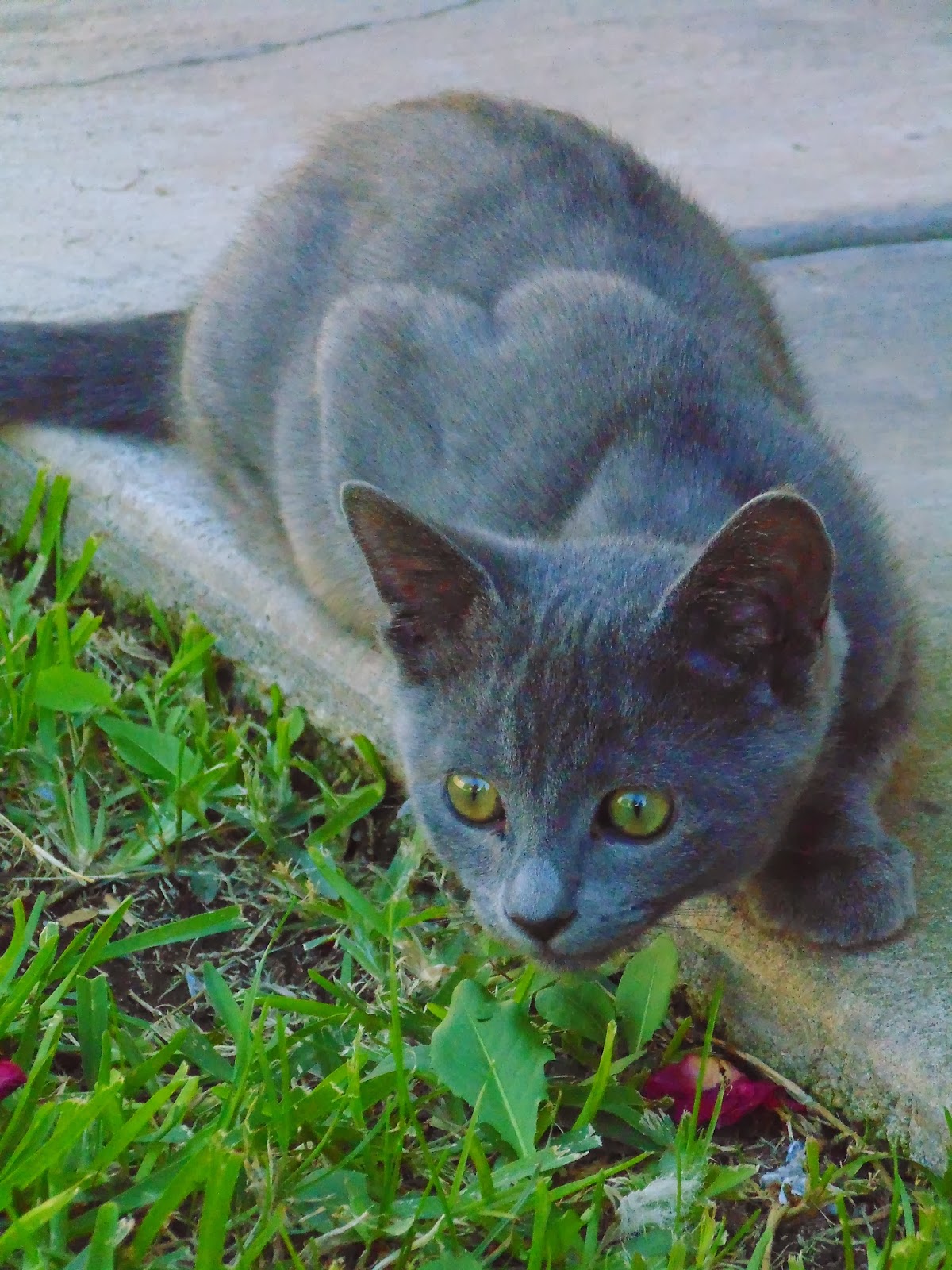
And that's how Purrl made it work. She was a tiny kitten, abandoned in a Target parking lot and rescued by the sister of a very sweet friend. Purrl (Purrlie/Purrl-O/Purrl Jam) was probably about ten weeks old when I brought her home, mewling and crying in a carrier. Instead of diving under the bed, Sug ran up to see what all the fuss was about, then hissed at the baby... but didn't fear her or reject her. Within days, Purrl was pouncing on Sug's stump of a tail, and Sug was patiently allowing it. Now both girls meet me at the door when I come home, and both sleep on the bed with me at night. Of course, Purrl snores. But then, how do I know I don't?
Oh, and one more good thing happened in 2013: GhostGrandma , my YA novel, released on October 31. I'm happy now for all the hours of this past summer I spent re-writing and editing it. I've gotten some nice reviews, and teens seem to like it.
On January 1, I will begin writing a new book, a memoir about my experiences living in on the mountain. At this point, I'm thinking (as I naively did with The Dogs Who Saved Me ) that it will be an effortless expression of my passionate love of the wild. My goal is to write three hundred words a day every day in 2014. Check back with me; I'll keep you posted.

December 24, 2013
Under the apple boughs

A year ago British author Peter Maughan contacted me through Amazon and asked if I would read one of his novels as he was in need of reviews. I downloaded The Cuckoos of Batch Magna but just couldn't get to it until summer. When I finally read it, I fell in love with Peter's writing. It was easy to give Cuckoos a 5-star review because it is just plain adorable (if a book can be such).
In September, I learned of and purchased another work by Peter which is a much shorter piece, maybe 60 pages if it were in page form. (It's available for Kindle.) This one is entitled Under the Apple Boughs , and I just have to say, if you want to completely immerse yourself in lyrical writing for a couple of hours, if you want to stroll the lanes of rural England in your imagination and view the sights through the eyes of an author who loves where he lives, spend $4.00 and download this narrative.
Peter's work has been characterized as " The Wind in theWillows for grown-ups." Exactly. Except... there is a thoughtful, gracious yet self-effacing intelligence in this writing that is nothing less than literary brilliance.
I began reading Apple Boughs after a particularly grueling week which was rife with heartbreak. Sometimes, as Yeats lamented, 'the world's more full of weeping than we can understand.' Beginning the narrative was like discovering the door to the SecretGarden and walking through to find the garden reclaimed and vibrant with trees and flowers and birdsong. For three nights running, just before sleep, I would disappear behind that gate and wander slowly with Peter through the gardens of his imagination. Our time together ended far too soon, but by the end of it I felt my soul had healed a bit.
If you're looking for a last minute gift for someone with a Kindle who loves the written word--especially if they love pastoral work--it takes only a couple of clicks to gift this book. Heck, just get it for yourself and you can "lend" it to a friend for free later.
Oh, and if you're still in the spirit of giving after you read (and love--I promise) Apple Boughs, take a second and post a sentence or two in review of it so that we can share Peter's love of words with others.
May the spirit of the season abound in love!
December 2, 2013
One fact, one fiction
For this post, I thought I'd share with you what I've been reading lately... because I want these great books to be discovered and loved by others. (Clicking on the titles, by the way, will take you to the Amazon page for each book. And no, I don't receive any compensation for promoting them--just that warm fuzzy feeling. Wait--maybe that has to do with what I'm drinking....)
First, a novel. Days of Smoke , by Mark Ozeroff, is fascinating for two reasons: (1) its point of view and (2) the unique voice of the writer. Here's some of the review I posted on Amazon:
First and foremost, the most compelling reason to read this novel is for the gorgeous prose. Ozeroff knows the English language, and he enlists it lovingly but without being florid or verbose; he simply employs the right word for the right spot, and that includes the tight, effective dialog here. This novel, set in WWII, is the story of a German pilot, but it is also the story of a war. Without being didactic, Ozeroff encourages his readers to consider what it may have been like from the other side's point of view. When we love someone, we tend to overlook obstacles to our love, and Days of Smoke offers a glimpse into how this may be true when we love our country as well.
Ozeroff has this style of writing that I can only characterize as "gallant," for lack of a better word. The main character is heroic in the classic sense, and I found him to be charming and engaging. If I can be sexist for a moment, Days of Smoke is kind of a guy's book (with all those aerial dog fights and aircraft specifications), but there's romance in it, too (which is of the classic heroic type as well). It's a great read, so if you're looking for your next novel-fix, here it is.
Next, a memoir. I just finished reading Jeffrey Koterba's book, Inklings . Koterba is an editorial cartoonist for the Omaha World-Herald. He's also a musician and plays frequent gigs in his own swing band. Oh, and on a side note, he inherited Tourette's Syndrome from his father.
Here's the amazing thing: I knew of Koterba's artistic work before I knew of his book, and I knew he had Tourette's. I assumed the memoir would be all about growing up with the syndrome, but no. It's about growing up with a non-nurturing, somewhat harsh father (a big reason why the book resonated with me). And it's about struggling to achieve his goal of doing the work that he loves (cartooning) as his bread-winning day job (something else I could identify with). Here's a bit of what I posted on Amazon about his book:
If memoir serves its purpose well, it helps us to see our own lives with a slightly better perspective, having glimpsed another life which is similar to ours but perhaps embraces greater or different challenges. Koterba's book does just that as he throws wide the shutters of his childhood and allows us to stand just outside the window, witnessing in detail the harsh and poignant moments which shaped him as a child and pushed him slowly but determinedly into the two careers he follows today.
In my own career path, I read a lot of memoir and personal narrative. Inklings will stand as one of the most memorable books I read in 2013. Koterba achieves here what few memoirists do, and that is the point at which the writer manages to step outside of his own experience and look back at it objectively, portraying events as authentically as they actually occurred. Perhaps Koterba's skill at cartooning extrapolated into his skill at writing. Whatever the case, this is an honest, forthright, sincere offering that had me staying up late turning pages.
In the winter, because I can't play outside until 7:00 (unless I want to play in the dark), I tend to read more. I'm already missing reading these two books--but I've just started E.L. Doctorow's new one. So far, it's brilliant.
First, a novel. Days of Smoke , by Mark Ozeroff, is fascinating for two reasons: (1) its point of view and (2) the unique voice of the writer. Here's some of the review I posted on Amazon:
First and foremost, the most compelling reason to read this novel is for the gorgeous prose. Ozeroff knows the English language, and he enlists it lovingly but without being florid or verbose; he simply employs the right word for the right spot, and that includes the tight, effective dialog here. This novel, set in WWII, is the story of a German pilot, but it is also the story of a war. Without being didactic, Ozeroff encourages his readers to consider what it may have been like from the other side's point of view. When we love someone, we tend to overlook obstacles to our love, and Days of Smoke offers a glimpse into how this may be true when we love our country as well.
Ozeroff has this style of writing that I can only characterize as "gallant," for lack of a better word. The main character is heroic in the classic sense, and I found him to be charming and engaging. If I can be sexist for a moment, Days of Smoke is kind of a guy's book (with all those aerial dog fights and aircraft specifications), but there's romance in it, too (which is of the classic heroic type as well). It's a great read, so if you're looking for your next novel-fix, here it is.
Next, a memoir. I just finished reading Jeffrey Koterba's book, Inklings . Koterba is an editorial cartoonist for the Omaha World-Herald. He's also a musician and plays frequent gigs in his own swing band. Oh, and on a side note, he inherited Tourette's Syndrome from his father.
Here's the amazing thing: I knew of Koterba's artistic work before I knew of his book, and I knew he had Tourette's. I assumed the memoir would be all about growing up with the syndrome, but no. It's about growing up with a non-nurturing, somewhat harsh father (a big reason why the book resonated with me). And it's about struggling to achieve his goal of doing the work that he loves (cartooning) as his bread-winning day job (something else I could identify with). Here's a bit of what I posted on Amazon about his book:
If memoir serves its purpose well, it helps us to see our own lives with a slightly better perspective, having glimpsed another life which is similar to ours but perhaps embraces greater or different challenges. Koterba's book does just that as he throws wide the shutters of his childhood and allows us to stand just outside the window, witnessing in detail the harsh and poignant moments which shaped him as a child and pushed him slowly but determinedly into the two careers he follows today.
In my own career path, I read a lot of memoir and personal narrative. Inklings will stand as one of the most memorable books I read in 2013. Koterba achieves here what few memoirists do, and that is the point at which the writer manages to step outside of his own experience and look back at it objectively, portraying events as authentically as they actually occurred. Perhaps Koterba's skill at cartooning extrapolated into his skill at writing. Whatever the case, this is an honest, forthright, sincere offering that had me staying up late turning pages.
In the winter, because I can't play outside until 7:00 (unless I want to play in the dark), I tend to read more. I'm already missing reading these two books--but I've just started E.L. Doctorow's new one. So far, it's brilliant.
November 11, 2013
What we no longer teach
In the course of my teaching day on Friday, two things were bothersome.
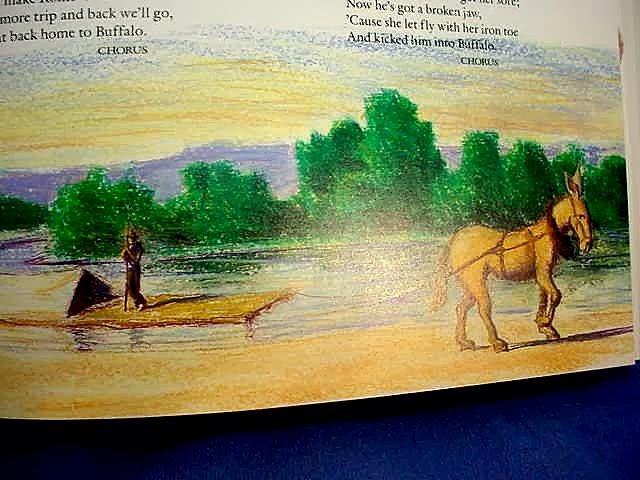
The first occurred when I read a poem with my Honors freshmen. It’s a prose poem by Jack Gilbert entitled “Waiting and Finding" which appeared in the July, 2013 issue of The Sun. In it, the poet mentions a memory from his early school days, and in order to set up the poem for my students, I asked if they’d had the experience in elementary school of a teacher pulling out a box of instruments and distributing them to kids in the class to play as an accompaniment to group singing. A roomful of faces stared back at me in wonderment. I shared with them my own experience of having a song book in my classroom desk each year of elementary school. Once a week—because it was part of the curriculum—the teacher would tell us to “get out your song books,” and for a half an hour or so, we would sing American folk and patriotic songs like “America the Beautiful” and “This Land is Your Land” and “The ErieCanal” and “Tingalayo.” (Click on the song titles to listen to them on YouTube.) As we sang, kids used a wide variety of percussion instruments like maracas and tom toms and tambourines and cymbals and castanets to keep time and punctuate the cacophonous music we made, and for a shy kid like me, it was a chance to sing along without fear of being heard.
“Why didn’t we get to do that in elementary school?” my modern day students asked, and I nearly choked up in answering them.
“Because your teachers were busy preparing you for those all-important state tests,” I told them. And I also told them, as I often do, that they are the next in line to rule the world, and as future school board members or school superintendents or state senators or governors, they can change things. They should change things.
And also on Friday, I asked each class period of freshmen if they knew why they weren’t coming to school on Monday.“It’s some holiday,” I heard in reply.“Labor Day?” someone asked.They didn’t know.
Telling them “Veteran’s Day” didn’t help. They didn’t understand what it was for. So I explained. And then I had them write a brief paragraph on what it means to be a soldier. For once, no one complained. No one tried to waste time with questions or stall tactics. They all simply began writing. Because they all know someone who is serving or has served in some branch of the military. And they wrote these amazing paragraphs about what it means to sign up for a job that might kill you or maim you or at the very least, require you to leave your family and friends and reside on foreign soil for long periods of time in uncomfortable conditions.
So I guess, yeah, they do really know what the day is for. They just needed a moment to muse on it.
October 6, 2013
Bury the dead

This past summer while I was in Missouri, I was privileged to tour the newly created columbarium erected by the Odd Fellows of Washington, Missouri. Frankly, I had no idea what a columbarium was until Marc Houseman—my favorite Odd Fellow—explained it to me some time ago. (And if you’re curious yourself, here’s a link to a very brief but very cool YouTube Video with Marc explaining—as he stands in front of the new columbarium: http://www.youtube.com/watch?v=To5koYnMwyo)
When Marc became involved with the Odd Fellows, he realized that part of their charter dictates that they have a responsibility to “bury the dead,” an edict Marc—as a mortician and as a humanitarian—feels quite passionately about. He presented the Odd Fellows with the idea of building a columbarium—a consecrated venue created to respectfully house unclaimed cremated remains. When he told me about this project, it brought to mind the day, a few summers back, when Marc took me to a cemetery in St. Louis and we toured the crematorium. In a dusty back room (yes, dusty with the ashes of countless Missourians), stacked upon several wooden shelves in a most undignified manner, sat row after row of nondescript cardboard boxes, each holding the “cremains” of someone whose family had never come to collect the ashes. We began to read the names and death dates on the boxes, and after only a few minutes, the three of us--Marc, myself and our companion, Ginger Justus—were so overwhelmed we left the room to get back to the open air and serenity of the cemetery.
It happens frequently, Marc told me, that people are cremated… and no one picks up the ashes, even when the cremation has been paid for.
And so the project was discussed, funds were collected, and the columbarium moved from dream to reality. Upon its completion, Marc contacted every crematorium in the state of Missouri to offer the space for unclaimed cremains. Cool, right? But being a historian, Marc felt compelled to go further, to search for possible living family members of those who came to be interred at the columbarium.
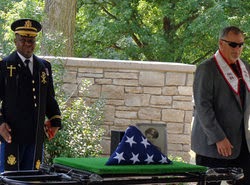
So it was that on September 11th, 2013, Private Albert Louis Onyika was laid to rest at Jefferson Barracks National Cemetery with full military honors, including the playing of “Taps” and the folding of the flag passed on to a family member—just like my mom and dad had for their memorials. Because when Marc went digging, he discovered that Albert Onyika was a veteran of WWII where he earned a Bronze Star and a Purple Heart, and as a veteran, he had earned the right to a military burial. Arrangements were made by the Odd Fellows, and Pvt. Onyika’s remains were accompanied to the cemetery by the American Legion Riders and the Missouri Highway Patrol. Thirty individuals attended his memorial service, including his granddaughter and representatives of MIAP, the Missing in America Project whose members track down “lost” veterans who are deceased.
So, so cool, right? When Marc told me this story in an email recently, it just brought me to tears. Would that every civic or community group would dedicate itself to such altruistic endeavors.Amazing.Humbling.
Wonderful in a way words can’t describe.
September 15, 2013
Wherein I misrepresent myself, ambiguously but, nonetheless, intentionally

Today, on my long Sunday morning walk down to 7th & Campus to snag a copy of the L.A. Times, I meandered through the lovely old homes on the Upland side of Highland Court. Watering his lawn (at 6:30a.m.) was an elderly gentleman with his elderly gentleman dog, a golden retriever that reminded me of TJ Murray. I asked the man if I could "meet" his dog, something I often do when I see folks out with friendly canines.
The man looked confused for a moment, then nodded yes. He continued running water from the hose on his parkway, but made a few remarks about the dog enjoying "new company." I started to walk on when the man made a comment about the heat we've been having, and I stopped again to respond in kind. At that moment he looked up from watering and the same look of confusion passed over this face. Again I began to walk on, and again he attempted to continue the conversation.
"So how have you been?" he asked, and with this question his tone and demeanor changed, became familiar, as if he knew me."Oh... fine," I replied, somewhat confused myself by this time."How are your kids?" he asked."They're great," I answered."And the grandkids?" he asked. "How many are there now?"
At this point, I realized he had mistaken me for someone else. He clearly had not when I had first begun to walk past on the sidewalk, but for some reason, there came a moment in which his mind slid slightly sideways, and he recognized me--albeit incorrectly--as someone he had known at one time.
For a brief moment, no more than a couple of seconds, I contemplated full disclosure, correcting him in his error. And then I thought of my mom... and how, just a few times in the last year or so of her life, she failed to recognize people she knew well or mistook them for others. The truth revealed always humiliated her. It's bad enough to lose memory; it's another thing entirely when people catch you at it and point it out.
"There are seven now," I told him, which is true."Seven!" he exclaimed. "That's wonderful! And are they all well?""They are well indeed," I told him, and then I took my leave, telling him that it was great to see him, and that I would talk with him longer the next time I was out for a walk, but that I wanted to get back home before it got too hot."Great to see you!" he called as he went back to watering.
I share this with you now, my friends and family members, as a future request. I hope that karma is kind... and that when I reach the age at which all the many beloved faces of my lifetime begin to blend into one another, those who know me--or those who are meeting me perhaps for the first time--will be kind. I don't ask much. Just... stop and chat with me for a while... whoever you are.
September 8, 2013
An Open Letter to the Checker at the Stater Bros. Market on Fourth Street and Vineyard in Ontario, CA
 Dear checker,I was just another shopper in your line, indistinguishable from other shoppers on this Sunday morning, waiting—you might have assumed impatiently—for you to help the Vietnamese man with his three sons. Actually, I picked your line because of those boys… because the three-year-old in the cart dropped his right flip flop on the floor just as I was passing, so I picked it up and pulled into line, handing him his shoe as I smiled to recall countless shopping trips with my own boy-in-the-cart dropping a shoe. That would have been thirty or so years ago. It feels like yesterday.
And if you thought I was impatient—as you clearly were—you were wrong. Yeah, I wanted to get back home to mow the lawn before it was too hot, but I didn’t begrudge this man, brave enough to shop with his boys, the few minutes it took to help him. And yes, the whole ordeal would have gone much more quickly had he spoken English well. When you looked at him with all that disdain in your eyes, in the set of your jaw, and then spoke with the same disdain dripping from your words, he didn’t know what you meant when you said “less fat.” When your accusatory finger hammered the document indicating his federal assistance with certain grocery items, he didn’t understand your terse, “The milk is supposed to be less fat. Two percent. Do you want two percent? It has to be two percent.” The bag boy seemed cheerful enough as he trotted off to make the switch. And at that point, we all knew—you, me, the boys, the dad—no one was behind me in line—that we had a bit of a wait on our hands, so you could have been a bit gentler when you told him, “These are the wrong beans. The wrong beans. Do you want red or black beans? They have to be red or black.” I heard your disgusted sigh as you stormed away from the register, and if I heard it, of course the dad did, too, as did his sons. It wasn’t necessary; we all understood that you were intent on shaming him.
And suddenly, there I was, thirty years ago, a boy in the cart and three more on the ground, a single mother of four, shopping with food stamps. Oh, I was shamed, too, in a Stater Bros. not far from this one, by a checker who refused to disguise her contempt for a young mother with all those kids relying on public assistance. I didn’t hate her for judging me. I just noted her pathetic ignorance. She couldn’t know that I was a full time college student, that the minute I had divorced him my former husband split, for all intents and purposes abandoning his children—the so-called “special needs” children we had adopted together—refusing to ever pay a penny in child support—because his church leaders had counseled him to do so. Would knowing this have made a difference to her? Would it make a difference now, if she could see that I have devoted nearly half my life to public service, giving back not only in the taxes I pay but in the small attempts I make to change the world one student at a time? I doubt it.
Just as I doubt that knowing this man’s story would have helped you wipe that ugly smirk off your face as you were shoving two bags of beans in his face, your head tipped sidewise, your eyes rolling as you demanded, “Do you want red beans or black?”
It was when the oldest son stepped up to the counter to help out that I noticed his soccer jersey. The lettering said something in Vietnamese, something about Saigon.
It was at that point, dear impatient checker, that I almost lost it, almost began to cry in your line.
You seem to be my son’s age, maybe early 30’s. Unless you had a passionate U.S. History teacher in your junior year of high school, I doubt you have any idea what “Saigon” means to someone my age, someone who lived during that war in which we promised the people of South Vietnam we would help them… because their Communist neighbors to the north were coming to get them, to murder and enslave them… and after we promised to protect them we failed… and then fled, leaving behind “the killing fields” of South Vietnam. I watched the fall of Saigon from the safety and security of my comfortable home, saw the chaos at the U.S. embassy as hundreds pleaded for sanctuary, sat anxiously praying as cargo planes were loaded up with children who were brought here to escape the threatened blood bath. We had begun the adoption process. One of those planes could be carrying my future child. And when one went down, killing all aboard… all those beautiful, sad, terrified children, I was sick for days.
Who knows what this father is going through, trying to feed his sons, trying to make his way in a new world as he learns a new language—at his age, which I guess to be late 40’s, perhaps a decade older than you. Who knows what he endured in his country before he came here, what he has had to sacrifice to come to the U.S., land of the American Dream. You can’t know. You can’t possibly know.
If you did, would it have made a difference? Would you have been able to muster a bit more sensitivity to his predicament, his lack of English skills? Could you have been just the tiniest bit more civil as you shoved the receipt and his modest change into his hand?
Could you, please, the next time he steps up to your register?


