
S. Kay Murphy's Blog, page 34
November 13, 2011
High school reunion, Part II
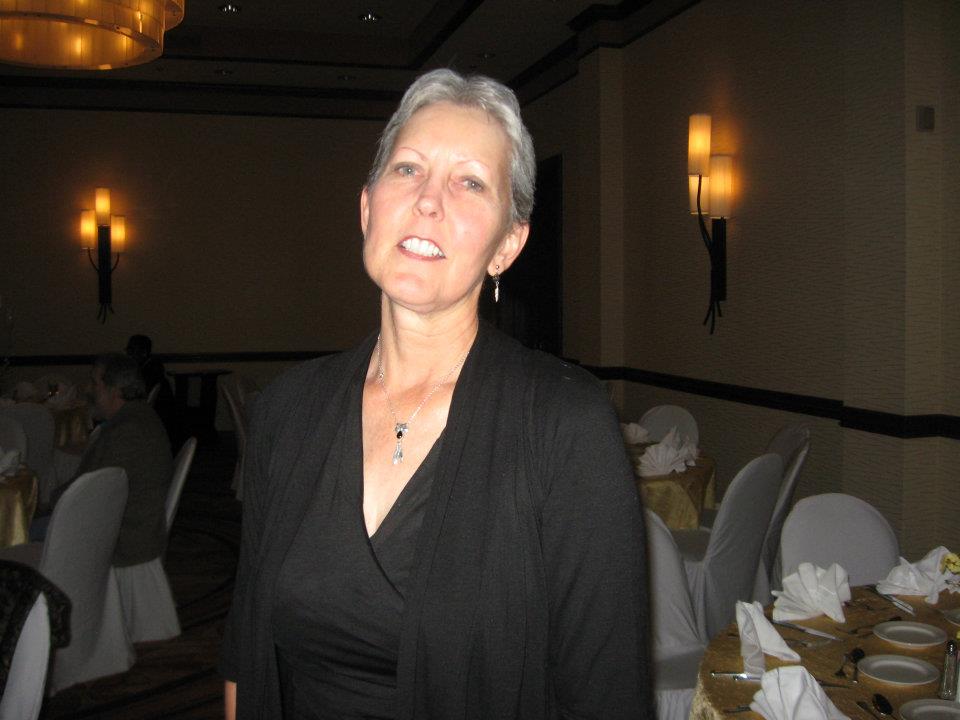 (Photo by Col. William Pine, USAF. Thanks for your patience, Colonel!)
I dragged my feet, I stalled, I changed clothes a couple of times and finally settled for looking like someone's grandmother at a funeral—with legs, since I foolishly selected my dormant black skirt which kept riding up my thighs all night while I sat for hours, alternately tugging at my skirt and picking at my vegetarian lasagna.
I did see Preston and Janice Smith, neither looking any older than they had at our 30th, and Diana and Bill Pine were there to offer me a seat at their table, thank heavens. Diana reminded me that she had attended Catholic school up until high school, so she hadn't known many people, either. Yet she did manage to find, throughout the evening, a number of people who remembered her. Not so, me. No one ever approached me and the one person I did try to connect with made it clear he had no memory of sitting in Mr. Campbell's U.S. History class for 180 school days, talking nonstop to me about whatever caught his fancy. He sat behind me. I was an ear to him; my name and face were meaningless.
Maybe high school reunions aren't for everyone. Maybe high school reunions are for those folks who felt connected to the—I began to say "institution," but let's just say "organization"—of high school… the athletes, the band and theater kids, the ones who participated in student government… those who were invested in school beyond academics. My experience was nothing like this. My daily plan back then was to get home as soon as possible after school, before one more boy made one more crude remark on the bus or one more snotty chick asked me why Dennis and I were still together or the neighbor girl offered to sell me drugs one more time and I had to stammer out "No thank you" again.
I want to say that I felt safe at home, but only when my Wicked Step-father wasn't there.
I went to school because I had to, but I was never comfortable there. I was a sojourner in a place where I didn't belong.
When this epiphany came to me last night, I was deeply entranced, juggling a thousand thoughts, as writers will do, and I suddenly awoke to realize I'd been placing forkful after forkful of the sickeningly sweet dessert in my mouth. At that point, I knew it was time to head home, back to the mountain, where I do, at long last, feel safe.


November 12, 2011
High School Reunion, Part I
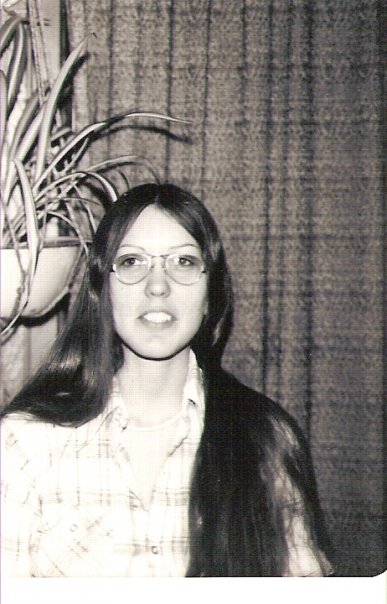
Tonight I will don irresponsible shoes and drive all the way to the Marriott in Riverside to attend my 40th high school reunion… from Rubidoux High School. Why am I going? I'm not sure.
I was not a memorable person for any reason when I was in high school. And when I began at Rubidoux in my sophomore year, my classmates, who had been attending school together since elementary school, had pretty much established their surrogate families on campus. I was the red-headed step-child, in more ways than one, an interloper from a foreign land. Add to that the dazed (read "closed") look on my face brought on by culture shock; we had left Orange County, the haven of preppy white kids, and journeyed to West Riverside, the racially diverse, just-above-poverty-level home of my Wicked Step-father. Add to all of that my melancholy, tortured-poet-in-training persona, and you have an easily assembled loner chick.
I had five friends in high school: Pam, Molly, Mahala, my boyfriend Dennis and his sister Anita. OK, four true friends. I had to socialize with Anita because of Dennis, but I wouldn't have chosen her gossipy, bigoted, back-stabbing company of my own accord. After Dennis and I broke up, I did have a huge crush on Leo Wilson, football player and popular man on campus, but he was deeply in love with the woman who is, I'm pretty sure—and sincerely hope—is still his wife.
I have not been in touch with Pam, but I'm certain she will not attend the reunion. Molly and Mahala have let me know they won't be there. Please—dear god—don't let Anita be there. I stopped dreaming about Dennis in the fourth or fifth year of my marriage, and that was 35 years ago, so I'm pretty much indifferent about seeing him.
At my 20th high school reunion, no one remembered me. By my 30th, the people I'd met at the 20th had forgotten me.
So... I've paid $75 to eat a vegetarian meal tonight in the Grand Ballroom of the Marriott because….

November 6, 2011
Observations on the first snowy weekend of the season
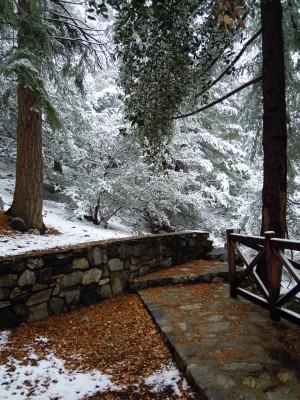
It's cold.
Breathing in icy, pine-scented air cleans your lungs of all the particulates left behind by dirty air. Or at least it feels like it.
It's easier to walk the loop in low-top sneakers in dry conditions than it is to walk it in high-top snow boots through slush and snow.
No matter how long you put off going outside to bring in firewood, it will always—always—start snowing harder once you finally put your boots on and go outside. And the minute you finish the chore, the snow will let up.
Walking through the forest when it is enshrouded in cloud still reminds me, after all these years, of the book I read as a child, in which a young girl is visited by magic ponies that appear—in colors of pale blue and green and lavender—only when there is heavy fog. I still look for them just beyond the trees.
Apparently my body is made of rubber. Yesterday I took one step down my front stone steps and slipped on the ice, falling onto my back against the steps. My first thought was, 'I wonder if my back is broken.' I sat on the steps until I could take an inventory of all my parts, then got up. My neck is a bit stiff today, and my left hip hurts. But I think I'm fine. Amazing, given how hard I fell. Maybe it's that (almost) daily yoga that keeps me flexible enough to bounce. Does that mean if I keep doing it I'll still be flexible in twenty years, when I'm almost 80?
The secret reason—and please don't tell anyone—the secret reason I love walking in a snowfall is that it makes me feel like I live in a snow globe. It's quiet and peaceful and safe, immured inside the bubble, with only the tiny flakes falling. In that state of being, I can pretend I live in a world where banks don't steal houses, psychopaths don't rise to power and commit genocide, people don't steal children, and there are no earthquakes, hurricanes, tornadoes or wildfires. Just peace.

October 30, 2011
True story
Yesterday morning I dropped the truck off to get her winter boots on. My son picked me up and we headed out to Oak Glen to have breakfast at Apple Annie's, walk off our potatoes and apple pie along the nature trails at Los Rios Rancho, and pick up some Honey Crisp apples and apple cider. As he drove, I told him how well I'd slept the night before, a conversation which progressed into the not-fond memories of waking up to shots being fired in our old Rancho Cucamonga neighborhood. Such things were a regular occurrence back then. Since I've lived here on the mountain, I've never experienced that sort of rude awakening. Friday night was no different; I read until I was sleepy, then pulled the covers up, cat snuggled lovingly along my side, and fell into a deliciously deep sleep.
Which is why, I suppose, I never heard the shouting or the commotion or the fire engine siren right outside my cabin.
When I returned yesterday, Neighbor Eric came out to apologize if I'd been disturbed the night before.
"No, no," I assured him. "I had the best sleep—"
"We had a chimney fire," he said. "Baldy Fire was here, lights and sirens. They parked between our cabins. You really didn't hear anything?"
I really didn't hear anything.
Maybe it has to do with the double-paned windows in the loft. More likely, it has to do with how safe I feel, tucked away in this canyon, away from all the predators in the flatland.

October 23, 2011
Ben at 17
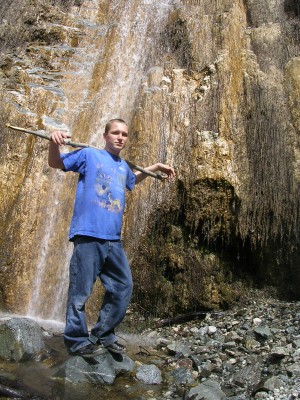
On the day of my grandson's twelfth birthday, I picked him up at his dad's to take him to dinner.
"How are you, Nana?" he asked politely as he climbed into my truck.
"I'm a little sad, Ben," I told him with a sigh.
"Sad? Why? You should be happy. It's my birthday!" His voice held all the innocent concern of a pre-teen boy before the voice change.
I explained to him my sadness came from knowing I had only one year left before he would turn into an ass, that as a teenager he probably wouldn't want to hike with me any more nor would he deign to hug me in public. He was thoughtful for only a moment before replying.
"If you promise not to be sad, I promise I'll try"—here he stressed the operative verb try—"not to be an ass when I turn into a teenager, and I promise I'll still hike with you and hug you. I'll always hug you. You're my Nana."
"Promise?"
"Promise."
Within days of this writing, he will turn seventeen. And I am here to say that he has kept his promise—he has no qualms about hugging me in public, and he really has tried not to be an ass as a teenager. (His mother might see things differently, but then, she has to live with him. I don't.) Actually, he has turned out to be an extraordinary young man, one who loves animals (in particular, wolves), is articulate, polite and personable when meeting new people, and is not reticent to be outspoken on a number of issues, including and especially gay rights. No, he's not gay; he has been in love with a girl (who was too needy for his free spirit), out of love, and back in again, and he's comfortable in his own skin. Just don't say anything anti-gay around him, or you will glimpse a bit o' the Irish blood passed down to the boy from his great-grandfather.
As for hiking, it is what we do nearly every time we're together, and while I hike often alone, these hikes with Ben have been my most memorable. Recently he walked the loop with me and we admired the brilliant yellow leaves of the elms as they turn now for autumn. Then as dusk came on we watched for bats and were rewarded by counting more than we've ever seen before.
In spite of being a physical kid—he was on his high school wrestling team for awhile and he does Parkour—he is also cerebral, reading every YA book I pass on to him (from Harry Potter to Eragon in his younger days to now the Gone series and I Am Number Four) in a matter of days. He understands literature in a way most of my students do not, and he can converse intelligently about plot, character motivation and other elements of fiction. But I attribute that to his mother's influence….
When I moved to the mountain, Ben's chores when he was here with me were minimal:
Help me bring in wood.
Hold the ladder.
Stand on that branch while I cut it.
Four short years later, he is my equal as I tell him:
Bring in some firewood and start a fire.
Use the saw and cut up those branches.
Climb up on the roof and take down the spark arrestor.
Back the truck up over here.
He is a very good driver.
Some weeks ago, he and his mom were going through some things she had kept for him, and he came upon a copy of the Christian Science Monitor. When he asked her why this had been saved as a keepsake, she pointed out the essay I'd written about him for the Home Forum page: "Boy, Uninterrupted." I wrote it when he was ten, on the day I had taught him how to skip rocks—a skill he has perfected and still engages in. It was my first piece for the Monitor, and it established a great writer-editor relationship for me. Of course, he had never read it, so upon discovering it, he called me to talk about it. And it brought back all the memories of that day… standing on the banks of the Santa Ana River under a shady tree, rejoicing in the blessing of some quality time with this magical boy. I worried, when he was twelve, that he would lose his magic, that the power of his pure, untainted heart would be diminished by the harsh lessons of adolescence. The truth is, he grows ever more magical with every year that passes, ever more comfortable in his skin and his perspective on the world, ever more skillful at skipping rocks… just for the sheer joy of it.
[image error]

September 11, 2011
Remembering 9-11
On the morning of September 11, 2001, I rose at 4:00a.m., walked the dogs, read the local paper while I had a cup of tea, and then got ready for work. What was unusual for me that day was that I didn't turn on the radio while getting dressed after my shower. Something—whatever it was—had me deep in thought that day. I have no idea what it was.
Finally, as I rolled out of the driveway and headed to work, I tuned in to an L.A.-based AM news station, KFWB. 'We are getting initial reports that planes have hit #1 and #2 towers of the World Trade Center….' What? Wait. What? I found myself leaning forward, turning up the volume. I tried to imagine the scenario; a military training mission gone horribly wrong? Did he say "planes"? Both towers? The standard program formatting of news-weather-traffic-sports had been suspended. The station managers in Los Angeles were trying desperately to connect with eyewitnesses across the country, trying to verify wire service reports that seemed impossible to believe.
I was halfway to work when they went live with a reporter on the ground in New York City. His first report: One of the Twin Towers had collapsed.
"What?" This time I said it aloud. I was certain what he'd heard was in error, that people were overreacting to some big explosion, that the news anchors would update the story soon to assure everyone that the building was still standing.
And then came the report that the second tower had collapsed. I'd been driving at a snail's pace, trying to hear as much as I could before I got to work. Now my foot hit the accelerator and I sped to Jurupa Valley High School, where I taught at the time. Immediately upon arriving, I headed for the teacher's lounge to validate what I was hearing. Someone had brought in a cart with a TV. Teachers were gathered around it, watching in horror. Some were crying. No one spoke. We watched until the bell dispersed us.
On the way to class, I stopped by the principal's office to ask if I could bring students to the lounge during the third period of the day—my Journalism class. Yes, I was told, as long as they were respectful.
Several students were absent in my first period class. I suspended my planned lesson.
"Are you alright?" I asked my freshmen. "You aren't scared, are you?"
Yes, they told me candidly. They were frightened and worried and rumors had already spread across campus that the L.A. area would be targeted next. I spent the hour reassuring them, told them what I'd heard already of flights across the country being canceled, airports and train stations shut down. While I spoke calmly to them my heart was racing. My son worked in the L.A. area. I hadn't heard from him.
"We're going to be alright here," I told them, hoping that what I told them was the truth. We had a similar discussion in Period 2. At some point in the first hours, my daughter called my classroom, and she told me she'd been watching the scenes on television. I remember needing to hang up, to get back to my class, but not wanting to sever the connection between us. We weren't really saying anything other than how horrible it all was, but as long as I could hear her voice, I knew that she was safe.
When my Journalism students arrived, I explained that we'd been given special permission to sit in the lounge for the class period and watch the news coverage, assuring them that they weren't required to stay if what they saw was too disturbing. I warned them to be respectful of the teachers who would be seeking sanctuary in their grief.
We filed in without saying a word, found seats and sat glued to the horrific images for nearly an hour. Behind me, I could hear the heavy door open and close behind me as others came in to watch, but not a single word was spoken during the hour. Someone at the back of the room was crying. It was the only sound we heard apart from the stunned voices of the reporters. When the bell rang, my students picked up their backpacks and walked out silently.
Somehow, we all kept putting one foot in front of the other to make it through that day. My teacher-heroes set aside their mathematics and literature and science lessons for the day and simply talked to their students about history and war and the meaning of terrorism.
At home finally, I gathered with my own children around the television and we continued watching for hours. By now, stories of heroism and tragedy were being documented. And the news clips of relatives looking for loved ones were being broadcast. We watched… and cried… and watched… and I told them they might have to sleep on the living room floor with me, as I didn't think I could bear to let them out of my sight. Finally, though, I went to my room because as a writer, I felt I needed to document what had happened and my response to it. I sat with pen in hand, staring at a blank page until I fell asleep from exhaustion.
I didn't write about the attack until four days later. I couldn't. Sometimes the sadness simply goes too deep to be gotten at with words. I spent the first days playing my guitar, singing songs of grief… and hope… and trying to process the insanity of it.
Of course, the event changed me, as it changed most of us.
In the weeks following, I wrote countless emails to close friends. I used the words "I love and appreciate you" over and over. I wanted my friends to know how much they meant to me… just in case.
And when I went to work each day, I told my students that I loved them. I have continued to do so since that time. Looking into their faces on September 11th, seeing the fear and anxiety there, hearing their stories of teachers who had hugged them or put an arm around them or told them they were safe here inspired me to work harder to let every student know; I will do my best to keep you safe in mind and spirit and body. It is a powerful responsibility we have been charged with as teachers, and I take it more seriously now than I ever have.
I invite you to comment here with your own remembrance of the day... lest we ever forget....


Finally, as I rolled out of the driveway and headed to work, I tuned in to an L.A.-based AM news station, KFWB. 'We are getting initial reports that planes have hit #1 and #2 towers of the World Trade Center….' What? Wait. What? I found myself leaning forward, turning up the volume. I tried to imagine the scenario; a military training mission gone horribly wrong? Did he say "planes"? Both towers? The standard program formatting of news-weather-traffic-sports had been suspended. The station managers in Los Angeles were trying desperately to connect with eyewitnesses across the country, trying to verify wire service reports that seemed impossible to believe.
I was halfway to work when they went live with a reporter on the ground in New York City. His first report: One of the Twin Towers had collapsed.
"What?" This time I said it aloud. I was certain what he'd heard was in error, that people were overreacting to some big explosion, that the news anchors would update the story soon to assure everyone that the building was still standing.
And then came the report that the second tower had collapsed. I'd been driving at a snail's pace, trying to hear as much as I could before I got to work. Now my foot hit the accelerator and I sped to Jurupa Valley High School, where I taught at the time. Immediately upon arriving, I headed for the teacher's lounge to validate what I was hearing. Someone had brought in a cart with a TV. Teachers were gathered around it, watching in horror. Some were crying. No one spoke. We watched until the bell dispersed us.
On the way to class, I stopped by the principal's office to ask if I could bring students to the lounge during the third period of the day—my Journalism class. Yes, I was told, as long as they were respectful.
Several students were absent in my first period class. I suspended my planned lesson.
"Are you alright?" I asked my freshmen. "You aren't scared, are you?"
Yes, they told me candidly. They were frightened and worried and rumors had already spread across campus that the L.A. area would be targeted next. I spent the hour reassuring them, told them what I'd heard already of flights across the country being canceled, airports and train stations shut down. While I spoke calmly to them my heart was racing. My son worked in the L.A. area. I hadn't heard from him.
"We're going to be alright here," I told them, hoping that what I told them was the truth. We had a similar discussion in Period 2. At some point in the first hours, my daughter called my classroom, and she told me she'd been watching the scenes on television. I remember needing to hang up, to get back to my class, but not wanting to sever the connection between us. We weren't really saying anything other than how horrible it all was, but as long as I could hear her voice, I knew that she was safe.
When my Journalism students arrived, I explained that we'd been given special permission to sit in the lounge for the class period and watch the news coverage, assuring them that they weren't required to stay if what they saw was too disturbing. I warned them to be respectful of the teachers who would be seeking sanctuary in their grief.
We filed in without saying a word, found seats and sat glued to the horrific images for nearly an hour. Behind me, I could hear the heavy door open and close behind me as others came in to watch, but not a single word was spoken during the hour. Someone at the back of the room was crying. It was the only sound we heard apart from the stunned voices of the reporters. When the bell rang, my students picked up their backpacks and walked out silently.
Somehow, we all kept putting one foot in front of the other to make it through that day. My teacher-heroes set aside their mathematics and literature and science lessons for the day and simply talked to their students about history and war and the meaning of terrorism.
At home finally, I gathered with my own children around the television and we continued watching for hours. By now, stories of heroism and tragedy were being documented. And the news clips of relatives looking for loved ones were being broadcast. We watched… and cried… and watched… and I told them they might have to sleep on the living room floor with me, as I didn't think I could bear to let them out of my sight. Finally, though, I went to my room because as a writer, I felt I needed to document what had happened and my response to it. I sat with pen in hand, staring at a blank page until I fell asleep from exhaustion.
I didn't write about the attack until four days later. I couldn't. Sometimes the sadness simply goes too deep to be gotten at with words. I spent the first days playing my guitar, singing songs of grief… and hope… and trying to process the insanity of it.
Of course, the event changed me, as it changed most of us.
In the weeks following, I wrote countless emails to close friends. I used the words "I love and appreciate you" over and over. I wanted my friends to know how much they meant to me… just in case.
And when I went to work each day, I told my students that I loved them. I have continued to do so since that time. Looking into their faces on September 11th, seeing the fear and anxiety there, hearing their stories of teachers who had hugged them or put an arm around them or told them they were safe here inspired me to work harder to let every student know; I will do my best to keep you safe in mind and spirit and body. It is a powerful responsibility we have been charged with as teachers, and I take it more seriously now than I ever have.
I invite you to comment here with your own remembrance of the day... lest we ever forget....

August 11, 2011
Playing. Again.
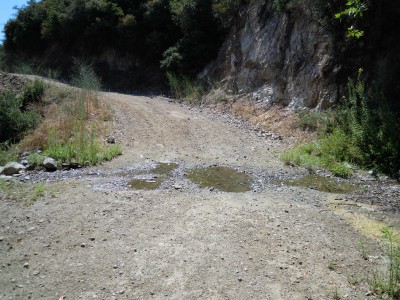
What happens to me when I ride my bike is a miracle, an absolute miracle, I tell you. Nothing short of. It's like getting in a time machine. The longer I ride, the younger I feel. Seriously. When was the last time you bombed a downhill? And splashed through water at the bottom? In shorts, so the water sprinkled over your hot dusty legs? And did it fast enough to pull yourself up the other side? And flew right past a rattlesnake while you did so?
OK, well, I confess that last bit about the snake was an embellishment, but still. There is a certain element of danger in mountain biking alone on a little-used trail. I kept looking over my shoulder for mountain lions.
I hope you haven't forgotten the exhilaration of it, how you felt as a kid, whether you were a playing-cards-in-the-spokes kind of guy, or a sedate lady pedaling her powder blue Schwinn on a quiet Sunday afternoon.
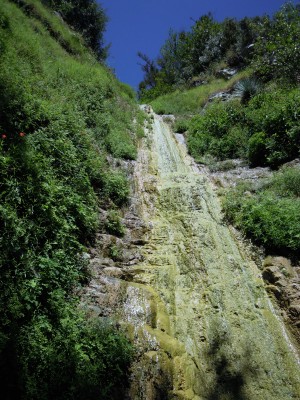
I love it so much, you'd think I would ride more often. I own a Gary Fisher Rock Hopper with gnarly tires and front suspension. OK, now you're thinking, 'Why don't you ride it more often?' I've been telling The Grandson for a year I would take it in to the shop, get the back tire repaired, have it tuned up. And I finally did it this week. Booyah! Of course I had to give it a test run, so I took it out to Cow Canyon and rode it out to the Secret Waterfall. (Photo below.) Didn't see a single person on the trail. Ah, solitude.
I have a Trek hybrid, too, that I love even more than the mountain bike. On a whim the other day, I put it in the truck and drove down to Yorba Linda Regional Park. The Santa Ana River bike trail begins east of the park, but you can park inside for a nominal fee and hit the trail from the park's perimeter. It's a fascinating experience. The trail runs along the Santa Ana River as it trundles along to the sea. (And you can ride the bike trail all the way to the ocean; it's only about 20 miles from the park in Yorba Linda.) What's amazing is what you see. In the distance, there's the 91 freeway. Not interesting at all—though the morning of my ride, traffic was backed up for miles, moving at a snail's pace, and I couldn't stifle the urge to chuckle and gloat. Bad karma, I know, but having been in that spot so many times, I couldn't suppress the joy of not being there on a cool, sunlit morning as I rolled along the asphalt trail above the river.
And on the river were seabirds. I saw snowy egrets first. "Wow," I said aloud. "Snowy egrets!" Then I saw a heron. And a cormorant. "No way!" I said aloud. "A cormorant!" And a sandpiper. And a plover, hovering over the water, then diving in for something delectable. The grandest sight of all was the Great Blue Heron. They are huge, and so majestic, standing in the shallow water, beaks poised, ready to strike as soon as they see a crawdad or snake or anything else edible. I stopped when I saw the first one. And I stopped when I saw the second one about a mile further on. And then I stopped stopping and stopped counting and just got happier every time I saw another one. For a long time, the Great Blues were endangered, and were a rare sight in California, a very rare sight in SoCal. But they've decided to make a comeback. Yes, I know we dirty up the air and the water, and it's so dang noisy what with the cars everywhere, but Southern California is still a nice place to live. So… thanks for staying, I want to tell them. Instead I just smile and pedal away.

July 29, 2011
Grasshopper
Fifteen years or so ago I taught my first English 1A class at Chaffey Community College. In that class was a young man by the name of Martin Lastrapes. Martin was nearly fresh out of high school, unsure of what he wanted to do in life, a quiet, soft-spoken, dark-eyed young man who said little in class but made up for it in his essays.
My job was to teach them the fundamentals of writing, so that my students would go on to express themselves successfully for the duration of their college years and perhaps beyond. But I also wanted them to become engaged in the writing, to understand it as a vehicle of self-expression at least, an artistic creation at best. So I assigned such topics as "Describe the last time you cried" and "What is the most frightening experience you've ever had?"
I had 36 students in that first class. That's a lot of essays to grade on a Sunday afternoon. And back then, I was a pretty slow grader. It's a grueling process, working one's way through a stack of papers that represent, for the most part, a half-hearted effort to complete an assignment which is seen as merely another hoop to jump through in the circus performance of getting a college degree. Marking the myriad of errors was tedious, to say the least.
Early on in the semester I learned to put Martin's essays on the bottom of the pile—so that I would have something to look forward to as I slogged through the rest of the batch. He wrote with a quirky, personable style that I really enjoyed, part comedic, part earnest sincerity that was simply endearing. And I don't think he was really trying to accomplish this; it was coming from his own innate artistic expression. To encourage him, I wrote small comments in the margins of his paper: "This made me laugh!" and "Love the way you express this!" and finally "You could be a writer, Martin." It was the same thing my fourth grade teacher, Mrs. Walton, had told me, the one statement that sent me on my way to being the writer I am today.
The semester ended, and quiet Martin went on his way. Five years later I received an email from him. It said, in part:
Kay,
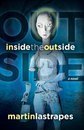
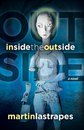
There is an awfully good chance that you won't remember me… I went into your class without much direction and you encouraged me to be a writer. Believe it or not, your encouragement was extremely influential. Nobody had ever isolated my writing as something worth exploring before you. Since then I graduated from Chaffey and recently got my B.A. in English. I'm going to start my journey toward a master's in English Composition this Fall…. As far as writing goes, I worked as a fiction editor for the Pacific Review and I was invited to read one of my short stories at the Cal Poly Writers Conference in March of 2003. I write all of the time, and I cannot imagine a life without it.All of this is preface to the announcement that Martin—my stellar student of fifteen years ago, that kid who sat quietly on one side of the classroom wondering where life would take him—has just published his first novel, Inside the Outside. "Proud of him" isn't adequate to describe my feelings about this recent accomplishment. Martin has been teaching college for some years, but having read an advance copy of his new book, I can see that his future truly lies in written expression.
And of course, this is yet another reminder to me of what teachers must always remember: Even the most casual comment—whether positive or negative—can have a lasting effect on a student.

My job was to teach them the fundamentals of writing, so that my students would go on to express themselves successfully for the duration of their college years and perhaps beyond. But I also wanted them to become engaged in the writing, to understand it as a vehicle of self-expression at least, an artistic creation at best. So I assigned such topics as "Describe the last time you cried" and "What is the most frightening experience you've ever had?"
I had 36 students in that first class. That's a lot of essays to grade on a Sunday afternoon. And back then, I was a pretty slow grader. It's a grueling process, working one's way through a stack of papers that represent, for the most part, a half-hearted effort to complete an assignment which is seen as merely another hoop to jump through in the circus performance of getting a college degree. Marking the myriad of errors was tedious, to say the least.
Early on in the semester I learned to put Martin's essays on the bottom of the pile—so that I would have something to look forward to as I slogged through the rest of the batch. He wrote with a quirky, personable style that I really enjoyed, part comedic, part earnest sincerity that was simply endearing. And I don't think he was really trying to accomplish this; it was coming from his own innate artistic expression. To encourage him, I wrote small comments in the margins of his paper: "This made me laugh!" and "Love the way you express this!" and finally "You could be a writer, Martin." It was the same thing my fourth grade teacher, Mrs. Walton, had told me, the one statement that sent me on my way to being the writer I am today.
The semester ended, and quiet Martin went on his way. Five years later I received an email from him. It said, in part:
Kay,
There is an awfully good chance that you won't remember me… I went into your class without much direction and you encouraged me to be a writer. Believe it or not, your encouragement was extremely influential. Nobody had ever isolated my writing as something worth exploring before you. Since then I graduated from Chaffey and recently got my B.A. in English. I'm going to start my journey toward a master's in English Composition this Fall…. As far as writing goes, I worked as a fiction editor for the Pacific Review and I was invited to read one of my short stories at the Cal Poly Writers Conference in March of 2003. I write all of the time, and I cannot imagine a life without it.All of this is preface to the announcement that Martin—my stellar student of fifteen years ago, that kid who sat quietly on one side of the classroom wondering where life would take him—has just published his first novel, Inside the Outside. "Proud of him" isn't adequate to describe my feelings about this recent accomplishment. Martin has been teaching college for some years, but having read an advance copy of his new book, I can see that his future truly lies in written expression.
And of course, this is yet another reminder to me of what teachers must always remember: Even the most casual comment—whether positive or negative—can have a lasting effect on a student.
July 13, 2011
Ordinary miracles
[image error]
My chariot awaits (to take me to dreamland)!(Note trusty cat companion in left foreground. Sugie loves the swing, too.)
I saw a fish yesterday. A speckled trout, to be precise. No, it wasn't online or in a fish tank. He was a wild fish. Well, I guess I mean, he was swimming "in the wild." He looked rather placid, a happy guy, if you want to know the truth, floating languidly at the bottom of a marshy pond, his tail fins slowly oscillating, much like my cat's tail. To see him was to see a miracle.
There is no lake in Mt. Baldy where I live. The mountain is filled with aquifers, though, and during the winter, it stores up snow and ice, then spends the spring and summer leaking as all that frozen water melts. We have waterfalls and rivulets, tiny streams and larger creeks (nothing big enough to be called a river).
When I first moved to the mountain four years ago, we'd been plagued by years of drought in Southern California. The mountain streams were no more than trickles. There were no fish to speak of. But in the past several years we've had a few good winters, and now we have water aplenty. And fish! It's a miracle!
Mr. Speckled Trout was just one of several miracles I've seen lately. I understand they may not be classified as "miracles" to everyone. Call them blessings, then.
Out for my morning walk several days ago, I saw two deer just down the road, camouflaged in a small oak grove near the firehouse. Word on the street is that they've been hanging around Bob and Jean Walker's cabin. (I would, too; there's a great wild-life-loving aura there.) We rarely get deer in this area, so it was nice to see them.
In the backyard a few days ago, getting a drink from the small dish of water I leave out for whoever wants it, I had a lazuli bunting. I've got a hanging feeder, so I get chickadees, nuthatches, black-headed grosbeaks (all dressed up for Halloween), acorn woodpeckers, one lone titmouse and our ever-present Stellar's jays. But in four years, I've never had a lazuli bunting. If you click on the link, you will see a gorgeous photo by photographer Larry Thompson. These birds are a beautiful shade of blue, much like the lapis lazuli that is found in only two places in the U.S.—Colorado and here in Mt. Baldy. Another miracle! Mr. Bunting didn't stay long, but he did come back the next day for a drink, so I've got my eye out for him.
My days lately have been spent alternately working on the dog book and watching the Tour de France before dawn, then taking long walks in the forest mid-morning, then coming home to my beloved porch swing, where I read, write or simply curl up and sleep, my face on one side nestled against the soft cotton blanket, on the other warmed by sunrays filtering through the branches overhead. Yesterday's walk took me down into San Antonio Canyon, along a trail that follows old, washed out Mt. Baldy Road. It's a great hike, with steep canyon walls to the east, the stream gushing along beside them, and an oak lined path… which eventually led to the marsh where I sat among the cattails watching the fish and the tiny rufous hummingbirds (which periodically employed strafing missions to try to get me to leave their nesting area). They are feisty and beautiful and yes, to my mind, miraculous.
All of this walking made me quite sleepy, of course, so upon my return, I had to spend some moments dozing on the swing. The only sound outside for hours was birdsong. As I drifted in and out of sleep, I found myself picking out the individual calls, matching song with bird, sheltered above by the green canopy of oak leaves, crystal blue sky beyond. As one bird call became more and more persistent, I slowly drifted back up to wakefulness, realizing it was the red-shafted flicker. Mr. Flicker is extremely reclusive. A type of woodpecker, he stays high in the treetops, dressed in his polka-dot pajamas, and I rarely get a glimpse of him. In fact, it took me two years to match call to bird when I first moved to the cabin. But yesterday I heard him clearly, shouting away for some reason. And when I did eventually wake fully and open my eyes, there he was, sitting in the branches directly above me. Call it what you will. I'm calling it a miracle.
I saw a fish yesterday. A speckled trout, to be precise. No, it wasn't online or in a fish tank. He was a wild fish. Well, I guess I mean, he was swimming "in the wild." He looked rather placid, a happy guy, if you want to know the truth, floating languidly at the bottom of a marshy pond, his tail fins slowly oscillating, much like my cat's tail. To see him was to see a miracle.
There is no lake in Mt. Baldy where I live. The mountain is filled with aquifers, though, and during the winter, it stores up snow and ice, then spends the spring and summer leaking as all that frozen water melts. We have waterfalls and rivulets, tiny streams and larger creeks (nothing big enough to be called a river).
When I first moved to the mountain four years ago, we'd been plagued by years of drought in Southern California. The mountain streams were no more than trickles. There were no fish to speak of. But in the past several years we've had a few good winters, and now we have water aplenty. And fish! It's a miracle!
Mr. Speckled Trout was just one of several miracles I've seen lately. I understand they may not be classified as "miracles" to everyone. Call them blessings, then.
Out for my morning walk several days ago, I saw two deer just down the road, camouflaged in a small oak grove near the firehouse. Word on the street is that they've been hanging around Bob and Jean Walker's cabin. (I would, too; there's a great wild-life-loving aura there.) We rarely get deer in this area, so it was nice to see them.
In the backyard a few days ago, getting a drink from the small dish of water I leave out for whoever wants it, I had a lazuli bunting. I've got a hanging feeder, so I get chickadees, nuthatches, black-headed grosbeaks (all dressed up for Halloween), acorn woodpeckers, one lone titmouse and our ever-present Stellar's jays. But in four years, I've never had a lazuli bunting. If you click on the link, you will see a gorgeous photo by photographer Larry Thompson. These birds are a beautiful shade of blue, much like the lapis lazuli that is found in only two places in the U.S.—Colorado and here in Mt. Baldy. Another miracle! Mr. Bunting didn't stay long, but he did come back the next day for a drink, so I've got my eye out for him.
My days lately have been spent alternately working on the dog book and watching the Tour de France before dawn, then taking long walks in the forest mid-morning, then coming home to my beloved porch swing, where I read, write or simply curl up and sleep, my face on one side nestled against the soft cotton blanket, on the other warmed by sunrays filtering through the branches overhead. Yesterday's walk took me down into San Antonio Canyon, along a trail that follows old, washed out Mt. Baldy Road. It's a great hike, with steep canyon walls to the east, the stream gushing along beside them, and an oak lined path… which eventually led to the marsh where I sat among the cattails watching the fish and the tiny rufous hummingbirds (which periodically employed strafing missions to try to get me to leave their nesting area). They are feisty and beautiful and yes, to my mind, miraculous.
All of this walking made me quite sleepy, of course, so upon my return, I had to spend some moments dozing on the swing. The only sound outside for hours was birdsong. As I drifted in and out of sleep, I found myself picking out the individual calls, matching song with bird, sheltered above by the green canopy of oak leaves, crystal blue sky beyond. As one bird call became more and more persistent, I slowly drifted back up to wakefulness, realizing it was the red-shafted flicker. Mr. Flicker is extremely reclusive. A type of woodpecker, he stays high in the treetops, dressed in his polka-dot pajamas, and I rarely get a glimpse of him. In fact, it took me two years to match call to bird when I first moved to the cabin. But yesterday I heard him clearly, shouting away for some reason. And when I did eventually wake fully and open my eyes, there he was, sitting in the branches directly above me. Call it what you will. I'm calling it a miracle.
June 30, 2011
Missing Mizzou
[image error]
Photo by Ginger Collins-Justus
One week ago I landed in St. Louis at 4:30p.m. and by 8:00p.m. I was standing in a small family cemetery in Robertsville, watching lightning bugs dance just above the recently mown grass and listening to Marc Houseman tell me the tragic tale of the Finney family. People in California often chuckle when I tell them that I spend a great deal of my time while visiting Missouri just wandering around old graveyards. Mostly, they think I'm kidding. I understand why; most of our graveyards here are simply expansive acres of grass, with perhaps a tree planted here or there. We have little of the sense of place and history that folks in the mid-west, who've often lived their entire lives in the same town, do. I still remember my first visit to Missouri, driving down the highway with my mother in a small rental car and seeing a 'real' cemetery with above ground monuments. I pulled over, jumped out, and ran to look at headstones, snapping pictures right and left. There were birth and death dates in the 1800's. Imagine that! Mom remained in the car, nonplussed at the diversion from our course. There was nothing novel there for her, having been raised on a farm in Missouri. But I could have spent hours just reading the names and epitaphs on the headstones, immersed in the imagined history of the deceased.
When I travel to cemeteries with Marc, I often don't have to imagine the history; he is a walking directory of "Here lies…" information, and can often tell me what the person did for a living, what family members are still in the community, and other details which honor the life of the departed. On this trip, I also had the privilege of wandering through several cemeteries and a mausoleum with Ginger Justus, who is working on, among other projects, the restoration of the Oak Grove Mausoleum in St. Louis. Like Marc, Ginger is devoted to the preservation of the history and beauty connected to places of burial, and she, too, is a fount of information. It is her photo that graces the top of my blog today.
On this trip to MO, I also met Betty Green, a fan of Tainted Legacy and a woman with a contagiously youthful spirit and vigor. Betty lives in Catawissa, the small town where my great-grandmother lived, back in the country by the Meramec River, where cardinals and other birds exotic to California flit around her outdoor feeders. Betty was gracious enough to invite me for a visit, and I had a great time chatting with her and her husband, Jim, who is an actual veteran of the Battle of the Bulge (and co-author of a book about it).
And I met Cody Jones, a young man who has grown up not with privileges but with courage. His story was inspiring. (He told it to me, in a self-effacing way, as we enjoyed pizza together at the Pizza Hut in Pacific.) Cody and I share a similar connection in that we are both still hopeful that "the right one" will come along someday, and I asked permission to adopt Cody's mantra of "I'd rather be alone than wish that I were." Amen, my young friend, amen.
I also had lunch with Brenda Wiesehan and toured the Pacific Plaza Antique Mall where she works. She has arranged to carry copies of Tainted Legacy in the store, so there will be an outlet in Pacific for them on a regular basis.
On my last night in Missouri, I spoke about Bertha Gifford at the Scenic Regional Library in Union. A great and gracious crowd gathered. One gentleman was kind enough to mention that his grandfather had worked for the Giffords at one time and ate many a meal at their table—and lived a long and healthy life, apparently. Another woman spoke up to say proudly that her father had been on the grand jury which indicted my great-grandmother. Amazing….
In our frenetic lifestyles here in Cali, we tend to overlook the fact that there are stories everywhere. Returning to Missouri every year gives me the opportunity to slow down—way down—and simply listen to some of them… or imagine them from the spare lines on tombstones.

One week ago I landed in St. Louis at 4:30p.m. and by 8:00p.m. I was standing in a small family cemetery in Robertsville, watching lightning bugs dance just above the recently mown grass and listening to Marc Houseman tell me the tragic tale of the Finney family. People in California often chuckle when I tell them that I spend a great deal of my time while visiting Missouri just wandering around old graveyards. Mostly, they think I'm kidding. I understand why; most of our graveyards here are simply expansive acres of grass, with perhaps a tree planted here or there. We have little of the sense of place and history that folks in the mid-west, who've often lived their entire lives in the same town, do. I still remember my first visit to Missouri, driving down the highway with my mother in a small rental car and seeing a 'real' cemetery with above ground monuments. I pulled over, jumped out, and ran to look at headstones, snapping pictures right and left. There were birth and death dates in the 1800's. Imagine that! Mom remained in the car, nonplussed at the diversion from our course. There was nothing novel there for her, having been raised on a farm in Missouri. But I could have spent hours just reading the names and epitaphs on the headstones, immersed in the imagined history of the deceased.
When I travel to cemeteries with Marc, I often don't have to imagine the history; he is a walking directory of "Here lies…" information, and can often tell me what the person did for a living, what family members are still in the community, and other details which honor the life of the departed. On this trip, I also had the privilege of wandering through several cemeteries and a mausoleum with Ginger Justus, who is working on, among other projects, the restoration of the Oak Grove Mausoleum in St. Louis. Like Marc, Ginger is devoted to the preservation of the history and beauty connected to places of burial, and she, too, is a fount of information. It is her photo that graces the top of my blog today.
On this trip to MO, I also met Betty Green, a fan of Tainted Legacy and a woman with a contagiously youthful spirit and vigor. Betty lives in Catawissa, the small town where my great-grandmother lived, back in the country by the Meramec River, where cardinals and other birds exotic to California flit around her outdoor feeders. Betty was gracious enough to invite me for a visit, and I had a great time chatting with her and her husband, Jim, who is an actual veteran of the Battle of the Bulge (and co-author of a book about it).
And I met Cody Jones, a young man who has grown up not with privileges but with courage. His story was inspiring. (He told it to me, in a self-effacing way, as we enjoyed pizza together at the Pizza Hut in Pacific.) Cody and I share a similar connection in that we are both still hopeful that "the right one" will come along someday, and I asked permission to adopt Cody's mantra of "I'd rather be alone than wish that I were." Amen, my young friend, amen.
I also had lunch with Brenda Wiesehan and toured the Pacific Plaza Antique Mall where she works. She has arranged to carry copies of Tainted Legacy in the store, so there will be an outlet in Pacific for them on a regular basis.
On my last night in Missouri, I spoke about Bertha Gifford at the Scenic Regional Library in Union. A great and gracious crowd gathered. One gentleman was kind enough to mention that his grandfather had worked for the Giffords at one time and ate many a meal at their table—and lived a long and healthy life, apparently. Another woman spoke up to say proudly that her father had been on the grand jury which indicted my great-grandmother. Amazing….
In our frenetic lifestyles here in Cali, we tend to overlook the fact that there are stories everywhere. Returning to Missouri every year gives me the opportunity to slow down—way down—and simply listen to some of them… or imagine them from the spare lines on tombstones.


![[image error]](http://2.bp.blogspot.com/-4cP9zOP_4qA/TqRWZxf7dBI/AAAAAAAAAKY/oCQL5pt6c6I/s1600/At+Kev%2527s+Ben.jpg)
![[image error]](http://4.bp.blogspot.com/-E1AXmZNBkCk/Th3swNEQ3QI/AAAAAAAAAJ4/jNOJ-2BXzfU/s1600/swing+%2526+Sug.jpg)
![[image error]](http://4.bp.blogspot.com/-h8NGjdzDiHk/Tgy-JDU2-yI/AAAAAAAAAJQ/cPKKUqx41NY/s1600/Girl+in+Bellefontaine+by+Ginger.jpg)