
S. Kay Murphy's Blog, page 22
July 22, 2016
A Glimpse of the Future
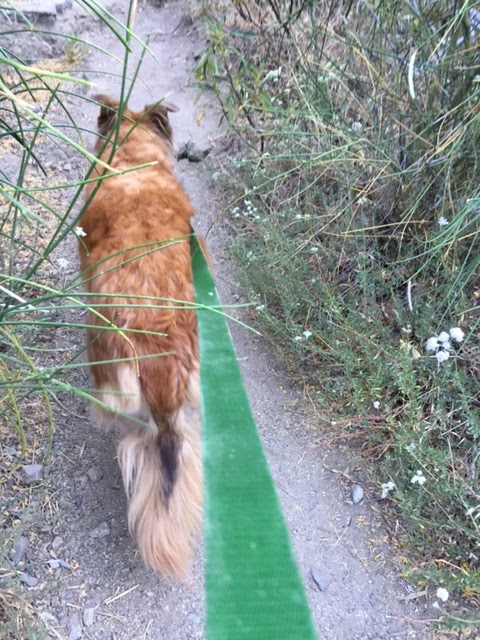
On several early mornings now, while driving Thomas at a snail’s pace up to the bike trail for our long morning walk, I have passed a very old man walking along the sidewalk on 7th Street. In his gnarled left hand, he holds the leash of a medium-sized dog, perhaps a terrier and cattle dog mix. The fingers of his right hand curl around the handle of a doll stroller, and he pushes it before them as he and the dog walk ever so slowly down the street.
Though I’ve seen them several times now, I haven’t been able to determine what’s in the doll stroller, but it looks like a small cooler, the type one would use to carry a bottle of water and perhaps a sandwich. Or possibly, if one had a worrisome wife or husband at home, extra medication… and contact information. I can only conjecture.
The dog is not an old dog. It is not stiff or plodding in its gait. It’s blocky, cattle dog head is held high, pointy ears straight up at attention. Its eyes are bright and clear as it surveys the landscape around them. One would think that such a dog would long to trot forward, sniff the grass, examine the shrubs along their route, and pee copiously. This dog does not. It matches its pace to the slow, methodical pace of the very old man as it marches majestically beside him.
My friends and I (those of us who love our dogs as if they are our children) wonder, “How will I walk my dogs when I am very old?” Let’s remember the doll stroller, shall we? If nothing else, it will offer something solid to lean on as we make our way down the road.


June 22, 2016
More on The Tainted Legacy of Bertha Gifford
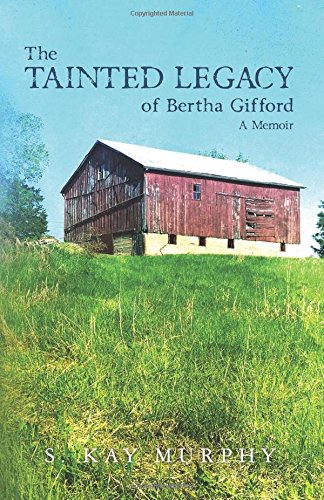
Bertha Gifford's first husband was Henry Graham (which would make him my great-grandfather) Recently I met a cousin with whom I am related through the Graham family. (Thank you, thank you, Ancestry.com.) Before we met, she had already learned of Henry's infamous wife and had read the new, independently published version of my book, The Tainted Legacy of Bertha Gifford.
When we met for lunch, Laurie didn't know anything about me other than what she'd read on my blog and that we shared great-great-grandparents. As we chatted about the book, though, I was struck by how similar our perspective on it was. She kept going back to the so-called "confession," the statement Bertha gave to Sheriff Georg regarding her personal use of arsenic as a medication and how she had administered it while acting as a volunteer nurse. Laurie's thought was this: If her intent had been murder, why would she readily volunteer this information? Wouldn't she instead try to deny it?
I come back to that point frequently myself, and I'm also quite sure that what Sheriff Georg asked her to sign was a statement summarizing what she'd said. Not until the statement was given to the press was it characterized as a "confession." Yep, we've all seen those true crime shows—48 Hours, Dateline, Cold Case Files—in which the perpetrator sits for hours in a small interrogation room being questioned repeatedly, and we all hope to see the moment in which the guilty individual will finally cave and come clean. This was not the case with Bertha. Sheriff Georg put her in a room alone and simply left her there for hours. I'm guessing by the time he finally returned and asked her for a statement about her use of arsenic, she was anxious to comply so that she could get back home to the farm and her husband, her son and her granddaughter (my mother). She never expected to be arrested based on the contents of that document.
Let me repeat what I've said countless times before: I make no attempt to exonerate her. I just want people to think through all of the known facts before making a judgment about her.
June 10, 2016
+1 Wherein I return without delay to my previous occupation after a thirty-year absence (of sorts)
I wasn't supposed to be a teacher. I knew from a young age that I had been gifted with the ability to write (a gift I do not take lightly), and I also knew that I was a damn fine horse trainer, patient as the day is long and able to get along better with most horses than I did with people. So my career goal in high school centered around those two endeavors. I thought if I could find the right partner in life, I could settle in to a routine which included working horses in the morning hours and writing in the afternoons. For a tiny space of time, I reached that goal—but then was thrust clean out of the end zone by life's capriciousness (if you'll forgive a football metaphor in a writer/horsewoman post).
When I found myself single at thirty with four kids and no child support from their daddy (the guy who said, "Let's have six!"), I knew I needed to do something quick, so I went back to school to get my teaching credential as teaching would afford me the most amount of time—winter break, spring break, summer break—with my children. When I took off my stay-at-home mom/writer hat and donned the mortarboard of academia, I'd already published one book (at the age of twenty-three) and was smack dab in the middle of writing a second. (That second book, which I abandoned during my divorce, would have been a good one... but was never finished.)
In all fairness, I can't say I haven't been writing in the past thirty years. I have. I've had three more books published, and I've seen my work in national periodicals such as The Writerand the Christian Science Monitor, in addition to the Los Angeles Times. (Yay me!) But one of those books was written in the short span of a ten-week summer break. Another, the YA novel, was written in just thirty days during NaNoWriMo. So the writing has been on the back burner while teaching has been my day job.
Yesterday, I carefully removed all the remaining bobby pins from my mortarboard and wrapped it up in metaphorical plastic to be stored forever as a memento of the job I came to love so much it stopped being a "job" years ago.
And today I woke at 4:00 (old habits die hard), crawled out of bed (carefully, as Purrl will sink her claws into my leg to keep me in bed like a sleepy teen slamming the snooze button), pulled on a comfortable old pair of cargo pants and a t-shirt, and set my writer's hat jovially, insouciantly, enthusiastically and passionately upon my head. Hallelujah! It still fits!
When I found myself single at thirty with four kids and no child support from their daddy (the guy who said, "Let's have six!"), I knew I needed to do something quick, so I went back to school to get my teaching credential as teaching would afford me the most amount of time—winter break, spring break, summer break—with my children. When I took off my stay-at-home mom/writer hat and donned the mortarboard of academia, I'd already published one book (at the age of twenty-three) and was smack dab in the middle of writing a second. (That second book, which I abandoned during my divorce, would have been a good one... but was never finished.)
In all fairness, I can't say I haven't been writing in the past thirty years. I have. I've had three more books published, and I've seen my work in national periodicals such as The Writerand the Christian Science Monitor, in addition to the Los Angeles Times. (Yay me!) But one of those books was written in the short span of a ten-week summer break. Another, the YA novel, was written in just thirty days during NaNoWriMo. So the writing has been on the back burner while teaching has been my day job.
Yesterday, I carefully removed all the remaining bobby pins from my mortarboard and wrapped it up in metaphorical plastic to be stored forever as a memento of the job I came to love so much it stopped being a "job" years ago.
And today I woke at 4:00 (old habits die hard), crawled out of bed (carefully, as Purrl will sink her claws into my leg to keep me in bed like a sleepy teen slamming the snooze button), pulled on a comfortable old pair of cargo pants and a t-shirt, and set my writer's hat jovially, insouciantly, enthusiastically and passionately upon my head. Hallelujah! It still fits!
June 9, 2016
1. And Done.
I carried my cell phone in the back pocket of my jeans today--like the kids--in order to live tweet through my last day of work. Until I realized it wasn't. So I just used it to note all the things I'm not going to miss about teaching high school:
I'll never sit at the light at Euclid and 11th street--whether on my bike or in the truck--at 7:10a.m. watching mothers on their cell phones, waiting for the light to change, oblivious to the kids and skateboards and bikes around them, oblivious to the horrible example they're setting for the teen they're taking to school who will be driving soon.
I'll never endure another Back-to-School night.
I'll never again sit in my room alone after school grading essays during finals week while all my colleagues and friends in the art and voc ed department run off gleefully to have lunch together.
I'll never have to try to carefully compose a "professional" response to a parent's rude and accusatory email.
The list goes on.
People have been telling me for days that I can now "sleep in!" but the truth is, I'm an early riser and will continue to be so in retirement (just not at 4:00a.m., which has been the case for the past fifteen years).
I realized this morning that really, this isn't my last day of "work." That day happened a long, long time ago, and I'll never be able to put my finger on which one it was, but after years of teaching, it just ceased to feel like work. The campus was a place I went to every week day to hang out with teenagers, share some insights into literature, provide guidance and support where needed, and do some paperwork. In exchange for that, I received a paycheck once a month, and I never stopped being amazed and grateful when I did.
So there was no big sigh of relief when the final bell rang today, no celebratory shout of "Woo hooooo!" emanating from my portable classroom. In fact, my room was so instantly flooded with kids coming by to wish me well, it hardly seemed like an end to anything. Just more of the same good stuff I've been privileged to experience for the last twenty-seven years.
I'll never sit at the light at Euclid and 11th street--whether on my bike or in the truck--at 7:10a.m. watching mothers on their cell phones, waiting for the light to change, oblivious to the kids and skateboards and bikes around them, oblivious to the horrible example they're setting for the teen they're taking to school who will be driving soon.
I'll never endure another Back-to-School night.
I'll never again sit in my room alone after school grading essays during finals week while all my colleagues and friends in the art and voc ed department run off gleefully to have lunch together.
I'll never have to try to carefully compose a "professional" response to a parent's rude and accusatory email.
The list goes on.
People have been telling me for days that I can now "sleep in!" but the truth is, I'm an early riser and will continue to be so in retirement (just not at 4:00a.m., which has been the case for the past fifteen years).
I realized this morning that really, this isn't my last day of "work." That day happened a long, long time ago, and I'll never be able to put my finger on which one it was, but after years of teaching, it just ceased to feel like work. The campus was a place I went to every week day to hang out with teenagers, share some insights into literature, provide guidance and support where needed, and do some paperwork. In exchange for that, I received a paycheck once a month, and I never stopped being amazed and grateful when I did.
So there was no big sigh of relief when the final bell rang today, no celebratory shout of "Woo hooooo!" emanating from my portable classroom. In fact, my room was so instantly flooded with kids coming by to wish me well, it hardly seemed like an end to anything. Just more of the same good stuff I've been privileged to experience for the last twenty-seven years.
June 8, 2016
2
In the midst of giving a final, grading yesterday's finals, continuing to pack up my room and writing letters of recommendation for students applying to summer programs in advance of their senior year, I was visited today by several favorites--Nico (please vote for him for Upland school board and city council), Allison, Crissy (aka "Scottie" as she is also the school mascot in the giant scottie dog costume), Mariah (who brought me not one but two red velvet cupcakes, oh my buddha!) and most poignantly, Desiree Dragna, teacher of freshmen and my replacement for next year.
Desiree came looking for "wisdom," as she put it, and I had to laugh. My joke with the Honors kids is that they were unfortunate enough to get me and not a "real" teacher. As the year progresses, some of them come to appreciate the fact that I am unconventional in my teaching. Not all, of course.
As I'm sure I've mentioned, this is my 27th year of teaching. OK, full disclosure: It's actually going to be 26.5. My first paid teaching assignment began after winter break at a tiny middle school in San Bernardino called Richardson Prep High. (Yes, it is a middle school.) In all my years of teaching, I've never met anyone else who has taught there. Until today. And there was Desiree, young and thin and pretty with long, brown hair. Wow. Except for the "pretty," that was me a few decades ago. Best of all, she is down to earth, unpretentious, and the minute she begins to talk about teaching, it's clear that she loves her job, loves the kids and, as she put it, feels Upland High School is her "home." She is absolutely perfect to take up where I left off with the Honors program and with my sweathogs as well. I had a lot of happy moments today (especially when eating those cupcakes), but this just absolutely made me feel at peace in leaving.
People have told me in recent weeks (when I've said I will miss the new crop of freshmen coming in) that it's ok; those kids don't know me, so they don't know what they're missing. I don't know about all that, but I have wondered who will be there to love them as I do. Desiree. Desiree already loves them and she hasn't even met them yet.
And we decided, Desiree and I, that while she may be the new kid now, she's going to hang in there and stay at Upland for a couple of decades, until everyone else with seniority over her retires or leaves the planet, at which point she'll be the one calling the shots. I wish her all the best. She's gonna be fantastic.
Desiree came looking for "wisdom," as she put it, and I had to laugh. My joke with the Honors kids is that they were unfortunate enough to get me and not a "real" teacher. As the year progresses, some of them come to appreciate the fact that I am unconventional in my teaching. Not all, of course.
As I'm sure I've mentioned, this is my 27th year of teaching. OK, full disclosure: It's actually going to be 26.5. My first paid teaching assignment began after winter break at a tiny middle school in San Bernardino called Richardson Prep High. (Yes, it is a middle school.) In all my years of teaching, I've never met anyone else who has taught there. Until today. And there was Desiree, young and thin and pretty with long, brown hair. Wow. Except for the "pretty," that was me a few decades ago. Best of all, she is down to earth, unpretentious, and the minute she begins to talk about teaching, it's clear that she loves her job, loves the kids and, as she put it, feels Upland High School is her "home." She is absolutely perfect to take up where I left off with the Honors program and with my sweathogs as well. I had a lot of happy moments today (especially when eating those cupcakes), but this just absolutely made me feel at peace in leaving.
People have told me in recent weeks (when I've said I will miss the new crop of freshmen coming in) that it's ok; those kids don't know me, so they don't know what they're missing. I don't know about all that, but I have wondered who will be there to love them as I do. Desiree. Desiree already loves them and she hasn't even met them yet.
And we decided, Desiree and I, that while she may be the new kid now, she's going to hang in there and stay at Upland for a couple of decades, until everyone else with seniority over her retires or leaves the planet, at which point she'll be the one calling the shots. I wish her all the best. She's gonna be fantastic.
June 7, 2016
3
It was my intention to count down the last five days of work, a 5, 4, 3, 2, 1 celebration of all the good things that came along with teaching. But who had time to write? I've been busy teaching, creating finals, grading essays and make-up work, to say nothing of cleaning out my classroom. (Where do I put all this memorabilia? I want to keep forever the notes, cards, drawings and goofy things for my desk kids have made for me over the years. I still have the tiny clay giraffe Diego Salas made for me a dozen years ago.)
So the days have gotten away from me. But then this happened today, which really spurred me on to document some of the wonderfulness:
As part of our regular celebration of poets and poetry, my Honors classes and I watched Dead Poets Society whenever we had a spare twenty minutes here and there. It took the entire year to finish it, but we did.
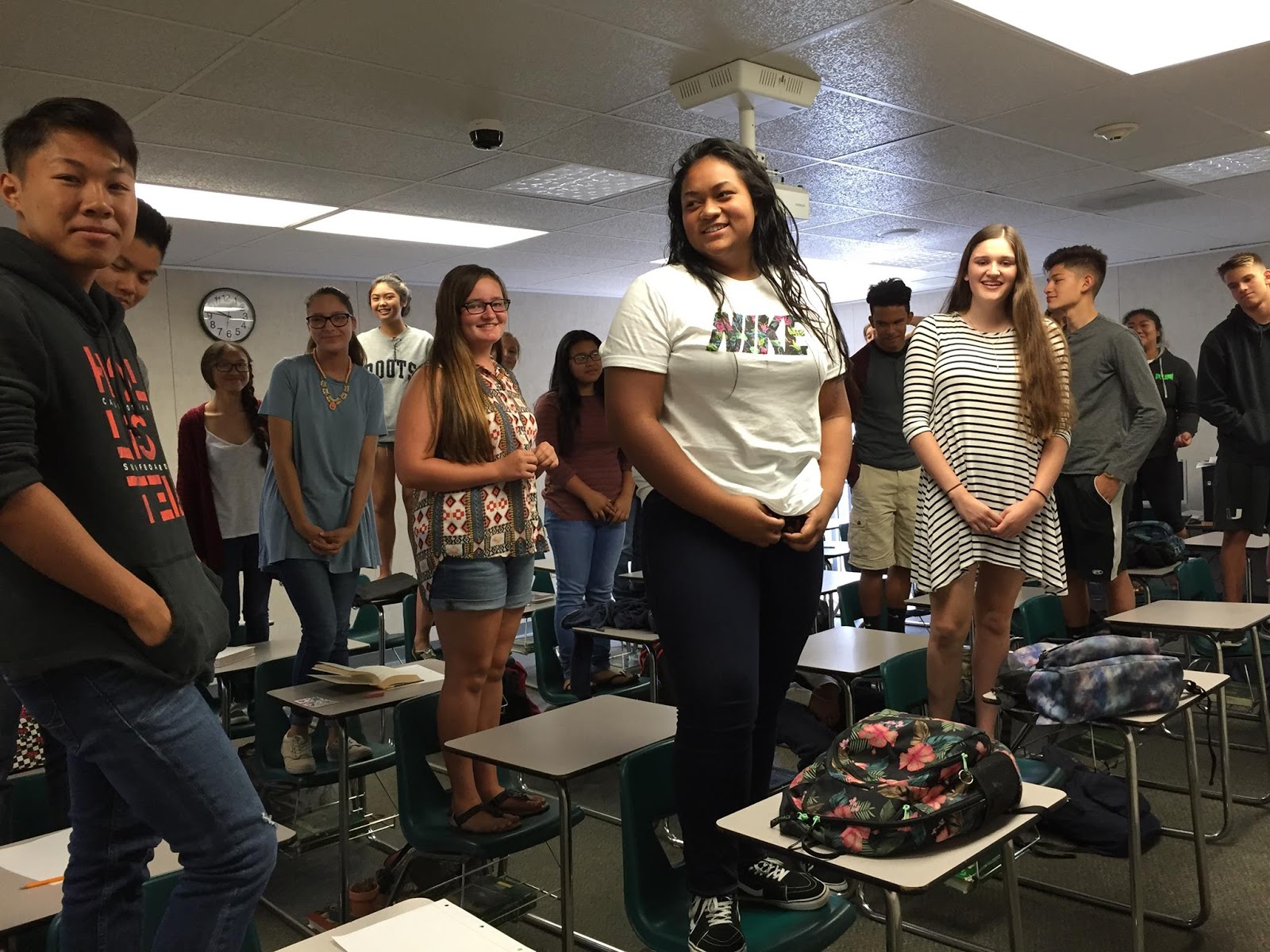
So today, at the end of Period One, when I collected all their finals and told them they had completed all work for the class (except for those who will still turn in re-writes tomorrow or the next day), there elapsed a second or two of silence. Then Steve got out of his seat, stood upon his desk and said, "O captain, my captain." Another second clicked off, then other students slowly got out of their desks and stood upon them, saying the same thing. By the third "O captain, my captain," I was nearly overwhelmed with emotion.
Pretty sure they have no idea how much I love them. They are amazing and wonderful.
And on Saturday, we had the Journalism banquet. Every year, after we've distributed the final newspaper for the school year, we all gather at a restaurant and share a meal and laugh over the highlights (and lowlights) of the past ten months. We had a particularly wonderful staff this year, with some funny, quirky new kids and of course, the seasoned veterans who make the paper great. Often, I feel like I'm herding cats or standing in a circus ring with a whip and a chair, trying to get the wild beasts to get their stories done. I scolded them a lot this year.
And what did they do in return? They gave me gifts.
They gave me two beautiful bouquets of flowers and a box of chocolates and a Starbucks gift card and an adorable stuffed giraffe—and a picture of me with the entire class that they had just taken two days before. It was mounted in a frame and around the matting they had all written personal notes. The only reason I didn't break down crying was that they'd had me laughing all evening. These, too, are amazing and wonderful kids.
One of the chores I had to do today was to return 36 copies of the freshman literature textbook to the library. They've been in my classroom for a decade. Two of my freshman favorites, Rosa and Denny, just happened to stop by my room after school. When I asked Rosa to help, she and Denny took over the job, pushing a cart over from the library, loading it up, then navigating the unwieldy vessel all the way back to the library.
More amazing and wonderful kids.
What will tomorrow bring?

May 1, 2016
This is why I teach poetry to high school students
Because I can teach all the literary devices I want them to learn throughout the year by using poems for examples:
Metaphor in "Dreams" by Langston Hughes:"For if dreams die, life is a broken-winged bird that cannot fly."
Repetition in the same poem:"Hold fast to dreams... Hold fast to dreams...."
Theme (with perhaps a life lesson thrown in):What is the poet saying here? Don't let go of your dreams or you become, in a sense, crippled, unable to move forward. Is there something important that you want to do in your life? Whatever it is, you can do it. The path to your goal may not proceed in a straight line, but keep that end destination in your sights; you'll get there. How did the poet know this? He lived it.
A more challenging theme in a different poem by Langston Hughes:"What happens to a dream deferred? Does it dry up like a raisin in the sun?"
Point of view and tone in "Bike Ride with Older Boys" by Laura Kasischke.(I do this one early in the year with my freshmen because I want them to learn that reading a poem is sometimes like unlocking a small cupboard door to find a bit of truth just sitting on the shelf, waiting to be discovered, and to show them that in poetry, titles can be an essential key.)The first line of the poem is this: "The one I didn't go on."The next two lines are: "I was thirteen/and they were older."In this poem I love "My afternoons/were made of time and vinyl" and "I have been given a little gift." We don't know what the gift is until we're nearly finished reading the poem. Some students are mystified by the lines "When I/stand up again, there are bits of glass and gravel/ground into my knees." They ask hesitantly, "What happened? Did she fall off the bike?" Others, when the impact of the narrative hits them, say, "ohhhh" in soft tones, and I know they are moved by it, perhaps even warned by it.
(As an aside here, that 'title as key' concept can also be seen in "Another Reason Why I Don't Keep a Gun in the House" by Billy Collins, which never references a gun at all in the poem, but does reference a dog that barks incessantly.)
Some poems should just be fun, so we do "Summer" by Walter Dean Myers, but they're still learning assonance, alliteration and internal rhyme as we go:"Bugs buzzin from cousin to cousin/juices dripping/running and ripping" and"Lazy days, daisies lay/beaming and dreaming...."
And there must be classics because, well, if you don't know Frost, you're not American."Whose woods these are, I think I know.""Two roads diverged in a yellow wood.""Something there is that doesn't love a wall."
Billy Collins is my hero, of course, and sometimes it's fun, especially with high school students, to discuss extended metaphor by reading "Schoolsville."("Their grades are sewn into their clothes/like references to Hawthorne./The A's stroll along with other A's./The D's honk whenever they pass another D.")
And speaking of classics, we read "To the Virgins, to Make Much of Time" so that we can discuss the concept of carpe diem, but I introduce it to them by showing them the scene from the movie Dead Poets Society in which Robin Williams as Mr. Keating has one of his new students read the poem.
I follow that by teaching them "O Captain! My Captain!" (because, in my humble opinion, Whitman was the most courageous American poet of his time), and then we watch the heartbreaking scene in Dead Poets in which Keating's students stand upon their desks in deference and respect, each one proclaiming "O captain my captain!"I have shared tears with some students after such a lesson.
I allow Emily Dickinson to teach them that "hope is the thing with feathers" and also that "I'm nobody" can be a strong statement of defiance for an introvert.
I teach them "Richard Cory" by Edwin Arlington Robinson toward the end of the school year because I want them to understand how subtle poets can be:"He was a gentleman from sole to crown/clean favored and imperially slim," but mostly because I want them to fully understand what isolation can do to people, how desperate and alone it can render someone who feels incapable of making a human connection with anyone else. I tell them to consider the folks around them... and who might be suffering despite walking among them as if everything is fine. At fourteen and fifteen, they are still challenged to find empathy and compassion. ("If he killed himself, he's stupid. That's just stupid.") But we work on it. We work on it.
Generally we end the year with Frost's declaration that "Nothing gold can stay" because I want to remind them about that whole "seize the day" attitude and that, while they are perfect—just as they are—life is going to lob some considerably large stones at them, which may alter them. But that's ok. Because "hope springs eternal."
Metaphor in "Dreams" by Langston Hughes:"For if dreams die, life is a broken-winged bird that cannot fly."
Repetition in the same poem:"Hold fast to dreams... Hold fast to dreams...."
Theme (with perhaps a life lesson thrown in):What is the poet saying here? Don't let go of your dreams or you become, in a sense, crippled, unable to move forward. Is there something important that you want to do in your life? Whatever it is, you can do it. The path to your goal may not proceed in a straight line, but keep that end destination in your sights; you'll get there. How did the poet know this? He lived it.
A more challenging theme in a different poem by Langston Hughes:"What happens to a dream deferred? Does it dry up like a raisin in the sun?"
Point of view and tone in "Bike Ride with Older Boys" by Laura Kasischke.(I do this one early in the year with my freshmen because I want them to learn that reading a poem is sometimes like unlocking a small cupboard door to find a bit of truth just sitting on the shelf, waiting to be discovered, and to show them that in poetry, titles can be an essential key.)The first line of the poem is this: "The one I didn't go on."The next two lines are: "I was thirteen/and they were older."In this poem I love "My afternoons/were made of time and vinyl" and "I have been given a little gift." We don't know what the gift is until we're nearly finished reading the poem. Some students are mystified by the lines "When I/stand up again, there are bits of glass and gravel/ground into my knees." They ask hesitantly, "What happened? Did she fall off the bike?" Others, when the impact of the narrative hits them, say, "ohhhh" in soft tones, and I know they are moved by it, perhaps even warned by it.
(As an aside here, that 'title as key' concept can also be seen in "Another Reason Why I Don't Keep a Gun in the House" by Billy Collins, which never references a gun at all in the poem, but does reference a dog that barks incessantly.)
Some poems should just be fun, so we do "Summer" by Walter Dean Myers, but they're still learning assonance, alliteration and internal rhyme as we go:"Bugs buzzin from cousin to cousin/juices dripping/running and ripping" and"Lazy days, daisies lay/beaming and dreaming...."
And there must be classics because, well, if you don't know Frost, you're not American."Whose woods these are, I think I know.""Two roads diverged in a yellow wood.""Something there is that doesn't love a wall."
Billy Collins is my hero, of course, and sometimes it's fun, especially with high school students, to discuss extended metaphor by reading "Schoolsville."("Their grades are sewn into their clothes/like references to Hawthorne./The A's stroll along with other A's./The D's honk whenever they pass another D.")
And speaking of classics, we read "To the Virgins, to Make Much of Time" so that we can discuss the concept of carpe diem, but I introduce it to them by showing them the scene from the movie Dead Poets Society in which Robin Williams as Mr. Keating has one of his new students read the poem.
I follow that by teaching them "O Captain! My Captain!" (because, in my humble opinion, Whitman was the most courageous American poet of his time), and then we watch the heartbreaking scene in Dead Poets in which Keating's students stand upon their desks in deference and respect, each one proclaiming "O captain my captain!"I have shared tears with some students after such a lesson.
I allow Emily Dickinson to teach them that "hope is the thing with feathers" and also that "I'm nobody" can be a strong statement of defiance for an introvert.
I teach them "Richard Cory" by Edwin Arlington Robinson toward the end of the school year because I want them to understand how subtle poets can be:"He was a gentleman from sole to crown/clean favored and imperially slim," but mostly because I want them to fully understand what isolation can do to people, how desperate and alone it can render someone who feels incapable of making a human connection with anyone else. I tell them to consider the folks around them... and who might be suffering despite walking among them as if everything is fine. At fourteen and fifteen, they are still challenged to find empathy and compassion. ("If he killed himself, he's stupid. That's just stupid.") But we work on it. We work on it.
Generally we end the year with Frost's declaration that "Nothing gold can stay" because I want to remind them about that whole "seize the day" attitude and that, while they are perfect—just as they are—life is going to lob some considerably large stones at them, which may alter them. But that's ok. Because "hope springs eternal."
March 15, 2016
Homage to Miss Lee: Maudie Atkinson
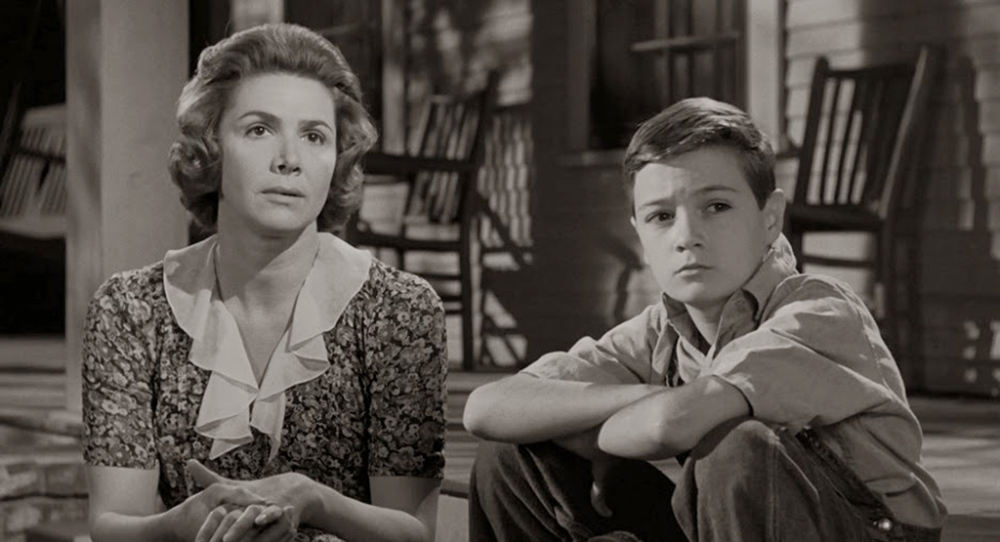 Miss Maudie (Rosemary Murphy) and Jem Finch (Phillip Alford) in the film version of To Kill a Mockingbird
(The subject of this post is Maudie Atkinson, a character in To Kill a Mockingbird. In the film version of the novel, her character was endearingly rendered by I think about Miss Maudie often, especially when I am gardening. After Scout (and Boo Radley, on some days), she is the character with whom I most identify. Maudie loves to garden, and she loves to be outside. In fact, with the exception of the ill-fated and profoundly ironic "missionary tea" in Chapter 24, Miss Maudie is outdoors every single time her character makes an appearance (well, ok, except for those brief moments during which the rabid Tim Johnson threatens everyone on the block). I like that about her. I also like her sass. When the "foot washing Baptists" shout judgmental scripture at her for being prideful about her flowers, she shouts scripture right back at them—"A merry heart doeth good like a medicine!" Yep, she's my kind of gal. She also puts the hypocritical blowhard Mrs. Merriweather in her place at the missionary tea when she starts to talk crap about Atticus. Atta girl, Maudie.
Alas, love seems to have passed Maudie by, and I guess I identify with that, too, to some extent, now that I've been alone for a couple of decades. I'll tell you what, though, if a man like Atticus Finch lived across the street from me, I'd do a lot more than just befriend his children and perhaps, on occasion, bake him (or his horrible sister) a Lane cake. I'd have enough sense to step up my game—especially if my Atticus-neighbor looked anything like Gregory Peck. Those Lane cakes certainly would be packed with shinny if that were the case, and I'd find a way to deliver them when the kids weren't around.
Of course, due to her spinsterhood, Maudie misses out on raising children, though she goes a far way in helping raise Jem and Scout. She offers gentle advice without scolding or criticizing, which is always my goal with my students. Scout mentions at one point that Miss Maudie allows them to help themselves to the scuppernongs from her arbor or to get a squirt of warm milk from her cow, but you know, the truth is, Maudie doesn't have a cow. Not really. I mean, if she had a cow, wouldn't someone have mentioned the poor beast on the night of the fire? Or the morning after? Other than Scout's vague one-time reference, the cow is never mentioned again, so in my mind, she doesn't really exist.
The best thing about Maudie, of course, is that she is the spokesperson for Atticus, explaining his ways to the kids when they don't understand, encouraging them to appreciate that their father is someone quite extraordinary. It is through Maudie that we learn why "it's a sin to kill a mockingbird" (if we're referencing the novel; in the movie, this wisdom comes directly from Atticus as he speaks to Walter Cunningham at dinner). After the verdict in the Tom Robinson trial, Maudie tries to comfort Jem by telling him that some folks are simply called upon to do the unpleasant things in life that others don't want to do, and that Atticus is just such a person (though Jem's dismay is not in regard to his father's failures, but rather the town's).
I find it fascinating that people often equate Harper Lee with Boo Radley, since she declined to make public appearances (for the most part) or give interviews. But she wasn't a recluse. After Mockingbirdcame out to such success, she still enjoyed living in New York, and she went about the city shopping and going to baseball games unrecognized by the vast majority of the folks she encountered. (There is something to be said for the anonymity found in the writer's life. My guess is Stephen King can probably still wander around New York City in a baseball cap and shades and his fans are none the wiser. No doubt the same would be true for J.K. Rowling).
No, Miss Lee wasn't Boo. She was Maudie. She loved to be outside, loved her town and the Southern way of life, despite its flaws. And she loved her father, the real Atticus (Amasa Coleman Lee), so it makes sense that Maudie is the character who says all the lovely things about Atticus. And she never married, nor did she have children. Lee, like Maudie, lived a quiet life, but a social one, I'm sure. She had her own view of the world, her own particular hope for its growth and enlightenment, and she put that hope forward with gentle words. She was a woman who, with her novel, created a space of comfort, wisdom and acceptance, much like Miss Maudie's porch was to Scout.
Pretty sure Miss Lee didn't have a cow, either. In fact, I'm certain of it.
February 21, 2016
In Memoriam: Harper Lee
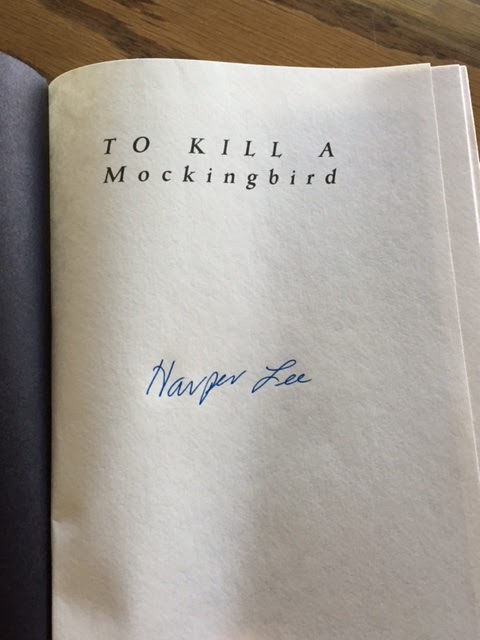
In 1966, desperate to find a book to read, I snuck into my brother’s room when no one was home and browsed through the books in his closet. I don’t know what made me choose To Kill a Mockingbird, but I do remember that once I began, I couldn’t put it down. I was twelve years old.
Two years later, the movie starring Gregory Peck (and the inimitable Robert Duvall as Boo Radley) aired on television, and all the characters I had fallen in love with came to life in black and white. That same year, men who had become my heroes in the Civil Rights Movement mostly because of my reading of the novel—Bobby Kennedy and Martin Luther King, Jr.—lost their lives to the socio-political war that was devastating the country at that time.
To say this novel shaped my life is an understatement. I lost my father at a young age and was raised by a non-nurturing mother. Like so many others who’ve read this book, I both envied and longed for the type of strong, loving relationship Scout shares with Atticus. And I yearned for the wisdom of Atticus in my life.
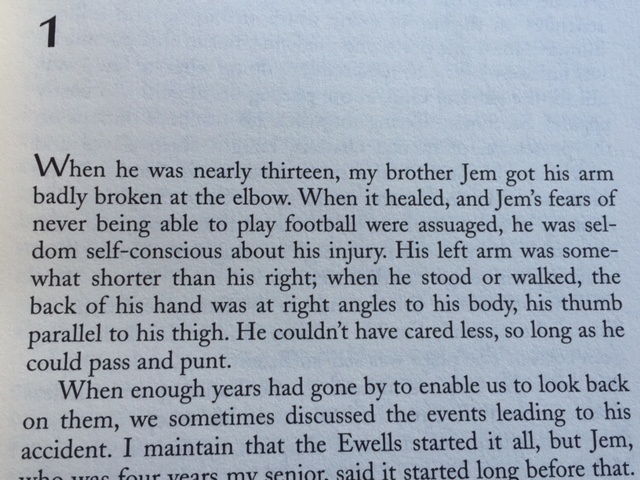
When Atticus looked down at me I saw the expression on his face that always made me expect something. “Do you know what a compromise is?” he asked.
And I learned volumes about parenting from his example:
I had spent most of the day climbing up and down, running errands for [Jem], providing him with literature, nourishment and water, and was carrying him blankets for the night when Atticus said if I paid no attention to him, Jem would come down. Atticus was right.
This was such an important book in my life that when my own daughter turned twelve, I bought her a copy—and I ended up re-reading the novel from start to finish, falling in love with Atticus even more, now that I was a parent myself.
By the time my daughter was a teenager, I had become a teacher. In my second year of teaching high school, I was assigned freshman English. That year we read To Kill a Mockingbird together, and for twenty-five out of the twenty-seven years of my teaching career, I have read it again—mostly aloud, affecting a Southern accent, and always, always fighting back tears in certain sections:
“Miss Jean Louise, stand up. Your father’s passin’.”
“Hey, Boo.”
“Mr. Tate was right.”Atticus disengaged himself and looked at me. “What do you mean?”“Well, it’d be sort of like shootin’ a mockingbird, wouldn’t it?”Before he went inside the house, [Atticus] stopped in front of Boo Radley. “Thank you for my children, Arthur,” he said. (Gregory Peck’s line in the screenplay version is, “Thank you, Arthur. Thank you for my children,” as he extends his hand to shake Boo’s. To my mind, it is one of the simplest yet most beautifully moving scenes in the film.)
He turned out the light and went into Jem’s room. He would be there all night, and he would be there when Jem waked up in the morning.
In my early years of teaching, I was sometimes criticized for readingewwww aloud to my students. (‘They’re in high school now. They need to learn to read and comprehend on their own.’) To my way of thinking, these folks had it all wrong. What better way to learn to comprehend the dynamics of literature than to hear the words come alive? Hearing someone who is familiar with the text stream through the long sections of dialogue in the courtroom scene has to be better than trying to parse through Tom Robinson’s style of speech (“No suh, I’s scared I’d be in court….”) while keeping track of who was speaking and what significance there was in the sometimes calm, sometimes accusatory exchange of questions and answers.
Because I read the novel along with my students, I’ve read it in excess of a hundred times. Each spring I read it with a new batch of kids, and each time I learn something new. It took me years to figure out why Harper Lee included the chapter on Mrs. Dubose—because as a writer, I know that every chapter has a purpose, but for the life of me, I couldn’t figure out how Mrs. Dubose supported the theme of the novel. Until I realized what she stood for. And then the epiphany came like a bolt of lightning.
“You know, she was a great lady.”
Yes, Atticus, just as the pre-Civil War South was, and it, too, suffered from a disease that ravaged it.
Over the years, as I’ve taught Mockingbird, I’ve thought fondly of Harper Lee. She would have been in her sixties when I first began teaching the novel. After I’d been teaching it for several years, I wrote her a long letter, never expecting any response, just wanting her to know how meaningful the book had been to me as a child and as an adult. She never answered, but this was her way, and everyone knew it. As the years went by, I would occasionally seek out her name on the internet to see how she was faring. Every year I’ve been able to tell my students as we finish the novel, “So Harper Lee is still alive…” (because 1960, the year the book came out, seems like hundreds of years ago to them). As it turns out, we are currently reading the book in my class. Tomorrow in each class period, I will tell them that Harper Lee has died, and we will talk about the legacy she has left behind.
Lee’s Pulitzer Prize winning novel helped solidify the Civil Rights Movement in America. Since its publication, it has never been out of print. Countless generations of readers, old and young, have found friends and role models in Jem, Scout, Dill, Atticus, Calpurnia, Miss Maudie, Tom Robinson and the rest of the characters. The novel will continue to influence readers for generations to come.
Rest in peace, Harper Lee. Thank you for your life, thank you for your work, thank you for your heart. Your words will be with us forever.
February 15, 2016
Sustenance
Today’s blog post is dedicated to my long-time friend, Barbara Tinsley. A score of years ago or so—when our grandchildren were children—Barbara was a regular reader of one of the papers in the City News Group trio, and she became a fan of my weekly column. Over the years, we’ve had great conversations about life, kids, grandkids, and other joys. Her official duty as the unofficial president of my fan club is to poke and prod me when I neglect my blog (which has now taken the place of my weekly column). Thank you, Barb, for your friendship, which is so dear to me, and Happy, happy birthday!
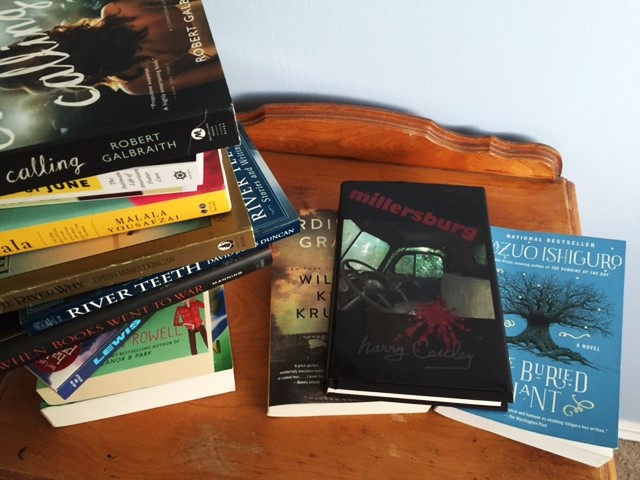
People have asked if, when I retire, I’ll still get up at 4:00a.m. No. Absolutely not. I’m planning on sleeping in until 5:00 or maybe even as late as 5:30. Because “we were meant to see the beginning of the day/Ibelieve it was planned to lift us this way.” And because the best quiet time to write is before my head is filled with the daily news and dire predictions. I still won’t use an alarm clock (as I do not now), and I will still spend the last moments before I drift off with nothing electronic going except a soft bedside light—to illuminate the pages as I read myself off to dreamland. Here’s what I’ve been reading lately, in no particular order of love:
Plainsong by Kent Haruf. If you read novels for the sheer joy of discovering characters, read this book. I tried to read it slowly as it is not terribly long, and I fell in love with the characters so immediately, I never wanted it to end—and when I finished, I couldn’t start another book as I missed my newfound friends. Love, love, loved it. I want every reading friend to read this book, and I might have to guilt some people into it. (Barb, I put this one first as I really think you would love it.)
Ordinary Grace , by William Kent Krueger. See the description above, and add a couple of murders and a plot twist or two. If you’re sharp and you read a lot of mystery, you’ll connect the dots before the intense climax, but that doesn’t really matter to this novel; it’s all about the characters. My bestie Donna sent this novel to me as a sweet gift, and I loved it so much I don’t think I can ever repay her.
Millersburg , by Harry Cauley. I am proud to say that actor, writer, director Harry Cauley is my friend, and we became friends because, well, I was a gushing fan girl over his novel, Bridie and Finn, and his memoir, Speaking of Cats. When I finished Plainsong, I dropped it off with Harry because I knew he would love it, and we subsequently had a phone conversation or two about it (Harry agreeing that it is “just lovely”). When I started Ordinary Grace, I remarked to him that it was similar to Plainsong, but with murder, and he replied, “That sounds like my novel, Millersburg.” How did I not know of this other novel of Harry’s? I hit Amazon immediately upon hanging up the phone. So once again, see the description above. Yes, there are two murders that occur, but the novel isn’t about them. Its subject is the people whose lives surround the circumstances of the murders, and it is Harry’s inimitable style and grace that makes this little book so satisfying. Again, I didn’t want it to end. (Harry also had a birthday this week. At 85, he is still writing up a storm, and I am the one who pokes and prods him to finish another novel because I just love his writing.)
The Buried Giant , by Kazuo Ishiguro. I would not have come to this book were it not for my book club. (Bless you, ladies.) If you’re a reader of great fiction, you may recall that Ishiguro is the author of The Remains of the Day (from which the screenplay was adapted). This book is nothing at all like that one. This book…. Oh, shoot, I don’t even know how to describe it. This book is imaginative fiction in its most brilliant and haunting form. Ishiguro, truly, is a genius, and is considered one of the greatest contemporary British novelists. (He was born in Japan but grew up in England.) This novel, to me, is an allegory—of sorts. And I really don’t want to comment further, other than to say there is an amazing storyline here… and ogres… and pixies… and dragons… and, of course, the buried giant. Here are my two favorite passages:
[King] Arthur charged us at all times to spare the innocents caught in the clatter of war. More, sir, he commanded us to rescue and give sanctuary when we could to all women, children and elderly, be they Briton or Saxon.
We must hope God yet finds a way to preserve the bonds between our peoples, yet custom and suspicion have always divided us. Who knows what will come when quick-tongued men make ancient grievances rhyme with fresh desire for land and conquest?
These books have sustained me in recent times. It is always heartening to know that, whatever calamity befalls me in the course of a day, at long last—in the remains of that day—I will rest upon my bed, a cat on either side, a dog nearby, and immerse myself in the brilliant stories of others. That, indeed, is lovely.


