
Michael Deibert's Blog, page 5
October 25, 2020
Colombia’s financial services industry flourishes despite domestic headwinds
Colombia’s financial services industry flourishes despite domestic headwinds
The country has seen increased interest from foreign lenders amid a challenging environment
By Michael Deibert
Foreign Direct Investment
(Read original article here)
In recent years, successive Colombian governments have sought to diversify the nation’s economy beyond its over-reliance on commodities, and nowhere has this been more apparent than in the financial services industry.
Despite battling the devastating impact of the Covid-19 pandemic, the Superintendencia Financiera de Colombia (SFC) — the government entity charged with supervising the nation’s financial and stock market systems — has recently received a slew of licensing applications from entities wanting to expand into the country.
International expansion into Colombia
“The financial system in Colombia has changed a great deal in recent years,” says Sergio Olarte, chief economist with Scotiabank Colpatria, the local partner of Canada’s Scotiabank, in Bogotá. Scotiabank Colpatria is now partnering with the Italian multinational utility Enel to provide new financial services for residential customers, as well as small and medium-sized businesses. The move will be highlighted by an expansion of Scotiabank’s credit card business, which will enable customers to use the card for a wider range of services than previously possible.
“Since 2012, the regulations in terms of capital markets have changed significantly: the taxes have been reduced by a great deal and that allowed a lot of offshore actors to come here,” Mr Olarte says, highlighting how the country’s floating exchange rate and the independence of the Banco de la República, Colombia's central bank, provide added incentives.
“That’s big for Colombia because we have a very conventional financial system, but lately we have learned a lot about derivatives, forwards, hedging and aspects like that,” he says.
In addition to Scotiabank, international investment banks JPMorgan and Brazil’s BTG Pactual are seeking commercial banking licenses. The local Gilinski family, the moving force behind Banco GNB Sudameris, obtained approval to open Colombia’s first fully digital bank, named Lulo Bank, last month.
Troubling past
The expansion of international lenders into Colombia has come during what has been a tumultuous year for the nation, which has been led by centre-right president Iván Duque Márquez since August 2018.
The killing of a man by police in the capital in September set off days of riots in which at least 13 people were killed. A steady drumbeat of assassinations of environmentalists, social leaders and members of Colombia Humana — the political movement led by leftist senator Gustavo Petro, who Mr Duque defeated for the presidency two years ago — have rocked the nation.
According to the UN high commissioner for human rights, more than 30 massacres have taken place across Colombia so far this year, which some have charged is a reappearance of the large-scale violence that had largely dissipated since the right-wing Autodefensas Unidas de Colombia paramilitary organisation officially disbanded more than a decade ago.
As if that was not enough, former president Álvaro Uribe Velez, Mr Duque’s mentor, and founder and senator of the Centro Democrático party to which both men belong, was placed under house arrest by the nation’s supreme court in August as part of a complex case involving those same paramilitaries.
Promising future
Nevertheless, in addition to the large international banks, several smaller entities are seeking the go-ahead to operate as part of the Sociedades Especializadas en Depósitos Electrónicos, Colombia’s digital deposit and payment system, and remain bullish on the country’s prospects. Among them is the Chilean online payments platform Global66.
“We think that Colombia is going to stand up and even flourish even more in the next few years,” says Global66’s expansion manager, Cristóbal Valle. “We wouldn’t be investing to get the new license in place if we didn't. At this time, even with some of the things happening, we’re confident with Colombia’s capacity to overcome them.”
The growth of the sector has not entirely escaped Colombia’s political tumult, however. Two senators, David Barguil of the Partido Conservador Colombiano and Armando Benedetti of the Partido Social de Unidad Nacional, have been particularly aggressive in pushing for major changes in the sector regulation, including trying to get individual risk agencies to wipe out clients' histories to make them eligible for loans and lowering interest rates.
In 2019, Barguil authored a bill limiting the fees that banks could charge and, earlier this year, he was one of the co-authors of a new financial law which stipulates that Colombians who catch up with any outstanding financial obligations in the 12 months after the law’s enactment will have negative records removed from these databases of credit bureaus within six months.
In a paper jointly published by Colombia Risk Analysis, a political risk consulting firm based in Bogotá, and the consulting firm Monodual, the two companies concluded that Colombia's financial sector had “been the target of all sorts of criticism since the beginning of the economic crisis of Covid-19” and “the inability of the sector to understand this enormous challenge and respond to citizens with generosity and empathy has led to the real possibility of greater regulation of the financial system that may affect the profitability” of the banks.
“I think the sector is under a lot of pressure, both from investors to continue the very positive results the Colombian financial sector has had and more in terms of regulatory pressure from populist legislators who want to cajole the sector even more,” says Sergio Guzmán, the director of Colombia Risk Analysis. “A lot of politicians see this with a mixture of jealousy and frustration that, even with a 15% contraction in the last quarter, the financial services sector posted COP8.5tn ($2.2bn) in profits. And it’s to a large degree because their costs are passed onto the consumer.”
Next year will be one of positioning for candidates ahead of Colombia’s general elections, to be held in 2022. As Mr Duque cannot run for office again, it is likely that some of those vying to replace him will present themselves as champions of Colombia’s consumers. Colombia’s financial services sector, despite its robust growth, will no doubt have to navigate these waters carefully if the industry is to expand and thrive.
This article first appeared in the October - November print edition of fDi Intelligence. View a digital edition of the magazine here.


October 17, 2020
Le rôle de la communauté internationale dans le royaume de l'impunité d'Haïti
Le rôle de la communauté internationale dans le royaume de l'impunité d'Haïti
Publié le 2020-09-24 | Le Nouvelliste
Par Michael Deibert
(Read the original article here)
Pendant que Haïti implose sous le regard vigilant du Bureau intégré des Nations unies en Haïti (BINUH) et de l’ambassade des États-Unis, il est difficile pour les observateurs, à l’intérieur et à l’extérieur du pays, de ne pas se demander quel a été le résultat de la longue présence internationale dans le pays et de son implication intense dans ses combats politiques.
En à peine plus de 25 ans, Haïti a reçu la Mission civile internationale en Haïti (MICIVIH), la Mission des Nations unies en Haïti (MINUAH), l’intervention militaire «Operation Uphold Democracy» menée par les États-Unis en 1994, et pour la plus longue période, de 2004 à 2017, la Mission des Nations unies pour la stabilisation en Haïti (MINUSTAH), grâce à laquelle BINUH a trouvé sa place.
Pendant ce temps, les Haïtiens ont enduré plusieurs chocs systémiques. Certaines catastrophes naturelles (plusieurs ouragans dévastateurs, dont l’ouragan Jeanne en 2004 et le tremblement de terre en janvier 2010) et d’autres des affaires d’hommes. Les élections - toujours contestées - ont eu lieu de manière régulière, mais les défaillances structurelles du système politique d’Haïti sont restées obstinément intactes. En effet, l’organisation des élections a souvent eu comme coût de maintenir l’avantage d’impunité pour ceux disposés à y participer.
Plutôt que d’atténuer ce problème, l’implication de la communauté internationale l’a souvent intensifié, même ses politiques économiques, en particulier celles des États-Unis, ont contribué à faire sombrer Haïti dans cette mer d’instabilité.
Aussi récemment que dans les années 80, Haïti produisait plus de 80% de ses denrées alimentaires ; mais en 1995, dans le cadre d’un ajustement structurel sponsorisé par la Banque mondiale (World Bank) et le Fonds monétaire international (FMI) avec le support du président des États-Unis Bill Clinton, Haïti a réduit les taxes d’importation sur le riz de 50% à 3%, et est rapidement devenu le 5e importateur mondial de riz des États-Unis et l’un des piliers de son économie a disparu. Ceux qui ont quitté la campagne pour la ville ont constaté que l’embargo des Etats-Unis du début des années 90 qui a aidé le régime militaire de Raoul Cédras a également ruiné l’industrie manufacturière d’Haïti, réduisant les emplois d’usine de la région de Port-au-Prince de 100,000 à 20,000 en un peu plus de 10 ans.
Le manque d’emplois rémunérés dans les campagnes aussi bien que dans les villes ait entrainé un grand nombre de jeunes hommes inactifs – les baz – dont les politiciens de la nation utilisèrent les muscles pour assurer des voix au moment des élections. Quasiment chaque élection de ces deux dernières décennies a été contestée par le parti perdant et la politique est vue comme une voie vers la richesse, le pouvoir et l’impunité. Les «baz» n’ont jamais manqué de travail.
En dépit d’être les descendants, d’une certaine façon, d’autres forces paramilitaires irrégulières de l’histoire d’Haïti – des Zinglin de Faustin Soulouque à l’armée souffrante de Louis-Jean-Jacques Acaau aux Tontons Macoutes de François Duvalier – le modèle baz était l’œuvre pionnière de Jean-Bertrand Aristide et du Parti Fanmi Lavalas à la fin du siècle dernier et depuis, s’est avéré une irrésistible tentation pour les politiciens haïtiens de toutes orientations. Le modèle baz s’est métastasé dans tout le corps politique, et quasi aucun parti n’est irréprochable, y compris le parti au pouvoir, le Parti haïtien Tèt Kale (PHTK), qui l’a adopté avec enthousiasme.
Rétrospectivement la communauté internationale a eu l’opportunité, à un moment précis, de suggérer une façon différente d’avancer.
Dans le cas du massacre d’au moins 27 personnes dans le quartier de Saint-Marc de la Scierie en février 2004 - survenant seulement quatre mois avant que la MINUSTAH débute son mandat - commenté par des organisations haïtiennes de défense des droits humains, par des journalistes locaux et des correspondants internationaux (dont moi) et par des chercheurs de l’organisation Human Rights Watch ; il fut décidé que poursuivre en justice serait trop incommode politiquement. Les auteurs présumés (ceux encore en vie) ont quitté la prison un à un, avec la bénédiction de la communauté internationale. Le cas de la Scierie n’a jamais fait l’objet d’une enquête complète et les atrocités commises restent impunies comme l’a noté Human Rights Watch en 2007. Les survivants d’un des plus importants massacres politiques des Amériques du 21e siècle n’auront pas - et n’ont pas - vu de justice. La politique a éclipsé la responsabilité historique. Ce message a été reçu clairement par les dirigeants politiques du pays.
Entre la justice et la « stabilité », la communauté internationale et les autorités haïtiennes ont choisi la stabilité et depuis, connaissent non seulement l’injustice mais aussi l’instabilité. Les meurtres de la Scierie étaient un « kafou danjere » et les acteurs du moment mal choisis.
Depuis, le tambour des crimes – leurs actes impunis et leurs victimes non vengées – est devenu une réalité de la vie. Le kidnapping et meurtre du journaliste Jacques Roche en juillet 2005 ; le meurtre de Bruner Esterne, pilier de la communauté du quartier de Grand-Ravine, en septembre 2006 ; la disparition du directeur général de la Commission nationale des marchés publics (CNMP), Robert Marcello, en janvier 2009 ; l’assassinat du précèdent gouverneur de la Banque République d’Haïti, Joseph Venel, en mars 2012 ; le meurtre d’Oriel Jean, ancien chef de la sécurité du Palais national en mars 2015 ; la disparition du journaliste Vladjimir Legagneur en mars 2018... la liste n’en finit pas. Haïti est vraiment devenu un royaume d’impunité.
Les troupes de MINUSTAH ont souvent agit bravement pour empêcher l’effondrement. Si ce n’était pour MINUSTAH, la présidence de René Préval aurait bien pu finir durant les émeutes d’avril 2008 contre le « lavi chè ». Et personne ne peut ignorer que dans le tremblement de terre de janvier 2010, ce sont 96 soldats de l’ONU, en plus des dizaines de milliers d'Haïtiens, qui ont péri, beaucoup loin de chez eux. Mais ils étaient mal servis par leurs dirigeants politiques.
Même si les Nations unies ont visiblement travaillé à accomplir leur mission de renfort sur les structures d’état de droit de Haïti, y compris dans la Police nationale d’Haïti (PNH), pendant plusieurs gouvernements successifs ; ceux qui osaient envisager la PNH comme quelque chose de plus qu’une matraque politique à disposition de ceux qui ont l’avantage du pouvoir - comme le policier Walky Calixte -, ont souvent payer de leur vie pour leurs convictions.
Dans les zones marginalisées du pays, la force des armes n’est pas mise en œuvre par l’application des lois officielles ou par le gouvernement, mais par les légions de baz employées par tel ou tel acteur politique. Depuis le milieu des années 90, Haïti s’est dégradé en un système balkanisé qui en vient à ressembler de plus en plus à la République centrafricaine, où un chef de guerre différent règne tous les quelques kilomètres (ou tous les quelques pâtés de maison). Comme nous l’avons vu avec l’arrivée du groupe de policiers dissidents du Fantôme 509, cet effilochage du contrat social a maintenant pris racine au sein de la police elle-même.
La démocratie n’est pas simplement l’organisation d’élections. C’est le peuple qui ressent un intérêt dans le processus politique, et qui souhaite que ce système politique réponde à ses besoins. Au moment où Haïti se prépare pour de nouvelles élections – avec un Conseil électoral provisoire, et un scrutin d’ores et déjà rejeté par de multiples organisations avant même que le vote n’ait eu lieu – y-a-t-il encore un moyen d’avancer ? Peut-être.
Un exemple qui peut être instructif dans le contexte haïtien est celui de la Commission internationale contre l'impunité au Guatemala (Comisión Internacional contra la Impunidad en Guatemala, CICIG), qui existait entre 2006 et 2019 ; son mandat malheureusement tronqué par la connivence du Président des États-Unis Donald Trump. Pendant son existence, la CICIG – avec une hybride de personnel local et international – a poursuivi avec succès un certain nombre de figures politiques et économiques, allant même jusqu’à l’arrestation et l’emprisonnement du président alors en place Otto Pérez Molina. Des factions au firmament politique avec une sincère détermination à renforcer l’État de droit là où elles étaient appuyées et encouragées. Une telle entité pourrait accomplir beaucoup à Haïti pour traduire en justice une litanie de crimes encore impunis. Guatemala, une nation elle aussi ayant une histoire de violence politique et un dur noyau d’impunité, a démontré que cela était possible dans une certaine mesure. Ses méthodes pourraient fonctionner à Haïti également.
Si la communauté internationale souhaite sincèrement réparer ses faux pas à Haïti au fil des années, et si le gouvernement haïtien et ses opposants souhaitent vraiment créer pour les jeunes du pays un futur autre que le combat sanglant pour un pouvoir misérable dont on a été témoin ces 20 dernières années, la création d’une entité haïtienne basée sur le modèle de la CICIG serait un bon point de départ.
Michael Deibert est un professeur invité de l’Instituto de Ciências Sociais da Universidade de Lisboa. Il est l’auteur de deux ouvrages sur Haiti : Haiti Will Not Perish: A Recent History (Zed Books, 2017) Notes from the Last Testament: The Struggle for Haiti (Seven Stories Press, 2005)
Haiti’s long road to energy self-sufficiency
Haiti’s long road to energy self-sufficiency
Clean energy could offer Haiti a more secure energy system and a way to reduce its devastating poverty, but the road ahead will be long.
By Michael Deibert 16 Sep 2020 Energy Monitor (Read the original article here)The same day René Préval was inaugurated as Haiti’s president for the second time in May 2006, a Venezuelan oil tanker appeared in the harbour of the capital, Port-au-Prince, bearing 10,000 barrels of oil, part of the Petrocaribe oil alliance with Venezuela. Entering into the alliance was Préval’s first official act as president.
For the tumultuous and impoverished Caribbean nation, which Préval had previously governed from 1996 to 2001, many hoped the agreement would be the first step in refounding its teetering power grid, diminished by years of corruption and political upheaval. Days-long blackouts have been a part of daily life in the country for years.
It hasn’t quite turned out that way, however. Far from helping buttress the country’s resources, the Petrocaribe affair became a vortex of controversy, encompassing not only Préval (who left office in 2011 and died in 2017), but those of his three successors as president, including Haiti’s current leader, the former agribusinessman Jovenel Moïse.
Successive audits revealed what investigators charge was a vast scheme of embezzlement, leaving the impoverished Caribbean nation with a debt of almost $2bn. Much of the funds are believed to have been siphoned off by corrupt political and business operators.
Haiti’s recent battles to modernise its energy sector serve as a stark lesson for how fraught the business of energy transition can be. In the wake of the scandal, the struggle to provide Haiti’s 11 million people with reliable energy – and the desire to attract foreign investment to do so – has taken on an evermore politically charged hue.
Global reform neededHaiti’s state electricity company, Electricité d’Haïti (EDH), was created in 1971 following the privatisation of the Compagnie d’Eclairage, at the time managed by a US firm. Tasked with the mission of producing, transporting, distributing and marketing electricity throughout this mountainous nation, in recent decades EDH has struggled to achieve those aims.
The second independent nation in the Americas after the US and site of the only successful slave rebellion in history, Haiti also holds the rather more dispiriting title of being the region’s poorest country. It has seen wild swings in its political compass since the overthrow of the Duvalier family dictatorship 34 years ago allowed many to dare hope for a brighter future.
One of the most ubiquitous sights in Haiti is the orange glow of kerosene lamps at night as roadside vendors attempt to sell pots of boiling fritay or chicken fried on makeshift grills. One of the most common sounds is the roaring of private generators behind the walls of the homes of the elite. Power outages in some areas of the country can last for weeks, while in neighbourhoods near Haiti’s National Palace in downtown Port-au-Prince – always politically restive – jerry-rigged siphoning of current has gone on for decades as successive governments dare not act against it.
“We have to have a global reform of the energy sector,” says Etzer Emile, a Haitian economist, professor at the capital’s Université Quisqueya and author of the book Haiti a choisi de devenir un pays pauvre (Haiti has chosen to be a poor country). “It is not just about the production, we have to diversify the energy matrix and we have to liberalise the market as they have done in the Dominican Republic. Companies need to be able to produce, transport and sell the service.”
Until the late 1990s, the energy market in the Dominican Republic was controlled by the state-owned Corporación Dominicana de Electricidad, whose history of non-technical energy losses (pirating) and shoddy bill collection made it somewhat analogous to EDH. Under the first presidency of Leonel Fernández, the sector was unbundled and partially privatised and now, in addition to the state generator, includes 12 private and mixed companies, which has resulted in far greater efficiency.
Clean energy potentialFor Haiti’s Moïse, who has made the provision of energy nationwide the cornerstone of his presidency, the promise has taken on added urgency as the nation approaches general elections slated for 2021.
A new contract signed with General Electric would produce an additional 55MW of electricity for EDH, Joiséus Nader, Haiti’s Minister of Public Works, Transport and Communication, suggested recently. He had previously said the entity was “in tatters”, lacking even basic equipment such as pylons and meters. Earlier this year, Haiti launched its second solar microgrid in the south of the country. The microgrid was created by US-based EarthSpark International in collaboration with Enèji Pwòp, Haiti’s in-country social enterprise arm, with plans to create 22 additional grids over the next four years.
“We have had this energy crisis for a long time, more than 20 years,” says Evenson Calixte, managing director of Haiti’s Autorité Nationale de Régulation du Secteur de l’Energie (ANARSE), the nation’s energy regulatory authority. “And we believe that one element that can help reform this sector is private investment.”
In April 2016, Haiti signed the Paris Agreement to reduce greenhouse gas emissions. At the beginning of Moïse’s term, Haiti also hosted a Haiti Sustainable Energy Forum in Port-au-Prince with the World Bank and the Korea Green Growth Trust Fund.
Many see clean energy as the potential future for energy generation in Haiti.
“There is an opportunity to provide renewable energy access and create this new trajectory for development,” says Sandra Kwak, CEO and founder of San Francisco-based 10Power. “It is exciting to merge the social justice aspect with the renewable energy aspect.”
10Power recently partnered in Haiti with SimpliPhi Power, a US manufacturer of non-toxic, cobalt-free lithium ion energy batteries, to distribute energy storage systems powered by solar power. The organisation also completed a solar-powered water desalination project on the vast and little-developed Île de la Gonâve in the bay of Port-au-Prince. The initiative will provide clean drinking water for up to 40,000 people. Its next projects are solar installations on the UNICEF Haiti headquarters and an engineering school.
Public versus privateThe struggle over Haiti’s power grid has put Moïse at loggerheads with some elements of Haiti’s private sector. In August 2020, a government anti-corruption task force published a report on the last ten years of the petroleum industry. It concluded that private oil companies operating in Haiti made $94m in undue profits between March 2019 and May 2020 at the expense of the state.
The report recommended strengthening the country’s Bureau de Monétisation des Programmes d’Aide au Développement, an entity tasked with optimising the efficacy of government contracts and programmes, and increased transparency in the price of imported petroleum products, among other measures. Haiti’s Association des professionnels du pétrole said the structure of fuel prices had been managed for 30 years by the Ministry of Finance, and that the devaluation of Haiti’s currency, the gourde, over the past decade had resulted in significant reductions in taxes collected because of increases in the cost of fuel.
Whereas Moïse says there has been “state capture” of the energy sector by corrupt private sector entities, his opponents have pushed back, claiming his is an increasingly autocratic and unaccountable government. After the terms of local mayors around the country expired this summer, when Moïse and the political opposition were unable to agree on a timetable for elections, Moïse simply issued a decree stating that, until elections were held, he would appoint mayors at will.
Opportunity and chaosBut even, amid such tumult, some argue that opportunity for the clean energy sector remains present.
“The situation in Haiti right now is everything but easy, and the Covid crisis has added another level of complexity, but there is opportunity there,” says Christian Schattenmann, fund manager at Bamboo Capital Partners.
The Luxembourg-based global private equity firm was selected in 2019 by Haiti’s government and the World Bank to act as the international fund manager for their dual Off Grid Electricity Fund (‘OGEF’). A $17.22m renewable energy access fund, the OGEF aims to electrify 200,000 households in Haiti within the next ten years.
“We want to electrify these households through renewable energy and investing in solar distributors, through mini grids, and by replacing diesel generators with new systems,” says Schattenmann.
Haiti’s political firmament continues to boil. The recent murder of well-known attorney Monferrier Dorval coincided with a series of armed incursions by street gangs (many rumoured to be linked to the government, others to the opposition) into various poor neighbourhoods in the capital, and has sent protesters back to the street demonstrating against insecurity.
On 5 September, in the presence of various dignitaries and the Taiwanese ambassador, Moïse launched a new project – financed to the tune of $157m by Taiwan’s Export–Import Bank – to construct four new substations and rehabilitate nine others to supply power to the Port-au-Prince metropolitan region. Of that, $27m will be used to build 43 solar and thermal microgrids across the country.
Despite the grinding violence and political battles, Moïse seemed sanguine, calling the project “a dream come true” and noting he would have done so before but “they” – his opposition – “stopped me”.
Michael Deibert is a journalist, author and Visiting Scholar at the Instituto de Ciências Sociais at the Universidade de Lisboa.
August 12, 2020
Puerto Rico’s Colonial Model Doesn’t Serve Its People
July 31, 2020, 6:11 PM
Puerto Rico’s Colonial Model Doesn’t Serve Its People
One year on from mass protests, Puerto Ricans are still questioning how to refresh the island’s relationship with the United States
By Michael Deibert
Foreign Policy
(Read the original article here)
Last summer, the drums of freedom sounded in the streets of San Juan. Puerto Ricans rose up to drive Gov. Ricardo Rosselló from office after the publication of a series of profane chats between the leader and his top aides deriding other politicians and ordinary Puerto Ricans, including survivors of the devastating Hurricane Maria in 2017. For weeks, protesters filled the streets of the capital’s colonial zone, marching, dancing, and chanting.
The uprising against Rosselló, once a leading light in the ruling New Progressive Party (PNP), was a cri de coeur from a population that has faced great hardship in recent decades and for whom Puerto Rico’s tangled relationship with the United States appears to have reached a crossroads. The colonial model, which for decades provided U.S. companies with low-wage workers and a captive export market for goods, appears to have given all it has to give. Beyond rhetoric, there is little appetite in the U.S. Congress to make the island a full state, and its independence movement remains on the electoral margins.
Puerto Rico’s hybrid relationship with the continental United States sees those born in Puerto Rico afforded U.S. citizenship and the ability to vote in presidential primaries, but island residents cannot vote in U.S. presidential elections. Despite having a population of over 3 million, surpassing nearly half of all U.S. states, Puerto Rico has only a single nonvoting member in Congress. So while the island has a bicameral legislature, its citizens are ultimately governed by entities—the U.S. president and Congress—that they have no say in electing.
The backroom deals of Puerto Rico’s political elites and the caustic racism of U.S. President Donald Trump have brought into stark relief what has always been a lopsided, unequal relationship. A series of natural disasters now have Puerto Ricans questioning what it will take to wrench the island out of the hybrid system that has poorly served its people for at least the last two decades.
On July 25, 1898, 1,300 American troops landed at Guánica, Puerto Rico, at the behest of U.S. President William McKinley, and within a month U.S. forces had seized the island from the Spanish. This military capture began Puerto Rico’s long and complex association with the U.S. federal government in Washington. Three days after landing, U.S. commanding officer Gen. Nelson A. Miles issued a proclamation to the island’s residents assuring them that he was acting “in the cause of liberty, justice, and humanity.”
However, for five decades after the U.S. invasion Puerto Rico was ruled by unelected and often racist functionaries appointed through political patronage. Under direct orders from U.S. colonial governors, Puerto Rican police crushed moves toward independence, such as during the Ponce Massacre on Palm Sunday 1937, when a march of several hundred nationalists resulted in a police riot that left 19 civilians dead and some 200 hundred injured.
In July 1952, some 15 years after the Ponce Massacre, Puerto Rico’s constitution came into effect, declaring the island the “Estado Libre Asociado de Puerto Rico,” the “Free Associated State of Puerto Rico”—and setting up its hybrid relationship with the United States.
Puerto Rico’s current status is due in no small part to the island’s first elected governor, Luis Muñoz Marín. Muñoz Marín was the scion of a notable political family who spent much of his younger years living a bohemian life in New York before returning to become Puerto Rico’s dominant political figure in the middle of the 20th century, governing from 1948 to 1965 as the head of the Popular Democratic Party (PPD).
Muñoz Marín and the PPD oversaw a series of measures known as Operation Bootstrap, an aggressive program of industrialization that moved the island’s economic engine from agriculture toward an urban, export-oriented model. By the mid-1950s, the income generated by manufacturing outstripped that generated by agriculture for the first time, and between 1953 and 1963 manufacturing salaries more than doubled. Easy migration to the United States provided an escape for those frustrated by this model, and tens of thousands of Puerto Ricans left for better-paying jobs on the mainland, preventing the widespread social unrest that occurred elsewhere in Latin America during the second half of the 20th century.
Washington set the small island up to fail. And now that the territory is on the verge of financial collapse, Congress is washing its hands of the blame.
By the 1970s, the island seemed to settle into an equilibrium between the PPD and the pro-statehood PNP—a colonial reflection of the U.S. two-party system on the mainland. Much of the political oxygen was consumed by the question of the island’s status vis-à-vis the United States.
U.S.-backed security forces had crushed violent pro-independence uprisings in the early 1950s, diminishing the nationalist movement as an electoral force. Activists were targeted by the FBI as part of the Counterintelligence Program and by the Puerto Rican police—sometimes with lethal consequences. In July 1978, two would-be revolutionaries, Carlos Enrique Soto Arriví and Arnaldo Darío Rosado Torres, were slain by police in what many viewed as a state-sanctioned assassination.
Puerto Rico’s dependence on the United States proved a Faustian bargain. In 1996, seeking new revenue to reduce the federal deficit, the Clinton administration abolished Section 936 of the Internal Revenue Code with bipartisan support, which gave companies from the mainland United States an exemption from federal taxes on income earned in Puerto Rico. The island was sacrificed to pay for the minimum wage hike on the mainland, and companies quickly began to move elsewhere.
The abolition of Section 936 took place during the tenure of Rosselló’s father, Gov. Pedro Rosselló—lambasted during last summer’s protests in a popular reggaeton song as “the most corrupt son of a bitch in history.” By the time the elder Rosselló left office in 2001, Puerto Rico’s public debt had ballooned to $25.7 billion. The value of the island’s bonds sank, and capitalist adventurers specializing in distressed assets arrived from the mainland to take advantage. Hedge funds dominated by the politically well-connected, such as Paulson & Co. of leading Republican donor John Paulson, lent Puerto Rico more than $3 billion—envisioning a 20 percent return based on a constitutional clause requiring that bonds be paid back. The territory had no legal ability to declare bankruptcy. Successive governments effectively created a pyramid scheme: The state was borrowing money from some lenders to pay others.
Appearing to grow tired of the status quo, in 2012 Puerto Ricans voted by a slim margin in a nonbinding referendum to jettison their commonwealth status to become the 51st state in the United States. A 2017 referendum boycotted by the PPD—in part due to the party’s rejection of its characterization of Puerto Rico as a “colony”—led to a more emphatic result. Another nonbinding status vote is planned for this fall. In a letterthis week to Puerto Rico’s elections commission, the U.S. Department of Justice said that it would neither officially approve nor fund the vote in part because the framing of the ballot approached the question of Puerto Rico’s status “from a decidedly pro-Statehood, and anti-territorial, point of view.”
By 2016, Puerto Rico’s financial situation had grown so dire that the U.S. Congress passed a law giving the territory the ability to seek bankruptcy and created an unelected federal oversight board with the ability to manage the island’s finances over the objections of the elected government. Many saw the move as deepening Puerto Rico’s colonial relationship with the United States. The devastation of Hurricane Maria soon followed. The storm killed around 3,000 people on the island and laid waste to its electrical grid. Trump’s response—mocking Puerto Rican citizens as people who “want everything done for them” and delaying aid—added insult to injury. (The president spent much of the crisis golfing.)
The year since Rosselló announced his resignation in July 2019 has been tumultuous. After five days, Puerto Rico’s Supreme Court ruled the ascent to the governorship by Rosselló’s chosen successor, Pedro Pierluisi, unconstitutional. Pierluisi had previously served as Puerto Rico’s nonvoting congressional representative and was instrumental in the creation of the fiscal oversight board. He was replaced by Secretary of Justice Wanda Vázquez Garced, whose administration has since been engulfed in scandal.
The ruling PNP holds commanding majorities in both houses of Puerto Rico’s legislature. But it is a viper’s nest of competing interests: Pierluisi and Vázquez, for example, are engaged in a bitter primary to see who will become the party’s gubernatorial candidate in the November elections. The PNP’s Senate leader, Thomas Rivera Schatz, is among the island’s most divisive political figures, viewed by many protesters as a symbol of an old and corrupt political order.
On Jan. 7, Guánica, where the U.S. military landed all those years ago, was the epicenter of another momentous event: Puerto Rico was rocked by a 6.4 magnitude earthquake, which caused extensive damage in several southern towns and knocked out power across the island for days. As thousands of ordinary Puerto Ricans flooded south to help their neighbors, it is alleged that Vázquez colluded with other officials to direct aid so that ruling-party politicians could benefit. Vázquez and several others in her party are now the subjects of an investigation by a special prosecutor into those actions and the resignation of two consecutive justice secretaries earlier this summer.
While protests against Vázquez have been smaller and less frequent due to the pandemic, anti-government graffiti still appears on colonial walls of San Juan near the governor’s mansion. Shortly before last summer’s protests, a new political party, the Citizens’ Victory Movement (MVC) was formed. It attracted independents and dissidents from the main political parties and, among other proposals, seeks to abolish the fiscal oversight board.
This November’s election will be the MVC’s first big test. Along with the governorship—which is being contested by Alexandra Lúgaro, an attorney and businesswoman who came in third in the 2016 gubernatorial elections—Manuel Natal Albelo, a representative in the commonwealth’s House of Representatives, who under the PPD banner got more votes than any other party candidate, is running as the MVC’s candidate for mayor of San Juan.
Puerto Rico is in the middle of a struggle to define itself beyond its status as the colony of the nation to the north. A few days ago, walking through my neighborhood of Viejo San Juan, I happened upon one of the sporadic protests against Vázquez’s government that happen from time to time. On its fringes I encountered an elderly man with a sign. “The homeland cannot be defended from a sofa,” it read. “It must be defended in the street, like in the summer of 2019.”
Michael Deibert is a visiting scholar at the Instituto de Ciências Sociais of the Universidade de Lisboa and the author of When the Sky Fell: Hurricane Maria and the United States in Puerto Rico.
August 4, 2020
Michael Deibert speaking to BBC World Service on impact of Tropical Storm Isaias in Puerto Rico
June 22, 2020
Dominican Republic: George Floyd protests spark reckoning with race as elections loom
Dominican Republic: George Floyd protests spark reckoning with race as elections loom
By Michael Deibert
The Guardian
(Read original article here)
As demonstrations were held around the world against racism and police brutality, a group of protesters arrived last week at Santo Domingo’s Parque Independencia to honor the memory of George Floyd, the African American man killed by Minneapolis police.
The vigil had been convened by Reconocido (Recognized), a local organization that describes itself as made up primarily of Dominicans of Haitian descent – a group that routinely faces racist discrimination.
But counter-protesters were waiting for them: an ultranationalist organization dubbing itself the Antigua Orden Dominicana (Old Dominican Order) had called on social networks for people to come out and “defend against the Haitian invasion”.
As Reconocido members tried to hold their event, the counter-protesters shouted invective at them. Police officers stood by, and when they eventually intervened, it was to bundle Reconocido’s leader, Ana María Belique, and another activist off to jail.
“What happened shows the levels of intolerance that exist here regarding the issue of race,” said Belique, who was released hours later without charges. “Perhaps if George Floyd was not black and if we were not an anti-racist collective, it might be different. Because everything black in this country evokes Haiti – as if it were an affront to this nation that turns its back on its black identity.”
The Dominican Republic shares both the island of Hispaniola and an uneasy history with Haiti – the country from which it gained its independence in 1844. It has traditionally provided an escape valve for Haitians fleeing political upheaval and economic desperation at home, even as they are sometimes viewed – often unfairly – as competing with poor Dominicans for low-wage jobs.
The global wave of Black Lives Matter protests reached the Dominican Republic as the country approaches 5 July presidential elections that some believe may put an end to 24 years of nearly uninterrupted governance by the Partido de la Liberación Dominicana (the Dominican Liberation party, or PLD).
The PLD first took the presidency in 1996 through a Faustian bargain with the longtime caudillo Joaquín Balaguer, after a campaign marked by fraud and racist incitement that finally saw Leonel Fernández take the presidential sash.
With the PLD now beset by various scandals – and bitterly divided between wings loyal to current president Danilo Medina (in office since 2012 and running the former government minister Gonzalo Castillo as his successor) and Fernández (who is mounting his own presidential campaign at the head of the Fuerza del Pueblo coalition) – polls suggest the ballot may be won by Luis Abinader of the opposition Partido Revolucionario Moderno (PRM).
What this may mean for the discourse on race in the Dominican Republic remains to be seen. The country’s agriculture, tourism and construction sectors largely depend on immigrant Haitian labor, but over the last decade, generations of Dominicans of Haitian descent have seen a series of court rulings gradually strip them of their nationality.
“Even the political parties that have been seen as more friendly on these issues have been quiet,” said Amarilys Estrella, a visiting professor with the department of social and cultural analysis at New York University.
“All of this silence allows for the amplification of a small group of ultra-nationalists who are anti-Haitian and also anti-black. Even people who might not agree with what is happening might not speak out because they fear they might be a target.”
That fear is rooted in history: an October 1937 speech by the dictator Rafael Trujillo launched a pogrom against Haitians in the country which would eventually become known as “the Parsley Massacre” or el Corte (the Cutting). At least 10,000 and perhaps up to 20,000 Haitians die during a weeks-long paroxysm of genocidal rage.
Acts of public violence against Haitians in the Dominican Republic still happen from time to time, with one of the better-known recent cases being the lynching of a Haitian man in the northern city of Santiago in 2015.
However, protests against corruption and electoral meddling that shook the country earlier this year saw a multiracial and often quite youthful front taking to the streets in what many observers agreed was an unprecedented show of civic discontent that may be a harbinger of future change.
“The young people are in many ways attuned to transnational networks and conversations,” says Lorgia García Peña, an associate professor in the department of romance languages and literatures at Harvard University.
“The language that is being used right now is purposeful. There has been a more global contextualization of the intersection of race, class and economic exploitation that this young generation is much more aware of.”
June 18, 2020
Donde las vidas de los negros importaban primero en las Américas
Donde las vidas de los negros importaban primero en las Américas Por Michael Deibert El Nuevo Día (Read the original article here) La imagen del asesinato de George Floyd, el hombre afroamericano al que oficiales de la policía de Minneapolis le exprimieron la vida el pasado 25 de mayo, le estrujó el corazón al mundo. El terrible simbolismo de ese acto -un cuerpo negro postrado y finalmente extinguido por el peso insoportable del racismo sistémico – es imposible de ignorar. Es cierto que una buena parte de la historia del Caribe también ha sido escrita en sangre, primero por la exterminación de sus habitantes nativos, y luego por la llegada forzosa de millones de esclavos africanos como parte del infernal sistema de la esclavitud y cautiverio. Sin embargo, en medio de esa dolorosa historia, el Caribe también provee un ejemplo del insaciable deseo humano de ser libre. Haití, que ocupa el tercio occidental de la isla de La Española, que comparte con la República Dominicana, nació en los fuegos de la máquina de la esclavitud. Luego de la llegada de Colón en 1492, los arauacos nativos fueron rápidamente esclavizados y obligados a trabajar hasta la muerte por los españoles, y, a manera de reemplazo, hacia mediados de los 1500 ya había sobre 30,000 esclavos africanos en la isla, apenas un preludio de lo que vendría después. La economía de Saint-Domingue, como se conoció una vez los franceses obtuvieron el control gracias al Tratado de Ryswick, se basaba en el cultivo de azúcar. Hacia fines de los 1700, suplía tres cuartas partes del azúcar que se consumía en todo el mundo, y su economía generaba más ingresos que todas las 13 colonias estadounidenses originales combinadas. Muy pronto se convirtió en la más próspera colonia francesa, pero también en un lugar donde la población de 40,000 blancos dominaba a más de 30,000 mulatos y negros libres y a 500,000 esclavos en condiciones de brutalidad propias de una pesadilla. La noche del 14 de agosto de 1791, un imponente supervisor negro traído de Jamaica, llamado Boukman, condujo una larga y compleja ceremonia de vudú a las afueras de Cap-Français (hoy día Cap-Haïtien) en Bwa Cayman (El Bosque del Cocodrilo) en medio de una dramática tormenta tropical, durante la cual los esclavos presentes juraron levantarse contra sus amos. Lo hicieron. En agosto de 1793, Toussaint Bréda (así llamado por la plantación de Bréda, donde servía como capataz) anunció que se cambiaba el nombre a Toussaint Louverture en una proclamación en la que declaró: “He emprendido la venganza. Quiero que la libertad y la igualdad reinen en Saint-Domingue”. Una serie de extraordinarias personalidades se unieron a la rebelión de Louverture, tales como el exesclavo convertido en gran comandante militar Jean-Jacques Dessalines. También estaba Henri Christophe, un exesclavo angloparlante que se creía era originario de Grenada y de quien se pensaba que de joven había combatido junto a las fuerzas francesas durante el Sitio de Savannah en la Guerra de Independencia de los Estados Unidos. Y además estaba Alexandre Pétion, cuya ascendencia blanca y mulata lo convertía en un gens de couleur (hombre libre de color) y quien había sido educado en Francia antes de volver a Saint-Domingue. La rebelión continuaría a tropezones durante 13 largos años marcados por el sectarismo, la traición (Louverture sería secuestrado por los franceses y moriría en una solitaria celda en las montañas de Jura, en 1803) y sufrimientos frecuentemente horrorosos. Las fuerzas haitianas finalmente derrotaron a las francesas en la Batalla de Vertières en noviembre de 1803 y, el 1ro. de enero de 1804 fue declarada la República de Haití (el triunfante Dessalines recuperó el antiguo nombre arauaco de la isla). Aunque no es un hecho tan conocido como los contornos amplios de la revolución en sí (como tampoco lo es el subsiguiente exterminio de prácticamente toda la población francesa que quedaba en la isla, ordenado por Dessalines), la Revolución Haitiana también proveyó un marco de referencia para los frentes multirraciales contra el sistema de las plantaciones. Miles de soldados polacos, reclutados por Francia para luchar contra los esclavos rebeldes, terminaron desertando y uniéndose a la causa rebelde, ganando así ciudadanía haitiana honorífica tras el triunfo de la revolución. Aun hoy día uno puede conocer a algunos de sus descendientes en el pueblo de Cazale, en el valle de Artibonite, al norte de la capital, Port-au-Prince. No obstante, el infernal sistema aún continuaría en el resto de las Américas. En los Estados Unidos se necesitarían sesenta años más y una sangrienta Guerra Civil para ponerle fin. En Puerto Rico, donde los esclavos se unieron al levantamiento del Grito de Lares contra los españoles, continuaría hasta 1873. En Cuba existió hasta 1886 y en Brasil se sostuvo hasta 1888. Sin embargo, las palabras de la Declaración de Independencia de Haití, proclamada en la ciudad de Gonaïves en 1804, aún resuenan a través de los siglos: No basta con haber expulsado a los bárbaros que han ensangrentado nuestra tierra durante siglos … Debemos, con un último acto de autoridad nacional, asegurar para siempre el imperio de la libertad en el país donde nacimos; debemos quitarle al gobierno inhumano que por tanto tiempo nos mantuvo en el letargo más humillante toda esperanza de reesclavizarnos... Debemos vivir independientes o morir. Independencia o muerte, dejemos que esas palabras sagradas nos unan y sean la señal de batalla y de nuestra reunión.
June 11, 2020
We All Need To Breathe
We All Need To Breathe
By Iris Ruiz
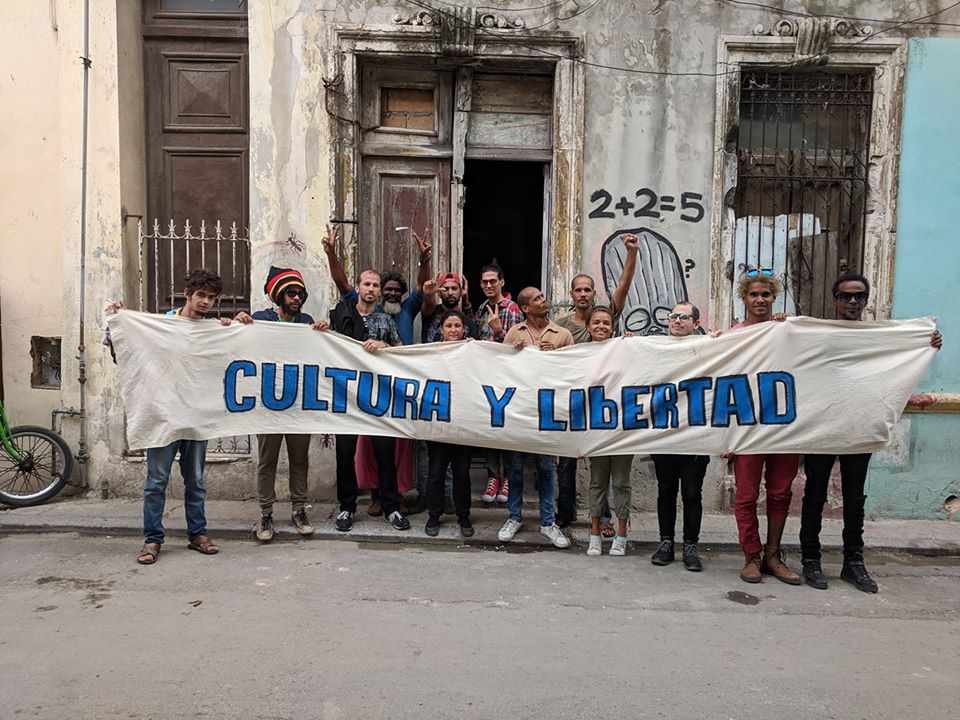
If I have learned anything in recent years from the experience of the civic struggle in Cuba within the San Isidro Movement, it is intersectionality. There are multiple and non-homogeneous motivations behind the slogan "Down with communism!" If you live in Cuba and are oppressed by the communist regime but you are white, it is one thing. If you are black, it is another. If you are not from Havana, another, and if you are a woman or gay, or if you come from marginal, impoverished neighborhoods, another still. If your family had possessions and they took them away, or if they were illiterate and learned to read and write with the "revolution.” If your parents ate the harvest for pleasure, if you stayed on the work trip, you married the Russian, the Italian. If they threw eggs at you when you left, if you arrived on a raft or had to cross jungles and deserts with smugglers. If they send you a remittance or you live off your salary. If you repatriated. And so on. Layer upon layer of oppression and accumulation of fears, pains and hatreds.
Thus, the perspective that we are shaping for a new Cuba is different depending on the glass through which we look at it or what one would say in good theater: The mask we put on to look our own reflection.
“I can't breathe!” George Floyd cried as he was dying and, unlike the years when the bagasse curtain did not allow Cubans who were inside the island to access information from other countries, or participate in the world, or even comment, today we can. Thanks to Cubans who fought and died for internet access and thanks to those who still fight against laws and decrees like Decree 370 inside and outside the country, today we can and we are going to use our voices and our bodies for good, because they are profits from our struggle.
Dialogue, debate, discussion, tiradera or catharsis are exercises inherent in the opening of a body that has been hardened and almost putrefied, pestilential and immobile for 61 years. A dead civility, a corpse that we now dissect, at the same time that we cry and we want to say everything that we couldn’t and above all that we love, because the death of those whom we love so much hurts us for more defects that it has and for how diverse we are . While it is true that our societies are structurally and culturally racist and oppressive, it is also true that we have traditionally built structures and cultures of struggle for freedom, whether it be peaceful, non-violent resistance or through rebellion and war.
Although we have gained some of those freedoms, we still have many to gain. We should not be stuck in our comfort zones. Although the evil that moves us is communism, we have also become citizens of the world and our civic responsibilities are broader now.
The cry of George Floyd was not for us to see the black, the Indian, the Chinese or the white, the Cubans or the Americans, the communists or capitalists that we are and that we have been, that we should already know. Our human history has given us more than enough evidence of these differences and what it has left as the consequences. If we continue to be deaf to those words and, believing that we are right, we cover our mouths or those of others and arrogantly stifle their opportunities and rights and opinions, we are not positioning our ideologies, we are killing our humanity. That is the crime. Absolutely all of us must breathe and if we cannot, we are dead.
- Iris Ruiz
[Note: Bagasse is the pulpy residue left after the extraction of juice from sugar cane. Decree 370 is a draconian new law aimed at curtailing freedom of expression over the internet.]
June 8, 2020
'Our heritage is abandoned': burning of Haitian church fuels anger at politicians
By Michael Deibert
Published on Fri 17 Apr 2020 12.45 BST
The Guardian
(Read original article here)
Cultural leaders in Haiti have described the gutting by fire of a celebrated 200-year-old church as an avoidable tragedy that highlights the fragility of the Caribbean nation’s patrimony – and the need to preserve its historical treasures.
The Our Lady of the Immaculate Conception church in the town of Milot is part of a Unesco world heritage site that includes the ruins of the Sans Souci palace and the Citadelle Laferrière, an imposing fort that looms over Haiti’s northern plains.
Fire tore through the church on Monday, causing its distinctive black wooden dome to collapse. The cause of the blaze has not been determined, but some saw it as indicative of the malaise of misrule that has long bedeviled the island – some of it locally rooted, and some imported by more powerful neighbors.
“[For years] we have been asking the state to ensure the protection of these colonial dwellings, which are important as monuments of slavery, yet nothing has been done,” said Laënnec Hurbon, a sociologist with the State University of Haiti.
“But the state spends its time buying luxurious cars for ministers, functionaries and parliamentarians. It is therefore not surprising that everything concerning the national heritage is abandoned.”
The church was constructed between 1810 and 1813 by Henri Christophe, one of a cadre of revolutionary leaders including Toussaint Louverture and Jean-Jacques Dessalines who helped Haiti oust the French and end the system of slavery.
Christophe went on to declare himself King Henry I and ruled in autocratic splendour over northern Haiti until his death by suicide in 1820 amid a protracted civil war.
On Christophe’s death, the church was ransacked, and its dome had collapsed following an 1842 earthquake. In the 1970s, the renowned Haitian architect Albert Mangonès led an effort to restore the complex. It was named a world heritage site in 1982.
Some worry the legacy that the buildings at Milot attest to is being lost amid Haiti’s current political upheaval.
“The structural inequalities in our society mean there has never been an education accessible to all that would teach the idea of the common good,” says the Haitian author Yanick Lahens.
Haiti has been shaken by often violent unrest for months, prompted in part by a long multibillion-dollar corruption scandal which has engulfed the administration of President Jovenel Moïse.
Despite the political battles, however, the church seems to pierce to the heart of Haiti’s national identity, across party lines.
In a letter to the government after the fire, educational and civil society figures called on the nation’s political leaders to “stop this denial of our history as a people [as] only these monuments remain, testimonies of our history of struggles, suffering and hope.”
One former president, Prosper Avril, who ruled the country from 1988 to 1990, has called for a taskforce to protect the country’s cultural heritage.
In a land that often seems beset by internecine political vendettas, some hope that even in this dire moment, the church’s reconstruction might serve as a point of unity.
“The royal chapel of Milot is a testimony to the history of our people,” said Erol Josué, director of Haiti’s national bureau of ethnology (BNE). “The Haitian state should engage all layers of the population in its reconstruction, because this is our heritage.”
April 14, 2020
L’église de Milot qui vient de prendre feu est un monument unique
L’église de Milot qui vient de prendre feu est un monument unique
Ayibo Post
(Read the original article here.)
L’église de Milot, patrimoine historique du pays construit entre 1810 et 1813, a pris feu ce 13 avril 2020, l’année de la célébration du bicentenaire de la mort du roi bâtisseur
Le roi Henri 1er doit se retourner dans la tombe dans laquelle il repose depuis 200 ans. Son église, la chapelle royale de Milot classé au patrimoine mondial de l’UNESCO, a connu un incendie ce matin du 13 avril 2020. Les préparations pour la commémoration de la mort du roi prennent donc un grand coup. Le patrimoine historique du pays aussi.
« C’est désolant, regrette Erol Josué, directeur du Bureau national d’ethnologie (BNE). Je connais la chapelle, je vais souvent à Milot dans le cadre de mon travail sur la préservation du patrimoine immatériel. C’est une perte importante. »
Télémaque Henri Claude, l’un des maires de la commune de Milo, déplore aussi cet incident regrettable. « Cela s’est passé entre minuit et deux heures du matin, estime-t-il. La population a donné l’alarme, l’église était déjà en feu. Maintenant nous ne pouvons plus parler de chapelle de Milot, mais de ruines. Nous avons fait un grand pas en arrière »La commune de Milot ne dispose d’aucun service d’incendie. Les camions des sapeurs-pompiers qui ont accouru sur les lieux venaient du Cap-Haïtien, à plus de 15 kilomètres de la commune.
« Les pompiers ont fait de leur mieux, assure le maire. Mais quand ils sont arrivés, il n’y avait pas moyen d’éclairer la scène pour qu’ils puissent mieux travailler. De plus, l’église est située en hauteur, et les pompiers ne pouvaient pas amener l’eau jusque-là. »
Incendie criminel ?
Il est encore trop tôt pour déterminer l’origine de l’incendie. Mais toutes les pistes sont ouvertes. « En général, c’est une zone où les gens restent tard. À cause du couvre-feu imposé pour le coronavirus, dit Télémaque Henri Claude, il n’y avait pratiquement personne aux alentours de l’église à cette heure. Tout le monde était rentré. Nous ne pouvons donc pas savoir ce qui s’est réellement passé, et c’est une enquête qui pourra le déterminer. Mais ce serait regrettable que le feu soit volontaire. »
Frédérick Mangonès est architecte. Il a passé plus de 20 ans de sa carrière à restaurer la citadelle Laferrière et le Palais Sans-souci, classés au patrimoine mondial de l’humanité. « On ne peut évidemment pas encore déterminer ce qui s’est passé, dit-il, mais il y avait une installation électrique dans le dôme. Il est construit en bois. Mais il n’y avait même pas un extincteur dans l’église ; cela pose le problème de la sécurité dans nos monuments historiques. »
Selon le maire de Milot, il y a des agents de sécurité sur le site, car l’église fait partie du Parc national historique, dans lequel on retrouve aussi la citadelle Laferrière et le palais Sans Souci.
Des actes de vandalisme auraient aussi été dirigés contre la citadelle Laferrière, rapporte Erol Josué, ce qui lui fait craindre un acte prémédité. « La porte vitrée du musée de l’artillerie, l’un des plus grands de la Caraïbe, a été brisée samedi soir », informe le directeur du BNE.
Le dôme, un bijou d’architecture
L’architecte Frédérick Mangonès mêle sa voix au concert de dénonciation de l’incendie. « L’église de Milot est la seule dans le pays qui a cette structure circulaire. Le dôme qui la recouvre est particulièrement bien fait, même si ce n’est pas l’original. »« Pour l’époque où le dôme a été construit, c’était un vrai tour de force, comme beaucoup d’autres aspects de l’architecture du palais Sans Souci. »
Ce premier dôme était en très mauvais état. Les Américains, sous l’occupation, et peu avant leur départ, l’ont reconstruit. « Ils ont fait du bon travail, et l’ont remplacé par une structure moderne, en bois, dit-il. Cependant, je crois qu’il était disproportionné par rapport à la base. L’architecte qui a construit le palais Sans Souci est de toute évidence un professionnel de premier ordre. Je ne crois pas qu’il avait construit un dôme aussi grand. »Le dôme de l’église allait bientôt être restauré. « Il y a consensus qu’il fallait le restaurer, continue Frédérick Mangonès. Mais le débat portait surtout sur ses proportions. Personnellement, je pensais qu’il en fallait un nouveau, adapté proportionnellement à la base. »
L’église de Milot, en plus de sa portée historique, aurait une signification ésotérique dans son architecture. L’ingénieur Claude Prépetit, dans un article, a fait une « étude symbolique », c’est-à-dire une « analyse rigoureuse des nombres et des formes sacrés habilement dissimulés » dans l’architecture de l’église. L’ingénieur, connu surtout pour ses travaux sur les séismes, se demande si l’église de Milot n’est pas « un catalyseur de la conscience humaine et des énergies de la nature qui émettait des ondes de formes positives et bénéfiques au royaume du roi Henri. »
Restaurer le patrimoine
L’incendie de l’église Milot met la lumière sur les faiblesses du pays en termes de protection du patrimoine matériel et immatériel. L’UNESCO et l’Institut de sauvegarde du patrimoine national (ISPAN) ont un programme en commun de restauration de certains sites comme le Parc national historique.
« Dans les autres pays de la région, les sites sont mis en valeur, dit Frédérick Mangonès. Chez nous, les moyens mis à la disposition de l’ISPAN sont une goutte d’eau comparée à la mer de ce qu’il faut réaliser. L’ISPAN a fait un inventaire des sites du pays. Il ne s’agit pas seulement des architectures militaires, mais aussi des systèmes civils comme les aqueducs, etc. »
Erol Josué croit que les responsables de l’État ont un grand rôle à jouer pour éviter que ces incidents se reproduisent. « Nous nous occupons tout le temps de politique, nous n’allons pas au rythme de la société, pour grandir, dit le directeur du BNE. Il y a un lien entre l’ignorance des gens et la protection du patrimoine. Cet incident nous affaiblit encore plus. Nous avons beaucoup de sites historiques, mais nous n’avons pas assez pour qu’ils soient détruits. »
Le Parc national historique est important pour le secteur déjà affaibli du tourisme. Michael Deibert, un journaliste, auteur et professeur invité à l’université de Lisbonne a travaillé pendant plus de 20 ans en Haïti. Il croit que l’importance de ce parc va au-delà du pays. « La citadelle Laferrière et le Palais Sans Souci sont parmi les monuments historiques les plus importants de l’hémisphère Nord », dit-il.
« C’est là que l’abolition de l’esclavage a commencé en Amérique, continue-t-il. Visiter le nord d’Haïti, et comprendre le courage de ceux qui se sont révoltés contre ce système infernal est une profonde et bouleversante expérience. »
Widlore Mérancourt a participé à ce reportage.
Michael Deibert's Blog

- Michael Deibert's profile
- 8 followers

