
Michael Deibert's Blog, page 12
September 15, 2016
The Ghosts of Assad
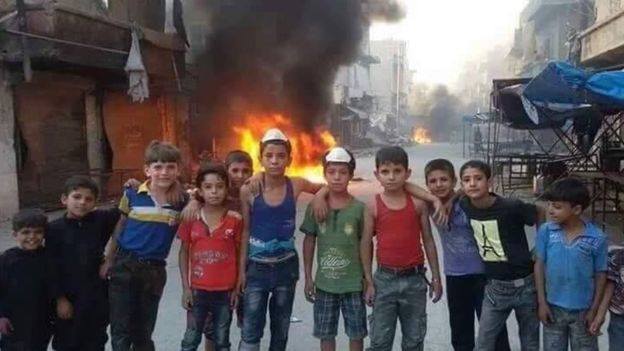
Children in Aleppo with a pile of burning tyres behind them, which they are setting alight to create a smokescreen against the bombing runs of the Assad regime and Russian planes. Photographer unknown.
The Ghosts of Assad
A Review of Francesca Borri's Syrian Dust: Reporting from the Heart of the War
By Michael Deibert
The blood-spattered, dust-covered face of Omran Daqnees, pulled from the rubble of his family’s home after a bombing in the Syrian city of Aleppo, wrenched the world’s collective conscience last month. Once the flourishing capital of Syria’s most populous region, Aleppo has been in a state of war since July 2012. The so-called barrel bombs of Syria’s President Bashar al-Assad - fiendish contraptions filled with explosives, shrapnel and sometimes chemicals - have killed thousands of people in the city, and have now been joined by more technologically advanced though no less lethal air assaults by the jets of Assad’s Russian backers.
This year, the relentless carnage of Syria’s five-year old civil war - pitting the Assad government and its allies in Russia, Iran and Lebanon’s Hezbollah against a flailing panoply of rebel groups including the so-calles Islamic State (ISIS), the until-recently Al-Qaeda-affiliated Al-Nusra Front, the Free Syrian Army (now believed to be all but defunct), various Kurdish militias and others - continued under the world’s impotent gaze. Death rained down on cities like Aleppo and Daraya (the latter finally falling to the government in late August) as ISIS-inspired attacks fanned out to Bangladesh, Belgium, Turkey and elsewhere, building on the horror of last year’s assaults in Paris.
But in so many ways, and not just in young Omran Daqnees’ traumatized, terrified gaze, Aleppo, broken, bleeding Aleppo, has remained the centre of it all. And Syrian Dust (Seven Stories Press), the excellent book by Italian journalist Francesca Borri recounting her reporting from the city between 2012 and 2013, presents a vital primary source recounting a siege that has over time became one of the 21st century’s great crimes.
Who would defend the people of Aleppo after their government began killing them four years ago? In Borri’s account, the Free Syrian Army is depicted as something of a joke of flip-flop wearing teenagers and regime defectors. Al Nusra is better-armed, but consisting of so many foreign nationals, their lingua franca is English. And thus a terrible dynamic develops, whereby a disparate armed insurgency fights a seemingly endless stalemate with a dictatorship capable of any atrocity.
“In theory, there are four fronts,” Borri writes. “But the truth is that there is only one front here: it’s the sky. And those who have nothing but bullets to use against the fighter jets haven’t got a chance. Without intervention from the West, as in Libya, the Syrian Free Army can’t win.”
That intervention never came, at least not in the way that Borri means it, but plenty of people did find opportunity in Syria’s agony.
There are the cynical exile opposition politicians who appear in squalid refugee camps to seek support and “distribute a few biscuits like a tourist feeds the pigeons at Piazza San Marco.” There are the Saudi rebels backers who appear and literally buy child brides from starving refugees huddled along the Turkish border. There are Borri’s own journalistic colleagues who, for the most part, far from being united by idealism, mostly appear driven to seek out the most garish and bizarre elements (“find me a drunken child soldier!”). Reporters level misogynistic advice with one hand (with one self-mythologizing reporter informing her Aleppo is “no place for a woman”) and engage in potentially lethal backstabbing with the other, with Borri allegedly once being directed towards snipers, and another time being ratted out to rebels by an ostensible colleague envious for a scoop.
And in the meantime, “you wait and you die in Aleppo, that’s all,” she writes, going on to pen that for those remaining in the city beneath Assad's planes
These are the cruelest moments, because the mind is still lucid. And as the pilot chooses his target, while maybe it will be you, all you can do is huddle there, your back against a damp wall, and stare at the floor along with everything you’ve left undone in your life, everything you put off, as you look around, now that maybe your number’s up, and even if you had something to say, here among these strangers, anything you could utter, any name, any wish, any regret whom could you say it to?
The book has its weaknesses, both in its sometimes meandering digressions into the author’s previous life working in Israel and Palestine, and in its one big omission in the lack of an real discussion of the rise of the Islamic State (there are a number of references to Al Qaeda but almost none to ISIS). But this is perhaps the result of the book’s being published first in Italian in May 2014, just as the terrorist group was becoming the major player in the conflict
But Syrian Dust’s true strength is its depiction of the terrified, terrorized lives of the Syrians living under the Assad regime’s brutal and relentless barrage. Borri tells us the story of a 25 year-old mother reduced to living in a drainage pipe with her 3 children who ventures out to buy bread with her youngest and is shot by a sniper, leaving her other two offspring “wasted away in poverty until a mortar pulverized them.” In Moadamiya “only six miles from the centre of Damascus...where bankers play tennis at their clubs...it looks like Somalia, with those bodies that are all bones.” During the siege of Al-Qusayr, she receives frantic texts from those inside the city: “Where are you? They’re killing us all!”
At the end of the book, comparing the city to Dresden after World War II, she writes simply and devastatingly “Aleppo no longer exists” and that “everything I may write, no matter how good, whatever life I may risk, this war and every war will go on.”
And go on it does.
There was another child pulled from the rubble in Aleppo the same day as Omran Daqnees: Omran’s brother, Ali.
He had been playing with friends in the street when the bombs began to fall. Like most of those in Aleppo’s agony, there was no photo to mark that moment or aftermath, nor did the world’s news sources and social media rouse themselves to a cri de cœur to mark his short life.
And like so many in Aleppo, as the world stood by, he died.
Michael Deibert is the author of the forthcoming Haiti Will Not Perish: A Recent History (Zed Books).


July 22, 2016
The Panama Papers is the least of Central America’s woes
The Panama Papers is the least of Central America’s woes
By Michael Deibert
16/06/2016
FDI
Corruption, resignations, drug wars: the Mossack Fonseca leak – known globally as 'the Panama Papers' – may have made headlines, but Central America has far more pressing problems to address if it is ever to regain investor confidence.
(Please read the original article here)
When 11.5 million documents were leaked from Panamanian law firm Mossack Fonseca in April, a host of politically connected international figures – and some politicians themselves – were revealed to be hiding their assets by sometimes dubious means. The impact was particularly strong in Latin America, especially on the isthmus of Central America, where several countries have been rocked by violence and allegations of shady business practices.
In recent years, Panama itself has worked hard to shed itself of the reputation as some sort of economic 'Wild West', which it acquired in the 1980s. During the 1983 to 1989 rule of dictator Manuel Noriega, Panama became known as a hub for laundering drug money profits for groups such as the Medellín cartel, the Ochoa family and others. Mr Noriega was arrested following the 1989 US invasion of Panama and served 17 years in prison in the US on drug-trafficking charges. He was subsequently extradited to France where he was also convicted of narcotics-related offences, and is now in a Panamanian jail.
Though Panama’s economy stabilised enough for several ratings agencies to boost its sovereign debt rating to investment grade, former president Ricardo Martinelli, who served from 2009 to 2014, ended up in exile in Miami on the run from embezzlement charges back home.
Slow-moving Nicaragua
North of Panama, Nicaragua is these days is ruled as a personal fiefdom by Daniel Ortega of the Frente Sandinista de Liberación Nacional, in office since 2007 and showing no signs of leaving any time soon.
Mr Ortega’s ambitious plan to one-up Panama’s inter-oceanic canal with one across Nicaragua – which were announced with great fanfare in 2013 with an estimated cost of $50bn – have thus far come to nothing. Ostensibly the brainchild of Chinese billionaire Wang Jing, chairman and CEO of Beijing’s Xinwei telecoms company (an entity that had never before had any involvement in infrastructure projects of this magnitude), ground was broken for the canal’s construction nearly two years ago.
Today, however, amid howls of protests from environmentalists, human rights leaders and others, work on the canal is virtually non-existent, as is any explanation for when it may be continued.
El Salvador violence
In neighbouring El Salvador, a 2012 truce organised between the government of then-president Mauricio Funes and the country’s two main gangs, Mara Salvatrucha and Barrio 18, saw murder numbers cut in half the following year. But Mr Funes’ replacement – former guerrilla commander Salvador Sánchez Cerén, like Funes a member a member of the left-wing Farabundo Martí National Liberation Front – abandoned the truce upon taking office in 2014, resulting in open warfare across the country between the gangs and the security forces.
Last year, El Salvador’s murder rate rose by a shocking 70% compared with the previous year: 6657 people died in what was by far the most deadly year since the end of the country’s civil war in 1992.
All this in a country with a population of just 6.4 million.
This year’s figures look set to surpass that, and Mr Sánchez Cerén’s government has taken the additional step of arresting some of those – including former government officials – who had negotiated the original truce. One long-time observer of the country described the government’s current policy as “madness”.
Guatemalan uncertainty
In Guatemala, Central America’s most populous country and its largest economy, three close confidants of former presidents Álvaro Colom, Alfonso Portillo and Otto Pérez were named in the Panama Papers, adding more uncertainty to what has already been an unsettled 12 months in the country.
Last autumn, then-president Mr Pérez resigned and was arrested the following day, following the apprehension of vice-president Roxana Baldetti, who had stepped down in August. Both are charged with running a criminal network known as la línea (the line) while in office.
Though the arrests of the country’s two most powerful politicians took place following massive street demonstrations throughout Guatemala, many believe they would not have happened but for the work of the Comisión Internacional Contra la Impunidad en Guatemala (CICIG), a UN-mandated body that has operated since 2007, charged with investigating criminal organisations and exposing their connections to the state. Led by Colombian judge Iván Velásquez Gómez, the swiftness with which CICIG, along with Guatemala’s Ministerio Público, brought about the downfall of the government was startling, especially given that Mr Pérez had only weeks left in office after 2015’s presidential election.
No consultation
Guatemala’s current president, Jimmy Morales, was elected on the ticket of the Frente de Convergencia Nacional, a party founded by former military officers leaning to the extreme right of the country’s political spectrum. Both before and after Mr Morales assumed office, foreign investment in Guatemala has been marked by controversy. Projects such as the Escobal silver mine, owned by Canadian company Tahoe Resources, in the department of Jalapa, have sprung up with little to no consultation with indigenous communities (Guatemala has the highest indigenous population in Central America) and little transparency, and have frequently resulted in violent clashes.
More worrying still, in April a video surfaced from the Guatemalan department of Huehuetenango showing armed men claiming to be from new rebel group the Fuerzas Armadas Campesinas, vowing to oppose by force a hydroelectric project in the town of Ixquisís.
At the turn of the millennium many might have hoped that endemic corruption and violence were on the wane in the region, but events of recent months, among which the Panama Papers leak is only one, may well have investors thinking twice about Central America.
By Michael Deibert
16/06/2016
FDI
Corruption, resignations, drug wars: the Mossack Fonseca leak – known globally as 'the Panama Papers' – may have made headlines, but Central America has far more pressing problems to address if it is ever to regain investor confidence.
(Please read the original article here)
When 11.5 million documents were leaked from Panamanian law firm Mossack Fonseca in April, a host of politically connected international figures – and some politicians themselves – were revealed to be hiding their assets by sometimes dubious means. The impact was particularly strong in Latin America, especially on the isthmus of Central America, where several countries have been rocked by violence and allegations of shady business practices.
In recent years, Panama itself has worked hard to shed itself of the reputation as some sort of economic 'Wild West', which it acquired in the 1980s. During the 1983 to 1989 rule of dictator Manuel Noriega, Panama became known as a hub for laundering drug money profits for groups such as the Medellín cartel, the Ochoa family and others. Mr Noriega was arrested following the 1989 US invasion of Panama and served 17 years in prison in the US on drug-trafficking charges. He was subsequently extradited to France where he was also convicted of narcotics-related offences, and is now in a Panamanian jail.
Though Panama’s economy stabilised enough for several ratings agencies to boost its sovereign debt rating to investment grade, former president Ricardo Martinelli, who served from 2009 to 2014, ended up in exile in Miami on the run from embezzlement charges back home.
Slow-moving Nicaragua
North of Panama, Nicaragua is these days is ruled as a personal fiefdom by Daniel Ortega of the Frente Sandinista de Liberación Nacional, in office since 2007 and showing no signs of leaving any time soon.
Mr Ortega’s ambitious plan to one-up Panama’s inter-oceanic canal with one across Nicaragua – which were announced with great fanfare in 2013 with an estimated cost of $50bn – have thus far come to nothing. Ostensibly the brainchild of Chinese billionaire Wang Jing, chairman and CEO of Beijing’s Xinwei telecoms company (an entity that had never before had any involvement in infrastructure projects of this magnitude), ground was broken for the canal’s construction nearly two years ago.
Today, however, amid howls of protests from environmentalists, human rights leaders and others, work on the canal is virtually non-existent, as is any explanation for when it may be continued.
El Salvador violence
In neighbouring El Salvador, a 2012 truce organised between the government of then-president Mauricio Funes and the country’s two main gangs, Mara Salvatrucha and Barrio 18, saw murder numbers cut in half the following year. But Mr Funes’ replacement – former guerrilla commander Salvador Sánchez Cerén, like Funes a member a member of the left-wing Farabundo Martí National Liberation Front – abandoned the truce upon taking office in 2014, resulting in open warfare across the country between the gangs and the security forces.
Last year, El Salvador’s murder rate rose by a shocking 70% compared with the previous year: 6657 people died in what was by far the most deadly year since the end of the country’s civil war in 1992.
All this in a country with a population of just 6.4 million.
This year’s figures look set to surpass that, and Mr Sánchez Cerén’s government has taken the additional step of arresting some of those – including former government officials – who had negotiated the original truce. One long-time observer of the country described the government’s current policy as “madness”.
Guatemalan uncertainty
In Guatemala, Central America’s most populous country and its largest economy, three close confidants of former presidents Álvaro Colom, Alfonso Portillo and Otto Pérez were named in the Panama Papers, adding more uncertainty to what has already been an unsettled 12 months in the country.
Last autumn, then-president Mr Pérez resigned and was arrested the following day, following the apprehension of vice-president Roxana Baldetti, who had stepped down in August. Both are charged with running a criminal network known as la línea (the line) while in office.
Though the arrests of the country’s two most powerful politicians took place following massive street demonstrations throughout Guatemala, many believe they would not have happened but for the work of the Comisión Internacional Contra la Impunidad en Guatemala (CICIG), a UN-mandated body that has operated since 2007, charged with investigating criminal organisations and exposing their connections to the state. Led by Colombian judge Iván Velásquez Gómez, the swiftness with which CICIG, along with Guatemala’s Ministerio Público, brought about the downfall of the government was startling, especially given that Mr Pérez had only weeks left in office after 2015’s presidential election.
No consultation
Guatemala’s current president, Jimmy Morales, was elected on the ticket of the Frente de Convergencia Nacional, a party founded by former military officers leaning to the extreme right of the country’s political spectrum. Both before and after Mr Morales assumed office, foreign investment in Guatemala has been marked by controversy. Projects such as the Escobal silver mine, owned by Canadian company Tahoe Resources, in the department of Jalapa, have sprung up with little to no consultation with indigenous communities (Guatemala has the highest indigenous population in Central America) and little transparency, and have frequently resulted in violent clashes.
More worrying still, in April a video surfaced from the Guatemalan department of Huehuetenango showing armed men claiming to be from new rebel group the Fuerzas Armadas Campesinas, vowing to oppose by force a hydroelectric project in the town of Ixquisís.
At the turn of the millennium many might have hoped that endemic corruption and violence were on the wane in the region, but events of recent months, among which the Panama Papers leak is only one, may well have investors thinking twice about Central America.
July 16, 2016
Waterfront, Coconut Grove, Miami
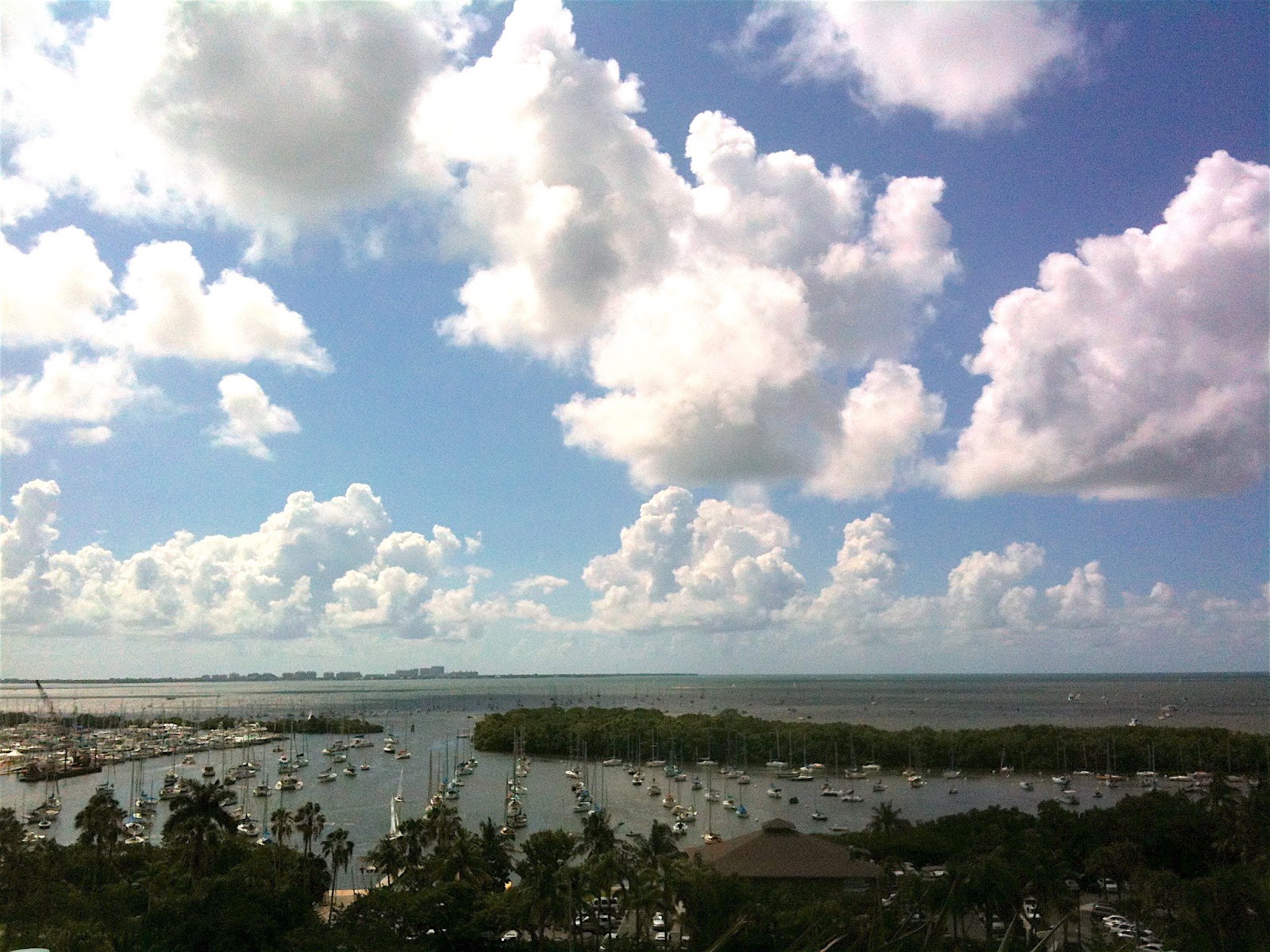
Photo © Michael Deibert
June 17, 2016
May 5, 2016
Et voilà...
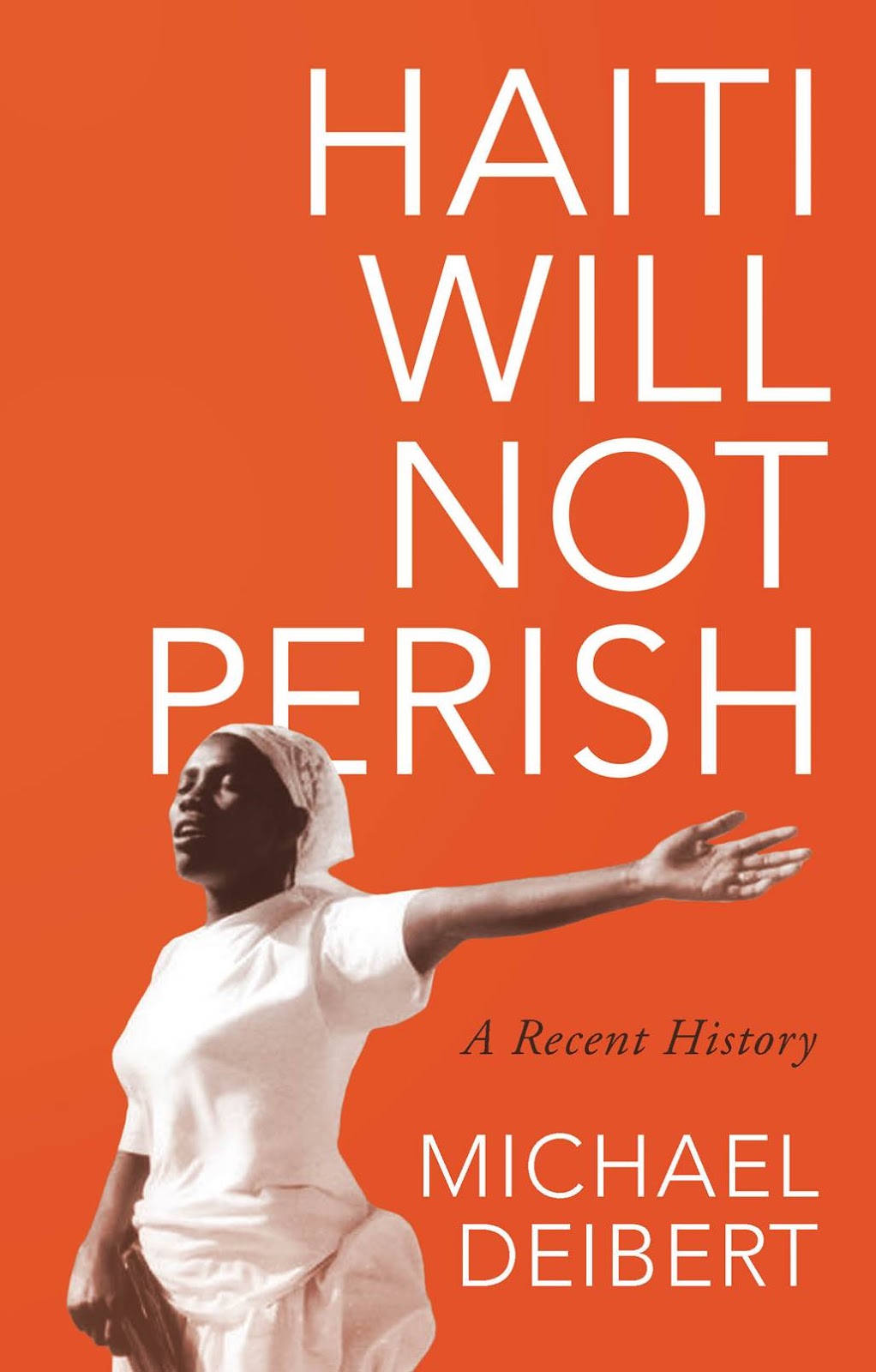
The cover for my new book, Haiti Will Not Perish: A Recent History, out from Zed Books this autumn.
May 2, 2016
A few thoughts on Puerto Rico's debt crisis
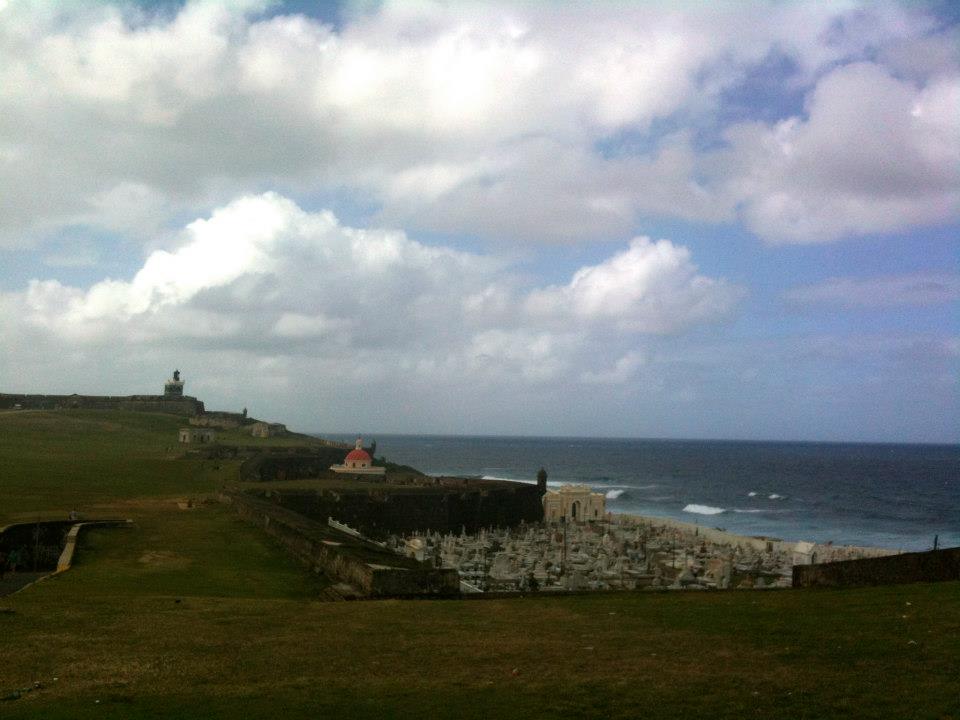
Make no mistake: The terms set up for Puerto Rico's $422 million payment to its debtors this week were ones that no one - including the creditors - believed that Puerto Rico could meet (nor do they have any chance of meeting the $2 billion - yes, billion - payment due in July).
How much more could the island reasonably cut by way of services as cuts have already pushed it to the brink? In the last two years, the island has laid off tens of thousands of employees, raised its sales tax to 11.5%, closed 10% of the its schools, shuttered dozens of hospitals and clinics, watched 84,000 of its sons and daughters depart for the mainland United States last year alone and seen nearly half the island's population descend into poverty.
The logic behind this is similar to the austerity package that was pushed on Greece, the one that Finance Minister Yanis Varoufakis resigned over last September. It is all about punishment. The hedge funds and vulture funds such as BlueMountain Capital Management that own a significant chunk of Puerto Rico's debt (and their front organizations, such as the Center for Individual Freedom and Main Street Bondholders, pressuring Congress) are sending an unambiguous message not only to Puerto Rico's citizens but to those of other countries in which they operate: Fuck with us and we'll make you scream. If this is how we treat U.S. citizens, imagine how we will treat you?
It is a scandal that 3.5 million Americans are being subjected to the economic equivalent of waterboarding, and Congress should act to reign in the island's usurious creditors and bring some relief to its citizens. Having colonies comes with responsibilities, too.
April 27, 2016
Book Talk: "Haiti Will Not Perish" with Michael Deibert
Here is the video of my talk on Haiti at Columbia University's School of International and Public Affairs. Thank you so much to Severine Autesserre for making it happen.
April 17, 2016
Review of In the Shadow of Saint Death: The Gulf Cartel and the Price of America's Drug War in Mexico
Review of In the Shadow of Saint Death: The Gulf Cartel and the Price of America's Drug War in Mexico
From "Drugs, Violence, and Corruption: Perspectives from Mexico and Central America" By Sonja Wolf in Latin American Politics and Society, Vol 58, Issue 1
(Read the original here)
In the Shadow of Saint Death, the third book from independent journalist Michael Deibert, is a superb piece of reporting on U.S. drug policy and its devastating effects on drug-producing and transit countries in the Western Hemisphere. Ambitious in scope, the volume touches on themes such as violence and sleaze, media censorship, and the survival and resistance of local heroes. With rich descriptions, the author effortlessly recreates the atmosphere in villages and towns across Mexico and Central America that are reeling under the impact of the drug war. The narrative is constructed around the history of the Gulf Cartel and events in its home state of Tamaulipas. But the book is really addressed to a U.S. audience, to whom Deibert aspires to convey the bloody consequences of an insatiable drug demand and a futile prohibitionist approach to drug control.
In his biting critique of U.S. policy, Deibert shows how historically the prohibition of certain substances and the criminalization of their consumers have created corruption and illegal markets. Successive administrations—from Richard Nixon through Barack Obama—have pursued the drug war both at home and abroad, costing the country more than one trillion dollars without ever making significant inroads into this public health issue. In a brief but fascinating section on the Reagan years, the journalist reminds readers how political goals even prompted the United States to collude with known drug traffickers. If the drug war has not yielded the expected results, why does the United States insist on fighting it, and how has it been successfully exporting it around the world for so long? Deibert does not concern himself with the second question and answers the first puzzle by pointing to business interests— notably the private prison industry—and the electoral interests of politicians.
The author is adamant that current drug policies must change and alternatives to drug control and addiction be explored. In the epilogue, the most reflective part of the book, he predicts more violence for Mexico and its southern neighbors unless a fundamental shift in strategy occurs. The terms of the debate have altered, although the fight for drug policy reform is bound to be a long one. Sounding a hopeful note, Deibert cites a 2009 report by the Latin American Commission on Drugs and Democracy—which pronounced the failure of the eradication and interdiction approach—and a 2011 document by the Global Commission on Drug Policy that urges experimentation with government regulation of drugs.
In the Shadow of Saint Death went to press before the publication of the GCDP’s successor report (2014), which set out a roadmap for the creation of more effective and humane drug policies. Deibert identifies Guatemalan president Otto Pérez Molina as an example of leadership on drug decriminalization, even as he recognizes that the unexpected espousal of a progressive standpoint may mask other agendas. The book certainly makes a strong case for drug policy alternatives, but scientific research will need to demonstrate the viability of unconventional approaches.
March 16, 2016

February 26, 2016
Notes from a fading democracy?
Donald Trump - who I have resisted writing about until now - has for months advocated deporting/excluding millions of people on an ethnic/religious basis and seen his poll numbers continue to climb and won three primaries in a row. You think the fact that Marco Rubio and Ted Cruz yelled at him last night will halt his ascent? Don't be so naive.
What I watched last night, as I have noted before, appeared to be half reality tv show, half Nuremberg Rally, with Trump playing his rivals so skillfully that at one point he had Rubio and Cruz arguing over who would be more willing to let people die in the street without healthcare as if it were a good thing.
Make no mistake, terrifying as he is - xenophobic, bigoted, corrupt, tapping into a fetid well of nativism, racism and paranoia - Trump is one of the most naturally gifted politicians to come along in many years. The Dems need to seriously weigh their options this fall. I was leaning towards Sanders - though I am not a reflexive Clinton hater like some - but if Facebook news feeds convinces you that endorsements by the Cornel Wests of the world will sway voters in places like Lancaster Country, Pennsylvania and Hillsborough County, Florida, I ask you to step outside your bubble and the weird religious cult aspects the Sanders campaign has begun to assume. Hillary has her own stark negatives, as well.
The Dems have two flawed candidates, and whoever wins will have their work cut out for them beating someone who represents a lot of things in America I think many wish we had left behind.
We should be worried.
What I watched last night, as I have noted before, appeared to be half reality tv show, half Nuremberg Rally, with Trump playing his rivals so skillfully that at one point he had Rubio and Cruz arguing over who would be more willing to let people die in the street without healthcare as if it were a good thing.
Make no mistake, terrifying as he is - xenophobic, bigoted, corrupt, tapping into a fetid well of nativism, racism and paranoia - Trump is one of the most naturally gifted politicians to come along in many years. The Dems need to seriously weigh their options this fall. I was leaning towards Sanders - though I am not a reflexive Clinton hater like some - but if Facebook news feeds convinces you that endorsements by the Cornel Wests of the world will sway voters in places like Lancaster Country, Pennsylvania and Hillsborough County, Florida, I ask you to step outside your bubble and the weird religious cult aspects the Sanders campaign has begun to assume. Hillary has her own stark negatives, as well.
The Dems have two flawed candidates, and whoever wins will have their work cut out for them beating someone who represents a lot of things in America I think many wish we had left behind.
We should be worried.
Michael Deibert's Blog

- Michael Deibert's profile
- 8 followers
Michael Deibert isn't a Goodreads Author
(yet),
but they
do have a blog,
so here are some recent posts imported from
their feed.

