
Michael Deibert's Blog, page 11
February 12, 2017
Be Realistic (Ask for the Impossible)
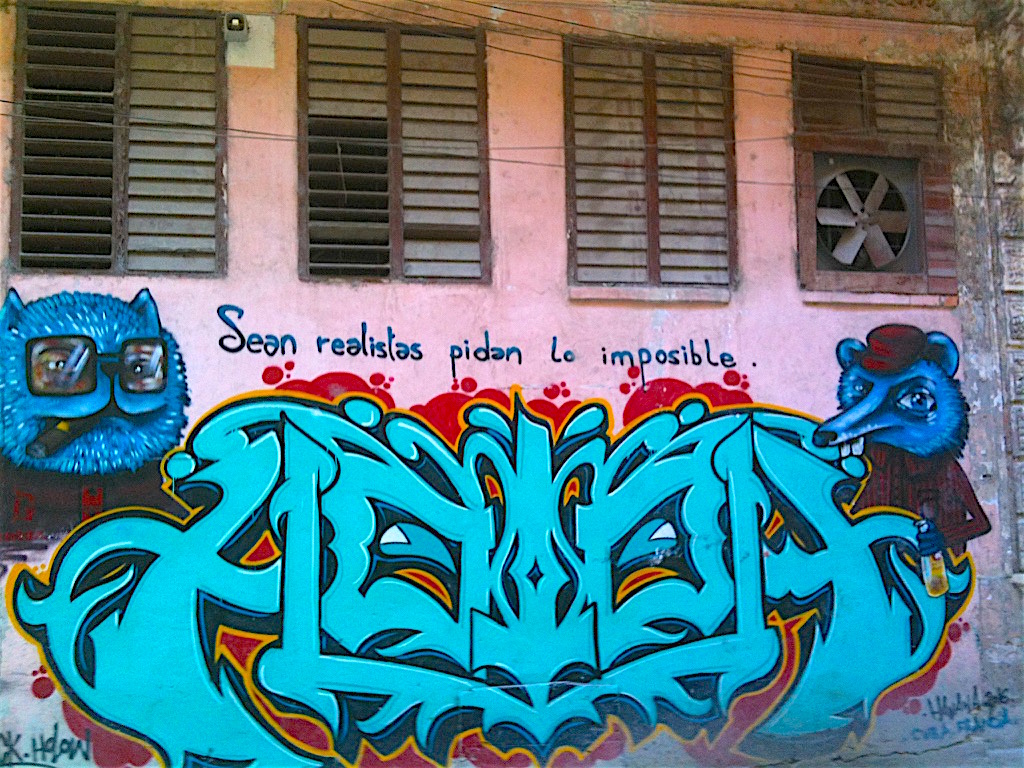 Photo © Michael Deibert


February 8, 2017
A few notes on the Miami-Dade County Board of County Commissioners meeting

What I witnessed yesterday at the Miami-Dade County Board of County Commissioners meeting was a disgrace and an affront to democracy.
In a packed house, as citizen after citizen rose to voice to their opposition to the city's collaboration with the Trump administration's nakedly racist policies targeting immigrants, Muslims and others - and to express that there are now whole communities in Miami that are living in fear - the speakers were consistently cut off and silenced by Commissioner Esteban L. Bovo, Jr., who presided over the meeting with the glittering arrogance of colonial proconsul addressing his imperial subjects.
As voter after voter spoke - some removed from the Chamber by Bovo even though they were no way being disruptive, Miami-Dade County Mayor Carlos A. Gimenez ignored the proceedings entirely, standing off to one side laughing and joking with his cronies. The dynamic finally erupted into a walkout and protest by many of those assembled (including me).
For those interested who would like to see video confirmation of my story, I posted three videos of the meeting and the aftermath that I took with my phone here.
The Miami-Dade County Board of County Commissioners has clearly forgotten who they work, so I suggest from here on out we remind them, not just on voting day but at every meeting henceforth. They work for us, the city of Miami, and we always have been and remain a city and a county of immigrants and a refuge for the persecuted, all the stronger for our diversity.
This will not pass. Ni un paso atrás.
February 5, 2017
Havana Nocturne
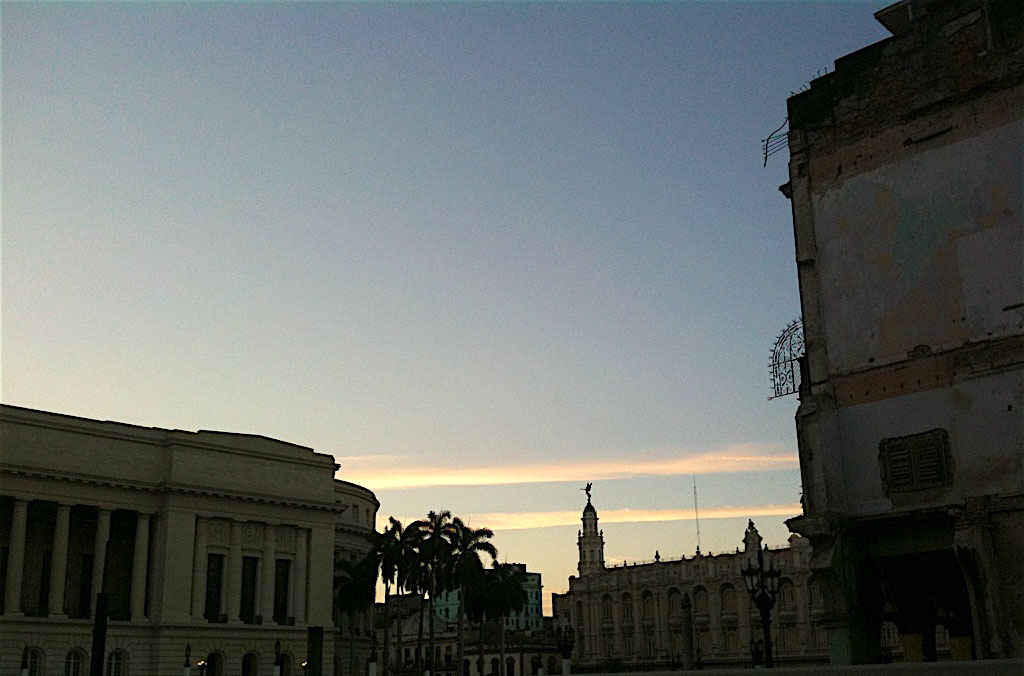 Havana Nocturne, photo by me.
January 30, 2017
Some Monday thoughts from a fading democracy
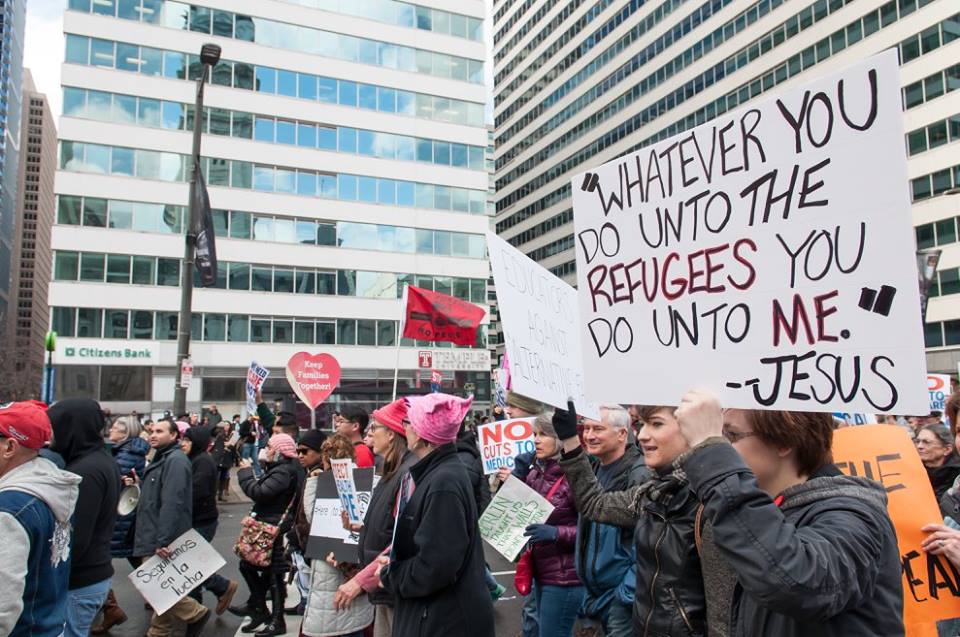
Protest at Thomas Paine Plaza, Philadelphia, 26 January 2017. Photo credit: Ben Deibert.
I think we are in a very dangerous moment in the United States at present.
There are clearly yawning fissures within and between our institutions - the Executive, the Department of Defense, the Department of Homeland Security, U.S. Customs and Border Protection (CBP), the Central Intelligence Agency (CIA), the Federal Bureau of Investigation (FBI), the judiciary - that should worry any clear-eyed observer, especially given the fact that Steven Bannon (who, don't forget, is a former Navy officer) is exercising so much control over Trump.
The fact that CBP (whose union, remember, endorsed Trump and whose more moderate leader was ousted once he took office) brazenly ignored a valid court order for hours and treated attorneys and even elected officials like Cory Booker with scorn when they tried to intervene, even invoking Trump's name in the process, has, to my knowledge, never happened before.
Also, make no mistake, both the Muslim Ban and the omission of Jews on Holocaust Memorial Day feed into white nationalist narrative that Bannon promotes (which is in no way undercut by the happenstance Jewishness of Trump's son in law).
New York City mayor Bill de Blasio mentioned yesterday if this is where Trump is starting, imagine where the government is heading. And imagine what their response will be when the next terrorist attack happens (and it will). I fully expect unprecedented attacks on the judiciary, the free press, the separation of powers, and I think people need to be prepared for the worst. Looking at all the signs and based on my years of reporting on politics abroad, I fear there is a strong chance this could get violent before it's all over.
I wish I had better news for you, I'm sorry...
Love to you all,
M
January 27, 2017
To my progressive friends: Common ground with your erstwhile conservative foes
Dear progressive friends: There ARE some conservatives and GOP folks who, to varying degrees, see Trump for what he is and realize the danger he poses. These may be people I don't agree with on a lot of issues, but on this they have (thus far ) been fairly sober when it comes to the unique peril the nation currently finds itself in. Among those I would suggest following (Twitter handles after their names):
-Senator John McCain, @SenJohnMcCain-Senator Lindsey Graham, @LindseyGrahamSC-Senator Rob Portman, @senrobportman-Senator Susan Collins, @SenatorCollins-Senator Jeff Flake, @JeffFlake -Gov. John Kasich, @JohnKasich-David Frum, @davidfrum-John Weaver, @JWGOP-Ana Navarro, @ananavarro-Jonah Goldberg, @JonahNRO-David French, @DavidAFrench-Bill Kristol, @BillKristol-George F. Will, @GeorgeWill-David Brooks, @nytdavidbrooks-Eliot A Cohen, @EliotACohen-Max Boot, @MaxBoot -Evan McMullin, @Evan_McMullin
This is by no means an exhaustive list, and I know there are issues (choice, the meaning of the 2nd amendment) on which I and these individuals would strongly disagree. But if there is one thing I have seen about despots in my 20 years as a journalist covering them (and make no mistake, that is where we are heading), it is that it takes a broad based coalition to bring them down, not a sectarian one. It is going to take bridge building on all sides for the country to get through this in one piece, and even then I think it will be a challenge like we haven't faced since the Great Depression or the Civil War. Before liberals or conservatives, Democrats or Republicans, we must now act as Americans.
Fight Trump every day.
Never give up.
L'union fait la force.
-Senator John McCain, @SenJohnMcCain-Senator Lindsey Graham, @LindseyGrahamSC-Senator Rob Portman, @senrobportman-Senator Susan Collins, @SenatorCollins-Senator Jeff Flake, @JeffFlake -Gov. John Kasich, @JohnKasich-David Frum, @davidfrum-John Weaver, @JWGOP-Ana Navarro, @ananavarro-Jonah Goldberg, @JonahNRO-David French, @DavidAFrench-Bill Kristol, @BillKristol-George F. Will, @GeorgeWill-David Brooks, @nytdavidbrooks-Eliot A Cohen, @EliotACohen-Max Boot, @MaxBoot -Evan McMullin, @Evan_McMullin
This is by no means an exhaustive list, and I know there are issues (choice, the meaning of the 2nd amendment) on which I and these individuals would strongly disagree. But if there is one thing I have seen about despots in my 20 years as a journalist covering them (and make no mistake, that is where we are heading), it is that it takes a broad based coalition to bring them down, not a sectarian one. It is going to take bridge building on all sides for the country to get through this in one piece, and even then I think it will be a challenge like we haven't faced since the Great Depression or the Civil War. Before liberals or conservatives, Democrats or Republicans, we must now act as Americans.
Fight Trump every day.
Never give up.
L'union fait la force.
December 31, 2016
Wishes for 2017

(Please excuse my imperfect translation, but these words echo my thoughts and wishes to all of you in the New Year. The photo is the view from Belot, Haiti, taken by me. xxx M)
I wish you endless dreams and the furious desire to achieve some of them. I wish you to love what you should love and forget what you should forget. I wish you passions, I wish you silences. I wish you the songs of birds on awakening and the laughter of children. I wish you to respect the differences of others, because the merit and value of each of us is often yet to be discovered. I wish you to resist complacency, indifference and the negative virtues of our time. Finally, I wish you never to give up searching for adventure, life or love, for life is a magnificent adventure, and you can't give up without a hard fight. I wish you above all to be yourselves, proud of being who you are and happy, for happiness is our true destiny.
Je vous souhaite des rêves à n’en plus finir et l’envie furieuse d’en réaliser quelques uns. Je vous souhaite d’aimer ce qu’il faut aimer et d’oublier ce qu’il faut oublier. Je vous souhaite des passions, je vous souhaite des silences. Je vous souhaite des chants d’oiseaux au réveil et des rires d’enfants. Je vous souhaite de respecter les différences des autres, parce que le mérite et la valeur de chacun sont souvent à découvrir. Je vous souhaite de résister à l’enlisement, à l’indifférence et aux vertus négatives de notre époque. Je vous souhaite enfin de ne jamais renoncer à la recherche, à l’aventure, à la vie, à l’amour, car la vie est une magnifique aventure et nul de raisonnable ne doit y renoncer sans livrer une rude bataille. Je vous souhaite surtout d’être vous, fier de l’être et heureux, car le bonheur est notre destin véritable.
- Les vœux de Jacques Brel, 1er janvier 1968 (Europe 1)
December 30, 2016
Books in 2016: A personal selection
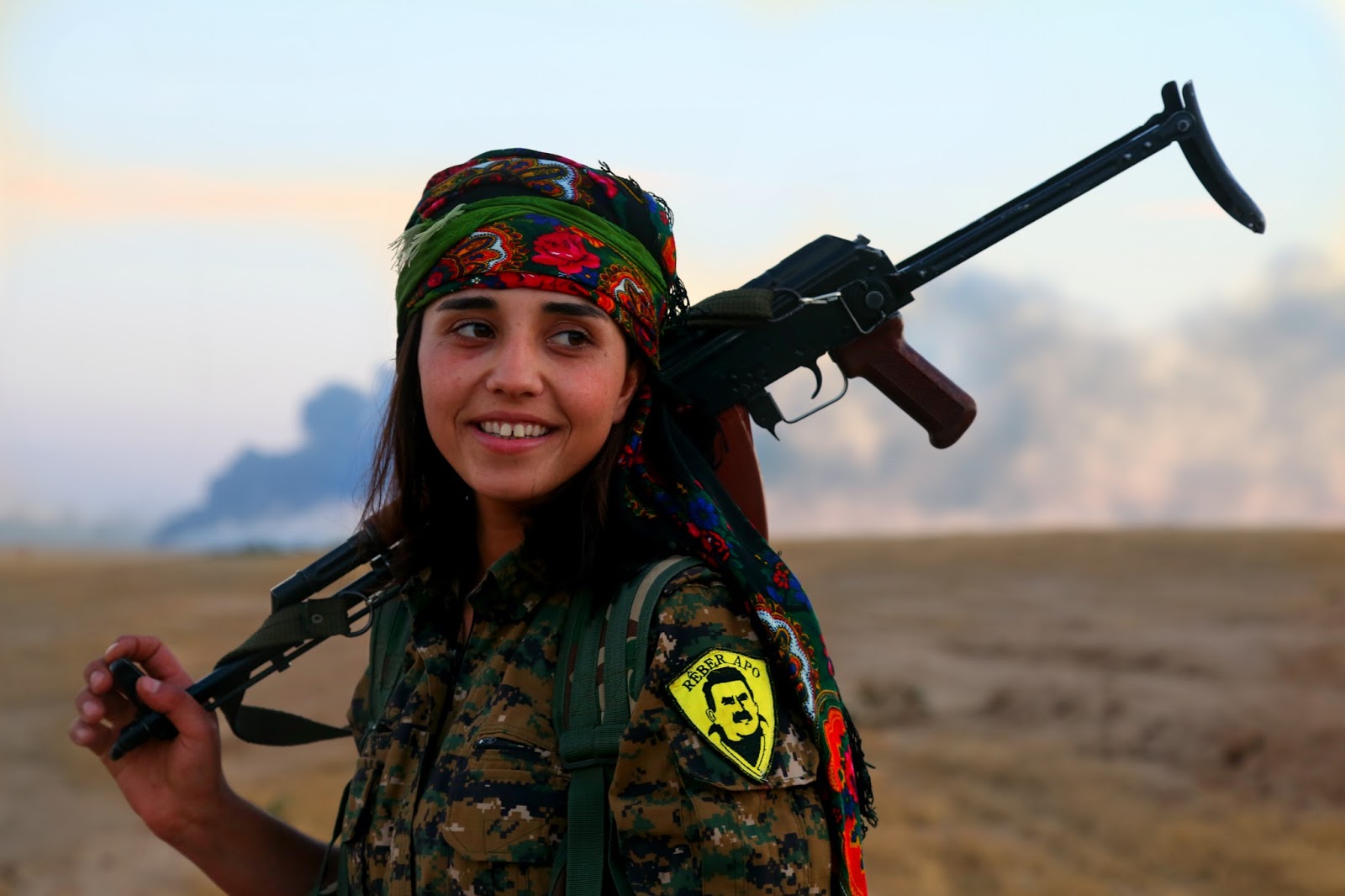
A Kurdish YPJ fighter with smoke behind her rising from an ISIS held area near the town of Al Hol, Hasakah, Syria. Photo by Delil Souleiman.
Syrian Dust: Reporting from the Heart of the War by Francesca Borri
This excellent book by Italian journalist Francesca Borri recounts her reporting from the Syrian city of Aleppo between 2012 and 2013, and presents a vital primary source recounting a siege that became one of the 21st century’s great crimes. Syrian Dust’s depiction of the terrified, terrorized lives of the Syrians living under the Assad regime’s relentless barrage - from the 25 year-old mother reduced to living in a drainage pipe with her 3 children who ventures out to buy bread and is shot by a sniper to the citizens of Moadamiya “with those bodies that are all bones” to those trapped in Al-Qusayr, during its siege reduced to sending frantic texts pleading “Where are you? They’re killing us all!” - will afflict the reader's conscience long after the book ends.
Afro-Cuban Tales by Lydia Cabrera
A striking and sometimes surreal collection from the woman who was perhaps Cuba’s greatest anthropologist, this book is a rich and splendid account of how Africa’s tradition of oral history and myth was translated to the Caribbean’s largest island.
Black Rice The African Origins of Rice Cultivation in the Americas by Judith A. Carney
This is a revelatory and chilling book that posits the thesis that much of the agricultural might of the southern United States derived from the expertise and labour of the West African slaves that were imported en masse to work there. A highly detailed dissection of the rice growing regions of West Africa where many American slaves hailed from makes a compelling case that they were were specifically plucked from these regions in order to bring their proficiency to the “new” world.
Out of Nowhere: The Kurds of Syria in Peace and War by Michael Gunter
An important work in decoding one aspect of Syria’s tortuously complex civil war, this book examines the murky and volatile relationship between Syria’s Kurds and the Assad family dictatorship in Syria, whose patriarch, Hafez al-Assad, as the author writes, took over the supposedly pan-Arab Baath Party and turned it “into a mere facade for his own Alawite family’s personal property.” Though Syria’s Kurds may not have suffered the genocidal slaughter their counterparts living in Iraq under the rule of Saddam Hussein endured, they were subjected to virtual ethnic cleansing from vast swathes of northern Syria in 1963 and reduced to an official status of less-than-full citizens of the country in which they lived. With particular focus paid to the Democratic Union Party or PYD (affiliated with the Kurdistan Workers' Party or PKK founded in Turkey by imprisoned Kurdish leader Abdullah Öcalan) and its military wing, the People's Protection Units (YPG), the book examines how the schizophrenic Assad regime could both shelter and protect the PKK for almost two decades (until they were kicked out in 1998) and, only a few years later, provide rearguard support to Al-Qaeda in Iraq, which then became both the Jabhat al-Nusra and Islamic State of Iraq and the Levant (ISIS) jihadist rebel groups. Though the narrative hits a slight bump when the author edges perilously close toward recycling wild conspiracy theories connected to the August 2013 chemical weapons attack on the Damascus suburb of Ghouta, it is nonetheless highly valuable for its clear timeline of factors such as the newly assertive mood for Syria’s Kurds following the assumption of the Iraqi presidency by Jalal Talabani, himself a Kurd, in 2005, and such precursors to rebellion as the Qaishli uprising in March 2004 and the murder of a prominent Syrian Kurdish Sufi leader in June 2005.
Signs Preceding the End of the World by Yuri Herrera
With its stark, incantatory prose, this brief tale of familial and cultural dislocation describes a Mexican woman’s journey to the United States to try and locate her missing brother and, in doing so, spins a haunting border vignette.
The Seven Good Years by Etgar Keret
The Israeli author pens short and at times quite affecting vignettes about his life as a father, son and friend in his often-conflicted land.
In the Time of the Tyrants by R. M. Koster and Guillermo Sanchez
An important document of a now-almost forgotten time when the Central American country of Panama was ruled by garish brutality, this book chronicles the governments of Omar Torrijos, Rubén Darío Paredes and Manuel Noriega and the courage of those who fought against them.
The Spanish Holocaust: Inquisition and Extermination in Twentieth-Century Spain by Paul Preston
The author writes that he penned this book “to convey the suffering unleashed upon their fellow citizens by the arrogance and brutality of the soldiers who rose up on 17 July 1936...(and) provoked a war that was unnecessary and whose consequences still resonate bitterly in Spain today” Though largely given short shrift in the English-speaking world, the story in this book of the terror visited upon Spain by the country’s right wing - rabidly anti-semitic, obsessed with supposed Masonic plots, addicted to benefiting from a rural economic model that seemed little better than slavery and adroit in their demonization/dehumanization of liberals in their discourse - amply proves the author’s thesis that the Spanish right “hated the Republic for being democratic long before it was able to denounce it for being anti-clerical." An all-too-relevant text for today's world.
The Feast of the Goat by Mario Vargas Llosa
The great Peruvian writer's account of the quixotic and tragic (though successful) plot to kill the Dominican Republic’s cruel dictator Rafael Trujillo, this novel minutely parses the web of flattery, threats, vanity, delusion and complicity that permits a totalitarian regime to thrive and the price that is often paid by those who dare to take it down.
December 24, 2016
2016: A Reporter’s Notebook of the Year Gone By
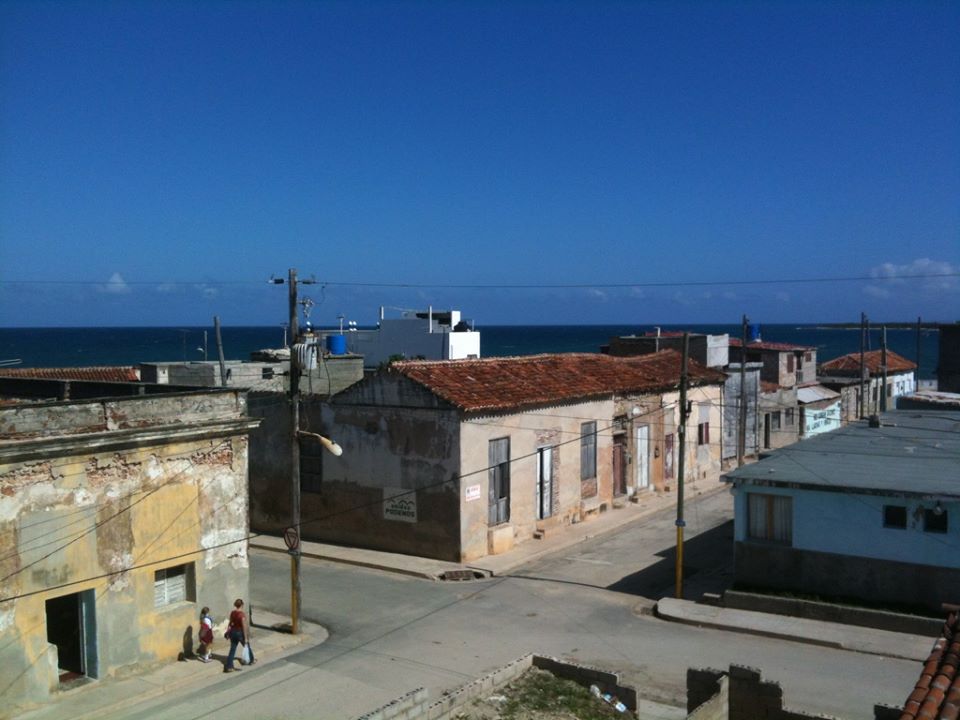
Gibara, Cuba. Photo by the author.
This year marked two milestones for your humble correspondent as a writer: I complete my second book on Haiti - Haiti Will Not Perish: A Recent History , which will be published by Zed Books next year - and I was finally able to engage thoroughly with Cuba, a fascinating country at a pivotal moment and which I was lucky enough to visit multiple times this year. Hopefully, going forward in 2017, I can continue trying to bridge the gaps between we fragile humans who inhabit the delicate earth, and help people to realize that the threads than bind us together are in fact stronger than that which keep us apart.
Paz y amor,
M
Closing Arguments for Michael Deibert's Blog (6 November 2016)
The Ghosts of Assad A Review of Francesca Borri's Syrian Dust: Reporting from the Heart of the War for Michael Deibert's Blog (15 September 2016)
Nicaragua tiptoes back to tyranny for fDi Magazine (26 August 2016)
Former economy minister takes power in Peru for fDi Magazine (27 June 2016)
The Panama Papers is the least of Central America’s woes for fDi Magazine (16 June 2016)
My talk "Haiti Will Not Perish" at Columbia University's School of International and Public Affairs (thanks to Severine Autesserre for making it happen (27 April 2016)
Review of my book In the Shadow of Saint Death: The Gulf Cartel and the Price of America's Drug War in Mexico From "Drugs, Violence, and Corruption: Perspectives from Mexico and Central America" in Latin American Politics and Society, Vol 58, Issue 1 (17 April 2016)
The fêted and the dead in Haiti for Michael Deibert's Blog (17 February 2016)
‘Rotten system’ blamed as Haiti’s election ends in stalemate for The Guardian (14 February 2016)
Haiti dances nervously towards bitterly contested presidential election for The Guardian (21 January 2016)
The Demon Heirs of El Chapo for The Daily Beast (10 January 2016)
December 17, 2016
Answer 33
After being beaten and arrested for exercising his human right of free expression, the Cuban graffiti artist Danilo Maldonado Machado, better known as El Sexto, was transferred to the El Combinado del Este Prison, perhaps the most notoriously violent jail on the island. Before he was transferred, he penned the following testimony. MD

Answer 33
What will become of the future for my daughter if they keep glorifying murderers?
This is my work November 25, 2016.
Written from Valle Grande Prison, 8 of December, 2016.
In many instances I have been interviewed by different means of communications and many asked what I thought about when Fidel dies and my answer was always the same: We must all identify and learn to demystify a murderer. If not, then on that day nothing will happen.
The Cuban people were forced to march under the sun and crying songs like “I am Fidel”, but many were silent, because the Cuban people live in fear and with fear you cannot be free.
As long as we keep bowing our heads with a disgusting salary, with nothing to eat, and emigrating and demanding to the outside world what we are not capable of demanding of ourselves like human beings here “freedom," acts like what they are doing to me will continue to be the norm in Cuban society.
Let them take away my personal property, my cellular phone, with the justification of investigating, but actually they already have my e-mail, Facebook, Instagram, and all my tools and contacts for my work and development as an artist.
And text messages that are sent from any cell phone in Cuba with the phrase “El Sexto” will be sent but not received.
That apparently for an offence of criminal damages there is a fine to be leveled for the simple fact that such a crime does not exist. Instead, I the only person in Cuba who did what the rest of the Cuban population should have done: Take to the streets and celebrate the death that nature gave him and that he did not have the courage to end. He fled and blamed blockades and permitted us to live in poverty and die in the sea without looking at the real enemy, the military occupation of the Castro brothers.
For I am the same age as Christ when he was stoned and crucified for the people that he filled with wisdom. I have not assaulted any garrison, nor have I held a rifle. What I have is paper, pen, and spray paint. In the past it was my turn, now it is the Cubans turn to plant themselves in the 3rd and the 2nd. I am 1 and 6 and I am free. Always on my way to her. Luck and light be with you.
-El Sexto-
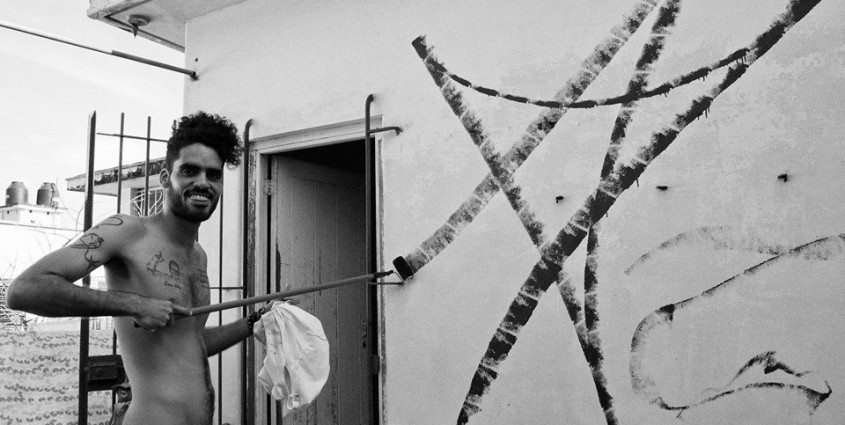
Answer 33
What will become of the future for my daughter if they keep glorifying murderers?
This is my work November 25, 2016.
Written from Valle Grande Prison, 8 of December, 2016.
In many instances I have been interviewed by different means of communications and many asked what I thought about when Fidel dies and my answer was always the same: We must all identify and learn to demystify a murderer. If not, then on that day nothing will happen.
The Cuban people were forced to march under the sun and crying songs like “I am Fidel”, but many were silent, because the Cuban people live in fear and with fear you cannot be free.
As long as we keep bowing our heads with a disgusting salary, with nothing to eat, and emigrating and demanding to the outside world what we are not capable of demanding of ourselves like human beings here “freedom," acts like what they are doing to me will continue to be the norm in Cuban society.
Let them take away my personal property, my cellular phone, with the justification of investigating, but actually they already have my e-mail, Facebook, Instagram, and all my tools and contacts for my work and development as an artist.
And text messages that are sent from any cell phone in Cuba with the phrase “El Sexto” will be sent but not received.
That apparently for an offence of criminal damages there is a fine to be leveled for the simple fact that such a crime does not exist. Instead, I the only person in Cuba who did what the rest of the Cuban population should have done: Take to the streets and celebrate the death that nature gave him and that he did not have the courage to end. He fled and blamed blockades and permitted us to live in poverty and die in the sea without looking at the real enemy, the military occupation of the Castro brothers.
For I am the same age as Christ when he was stoned and crucified for the people that he filled with wisdom. I have not assaulted any garrison, nor have I held a rifle. What I have is paper, pen, and spray paint. In the past it was my turn, now it is the Cubans turn to plant themselves in the 3rd and the 2nd. I am 1 and 6 and I am free. Always on my way to her. Luck and light be with you.
-El Sexto-
November 6, 2016
Closing Arguments
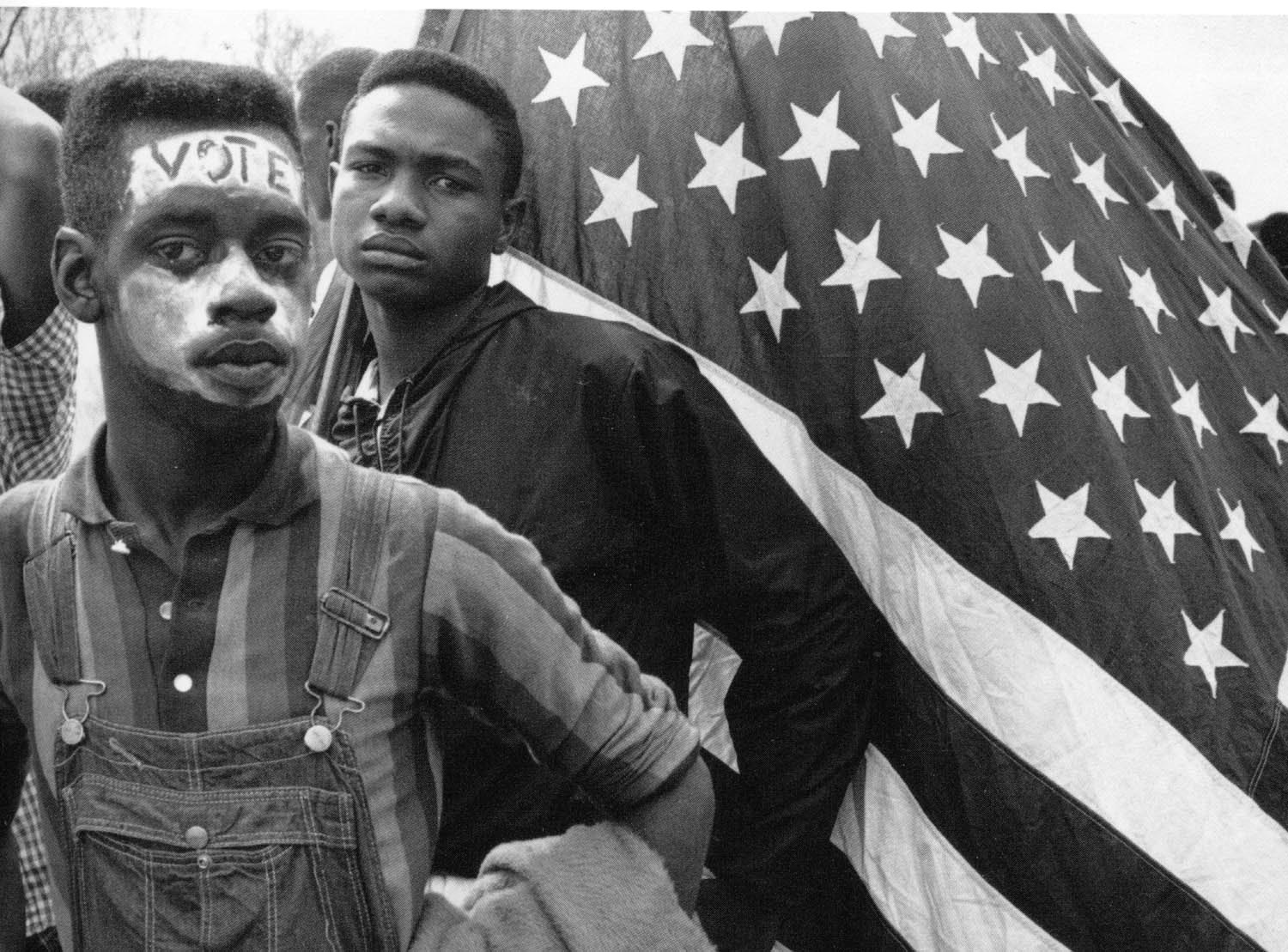
This Tuesday, Americans will make a fateful decision regarding the direction the country will take in coming years.
On one side, we have Hillary Rodham Clinton, former Secretary of State, senator from New York and Fist Lady who started her career working at the Children's Defense Fund and who has been, for better and for worse, at the heart of the nation’s politics, both foreign and domestic, for the last 25 years.
On the other side, we have a man who represents a threat to American democracy unique in the country’s 240 year history.
During this past primary season, Republican voters had, in the persons of Jeb Bush and John Kasich, a chance to nominate the popular current or former governors of vital swing states who had a clearly articulated vision of conservative principals and had demonstrable records of reaching across the aisle and working with those of the other party in the day to day business of keeping their states chugging along.
Instead, Republican voters chose a television curiosity with no political experience and a glaring ignorance of national and international affairs, a confessed sexual predator, a publicly committed racist and misogynist who said he would ban an entire religion, kill innocents in a nebulous war on terrorism, called on a hostile foreign intelligence agency to disrupt the democratic process of the United States, conspired (at least rhetorically) with a fugitive accused rapist openly hostile to U.S. interests, who vowed to destroy the separation of powers, who pledges to put both his opponent and journalists like myself in prison and who traffics in dark conspiracy theories in a brazen appeal to white nationalism and the most putrid strain of America’s polarized politics.
Part of the blame can be laid at the feet of the institutional Republican Party itself. Once an internationally minded entity run on an ethos of voter enfranchisement, especially of African–Americans (anyone who doubts that fact should read John Hope Franklin’s Reconstruction After the Civil War), decided, with the election of the country’s first African–American president, that, when in opposition, its job wasn’t, in fact, to help govern the nation and that indeed it wasn’t beholden to the rules of democracy, after all.
The threats of violence from the Republican “base” against President Obama began from almost the day he took office as well as Democratic members of congress, which in the case of Arizona’s then–congresswoman Gabby Giffords were acted on with catastrophic results. Rather than reasoned debate on the issues, policy differences were met with a government shutdown and reckless threats to default on the country’s debt. Realizing that the shifting demographics of the United States were against the party’s increasing drift into a white identity entity, the party whose members once died trying to register black voters became, nationwide, the party of voter suppression. The president’s prerogative of filling Supreme Court vacancies was met by an unprecedented stonewalling.
Enter Donald J. Trump, reality tv host and dubious businessman who began his campaign by deriding citizens of Mexico, our southern neighbor and one of our most important trading partners, as murderers and rapists and who has continued through the months selling a vision of our country is little more than a nightmare tapestry of lies held together by threads of racial and social rancour.
Consistently from the stage, Trump has claimed that the murder rate in the United States is the ‘highest it’s been in 45 years.” That is a lie, and it is not. He has demeaned the Indiana–born judge overseeing the lawsuit against Trump’s bogus “university” based on the Mexican heritage of the judge’s parents. He unforgivably slandered the family of Captain Humayun Khan, killed fighting in Iraq in 2004 with anti–Muslim slurs. He has promoted an economic plan that has been denounced by economists as “a dangerous, destructive choice for the country” based on “magical thinking and conspiracy theories over sober assessments of feasible economic policy options.” He has all but vowed to default on America’s debt, depriving the economy of a crucial safety net, in what the Nobel Prize–winning economist Paul Krugman called an example of “extrapolating from his own business career, in which he has done very well by running up debts, then walking away from them.” His refusal to release his tax returns, and his dishonest explanations for why he would not do so, means voters are in the dark about his web of debts and financial entanglements. Both Trump and his running mate, Indiana Governor Mike Pence, have praised Russian dictator Vladimir Putin, with Trump also lavishing praise on the late Iraqi dictator Saddam Hussein. He has grotesquely hinted at the potential desirability of the assassination of his opponent, and for months has been calling for violence against any and all who speak out against him.
The violent rhetoric of Trump and his supporters directed at journalists in general and Jewish journalists in particular, many of whom appear, with great justification, to sense the threat Trump poses on a molecular level, should be the canary in the coal mine for all of us to see. Though I am not Jewish, after I spoke against Trump’s recycling of far right anti–semitic conspiracy theories about “international bankers” and “George Soros,” I was deluged with hundreds of death threats on Twitter, threats which Twitter refused to act against claiming they didn’t violate their terms of service. It is not for nothing that Bradley Burston, a columnist for Haaretz, Israel’s oldest newspaper, looked aghast at Trump and wrote that he is “sadistically vindictive, flagrantly hypocritical, proudly divisive. He will harm anyone, say anything, declare the opposite, to get what he wants.” Lest anyone miss the point, Trump concluded his campaign with a nakedly anti–semitic ad basically suggesting a trio of prominent Jews are responsible for all of the country's financial woes.
We have been forced to live in Trump’s gutter so long I think that many of my fellow Americans have simply been battered into believing that such behaviour and discourse is normal for a presidential candidate. It is not normal, and if such a thought process is married to all the tools at the disposal of the president, it will lead the country over the cliff on which it now teeters and into the abyss.
There have been precious few voices raised against Trump within his own party, but those that have done so deserve mention. In March, Mitt Romney, the party’s 2012 presidential candidate, warned that Trump’s “imagination must not be married to real power.” In May, Jeb Bush declared that Trump had “not demonstrated that temperament or strength of character (to be president and that) he has not displayed a respect for the Constitution....I cannot support his candidacy.” The National Review’s Jonah Goldberg wrote that “Trump is a fundamentally dishonorable and dishonest person, and has been his whole adult life...An insecure, morally ugly, man-child who thinks boasting about how he can get away with groping women ‘because you’re a star’ impresses people. He’s a grotesque, as a businessman and a man full stop.” The Wall Street Journal’s Brett Stephen’s wrote that “it will not do for Republicans to say they denounce Mr. Trump’s personal slanders; his nativism and protectionism and isolationism; his mendacity and meanness and crassness; his disdain for constitutional protections, and still campaign for his election. There is no redemption in saying you went along with it, but only halfway; that with Mr. Trump you maintained technical virginity. To lie down with him is to wake up with him. It’s as simple as that.” While other evangelicals have spat upon their own professed beliefs to endorse him, veteran GOP operative Peter Wehner wrote that “Trump’s character is antithetical to many of the qualities evangelicals should prize in a political leader: integrity, compassion and reasoned convictions, wisdom and prudence, trustworthiness, a commitment to the moral good.” More than 50 members of the Republican national security community signed a joint letter in which they warned that they were “united in our opposition to a Donald Trump presidency...His vision of American influence and power in the world is wildly inconsistent and unmoored in principle” and that “Mr. Trump’s own statements lead us to conclude that as president, he would use the authority of his office to act in ways that make America less safe, and which would diminish our standing in the world.”
But most of the Republican establishment has demonstrated no such courage. Senate majority leader Mitch McConnell and House Speaker Paul Ryan endorsed Trump after an untold number of outrages, and though the latter declined to campaign for Trump after a recording revealing the nominee bragging about sexually assaulting women came to light he supinely ran back into the fold in recent days. They have indelibly stained the GOP to such a degree that its image as a coherent party with a set of principals and values has almost ceased to exist. Should Trump win, Trump surrogates like Rudy Giuliani, Chris Christie and Jess Sessions will be remembered for playing with alacrity their roles as the American equivalents of Franz von Papen, Constantin von Neurath and other career politicians who gave Adolf Hitler the political cover he needed to form his first cabinet, complimenting Steve Bannon in his role as Joseph Goebbels and Breitbart News in its role as Der Stürmer.
(I won’t even mention the so called third party candidates, a pothead former governor with memory recall issues and a daffy heiress who believes being “founder and past co-chair of a local recycling committee appointed by the Lexington Board of Selectmen” is qualification of being president of the world’s most influential country, save to say it is a sad state of affairs that the fate of the republic may hang in the balance of their candidacies.)
Americans are cocooned and cushioned by the reality many (though not Native Americans or African–Americans) have shared since the country’s founding, decades of stable institutions and, in the national main, political fair play. They cannot imagine how quickly, and how violently, things can change. Those who dismiss Trump’s rhetoric as simply buffoonish bluster will be startled at how quickly things go downhill should he enter the office of the presidency. But make no mistake, with the powers bestowed on that office, Trump’s shredding of the constitution is not only a possibility but a forgone conclusion
In my 20 years as a journalist reporting on international affairs, I have come across the Trump template before, employed by those whose political behavior is marked by, as Robert Paxton said in his 2004 book The Anatomy of Fascism
(An) obsessive preoccupation with community decline, humiliation, or victimhood and by compensatory cults of unity, energy, and purity, in which a mass-based party of committed nationalist militants, working in uneasy but effective collaboration with traditional elites, abandons democratic liberties and pursues with redemptive violence and without ethical or legal restraints goals of internal cleansing and external expansion.
In Côte d’Ivoire I saw how Laurent Gbagbo’s promoting his ethno supremacist cult of Ivorité took one of Africa’s richest countries and toppled it over into civil war. In Haiti, I saw how Jean Bertrand Aristide took the rancour of the masses and stoked it into an attempt to create a kind of garish fiefdom modeled on those of Uganda’s Idi Amin and the Central African Republic’s Jean-Bédel Bokassa. In Guatemala, I watched former dictator Efraín Ríos Montt, who oversaw the country’s worst period of genocidal bloodletting, form a political party, the Frente Republicano Guatemalteco (FRG), whose entire motor ran on anti–elite rage and was eventually revealed to be more criminal enterprise than political vessel.
I come from the exact strata of American society – the white, blue collar, Rust Belt working class – among whom Trump’s message has the most resonance, relatively unworldly people with a strong work ethic who feel all their hard work has been spat upon and shunted aside by years of free trade deals championed by both parties and a tax system that lavishes breaks on the wealthy and penalizes those of more modest means (championed, ironically, by the very same party to which they now claim allegiance). There is real pain and real despair there. I see it every time I go back to Lancaster County, Pennsylvania, where I grew up. But there is also a whining self pity that often can’t see anyone’s struggle as worthy as their own and a nearly millenarian sense of grievance that sees politics not as the art of the possible but as an apocalyptic struggle between a largely white industrial world that has gone and will never return against a confusing kaleidoscope of liberal urban elites, the country’s burgeoning non–white population, immigrants, alternative sexual orientations and other shocks to their system. If Trump voters often sound as if they think the world is about to end, it’s because the world as they have known it is ending. But these forces of demography cannot be reversed, by Trump or anyone else, and it is not a world my fellow working–class whites need to fear, but fear is the currency on which Trump trades.
The American democratic project has been characterized by inconsistencies since it commenced in 1776. Some of these tensions involved America’s actions abroad, and some in the way it treated its most vulnerable citizens at home. But, with the exception of a wrenching civil war that saw over 600,000 Americans die, few have ever questioned the value of the project itself.
When, at the end of the Revolutionary War, a group of dissident officers in the Continental Army all but suggested a coup against the newly inaugurated Congress in what came to be known as the Newburgh Conspiracy, the army's commander in chief (and future first U.S. President) George Washington gave an impassioned speech in which he inveighed on behalf “of our common country,” charging
As you value your own sacred honor, as you respect the rights of humanity, and as you regard the military and national character of America, to express your utmost horror and detestation of the man, who wishes, under any specious pretences, to overturn the liberties of our country; and who wickedly attempts to open the flood-gates of civil discord, and deluge our rising empire in blood.
This Tuesday we will find out if the ethos of the man we call the Father of the Country is still subscribed to by the people who live here now.
History has amply warned us of the path we are poised to go down.
In the July 1932 elections in Germany, also a democracy at the time, the Nazis received 37% of the vote, the most they every got. In the next election four months later, their share shrank to 32%. But by then it was too late. The serpent was already in the garden. In the 1990s, the people of the Balkans put their faith in leaders like Serbia's Slobodan Milošević and Radovan Karadžić who led the region into ethnic cleansing, genocide, NATO bombing and bloody war for a decade. In 1999, the people of Venezuela, desperate and vengeful after being ignored by their politicians for years, turned the reigns of their country over to former coup leader Hugo Chávez, his successor Nicolás Maduro and their “Bolivarian socialism.” They haven’t gotten it back since.
In Cuba, where I spend a lot of time these days and which has its own experience with strongmen promising to expunge a collective grievance through a cleansing release of violence, after the 1959 overthrow of dictator Fulgencio Batista, the new government, led by Fidel Castro, executed hundreds, possibly thousands, of people tied to the ancien régime after only the most summary trials (and many with no trial at all). Whether all or even most of them were guilty will never be known. The cry of paredón (to the wall) resounded, and the will of the maximum leader had to be obeyed. Today, one can still visit El Morro, where so many of them died, and El Capitolio, where Cuba’s congress met and debated, but which was shuttered after 1959, and remains so to this day.
Now, at another time, in another place, that cry raises its sanguinary voice again, in my own country in the form of a candidate and his supporters who call for his opponent to be jailed, for journalists to be arrested and killed, and for all those who speak out against hm to be attacked and battered into submission.
To Trump’s supporters, I say this: Today it might be the Democrats who are sent to the wall. It might be Jewish journalists, or Muslims, or Latinos or immigrants. But should this man ascend to to power, one of these days, not too long from now, his mob will scream for blood and it will be someone you love who is brought to the wall, for some transgression real or imagined. It might even be you. In my 20 years as a journalist I’ve seen it in countless countries before. People think it can’t happen here, but it can.
On Tuesday, when you go to the polls, vote as if your life depends on it. Because it does.
Michael Deibert's Blog

- Michael Deibert's profile
- 8 followers
Michael Deibert isn't a Goodreads Author
(yet),
but they
do have a blog,
so here are some recent posts imported from
their feed.

