
Michael Deibert's Blog, page 3
December 29, 2021
The Death of Haiti���s President Summons Ghosts Old and New
The Death of Haiti���s President Summons Ghosts Old and New
The assassination of Haiti���s Jovenel Mo��se was something anyone should have seen coming. Yet few did
Michael Deibert
July 28, 2021
Newlines Magazine
(The original article can be read here)
If you are on the back of a moto taxi hurtling down Route Canap�� Vert in Port-au-Prince at dusk, you will see the sun sinking fiery into the bay, just beyond a slew of impoverished neighborhoods ��� Village de Dieu, La Saline, Cit�� Soleil ��� often written about (if at all) because of the various armed groups that hold the populations there under their thumbs, but which are in reality home to hundreds of thousands of struggling, deeply disadvantaged people with no connection to crime or violence. On your left you will see an undulation of mountains dotted with the modest abodes of others marginally less desperately poor, and the smell of Haiti ��� flowers, citrus, burning, sewage ��� will dance on your nostrils. When you reach Turgeau, the streets narrow, and you will be able to hear the melodious lilt of Haitian Creole and sinuous ebb of konpa music from radios on the street. You will pass a tall building that once housed Haiti���s state telephone company, looted by questionable government deals in the early 2000s. A few streets away once stood the ��glise Sacr��-Coeur, where the dictator Fran��ois Duvalier stole the coffin containing the body of his rival, Clement Jumelle, in 1959, and in front of which the progressive Palestinian-Haitian businessman Antoine Izm��ry was slain in 1993.
To the south, as you continue, will be the neighborhood of Pacot, where I once lived, a formerly chic and now decaying collection of brightly colored gingerbread houses where bougainvilleas fall in riotous sprays over high walls. Just beyond, covering the hills as the capital slumps further southward is the neighborhood of Martissant, where Napoleon Bonaparte���s sister, Pauline, and her husband, French Gen. Charles Leclerc, allegedly once lived (their former residence now within a 42-acre park dripping with vegetation and bright bird of paradise flowers) but that has now been carved up to fiefdoms of warring armed groups, its people hostage to their violence.
Eventually the buildings fall away, the sky opens up, and you find yourself on the Champ de Mars, Port-au-Prince���s broad main square, with the heights of Bel Air, a culturally significant district also now blighted by violence, rising behind you. You stop in front of a fence where, until it collapsed during the capital���s devastating 2010 earthquake, the gleaming-white Palais National, designed by the architect Georges Baussan and completed in 1920, once sat glistening beneath a backdrop of mountains garlanded with clouds.
It was in the warren of offices behind where the palace had once stood, after night had already fallen on the Haitian capital and the lanes around the Champ de Mars danced to the orange, incandescent glow of the kerosene lamps that vendors used to illuminate their commerce, that I first met Jovenel Mo��se, the Haitian president slain on July 7.
Tall, lanky, complex, flawed, authoritarian and stubborn, Mo��se was a better communicator in person than when he addressed mass rallies in often bellicose terms, and he spoke to me for nearly an hour without notes about his vision for the country that night in March 2018. He talked about his desire to pave the country���s collapsing roads, to bring electricity to its far-flung and long-neglected communes, and the fact that he had been born in the small town of Trou-du-Nord, in the north of country and had served as president of the chamber of commerce in the country���s Northwest Department. In his view, Haiti had ���a kind of cleavage. You have urban zones, rural zones, people in the town and people in the country ��� We want to move Haiti beyond being the republic of nongovernmental organizations. ��� They cannot replace the state.���
He had been in office for about a year then and had come to the presidency as the candidate of the Parti Ha��tien T��t Kale (PHTK), formed by his predecessor Michel Martelly, a singer who went by the stage name Sweet Micky and who served as Haiti���s president from 2011 to 2016. Martelly had been elected in a controversial ballot during which some saw outgoing president Ren�� Pr��val as trying to rig the vote in favor of his chosen successor, former government official Jude C��lestin, while others saw the hand of the United States, particularly then-Secretary of State Hillary Clinton, in pushing Martelly over the top. (Ironically, Pr��val���s own 2006 victory was achieved without the necessity of a second round against former president Leslie Manigat also with the help of outside pressure.)
The election of mulatto Martelly, a right-wing populist in a country often riven by divides of class and color and who, in the words of the late Haitian diplomat Guy Alexandre, was ���backed by former Duvalierists and the youth of the popular classes,��� represented a wholesale rejection of Haiti���s traditional political system, or so some voters in the impoverished Port-au-Prince neighborhood of St. Martin seemed to think, telling me shortly after Martelly���s election that ���everyone��� in the area had voted for him. Martelly���s five years in power, though, were marked by bitter clashes with Haiti���s opposition and increasingly brazen examples of alleged corruption involving the PHTK itself as well as Martelly���s family.
The first round of Mo��se���s election was derailed by allegations of fraud and an opposition that vowed to kill voters ��� ���machetes and stones in hand��� ��� at the polls. He eventually won 56% of the vote in a crowded field in a November 2016 contest marked by feeble participation and overseen by an interim president and political rival, former Sen. Jocelerme Privert. Mo��se entered office promising an aggressive infrastructure program to help revive Haiti���s economy, still struggling from the 2010 earthquake. Many foreign commentators said that Mo��se was ���unknown��� before throwing his hat in the ring for the presidency. But what they really meant was he was unknown to them, the people for whom Port-au-Prince is a stand-in for a country of more than 11 million people. Involved in agribusiness in the country���s north (and later accused of having made his fortune through suspect means), Mo��se had served as president of the region���s chamber of commerce and had appeared on programs such as Tele M��tropole���s ���Le Point��� as early as 2014.
Haiti���s political opposition ��� made up largely of a series of shambolic and violent opportunists who have made their living off political instability for two decades ��� never accepted his victory. Even before Mo��se took office, Andr�� Michel, an attorney and professional political agitator affiliated with the Secteur D��mocratique et Populaire (which is neither democratic nor popular), said the opposition would ���destroy the country��� if Mo��se became president. Such pronouncements were typical.
Over the next four years, helped along by the PHTK and sometimes by Mo��se himself, they did just that.
A few months after Mo��se took power, a Haitian Senate commission reported evidence of widespread fraud and misuse of funds stemming from Haiti���s participation in the Venezuelan low-cost oil program known as Petrocaribe, which occurred before Mo��se had taken office. A subsequent report by Haiti���s Court of Auditors and Administrative Disputes claimed that firms linked to Mo��se when he was a private citizen took part in the embezzlement scheme. For many, this was the beginning of the end of his presidency.
���When Jovenel came along, he was a good speaker, and his presence on the scene meant you would get to know him better than the opponents,��� said Johnson Deshommes, a young activist who initially supported Mo��se but turned against the president when he ���realized that the PHTK clan were still the ones controlling things.��� Deshommes added, ���He kept promising things even when he couldn���t deliver; no one in the Petrocaribe affair was arrested.���
By summer 2018, things began spiraling downward. Massive protests rocked the capital as protesters demanded to know what had happened to the missing Petrocaribe money. In November 2018, a group of gunmen raided the capital���s slum of La Saline in an attack the United Nations said left at least 26 people dead, while a report by the Haitian human rights group R��seau National de D��fense des Droits Humains (RNDDH) put the death toll at 71.
Three of those allegedly involved in the attack ��� former police officer Jimmy ���Barbecue��� Ch��rizier, Ministry of Interior functionary Fednel Monchery and former West Department delegate Joseph Pierre Richard Duplan ��� would be sanctioned by the U.S. State Department for their alleged roles in the killings. Ch��rizier would subsequently hold a press conference announcing the formation of the G9 an fanmi e alye, an alliance of armed groups around the city that many saw as the government���s bludgeon against its rivals. Though Ch��rizier has frequently been pegged as a Mo��se loyalist, especially in the foreign press, he has said himself that he had been a supporter of Jude C��lestin and even worked as a bodyguard for a parliamentary candidate from C��lestin���s political party. It was all very murky.
The use of armed gangs, often made up of the quite young, as a political modus operandi is perhaps the most lasting legacy of the 2001 to 2004 government of Jean-Bertrand Aristide, whose Fanmi Lavalas party pioneered (if that is the right word) the practice during which the gangs were referred to as chimere, after a mythical fire-breathing demon. The practice has since metastasized throughout Haiti���s body politic so that almost every political current in the country has its cadre of gunmen (referred to as baz, or base, in Creole) and the gang leaders themselves have grown ever-more powerful, gradually approaching an equilibrium with their patrons in the country���s economic and political elite.
���For a long time we have had different mafias here controlling economic and political life, and presidents, senators and deputies exist in this criminal milieu,��� says Michel Soukar, a Haitian author whose works include ���La derni��re nuit de Cincinnatus Leconte,��� a fictionalized account of the explosion that claimed the life of another Haitian president in 1912.
By May 2019, rather than allow a vote on Mo��se���s designate for interim prime minister, a group of opposition senators led by Antonio ���Don Kato��� Cheramy, a rapper-turned-politician, destroyed the meeting room in Haiti���s parliament. After Mo��se nominated a Ministry of Finance official for the same post four months later, opposition politicians, again led by Don Kato, once more vandalized the parliamentary meeting hall, leading a group of shrieking partisans into the chamber in what now resembles the attempted putsch at the U.S. Capitol on Jan. 6. A violent dissident group within the police calling itself the Fant��me 509 also began roiling armed demonstrations against the government, and, stretching from 2018 into 2019, the opposition was enforcing peyi l��k ��� a terrifying armed strike that brought all commerce and activity in the capital to a halt for weeks and that, in the words of Soukar, ���failed to overthrow Jovenel Mo��se but succeeded in overthrowing Haiti.���
Mo��se, meanwhile, railed against what he charged was the ���capture��� of Haiti���s state by corrupt oligarchs and political operators (some of whose help he was happy to accept during his own 2016 campaign) ��� many of them mulattos ��� and government-aligned magistrates issued a slew of arrest warrants, including against wealthy businessman Dimitri Vorbe, whom Mo��se accused of illicitly profiting from government energy contracts under the Pr��val administration in the mid-2000s and who subsequently fled to Miami.
When I met Mo��se for the second and last time in November 2019, his mood had darkened considerably.
���Haiti is not divided but torn,��� he said to me, as he sat on a white and gold chair between four large Haitian flags. ���We need a national agreement where each Haitian can talk to one another, where we can talk about an inclusive solution. ��� The state in Haiti is being held hostage by a group of people [and] we have to free that captured state. What president elected with almost 60% of the vote would decide today to leave office without working on the promises that he has made? Now we see the opposition asking for the president to leave, what strategy do they bring, what future do they say they have for the country? It is a system where it is ���get out so that I can get in.��� ���
As the instability rolled on, Mo��se lost more and more popularity and found himself more and more isolated.
���In the beginning, he had a social project that he wanted to accomplish in favor of the nation, for example the electrification of the country, the construction of irrigation dams on the rivers, the insecurity that he wanted to slow down,��� said Remise B��lizaire, the co-director of the Konbit Sant Sosyokiltir��l Thomonde, headquartered in the town of the same name in Haiti���s largely rural Plateau Central, one of many forgotten regions that Mo��se claimed he wanted to help with his so-called caravane du changement (caravan of change).
���But unfortunately, he did not produce, he did not keep promises to the people,��� B��lizaire said.
And yet, even then, Mo��se still had some supporters. But they were not the kind of people who haunt social media (especially Twitter), nor were they the kind of people who are easily accessible as most of them speak only Creole and not the kind of people that the foreign professional journalist and analyst class often bother to talk to.
During a text-messaging chat earlier this year, a friend who is a recently lapsed member of the baz in the poor quarter of St. Martin wrote that ���Jovenel is a good president but the opposition prevents him from being able to work and makes chaos. They are afraid to go to the polls because they know no one will vote for them. Haitians do not need transition, we need elections and another constitution for the country to prosper.���
The fact that voices like this young man���s are almost uniformly absent from the analyses that have appeared in recent weeks is maybe something worth pondering.
In January 2020, after the terms of most of Haiti���s elected parliament expired ��� the government and the opposition, whose first demand for negotiation was that Mo��se resign, couldn���t agree on a process to hold elections ��� Mo��se began ruling by decree, in an almost carbon copy of how former President Ren�� Pr��val had dealt with a similar impasse in 1999. When all eight members of Haiti���s Conseil Electoral Provisoire (Provisional Electoral Council) resigned in July 2020, Mo��se created a new electoral council and unilaterally named its members and tasked them with organizing local and federal elections and overseeing a commission to rewrite Haiti���s often-criticized 1987 constitution. This was to be approved by a plebiscite, a move that many called unconstitutional and dictatorial. Many constitutional experts charged that the one-year term of an interim president should be deducted from his five-year term, but Mo��se refused to step down before February 2022.
And PHTK, the party that Mo��se was ostensibly aligned with but by some accounts was increasingly at odds with (others within the party deny this), has become what many Haitians have described to me alternately as a ���poison��� and a ���cancer��� on the country, and a survey of its officials provides a rogues��� gallery of malefactors and malfeasance.
PHTK Sen. Herv�� Fourcand figured prominently in the 2019 trial of a former U.S. Marine sergeant and Orlando gun shop owner who was found guilty of conspiring to illegally export guns and ammunition to Haiti, with WhatsApp messages showing Fourcand in regular contact about the shipment. In February 2021, Canada���s La Presse reported that the wife of PHTK Sen. Rony C��lestin purchased a $3.4 million waterfront villa for her and the senator, paid off in cash. The circumstances of the purchase of the villa are currently under investigation by Haiti���s Unit�� de Lutte Contre la Corruption (ULCC), even as Rony C��lestin also owns newly constructed buildings in the Port-au-Prince neighborhood of Juvenat and a large mansion in Haiti���s remote Plateau Central. Yet another PHTK politician, Deputy Claude Luc Guillaume, is the nephew of famous Haitian drug trafficker Jacques Ketant (who once famously told a Miami court that his former friend Aristide was ���a drug lord��� who had turned Haiti ���into a narco-country���) and was involved in a July 2019 gun battle that left six people dead in Petite-Rivi��re de Nippes.
By May 2021, Woodly ���Sonson La Familia��� Eth��art ��� a feared figure in Haiti���s criminal underworld who reputedly led the ���Gang Galil��� and a former business partner of Martelly���s brother-in-law, Charles ���Kiko��� St. Remy ��� was incautiously posting photos to social media of himself enjoying a night of music by Martelly in the Dominican Republic before he was arrested by police there and transferred to Haiti on what they said was an outstanding arrest warrant dating from 2019. Mo��se���s collaboration in the arrest is said to have outraged some sectors of his own party, as was, reportedly, his view that one of the ways to rescue his historical legacy was to hold ���legitimate��� elections this coming September.
In recent months, Mo��se had told several international diplomats that he believed he would be killed.
Young activists, meanwhile, felt exasperation about not only Mo��se but also what they viewed as a rotten political system.
���The cornerstone of a country is the foundation of a state where the institutions stand and defend the constitution, whatever it takes,��� says Deshommes. ���But the smartest people never got a chance to govern this country. Aristide left us with gangs that until now cause problems. Pr��val should never have been president over Manigat; he did not believe in great projects but in small victories and a lot of people in the private sector took a lot of advantage of that. In no other country in the world would Michel Martelly ever run for the presidency because of his past.���
Haitians have learned not to look abroad for a solution to their problems, either.
The so-called Core Group (made up of the ambassadors of Brazil, Canada, France, Germany, Spain and the U.S., and representatives of the Organization of American States, the EU and U.N.) is widely viewed as little more than a kind of collective proconsul, dictating to the country the path outside powers demand it should take.
Though some Haitians might have hoped for an improvement in the level of discourse about their country in the U.S. since former President Donald Trump���s ���shithole countries��� comment in 2018, the individuals populating the U.S. House Foreign Affairs Committee are enough to give one pause. In February 2021, Rep. Andy Levin of Michigan mocked Mo��se in a tweet for having ���no evidence to support claims of a conspiracy against his life.��� In October 2019, Levin posted a photo to his Twitter account and described his meeting with ���a brave delegation from Haiti.��� In the photo, Levin posed with Evalli��re Beauplan, who voiced his support for overthrowing Ren�� Pr��val after the 2010 earthquake and faced accusations of corruption during his time in parliament, and Croix-des-Bouquets Mayor Rony Colin, who runs a radio station called Radio Zenith that more than one Haitian has compared to Rwanda���s genocidal Radio Mille Collines.
During a recent House hearing on Haiti, Rep. Maxine Waters of California, whom I watched party with Aristide at Haiti���s National Palace in 2004 as protesters whom she mocked and degraded were being savagely repressed by his government, appeared to think it was still 2001, declaring at a recent congressional hearing on Haiti ���I am Lavalas��� out of loyalty to Aristide���s political party, which has been in political eclipse for almost 20 years now.
By the time Mo��se was killed in the early morning hours of July 7 ��� after frantically calling to the nation���s police as his personal security had abandoned him ��� the mercenaries who cut him down were adding but one more life, no matter how grand, to Haiti���s butcher���s bill of recent years.
In February, in an operation targeted against the 5 Segonn gang, believed to be one of the main movers behind the recent spate of kidnapping, police raided the gang���s stronghold in the impoverished quarter of Village de Dieu. The raid ended in disaster with 6 police officers killed, their last moments shared on social media by gang members who can be heard gloating in the footage.
Thousands have been displaced in fighting between armed groups in the capital���s Martissant, Bel Air, and Cite Soleil neighborhoods. In June, the leader of the G9 coalition of armed groups, Ch��rizier, released a video in which he was surrounded by dozens of armed, masked men saying a ���major revolution��� was beginning in Haiti. Only days later, Haiti journalist Diego Charles and feminist activist Antoinette Duclaire were slain in Port-au-Prince���s Christ-Roi neighborhood, two of more than a dozen killed that night, with Duclaire having said before her murder, ���you deal with death on a daily basis. When you leave home, there���s no certainty that you will return. They can assassinate you, kidnap you.���
And on and on and on ���
In Jacques Roumain���s book ���Gouverneurs de la ros��e,��� published in 1944 at the height of the despotic rule of ��lie Lescot, he wrote of ���how far things were from the good old days of the konbit, from the virile joyous chants of the men folk, from the sparkling, swinging hoes in the sun, from those happy years when we used to dance the minuet under the arbors with the carefree voices of dark young girls bursting forth like a fountain in the night.���
In Haiti, they have a saying, lane pase toujou pi bon (past years are always better).
Since the murder of Haiti���s president ��� the fifth president from Haiti���s grand nord to be slain ��� all the actors have been playing their parts. The former police officer known as Barbecue has been ratcheting up incitement on social media and led an armed march in the slain president���s honor through downtown Port-au-Prince. Haiti���s current ruling class cobbled together a new ���consensus��� government that includes virtually no one outside of their own circle and were given the helpful nod of the Core Group. The president���s wife, wounded in the attack that killed her husband, returned to Haiti from her convalescence in Miami, dressed all in black, and denounced the ���traitors��� who had surrounded her husband at his funeral. Even Dimitri Vorbe ��� who, in a broadcast a few weeks before Mo��se���s murder, rambled about an electoral timeline, called the president a ���sucker��� and ���ugly��� and told him ���you don���t have much time left��� ��� took a moment to post a smiling selfie of himself on his Twitter account, ostensibly celebrating Argentina���s win over Brazil in the Copa America, three days after the president���s murder.
The people of Cit�� Soleil, Martissant, Bel Air and other marginalized neighborhoods in the capital cling to hope within their communities to lift themselves up, with little help from the government or anyone else. In the countryside, in communities like Thomonde, Bombardopolis and Gros-Morne, people do the same. Old rivalries ��� between city and countryside, between black and mulatto, between north and south ��� once muted if not absent, now seem reanimated.
Mo��se is gone, but the system that he was part of and ostensibly was fighting against, made of blood and bone, both predated him and will outlast him.
���I believe the president opened his eyes once he started understanding the system,��� says Deshommes. ���He became a danger to their interests but tout b��t jennen m��d (a cornered animal will bite). By then it was too late, and he was fighting alone.���


The Death of Haiti’s President Summons Ghosts Old and New
The Death of Haiti’s President Summons Ghosts Old and New
The assassination of Haiti’s Jovenel Moïse was something anyone should have seen coming. Yet few did
Michael Deibert
July 28, 2021
Newlines Magazine
(The original article can be read here)
If you are on the back of a moto taxi hurtling down Route Canapé Vert in Port-au-Prince at dusk, you will see the sun sinking fiery into the bay, just beyond a slew of impoverished neighborhoods — Village de Dieu, La Saline, Cité Soleil — often written about (if at all) because of the various armed groups that hold the populations there under their thumbs, but which are in reality home to hundreds of thousands of struggling, deeply disadvantaged people with no connection to crime or violence. On your left you will see an undulation of mountains dotted with the modest abodes of others marginally less desperately poor, and the smell of Haiti — flowers, citrus, burning, sewage — will dance on your nostrils. When you reach Turgeau, the streets narrow, and you will be able to hear the melodious lilt of Haitian Creole and sinuous ebb of konpa music from radios on the street. You will pass a tall building that once housed Haiti’s state telephone company, looted by questionable government deals in the early 2000s. A few streets away once stood the Église Sacré-Coeur, where the dictator François Duvalier stole the coffin containing the body of his rival, Clement Jumelle, in 1959, and in front of which the progressive Palestinian-Haitian businessman Antoine Izméry was slain in 1993.
To the south, as you continue, will be the neighborhood of Pacot, where I once lived, a formerly chic and now decaying collection of brightly colored gingerbread houses where bougainvilleas fall in riotous sprays over high walls. Just beyond, covering the hills as the capital slumps further southward is the neighborhood of Martissant, where Napoleon Bonaparte’s sister, Pauline, and her husband, French Gen. Charles Leclerc, allegedly once lived (their former residence now within a 42-acre park dripping with vegetation and bright bird of paradise flowers) but that has now been carved up to fiefdoms of warring armed groups, its people hostage to their violence.
Eventually the buildings fall away, the sky opens up, and you find yourself on the Champ de Mars, Port-au-Prince’s broad main square, with the heights of Bel Air, a culturally significant district also now blighted by violence, rising behind you. You stop in front of a fence where, until it collapsed during the capital’s devastating 2010 earthquake, the gleaming-white Palais National, designed by the architect Georges Baussan and completed in 1920, once sat glistening beneath a backdrop of mountains garlanded with clouds.
It was in the warren of offices behind where the palace had once stood, after night had already fallen on the Haitian capital and the lanes around the Champ de Mars danced to the orange, incandescent glow of the kerosene lamps that vendors used to illuminate their commerce, that I first met Jovenel Moïse, the Haitian president slain on July 7.
Tall, lanky, complex, flawed, authoritarian and stubborn, Moïse was a better communicator in person than when he addressed mass rallies in often bellicose terms, and he spoke to me for nearly an hour without notes about his vision for the country that night in March 2018. He talked about his desire to pave the country’s collapsing roads, to bring electricity to its far-flung and long-neglected communes, and the fact that he had been born in the small town of Trou-du-Nord, in the north of country and had served as president of the chamber of commerce in the country’s Northwest Department. In his view, Haiti had “a kind of cleavage. You have urban zones, rural zones, people in the town and people in the country … We want to move Haiti beyond being the republic of nongovernmental organizations. … They cannot replace the state.”
He had been in office for about a year then and had come to the presidency as the candidate of the Parti Haïtien Tèt Kale (PHTK), formed by his predecessor Michel Martelly, a singer who went by the stage name Sweet Micky and who served as Haiti’s president from 2011 to 2016. Martelly had been elected in a controversial ballot during which some saw outgoing president René Préval as trying to rig the vote in favor of his chosen successor, former government official Jude Célestin, while others saw the hand of the United States, particularly then-Secretary of State Hillary Clinton, in pushing Martelly over the top. (Ironically, Préval’s own 2006 victory was achieved without the necessity of a second round against former president Leslie Manigat also with the help of outside pressure.)
The election of mulatto Martelly, a right-wing populist in a country often riven by divides of class and color and who, in the words of the late Haitian diplomat Guy Alexandre, was “backed by former Duvalierists and the youth of the popular classes,” represented a wholesale rejection of Haiti’s traditional political system, or so some voters in the impoverished Port-au-Prince neighborhood of St. Martin seemed to think, telling me shortly after Martelly’s election that “everyone” in the area had voted for him. Martelly’s five years in power, though, were marked by bitter clashes with Haiti’s opposition and increasingly brazen examples of alleged corruption involving the PHTK itself as well as Martelly’s family.
The first round of Moïse’s election was derailed by allegations of fraud and an opposition that vowed to kill voters — “machetes and stones in hand” — at the polls. He eventually won 56% of the vote in a crowded field in a November 2016 contest marked by feeble participation and overseen by an interim president and political rival, former Sen. Jocelerme Privert. Moïse entered office promising an aggressive infrastructure program to help revive Haiti’s economy, still struggling from the 2010 earthquake. Many foreign commentators said that Moïse was “unknown” before throwing his hat in the ring for the presidency. But what they really meant was he was unknown to them, the people for whom Port-au-Prince is a stand-in for a country of more than 11 million people. Involved in agribusiness in the country’s north (and later accused of having made his fortune through suspect means), Moïse had served as president of the region’s chamber of commerce and had appeared on programs such as Tele Métropole’s “Le Point” as early as 2014.
Haiti’s political opposition — made up largely of a series of shambolic and violent opportunists who have made their living off political instability for two decades — never accepted his victory. Even before Moïse took office, André Michel, an attorney and professional political agitator affiliated with the Secteur Démocratique et Populaire (which is neither democratic nor popular), said the opposition would “destroy the country” if Moïse became president. Such pronouncements were typical.
Over the next four years, helped along by the PHTK and sometimes by Moïse himself, they did just that.
A few months after Moïse took power, a Haitian Senate commission reported evidence of widespread fraud and misuse of funds stemming from Haiti’s participation in the Venezuelan low-cost oil program known as Petrocaribe, which occurred before Moïse had taken office. A subsequent report by Haiti’s Court of Auditors and Administrative Disputes claimed that firms linked to Moïse when he was a private citizen took part in the embezzlement scheme. For many, this was the beginning of the end of his presidency.
“When Jovenel came along, he was a good speaker, and his presence on the scene meant you would get to know him better than the opponents,” said Johnson Deshommes, a young activist who initially supported Moïse but turned against the president when he “realized that the PHTK clan were still the ones controlling things.” Deshommes added, “He kept promising things even when he couldn’t deliver; no one in the Petrocaribe affair was arrested.”
By summer 2018, things began spiraling downward. Massive protests rocked the capital as protesters demanded to know what had happened to the missing Petrocaribe money. In November 2018, a group of gunmen raided the capital’s slum of La Saline in an attack the United Nations said left at least 26 people dead, while a report by the Haitian human rights group Réseau National de Défense des Droits Humains (RNDDH) put the death toll at 71.
Three of those allegedly involved in the attack — former police officer Jimmy “Barbecue” Chérizier, Ministry of Interior functionary Fednel Monchery and former West Department delegate Joseph Pierre Richard Duplan — would be sanctioned by the U.S. State Department for their alleged roles in the killings. Chérizier would subsequently hold a press conference announcing the formation of the G9 an fanmi e alye, an alliance of armed groups around the city that many saw as the government’s bludgeon against its rivals. Though Chérizier has frequently been pegged as a Moïse loyalist, especially in the foreign press, he has said himself that he had been a supporter of Jude Célestin and even worked as a bodyguard for a parliamentary candidate from Célestin’s political party. It was all very murky.
The use of armed gangs, often made up of the quite young, as a political modus operandi is perhaps the most lasting legacy of the 2001 to 2004 government of Jean-Bertrand Aristide, whose Fanmi Lavalas party pioneered (if that is the right word) the practice during which the gangs were referred to as chimere, after a mythical fire-breathing demon. The practice has since metastasized throughout Haiti’s body politic so that almost every political current in the country has its cadre of gunmen (referred to as baz, or base, in Creole) and the gang leaders themselves have grown ever-more powerful, gradually approaching an equilibrium with their patrons in the country’s economic and political elite.
“For a long time we have had different mafias here controlling economic and political life, and presidents, senators and deputies exist in this criminal milieu,” says Michel Soukar, a Haitian author whose works include “La dernière nuit de Cincinnatus Leconte,” a fictionalized account of the explosion that claimed the life of another Haitian president in 1912.
By May 2019, rather than allow a vote on Moïse’s designate for interim prime minister, a group of opposition senators led by Antonio “Don Kato” Cheramy, a rapper-turned-politician, destroyed the meeting room in Haiti’s parliament. After Moïse nominated a Ministry of Finance official for the same post four months later, opposition politicians, again led by Don Kato, once more vandalized the parliamentary meeting hall, leading a group of shrieking partisans into the chamber in what now resembles the attempted putsch at the U.S. Capitol on Jan. 6. A violent dissident group within the police calling itself the Fantôme 509 also began roiling armed demonstrations against the government, and, stretching from 2018 into 2019, the opposition was enforcing peyi lòk — a terrifying armed strike that brought all commerce and activity in the capital to a halt for weeks and that, in the words of Soukar, “failed to overthrow Jovenel Moïse but succeeded in overthrowing Haiti.”
Moïse, meanwhile, railed against what he charged was the “capture” of Haiti’s state by corrupt oligarchs and political operators (some of whose help he was happy to accept during his own 2016 campaign) — many of them mulattos — and government-aligned magistrates issued a slew of arrest warrants, including against wealthy businessman Dimitri Vorbe, whom Moïse accused of illicitly profiting from government energy contracts under the Préval administration in the mid-2000s and who subsequently fled to Miami.
When I met Moïse for the second and last time in November 2019, his mood had darkened considerably.
“Haiti is not divided but torn,” he said to me, as he sat on a white and gold chair between four large Haitian flags. “We need a national agreement where each Haitian can talk to one another, where we can talk about an inclusive solution. … The state in Haiti is being held hostage by a group of people [and] we have to free that captured state. What president elected with almost 60% of the vote would decide today to leave office without working on the promises that he has made? Now we see the opposition asking for the president to leave, what strategy do they bring, what future do they say they have for the country? It is a system where it is ‘get out so that I can get in.’ ”
As the instability rolled on, Moïse lost more and more popularity and found himself more and more isolated.
“In the beginning, he had a social project that he wanted to accomplish in favor of the nation, for example the electrification of the country, the construction of irrigation dams on the rivers, the insecurity that he wanted to slow down,” said Remise Bélizaire, the co-director of the Konbit Sant Sosyokiltirèl Thomonde, headquartered in the town of the same name in Haiti’s largely rural Plateau Central, one of many forgotten regions that Moïse claimed he wanted to help with his so-called caravane du changement (caravan of change).
“But unfortunately, he did not produce, he did not keep promises to the people,” Bélizaire said.
And yet, even then, Moïse still had some supporters. But they were not the kind of people who haunt social media (especially Twitter), nor were they the kind of people who are easily accessible as most of them speak only Creole and not the kind of people that the foreign professional journalist and analyst class often bother to talk to.
During a text-messaging chat earlier this year, a friend who is a recently lapsed member of the baz in the poor quarter of St. Martin wrote that “Jovenel is a good president but the opposition prevents him from being able to work and makes chaos. They are afraid to go to the polls because they know no one will vote for them. Haitians do not need transition, we need elections and another constitution for the country to prosper.”
The fact that voices like this young man’s are almost uniformly absent from the analyses that have appeared in recent weeks is maybe something worth pondering.
In January 2020, after the terms of most of Haiti’s elected parliament expired — the government and the opposition, whose first demand for negotiation was that Moïse resign, couldn’t agree on a process to hold elections — Moïse began ruling by decree, in an almost carbon copy of how former President René Préval had dealt with a similar impasse in 1999. When all eight members of Haiti’s Conseil Electoral Provisoire (Provisional Electoral Council) resigned in July 2020, Moïse created a new electoral council and unilaterally named its members and tasked them with organizing local and federal elections and overseeing a commission to rewrite Haiti’s often-criticized 1987 constitution. This was to be approved by a plebiscite, a move that many called unconstitutional and dictatorial. Many constitutional experts charged that the one-year term of an interim president should be deducted from his five-year term, but Moïse refused to step down before February 2022.
And PHTK, the party that Moïse was ostensibly aligned with but by some accounts was increasingly at odds with (others within the party deny this), has become what many Haitians have described to me alternately as a “poison” and a “cancer” on the country, and a survey of its officials provides a rogues’ gallery of malefactors and malfeasance.
PHTK Sen. Hervé Fourcand figured prominently in the 2019 trial of a former U.S. Marine sergeant and Orlando gun shop owner who was found guilty of conspiring to illegally export guns and ammunition to Haiti, with WhatsApp messages showing Fourcand in regular contact about the shipment. In February 2021, Canada’s La Presse reported that the wife of PHTK Sen. Rony Célestin purchased a $3.4 million waterfront villa for her and the senator, paid off in cash. The circumstances of the purchase of the villa are currently under investigation by Haiti’s Unité de Lutte Contre la Corruption (ULCC), even as Rony Célestin also owns newly constructed buildings in the Port-au-Prince neighborhood of Juvenat and a large mansion in Haiti’s remote Plateau Central. Yet another PHTK politician, Deputy Claude Luc Guillaume, is the nephew of famous Haitian drug trafficker Jacques Ketant (who once famously told a Miami court that his former friend Aristide was “a drug lord” who had turned Haiti “into a narco-country”) and was involved in a July 2019 gun battle that left six people dead in Petite-Rivière de Nippes.
By May 2021, Woodly “Sonson La Familia” Ethéart — a feared figure in Haiti’s criminal underworld who reputedly led the “Gang Galil” and a former business partner of Martelly’s brother-in-law, Charles “Kiko” St. Remy — was incautiously posting photos to social media of himself enjoying a night of music by Martelly in the Dominican Republic before he was arrested by police there and transferred to Haiti on what they said was an outstanding arrest warrant dating from 2019. Moïse’s collaboration in the arrest is said to have outraged some sectors of his own party, as was, reportedly, his view that one of the ways to rescue his historical legacy was to hold “legitimate” elections this coming September.
In recent months, Moïse had told several international diplomats that he believed he would be killed.
Young activists, meanwhile, felt exasperation about not only Moïse but also what they viewed as a rotten political system.
“The cornerstone of a country is the foundation of a state where the institutions stand and defend the constitution, whatever it takes,” says Deshommes. “But the smartest people never got a chance to govern this country. Aristide left us with gangs that until now cause problems. Préval should never have been president over Manigat; he did not believe in great projects but in small victories and a lot of people in the private sector took a lot of advantage of that. In no other country in the world would Michel Martelly ever run for the presidency because of his past.”
Haitians have learned not to look abroad for a solution to their problems, either.
The so-called Core Group (made up of the ambassadors of Brazil, Canada, France, Germany, Spain and the U.S., and representatives of the Organization of American States, the EU and U.N.) is widely viewed as little more than a kind of collective proconsul, dictating to the country the path outside powers demand it should take.
Though some Haitians might have hoped for an improvement in the level of discourse about their country in the U.S. since former President Donald Trump’s “shithole countries” comment in 2018, the individuals populating the U.S. House Foreign Affairs Committee are enough to give one pause. In February 2021, Rep. Andy Levin of Michigan mocked Moïse in a tweet for having “no evidence to support claims of a conspiracy against his life.” In October 2019, Levin posted a photo to his Twitter account and described his meeting with “a brave delegation from Haiti.” In the photo, Levin posed with Evallière Beauplan, who voiced his support for overthrowing René Préval after the 2010 earthquake and faced accusations of corruption during his time in parliament, and Croix-des-Bouquets Mayor Rony Colin, who runs a radio station called Radio Zenith that more than one Haitian has compared to Rwanda’s genocidal Radio Mille Collines.
During a recent House hearing on Haiti, Rep. Maxine Waters of California, whom I watched party with Aristide at Haiti’s National Palace in 2004 as protesters whom she mocked and degraded were being savagely repressed by his government, appeared to think it was still 2001, declaring at a recent congressional hearing on Haiti “I am Lavalas” out of loyalty to Aristide’s political party, which has been in political eclipse for almost 20 years now.
By the time Moïse was killed in the early morning hours of July 7 — after frantically calling to the nation’s police as his personal security had abandoned him — the mercenaries who cut him down were adding but one more life, no matter how grand, to Haiti’s butcher’s bill of recent years.
In February, in an operation targeted against the 5 Segonn gang, believed to be one of the main movers behind the recent spate of kidnapping, police raided the gang’s stronghold in the impoverished quarter of Village de Dieu. The raid ended in disaster with 6 police officers killed, their last moments shared on social media by gang members who can be heard gloating in the footage.
Thousands have been displaced in fighting between armed groups in the capital’s Martissant, Bel Air, and Cite Soleil neighborhoods. In June, the leader of the G9 coalition of armed groups, Chérizier, released a video in which he was surrounded by dozens of armed, masked men saying a “major revolution” was beginning in Haiti. Only days later, Haiti journalist Diego Charles and feminist activist Antoinette Duclaire were slain in Port-au-Prince’s Christ-Roi neighborhood, two of more than a dozen killed that night, with Duclaire having said before her murder, “you deal with death on a daily basis. When you leave home, there’s no certainty that you will return. They can assassinate you, kidnap you.”
And on and on and on …
In Jacques Roumain’s book “Gouverneurs de la rosée,” published in 1944 at the height of the despotic rule of Élie Lescot, he wrote of “how far things were from the good old days of the konbit, from the virile joyous chants of the men folk, from the sparkling, swinging hoes in the sun, from those happy years when we used to dance the minuet under the arbors with the carefree voices of dark young girls bursting forth like a fountain in the night.”
In Haiti, they have a saying, lane pase toujou pi bon (past years are always better).
Since the murder of Haiti’s president — the fifth president from Haiti’s grand nord to be slain — all the actors have been playing their parts. The former police officer known as Barbecue has been ratcheting up incitement on social media and led an armed march in the slain president’s honor through downtown Port-au-Prince. Haiti’s current ruling class cobbled together a new “consensus” government that includes virtually no one outside of their own circle and were given the helpful nod of the Core Group. The president’s wife, wounded in the attack that killed her husband, returned to Haiti from her convalescence in Miami, dressed all in black, and denounced the “traitors” who had surrounded her husband at his funeral. Even Dimitri Vorbe — who, in a broadcast a few weeks before Moïse’s murder, rambled about an electoral timeline, called the president a “sucker” and “ugly” and told him “you don’t have much time left” — took a moment to post a smiling selfie of himself on his Twitter account, ostensibly celebrating Argentina’s win over Brazil in the Copa America, three days after the president’s murder.
The people of Cité Soleil, Martissant, Bel Air and other marginalized neighborhoods in the capital cling to hope within their communities to lift themselves up, with little help from the government or anyone else. In the countryside, in communities like Thomonde, Bombardopolis and Gros-Morne, people do the same. Old rivalries — between city and countryside, between black and mulatto, between north and south — once muted if not absent, now seem reanimated.
Moïse is gone, but the system that he was part of and ostensibly was fighting against, made of blood and bone, both predated him and will outlast him.
“I believe the president opened his eyes once he started understanding the system,” says Deshommes. “He became a danger to their interests but tout bèt jennen mòd (a cornered animal will bite). By then it was too late, and he was fighting alone.”
Michael Deibert interviewed in Washinton Post en espa��ol
I spoke to the Spanish-language podcast of the Washington Post about the the assassination of Haiti's president Jovenel Mo��se. The full episode can be listened to here.
Michael Deibert interviewed in Washinton Post en español
I spoke to the Spanish-language podcast of the Washington Post about the the assassination of Haiti's president Jovenel Moïse. The full episode can be listened to here.
Michael Deibert interviewed in The Times (UK)
I was interviewed by The Times (UK) about the assassination of Haiti president Jovenel Moïse. The original article can be read here.
Haiti’s president is dead — but why did it take a hit squad of 28?
The ‘assassins’ had no escape plan and rumours circulate that they were scapegoats for an outlandish plot by Jovenel Moïse’s enemies
A neighbour, a man in his twenties who gave his name only as Rosemond, said he was woken by a series of explosions as the rampage began. At first he assumed it was an earthquake, a dread that haunts all Haitians. “Then my mum called me to tell me that the president had been murdered,” he said.
Political violence may be commonplace in Haiti, but the worst of it has long been aimed at its people, not its leaders. Even the despised despot François “Papa Doc” Duvalier, who commanded his own murder squad, died of natural causes, in 1971. So too did his playboy-dictator son, Jean-Claude “Baby Doc”, who once raced his Ferrari past the house where Moïse died. No serving Haitian president has been killed since 1915.
Murdering a head of state is “the final taboo” of modern Haitian politics, said author Michael Deibert. “And now even that line has been crossed.”
The killing has led to days of chaos. For at least 24 hours, gun battles raged around the upmarket suburb of Pétion-Ville, as police and locals hunted the mercenaries. Two suspects were killed. A further 11 broke into the nearby embassy of Taiwan where they were later arrested. Two men, who had the same pale skin as the mercenaries, narrowly escaped being lynched when they were spotted by an angry crowd. Pleading innocence, they were dragged to the police, one with a bloodied rope around his neck.
On Friday large crowds thronged the US embassy, desperate to believe unfounded rumours that their powerful neighbour was about to hand out visas on humanitarian grounds. The US has snubbed a request from Haiti for military assistance.
Speculation about who arranged the assassination, who carried it out and who stands to benefit has run wild.
The Haitian authorities say that Moïse was murdered by a , 26 of whom were Colombian nationals, including 13 veterans of the Colombian armed forces, whose former members are in demand around the world as highly accomplished, cheaper alternatives to British and American mercenaries.
Most of the men had arrived in Haiti in early June. According to the Colombian newspaper El Tiempo, many of them were under the impression they were to provide protection to senior government figures on a three-month trial, for $2,700 a month. They kept in touch with their families. One complained to his wife about the bad food he was being served.
But at about 1am on Wednesday, according to police, these men appeared by the president’s home. Moïse, 53, is understood to have been working in his study when they arrived.
A video taken by one neighbour shows armed men on the street outside, with at least one shouting, in English: “DEA operation!”. This has encouraged a theory that the mercenaries managed to dupe the president’s security by pretending they were US drug enforcement agents with an order to arrest, not kill, Moïse.
Once inside the mansion, according to police, the assassins showed no mercy. Moïse was shot 12 times and his left eye was gouged out. His body was left face-up on the floor, his blue trousers and white shirt soaked in blood. His wife Martine was also shot, but survived, and has been flown to a Miami hospital. She may yet become a vital witness. The couple’s daughter Jomarlie, one of their three children, escaped by hiding in a bedroom, emerging at 4pm the next day.
“This was a highly co-ordinated attack by a highly trained and heavily armed group,” said interim prime minister Claude Joseph. Days before the attack he had been told that he was being replaced.
Some of the captured men have since denied that they were part of any murder plot. The two Haitian-Americans in the group claim they were recruited as unwitting translators.
The suggestion, circulating in both Colombia and Haiti, is that the group was never an elite assassination unit, and was instead duped into appearing like one. The theory is that the former soldiers were scapegoats for a planned killing of the president by his internal enemies, who killed Moïse shortly before they arrived, or during the initial mayhem.
“Anything, and I mean anything, is possible in Haiti,” Luis Moreno, a former US diplomat in Port-au-Prince, and later ambassador to Jamaica, said. He added that when he first heard about the attack he began to suspect there was more to it than might appear.
“There are too many guys. Why would you need 26 guys on site?” he said. ”And how do you not have an escape plan?”
Rumours as to who might have masterminded the plot to kill Moïse have focused on shadowy oligarchs and criminals who still make fortunes in Haiti. They may have felt that he was not a man they could deal with. “He was not a team player,” one businessman in Port-au-Prince conceded.
Deibert said that whoever stands to lose or gain from the assassination, nothing much will change in Haiti, a country he portrays as ruled by a tiny elite, with democracy little more than a veneer. “The system that Jovenel Moïse sat atop of was bigger than him. It predated and will outlast him,” he said.
December 26, 2021
Michael Deibert interviewed in El Confidencial
I spoke to Spain's El Confidencial about the the assassination of Haiti's president Jovenel Moïse. The full article is below and the original appears here.
Asesinado cerca del fin de su mandato Jovenel Moïse: el polémico presidente que quiso cambiar Haití y al que Haití devoró Odiado por muchos haitianos que criticaban su autoritarismo, aunque alabado por otros que respetaban su intento de transformar el país, el mandatario nunca logró los cambios que buscaba
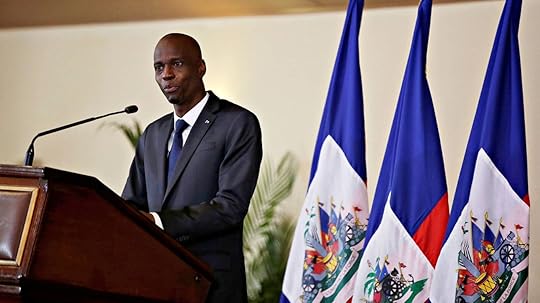 Jovenel Moïse en octubre de 2020. (Reuters) Por L. Proto 07/07/2021 - 16:09 Actualizado: 07/07/2021 - 18:16
 Jovenel Moïse nunca estuvo destinado a una presidencia fácil. Nadie lo está en Haití, la nación más pobre del hemisferio occidental con una larga historia de dictaduras y golpes de Estado y en el que la democracia continúa siendo muy frágil. Su mandato nació con un débil respaldo, se desarrolló en medio de acusaciones de corrupción y autoritarismo y murió junto a él este miércoles, a manos de asaltantes todavía no identificados que dispararon contra el presidente de 53 años y la primera dama en su residencia privada.
Hijo de un mercader y de una costurera, Moïse era un empresario agrícola que nunca había ejercido ningún cargo político hasta el momento en el que el expresidente Michel Martelly lo eligió como su sucesor al frente del Partido haitiano Tèt Kale (PHTK) en 2015. Su asesinato se produce a escasos dos meses de las elecciones presidenciales y legislativas convocadas para el próximo 26 de septiembre, unos comicios en los que no podía ser candidato y que estaban rodeados de polémica, dado que gran parte del país consideraba que el presidente llevaba desde febrero gobernando Haití ilegítimamente.
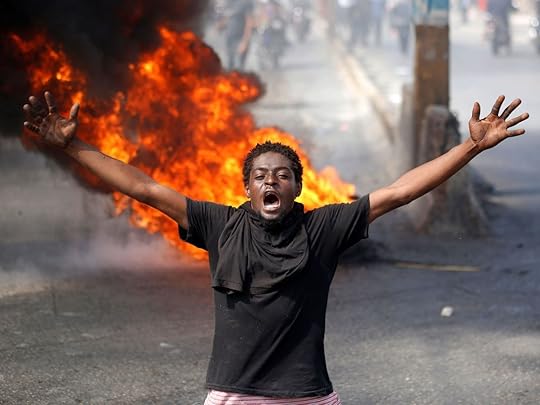
[image error] Un mandato en llamasMoïse llegó al poder a raíz de unas elecciones marcadas por los retrasos continuos, por las múltiples acusaciones de fraude y, sobre todo, por una bajísima participación. En un país de cerca de 12 millones de habitantes, solo 600.000 respaldaron en las urnas al fallecido mandatario, poco más de un 5% de la población. La polémica lo había perseguido desde su primer día en el cargo, pero especialmente desde 2018, cuando, a raíz de un escándalo de corrupción en torno a los fondos del programa Petrocaribe, por el cual Venezuela suministra petróleo a varios países, comenzaron una serie de protestas populares en su contra que nunca llegaron a apagarse.
 Coordenadas | ¿Por qué debería preocuparte esta crisis en el país de las mil crisis? L. P.
 La tensión llegó a su punto álgido a principios de febrero, provocando la que muchos expertos consideraron como la mayor crisis política de los últimos años en Haití. La clave de la crisis residía en dos interpretaciones diferentes de la Constitución haitiana, que establece que la duración de un Gobierno es de cinco años y que el cambio de poder debe efectuarse el 7 de febrero, el día del aniversario del fin de la dictadura de los Duvalier.
La oposición haitiana —compuesta por partidos políticos, grupos religiosos, organizaciones de sociedad civil y activistas por los derechos humanos, entre otros— argumentaba que el presidente debería haber abandonado su cargo este 2021, dado que las elecciones tuvieron lugar en 2016. Moïse, por el contrario, consideraba que su mandato debía finalizar en 2022 porque su inauguración no se produjo hasta 2017. Esta discrepancia podría haberse visto resuelta mediante un Tribunal Constitucional, pero Haití carece de tal institución.
Cuando llegó ese día 7, el presidente hizo un comunicado a la nación en el que afirmaba que se había frustrado un "golpe de Estado" para derrocar a su Gobierno y asesinarlo. Más de una veintena de sus detractores, entre ellos un juez de la Corte Suprema, fueron arrestados ese mismo día. Los opositores se apresuraron a nombrar un presidente interino, pero no obtuvieron ningún respaldo significativo por parte de la comunidad internacional y Moïse se mantuvo en el poder. Desde entonces, las protestas se agravaron, sumando un nuevo frente a una grave crisis de seguridad protagonizada por luchas de bandas armadas y por una ola de secuestros que ha forzado el desplazamiento interno de miles de haitianos. Un día antes del asesinato del presidente, Gaston Browne, presidente de la Comunidad del Caribe (Caricom), había calificado la situación en el país de "insostenible".

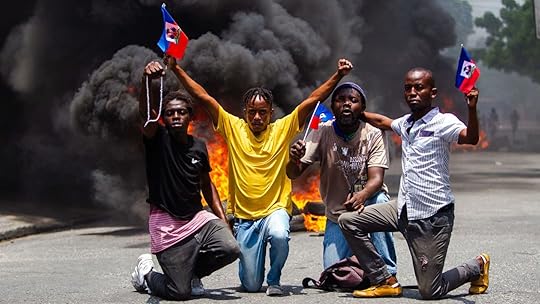 Manifestantes antigubernamentales en Haití. (EFE) El cambio constitucional que nunca llegó
 Desde su llegada a la presidencia, Moïse defendió la necesidad de reformar la Constitución, que data de 1987, para garantizar al Ejecutivo un mayor poder que le permitiera enfrentarse a una oligarquía que, según él, se estaba aprovechando de la debilidad del Gobierno. “Necesitamos un sistema que funcione”, dijo este año en una entrevista con 'The New York Times'. “El sistema actual no funciona. El presidente no puede trabajar para cumplir”.
Tanto la oposición haitiana como algunos analistas consideraban estos llamados del mandatario como una simple estrategia para avivar el sentimiento populista y camuflar los escándalos de su propio Gobierno. Pero otros veían en las palabras del presidente como una descripción acertada de la realidad en un país que ha encadenado una crisis política tras otra desde el terremoto de 2010, en el que murieron entre 100.000 y 300.000 personas y a raíz del cual más de un millón resultaron desplazadas.
"Jovenel Moïse era una persona complicada e imperfecta a las riendas de un sistema letal mucho más grande que él y que, en su deseo de cambiar Haití, se hizo enemigo de muchas personas peligrosas", relata a El Confidencial Michael Deibert, autor y periodista con más de dos décadas de experiencia reportando sobre Haití.
Los esfuerzos por reformar la carta magna marcaron los últimos meses de la presidencia de Moïse, quien había planeado la celebración de un referéndum constitucional el pasado 27 de junio. Sin embargo, las autoridades electorales de Haití decidieron aplazar la votación debido a la reciente oleada de contagios de covid en el país, la cual ha ocasionado un aumento de las muertes y de las hospitalizaciones que han sobrecargado el deficitario sistema sanitario del país.
Tras el asesinato del presidente, el destino de la reforma constitucional queda en el aire. Ni siquiera existe una redacción completa. Los únicos dos anteproyectos que se han dado a conocer proponían que las elecciones presidenciales se decidieran en una sola vuelta y que el Parlamento pase de tener dos cámaras a una, eliminando el Senado. También, crucialmente, buscaba reemplazar el puesto del primer ministro por el de un vicepresidente que responda a las órdenes de su superior, una medida respaldada incluso por los críticos de Moïse para evitar la frecuente fractura del Gobierno.
Ahora, Haití queda descabezado sin que ninguna de las ambiciosas transformaciones que Moïse planeaba para el país —y que tanta animadversión despertaron entre un importante sector de su población— haya logrado materializarse. "Pasé horas entrevistándolo y fue difícil reconciliar al hombre humilde que hablaba con aparente sinceridad sobre su deseo de construir carreteras y llevar electricidad a Haití con la figura que tanto odio inspiraba entre algunos, además de la aparente amnesia de una oposición que con frecuencia optaba por la violencia en lugar de la negociación", narra Deibert.
"Ahora, Jovenel Moïse se ha ido y el sistema, hecho de sangre y huesos, continuará avanzando mientras los autores de este crimen probablemente siguen beneficiándose de él", sentencia el autor.
Michael Deibert interviewed in La Tercera
I was interviewed in Chile's La Tercera about the assassination of Haiti's president Jovenel Moïse. The full article files and the original can be read here.
Magnicidio en Haití: la visión de un exagente de la CIA y un periodista que conoció a Moïse
Fernando Fuentes10 jul 2021 08:50 PM Tiempo de lectura: 9 minutos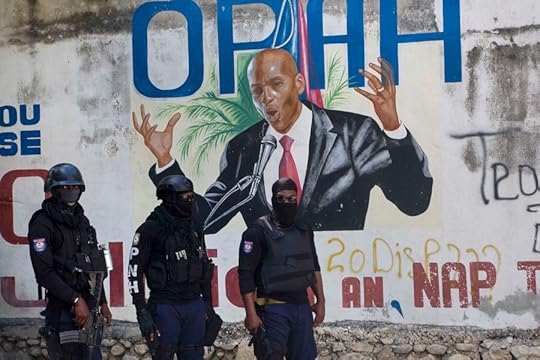
Policías haitianos pasan frente a un mural que representa al fallecido Presidente Jovenel Moïse, cerca de su residencia en Puerto Príncipe. Foto: AP.
Fulton Armstrong fue el jefe de la CIA en el país caribeño durante la década de los 90 y Michael Deibert entrevistó en dos ocasiones a Jovenel Moïse. Ambos entregan a La Tercera su análisis sobre las consecuencias del asesinato del presidente haitiano.
Fulton Armstrong: “Este Estado fallido se puede deslizar a una crisis de proporciones históricas”
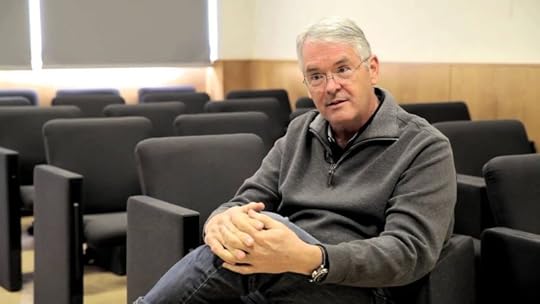 Fulton Armstrong, exjefe de la CIA en Haití durante los 90.
Sirvió en la Sección de Intereses de EE.UU. en La Habana y fue jefe de la CIA en Haití durante los 90. Hoy es miembro del Centro de Estudios Latinoamericanos y Latinos de la American University.
El de Jovenel Moïse no es el primer magnicidio en Haití. En 1915, el Presidente Jean Vilbrun Guillaume Sam fue asesinado por una turba enfurecida después de esconderse en la embajada francesa. Pese a este antecedente, ¿le sorprendió la muerte de Moïse?
En cierto sentido, el asesinato no fue sorprendente. Moïse estuvo involucrado en un juego de poder prolongado y, como muchos otros políticos haitianos, utilizó las pandillas para impulsar su agenda en las calles. Es una estrategia arriesgada y, por supuesto, antidemocrática. Un hombre que vive por la espada puede morir fácilmente por la espada. Pero a otro nivel, es impactante que un jefe de Estado haya sido asesinado. Es sintomático de la ruptura del orden social y, lo que es más importante, de las instituciones. Haití ha estado en crisis durante muchos años y ahora se dirige a una crisis aún más profunda.
En una entrevista en febrero, Moïse denunció que había un golpe de Estado en marcha organizado por “un pequeño grupo de oligarcas”. ¿Quién podría estar detrás de este asesinato? ¿Quién se beneficia con la muerte de Moïse?
Es difícil separar la retórica egoísta de Moïse de lo que realmente sucedió. Las acusaciones de Moïse sobre un “pequeño grupo de oligarcas” tienen valor político para él, pero corren el riesgo de presentarlo como un noble defensor de las masas pobres del país, una caracterización que se contradice con algunos hechos. Nuestros corazones tienen que estar con Moïse y su familia, pero eligió seguir estrategias que también olían a golpe de Estado: cerrar la Legislatura, empujar a un lado al Poder Judicial y promover una reforma constitucional que aumentó su propio poder. Las autoridades en Puerto Príncipe afirman que han matado a los asesinos, pero tenemos que ser claros al respecto y reconocer que los agentes de bajo nivel que hicieron el golpe no lo hicieron por iniciativa propia. Fuerzas poderosas estuvieron detrás del asesinato. Los beneficiarios de la muerte de Moïse son, si la historia es una guía, “todos” menos el presidente fallecido. Su asesinato provocará un festín.
¿El país puede quedar al borde del caos otra vez?
El caos es inevitable en este punto. De hecho, la situación ya era caótica durante meses. La “comunidad internacional”, incluida la OEA, EE.UU. y América Latina, optó por ignorar el caos, pero eso no significa que no fuera caótico. Es justo preguntar cómo Haití, sin una Legislatura, sin un Poder Judicial creíble y sin siquiera un primer ministro legítimo, se va a gobernar a sí mismo. Entonces, sí, el país está al borde del caos nuevamente. Si la comunidad internacional opta por ignorarlo, este Estado ya fallido se deslizará hacia una crisis de proporciones históricas. Para un país que ha vivido en crisis durante décadas, eso dice mucho.
[image error] Ciudadanos haitianos se reúnen frente a la Embajada de EE.UU. en Puerto Príncipe, pidiendo asilo luego del asesinato del Presidente Jovenel Moïse. Foto: AFPHaití ha luchado contra la inestabilidad política desde el fin de las dictaduras de François y Jean-Claude Duvalier. A su juicio, ¿por qué el país ha sido incapaz de superar esta inestabilidad que ya parece endémica?
Buena pregunta. La historia de Haití, desde el momento de la independencia del país, ha sido de sufrir presiones externas e internas. La mayoría de las voces internacionales decisivas -incluidas Francia y Estados Unidos- pusieron sus intereses políticos venales, incluido el apoyo a la esclavitud, y trataron de asfixiar al país. Haití, que anteriormente era la potencia dominante en la isla de La Española, descendió en espiral y ha sido el país más pobre del hemisferio occidental durante muchos años. La inestabilidad del país no es, estrictamente hablando, “culpa” de la comunidad internacional, pero está claro que no hemos ayudado. A medida que las fuerzas internas aumentan para desafiar la estabilidad e incluso los signos ocasionales de cultura democrática en el país, no hemos podido encontrar la manera correcta de hacerlos retroceder.
Haití, que estuvo sujeto a una controvertida misión de estabilización de la ONU entre 2004 y 2017, ¿podría enfrentar otra intervención de este tipo si la situación de seguridad empeora tras el asesinato de Moïse?
Las misiones de la ONU pueden haber sido controvertidas, pero proporcionaron cierta influencia estabilizadora durante muchos años, especialmente desde la restauración del Presidente Aristide en 1994. Es natural y probablemente correcto que recurramos a la ONU una vez más para proporcionar algo de liderazgo y asistencia en Haití. Estados Unidos bajo Donald Trump y, desafortunadamente, incluso bajo Joe Biden no ha logrado proporcionar algo de liderazgo. En este vacío, solo la ONU ha demostrado liderazgo, por lo que es natural volver a buscar ese liderazgo.
¿Cree que están dadas las condiciones para realizar las elecciones presidenciales, legislativas y el referéndum constitucional programados para el próximo 26 de septiembre?
Yo tampoco creo en Santa Claus, el Conejo de Pascua o el Hada de los Dientes. Haití no tiene las condiciones necesarias para unas elecciones creíbles o un referéndum. Un gobierno interino tendrá que crear esas condiciones, un proceso que no será rápido.
Michael Deibert: “Hay una élite política corrupta y depredadora que se beneficia del caos”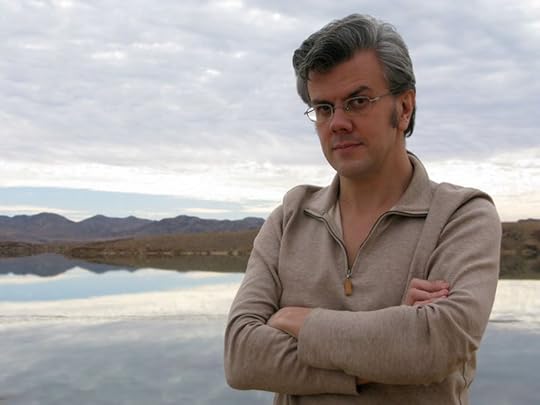 Michael Deibert, periodista estadounidense que entrevistó dos veces a Jovenel Moïse.
Periodista y escritor de EE.UU. ha informado sobre Haití durante casi 25 años. Autor de Haití no perecerá: una historia reciente (2017) y Notas del último testamento: la lucha por Haití (2005).
El de Jovenel Moïse no es el primer magnicidio en Haití. En 1915, el Presidente Jean Vilbrun Guillaume Sam fue asesinado por una turba enfurecida. Pese a este antecedente, ¿le sorprendió la muerte de Moïse?
Moïse era una persona complicada e imperfecta sentada sobre un sistema letal mucho más grande que él y, en su deseo de cambiar Haití, se hizo enemigo de muchas personas peligrosas. Pasé horas entrevistándolo y fue difícil reconciliar al humilde hombre que hablaba con aparente sinceridad de su deseo de construir carreteras y llevar electricidad a Haití con la figura que tanto odio inspiraba entre algunos y la aparente amnesia sobre una oposición que con frecuencia, casi exclusivamente, optaba por la violencia en lugar de la negociación. En muchos sentidos, Moïse, quien nació en un pequeño pueblo en el norte de Haití, era más típico del haitiano promedio que la mayoría de los políticos profesionales que desfilaban, como gallos en un patio, en la capital. Era un hombre terco que, a pesar de las muchas fechorías de sus propios aliados y partido político, parecía creer genuinamente que podía transformar el país. Claramente, había fuerzas que no permitirían que esto sucediera.
¿Quién podría estar detrás de este asesinato? ¿Quién se beneficia con la muerte de Moïse?
A pesar de sus propios defectos y sus tendencias autoritarias, Moïse ciertamente se hizo enemigo de algunos de los oligarcas corruptos y de las élites políticas que se han beneficiado durante tanto tiempo de la disfuncionalidad de Haití. Sus intentos de modernizar la producción de energía y la infraestructura del país, por ejemplo, amenazaron a mucha gente poderosa, fuerzas que no tienen alergia a la sangre. Al mismo tiempo, ha habido rumores de que han amenazado a las fuerzas dentro de su propio partido, el Parti Haïtien Tèt Kale. El presidente interino, Joseph Lambert, es un producto y un beneficiario del antiguo orden político que Moïse afirmó que estaba amenazando.
¿El país puede quedar al borde del caos una vez más?
Hay fuerzas en Haití más grandes que el presidente, una élite política corrupta y depredadora, que se beneficia del caos y la disfuncionalidad y hará cualquier cosa, incluido, ahora lo vemos, el asesinato de un presidente, para asegurar que el sistema sanguinario continúe. Ahora Moïse se ha ido. El sistema que finalmente lo mató, hecho de sangre y huesos, continuará avanzando y los perpetradores de este crimen continuarán sentados encima de él, al menos por el momento. Lo que Haití necesita con urgencia, en mi opinión, es una entidad similar a la Comisión Internacional contra la Impunidad en Guatemala (CICIG), que existió desde 2006 hasta 2019 y que investigó el crimen organizado y grupos armados ilegales y sus vínculos con el Estado. Esta entidad, con respaldo internacional, haría más que cualquier fuerza de mantenimiento de paz para enfrentar el cáncer de la corrupción y la impunidad.
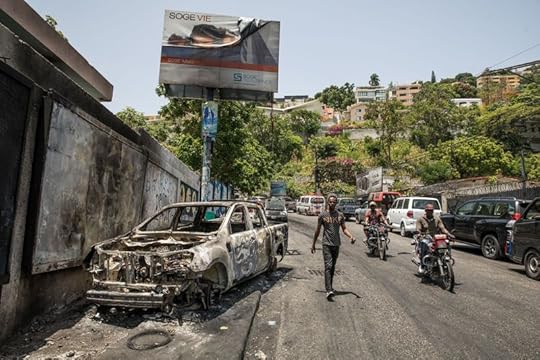 Un automóvil carbonizado cerca del cuartel de policía de Petionville, donde los sospechosos del asesinato del Presidente Jovenel Moise se encuentran detenidos, Foto: AFP
¿Por qué el país ha sido incapaz de superar esta inestabilidad que ya parece endémica?
Durante varias décadas en Haití hemos sido testigos de la forma de democracia, el proceso de elecciones, mientras que el fondo de la democracia, un gobierno representativo que responda a la voluntad del pueblo, está en gran parte ausente. Entre los extranjeros a menudo hay un enfoque en los grupos armados que ejercen control sobre vastas áreas del país, especialmente Puerto Príncipe, pero lo que a menudo se descuida es que la mayoría de estos grupos tiene patrocinadores en la élite política y económica que los utiliza como una especie de milicia privada. Este sistema comenzó bajo el gobierno de Jean-Bertrand Aristide a principios de la década de 2000 y ha hecho metástasis hasta infectar, hoy, a todo el cuerpo político. En conjunto con la impunidad y la corrupción, está claro que los problemas en Haití son estructurales y sistémicos y no pueden resolverse únicamente con elecciones. El cuerpo del paciente está enfermo y un abordaje estructural, similar a la CICIG, creo que es uno de los antídotos.
Haití, que estuvo sujeto a una controvertida misión de estabilización de la ONU entre 2004 y 2017, ¿podría enfrentar otra intervención de este tipo si la situación de seguridad empeora?
Cualquier misión de este tipo sería sólo una solución temporal, cosmética e ineficaz si no se afrontan los problemas estructurales.
¿Cree que están dadas las condiciones para realizar las elecciones presidenciales, legislativas y el referéndum constitucional programados para el próximo 26 de septiembre?
Creo que las elecciones que se celebren en las condiciones actuales -el asesinato de un presidente, el gobierno de bandas armadas en gran parte de la capital, la continua pauperización y marginación de la mayoría- solo servirían para afianzar aún más a la rancia clase política que trajo a este abismo al país, que sigue siendo, a pesar de su imagen, un país verdaderamente grande, con mucha sabiduría para ofrecer al mundo.
Michael Deibert interviewed in El Nuevo Día
I was interviewed in Puerto Rico's El Nuevo Día regarding the assassination of Haiti's President Jovenel Moïse. The article can be read here.
A presidential assassination
A presidential assassination
The murder of Haiti’s president will worsen the country’s chaos
Jovenel Moïse was unloved. But his death leaves the country with a power vacuum
Jul 7th 2021
(Read original article here)
OPPONENTS OF Jovenel Moïse, Haiti’s president since 2017, have long wanted him to leave office. Now he has—but not in the way they were expecting. A group of unknown attackers shot and killed Mr Moïse in the bedroom of his private residence in a gated community on the outskirts of Port-au-Prince, the capital, in the early hours of July 7th. They also injured his wife. Claude Joseph, whom the president appointed as interim prime minister in April, announced the killing in a statement and said he had taken charge of the Caribbean country. Haiti was already in turmoil—much of it due to Mr Moïse’s rule. His murder has added fuel to the flames.
On the morning after the murder Port-au-Prince’s streets were unusually quiet, without the usual roar of motorcycles and bustle of market stalls, as Haitians tried to guess what might happen next. The city’s airport was shut, as was the land border with the Dominican Republic.
The assassination has shocked a country which, for all its history of misrule and criminal violence, last witnessed the killing of a president in 1915. Rumours swirl about who was behind it. By the evening of July 7th the police chief announced that four suspects had been killed, and two more arrested. The assassins were probably mercenaries. The question is: who hired them? “It was obviously somebody with a lot of money and a lot of power,” says Monique Clesca, a former UN official.
Many pointed the finger at opposition politicians or Haitian elites. Other Haitians, who given the country’s history are suspicious of foreign interference, suspect the attack came from outside, possibly from Venezuela or the United States. Mr Joseph said some of the attackers spoke Spanish (Haitians speak Creole and French). Another video suggested they spoke English and claimed to be agents of the US Drug Enforcement Administration. This is certainly not the case, but the whispers add to the volatile situation.
It was not the first attempt on Mr Moïse’s life—at least, according to him. In February his government arrested at least 23 people, including a top judge and a senior police officer, who were accused of plotting an assassination and coup. Mr Moïse, a former plantation manager who referred to himself as “Banana Man”, had no shortage of enemies. Critics accused him of involvement in the pilfering of millions of dollars from PetroCaribe, an aid fund from Venezuela. Opponents said his term ended in February, five years after his predecessor left office. He claimed his term started when he took power, a year later—a position backed by the United States, although Joe Biden’s administration urged new elections this year. Protests regularly broke out against his rule.
As the political crisis deepened, Mr Moïse became more authoritarian. Since January 2020, when he dismissed all but ten senators in the two-chamber legislature, the president had been ruling by decree. He used his powers to create an intelligence agency and broadened the definition of terrorism to include acts of dissent. Protesters were attacked by gangsters. Mr Moïse denied asking them to intimidate and kill his opponents.
Previous Haitian presidents have fostered violence and corruption, too. But under Mr Moïse the situation grew worse. Critics accused him of using gangs to a greater extent to do his bidding, while having far less control over them, than previous presidents. In recent weeks fighting in Port-au-Prince has intensified; thousands of people had to flee their homes in June alone. By some estimates, kidnappings in Haiti tripled last year compared with 2019.
Although Mr Moïse has been the focus of much discontent, his death is unlikely to simplify things. “He was a complicated and flawed person, but the people who made him the single focus of all that is wrong in the system of Haiti miss the larger failures of that system,” says Michael Deibert, an American expert on Haiti.
Mr Joseph has little legitimacy. Mr Moïse had nominated Ariel Henry, a doctor, as permanent prime minister; he was due to take office on the day of the assassination. The constitution does not provide for the lack of both a president and a National Assembly, and the chief justice of the Supreme Court, who could arbitrate, died two weeks ago of covid-19. The killing could also make it harder to hold elections for a new president and legislature, which are due in September.
In many ways Haiti already looks like a failed state. Men with guns have long terrorised its people. Only last month Jimmy Chérisier, alias Barbecue, a former policeman and leader of an alliance of gangs, announced a “revolution” against the status quo (though many think he meant the opposition). The police are weaker than the gangs, who may now feel they have a free hand. Now that lawlessness has reached the country’s highest office, many Haitians fear the worst.■
A version of this article was published online on July 7th 2021
This article appeared in the The Americas section of the print edition under the headline "A presidential assassination"
July 16, 2021
Oración
Oración
By Amaury Pacheco
(Translated by Michael Deibert)
Here we are the pilgrims.
Myrrh, incense, gold from our poetic stay,
diamond rain we bring.
SAN LÁZARO, I pray to your heart for each Cuban,
materialize your goodness on the island, bathe it with your gifts,
beyond these edges so that prosperity
lights a fire in homes, in mind, body and soul.
SAN LÁZARO of the diasporas
poetic chimeric kabbalistic buddhist new age christian
progressive put in the 17 Cosmic friend of GOD
Give us Cubans the certainty to make our way
between the deceptions dangers discrepancies
disappointments sadness miseries and misfortunes
of a blurred destiny.
Convert the adventure of living
into the joy of being reborn at every moment.
Give us Cubans today the peace of change.
Biographical note:
Amaury Pacheco (born 1969) is an Afro-Cuban poet and activist and one of the founders of the Movimiento San Isidro, a group of activist artists that has staged protests against the restrictive measures of the Cuban government since 2018.
Translator’s note:
San Lázaro (Saint Lazarus), the patron saint of healing and the sick, is represented by the orisha Babalú-Ayé in the Santería religion. His shrine, the site of an annual pilgrimage, is located in the Havana suburb of Rincón.
Michael Deibert's Blog

- Michael Deibert's profile
- 8 followers

