
Christine Valters Paintner's Blog, page 126
September 14, 2015
Featured Self-Study for September: Hildegard of Bingen

To celebrate the feast of St Hildegard of Bingen we are offering a $10 discount off the cost of the Creative Flourishing in the Desert self-study retreat. It includes rich reflections from Christine on Hildegard’s spirituality for today, daily invitations to draw mandalas, links to her music, and invitations into body prayer with Betsey Beckman.
Or join us in the Rhine Valley of Germany May 29-June 6, 2016 for a pilgrimage walking in the landscape which shaped her. Your registration for the pilgrimage includes access to the self-study retreat above to help you prepare for the journey.
Details and registration here>>
The post Featured Self-Study for September: Hildegard of Bingen appeared first on Abbey of the Arts.


September 12, 2015
Celebrate the Feast of St. Hildegard! ~ A Love Note from Your Online Abbess
Dearest monks and artists,
September 17th will be the Feast of Holy Hildegard, one of the patron saints of our work here in Abbey because of her roots as a Benedictine monk and Abbess, and her incredible commitment to creative expression and nurturing aliveness. She is featured in our upcoming online retreat for women Coming Home to Your Body. I offer you this brief excerpt:
 I am the living breath in a human being placed in a tabernacle of marrow, veins, bones, and flesh, giving it vitality and supporting its every movement.
—St. Hildegard of Bingen, Scivias I 4:4
Hildegard of Bingen was a 12th century Benedictine Abbess, who was also a theologian, visionary, musical composer, spiritual director, preacher, and healer. For centuries monasteries have been centers of healing and herbal medicine. Monks would grow the herbs and learn their applications, so that people would come for both spiritual and physical healing.
We have lost this connection, with medicine taking place in the efficient and sterile halls of hospitals. Please don’t misunderstand me, I am profoundly grateful for the gifts of modern medicine, and rely on it to some degree to maintain my own quality of life. And yet, we have lost so much in this shift from the model of slow medicine and healing to the pursuit of quick cures. In the process we have come to compartmentalize ourselves, seeking the fix for the headache or the stomach trouble, without considering the whole of our bodies and our lives. We become impatient when illness descends, rather than yielding to body’s needs and desires.
We rarely have a relationship with our doctors, spending only minutes with them each visit, whereas Hildegard, and other monastics like her, would have come to know her patients. She would have seen the profound connection between body and soul. She would have practiced slow medicine.
One of the fundamental principles of Hildegard’s worldview is viriditas, which means the “greening power of God.” But even more than that, it refers to a lushness and fecundity in the world, a greening life force we can witness in forests and gardens and farmland. Hildegard, who lived in the valley around the river Rhine in Germany, was profoundly impacted by her witness to the profusion of greenness and how this green life energy was a sign of abundance and life. It is what sustains and animates us.
Greenness became not just a physical reality, but a spiritual one as well. Hildegard believed that viriditas was something to be cultivated in both body and soul. Her language is filled with metaphors for seeking out the moistness and fruitfulness of the soul. The sign of our aliveness is this participation in the life force of the Creator. Anything that blocks this flow through us contributes both to physical disease as well as spiritual unrest.
For Hildegard, viriditas was always experienced in tension with ariditas, which is the opposite experience of dryness, barrenness, shriveling up. She would keep asking how to bring the flow of greening life energy back in fullness to a person.
Victoria Sweet, a medical doctor in San Francisco and researcher in medieval history, wrote a wonderful book called God’s Hotel: A Doctor, a Hospital, and a Pilgrimage to the Heart of Medicine in which she explored Hildegard’s principles of greening in her own medical practice. Dr. Sweet worked in a long-term care facility and began to ask the question of what was blocking a patient’s access to this life-giving greening energy and shifting her perspective enabled her to find healing paths that were previously unseen. She also discovered that simply being in relationship with her patients over time allowed her to see patterns and behaviors which revealed far more into their care than a quick visit could ever do.
There is a story from the desert fathers where an Abba says to a seeker, “Do not feed your heart what does not nourish it.” This can be easier said than done, since we are inclined to so many “comforts” which only serve to numb and distract us from life. How often do we try to satisfy ourselves with that which depletes us?
What if your fundamental commitment was to only offer your body and soul that which is nourishing and to listen to what depletes you and say no to those things.
I invite you to hold this question in all things: Does this nourish me or does this deplete me?
To read my poem about Hildegard of Bingen and find more links at the Abbey about her click this link
Would you like to nourish your body with God’s greening in a community of kindred souls? Join me this fall for the journey home again: Coming Home to Your Body: A Woman’s Contemplative Journey to Wholeness My apologies to the amazing men monks in our community. You will be warmly invited to join us for the Advent online retreat.
With great and growing love,
Christine
Christine Valters Paintner, PhD, REACE
Photo: © Icon of Hildegard of Bingen by Marcy Hall Order prints here>>
The post Celebrate the Feast of St. Hildegard! ~ A Love Note from Your Online Abbess appeared first on Abbey of the Arts.
September 9, 2015
Monk in the World guest post: Gerry O’Neill
I am delighted to share another beautiful submission for the Monk in the World guest post series from the community. Read on for Gerry O'Neill's poem about ways to practice the sacrament of Communion.
Strange Communion
No altar,
No bread or wine,
No priest,
No word spoken
To stir the dangerous memory of Jesus (John Baptist Metz)
The drama is enacted
Under a different form:
Paper cup, coffee and hot roll,
Offered up
In a liturgy of love.
The salivated cup passes,
From lip to lip,
Measured bites so all may have food
For the journey
To the sheltered workshop.
Real presence in the sharing,
Joy that is blind
To the disapproving glances
Of those who fail to see
The depth in this encounter.
Tears well up
And overflow in gratitude,
For the gift of Eucharist
Made present,
In strange communion,
Do this in memory of me!
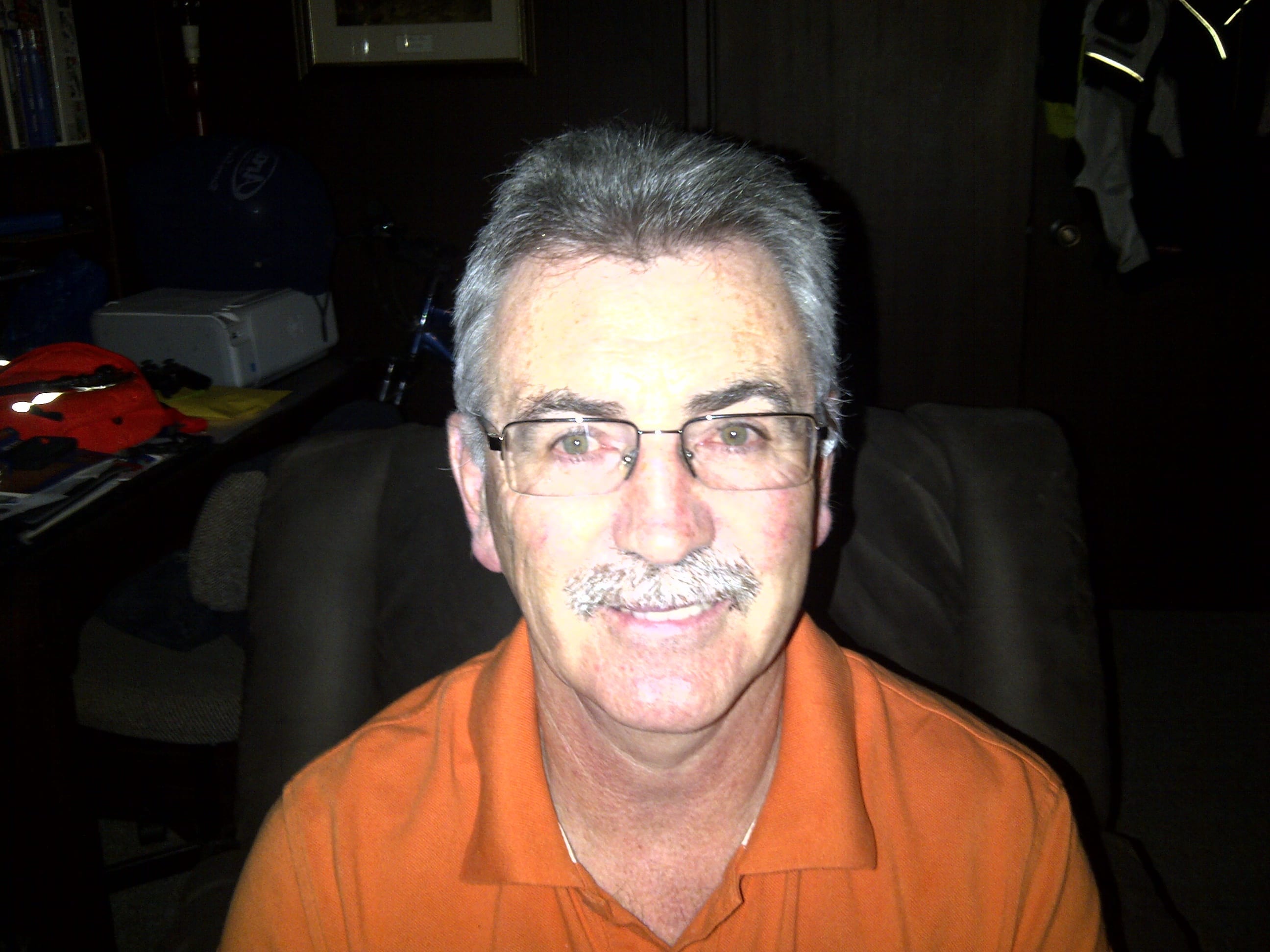 Gerry holds Masters’ Degree in both Education and Theology. In recent years he has served as Director of Mission for St John of God Health Care in Western Australia and currently holds the position of Regional Formation Manager for the Sisters of St John of God Ministries.
He has been key-note speaker at a number of conferences, published work in the Enneagram, Leadership and Visioning. Currently, he is offering a range of formation workshops that are designed to support those who are charged with the responsibility of continuing the healing mission of Jesus Christ in education, health, welfare and outreach to those on the margins of society.
The post Monk in the World guest post: Gerry O’Neill appeared first on Abbey of the Arts.
September 7, 2015
Coming Home to Your Body: A Woman’s Contemplative Journey to Wholeness ~ A Love Note
Dearest monks and artists,
I offer you a brief excerpt from our upcoming online retreat for women Coming Home to Your Body:
Every breath is a resurrection.
—Gregory Orr (excerpt from poem “Concerning the Book that is the Body of the Beloved”)
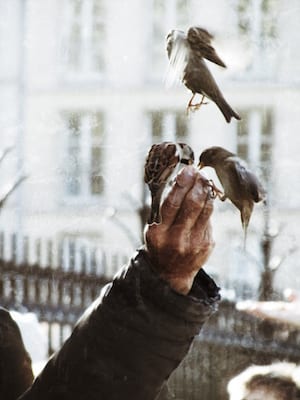 In the Benedictine tradition there is a monastic practice called statio, which is the practice of stopping one thing before beginning another. Imagine, instead of rushing from one appointment to the next, that between each one you pause, you breathe just five long slow breaths. Imagine how this might transform your movement from one activity to another. Or even if you move from one room to another, to allow a brief pause on the threshold between spaces. God lives inside our breath and so every breath can become a resurrection.
For the Celtic monks, thresholds were sacred places. The space or the moment between – whether physical places or experiences – is a place of possibility. Rather than waiting being a nuisance, or a sense that you are wasting time, it is an invitation to breathe into the now and receive its gifts.
Each moment of the breath is a threshold – the movement from inhale to fullness to exhale to emptiness. The breath can help us stay present to all of the moments of transition in our lives, when we feel tempted to rush breathlessly to the next thing. Instead, what happens in our bodies and hearts when we intentionally pause? When we honor this threshold as sacred? When we breathe deeply and slowly for even a single minute?
Statio calls us to a sense of reverence for slowness and mindfulness. We can open up a space within for God to work. We can become fully conscious of what we are about to do rather than mindlessly starting and completing another task. We call upon the breath as an ancient soul friend to help us to witness our lives unfolding, rather than being carried along until we aren’t sure where our lives are going. We can return again and again to our bodies and their endless wisdom and listen at every threshold.
We often think of these in between times as wasted moments and inconveniences, rather than opportunities to return again and again to the expansiveness of the present moment and the body’s opening to us right now, to awaken to the gifts right here, not the ones we imagine waiting for us beyond the next door.
Would you like to breathe into wholeness in a community of kindred souls? Join me this fall for the journey home again: Coming Home to Your Body: A Woman’s Contemplative Journey to Wholeness. My apologies to the amazing men monks in our community. You will be warmly invited to join us for the Advent online retreat.
With great and growing love,
Christine
Christine Valters Paintner, PhD, REACE
Photo: © Christine Valters Paintner in Paris, France outside of Notre Dame
The post Coming Home to Your Body: A Woman’s Contemplative Journey to Wholeness ~ A Love Note appeared first on Abbey of the Arts.
September 2, 2015
Monk in the World guest post: Rich Lewis
I am delighted to share another beautiful submission for the Monk in the World guest post series from the community. Read on for Rich Lewis' reflection on contemplative prayer.
When I slow myself down I remember I am a divine being. One way I slow myself down is through the practice of centering prayer. I have been practicing centering prayer since June 1, 2014. The recommended guidelines are twice per day, twenty minutes each time. Previously, I dabbled with centering prayer. For a few months, I practiced once per night. Each session lasted no longer than ten minutes. I knew this was not enough. I knew God was calling me. I knew God wanted me to experience more and more of Her Spirit. On June 1, 2014, I decided to stop experimenting. I decided to consent to the presence and action of God within. I knew that the only way to do this was to follow the recommended guidelines.
I now center first thing before I begin my day. My second session is usually in the evening. Each time I center, I am refreshed. I call this time “sitting with Jesus.” My sacred word is a mental picture of Jesus from an icon. As my thoughts wander or my emotions reflect about the past day or upcoming events, I ever so gently return to this mental image to bring me back to the purpose for centering. I am consenting to the presence and action of God within.
I am allowing myself to enter the fourth stage of prayer that I read about in a recent blog article, Finding Your Inner Room by Irwin J. Boudreaux. The first three stages are: One – We speak, God listens, Two – God Speaks, we listen, Three – No one speaks, both listen.
Centering Prayer is a practice which leads me into contemplative prayer or the fourth stage, No one speaks, no one listens. I am simply resting in God. I am letting God act in me. Do I know what God is doing? No, I do not. My job is to simply rest and trust. How God is acting within me, will reveal itself in my non-silent actions throughout the day.
Many times throughout the day, I ever so gently return to my sacred symbol when I find my thoughts and emotions are distracting me from what I need to do. I re-center myself even during my non-centering portion of the day. When I find myself becoming anxious, angry or frustrated, I mentally visualize my sacred symbol and bring myself back to the task at hand. During Centering Prayer, I consent to the Divine so the big D and me, the little d, simply sit with with each other. We become united. During my non silent parts of the day, I do the same. My little d recognizes that I need to become one with the big D. I mentally visualize my sacred symbol and allow myself to become united with God. At that moment I can get back to the task at hand. At that moment I partner with God to accomplish the tasks ahead.
Since I began my centering prayer practice I have noticed a few new things about myself. I am much calmer. Yes, I still become anxious, nervous, frustrated and upset just like everyone else. Yet, I notice that I am able to re-center myself much more quickly and resume whatever tasks are in front of me. I no longer panic when I have an enormous list of tasks that need to get done in a short period of time. For example, at work, I will have at least 20 or more items that need to get done. I find that I am able to calmly review my list and one by one make my way through this list. At the end of each day, I am always amazed by what I have accomplished. I know the calmness and fluidity of this process is because of my centering prayer practice! God and I are partnering throughout the day.
Centering prayer slows me down. I bring this slowness into my daily life. I am calm yet more productive. I am calm and make wiser decisions. Because I am calm and make wiser decisions, I am able to get more done. It is a paradox. Working faster and harder should lead to getting more done. I am finding that this is not true. When I work slowly but with a calm intensity, I am always more productive.
 Rich Lewis is daily practitioner of centering prayer since June 1, 2014. Rich enjoys writing short quotes and small articles that share the centering prayer fruits he has experienced. Rich is on the RCMR team (www.amossmith.org) and is currently writing a book with Amos Smith, author of Healing the Divide.
The post Monk in the World guest post: Rich Lewis appeared first on Abbey of the Arts.
September 1, 2015
One-Day Writing Retreat in Galway City

Saturday, September 19, 2015
10:00 a.m. – 5:00 p.m.
with Christine Valters Paintner, PhD and John Valters Paintner, MTS
Join us for a daylong immersion in the creative process. We will draw on contemplative practice and mindfulness principles, stories from Celtic monastic tradition, free-writing prompts, poetry explorations, and the expressive arts to create a safe and supportive container for diving deep into your creative heart through writing. This day is designed to inspire and generate new writing, ideas, and tools for personal practice. It is not a critique or workshopping group, although there will be opportunity to share your work. Open to writers of any genre or level.
Click here for more details and registration>>
The post One-Day Writing Retreat in Galway City appeared first on Abbey of the Arts.
August 31, 2015
Monk Manifesto appears at the On Being Blog
I am delighted that the Monk Manifesto appeared this past week on the On Being blog as well as a reflection by me about it. I submitted this to them quite a while ago, so it doesn’t include our 8th added principle:
8. I commit to being a dancing monk, cultivating creative joy and letting my body and "heart overflow with the inexpressible delights of love."
(You can see the full Monk Manifesto here)
But worth a stop by their site to see the dancing monk community around the web. Stop here to read the article>>
The post Monk Manifesto appears at the On Being Blog appeared first on Abbey of the Arts.
August 30, 2015
Coming Home to Your Body – an online retreat for women

September 21-November 28, 2015 | 10-week online retreat
with Christine Valters Paintner, PhD, REACE + ten fabulous guest teachers + two amazing forum facilitators = a recipe for deepened body love!
If only we can bring the wisdom of the body to consciousness, spirit will no longer be homesick for home."
–Marion Woodman, Leaving my Father’s House
What if you made a radical commitment to embrace the gift of your body as sacred vessel?
What if you began the long and beautiful journey home?
Together in this 10-week online retreat for women we will create a body wisdom tribe of dancing monks, sensual monks, monks delighting in the gifts of embodied life, and monks lamenting the places of loss and betrayal. We will root these in ancient practices and texts. We will discover that we are part of a larger Body and a Cosmic Dance, which constantly offers us the nourishment we need to thrive.
Register by Sept 7th for early discount.
Click here for more details and registration>>
The post Coming Home to Your Body – an online retreat for women appeared first on Abbey of the Arts.
August 29, 2015
Love note: Writing as a Spiritual Practice
Dearest monks and artists,
I have had a wonderful time of sabbatical during the month of August with time for play, friends, solitude, and creative work. I return to the Abbey feeling refreshed and ready for a full autumn of pilgrimage journeys and leading a new session of Coming Home to Your Body, an online retreat for women.
 I am delighted to share an article of mine published in the most recent issue of Network Ireland Magazine on Writing as a Spiritual Practice. For those of you in Ireland, John and I are offering a daylong writing retreat in Galway City on Saturday, September 19.
Read on for more insight into how I approach this work:
I am deeply inspired by monastic tradition, one of the great contemplative and mystical strands of Christian heritage, and also present in other religions. Monks were the keepers of wisdom through their commitment to spiritual practice and to the art of writing. Manuscripts were illuminated, bringing word and image together, to shine a light on the poetry, stories, and other wise words that shape our western cultural imagination. I have been a writer for as long as I can remember. At age 8 I penned short stories about 008, the woman spy who had to step in where James Bond failed, marking my simultaneous early journey into feminism as well.
As an adult, I write mostly non-fiction and poetry. My journal is an intimate companion to my days. Writing is often a doorway of discovery to what I didn’t know before. When I write with openness to the unfolding journey, surprises await me on the page. When I fell in love with monasticism in graduate school fifteen years ago, I discovered a set of practices that resonated with the part of me that loves spaciousness and slowness. I slowly came to realize that the contemplative way can also be a gift for our creativity as well, nurturing it in powerful ways.
Click the link to read the entire article>>
I would love to have you join me this fall either online or in person for contemplative practice and creative expression in a vibrant community!
With great and growing love,
Christine
Christine Valters Paintner, PhD, REACE
Photo: © Christine Valters Paintner on Flaggy Shore in Co Clare
The post Love note: Writing as a Spiritual Practice appeared first on Abbey of the Arts.
August 7, 2015
Writing as a Spiritual Practice
Read on for more insight into how I approach this work:
I am deeply inspired by monastic tradition, one of the great contemplative and mystical strands of Christian heritage, and also present in other religions. Monks were the keepers of wisdom through their commitment to spiritual practice and to the art of writing. Manuscripts were illuminated, bringing word and image together, to shine a light on the poetry, stories, and other wise words that shape our western cultural imagination. I have been a writer for as long as I can remember. At age 8 I penned short stories about 008, the woman spy who had to step in where James Bond failed, marking my simultaneous early journey into feminism as well.
As an adult, I write mostly non-fiction and poetry. My journal is an intimate companion to my days. Writing is often a doorway of discovery to what I didn’t know before. When I write with openness to the unfolding journey, surprises await me on the page. When I fell in love with monasticism in graduate school fifteen years ago, I discovered a set of practices that resonated with the part of me that loves spaciousness and slowness. I slowly came to realize that the contemplative way can also be a gift for our creativity as well, nurturing it in powerful ways.
Silence and Slowness
In our busy lives we miss so much of the texture, nuance, and depth of the world around us. At heart, the contemplative life is about being willing to slow down enough to really see the wonders of life at work all around us. We embrace times of silence to allow a different voice to speak, a wiser and more centered voice than the anxious narrative many of us have running continually through our minds. What might happen if we allowed a few minutes each day to descend into the well of stillness?
Click here to read the entire article>>
The post Writing as a Spiritual Practice appeared first on Abbey of the Arts.


