
Christine Valters Paintner's Blog, page 122
January 5, 2016
Monk in the World guest post: Kate Kennington Steer
I am delighted to share another beautiful submission for the Monk in the World guest post series from the community. Read on for Kate Kennington Steer's reflection on the power of a word:
word
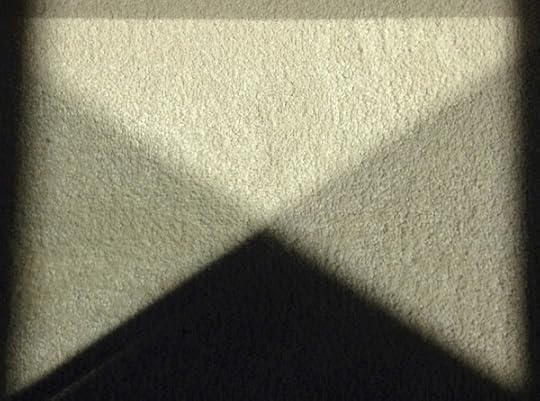 As the seasons shift again and the year moves into what I think of as its dying arc, I have been prompted yet again to return to the word I was given at the end of Advent last year: Welcome.
Welcome is all ‘about’ answering the Spirit's invitation to listen, live and love more deeply as I follow in the footsteps of the Way to and with Christ. It is an all embracing word: whatever arrives in this day will come; its coming is beyond my power to control; and further, this coming will be ‘well’, in a way which will most probably be completely beyond my comprehension. My definition of welcome needs must be expansive and encompassing, and as I have been exploring its meanings and themes I have been reminded of TS Eliot’s echo of Julian of Norwich’s words,
And all shall be well and
All manner of the thing shall be well
The example of faith that these echoes proffer to me is a particular challenge – and comfort – when I find myself unmoored by periods of severe depression or struggling with the necessity of long periods of retreat from the world by a bad patch of ill health. Welcome assures me that fear is not the final word, wherever my explorations will take me.
Part of my recent commitment to unravelling the mysteries embedded in welcome is praying Thomas Keating's famous 'welcoming prayer' each morning before I begin my period of centering prayer. I am finding it draws together strands of definitions I have already glimpsed and throws open the windows of my soul to other meanings:
Welcome, welcome, welcome.
I welcome everything that comes to me today because I know that it is for my healing.
I welcome all thoughts, feelings, emotions, persons, situations, and conditions.
I let go of my desire for power and control.
I let go of my desire for affection, esteem, approval and pleasure,
I let go of my desire for survival and security.
I let go of my desire to change any situation, condition, person or myself.
I open to the love and presence of God and God
’
s action within.
Amen.
Praying this prayer is not easy – at all! The challenge to ‘let go’ of the key drivers that underlie and inform all of my behaviour brings to the fore all my fears in one fell swoop. I am presently finding it difficult to get past the second line: that welcome is ‘about’ healing, even though it was partly recognising this very need of God in every way that brought me to this word for this year. But ‘everything … is for my healing’? I know that embedded in here is the Invitation: the possibility that, through the presence of the Holy Spirit opening my eyes to noticing what keeps me from God, all my reactions to whatever arrives this day may lead me into closer relationship with God. The Invitation is the beckoning of possibility – that all may be redeemed by Grace. This is the freedom I am continually offered, and repeatedly fail to see. As St Ignatius says, ‘there are very few people who realise what God would make of them if they abandoned themselves into his hands, and let themselves be formed by his grace.’
For all the difficulties I create for myself, on some mornings I have a glimmer of the possibility of understanding. This creates a hope in me which prays with Wendell Berry that since it is
A grace living here as we live,
Move my mind now to that which holds
Things as they change.
(1982.IV, A Timbered Choir)
This tension between holding/being held in stasis and flux is a very real presence in my life. For example, I had set aside the last month for writing a new project. I was excited about the creative and spiritual challenge of this form of service and was certain that I had also been offered this project as an opportunity for my work to reach a new audience, and who knew what possibilities after that? And yet, I have spent nearly the whole month lying in bed, unable even to dictate. I will miss my publishing deadline, and will not fulfil my contract as it stands.
The challenge of welcome becomes very applicable at this moment. The challenge of welcome intimately involves me in the process of the letting go, over and again, of creative opportunities that failed to happen; or those that have happened and failed to materialise my original vision or do justice to my inspiration. Even more crucially, welcome is ‘about’ letting go of those times, photographs, prayers, essays, poems which did come close to expressing an iota of the wonder of God, so that the Spirit may take them wherever is most needful; so that I do not mistake them for God.
The challenge of welcome asks me in not to grasp onto all this ‘failure’, ’loss’, or ‘success’. Welcome wishes to release me from the possibility of mistaking these activities as signs of my worth and identity.
Never to be again! But many more of the kind
As good, nay, better, perchance: is this your comfort to me?…
Therefore to whom turn I but to thee, the ineffable Name?
Builder and maker, thou, of houses not made with hands!
What, have fear of change from thee who art ever the same?
Doubt that thy power can fill the heart that thy power expands?
There shall never be one lost good!
(Robert Browning ‘ Abt Vogler ')
Hope and Gratitude needs be my only response to welcome. And although I continually fall short in this on a daily basis, it remains true that this is what my soul needs for its healing. Only from this will come the kind of soul-making inspiration to see where my embodied creativity can join long enough with the Spirit to receive a word or an image that might aid others to see the Holy. Here. Now.
 Kate Kennington Steer is a writer and photographer with a deep abiding passion for contemplative photography and spirituality. She writes about these things on her shot at ten paces blog (http://shotattenpaces.blogspot.co.uk).
The post Monk in the World guest post: Kate Kennington Steer appeared first on Abbey of the Arts.


January 3, 2016
The Elements as Wise Guides and Companions | January 29, 2016
10.00am – 4.30pm | Arrupe Room, Milltown, Ranelagh, Dublin 6
Join me in Dublin for a day of retreat with the AISGA (All Ireland Spiritual Guidance Association, non-members welcome to register).
As we approach the feast of Imbolc and St Brigid, we will gather together to pause and listen for how each of the four elements of wind, fire, water, and earth might offer us wisdom and guidance for the season ahead. As the earth reawakens to new life we will listen to the seed rumblings in our own bellies. Through song, gentle movement, writing, photography, reflection, stillness, and conversation we will let the gifts of nature inspire our creative longing and vision. You will come away from the day reconnected and refreshed. No art experience necessary, just a willingness to explore!
Advance registration is required at AIGSA.ie
The post The Elements as Wise Guides and Companions | January 29, 2016 appeared first on Abbey of the Arts.
January 2, 2016
New Year and Epiphany Blessings ~ A love note from your online abbess
Dearest monks, artists, and pilgrims,
New Year blessings to you!
 I love the Epiphany gospel story (in some churches celebrated January 6th and some next Sunday) and I offer you a reprise of a reflection on the invitations this text has to offer to us:
The story of the magi offers us a template for an archetypal journey, that is, one we are all invited to make. We can find ourselves in the text if we have ever longed to follow an inkling into the long night knowing there were gifts awaiting us.
Follow the star to where it leads
The story begins with the magi calling upon the grace of night vision. Navigation in ancient times was largely by stars and constellations. Travelers had to know the night sky and trust the path through darkness and unknowing. As you cross this threshold into the New Year, what is the star beckoning you in the night? As you stand under a black sky of unknowing which star is shimmering? The star might be a particular practice, which when you commit to following it, will guide you in a holy direction. It might be a word to guide you for the year.
Embark on the journey, however long or difficult
Herod gathers all his chief priests and scribes to find out more about this holy birth. Instead of searching out for himself, he sends the magi on his behalf. While Herod seeks outside advice and send others, the magi make the journey for themselves. Where are you tempted to trust others to make the journey for you, perhaps in reading books about the spiritual journey but never practicing yourself? How might you own your journey more deeply in the coming year?
Open yourself to wonder along the way
The scriptures tell us the magi were “overjoyed at seeing the star.” I like to imagine them practicing this kind of divine wonderment all along the journey there. Moments which spoke to the sacred call. When we lose our sense of wonder our hearts become hardened and cynical, we forget to believe in magical possibilities. As you enter into a new cycle of the earth’s turning, how might you embrace the gift of wonder? What practices open your heart?
Bow down at the holy encounters in messy places
When the magi enter the messy, earthy place of the manger, it says they bow down and prostrate themselves. Prostration is an act of humility and honor, as well as full-body connection with the earth. As you encounter the sacred in the most ordinary of places, how might you express this embodied appreciation and honor?
Carry your treasures and give them away freely
The magi reveal the gifts they have brought of gold, frankincense, and myrrh. Gold represents the honor brought to a King, frankincense is a connection to the divine by raising our prayers heavenward, and myrrh a holy oil of anointing. What are the treasures you carry with you into the New Year? How might you offer them even more generously to others in the months to come?
Listen to the wisdom of dreams
The magi are warned in a dream not to return to Herod and they listen to this night wisdom. The scriptures are filled with stories of dreams delivering important messages and facilitating discernment. Our own night dreams arrive unbidden laden with mystery and meaning. In the New Year, how might you honor these stories which emerge from the darkness and surrender of sleep?
Go home by another way
After receiving the gift of the dream, they choose another way home. In truth, after any journey of significance, there is no going back the same way as before. We always return with new awareness if we have been paying attention. What is the usual path you have traveled which has become suffocating? How this year call forth new directions in your own life? Is there something symbolic of the new way home which you could carry with you like a talisman?
These stories carry ancient treasures for us: guidance and wisdom along the way. Ultimately we turn inward to discover our own call, our own treasures to share, the dreams emerging in silent spaces.
I invite you to find a window of time in these next few days to ponder this story and these questions in your heart and see what insights they awaken for you.
Let this New Year’s be different. Instead of making resolutions which only reinforce a sense of internal dissatisfaction, follow the holy star in a community of kindred souls and dancing monks. Each of us has a different way to follow, but together we share our moments of wonder and grace which amplifies and multiplies them. I am so glad you are here.
With great and growing love,
Christine
Christine Valters Paintner, PhD, REACE
Photo: © Christine Valters Paintner at Heiligenkreuz monastery near Vienna, Austria
The post New Year and Epiphany Blessings ~ A love note from your online abbess appeared first on Abbey of the Arts.
December 19, 2015
The Promise of Holy Darkness ~ A love note from your online abbess
Dearest monks, artists, and pilgrims,
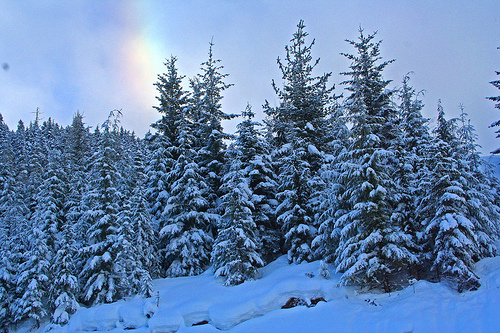 Advent is my favorite liturgical season of the year. Images of waiting, darkness, and birthing make my soul sing. We are each given time and space to grow more welcoming to unknowing, where so much promise and possibility dwell. During Advent we honor a God who is far beyond our own imaginations and who calls us into the fullness of our own horizons.
The 17th century German mystic Angelus Silesius wrote, “I must be the Virgin and give birth to God." He describes the call of this time: to birth the holy in the midst of our lives, wherever we find ourselves. This is not something that waits until we have more time or space or money. We birth the holy right here, right now.
Birthing is a messy process with lots of unknowns along the way. Birthing the holy demands that we release control and let the journey take us where it will. This is a practice of cultivating trust in the organic unfolding of my life. If I make space to listen to the deep desires of my heart and I follow those, not knowing exactly where they will take me, I find myself being led to beautiful and exhilarating landscapes.
We hear of “birthing pains” because there is a physical and spiritual stretching apart as we make way for unleashing new life into the world. The poet David Whyte writes "What you can plan is too small for you to live." The real adventure of life begins when I release my own plans and allow myself to birth what is being brought forth within me.
During this time that we wait for God's coming enfleshed, I pay close attention to my dreams, those nighttime visions that come to show me something new. An angel appeared in a dream to Joseph to tell him to wed Mary even though she was already pregnant. I listen for what holy invitations are being whispered to my own heart that might seem hard to believe in the scrutiny of daylight.
God comes into the world through dreams of daring to break through perceived boundaries. We need the night vision of Advent to receive them.
May you be blessed with the illumination of holy darkness in the days ahead. May Christmas arrive as gift of unexpected surprise.
With great and growing love,
Christine
Christine Valters Paintner, PhD, REACE
Photo: © Christine Valters Paintner
PS – We will be taking a short break from the weekly and daily emails for the next couple of weeks for a time of rest, stillness, and sabbatical. See you again on January 3rd.
The post The Promise of Holy Darkness ~ A love note from your online abbess appeared first on Abbey of the Arts.
Spaces Available for 2016 Ireland Pilgrimages
 Last week we added one last set of dates for pilgrimage in Ireland this coming year: August 30-September 7, 2016. We filled several of those spaces and had a bit of shifting around from other dates, so right now we have the following availability: (click links to go to pages with descriptions)
Writing on the Wild Edges in Ireland – May 3-11, 2016 (ONE SPACE)
Monk in the World: Pilgrimage to the Sacred Edge of Ireland – August 30-September 7, 2016 (THREE SPACES)
The Soul's Slow Ripening: Monastic Wisdom for Discernment – Pilgrimage in Ireland – September 20-28, 2016 (TWO SPACES AVAILABLE)
Join our intimate community of 12 pilgrims for a journey to the sacred edge of Ireland based in the wonderful city of Galway!
If you prefer to wait until 2017, let us know and we will add you to the advance notice list when those dates are published in the spring.
We also have just a few spaces left for our pilgrimage experience in Vienna, Austria next November 12-20, 2016. Come to one of the most beautiful cities in the world with us and visit stunning monasteries and savor the music, architecture, and food. We will explore contemplative practice for contemporary life.
More details on our Vienna journey>>
The post Spaces Available for 2016 Ireland Pilgrimages appeared first on Abbey of the Arts.
December 16, 2015
Monk in the World guest post: Jean Wise
I am delighted to share another beautiful submission for the Monk in the World guest post series from the community. Read on for Jean Wise's reflection on the power of silence:
Rediscovering Silence
I love words. I love taking sounds and syllables and dance with them on a page either in my journal or in my work as a writer. My ears tingle with the sound of words as they roll from my tongue in speaking or in song.
Words have their benefits. They form a container for me to hold reason, a sense of control and clarity and dare I say, my ego. We live in a society where what we do and what we accomplish drives our value and in words we find meaning in this chaotic world.
Lately I have been listening to live streaming and podcasting. I enjoy learning and it is through the words and wisdom of others I grow. I listen as I walk each morning. I listen when I take an afternoon break. Don’t tell anyone, but I have even listened in the middle of the night when I can’t sleep.
But I have been gorging on words lately, an overconsumption of words – written and spoken. I soon realized something was amiss. I felt off kilter; unbalanced. My attention span shrunk with all the distractions. Our culture of noise encompassed me and coated me with its desire and wants and expectations. Too many words fragmented my sense of being.
Then I read a statement from Richard Rohr: “As a general spiritual rule, you can trust this: The ego gets what it wants with words. The soul finds what it needs in silence.”
Silence – I forgot to hold onto its promise and presence. As a dancing monk here on the Abbey of the Arts, I forgot the very first principle of our Monk Manifesto.
"I commit to finding moments each day for silence and solitude, to make space for another voice to be heard, and to resist a culture of noise and constant stimulation."
Time to restart once again with a basic spiritual habit that I know nourishes my spirit: silence.
The external noise and internal chattering will never cease until I intentionally find pockets of silence to rest. To center, to become myself again. To enter my inner cloister for refreshing peace. To hear that true voice within me.
What kept me wrapped up in noise instead of pursuing silence sooner? I finally realized it was fear. Fear of what I would miss by not staying connected. Society has even given a name for this phenomenon: FOMO: Fear of Missing Out.
I used to think practicing silence was an occasional habit to embrace but more and more I am seeing it as an essential daily, even a foundational piece. I need to let go of the words that contain and refrain and dive into the pool of refreshing silence. There I will find freedom without constraints. In silence I come before the throne of God just to listen and to be.
I love words but need to remember they are just tools, which have their purpose at times, but also not all the time. If I cling too tightly to them, my hand and my heart cramps with its tension. It is in letting go and entering silence I find the important work of my life.
So I return to silence with a deep thirst. I realize once again I crave silence more than words.
I begin my mornings with contemplation. I sit in my chair. Light a candle, Close my eyes and deep breathe. I take in silence and expel the noise within. I invite God to fill this newly opened spacious room in my heart and mind.
I find pockets of quiet throughout the day. I pause and pay attention to that present moment. I stop, look around, and listen deeply.
I end my days soaking in silence. The dark whispers its invitation to sit still before I sleep and appreciate the gift of that day with gratitude.
Coming back to silence I am amazed how wonderfully refreshing these moments are in the midst of a noisy chaotic work week.
Henri Nouwen wrote: “In solitude I get rid of my scaffolding: no friends to talk with, no telephone calls to make, no meetings to attend, no music to entertain, no books to distract, just me – naked, vulnerable, weak, sinful, deprived, broken – nothing. It is this nothingness that I have to face in my solitude, a nothingness so dreadful that everything in me wants to run to my friends, my work, and my distractions so that I can forget my nothingness and make myself believe that I am worth something."
"Silence is God's first language," wrote John of the Cross.
I do love words. But even more I love to dwell in the space between the words or even beyond all language. Silence opens within us a space to rest, regroup and to return to the world restored and refocused. The practice of silence is a simple, essential and powerful way to stay connected with ourselves in a noisy inner and outer world.
 Jean Wise is Journalist/writer, blogger, speaker, and retreat leader. She is spiritual director, RN, and an Associate in Ministry, living in northwest Ohio. Her passion is to help others deepen their walk with God. She writes twice a week on her blog at: www.healthyspirituality.org. She is the author of Let Every Heart Prepare Him Room: An Advent Devotional.
The post Monk in the World guest post: Jean Wise appeared first on Abbey of the Arts.
December 12, 2015
Give Me a Word 2016: 7th Annual Abbey Giveaway
In ancient times, wise men and women fled out into the desert to find a place where they could be fully present to God and to their own inner struggles at work within them. The desert became a place to enter into the refiner's fire and be stripped down to one's holy essence. The desert was a threshold place where you emerged different than when you entered.
Many people followed these ammas and abbas, seeking their wisdom and guidance for a meaningful life. One tradition was to ask for a word – this word or phrase would be something on which to ponder for many days, weeks, months, sometimes a whole lifetime. This practice is connected to lectio divina, where we approach the sacred texts with the same request – "give me a word" we ask – something to nourish me, challenge me, a word I can wrestle with and grow into. The word which chooses us has the potential to transform us.
What is your word for the year ahead? A word which contains within it a seed of invitation to cross a new threshold in your life?
Share your word in the comments section below by January 6, 2016 and you are automatically entered for the prize drawing (prizes listed below).
A FREE 12-DAY ONLINE MINI-RETREAT TO HELP YOUR WORD CHOOSE YOU. . .
As in past years, I am offering all Abbey newsletter subscribers a gift: a free 12-day online mini-retreat with a suggested practice for each day to help your word choose you and to deepen into your word once it has found you. Even if you participated last year, you are more than welcome to register again.
Subscribe to our email newsletter and you will receive a link to start your mini-retreat today. Your information will never be shared or sold. (If you are already subscribed to the newsletter, look for the link in today's email).
WIN A PRIZE – RANDOM DRAWING GIVEAWAY ON JANUARY 6TH!
We are delighted to offer some wonderful gifts from the Abbey:
One signed copy each of Soul of a Pilgrim , Eyes of the Heart , The Artist's Rule , and Water, Wind, Earth, and Fire .
One space in Sacred Seasons: A Yearlong Journey through the Celtic Wheel of the Year
4 people will win their choice of self-study online classes from the following: Creative Flourishing in the Heart of the Desert: A Self-Study Online Retreat with St. Hildegard of Bingen , Soul of a Pilgrim: An Online Art Retreat , Seasons of the Soul , Lectio Divina: The Sacred Art of Reading the World , or Eyes of the Heart: Photography as a Contemplative Practice .
So please share your word (and it would be wonderful to include a sentence about what it means for you) with us below.
Subscribe to the Abbey newsletter to receive ongoing inspiration in your in-box. Share the love with others and invite them to participate. Then stay tuned – on January 6th we will announce the prize winners!
If this is your first time commenting at the Abbey, or you are including a link, your comment will need to be approved before appearing, which usually takes less than 24 hours.
The post Give Me a Word 2016: 7th Annual Abbey Giveaway appeared first on Abbey of the Arts.
December 9, 2015
Monk in the World guest post: Jodi Blazek Gehr
I am delighted to share another beautiful submission for the Monk in the World guest post series from the community. Read on for Jodi Blazek Gehr's the sacred pilgrimage of driving country roads:
A Country Road Contemplative
My country drives are a sacred experience, a contemplative, scenic journey through four counties of Nebraska.
Driving country roads has become a pilgrimage of its own as I travel to St. Benedict Center, a Benedictine retreat center and monastery seventy miles northwest of my home. Once or twice a month, I receive spiritual direction, participate in or lead retreats, attend Oblate meetings or pray with the monks. It’s where I go to honor my “inner monk”, find peace and quiet, learn to live more holy and grow in love. It has become my spiritual home and a home-away-from-home.
Initially, the drive was a means to an end, an hour and a half that I endured to get to my spiritual oasis. For most of thirteen years, I’ve taken the most direct route via paved highway. Occasionally, I took a different route or explored shortcuts, attempting to shave minutes off the drive.
The most efficient shortcut requires traveling on ten miles of gravel roads through small towns with few houses, and long since closed grocery stores and taverns. Every mile or two, there is a farmhouse nestled in rolling hills (or on flat-as-pancakes plains; we have both in Nebraska), acres of crops, cattle and pig farms, old trucks and tractors, and farm dogs that run after my car, barking.
I begin to notice details—the color of the sky, shapes of clouds, shadows on a hill. I wonder about the farmhouse that still has curtains on the windows, yet abandoned. I stop on bridges and watch water rush below. I see turkey and deer, donkeys and horses, weeds and wildflowers, fields of sunflowers and bales of hay. But, rarely, do I see other people.
It’s common in Nebraska to travel country roads and not encounter another car or person for miles. I feel as if I’m the only person in the world, an unmatched solitude and peace. I am taken with the beauty of the changing seasons—the greens of spring and summer, the gold and reds of autumn, the browns and grey of winter. I notice when the corn is higher, the sky more blue. The landscape is always being re-created, always in a state of becoming.
It happened slowly, but I realized that the drive is just as sacred of an experience as getting to my destination. I prefer to drive alone, sometimes spending two or more hours turning west, then north, then west again; taking roads that look interesting and head in the general direction of St. Benedict Center. It has become part of the weekend getaway instead of the means to an end. The drives that I had tried to trim minutes off of, actually have become longer. As I plan more time for the drive, my weekend pilgrimages start the minute I get in the car.
A pilgrimage is a journey. A pilgrimage does not require a far-off destination or even a sacred shrine as the endpoint. A great Desert father, Abba Moses, advised his monks, “Go sit in your cell, and your cell will teach you everything." My car has become my “cell”, where I turn inward, reflect, behold, contemplate and enjoy the country roads.
“No man ever steps in the same river twice, for it's not the same river and he's not the same man.” ― Heraclitus
I wanted to capture the beauty of the land that is so seldom seen—not just in numbers of people (although that can be an issue in Nebraska), but I mean really seen—appreciated, cherished, shared. Now I take a camera with me every time I travel country roads. I pull my car to the side of the road and photograph animals, sheds, flowers, old buildings, roads, fields, clouds, gravestones on a hill. I take pictures of cows that make eye contact with me (and they always do). I photograph barns that are bright red, barns with peeling paint, barns that have collapsed.
With each photo I take I know I am experiencing a once-in-a-lifetime-moment. I have taken thousands of photos of the countryside, but no two will ever be the same. Never again will the clouds look just that way or will the grass be just that shade of green. Never will I step into the same “river” again, each moment unique and made for me to celebrate. When that moment is gone, it is gone forever.
I am alone on my pilgrimage, yet accompanied. This is where I know I meet God. This is where ideas overflow; where there are bursts of creativity and a wealth of insights; where problems get solved, prayer happens and time stands still, in my “cell”.
My “cell” has taught me that photography is contemplative prayer. It is a new way of seeing. I honor the present moment like no other time or place. There are so many undiscovered parts of our world—places where no one is—in the depths of the ocean, the expanse of a cornfield, down a Nebraska country road. God is present in all of those places and in our solitude we can be there too.
I have learned so much about God and life on country roads. The most efficient route might not be the most fruitful. I can head in a general direction and God can fill in the details. I can be flexible. Listening to God and following my intuition works. Perhaps I don’t need to have everything planned out perfectly. I can look for signs along the way (some roads are more winding or steep; usually there is a warning, just like in life). I can surrender to surprise. The present moment is all we have and we better appreciate it. Joy is meant to be shared, eventually, but solitude is essential. Spirit is the best roadmap. I am not the Absolute, so I cannot know absolutely where I should end up. I’ve learned to listen, to pray, to rejoice. I experience the sacred on country roads.
 Jodi Blazek Gehr is a SoulCollage® Facilitator; Benedictine Oblate of Christ the King Priory; Retreat leader at St. Benedict Center, Schuyler, Nebraska; High School Business Teacher; Mother of 21 year old Jessica; Married to Joe for 30 years; Marketing and Social Media enthusiast; Lover of learning, reading, creativity and spirituality.
The post Monk in the World guest post: Jodi Blazek Gehr appeared first on Abbey of the Arts.
December 5, 2015
Thomas Merton and Embracing Your Inner Monk ~ A love note from your online abbess

“Whose silence are you?”
After Thomas Merton
The single eye of the sun long shut,
world deep asleep like a sunken ship loaded with treasures,
full moon’s fierce shadows illumine the way for miles,
stars glint like coins dropped to the well’s black bottom,
last apple fallen from the tree
in a slush of honey and crimson.
I walk barefoot across wet grass,
night’s questions relentlessly wrestling
in my mind’s knotted weave.
I look for answers written by salmon in the stream,
or a snail’s slither of streaming silver.
I prostrate myself at the gnarled foot of the ash tree.
River softly murmurs her secrets.
Then the wind departs, taking words with it.
Hush cracks open, and
only Silence
blankets my moss-covered dreams
under the mute howl of night.
The long slow leaving of voices reveals
the ancient song of repose.
I awaken covered with dew,
stillness shaken by a single robin.
No longer full of my own echoing emptiness,
I am able to hear at last.
—Christine Valters Paintner
Dearest monks, artists, and pilgrims,
December 10th is the feast day of Thomas Merton. Merton was a Trappist monk living in the 20th century and was instrumental in bringing the contemplative life and wisdom teachings to a wider audience through his writings.
Here is a brief excerpt from my forthcoming book Illuminating the Way: Embracing the Wisdom of Monks and Mystics (being published in April 2016 by Ave Maria Press) on the invitation to embrace your inner monk:
Archetype of the Monk
The root of the word monk is monachos which means single, as in singular of focus, or single-hearted. The monk seeks to discover the divine presence in everything, every moment, every person. This is, of course, a lifelong practice and is never “perfected.”
The Monk seeks wisdom, knowing this comes through showing up to the struggles of the inner life. Stability and a commitment to staying with our experience is at the core of the monk. There is a commitment to presence to the moment and not running away, whether physically or emotionally. The monk knows that staying with discomfort yields grace and growing freedom.
Connected to this is hospitality and welcoming in the stranger. Monasteries have traditionally been sought out as places of refuge and sanctuary. In medieval Ireland, this was literally true as the laws of the kingdoms did not apply within the monastic complex. So the Monk invites us to let in all that is strange, both within and without, and welcome it as a divine guide.
The Monk treasures reflection and time spent in solitude and silence, knowing that in this time, rich connection to the inner life is fostered and then spills over into connection with the world. In some monastic traditions, there was greater emphasis on the hermit, who retreated out to the wilderness and was then sought out by those desiring wisdom. Other traditions emphasized the communal nature of the monastery, and the support needed for the rigor of this life commitment. In Celtic traditions, a monk was expected to have an anam cara, or soul friend, with whom they could reveal all the struggles of the soul. Often it takes someone quite mature in their spiritual practice to be able to live a hermit life free of the wrestling with one’s shadows.
The Monk also relishes the gift that practice brings. There is a discipline in the monastic life, of committing oneself to prayer practices which help to remind us of the divine indwelling in each moment, and within us. These practices also support us in shedding our false identities and continually return to the indwelling spark that is our divine nature.
May your own monk be inspired by slowness and attentiveness in the world.
With great and growing love,
Christine
Christine Valters Paintner, PhD, REACE
Photo: © Thomas Merton Dancing Monk Icon by Marcy Hall
The post Thomas Merton and Embracing Your Inner Monk ~ A love note from your online abbess appeared first on Abbey of the Arts.
December 2, 2015
Monk in the World guest post: Susan Heffron Hajec
I am delighted to share another beautiful submission for the Monk in the World guest post series from the community. Read on for Susan Heffron Hajec's reflection on living as steadfast love:
Walking in Faithfulness
"For your steadfast love is before my eyes, and I walk in faithfulness to you." Psalm 26:3
I am an ordinary person who is immensely grateful for the gift of living an extraordinary life. At the age of 72, I recognize the steadfast lovebefore my eyes that has accompanied my journey all along the way.
At my age, life’s responsibilities are simplified and I love that. But even during the frantic days and years of multi-tasking, I began a search into the quiet and contemplative practice of prayer and meditation. I am glad the roots of becoming a monk found their way early into my life and took hold because this has become a very natural way of life for me.
Our household now consists of my beloved husband of fifty years and me. The sacrament of matrimony has blessed our lives deeply. The first part of every day begins for both of us with a prayer song of raising and blessing each other and the wounded of our world. Thus, prayer is the first thing we touch our lives and our world with daily.
After breakfast, we each continue in silent prayer, with intentions that include our family, friends, and world needs. We each include quiet, contemplative reading as part of our united practice. This way of life has been in place for many years and I am uncomfortable when there is some momentary interruption to it.
After meeting Christine Valters Paintner online in Abbey of the Arts, I felt drawn to expressing my spirituality in many of the creative venues she offered. Then came the formation of the Holy Disorder of Dancing Monks. I knew instantly I belonged to this disorder.
This is the way I am a monk in the world:
I Am Living as Love. Each year, I make an Intention Mandala and live by the intentions stated on that mandala. My overall lifetime intention is to live daily as love.
In my mind, I live as love by paying attention to the thoughts I have, weeding and releasing those that are harmful to myself and others. I am an amazing expression of God and thoughts that cause me to think otherwise are not the truth of me. I can tell some thoughts, “thank you for sharing” and let them pass through. I can add the discipline of not acting upon other thoughts and praying about them until they no longer take up space in my head.
In my heart, I live as love being my primary life motivator. My love starts with my connection to God during times when I feel it strongly and times when I am in search of it. Love moves out from my heart into the places where I touch people each day. The Prayer of St. Francis is a high bar to meet but it is my reminder of living love.
In my flesh, I live as love by fully appreciating my body as my vechicle of life and the house of my soul. I do this in the choices I make on all levels, physical, emotional and spiritual. When there is discomfort in my body, it is time for reflection, discernment and guidance. Quiet graces are then given for adjustments.
In my life, I live as love primarily through prayer and service. I serve in my primary vocation as wife and mother first. I am respectful of my vocation and mutual love is its first seed. From there, I reach out to our children and grandchildren in living our heritage of faith. They are very aware of my faith-centered life and seeds of example are sown in their lives also. Beyond the family, my love, like water, flows where it will and where it is needed. I lend my Christ-centered hands and heart to the world.
In my world, I live as love by the practice of Reiki healing. I am centered in the practice of SoulCollage® and I have a labyrinth in my backyard for the practice of moving meditation and reflection. These are quiet practices of the arts and spirituality which connect me to life’s daily purpose, and life’s larger dimensions and meaning. I share this through small gatherings which spread the awareness of the gift and grace of quiet in our lives.
In our culture, we are so encouraged to be noisy, busy, and in some other place than where we actually are through constant gadget peering, that the reality of the present moment is negated.
As a monk in the world, I am quiet. I move slowly. I touch peace in my day.This is the gift I give as monk in my world.
 Susan Heffron Hajec is a Truth Seeker, Peace Maker, and Love Giver who treasures sharing her spirituality in the community of Dancing Monks and is fed graciously by the contributions from her companion monks. Writing and photography are her strongest spiritual connections and gifts.
The post Monk in the World guest post: Susan Heffron Hajec appeared first on Abbey of the Arts.


