Peter K Fallon's Blog, page 5
September 25, 2010
What Neil Postman Thinks About the Internet... (my imaginary conversation)
Some of us Facebook types have been having a discussion on the "Neil Postman Appreciation Group" brought up by Bob Berkman: What would Neil Postman say about Facebook, and "
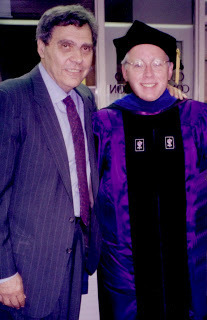 scholarly" social networking sites like Academia.edu. Well, I started thinking about it and realized he's already answered the question, several times over. In the last ten years or so of his life, Neil spent a lot of time asking the questions he outlined in "Building a Bridge..." So, in judging the value of Facebook -- or of digital social networking in general -- we might ask "what is the problem for which Facebook is the solution?"
Imagining the discussion that followed when I began to argue in favor of social networking, I believe it would go something like this:
Peter: Facebook keeps me in contact with people I don't see on a daily basis.
Neil: What, have you forgotten how to write? Peter, I remember you telling me in 1986 about how you wrote letters every week to your cousins in Ireland, about how you were a dedicated -- and habitual -- letter writer. What happened to you?
PKF: Writing all those letters took a lot of time and a lot of energy. With Facebook all I have to do is send someone a private message and they get it instantly.
NP: Does it take any less time or energy to sit and think and write a beautifully-crafted letter -- or "message" -- on Facebook than it did when you were writing and sending letters through the mail?
PKF: Well, actually, I don't really tend to write as much on Facebook as I used to in a letter. It's usually just a couple of lines.
NP: Why is that, Peter?
PKF: Well, for one thing I tend to "bump into" (in a disembodied sort of way) one or another of my cousins rather frequently online, and we exchange pleasantries almost on a daily basis. Not as much time passes between our moments of contact, and I don't feel as though I have to provide a comprehensive chronicle of recent events. Besides, that's what my "wall" is for.
NP: Uh-huh. And do you share everything on your wall? Do you share the same sorts of details of your life on your very public profile page that you once did, in letters, with your cousins?
PKF: Ummm...no.
NP: And so would you say that your interactions with your cousins have changed?
PKF: Yeah, I suppose so. They're far more frequent, but not nearly as deep. But isn't that my fault? You're not suggesting that Facebook has done this to me.
NP: No, Peter, but this is also my point: You have done this. But you have done this with Facebook. Facebook giveth, and Facebook taketh away. You have adopted Facebook as a convenience but told yourself that it is (as you consider all new technologies to be) a necessity. This was a choice involving no coercion or compromise of your intelligence or agency. You have accepted, unquestioningly, your culture's assumptions that, in all matters, but especially those of information, more is better than less and faster is better than slower. And you have accepted this knowing full well (as I taught you) that speed, quantity, and convenience are values in their own right and must compete with other values which you might (because you once did) hold in higher esteem. So you did this, Peter, and you continue to do this, beyond all logic. What's wrong with you?
PKF: I don't think you understand the enormity of the change our culture is going through at this moment, Neil...
NP: (~~wry grin~~)
PKF:...I mean, this digital thing is not all bad. It gives us "small people" -- as BP Chairman Carl-Henric Svanberg calls us -- the power to communicate widely with a potentially global audience. In this sense, it is every bit as revolutionary as Gutenberg's printing press. There has been an enormous proliferation of voices in the last ten years resulting in new ideas and new perspectives that otherwise might never have surfaced in a culture of top-down networks and mass communication.
NP: Sure, Peter, I can see that. But to what end?
PKF: Huh? Isn't the opening up of channels of communication to enfranchise the information-disenfranchised an end in itself?
NP: I'm not so sure. Do you ever read Jacques Ellul?
PKF: (~~petulantly~~) Yes...
NP: And perhaps a bit of Thoreau?
PKF: Yes...
NP: Well, then you ought to know that our whole approach, as a species, to the relationship between means and ends has changed. Our technologies, Thoreau said, are nothing more than im--
PKF:...improved means to an unimproved end, yes...I know...
NP: Ahem...Yes...and Ellul reminds us that the values of a technological society present us with a certain...imperative...with which we seem only too happy to conform, namely: to do, to act, to respond, to achieve, to produce, without much regard for what it is, exactly, we are doing, acting on, responding to, achieving, or producing. Technology, as I taught you (and you should have learned by now), answers the human question "how." Ethics answers the human question "why" and it is this question that seems more and more to go missing in our culture. Is giving a voice to those who have none a good in and of itself? Perhaps, and perhaps not. Our culture certainly tells us it is. The values of postmodern, highly technologically-developed "democracies" certainly support this point of view.
But isn't it at all instructive to ask, in the first place, whether those who heretofore have had no voice have anything, finally, to say?
PKF: But isn't this how knowledge increases and spreads, Neil? By opening up channels of information to allow more diverse points of view?
NP: This is how INFORMATION spreads, Peter, not necessarily knowledge. Knowledge is another story. To paraphrase Henri Poincare, knowledge is made up of facts, as a house is made of bricks. But knowledge is no more merely a pile of facts than a house is merely a pile of bricks. There is an epistemology at work here, Peter, and a curriculum. And there is a method. Critical thought, based on propositional language, is foundational to the construction of bodies of knowledge. The ability to discern -- and reject -- useless, irrelevant, and trivial information does not necessarily come easily to the human being. It takes years of hard work and practice to develop the literate mind and the rigors of critical thought. And without these all we have are piles of facts -- and in the digital world, truly prodigious piles of facts. Nicholas Carr asked the wrong question, and in doing so created a strawman argument that proponents of the digital epistemologies have gleefully attacked and destroyed: will Google make us stupid? He misses the point: human beings evolved stupid. We're stupid to begin with. Literacy and critical, propositional thought is the therapeutic intervention we invented to cure our stupidity. Digital technologies, to the extent that they provide us with a shortcut to "information" (again, without regard to the quality of the information) that bypasses these thought processes, don't make us stupid, but counteract the therapies that we ourselves invented to ameliorate our stupidity. Epistemology, curriculum, and method cannot be separated without consequence.
So what digital technologies have done, perhaps, in empowering the information-disenfranchised (as you call them) is not to have spread knowledge, but to have spread stupidity.
PKF: But many of my friends and colleagues insist that these digital technologies support propositional thought, that people are reading more as a result of the internet, and kindle, and iPads, and all the other various venues and applications. Can you deny that?
NP: I can neither confirm nor deny that, and I'll confess to you that I hope -- and pray -- that it is true. But I'll also confess to you that I have my doubts and remain skeptical about such suggestions based on my observations of human behavior, especially where technology is involved.
PKF: Why?
NP: Peter, are you aware of what the two most widely used applications of the internet are?
PKF: Ummm...yes, as a matter of fact.
NP: Well? What are you waiting for?
PKF: E-mail and pornography.
NP: Yes. Virtually 100% of internet users have one or more active e-mail accounts. Nearly 70% of internet users download and view pornography. Now, don't think I'm a prude, Peter (many people believe I am, you know), I'm not condemning people for engaging in an expressive form that is as old as the species. It just serves as an illustration of my point. Given a medium (one that is, in a sense, the accretion of all previous media) that allows for engagement with both propositionally-structured information and presentationally-structured information, people will choose titillation, excitement, and amusement everytime. Reading is difficult work and unnatural; sensory experience is not. I'm reminded of Christine Nystrom's article -- you remember Christine, don't you?
PKF: Of course I do. She was my dissertation chair.
NP: (~~annoyed~~) Oh, yes. That's right, she was. Well, anyhow, I'm reminded of something she once wrote called "literacy as deviance." Her point was that human beings invented writing and eventually print only because we were, at those points, insufficiently technologically advanced to invent television. All of human technological development, she suggested, is aimed at constructing tools that more and more accurately mimic human sensory experience. Hence, our infatuation with "virtual reality" (as though actual reality were not real enough), and her observation that alphabetic writing was merely a detour on this path.At any rate, whether you call it an iPad, or an e-book, or a schmindle, what you're really talking about is a computer hooked to the internet. Come to think of it, what kind of environment are we living in when you can make phone calls on a book? But I digress. As long as we're talking about computers with multiple applications, only one of those being to access text, we're very likely, I believe, to find that people will use them to look at pictures or movies, or listen to music just as frequently -- if not more -- as to read text.There are, of course, the other issues of what we're reading (to go back to our earlier discussion of information) and how we're reading (if you wanted to discuss Sven Birkerts's ideas of the deeply interior experience of "deep reading"), but I think you get my point. I am skeptical about the ability of digital technologies to support the epistemology, curriculum, and method of print culture. Extremely skeptical.
PKF: Listen, Neil, my friend Robert Berkman wanted me to ask you a question...
NP: How long have you known Bob Berkman?
PKF: Well, we've actually never met, but ---
NP: So why do you call him your friend? Look at how new technologies change our language!
PKF: Well, he's a Facebook friend...I know it's not the same thing, Neil, but, look, he's a nice guy, he's smart and asks good questions, suggests good answers -- and his profile picture always has a smile!
NP: Just get on with it, Peter. I don't have all day. I'm playing Bridge later with McLuhan, Innis, and Ong...
PKF: Well, Bob thought you might be more amenable to giving your approval to sites like Academia.edu...
NP: What's that? That's a new one to me...
PKF: It's a website for scholars. You have your own page -- a profile page that links to personal information, research interests and activities, etc. Other scholars can "follow" your work, and you can upload your research and get comments from other scholars.
NP: Why in the world would you want to do that?
PKF: Well, again Neil, it's this idea of opening up channels of communication, getting reactions from diverse perspectives, generating synergy...
NP: Synergy, schminergy, Peter. You're talking gobbledy-gook here...Peter, let me ask you a question.
PKF: By all means.
NP: You've written a book now, correct?
PKF: Ummm...actually, my second book just came out. It's called "The Meta --
NP: Yes, yes, whatever. My point is, did you write this book by yourself, or did you organize a committee to write it for you?
PKF: I wrote it myself, Neil, but there were a lot of things I was writing about that were, quite honestly, beyond the boundaries of my expertise and personal and academic experiences. I found it both useful and necessary to have the manuscript read, at various stages, by philosophers and theologians to make sure I was miving in the right direction.
NP: And did you find these philosophers and theologians on Academia.edu?
PKF: No.
NP: Why not?
PKF: Well, I don't know most people on that website ---
NP: You don't know Bob Berkman but you call him your friend...
PKF: But that's Facebook, and that's different. What we're talking about now is--
NP: Facebook with another name. You didn't put your work up on Academia.edu for comments, and you wouldn't have accepted comments or criticisms that were offered on Academia.edu because you don't know who is leaving them. Oh, you may see their names there, but that doesn't mean you "know" them. Instead, you found your readers where?
PKF: Oh, these were people I knew personally and respected. These were people who others know and respect too.
NP: Another question, Peter, beyond the specific issue of specialized response. You didn't write chapters of this book and post them to get others' responses?
PKF: No.
NP: If you had, would you have modified or changed your manuscript in any way?
PKF: No.
NP: Why not?
PKF: Oh, simple: this was my book based on my ideas. I've had this experience before in conversations about this book, and about the perspective from which I wrote it. People can't touch my data, but they hate my conclusions. We get into arguments about "the meaning of it all," and, at the end of the day, people are just resistant to points of view that stray too far from their comfort zones. I thought about posting excerpts on Academia.edu, and in fact did post excerpts on Goodreads.com -- which is more interested in literary merit than scholarship -- but decided to avoid Academia.edu. I thought there's be too much pressure to conform to more mainstream points of view.
NP: You can tell Bob Berkman that I agree. My books, for better or worse, have all been mine.
(Anyway, that's how I imagine the conversation going...)
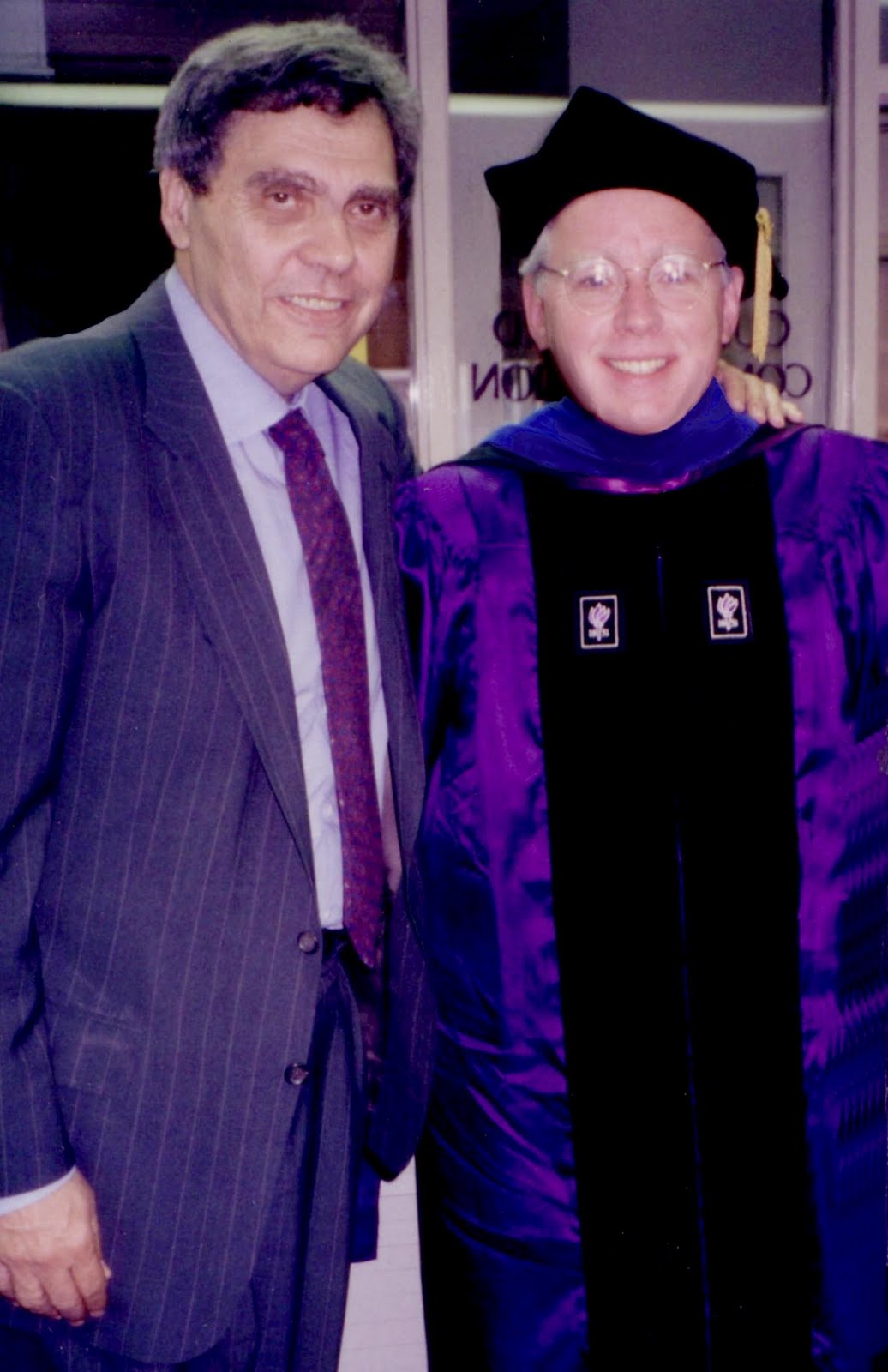 scholarly" social networking sites like Academia.edu. Well, I started thinking about it and realized he's already answered the question, several times over. In the last ten years or so of his life, Neil spent a lot of time asking the questions he outlined in "Building a Bridge..." So, in judging the value of Facebook -- or of digital social networking in general -- we might ask "what is the problem for which Facebook is the solution?"
Imagining the discussion that followed when I began to argue in favor of social networking, I believe it would go something like this:
Peter: Facebook keeps me in contact with people I don't see on a daily basis.
Neil: What, have you forgotten how to write? Peter, I remember you telling me in 1986 about how you wrote letters every week to your cousins in Ireland, about how you were a dedicated -- and habitual -- letter writer. What happened to you?
PKF: Writing all those letters took a lot of time and a lot of energy. With Facebook all I have to do is send someone a private message and they get it instantly.
NP: Does it take any less time or energy to sit and think and write a beautifully-crafted letter -- or "message" -- on Facebook than it did when you were writing and sending letters through the mail?
PKF: Well, actually, I don't really tend to write as much on Facebook as I used to in a letter. It's usually just a couple of lines.
NP: Why is that, Peter?
PKF: Well, for one thing I tend to "bump into" (in a disembodied sort of way) one or another of my cousins rather frequently online, and we exchange pleasantries almost on a daily basis. Not as much time passes between our moments of contact, and I don't feel as though I have to provide a comprehensive chronicle of recent events. Besides, that's what my "wall" is for.
NP: Uh-huh. And do you share everything on your wall? Do you share the same sorts of details of your life on your very public profile page that you once did, in letters, with your cousins?
PKF: Ummm...no.
NP: And so would you say that your interactions with your cousins have changed?
PKF: Yeah, I suppose so. They're far more frequent, but not nearly as deep. But isn't that my fault? You're not suggesting that Facebook has done this to me.
NP: No, Peter, but this is also my point: You have done this. But you have done this with Facebook. Facebook giveth, and Facebook taketh away. You have adopted Facebook as a convenience but told yourself that it is (as you consider all new technologies to be) a necessity. This was a choice involving no coercion or compromise of your intelligence or agency. You have accepted, unquestioningly, your culture's assumptions that, in all matters, but especially those of information, more is better than less and faster is better than slower. And you have accepted this knowing full well (as I taught you) that speed, quantity, and convenience are values in their own right and must compete with other values which you might (because you once did) hold in higher esteem. So you did this, Peter, and you continue to do this, beyond all logic. What's wrong with you?
PKF: I don't think you understand the enormity of the change our culture is going through at this moment, Neil...
NP: (~~wry grin~~)
PKF:...I mean, this digital thing is not all bad. It gives us "small people" -- as BP Chairman Carl-Henric Svanberg calls us -- the power to communicate widely with a potentially global audience. In this sense, it is every bit as revolutionary as Gutenberg's printing press. There has been an enormous proliferation of voices in the last ten years resulting in new ideas and new perspectives that otherwise might never have surfaced in a culture of top-down networks and mass communication.
NP: Sure, Peter, I can see that. But to what end?
PKF: Huh? Isn't the opening up of channels of communication to enfranchise the information-disenfranchised an end in itself?
NP: I'm not so sure. Do you ever read Jacques Ellul?
PKF: (~~petulantly~~) Yes...
NP: And perhaps a bit of Thoreau?
PKF: Yes...
NP: Well, then you ought to know that our whole approach, as a species, to the relationship between means and ends has changed. Our technologies, Thoreau said, are nothing more than im--
PKF:...improved means to an unimproved end, yes...I know...
NP: Ahem...Yes...and Ellul reminds us that the values of a technological society present us with a certain...imperative...with which we seem only too happy to conform, namely: to do, to act, to respond, to achieve, to produce, without much regard for what it is, exactly, we are doing, acting on, responding to, achieving, or producing. Technology, as I taught you (and you should have learned by now), answers the human question "how." Ethics answers the human question "why" and it is this question that seems more and more to go missing in our culture. Is giving a voice to those who have none a good in and of itself? Perhaps, and perhaps not. Our culture certainly tells us it is. The values of postmodern, highly technologically-developed "democracies" certainly support this point of view.
But isn't it at all instructive to ask, in the first place, whether those who heretofore have had no voice have anything, finally, to say?
PKF: But isn't this how knowledge increases and spreads, Neil? By opening up channels of information to allow more diverse points of view?
NP: This is how INFORMATION spreads, Peter, not necessarily knowledge. Knowledge is another story. To paraphrase Henri Poincare, knowledge is made up of facts, as a house is made of bricks. But knowledge is no more merely a pile of facts than a house is merely a pile of bricks. There is an epistemology at work here, Peter, and a curriculum. And there is a method. Critical thought, based on propositional language, is foundational to the construction of bodies of knowledge. The ability to discern -- and reject -- useless, irrelevant, and trivial information does not necessarily come easily to the human being. It takes years of hard work and practice to develop the literate mind and the rigors of critical thought. And without these all we have are piles of facts -- and in the digital world, truly prodigious piles of facts. Nicholas Carr asked the wrong question, and in doing so created a strawman argument that proponents of the digital epistemologies have gleefully attacked and destroyed: will Google make us stupid? He misses the point: human beings evolved stupid. We're stupid to begin with. Literacy and critical, propositional thought is the therapeutic intervention we invented to cure our stupidity. Digital technologies, to the extent that they provide us with a shortcut to "information" (again, without regard to the quality of the information) that bypasses these thought processes, don't make us stupid, but counteract the therapies that we ourselves invented to ameliorate our stupidity. Epistemology, curriculum, and method cannot be separated without consequence.
So what digital technologies have done, perhaps, in empowering the information-disenfranchised (as you call them) is not to have spread knowledge, but to have spread stupidity.
PKF: But many of my friends and colleagues insist that these digital technologies support propositional thought, that people are reading more as a result of the internet, and kindle, and iPads, and all the other various venues and applications. Can you deny that?
NP: I can neither confirm nor deny that, and I'll confess to you that I hope -- and pray -- that it is true. But I'll also confess to you that I have my doubts and remain skeptical about such suggestions based on my observations of human behavior, especially where technology is involved.
PKF: Why?
NP: Peter, are you aware of what the two most widely used applications of the internet are?
PKF: Ummm...yes, as a matter of fact.
NP: Well? What are you waiting for?
PKF: E-mail and pornography.
NP: Yes. Virtually 100% of internet users have one or more active e-mail accounts. Nearly 70% of internet users download and view pornography. Now, don't think I'm a prude, Peter (many people believe I am, you know), I'm not condemning people for engaging in an expressive form that is as old as the species. It just serves as an illustration of my point. Given a medium (one that is, in a sense, the accretion of all previous media) that allows for engagement with both propositionally-structured information and presentationally-structured information, people will choose titillation, excitement, and amusement everytime. Reading is difficult work and unnatural; sensory experience is not. I'm reminded of Christine Nystrom's article -- you remember Christine, don't you?
PKF: Of course I do. She was my dissertation chair.
NP: (~~annoyed~~) Oh, yes. That's right, she was. Well, anyhow, I'm reminded of something she once wrote called "literacy as deviance." Her point was that human beings invented writing and eventually print only because we were, at those points, insufficiently technologically advanced to invent television. All of human technological development, she suggested, is aimed at constructing tools that more and more accurately mimic human sensory experience. Hence, our infatuation with "virtual reality" (as though actual reality were not real enough), and her observation that alphabetic writing was merely a detour on this path.At any rate, whether you call it an iPad, or an e-book, or a schmindle, what you're really talking about is a computer hooked to the internet. Come to think of it, what kind of environment are we living in when you can make phone calls on a book? But I digress. As long as we're talking about computers with multiple applications, only one of those being to access text, we're very likely, I believe, to find that people will use them to look at pictures or movies, or listen to music just as frequently -- if not more -- as to read text.There are, of course, the other issues of what we're reading (to go back to our earlier discussion of information) and how we're reading (if you wanted to discuss Sven Birkerts's ideas of the deeply interior experience of "deep reading"), but I think you get my point. I am skeptical about the ability of digital technologies to support the epistemology, curriculum, and method of print culture. Extremely skeptical.
PKF: Listen, Neil, my friend Robert Berkman wanted me to ask you a question...
NP: How long have you known Bob Berkman?
PKF: Well, we've actually never met, but ---
NP: So why do you call him your friend? Look at how new technologies change our language!
PKF: Well, he's a Facebook friend...I know it's not the same thing, Neil, but, look, he's a nice guy, he's smart and asks good questions, suggests good answers -- and his profile picture always has a smile!
NP: Just get on with it, Peter. I don't have all day. I'm playing Bridge later with McLuhan, Innis, and Ong...
PKF: Well, Bob thought you might be more amenable to giving your approval to sites like Academia.edu...
NP: What's that? That's a new one to me...
PKF: It's a website for scholars. You have your own page -- a profile page that links to personal information, research interests and activities, etc. Other scholars can "follow" your work, and you can upload your research and get comments from other scholars.
NP: Why in the world would you want to do that?
PKF: Well, again Neil, it's this idea of opening up channels of communication, getting reactions from diverse perspectives, generating synergy...
NP: Synergy, schminergy, Peter. You're talking gobbledy-gook here...Peter, let me ask you a question.
PKF: By all means.
NP: You've written a book now, correct?
PKF: Ummm...actually, my second book just came out. It's called "The Meta --
NP: Yes, yes, whatever. My point is, did you write this book by yourself, or did you organize a committee to write it for you?
PKF: I wrote it myself, Neil, but there were a lot of things I was writing about that were, quite honestly, beyond the boundaries of my expertise and personal and academic experiences. I found it both useful and necessary to have the manuscript read, at various stages, by philosophers and theologians to make sure I was miving in the right direction.
NP: And did you find these philosophers and theologians on Academia.edu?
PKF: No.
NP: Why not?
PKF: Well, I don't know most people on that website ---
NP: You don't know Bob Berkman but you call him your friend...
PKF: But that's Facebook, and that's different. What we're talking about now is--
NP: Facebook with another name. You didn't put your work up on Academia.edu for comments, and you wouldn't have accepted comments or criticisms that were offered on Academia.edu because you don't know who is leaving them. Oh, you may see their names there, but that doesn't mean you "know" them. Instead, you found your readers where?
PKF: Oh, these were people I knew personally and respected. These were people who others know and respect too.
NP: Another question, Peter, beyond the specific issue of specialized response. You didn't write chapters of this book and post them to get others' responses?
PKF: No.
NP: If you had, would you have modified or changed your manuscript in any way?
PKF: No.
NP: Why not?
PKF: Oh, simple: this was my book based on my ideas. I've had this experience before in conversations about this book, and about the perspective from which I wrote it. People can't touch my data, but they hate my conclusions. We get into arguments about "the meaning of it all," and, at the end of the day, people are just resistant to points of view that stray too far from their comfort zones. I thought about posting excerpts on Academia.edu, and in fact did post excerpts on Goodreads.com -- which is more interested in literary merit than scholarship -- but decided to avoid Academia.edu. I thought there's be too much pressure to conform to more mainstream points of view.
NP: You can tell Bob Berkman that I agree. My books, for better or worse, have all been mine.
(Anyway, that's how I imagine the conversation going...)


May 30, 2010
Memorial Day 2010

Every gun that is made, every warship launched, every rocket fired signifies in the final sense, a theft from those who hunger and are not fed, those who are cold and are not clothed. This world in arms is not spending money alone. It is spending the sweat of its laborers, the genius
of its scientists, the hopes of its children. This is not a way of life at all in any true sense. Under the clouds of war, it is humanity hanging on a cross of iron. ~Dwight D. EisenhowerNever think that war, no matter how necessary, nor how justified, is not a crime. ~Ernest Hemingway
War is the price others pay for our sins. War is state-sanctioned insanity. War is the clearest, most vivid evidence we have of human imperfection. Imperfection? No, stupidity.
All wars, like all people, are equal -- that is to say that inherent in every war there is a common element, a thing that binds all wars together: evil. But all wars, like all people, do not necessarily possess to the same degree exactly the same elements, and we can make (and historically have made) arguments for the justifiability of war. These arguments have frequently been rationalizations rather than justifications for wars, and have just as frequently been delusions -- tragic examples of self-deception. These rationalizations form the basis of mass-mediated propaganda campaigns: the vilification of some "enemy," the vital interests at stake, the preservation of liberty.
I'm not saying that war is never necessary or that it is always concocted, conspiratorially, in some dark room by powerful, cynical, evil men. The (US) civil war, while not "necessary" (in the sense that we white, European colonial settlers might have rejected slavery long before we gained our independence from Britain) was certainly inevitable, a long-delayed ritual sacrifice to cleanse our souls of the blight of brutal, murderous, forced human servitude. The second world war -- or, at the very least, US involvement in that war -- became necessary not when we were attacked on December 7, 1941, but when we learned of the existence of factories of death, mechanized mass murder in death camps across Nazi-occupied Europe.
But so many wars in human history -- and most US wars since WWII -- have been unnecessary, unjustified, and rationalized not by need, but by strategic interest: expansion of territory (or market), control of resources, consolidation of power bases (let's not ever forget that Saddam Hussein was our valued ally until the moment he became our mortal enemy).
In fact, the very idea of "need" has been changed by our post-WWII history. What do we "need" anymore? What stories do we tell ourselves about our "needs"? What do we really, truly need? Well, in order to stay alive we need oxygen, water, food, shelter. On a somewhat higher level of abstraction we need company, conversation, love. We need some organizing principle of association through which we interact and carry out the economic and political activities implied in the lower order needs. These needs have been with us since the beginnings of human history, and in the past when we've gone to war (justly or unjustly), it's always been rationalized by a threat to one or more of them. "They are threatening our territory." "They have put unjust tariffs on our goods."
Today, it is "our freedom" or "our way of life" that we are told is being threatened when we are pushed toward war. Well, I certainly don't want to lose my freedom. No, indeed. Freedom is a fairly fundamental human need and a universal human right, and I certainly don't want to lose it. But where and how is our freedom threatened today? Say what you will about the US, we still have the biggest arsenal of conventional and nuclear weapons in the world and could, if we really "needed" to, raise a fairly enormous army. Where is the threat to my freedom in the face of that fact?
In fact, what Americans call "freedom" today is largely license: we give ourselves permission to do whatever we want, whenever we want as long as "nobody gets hurt" -- or, more likely, we remain blissfully unaware of the consequences. In this, our mass media are facilitators and enablers. We're awash in both visual and aural images of "the American way of life" on a daily basis on television, in magazines, in movies, on the radio; at the same time, our media do -- at best -- a mediocre job of reporting to us about our world, and a disgraceful job of reporting to us about ourselves.
And we're happy about it.
Who wants to really focus on the fact that American corporations are the biggest manufacturers and distributors of weapons of mass destruction to rogue states in the world? Who wants to hear about the hundreds of thousands of deaths in the developing world in warfare powered by American weapons? Who can stand seeing images of poverty and hunger and disease in the world when we Americans -- 5% of the worlds population who control nearly a third of its wealth -- are having such a good time?
Jersey Shore? American Idol? Real Housewives of Orange County? Yeah, baby. That's what I'm talking about.
War is hell. It is sometimes necessary. It is sometimes justified.
But if this is what we're going to war over, so that we can use resources for our amusement that others actually need (in the truest sense of the word) to stay alive, then war is merely a prelude to hell. War is the price others pay for our sins.
God bless America and God bless our military. God give us the wisdom to use it rightly.

April 2, 2009
Who is an embarassment?
Apparently, Cardinal Francis George thinks it is an "extreme embarrassment" that Notre Dame University invited President Barack Obama to speak at its commencement ceremony. Extreme embarrassment, eh? Wow, strong words. I mean, this is the President of the United States he's talking about. It wasn't so long ago that that kind of talk would cause a person to be branded unpatriotic.
I know Notre Dame is a Catholic university. George, and others, think Obama shouldn't have been asked to speak because his views on abortion and stem cell research are not in line with the views of Catholics. But from looking at Notre Dame's site, there is no requirement that a student be Catholic, or religious at all. I would gather that means there are students of many different religions, and maybe some who don't practice at all. I would also gather that not all students have the same views on abortion or stem cell research, regardless of the fact that they attend a Catholic university. Isn't that pretty much what college is about -- coming into contact with people unlike yourself? And let's face it, not even Notre Dame students are perfect.
It's not as if Obama is going to give a speech about abortion or stem cell research, or try to convince students who have different views than he does to change their views. Obama is about more than just his political views. If anything, the fact that Obama is the first black president should be encouraging to students. And that leads me to something I found on George's Web site.
George wrote a pastoral letter on racism where he talks about people of different races dwelling together. Here is the first black president, and George calls his invitation to speak at Notre Dame an "extreme embarrassment." Now, George wasn't referring to race when he made that comment, but he should have thought a bit more about the obvious consequence of that remark. George says it's an embarrassment and encourages people to write, call and e-mail to convey their displeasure. But by doing so, the end result of that campaign, could be the rescission of the invitation for the first black president to speak. If George is so passionate about ending racism that he would write this long involved pastoral letter, then why not express his concern over the invitation in a different way? Because despite Obama's views on abortion and stem cell research, he is still a success story for minorities, if not for everyone. See what you can do when you work hard. Heck, I'd even go so far as to say Obama is somewhat of a success story when it comes to racism in this country. No, his election didn't eradicate racism, but it meant something. It showed us that if a person is right for the job, he (or she) deserves our vote.
When former President George W. Bush gave the commencement speech at Notre Dame, he too faced protest. He also faced protest when he gave the commencement speech at Yale, his alma mater. So I guess this is just par for the course for presidents. But this notion that Notre Dame's invitation to Obama is an extreme embarrassment to Catholics, well, I think George should be embarrassed for making such a statement, especially when his pastoral letter on racism contains such nuggets as this:
The Gospel compels us to love our neighbor as ourselves, to abandon patterns of seeing those who are racially or culturally different from ourselves as strangers and to recognize them as our brothers and sisters. Even those who have suffered at the hands of others, individually or collectively, must pray to overcome hostility, forgiving those who have offended them and asking forgiveness from those whom they have offended. We must embrace one another as formerly estranged neighbors now seeking reconciliation.
Seems to me the Cardinal doesn't practice what he preaches. Embarrassment, indeed.
I know Notre Dame is a Catholic university. George, and others, think Obama shouldn't have been asked to speak because his views on abortion and stem cell research are not in line with the views of Catholics. But from looking at Notre Dame's site, there is no requirement that a student be Catholic, or religious at all. I would gather that means there are students of many different religions, and maybe some who don't practice at all. I would also gather that not all students have the same views on abortion or stem cell research, regardless of the fact that they attend a Catholic university. Isn't that pretty much what college is about -- coming into contact with people unlike yourself? And let's face it, not even Notre Dame students are perfect.
It's not as if Obama is going to give a speech about abortion or stem cell research, or try to convince students who have different views than he does to change their views. Obama is about more than just his political views. If anything, the fact that Obama is the first black president should be encouraging to students. And that leads me to something I found on George's Web site.
George wrote a pastoral letter on racism where he talks about people of different races dwelling together. Here is the first black president, and George calls his invitation to speak at Notre Dame an "extreme embarrassment." Now, George wasn't referring to race when he made that comment, but he should have thought a bit more about the obvious consequence of that remark. George says it's an embarrassment and encourages people to write, call and e-mail to convey their displeasure. But by doing so, the end result of that campaign, could be the rescission of the invitation for the first black president to speak. If George is so passionate about ending racism that he would write this long involved pastoral letter, then why not express his concern over the invitation in a different way? Because despite Obama's views on abortion and stem cell research, he is still a success story for minorities, if not for everyone. See what you can do when you work hard. Heck, I'd even go so far as to say Obama is somewhat of a success story when it comes to racism in this country. No, his election didn't eradicate racism, but it meant something. It showed us that if a person is right for the job, he (or she) deserves our vote.
When former President George W. Bush gave the commencement speech at Notre Dame, he too faced protest. He also faced protest when he gave the commencement speech at Yale, his alma mater. So I guess this is just par for the course for presidents. But this notion that Notre Dame's invitation to Obama is an extreme embarrassment to Catholics, well, I think George should be embarrassed for making such a statement, especially when his pastoral letter on racism contains such nuggets as this:
The Gospel compels us to love our neighbor as ourselves, to abandon patterns of seeing those who are racially or culturally different from ourselves as strangers and to recognize them as our brothers and sisters. Even those who have suffered at the hands of others, individually or collectively, must pray to overcome hostility, forgiving those who have offended them and asking forgiveness from those whom they have offended. We must embrace one another as formerly estranged neighbors now seeking reconciliation.
Seems to me the Cardinal doesn't practice what he preaches. Embarrassment, indeed.
March 23, 2009
The recession hits home
I've never worked at a company that laid off several people at once. I've never sat at my desk worrying that I might get that call telling me to come down for a chat, i.e. the figurative pink slip. I never experienced those things until last week. My company had let a few people go toward the end of last year, but it wasn't anything major and it was mostly eliminating positions that weren't needed. I was worried, but not too worried. I thought I was safe for at least a few more months, that my company wouldn't let anyone else go until the middle of this year, if at all. I was wrong.
I heard rumblings last week that 70 people were going to be let go at the end of the week. I didn't know how much to believe. Was it really 70? Would there be layoffs at all? Would it be that week? But I was scared. Who wouldn't be? I may be young and good at my job, but in this economy that doesn't mean much. Even people my age with my skills are having trouble finding jobs. I barely slept that night, thinking about how I'd pay off the $2,000 in furniture I bought just the weekend before, thinking my job was safe. Here I went out and tried to help the economy by buying something big, and it was going to bite me in the ass, possibly. I should have kept my money under lock and key like I had been, because of my fear of losing my job.
It turned out my company let just over 30 people go, and I wasn't one of them. Not that it makes me feel that much better. People I knew and talked to, who I had worked with for five years, were let go. I was on the verge of tears the whole day, and every time my phone rang, my heart beat faster, until I looked at the display and realized it wasn't my supervisor calling me for that chat. I don't think anyone did anything that day because we were all too consumed with who was being let go. Staff members were calling other staff members to let them know who they had just heard was escorted out. By the end of the day, it was over, but I was no more relieved. Because I realized no one is safe. I always thought if I worked hard, was knowledgeable and received good reviews, I was safe. But I don't believe that anymore. Because in this economic climate, sometimes companies have to let even the good people go. I don't know if there will be more layoffs down the line, and I don't know if it will be me next time. But a day doesn't go by now that I'm not anxious over the possibility, that I'm not looking at my bank accounts to see how much I have available and how I can save more. I'm afraid to buy lunch even one day out of the week because I don't want to waste the money. Not like $7 is going to do much for me. I don't buy anything with my credit card because I don't want the balance, and that furniture that I bought on a 12-month no interest no payment plan will be paid off shortly, just so I don't have that balance hanging over my head. And I won't be buying any other big ticket items this year. I'll be saving my money -- just in case.
I never thought I'd be this scared. I never thought I'd be afraid of getting laid off. I never did, but now I am. And it's not a good feeling.
I heard rumblings last week that 70 people were going to be let go at the end of the week. I didn't know how much to believe. Was it really 70? Would there be layoffs at all? Would it be that week? But I was scared. Who wouldn't be? I may be young and good at my job, but in this economy that doesn't mean much. Even people my age with my skills are having trouble finding jobs. I barely slept that night, thinking about how I'd pay off the $2,000 in furniture I bought just the weekend before, thinking my job was safe. Here I went out and tried to help the economy by buying something big, and it was going to bite me in the ass, possibly. I should have kept my money under lock and key like I had been, because of my fear of losing my job.
It turned out my company let just over 30 people go, and I wasn't one of them. Not that it makes me feel that much better. People I knew and talked to, who I had worked with for five years, were let go. I was on the verge of tears the whole day, and every time my phone rang, my heart beat faster, until I looked at the display and realized it wasn't my supervisor calling me for that chat. I don't think anyone did anything that day because we were all too consumed with who was being let go. Staff members were calling other staff members to let them know who they had just heard was escorted out. By the end of the day, it was over, but I was no more relieved. Because I realized no one is safe. I always thought if I worked hard, was knowledgeable and received good reviews, I was safe. But I don't believe that anymore. Because in this economic climate, sometimes companies have to let even the good people go. I don't know if there will be more layoffs down the line, and I don't know if it will be me next time. But a day doesn't go by now that I'm not anxious over the possibility, that I'm not looking at my bank accounts to see how much I have available and how I can save more. I'm afraid to buy lunch even one day out of the week because I don't want to waste the money. Not like $7 is going to do much for me. I don't buy anything with my credit card because I don't want the balance, and that furniture that I bought on a 12-month no interest no payment plan will be paid off shortly, just so I don't have that balance hanging over my head. And I won't be buying any other big ticket items this year. I'll be saving my money -- just in case.
I never thought I'd be this scared. I never thought I'd be afraid of getting laid off. I never did, but now I am. And it's not a good feeling.
March 3, 2009
Schoolyard politics
So is this how politics works?. Like the schoolyard? There is a bully. The bully says you will do this or else. Everyone else complies.
This weekend, a group of black pastors from Chicago rallied on behalf of Sen. Roland Burris and said that those politicians calling for his resignation need to leave him alone. And if the calls for Burris's resignation don't cease, these pastors will not support those politicians in future elections. Wow, so that's how things get done? I thought people would just laugh it off. You can't expect people to take you seriously when making threats like that. Then I heard on the news today that Gov. Pat Quinn is backing off on calls for Burris's resignation. Wimp.
I'm glad to see Rep. Bobby Rush came out of the woodwork for this little gathering. I was starting to wonder where the support he gave to Burris a month ago had gone. But I guess when the subject is race and how Burris is only being treated this way because he's black, Rush will be present. Of course, his claims are asinine. The Sun-Times column quoted Rush as saying that Sen. Larry Craig, for example, was treated better than Burris has been, even though he pled guilty to a crime. Sadly, Rush needs to read his history, because fellow politicians called for Craig's resignation. Mitt Romney said Craig had disappointed the American people. Craig didn't get a free pass because he's white. Nor did Randy Cunningham. Nor did James Traficant. Or even Gary Condit, who wasn't guilty of anything except bad judgment. These are random names, but just ones I could remember or found while reading other items. There are three congressman who are white and who weren't allowed to just skate by. Four, if you count Craig.
But, you say, these guys were convicted of or under suspicion for more serious crimes than Burris. True. But no one really knows what Burris is guilty of, because the story has changed many times over. If Burris was appointed by a governor who was squeaky clean (to the extent that any politician can be that clean), I don't think his waffling would matter to anyone. But Burris had to know when he accepted the appointment that he would be subject to closer scrutiny because of his connection to Rod Blagojevich. The uproar over Burris's revised testimony should come as no surprise to Burris or the black pastors who support him. The problem never was Burris's race. The problem was that he was appointed by a crooked governor. And then his changing testimony about which one of Blago's aides and friends he spoke to, or whether he did or didn't raise money for Blago, made the situation even worse. Burris wants our trust, but how can we trust someone who says one thing at one time and then says another later? And this is not the media attacking Burris. The media reported the facts that were out there. It's not their fault those facts paint Burris in a bad light. Burris himself is responsible. And I love this quote in the Sun-Times column from Rev. Janette Wilson: "You're all at his home every morning; when he goes to bed. You didn't do this for priests . . . wanted for pedophilia." Ha, that's rich. The Church did a pretty good job of covering up the pedophilia scandals, but when the news came out, there were stories. Many of them. Like the Church, Burris was able to cover up the true story about any connections with Blago. But once the news came out, the media reported it. Wilson also said, in the Tribune article, that they would not allow "you to force our senator to resign." He's not our senator. We didn't vote him into office. If anything, he's Blago's senator and we're just forced to go along. What about the people who don't want Burris to represent them? We have no choice. So why should people like Wilson be able to force their senator down our throats? I want a special election. If Burris wants to run, and Wilson and others want to vote for him, then so be it. But at least the people of Illinois would have a say in who represents them in the Senate.
I know racism is alive and well in this country, but where it doesn't exist, why must others make it an issue? Don't we have enough true racism to deal with? Burris's race is not an issue. This isn't a black vs. white issue. But the black pastors for Burris have now made it one by threatening not to support politicians, many of whom are white, who called for Burris's resignation. This is about what is best for Illinois, and it is not in our state's best interests to be represented by someone who can't keep his story straight. If the black pastors for Burris want him as their senator, they can vote in a special election.
This weekend, a group of black pastors from Chicago rallied on behalf of Sen. Roland Burris and said that those politicians calling for his resignation need to leave him alone. And if the calls for Burris's resignation don't cease, these pastors will not support those politicians in future elections. Wow, so that's how things get done? I thought people would just laugh it off. You can't expect people to take you seriously when making threats like that. Then I heard on the news today that Gov. Pat Quinn is backing off on calls for Burris's resignation. Wimp.
I'm glad to see Rep. Bobby Rush came out of the woodwork for this little gathering. I was starting to wonder where the support he gave to Burris a month ago had gone. But I guess when the subject is race and how Burris is only being treated this way because he's black, Rush will be present. Of course, his claims are asinine. The Sun-Times column quoted Rush as saying that Sen. Larry Craig, for example, was treated better than Burris has been, even though he pled guilty to a crime. Sadly, Rush needs to read his history, because fellow politicians called for Craig's resignation. Mitt Romney said Craig had disappointed the American people. Craig didn't get a free pass because he's white. Nor did Randy Cunningham. Nor did James Traficant. Or even Gary Condit, who wasn't guilty of anything except bad judgment. These are random names, but just ones I could remember or found while reading other items. There are three congressman who are white and who weren't allowed to just skate by. Four, if you count Craig.
But, you say, these guys were convicted of or under suspicion for more serious crimes than Burris. True. But no one really knows what Burris is guilty of, because the story has changed many times over. If Burris was appointed by a governor who was squeaky clean (to the extent that any politician can be that clean), I don't think his waffling would matter to anyone. But Burris had to know when he accepted the appointment that he would be subject to closer scrutiny because of his connection to Rod Blagojevich. The uproar over Burris's revised testimony should come as no surprise to Burris or the black pastors who support him. The problem never was Burris's race. The problem was that he was appointed by a crooked governor. And then his changing testimony about which one of Blago's aides and friends he spoke to, or whether he did or didn't raise money for Blago, made the situation even worse. Burris wants our trust, but how can we trust someone who says one thing at one time and then says another later? And this is not the media attacking Burris. The media reported the facts that were out there. It's not their fault those facts paint Burris in a bad light. Burris himself is responsible. And I love this quote in the Sun-Times column from Rev. Janette Wilson: "You're all at his home every morning; when he goes to bed. You didn't do this for priests . . . wanted for pedophilia." Ha, that's rich. The Church did a pretty good job of covering up the pedophilia scandals, but when the news came out, there were stories. Many of them. Like the Church, Burris was able to cover up the true story about any connections with Blago. But once the news came out, the media reported it. Wilson also said, in the Tribune article, that they would not allow "you to force our senator to resign." He's not our senator. We didn't vote him into office. If anything, he's Blago's senator and we're just forced to go along. What about the people who don't want Burris to represent them? We have no choice. So why should people like Wilson be able to force their senator down our throats? I want a special election. If Burris wants to run, and Wilson and others want to vote for him, then so be it. But at least the people of Illinois would have a say in who represents them in the Senate.
I know racism is alive and well in this country, but where it doesn't exist, why must others make it an issue? Don't we have enough true racism to deal with? Burris's race is not an issue. This isn't a black vs. white issue. But the black pastors for Burris have now made it one by threatening not to support politicians, many of whom are white, who called for Burris's resignation. This is about what is best for Illinois, and it is not in our state's best interests to be represented by someone who can't keep his story straight. If the black pastors for Burris want him as their senator, they can vote in a special election.