Peter K Fallon's Blog, page 3
April 17, 2013
"Silkie" by Anne-Marie Cusac
 Silkie by Anne-Marie Cusac
My rating: 5 of 5 stars
This is a frighteningly beautiful book, based on old, oral, Celtic legends and folktales, of a "bad girl" with a good heart, of illicit love, of the difficulty of following the call of your heart, and of the comfort -- and discomfort -- of living in the skin we're in.
Anne-Marie Cusac's "Silkie" is smart, and sensual, and funny, and sad, and scary. It is a beautiful and emotional work that tells us not only about its characters, but about its author. And, if you're paying attention, it will tell you something about yourself.
View all my reviews


Plato's Phaedrus: Beware of Bullshit
 Phaedrus by Plato
My rating: 5 of 5 stars
Spoiler alert: This book is not about a "philosophy of love" as many reviewers seem to believe. As every dream has its manifest content (a storyline) that masks a latent content (the suppressed, unconscious emotions that bubble into our semi-conscious REM sleep), Socrates' discourse on the nature of love thinly masks the true subject of this dialogue: bullshit, how to produce it, and how to recognize it. For the reader, his dialectical approach gives us a hint about how to resist it.
With self-deprecating charm -- true to form -- Socrates schools beautiful young Phaedrus on his own susceptibility to bullshit, alternately praising Phaedrus's current object of infatuation, the silver-tongued rhetor Lysias, and ruthlessly dismantling the rhetorical artifices of Lysias' manufacture.
This excellent translation by Christopher Rowe is not only accessible to the reader not familiar (or terribly comfortable) with the Socratic dialogs, but manages, too, to emphasize Socrates' sharp wit, good humor, and gentleness of pedagogy. Rowe's scholarly introduction provides context and background making clear the significance of this work.
It is a testament to Plato -- an early generation child and devotee of alphabetic literacy -- that he takes pains to accurately convey to us Socrates' belief that writing would sap the intelligence of the Athenian youth, making them both less knowledgeable about the universal precepts of logic, and less inclined to engage in a dialectic with thought externalized and made permanent.
View all my reviews
April 9, 2013
Margaret Thatcher is Dead
Margaret Thatcher, the friend of bloody Chilean dictator Augusto Pinochet whom she praised for “bringing democracy to Chile,” all while Pinochet engaged in the murder and torture of political opponents. The Pinochet Government was responsible for the death of at least 3,197 people and the torture of about 29,000.Margaret Thatcher, whose Government continued previous Governments’ practices against political detainees (which eventually found their way to Gitmo, Abu Ghraib, and Bagram) judged by the European Commission on Human Rights (Ireland v. United Kingdom, 1976 Y.B. Eur. Conv. on Hum. Rts. 512, 748, 788-94) to constitute torture.
Margaret Thatcher, who watched without emotion as Bobby Sands, Francis Hughes, Raymond McCreesh, Patsy O’Hara, Joe McDonnell, Martin Hurson, Kevin Lynch, Kieran Doherty, Thomas McElwee, and Michael Devine died in a 1981 hunger strike, rather than granting IRA members the status of “political prisoners.” Margaret Thatcher, who provided the inspiration to a generation of political leaders holding human rights and due process of law in contempt, instituting a “shoot to kill” policy against suspected (SUSPECTED!) IRA members. Mairead Farrell, Sean Savage and Daniel McCann died, unarmed, and uncharged, in a hail of 29 bullets in Gibraltar in 1988.
Margaret Thatcher, who, in the 1980s, revived a “black propaganda” campaign of the 1970s called “Operation Clockwork Orange” (originally a smear campaign against then PM Harold Wilson) to feed misinformation to British and global journalists. Those stories about IRA drug dealers? About young Irish mothers delivering bombs in prams? About the IRA “crime godfathers”? All fabrications of British Military Intelligence, hungrily snapped up and reported by an unquestioning “liberal media.”Margaret Thatcher, who both allowed and encouraged British Army collusion with Northern Irish terrorists, the arrest and internment without due process or trial, the murders, bombings, and framing of innocent victims, black propaganda campaigns, a shoot-to-kill policy, search of private homes and seizure of private property without warrant, jury-less Courts, torture, and kidnappings (known today as “rendition”).
Margaret Thatcher is dead. That chapter in history is closed. Have we learned anything?
December 24, 2012
Christmas 2012
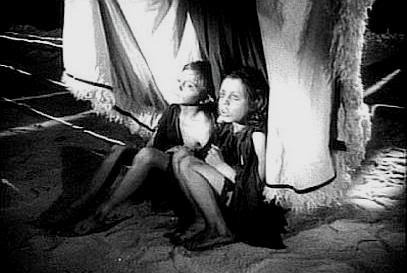
This Christmas, as always, my fervent wish is that we use our wealth and our might to lift people out of poverty, to share the blessings that God has given us with the billions in the world who, through no fault of their own, have been left behind. But my most fervent wish is that we take back control of our media from the hands of multinational corporations, and bring real journalism back to America. Otherwise, we will remain ignorant of the crushing poverty and pain that others suffer, and we'll continue to live IN THE DARK.
This boy is Ignorance. This girl is Want. Beware them both, and all of their degree, but most of all beware this boy, for on his brow I see that written which is Doom, unless the writing be erased. Deny it.' cried the Spirit, stretching out its hand towards the city. 'Slander those who tell it ye. Admit it for your factious purposes, and make it worse. And abide the end.'
'Have they no refuge or resource?' cried Scrooge.
'Are there no prisons?' said the Spirit, turning on him for the last time with his own words. 'Are there no workhouses?'"
- A Christmas Carol, Stave 3: The Second of the Three Spirits
Merry Christmas.
April 4, 2012
More Thoughts on Racism in America
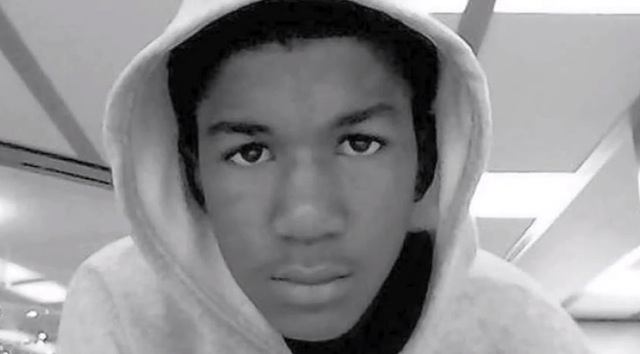 The Trayvon Martin case has touched a very raw nerve in American culture. After years of being hidden away in the closet of the American mind, the spectre of racism once again haunts us. Ever since the 1960s – the "Freedom Riders," the civil rights movement, the march on Washington and Dr. King's stirring speech at the Lincoln Memorial, the march from Selma to Montgomery, the passage of the Civil Rights Act and Voting Rights Act – Americans have been convinced that racism is a thing of the past in the United States of America.
There's no question that the attitudes of average Americans changed during this time. Where white Americans once either ignored the group of people we once called "negroes" or thought about them as somehow less than human, the civil rights movement of the 1950s and 1960s was very likely helped by the emergence of television. Images of men, women, and children in peaceful protest being beaten with truncheons, attacked with dogs, and swept off their feet and blasted with fire hoses, brought home to America the injustices of inequality. The powerful, emotional images entering our homes night after night sparked our sympathy for Americans of African descent and changed our minds about accepting the status quo of Jim Crow segregation.
I'm pretty certain that anyone reading this post who happens to be white will vehemently – angrily! – disagree with me, but we're fooling ourselves. Ask a white American what he or she thinks of racism, and they will tell you just how awful and inhuman it is. Ask a white American if he is racist and he will be shocked – shocked! – at the suggestion. "I am not a racist," he
will tell you. "I have black friends." But, I repeat, we are fooling ourselves.
No one wants to think of himself as racist any more than he would think of himself as stupid or ignorant or hateful. But stupidity, ignorance, and hatred are in no short supply in the United States in the second decade of this new millennium. So you must be talking about someone else. It's not me.
Racism did not disappear from our nation in the 1960s. It merely disappeared from our words and actions. It lives on, alive and well in our hearts. Certain words have disappeared (we all know the words I'm referring to). Certain behaviors have disappeared. We now consider the words vile and disgusting and the behaviors boorish and uncivilized.
But have we changed? Have our hearts changed?
A lot of the problem stems from our understanding of the words "racism" and "hatred." It's very easy to have a friend, black or white. Friends are people we like. We like them because we believe they're good, and we believe they're good because we've bothered to get to know them, to know
their hearts. I have black friends and white friends and Asian friends and Latino friends. I have Christian, Jewish, and Muslim friends. My students are black, white, Latino, Asian, Christian, Jewish, Muslim, and atheist. I can honestly say I love my friends. And I can honestly say that I love the vast majority of my students (if I have a problem with a student, it would be more
connected with their seriousness and work ethic than their ethnicity). They are, like me, American. Does that mean I am not a racist? It's a bit more complicated than that.
If I am walking down a Chicago street late at night and a young black man wearing a "hoodie" is walking toward me, am I uncomfortable? Why? I do not know the young man, not anything about him. I have no reason to believe that he has any intention, good or ill, other than to walk down the same street I am walking. What could possibly be the reason for this discomfort?
Human beings tend to fear two things: 1] that which they don't understand, and 2] that which they do understand, if they understand it incorrectly. And here's where racism comes in. Very few (if any) Americans will admit this, but we all have preconceived notions of others based on social categories. We react to people that we don't yet know not as individuals, but as members of one of these categories. And we make decisions about what category people belong to based on their appearance. We all do this. All of us.
In an earlier post, I talked about both white racism and black racism (what some white people refer to as "reverse racism"). And I said I understood black racism far more than I understand white racism. I said that white racism is based on deeply-seated feelings of privilege and cultural superiority, and "reverse racism" (black racism) is based mostly on resentment of white privilege and on fear – fear of someday being a victim of white racism.
Like Trayvon.
And here's where hatred comes in. In order to hate, it is not necessary to actually take a gun and shoot someone. It is not necessary to beat someone with a club until unconscious, chain him to a pickup truck, and drag him around town until his lifeless body literally falls into pieces. In
order to hate, it is not necessary to make someone sit in the back of a bus, give him a separate bathroom, or make him step off the sidewalk as you walk by. In order to hate someone, it is not necessary to call him a vile and disgusting name.
All that is really necessary to hate someone is not to give a shit about what happens to him. And when we don't give a shit about what happens to a whole group of Americans because of the color of their skin, that is racism.
So I feel it necessary to point out the following inconvenient truths:
On average, African-Americans have a lower life expectancy than white Americans, with higher infant mortality, greater risk of coronary artery disease, diabetes, stroke and HIV/AIDS. (source)
African-American unemployment is on average twice the white unemployment rate, at all times, not just during the current economic crisis. (source)
At some point in their lives, 42% of African-Americans will experience poverty as opposed to 10% of whites. (source)
One third of black children live in poverty today compared with 15% of white children. (source)
Black Americans experience homelessness at a rate seven times that of white Americans. (source and source)70% of white high school students go on to college as opposed to 55% of black students. (source)A black man is three times more likely than a white man to be stopped and searched by police (racial profiling), and once stopped is four times more likely to encounter physical force by police. (source)A black man is nearly 12 times more likely than a white man to be sent to prison on drug charges, even though the greatest number of drug users is white. (source)Young black students are three times more likely to be arrested than white students. (source)If and when arrested and convicted, black prisoners spend about 10% more time in prison than white prisoners. (source)A white man who kills a black man is far less likely to face the death penalty than a black man who kills a white man. (source)Someone of any race who kills a white man is four times more likely to face the death penalty than someone who kills a black man. (source)And most of America doesn't give a shit. Not about any of this. On the contrary – if we're going to be honest with ourselves – we rather expect that this is pretty much "just the way things are." We like to tell ourselves that in America "anyone can make it if they try," that all you have to do is "pull yourself up by your bootstraps" and "work hard to get ahead." In other words, if you are one of the 45 million Americans living in poverty, you're just not trying hard enough. And if the majority of that 45 million is black – well, the numbers speak for themselves, don't they? As Herman Cain said, "If you're poor and unemployed in America, blame yourself!"
White Americans will never admit it, but deep in their hearts they still believe that black people are inferior. And any attempt to point out the disparities and injustices in our social and economic structures, any attempt to suggest that there are structural inequalities built into the
system that we have never addressed, any attempt to argue that racism survives in America – these are all met with the charge of "race baiting!"
None of this is ever going to change until each of us changes. The change has to come from us, and the object of that change is us. We have to change our hearts. And we have to change our
minds. We have to stop thinking in terms of stereotypes and deal with people as people. We have to stop thinking in terms of narrow self-interest and begin to reclaim the idea of the common good.
A week before he died (forty-four years ago last week, to be exact), The Reverend Dr. Martin Luther King Jr. preached at the National Cathedral in Washington DC. He called his sermon "Remaining Awake Through a Great Revolution." In it he said the following:
We must all learn to live together as brothers or we will all perish together as fools. We are tied together in the single garment of destiny, caught in an inescapable network of mutuality. And whatever affects one directly affects all indirectly. For some strange reason I can never be what I ought to be until you are what you ought to be. And you can never be what you ought to be until I am what I ought to be. This is the way God's universe is made; this is the way it is structured.
John Donne caught it years ago and placed it in graphic terms: "No man is an island entire of itself. Every man is a piece of the continent, a part of the main." And he goes on toward the end to say, "Any man's death diminishes me because I am involved in mankind; therefore never send to know for whom the bell tolls; it tolls for thee." We must see this, believe this, and live by it if we are to remain awake through a great revolution.
Trayvon Martin's tragic death is bigger, I think, than a debate over a really bad self-defense law ("stand your ground"). It is bigger than our own narrow political agendas. It is bigger than our bruised egos when someone accuses us of racism. It is bigger than the terrible, incompetent
justice system in a small Florida town. It is about something bigger than all of these, I believe; something universal. It is about looking at ourselves and being honest, it is about realizing that no one in America is safe until everyone is safe, that no one in America is a success until everyone is a success, that there is no more central a self-interest than the interests of all. We are all Trayvon Martin.

March 24, 2012
We're ALL Trayvon Martin...
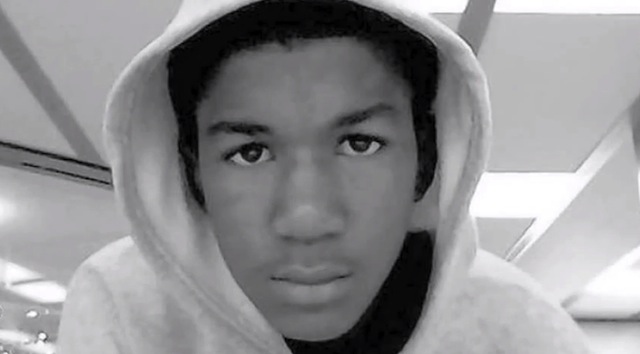 There's a lot of bullshit being spouted about the cold-blooded murder of Trayvon Martin; specifically, that it was not racially motivated. Americans are too busy either patting themselves on the back for electing an African-American President, or hating that President for being a Muslim, Socialist, Kenyan who planned a coup de etat
in utero
and unconstitutionally stole the presidency, to admit to themselves that we live in a society where racism not only survives, but thrives. And white progressives can't see their own racism; and white conservatives think that the only racists left in America are black. Geraldo Rivera, in a classic example of "blame the victim," reduced the crime to a morality play about fashion:
There's a lot of bullshit being spouted about the cold-blooded murder of Trayvon Martin; specifically, that it was not racially motivated. Americans are too busy either patting themselves on the back for electing an African-American President, or hating that President for being a Muslim, Socialist, Kenyan who planned a coup de etat
in utero
and unconstitutionally stole the presidency, to admit to themselves that we live in a society where racism not only survives, but thrives. And white progressives can't see their own racism; and white conservatives think that the only racists left in America are black. Geraldo Rivera, in a classic example of "blame the victim," reduced the crime to a morality play about fashion: The President has become a contortionist trying to avoid saying...well... anything that someone on the right might construe to be "playing the race card." He made s imple statement of sympathy for Trayvon Martin's parents, noting that if he had a son, he'd look like their son. The right-wing extremists who call themselves "conservatives" responded as expected. They called the President a "race baiter." Newt Gingrich insisted beyond the boundaries of reality that race did not and should not play an issue in this case, and took a slap at President Obama:You have to recognize that this whole stylizing yourself as a 'gangsta' … You're gonna be a gangsta wannabe? Well, people are going to perceive you as a menace. That's what happens. It is an instant reflexive action...
Any young American of any ethnic background should be safe period. We should all be horrified no matter what the ethnic background. Is the president suggesting that if it had been a white who had been shot that would be ok because it didn't look like him?Meanwhile, at a pistol range in Louisiana where Rick Santorum was burnishing his right-wing bona fides by firing off a couple of dozen rounds, a woman in the crowd watching the candidate to him to "pretend it's Obama." And I suppose that's not racist, either. While I appreciate the sentiment that envisions a "post-racial society" and says "this is not a black/white issue," I also think that there's a self-consciousness about racism that too many people are vulnerable to. We are, of course, the worst judges of our own faults. Most Americans refuse to believe that their purchasing decisions are influenced by advertisements. Yet advertising is a $400 billion industry in the US alone. Like my right-wing friend in New York, constantly reminding the world that "I am not a racist," Americans -- particularly white Americans -- simply don't want to admit that racism is alive and well and living right smack dab in the center of their hearts. I happen to agree with Howie (no, really) that there's such a thing as "reverse racism." What he (and most of America) refuses to admit is that the dominant racism (white racism) is based on deeply-seated feelings of privilege and cultural superiority, and "reverse racism" (black racism) is based mostly on resentment and fear -- fear of someday, for no reason, becoming a target -- or worse: having one of your children become a target, of some hate-filled asshole like George Zimmerman. And then having the authority of the state essentially endorse that hatred by failing (or refusing) to bring that person to justice. I happen to understand black racism a lot more than white racism. The point is that we have to stop all of it. George Zimmerman didn't hate Travon Martin. He didn't even know him. He hated some *image* that Travon looked like in Zimmerman's ignorant, hate-addled brain. He didn't kill an innocent kid; he killed a stereotype. And that stereotyped thinking has to stop. The responsibility is white America's. When white people FINALLY see people who don't look like them as equal, when they stop looking at the Trayvon Martins of the world as "thugs" and "gangstas" and treat each individual human being as a person (as, by the way, Christ taught us to do), then people of color, immigrants, Muslims, and other groups suffering discrimination will be able to see white people as people too, and not as dangers to their safety. Gandhi once said, "I like your Christ. I don't like your Christians." Well, I love America. But there are too many hateful Americans. The way I see it, we're all either Trayvon Martin or we're George Zimmerman. The choice is ours. There's no in-between.

February 15, 2012
The Metaphysics of Media (Continued...)
The Chronicle of Higher Education reports this week (A Tech-Happy Professor Reboots After Hearing His Teaching Advice Isn't Working) that Prof. Wesch may be re-thinking his pedagogy.
Prof. Wesch has perhaps had something of an epiphany, although to what extent I am not yet sure. On his website he mentions that his new approach is "not so much a reboot of my thinking, or even my message, it is simply a reboot in how I deliver my message."
Michael Wesch has been on the lecture circuit for years touting new models of active teaching with technology. The associate professor of cultural anthropology at Kansas State University has given TED talks. Wired magazine gave him a Rave Award. The Carnegie Foundation for the Advancement of Teaching once named him a national professor of the year. But now Mr. Wesch finds himself rethinking the fundamentals of teaching—and questioning his own advice...
...To be fair, Mr. Wesch always pointed to the downsides of technology (it can be a classroom distraction, for instance). But he saw tech-infused methods as a way to upgrade teaching.Then a frustrated colleague approached him after one of his talks: "I implemented your idea, and it just didn't work," Mr. Wesch was told. "The students thought it was chaos."
It was not an isolated incident. As other professors he met described their plans to follow his example, he suspected their classes would also flop. "They would just be inspired to use blogs and Twitter and technology, but the No. 1 thing that was missing from it was a sense of purpose."
Mr. Wesch is not swearing off technology—he still believes you can teach well with YouTube and Twitter. But at a time when using more interactive tools to replace the lecture appears to be gaining widespread acceptance, he has a new message. It doesn't matter what method you use if you do not first focus on one intangible factor: the bond between professor and student.
At any rate, four years ago I produced a response to Wesch's "Vision" based (loosely and very generally) on a couple of themes in The Metaphysics of Media (University of Scranton Press, 2010). I offer them both once again in the hopes of keeping this conversation alive.

December 24, 2011
Christmas 2011
This Christmas, as always, my fervent wish is that we use our wealth and our might to lift people out of poverty, to share the blessings that God has given us with the billions in the world who, through no fault of their own, have been left behind. But my most fervent wish is that we take back control of our media from the hands of multinational corporations, and bring real journalism back to America. Otherwise, we will remain ignorant of the crushing poverty and pain that others suffer, and we'll continue to live IN THE DARK.
This boy is Ignorance. This girl is Want. Beware them both, and all of their degree, but most of all beware this boy, for on his brow I see that written which is Doom, unless the writing be erased. Deny it.' cried the Spirit, stretching out its hand towards the city. 'Slander those who tell it ye. Admit it for your factious purposes, and make it worse. And abide the end.'
'Have they no refuge or resource?' cried Scrooge.
'Are there no prisons?' said the Spirit, turning on him for the last time with his own words. 'Are there no workhouses?'"
- A Christmas Carol, Stave 3: The Second of the Three Spirits
Merry Christmas.

December 15, 2011
A Few More Thoughts on Capitalism and Catholic Social Justice
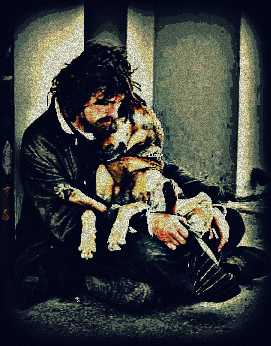 If you were kind enough to make it all the way through my last posting you'll undoubtedly realize that my argument (as logical, well-formed, and supported by documentation as it was) did not go over well with Thomas J. MacNamara who spoke on behalf of laissez-faire Capitalism. I remarked in my post that the sort of adherence to a "pure" economic system (
any
economic system) without reference to how well it might be serving actual
human needs
is really little more than slavery to ideology.
If you were kind enough to make it all the way through my last posting you'll undoubtedly realize that my argument (as logical, well-formed, and supported by documentation as it was) did not go over well with Thomas J. MacNamara who spoke on behalf of laissez-faire Capitalism. I remarked in my post that the sort of adherence to a "pure" economic system (
any
economic system) without reference to how well it might be serving actual
human needs
is really little more than slavery to ideology.And I wonder to myself, "How can Christians surrender themselves to ideology?"
I was reminded of the Gospel of Matthew, chapter 25, verses 31-46:
"When the Son of Man comes in his glory, and all the angels with him, he
will sit upon his glorious throne, and all the nations will be assembled before him. And he will separate them one from another, as a shepherd separates the sheep from the goats.
Then the king will say to those on his right, 'Come, you who are blessed by my Father. Inherit the kingdom prepared for you from the foundation of the world. For I was hungry and you gave me food, I was thirsty and you gave me drink, a stranger and you welcomed me, me, in prison and you visited me.'
Then he will say to those on his left, 'Depart from me, you accursed, into the eternal fire prepared for the devil and his angels. For I was hungry and you gave me no food, I was thirsty and you gave me no drink,
The Son of Man does not ask us on the last day, "How balanced were your books? How closely did you adhere to the rules of Capitalism? How great a profit did you make for your stockholders? How efficiently did you run your business or the economy as a whole? How productive were your workers?" Indeed, he does not ask, "Are you gay? Are you a Socialist? Are you a Democrat?"
No, instead the question he asks -- and the standard he holds us to -- is quite simple: What did you do for the least among us, for the poor, the hungry, the homeless, the ill?
And I wonder how a Christian Capitalist answers this question. But I believe I already know.
December 13, 2011
Occupy Wall Street: Social Justice versus Capitalism
I'm going to try to describe as objectively as possible the evening's discussion.
The evening began with a video by Mike Russo (AKA "Udo Capelli"), "Why We Protest: Voices from Occupy Wall Street." Michael then gave a little background on the video, the protesters, and his experiences at Zuccotti Park. (running time: 30:47)
I followed Mike Russo's video and talk with a presentation I called "The Inevitability of the Occupy Movement in a Global Context." I put forward what I believed to be a rational argument directed at a fairly conservative Catholic audience. I quoted from four Papal Encyclicals (Leo XIII's Rerum Novarum, John XXIII's Mater et Magistra, Paul VI's Populorum Progressio, and John Paul II's Solicitudo Rei Socialis), all of which called some dimension of Capitalism into question and urged that self interest -- while a legitimate human drive -- not overpower and destroy the idea of "the common good." Listening to the quotes I selected, one could easily imagine I was reading Marx to an audience of Catholics. But this was part of my point: I wanted this Catholic, Christian audience to hear what the Church teaches about economics and social justice.
I also proposed that, since Christians have been warned by the Church for a century about the dangers of economic injustice but have largely ignored the warnings, there is a certain inevitability to the Occupy movement. One of the scholars whose work I referenced to support my proposition was Jacques Ellul. I've been struck by the fact that we are in a situation at the moment that runs counter to Ellul's description of the several necessary prerequisite social factors for effective propaganda, most notably a broadly shared average level of education and a broadly shared average level of income. In the last thirty years -- with supply-side economics at work and growing emphasis on the privatization of everything, including schools -- we've seen our national educational performance falter and a chasm grow between the country's richest and poorest, with the middle class the most threatened of all. And so the homgenizing effects of mass propaganda will, naturally, decrease under these circumstances making dissent and protest all the more inevitable. A logical argument, it seems to me: income inequality is not just unjust, it is dangerous to the stability of a society. (running time: 22:54)
Finally, Wall Street had its say in Thomas J. MacNamara's presentation, "Capitalism as the Solution, Not the Problem." Here's where I must actually try to be objective. Let's start with the title. Capitalism as solution? Sure. No problem. But the problem we're facing right now is not a problem with Capitalism? Wow. That's a tough one for me and suggests that only a true believer can rationalize such a statement.
I'll let you listen to Thom's argument (part of me is itching to call it a diatribe) and come to your own conclusions, but there are a small number of points I want to make: 1] no economic system is perfect. When we pretend that one system is perfect and cannot be regulated or treated with flexibility or is immune to change, we're not dealing with an economic theory anymore. We're dealing with an ideology. And ideology is the death of critical reason. Ideology is philosophy on artificial life support. Ideology -- any ideology -- is the dessicated corpse of reason embalmed with the fluid of self-justification. 2] There is no "invisible hand." Even when Adam Smith was talking about the so-called "invisible hand of the market" he wasn't anthropomorphizing markets; he was referring to the hand of God that guides the enlightened participants in a market who deal with one another not only out of self interest, but of "fellow feeling." 3] Ayn Rand was not a philosopher, nor is "objectivism" a "philosophy." Let's get this straight: philosophers don't answer questions, they ask them. And when someone proposes the one, true answer (whether we're talking about Communism or Capitalism or Objectivism or any of the other -isms floating around out there) he or she is not philosophizing, he or she is pushing an ideology. 4] Parts of Thom's argument sound as though they came directly from Frank Luntz's plenary presentation to the Republican Governors Association (even though that presentation came a couple of weeks after the panel at Molloy). It's all Washington's fault. Don't take money from "hard working taxpayers." They're "job creators" who believe in "economic freedom." Blah, blah, blah. 5] A fairer distribution of income will not make us Cuba.
I'm done being objective now. Watch for yourself. I report, you decide. Fair and balanced. Et cetera. (running time: 26:37)