Beth Tabler's Blog, page 192
May 5, 2022
Review – 3:33 AM by Luke Hindmarsh
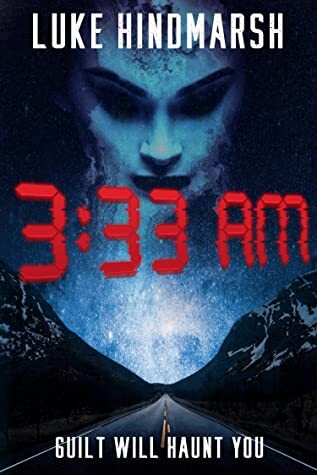
Jack’s brother was a hell of a singer before he died.
Saffron would do anything to change what happened. Jack just wants to come to terms with it.
Her dreams are haunted by guilt until her nightmares seep into the waking world. His mind is clouded by grief, and his memories are changing.
Drawn to each other, they have a chance to break free from the past. As their lives collide, Saffron and Jack will find that a guilt denied only festers and some secrets refuse to die.
While I don’t read or review a lot of horror, I am a fan of supernatural horror, the kind of story that builds tension with things unseen, not just gory slasher stuff. The kind of story were just little things, like a creaking floor, a light going out, or air moving where it shouldn’t, just ramping up the tension until the mystery cause is finally revealed.
And this is where 3:33 AM comes in. Set in modern-day London, the story starts showing us the main characters Jack and Saffron in their daily lives. Jack is a guitar player for an up-and-coming rock band, with his twin brother Eddie as the singer. They are playing all the London clubs and working on getting a recording deal while building a loyal following. Saffron is a nurse, just working long shifts and living day today.
Their lives converge when Saffron, driving home from a long shift, changes lanes carelessly and cuts off the band van, which had everyone but Jack in it, killing the band. This leaves Saffron and Jack traumatized, Saffron with guilt for causing the accident, and Jack at the death of his brother. They both spiral downhill emotionally for a bit until they run into each other one day, and feel an instant chemistry. This chemistry is odd for both of them, as they feel a connection, not knowing how they are connected, though. Saffron is still waking up nightly at 3:33 AM, the moment of the accident, and is having weird dreams. Jack is also having weird stuff happen to him, such as sleepwalking, and finding his brother was into weird occult stuff.
The tension mounts throughout the story, as Jack and Saffron’s relationship grows, they have weird occurrences happen to each of them, stuff that just has no rational explanation, and their behavior changes, becoming more apathetic to the occurrences, almost like something is making them think whats happening isn’t important. This all leads to some startling revelations, as Saffron especially explores alternative methods to stop her dreams, and Jack having weirder visions about his life events. These two normal people are dealing with forces they could never have imagined, something their exceptionally rational minds aren’t prepared for, leading to a shocking, violent conclusion that will leave the reader shocked at how it turned out.
The way Jack and Saffron are portrayed is just done so well. Just ordinary people, caught up with extraordinary situations that slowly and methodically turn their lives upside down, threatening to destroy them in insidious ways. It’s definitely a slow build, but not in a bad way. The tension just keeps ratcheting up throughout the story, with the supernatural elements building as the story goes, really affecting how the characters react to each other, and their actions are definitely changed. This may be one of the best stories I’ve read that so effectively builds this tension into such a shocking conclusion, and I can’t recommend this story enough.
Check Out 3:33 AM by Luke HindmarshThe post Review – 3:33 AM by Luke Hindmarsh appeared first on BEFOREWEGOBLOG.


May 4, 2022
An Interview With Author Mark Lawrence
New York Times Bestselling author Mark Lawrence is widely known in the fantasy world as a bit of a chameleon. He is comfortable writing stories that travel in the grimmest of worlds with the most questionable characters to ones of a reality bending fifteen-year-old genius in 1986.
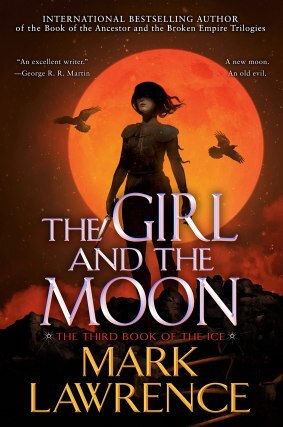
Mark sits down and chats with us about writing, SPFBO, and his newest novel, The Girl and the Moon, the finale to his Book of Ice series.
 [B] You have a degree in physics and hold a Ph.D. in mathematics. Creativity in physics and math is expressed by asking questions and testing them. When plotting a story, do you use the same sort of process? Or is the creative space completely different when writing?
[ML] It’s completely different (for me). Writing is largely an unconscious process as far as I’m concerned. I don’t spend a lot of time running it through my mind. When I do it’s mainly to ask after the event whether it makes sense or not – the “couldn’t the eagles have flown the ring to Mount Doom?” sort of sanity check.
[B] What was it like being nominated and shortlisted for a Nobel Peace Prize? I know that it was for a small contribution to the North Carolina Committee on justice reform. It is quite the bucket list item to check off.
[ML] People who say “it was surreal” always annoy me. Show some more originality!
It was surreal. I have a medal from the Governor of North Carolina!
I suspect its most lasting impact will be the smile I have whenever I remember that Voyager decided to put it into my author blurb on the books, including (I think) the 10th anniversary edition of Prince of Thorns. I like to imagine the readers doing double-takes.
[B] Your daughter Celyn wrote a book Wheel-Mouse vs. All The Crazy Robots, at age 8, with proceeds going to Children’s Hospice Charities. How did that come about? I read it and loved all the pooing robots.
[ML] It’s a fine piece of literature. I’m surprised she wasn’t the first member of the family nominated for a Nobel Prize. As far as I remember (and it was 10 years ago now – she turned 18 last week) I was just entertaining her and thought we could make a story with someone in a wheelchair so she had someone like her in it – such things were thin on the ground in 2012 and may well still be. So, I asked her lots of questions about who our hero would be, and then what would happen next etc. And at each turn she tended to choose the most “out there” option, and we ended up with Wheel-Mouse battling pooing robots. A classic was born. A semi-finalist for the Goodreads Choice Award for best picture book that year!
[B] I read that you DM when playing D&D; in your opinion, what makes a good DM? Is it preparedness or on-the-fly creativity?
[ML] I did DM when I played. I haven’t run a game since my kids were small, but DM is my natural station in such things.
I think maybe the most important ingredient – and the one I lack most – is being a good actor. You have to play the role of many different individuals that the players encounter. Being able to portray them well is a key to bringing the whole thing to life. Sadly, I have all the acting ability of a tree stump, so I had to fall back on storytelling, imagination, preparation, and on-the-fly creativity, all of which are important components too.
The improvisation needs to be kept in check though – I feel that the players like to know there are fixed truths at play, rather than the story is dodging around them just to keep things going. If a character is saved (or killed) by something the DM makes up on the fly, it feels too arbitrary and lacks importance. The players need to know that they have beaten – or been beaten by – a set challenge, and that the improvisation is more about adding colour than about changing the game to let them win.
[B] When you build a new story, do you start with the world or a character?
[ML] Almost always with character – though I think with Red Sister I probably decided on the world first (i.e. ice corridor maintained by artificial moon – the rest, including nuns, came as I wrote).
My books are primarily about characters, so character is the place to start for me.
[B] What do you think the grimdark as a whole might look like in ten years, and what do you see as the strongest influences of the past five years?
[ML] Now you expose my ignorance. I’m still not entirely sure what grimdark is. According to my own polls, I don’t seem to have written any for 10 years, and I’ve not read a lot of it either. I couldn’t tell you what the influences are or what the future holds. I just write the books I feel like writing, and let other people take care of the rest.
[B] From a publishing perspective, are there different expectations of what grimdark is and what is expected from a story dependent on what part of the world you are in?
[ML] I’m not sure I know what this question means. I don’t feel publishers think about grimdark as a subgenre. They seem to consider the word as a synonym for violence, and it’s not a word that I remember seeing printed on either of my main publishers’ books.
If you’re asking whether the US publishers seem any different to the UK publishers in this regard … then no.
 [B] After almost a decade of running SPFBO, what have been some of your personal highlights or memorable moments from the competition?
[ML] Oddly, I guess it has to be a book that was failed by the SPFBO in the formal sense. Senlin Ascends didn’t make the final, it was edged out of a finalist spot by Path of Flames (which came 2nd overall – with The Grey Bastards taking 1st). But seeing the publicity lift that book from an obscurity where it looked certain to remain, to a wide audience that it totally deserves, was very heartening.
Otherwise, it’s really ‘just’ seeing a good number of authors really welcoming the attention that the contest was able to focus on their books, gaining them reviews and readers. It’s been really nice to see the finalists each year bond and form friendships / support circles. Lately, they’ve been doing mass zoom-sessions which you can watch on YouTube.
[B] Since the competition’s inception, can you see a recognizable impact in the reception of independently published fantasy?
[ML] I think the profile of self-published fantasy has definitely increased over the last 5-10 years. What part the SPFBO played in that is impossible to say. I’m sure the direction of travel would have been the same with or without the contest. But it has been, and continues to be, a fun ride!
[B] You have an upcoming release with The Girl and the Moon, the third and final volume in The Book of Ice trilogy. Could you tell us a bit about the trilogy and where we are in the story?
[ML] Grrr… I hate talking about my books. A terrible failing in any author. Can we leave it at “it’s good, read it”?
The story is set on an ice-covered planet and follows the eponymous “girl” on a really long journey where her horizons rapidly broaden from the life she had been living on the edge of survival in the frozen north. (99.999% of the planet is frozen, but the north is COLD with caps).
Our hero, Yaz, has reached a slightly warmer bit of the world by book 3, and the gloves have come off!
[B] Did you know the ending of The Book of Ice trilogy when you started writing it?
[ML] I didn’t know the ending halfway through the third book.
[B] All of your main protagonists, Jorg, Jalan, Nick, Nona, and now Yaz, all have very distinct voices. I read that you based Jorg on Alex from The Clockwork Orange, and you created Jalan as the opposite of him. What was your starting point for the creation of Yaz?
[ML] My other main characters (with the exception of Nick Hayes in a real-world story, set in 80s London) are fighters – an unwilling one in Jalan’s case, but he knows how to swing a sword and will do so if cornered. With Yaz I wanted someone who, although tough and brave, was not given to violence and not trained with weapons. She’s also the closest I’ve come to a traditional hero, someone motivated by the general good, not prone to anger or selfishness. Hardly groundbreaking, but a change for me.
The books have a theme of hanging on to humanity in the face of implacable pressure to do otherwise. On the ice existence is so precarious that logic dictates there’s no room for weakness, and yet Yaz refuses to surrender to the draconian solutions her society adopts. A starting point for her character was to have someone who would care about these sorts of things and to have the courage to try to do something about it.
[B] The Girl and the Stars and The Girl and the Mountain both end with incredible cliffhangers that linger with readers long after putting the books down. From a writing standpoint, did you utilize cliffhangers, so the reader is directly drawn into the next book? Or was it a way to start the next book with a bang?
[ML] Hard to say. Mainly, I guess it was just something new. I haven’t ended books on cliffhangers before (as far as I remember … oh, wait, The Liar’s Key has one, I guess). I like to vary my story, my style, my structure. This was one such variation. The books (especially the first book) are more plot driven than my other stuff, I feel. They’re still character-driven, but the plot and the action get more focus. In some of my earlier books the plot is very secondary to the character. Neither is a bad choice, in my view, just different writing approaches.
A cliffhanger is a double-edged sword. It can encourage readers towards the next book, but also it can discourage readers from starting until the next book is out, if they hear about the cliffhanger’s existence in advance.
[B] Can you tell us anything about what is coming next?
[ML] I can! I’m about a quarter of the way through the final book in my next trilogy, which will come out in 2023/4/5.
The first book has as the working title: The Book That Wouldn’t Burn
It’s a story about a vast, possibly infinite, library. Or it’s a story about people whose lives intersect the library. I use the word ‘book’ a lot! But there’s also intrigue, violence, even romance! [image error]
It’s not very grimdark. Unless I really don’t know what grimdark is … then it might be.
The interview originally appeared in Grimdark Magazine
Check Out Girl and the Moon by Mark LawrenceThe post An Interview With Author Mark Lawrence appeared first on BEFOREWEGOBLOG.
Graphic Novel Review of “Punk Rock Jesus” by Sean Gordon Murphy
 AwardsIGN Award for Best Comic Mini-Series (2012)#15 on CBH – Best Graphic Novel’s of all Time
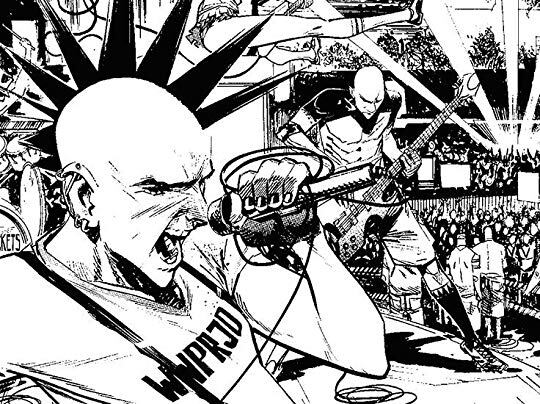
AboutMy ThoughtsFrom the pubisher, “A reality TV show starring a clone of Jesus Christ causes chaos across the U.S. of the near future in PUNK ROCK JESUS, a new graphic novel written and drawn by Sean Murphy, the acclaimed illustrator of JOE THE BARBARIAN and AMERICAN VAMPIRE.
J2 causes both outrage and adulation. Religious zealots either love or hate the show, angry politicians worry about its influence on the nation, and members of the scientific community fear the implications of cloning a human being at all, let alone the Son of God.
Thomas McKael is the clones’s bodyguard and former IRA operative, who despite his turbulent past is hired to protect the new Jesus—a baby who captivates the world, but grows up to become an angry teenager.
When falling ratings force the network to cut Jesus’s mother from the series the young star runs away, renounces his religious heritage and forms a punk rock band. And what starts off as babysitting for Thomas becomes an epic battle, as Jesus goes to war against the corporate media complex that created him.”
I seriously can’t decide how I feel about this series. It is angry, defiant, thoughtful, and current. It reminds me of a manifesto written by a Catholic school teenager who wants to rise against his upbringing, It is really, really strange. Strange and a solid read.
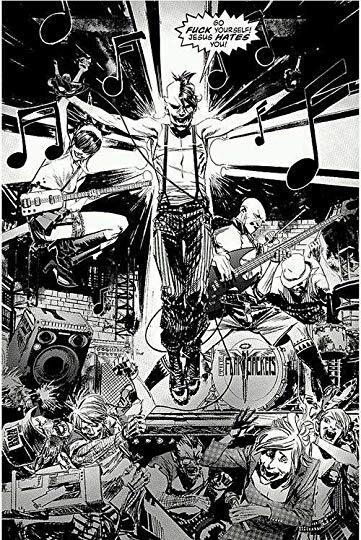
Chris is a typical 15-year-old Jesus clone. Angry at the establishment. The establishment being all of Christianity who have deified him as some supposed clone and destroyed and the chance he will ever have at a normal existence. Turned his life into the Truman Show, and killed his mother because she is weak for ratings. SO F#$% YOU, F#$% RELIGION, F#$% EVERYONE (cue guitar riff.) Somehow there is a scientist who has a pet Polar bear, a daughter who is really not her daughter, and the cure to save global warming.
As you can see, this is a book about extremes. Extremes in Christianity, extremes in religious fanaticism, all of America is brimming with fat, lazy and stupid people who don’t know their ass from their elbow. Everything is black and white. Life is not black and white at all, which is why this book reminds me of an angry teenager. The dialog, the plot, even the graphics and pen work are all done in this stark and contrasting style. Whether the illustrator/writer did that on purpose or that was just a stylistic choice remains to be seen, but it lends itself to the dialog. In a lot of ways, the pacing of this novel is a mess. It speeds and jumps around in gigantic leaps of time. The clone of Jesus is 1 years old, then 3, then 10, and then 15. Again, this might be a stylistic choice emulating the time jumps in the bible. If it is, that is a pretty nuanced plot addition.
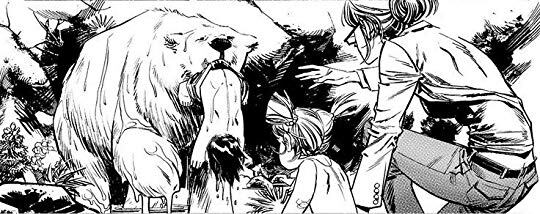
Hello, tame polar bear.
I feel like all these decisions the author made regarding the extremes in his storytelling where very specific and deliberate. He could have written a much better and more exciting book with the same plot and given it more heart and reality and less punk rockness. But that’s just me. It is an entirely plausible thing for a Hollywood studio to do. Clone a famous person who is a deity to a billion people and watch the ratings soar.
My recommendation is, as usual, to read it. It isn’t great, it isn’t horrible. Just angsty enough for me to feel old and annoyed at the very same time. But kinda fun, and crazy. Again, what the hell is up with a polar bear. Make up your own mind, and drop me a note about it. I am curious about other takes.

The post Graphic Novel Review of “Punk Rock Jesus” by Sean Gordon Murphy appeared first on BEFOREWEGOBLOG.
May 3, 2022
Interview With Author Ben Aaronovich
Years ago, on my quest to read the world of urban fantasy, I came across Bestselling urban fantasy author Ben Aaronovitch’s Rivers of London novels and was immediately hooked.
Ben kindly sat down with us and chatted with us about writing, his start, and his newest novel, Amongst Our Weapons.
 [GdM] How did you become a novelist? Can you tell us about Waterstones and how Rivers of London come about?
I started as a scriptwriter but after my first Doctor Who I was offered the chance to novelise my story which is like someone saying they’ll pay you good money to learn how to write prose. Once I’d done a 40,000 word novella I knew I could do a full-length book. After a few more tie-in novels for Virgin and Big Finish I was confident I could write well to that format. When my career as a scriptwriter fizzled out I found myself working in Waterstones and going slowly bankrupt. Faced with penury or worse- moving out of London, I turned to prose to make my one and only talent, writing, pay. The question was – what kind of novel would I write?
[GdM] You said in an interview that you had an epiphanic moment for who Peter Grant is. Can you tell us about that moment?
After casting about and reviewing old ideas I settled on a crime/fantasy hybrid that I’d been developing as a TV pitch before common sense caught up with me and I recognised that no British TV company was going to make it. But the beauty of writing a novel is that in the first instance you are writing for just one person – yourself. Thus Magic Cops(w/t) was resurrected as a prose project and I started thinking about a protagonist. I knew he was a Londoner and I knew he was mixed race and a police officer but that was it.
Then into my mind came Peter Grant, jazz junkie father and Sierra Leonean mother and all. I knew where he lived, where he’d gone to school and how he came to join the police. More importantly I sat down and wrote what become the first five pages of Rivers of London. Peter’s voice came alive and at that moment I knew I’d got hold of something that would sell. I just had to write the next 90,000 words…plus come up with a plot.
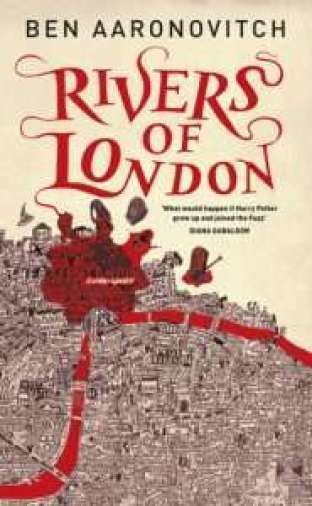 [GdM] I watched a video where you said, “my life was saved by a PCW in my early 20s.” How did a PCW save you?
I’m a terrible speller and a fast but inaccurate typist. The Amstrad PCW was the first affordable word processor to come on the market in the UK. It ran a WP called Locoscript and immediately I had access to onscreen editing and, most importantly, a spell checker. This allowed me to write my first scripts and novels and thus saved my life from the misery of having to work for a living.
[GdM] London is your hometown, and you have a deep connection to it. What are the positives and negatives you have run into depicting it as the setting for Peter Grant’s Rivers of London?
Well the positives are obvious because I know the city very well I know where all the good locations are going to be. That’s especially important when you’re trying to write a novel at 4:00 o’clock in the morning which you have to if you already holding down a full time job and have a teenage son. From my point of view there aren’t any real negatives except that some people seem to have something against London, I don’t know why, go figure.
[GdM] In the US, the first book of the series is Midnight Riot instead of Rivers of London. Why is that?
American publishers often localize the titles of British books and vice versa although in my case this was a mistake. In the far off days of twenty years ago far less publicity and word of mouth was generated via social media. Markets tended to be much more self-contained and so changing the title had little effect. I think changing the title meant that Midnight Riot failed to gain from the social media momentum generated by the UK release which partly explains its lacklustre performance – plus the bloody awful US cover didn’t help.
[GdM] Can you tell us a bit about October Man? Where did the idea for Tobias Winter come about?
Tobias Winter came about when I wrote a very short piece, what I call a moment, just for fun, where we discovered just what the German reaction was to Peter Grant being made an apprentice. That introduced Tobias Winter and his boss. The trouble is when you create a character like that they demand to have their own stories told and since I couldn’t get him over to London I had to write a story set in Germany.
[GdM] How do you handle your research for each novel? Are there any enjoyable rabbit holes you went down that have not ended up in the series thus far but still might in the future?
Research is essentially finding as many rabbit holes as you can and then attempting to go down the maximum number within the time you’ve allowed yourself, You’re constantly finding new and interesting stuff but at some point you have to stop and start writing.
[GdM] Did you read or play D&D as a youth, or were you a big reader? If so, what was your gateway book into SFF?
Yes I did, in fact I once owned, aged 12, the original three book box set that spawned a million house rules. I played a lot in my teens but like many people I suffered a shortage of people to play with and besides, creating the worlds is what really excited me. I prefer non-class based systems such as BRP and Traveller so I gravitated to such games as Call of Cthulhu.
[GdM] You have a new addition to the Rivers of London series in Amongst Our Weapons. Can you tell us a bit about where we are in the story?
Well just to clarify Rivers of London was never conceived as a series with a beginning, a middle and an end. Instead I was aiming much more at the classic detective mode as seen in Ed McBain’s 87th Precinct series, Ian Rankin’s Rebus books or, more classically, Agatha Christie’s Poirot. But unless you reset your detective after every mystery there is going to be character and setting change and growth with each instalment. Since Amongst Our Weapons is the ninth full length novel things have moved on since PC Peter Grant tried to take a witness statement from a ghost one cold January night in Covent Garden,
For a start Peter is now a dangerous wizard in his own right with a growing reputation amongst the demi-monde and his fellow police officers. He is also about to become a father for the first time and since his partner is Beverley Brook, the goddess of a small river in South London, this is binding him tighter to the world of the supernatural.
In the meantime he has helped take the Folly, a moribund institution and dragged it, if not kicking and screaming then certainly grumbling under its breath into the world of 21st Century professionalised policing. Which is just as well because magic, long thought dormant, is bubbling up to the surface bringing with it fresh new challenges. One of these challenges being a dead body in the London Silver Vaults with a hole in its chest where its heart should be.
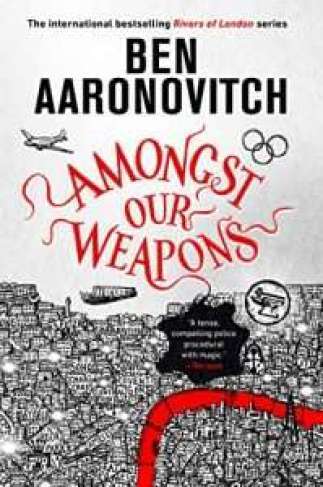 [GdM] Is the process of writing a novel for the Rivers of London series different now at book 9+ than it was for your first book, Rivers of London?
You know I keep expecting it to get easier but the process is just as laborious now as it was with the first book. Fortunately it’s still as much fun as it was when I started so I don’t mind so much. I have more mental “tools” to deal with blockages and the like and I have the certainty that what I write will eventually be published which is nice.
[GdM] There is another famous Peter Grant, the manager for Led Zeppelin. Is it a coincidence that they share the same name, or are you a Zeppelin fan?
That’s a total coincidence I was merely going for an ordinary anodyne name like Harry Palmer or James Bond (before he got famous). Given the fantastical nature of the world he was entering I didn’t want to call him ridiculous like Dan Spectre or Max Steel.
[GdM] Are you working on the release of the next graphic novel book for Rivers of London?
The latest graphic novel is under production even as we speak.
[GdM] Is there any news on Simon Pegg & Nick Frost’s Stolen Picture adaption?
Alas no. The TV adaptation is still in the same state of permanent pre-pre-production it has been in for the last 11 years.
The interview originally appeared in Grimdark Magazine
Check Out Amongst Our Weapons and the Full Series Thus FarThe post Interview With Author Ben Aaronovich appeared first on BEFOREWEGOBLOG.
First Chapter, First Paragraph – Gardens of the Moon by Stephen Erikson
“Ambition is not a dirty word. Piss on compromise. Go for the throat.”What is Gardens of the Moon about?
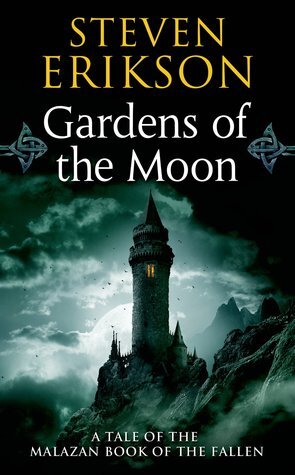 The Malazan Empire simmers with discontent, bled dry by interminable warfare, bitter infighting and bloody confrontations with the formidable Anomander Rake and his Tiste Andii, ancient and implacable sorcerers. Even the imperial legions, long inured to the bloodshed, yearn for some respite. Yet Empress Laseen’s rule remains absolute, enforced by her dread Claw assassins.
For Sergeant Whiskeyjack and his squad of Bridgeburners, and for Tattersail, surviving cadre mage of the Second Legion, the aftermath of the siege of Pale should have been a time to mourn the many dead. But Darujhistan, last of the Free Cities of Genabackis, yet holds out. It is to this ancient citadel that Laseen turns her predatory gaze.
However, it would appear that the Empire is not alone in this great game. Sinister, shadowbound forces are gathering as the gods themselves prepare to play their hand…
Conceived and written on a panoramic scale, Gardens of the Moon is epic fantasy of the highest order–an enthralling adventure by an outstanding new voice.
First Chapter, First Paragraph of Gardens of the Moon
Check Out Gardens of the MoonOther First Chapters1154th Year of Burn’s Sleep 96th Year of the Malazan Empire.
The Last Year of Emperor Kellanved’s Reign
I
THE STAINS OF RUST SEEMED TO MAP BLOOD SEAS ON THE BLACK, pocked surface of Mock’s Vane. A century-old, it squatted on the point of an old pike that had been bolted to the outer top of the Hold’s wall. Monstrous and misshapen, it had been cold‐hammered into the form of a winged demon, teeth bared in a leering grin, and was tugged and buffeted in squealing protest with every gust of wind. The winds were contrary the day columns of smoke rose over the MouseQuarter of Malaz City. The Vane’s silence announced the sudden falling‐off of the sea breeze that came clambering over the ragged walls of Mock’s Hold, then it creaked back into life as the hot, spark‐scattered, and smoke‐filled breath of the Mouse Quarter reached across the city to sweep the promontory’s heights.
First Chapter, First Paragraph -; Three Parts Dead by Max Gladstone
The post First Chapter, First Paragraph – Gardens of the Moon by Stephen Erikson appeared first on BEFOREWEGOBLOG.
May 2, 2022
Kindle Unlimited Recommendations for May
Kindle Unlimited is a service that can theoretically provide you with limitless numbers of books for the price of one normal release every month. This is a tremendous blessing for those of us who are fast readers. I pretty much have read every single Red Sonja comic ever written thanks to Dynamite Entertainment putting almost all their comics on the service.
However, what we here at Before We Go want most is good Kindle Unlimited books. As such, here is a recommendation of a bunch of entertaining ones that I’ve enjoyed and can say rise above the dross.
1. Five Kindle Unlimited Recommendations for January
2. Five Kindle Unlimited Recommendations for February
3. Five Kindle Unlimited Recommendations for March
4. Five Kindle Unlimited Recommendations for April
As an indie author on Kindle (Space Academy Dropouts, I was a Teenage Weredeer, Esoterrorism), here are some of my favorites:
1. Andrea Vernon and the Corporation for Ultrahuman Protection by Alexander C. Kane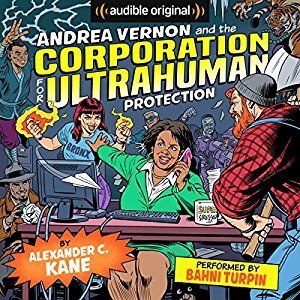 Anyone who knows me knows that I absolutely love superhero literature. I also love comedy and genre parodies. Andrea Vernon and the Corporation for Ultrahuman Protection is all three and fantastic. Poor Andrea is a world-traveling Haitian American who gets unwittingly dragooned into being a secretary for a superhero PMC. They’ll protect anyone for a price and want the contract for the Bronx more than anything–especially when an alien invasion takes the form of a giant egg about to hatch.
Think superheroes are tough? Try having one for a boss, or co-worker. That’s the predicament Andrea Vernon finds herself in as the heroine of Alexander C. Kane’s debut audiobook. Drowning in debt, and forced to move back into her parents’ Queens apartment, Andrea starts looking for a job. Luckily for her, she finds herself recruited—well, really kidnapped—by the Corporation for UltraHuman Protection (C.U.P.), an organization that deploys superheroes. Suddenly Andrea must contend with co-workers who can shoot lightning from their fingertips, face the imminent destruction of humanity, and juggle a fledgling romance with a giant lumberjack. It’s all in a day’s work for the would-be novelist turned superstar secretary.
Audible Hall of Fame narrator Bahni Turpin is perfectly cast as a normal person finding herself in abnormal circumstances. Turpin brings to life an entire cast of quirky characters, along with their heroically funny antics in the cubicle next door. If you’ve ever wondered what a genetically altered rhinoceros sounds like, or needed to take a break from your own office drudgery, this is the comedy for you.
2. Get Bent by Rick Gualtieri
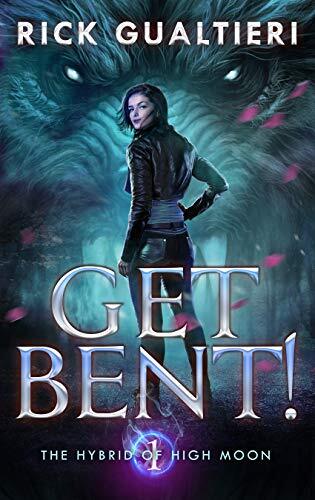 I am a huge fan of Rick Gualtieri’s Bill the Vampire series which combines The Big Bang Theory with the undead. Here, Get Bent is the story of a half-werewolf/half-witch who has all the snark and plucky spirit of Buffy but a simplified world with a town split between two major supernatural factions. Bentley is a great protagonist, and the storyline is low stakes but deeply important to the people involved. It’s not about saving the world but the peace in a small town.
They say I’m an abomination.
I say words hurt … but not as much as my fists.
My name is Tamara Bentley, Bent to my friends, and I’m not supposed to exist. I was born of the forbidden union between a witch and a werewolf, and they’ve been trying their damnedest to hide my existence ever since.
But now my secret is out, and my uncle, the leader of the wolf pack, is pissed beyond belief. In his eyes, I’m something that should’ve never been born. He wants me dead and doesn’t care who he has to sacrifice to get the job done.
I’m far from helpless, though. Not only am I a champion athlete, but I’m strong enough to punch out a bus. Good thing, too, because a rare lunar event is about to increase my uncle’s already terrifying power. I’ll have to call on every last ounce of strength I have if I want to survive the night and save the lives of everyone counting on me
3. Quincy Harker, Demon Hunter by John G. Harkness
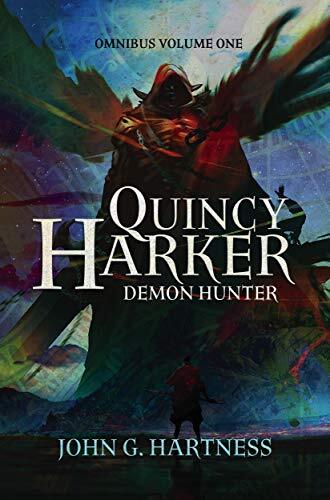 Quincy Harker is the son of Mina Harper and Jonathan Harper. Unfortunately, depending on your point of view, being bitten by Dracula affected both of his parents. Blessed with immortality and a horribly bad attitude, Quincy has devoted himself to fighting the forces of Hell on Earth. He’s just a real jerk about it. He also has the help of his “uncle” Luc, who has mostly retired from being a force of evil. I really enjoy these books and they’re like an even sillier version of the Dresden Files with all the wonderful melodrama. I strongly recommend the omnibus versions.
What it is about?
AWARD-WINNING DARK FANTASY WITH ACTION, SNARK, AND DEMONS GALORE
“If you love action-packed dark edged urban fantasy with mystery, humor and a lot of foul language then check this one out.” – Sharon Stogner, I Smell Sheep
Straight out of the pages of the legendary vampire novel Dracula comes a demon hunter for the modern world. Mina Murray and Jonathan Harker had a son. They named him Quincy. His guardian angel calls him Q. Dracula calls him nephew.
Demons call him The Reaper.
“There are things in this world that men and women aren’t meant to understand. We aren’t supposed to know these things exist, much less how to fight them. The things that go bump in the night, the monsters in the closet, the shadow out of the corner of your eye — that’s where I live.”
Year One collects the first four short novels in the Quincy Harker, Demon Hunter series
Raising Hell – Winner of the 2016 Manly Wade Wellman Award – Quincy Harker takes on a demon-summoning entrepreneur that makes Gordon Gecko look like Santa Claus.
Straight to Hell – The Four Horsemen are back in Charlotte, NC, and I don’t mean Ric, Arn, Tully, and Barry. Harker has to save the world from the forces of Apocalypse.
Hell on Heels – She’s hot, she’s mean, she’s borderline psychotic and has a lot of issues with Harker and his people. She’s Gabriella Van Helsing, and she’s Hell on Heels.
Hell Freezes Over – Somebody is walking through dreams and murdering families all over Harker’s city. Now the ghost of a murdered little girl is walking through Harker’s dreams. Is he going to stand for this? Yeah, when Hell Freezes Over.
4. Darkmage by M.L. Spencer
 Darkmage is the first of the Rhenwars Saga and it is one of my all-time favorite fantasy novel series, indie or otherwise. There’s a prequel, Darkstorm, but Darkmage is where the author wants you to start. Darien Lauchlin wants to be the man who saves his country from the forces invading it and who murdered his family. Unfortunately, too much power makes him an enemy of the entire world. It also helps that he’s not quite right about who the villains of this story are.
What is it About?
The hope of the world rests in the hands of a Darkmage.
The Well of Tears is open and the terror of the night has been unleashed. Now, the last Sentinel left alive with the power to defend his world against the minions of the Netherworld is a man destined to be corrupted into the image of what he hates. In the name of duty, Darien Lauchlin will see oaths forsaken, crowns toppled, friends sacrificed and the land he loves desecrated. For there is a very thin line between duty… and brutal inhumanity.
5. Crimes against Magic by Steve McHugh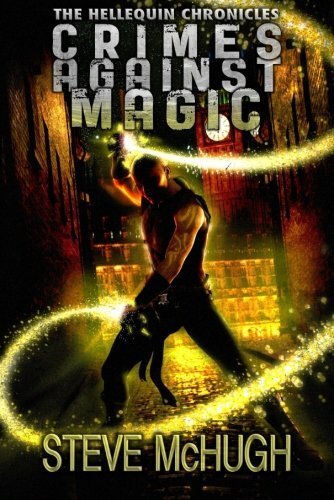 Steve McHugh has created a great world with a combination of Greek mythology, Arthurian mytholoy, and gritty crime drama. Nate Garrett woke up with amnesia a decade ago and now works for both a vampire fixer and a regular crime lord. However, his destiny and past are much-much greater. He’s also faced against “crimes against magic”, beings that manage to make even his formidable skill look paltry. I love this series and while I miss that it moves further into high fantasy than gritty London gangster story, it’s still a fantastic set of books.
It’s been almost ten years since Nathan Garrett woke on a cold warehouse floor with nothing but a gun, a sword, and no idea of who he was or how he got there. His only clue … a piece of paper with his name on it. Since then, he’s discovered he’s a powerful sorcerer and has used his abilities to work as a thief for hire. But he’s never stopped hunting for his true identity, and those who erased his memory have never stopped hunting for him. When the barrier holding his past captive begins to crumble, Nathan swears to protect a young girl who is key to his enemy’s plans. But with his enemies closing in, and everyone he cares about becoming a target for their wrath, Nathan is forced to choose between the life he’s built for himself and the one buried deep inside him.
Crimes Against Magic is an Urban Fantasy set in modern-day London with Historical flashbacks to early fifteenth-century France. It’s book one of the Hellequin Chronicles, a series about Nathan (Nate) Garrett, a centuries-old sorcerer.
The post Kindle Unlimited Recommendations for May appeared first on BEFOREWEGOBLOG.
May 1, 2022
Getting Started in Superhero Fiction
 I love me some superhero fiction. As much as I love comic books as a medium, I feel like superheroes tend to get to stretch their legs when they move beyond serialized sequential art. Part of this is because they more often are allowed to have character growth, definitive endings, and stories that just don’t bleed into the next volume.
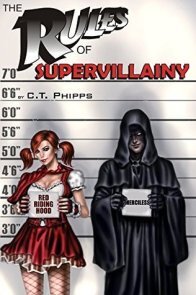
As the author of the extremely popular Supervillainy Saga, I’ve done a lot of research into prose superhero fiction and have read literally hundreds of examples of the genre. You can check out my Goodreads if you don’t believe me. Some of the books stand a cut above the rest and I thought I’d share an article on what I perceive to be the best of the best. Better still, the books you’d probably enjoy if you wanted to get into the subgenre. Pick any one of them and I’m sure you’ll have a great time.
I should note that I haven’t included any books starring the world’s most famous superheroes. First, that’s a cheat and second, they don’t need the additional publicity. It also doesn’t take advantage of the biggest advantage of prose fiction that these characters belong to the author rather than the machine that produces them.
EssentialsSoon I will be Invincible by Austin Grossman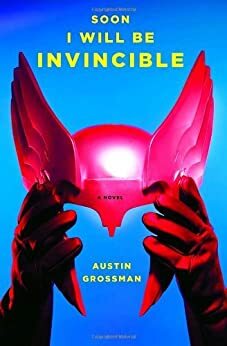 The first superhero book I ever read and one that left the biggest impression by the brother of the guy who wrote The Magicians. This is the story of Doctor Impossible, a Lex Luthor meets Doctor Doom-esque villain who suffers from Malign Hypercognition Disorder. What does that mean? He’s an evil genius. He can’t not try to take over the world. Opposing him is FATAL, a beautiful cyborg who is a new hero and awkwardly thrust into a group of Teen Titans-style heroes (who haven’t been teens for a while). They’ve been at it for decades but one day, well, Corefire (AKA Superman’s analog) dies and everything changes—or does it?
Dreadnought by April Daniels
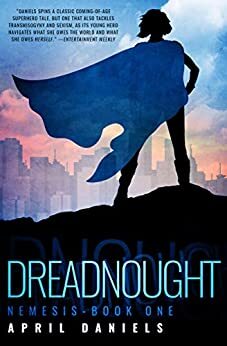 Superheroes are inherently escapist fantasy. They are stories that somehow, someway, we can our best selves and use that to help the world. April Daniels successfully relates that to the trans experience with a bit more success than the X-men by being more literal. Danny Tozer has been in hiding about her true identity for her entire life and when she receives the power of Dreadnought, world’s greatest hero, it transforms her into the beautiful powerful paragon she was always meant to be. However, is the world ready to accept a trans hero? Certainly, her family isn’t.
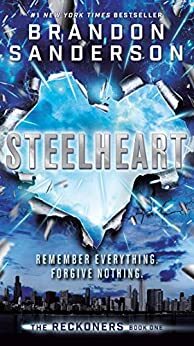 It would be a poor list without including one of my favorite genre writers. Steelheart, first book of the Reckoners trilogy, deals with a world where superheroes are real and they’re all evil. For whatever reason, gaining a power turns you into a sociopathic monster. Steelheart is the strongest of these heroes and our protagonist wants to take him and every other superhero down. However, things are not what they seem but when are they ever? A great standalone read but also great as part of a trilogy of books.
Highly RecommendedEx-Heroes by Peter Clines
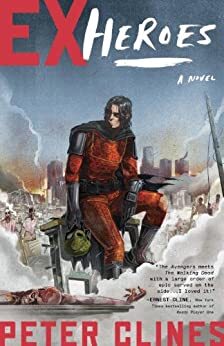 Ex-Heroes has the delightfully batshit premise of superheroes vs. zombies in a world where the latter has won. The last superheroes in the world have gathered in Los Angeles and done their best to keep as many humans alive as possible. However, the simple fact is the undead are still around and it seems like a hopeless situation. The first book has some unnecessary edgelord elements that it backs away from in later books, but the heart of the book is strong: the characters are just likable.
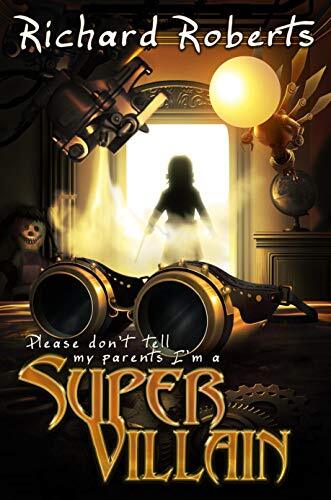 Quite possibly the single most adorable superhero books ever made and ones I almost put on the essential list. The Inscrutable Machine is a trio of superpowered teens who wanted to become superheroes in middle school but have been labeled supervillains. Harmless adorable supervillains. Penny Akk is embracing it with gusto, though, and each of the stories told about the characters is great. Eventually, the books
move onto new junior high and high school characters but remain deeply fun as well as harmless.
The Roach by Rhett Bruno
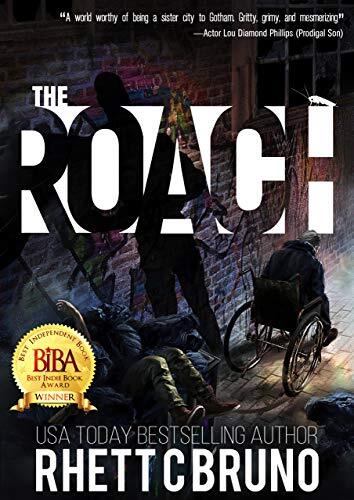 On the opposite end of the spectrum from the Please Don’t Tell My Parents is The Roach. Reese Roberts was once the Batman-esque protector of Iron City. Except he was a lot meaner and nastier than Batman, barring the Tim Burton and Frank Miller ones. Still, he protected the innocent up until he was paralyzed from the waist down. It’s a fascinating story of disability, struggle, and old fashioned superheroism with an edge. Very dark but very enjoyable.
Forging Hephaestus by Drew Hayes
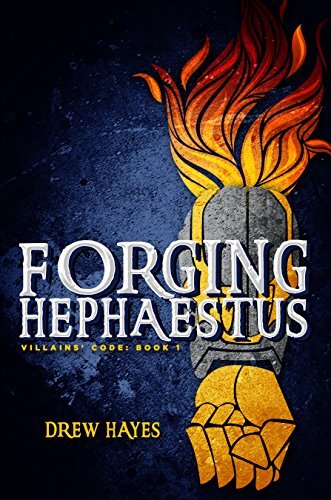 Drew Hayes is the undisputed master of indie superhero fiction, which is a somewhat specifically sized pond but no less a kingdom. The Superpowered series and Corpies are both extremely fun, but this is the one that stands above the rest. There’s been a treaty between the villains and heroes for a long time, almost to the point there’s peace, but this is a situation that cannot last. An apprentice supervillain and the world’s strongest man are about to find out how fragile the world they live in is.
RecommendedWearing the Cape by Marion G. Harmon
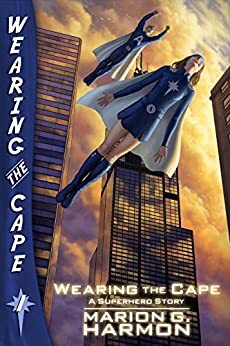 Wearing the Cape is about a world where superpowers appeared in an event called the Breakthrough. Hope Corrigan gains the power of Supergirl when she barely survives a terrorist attack and immediately tries to figure out how superheroes work. A lot of attention is paid to how superheroes “could” work in a semi-plausible world. I also really like Hope, she is a noble and goodhearted heroine but still very believable.
Velveteen Versus The Junior Super-Patriots by Seanan Maguire
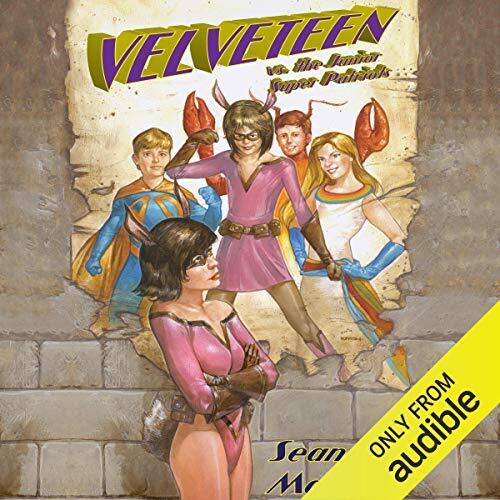 Velveteen Versus is one of my favorite book series on this list but sadly is only available on audiobook format as well as online (link: https://seananmcguire.com/velhome.php). Poor Velveteen was sold by her parents to the Super Patriots Corporation. Now an adult and horribly traumatized, she wants to live a normal life, but the corporation never lets any of its assets away. I really enjoyed the book and suggest purchasing all of them on Audible.
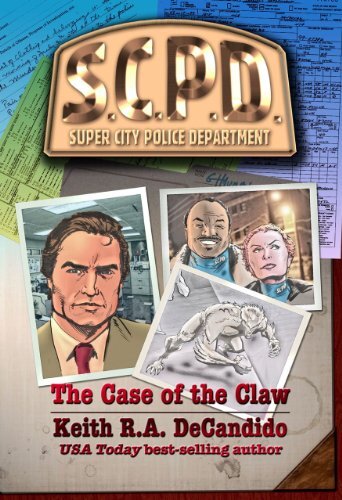 Super City Police Department is a wonderful collection of novels dealing with the titular cities’ cops as they struggle to keep up with the outright surreal crimes always being committed around us. The Case of the Claw is the first of these and probably the most enjoyable. I’ve always loved Keith RA Decandido’s work in Star Trek and he brings his love of the superhero genre to every page.
Andrea Vernon and the Corporation for Ultrahuman Protection by Alexander C. Kane
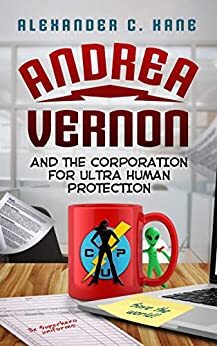 Andrea Vernon is a Haitian American with a love of travel and an inability to keep a job. So, it comes as a great shock when she ends up semi-voluntarily recruited to be a secretary for the world’s largest private superhero corporation. Developing a relationship with one of the superheroes, Andrea soon finds herself swept in a variety of insane and hilarious but no less life-threatening situations. I enjoyed all three of these books on audiobook format and recommend them that way for their fantastic narration.
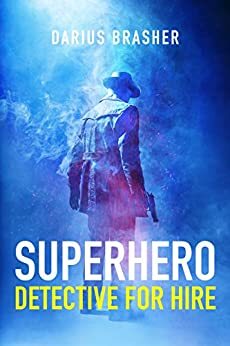 Darius Brasher has a mastery of writing superhero stories that are short, easy to digest, and thoroughly entertaining. Which one of them to start with was a hard call but I choose the Superhero Detective that is honestly more noir than superhero. However, that’s what makes these books the best as they follow the investigation of the sordid underbelly of superheroes. Sex, lies, and blackmail to keep one’s public image clean.
The post Getting Started in Superhero Fiction appeared first on BEFOREWEGOBLOG.
April 30, 2022
#Tour – Spotlight: Escaping First Contact by T. S. Beier

“Once in the metal labyrinth’s clutches, it is clear the unlikely allies will not escape”
What is Escaping First Contact About?
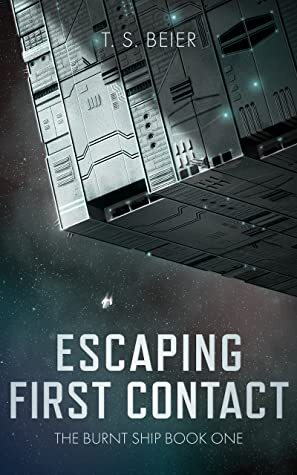 At the far edge of cultivated space, a derelict ship rests. Ten times larger than the biggest Terran dreadnaught, the ship is not recognized by any of the five species tenuously coexisting in the galaxy.
Small crews are sent to investigate. What they find is a trap.
Once in the metal labyrinth’s clutches, it is clear the unlikely allies will not escape unless they can work together as a team. Unfortunately, trust and cooperation are entirely out of the question.
An immersive tale of escape and comradery, Escaping First Contact brings together an unforgettable cast of characters, richly detailed alien cultures, deft humour, and explosive action.
What Folks are Saying About Escaping First Contact
“Fantastic world-building, believable aliens, and lots of snappy action. T.S. Beier is on her way up!”
– S.D. Perry, author of Aliens vs. Predator: Prey, Aliens vs. Predator: War, and the Resident Evil novel series.
The post #Tour – Spotlight: Escaping First Contact by T. S. Beier appeared first on BEFOREWEGOBLOG.
Saturday Book Cook Up – Deadpool or “I can say Chimichanga in seven languages.”

Deadpool vs. Cable #13
According to wikipedia “Chimichanga (/tʃɪmiˈtʃæŋɡə/; Spanish: [tʃimiˈtʃaŋɡa]) is a deep-fried burrito that is popular in Tex-Mex, Southwestern U.S. cuisine. The dish is typically prepared by filling a corn tortilla with a wide range of ingredients, most commonly rice, cheese, beans, machaca (dried meat), Carne adobada (marinated meat), Carne seca (dried beef), or shredded chicken, and folding it into a rectangular package. It is then deep-fried and can be accompanied by salsa, guacamole, sour cream or cheese.”Deadpool loves it citing multiple times throughout the various comics and movie that he loves some chimichangas or more importantly, he enjoys saying the word chimichanga. Also beloved are pancakes, enchiladas, and tacos. All are welcome in his twisted world.
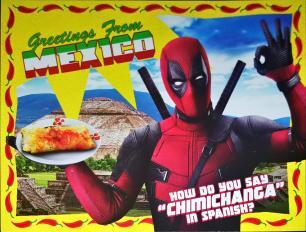
Fun Fact: Chimichangas possibly came about in the 1920s when an owner of a Mexican restaurant, when dropping a burrito in the fryer accidentally, began to curse. Having stopped herself before the cursing came to fruition, she said the word chimichangas.
Ingredients
1 pound ground beef
1 can (16 ounces) refried beans
1/2 cup finely chopped onion
3 cans (8 ounces each) tomato sauce, divided
2 teaspoons chili powder
1 teaspoon minced garlic
1/2 teaspoon ground cumin
12 flour tortillas (10 inches), warmed
1 can (4 ounces) chopped green chilies
1 can (4 ounces) chopped jalapeno peppers
Oil for deep-fat frying
1-1/2 cups shredded cheddar cheese
Directions
In a large skillet, cook beef over medium heat until no longer pink; drain. Stir in the beans, onion, 1/2 cup tomato sauce, chili powder, garlic and cumin.
Spoon about 1/3 cup of beef mixture off-center on each tortilla. Fold edge nearest filling up and over to cover. Fold in both sides and roll up. Fasten with toothpicks. In a large saucepan, combine the chilies, peppers and remaining tomato sauce; heat through.
In an electric skillet or deep-fat fryer, heat 1 in. of oil to 375°. Fry the chimichangas for 1-1/2 to 2 minutes on each side or until browned. Drain on paper towels. Sprinkle with cheese. Serve with sauce.
Nutrition Facts
1 chimichanga: 626 calories, 41g fat (9g saturated fat), 37mg cholesterol, 1094mg sodium, 46g carbohydrate (5g sugars, 6g fiber), 19g protein.
Originally published as Beef Chimichangas in Quick Cooking May/June 1998
The post Saturday Book Cook Up – Deadpool or “I can say Chimichanga in seven languages.” appeared first on BEFOREWEGOBLOG.
Cook with me! The Weekly Cookup

Starting on 30th of April of 2022, I will be starting a fun series called, “Weekly Cook up.” In this series, I will talk about a book that features food of some sort and relates it to an actual recipe. There are rules:
It has to be based on a graphic novel or book passage. It has to actually taste decent.It has to have available ingredients.Doable for the home cook.The recipe needs to be able to be scaled.
This is not so much a review of the book or graphic novel featured, but a fun offshoot for a passage mentioned in the book. I know I love cooking and I am sure some of you out there do as well.
If anyone has any ideas about fun recipes you would like me to feature, let me know!
The post Cook with me! The Weekly Cookup appeared first on BEFOREWEGOBLOG.