
Stephen K. Ray's Blog, page 62
February 17, 2023
The Other Catholics: A Short Guide to the Eastern Catholic Churches
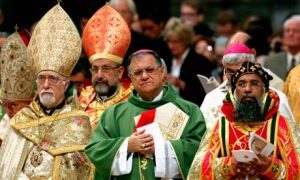 Since we are in Jerusalem, where many of the Eastern Catholic Churches converge, I decided to share this excellent article. I found it very helpful.
Many think the name of “our church” is the “Roman Catholic Church” — but that is only the name of the Latin Rite of the Catholic Church. The “Catholic Church” is the simple and actual name of our Church, a church made of many different rites, all with the same sacraments and all loyal to the Bishop of Rome as the visible head of the Catholic Church.
But many others of the Eastern churches are not “Catholic” and are not in union with Rome such as the Greek Orthodox, the Russian Orthodox, Coptics and many others.
I hope you find this explanation, list of the various rites, glossary of terms and more as helpful as I did. Greetings from Jerusalem where the Roman Catholic Church is referred to as the Latin Rite and cooperates with many other Catholic Rites and co-exists with many non-Catholic Eastern rites.
The article begins,
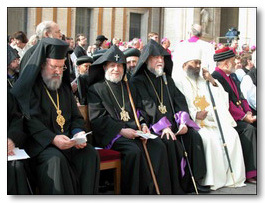 “As millions watched the funeral for Pope John Paul II, many were confused by the concluding Panakhyda celebrated not in Latin, but in Greek and Arabic by hierarchs in black hoods, turbans, crowns, and unusual vestments. Was this not the responsibility of the cardinals? And were those clerics even Catholic?
“The answer may surprise you, as Catholics are generally unaware that they have millions of coreligionists who are not themselves part of the Roman Catholic Church. Indeed, even the term “Roman Catholic” isn’t quite right it was actually a derogatory label assigned to us by Anglican Protestants, trying to legitimize their own use of the term “Catholic” over and against that foreign Church loyal to the pope of Rome.
 “In point of fact, the Catholic Church directly under the jurisdiction of Rome is properly and canonically termed the Latin Church. All official Church documents simply use the term, “Catholic Church.” And contrary to popular belief, most of the day-to-day work preformed by the Holy Father is not in his role as pope and pastor of the Universal Church but in his position in the Latin Church as the bishop of Rome and the patriarch of the West.
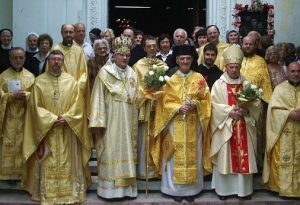
“So who are these “other” Catholics? They have their own hierarchies and liturgies, as well as their own distinct apostolic lineages. They may look and act like Eastern Orthodox churches, but they recognize the pope of Rome as the head of the visible Church on earth and have suffered for the cause of that unity.
“Meet the Catholic Churches. There are more of them than you think… For the whole article, click here.
The post The Other Catholics: A Short Guide to the Eastern Catholic Churches appeared first on Defenders of the Catholic Faith.


Day2: Transfiguration, Cana & Nazareth
Mount Tabor rises 1900 feet above the Jezreel Valley below. It has a unique hump of a mountain rising up in the plain. On
Many times people had asked me how long it would take Jesus and the disciples to get to the top. So back on ways, I drove over to the mountain, parked at the base, and I scrambled straight up to the top through the trees and over rocks. It took me 55 minutes but I was in a rush. So I suspect it took Jesus and his disciples about an hour and a half.
We arrived early in the morning and took the van taxis up instead of climbing, and had Mass looking out over the land of Israel.
From there we went to Cana for the renewal of wedding vows and lunch at the YMCA.
Our last step of the day was Nazareth to visit the grotto where the angel made the announcement to Mary, and where the Incarnation took place — it ALL started here! We arrived back at the hotel, giving everyone some free time to sit by or swim in the Sea of Galilee, and to get a good night’s sleep.
The post Day2: Transfiguration, Cana & Nazareth appeared first on Defenders of the Catholic Faith.
February 16, 2023
Our new group arrives in Israel: lots of young folks which is very exciting!
One thing that’s always exciting about a pilgrimage is when you see families come with their youngsters. These young folks are so profoundly impacted by the gospel as it’s presented in the land where it actually happened.
We had a wonderful start, everybody’s accounted for, no lost luggage, and we had a great Mass and dinner on the shore of Galilee.
The post Our new group arrives in Israel: lots of young folks which is very exciting! appeared first on Defenders of the Catholic Faith.
February 15, 2023
Yes, Christians Do Have an Assurance—but Not an Absolute Assurance—of Salvation
By Dave Armstrong:
Many Protestants understand being “saved” as a one-moment-in-time act of repentance and acceptance of Jesus Christ as one’s “personal Lord and savior” (a phrase that nowhere appears in the Bible, by the way), a life-changing transformation of “lost” sinner who becomes a “saved” child of God. They believe this to be an irrevocable step that eliminates the penalties of past sins and guarantees, no matter what might happen from that point forward, that nothing can undo or rescind one’s salvation.
 “Once-saved-always-saved” is a slogan many Protestants use to describe their belief in a Christian’s absolute assurance of salvation. And though not all Protestants accept the once-saved-always-saved formula, many, such as Southern Baptists and the myriad of “non-denominational” denominations, do. Two Bible passages commonly cited in support of this view are:
1 John 5:13: “I write this to you who believe in the name of the Son of God, that you may know that you have eternal life.”
John 10:27-29: “My sheep hear my voice and I know them, and they follow me; and I give them eternal life, and they shall never perish, and no one shall snatch them out of my hand. My Father, who has given them to me, is greater than all, and no one is able to snatch them out of the Father’s hand.”
St. John’s assurance that “you have eternal life” is a proclamation of every Christian’s moral—not absolute—assurance of salvation. Christ offers us the gift of salvation, and he will not go back on his word.
But you and I are entirely capable of going back on our word by abandoning Christ and, thereby, forfeiting his gift of salvation. St. Paul speaks about this in 2 Timothy 2:11-13:
If we have died with him, we shall also live with him; if we endure, we shall also reign with him; if we deny him, he also will deny us; if we are faithless, he remains faithful— for he cannot deny himself.
Take care to notice the particular “if” in this passage. So while it’s true that we may indeed “have” salvation, whether or not we keep our grasp on it is another matter, as St. Paul will demonstrate below.
 But first, let’s consider St. John’s other statement: No one can snatch out of Christ’s hand, those whom the Father has given him. No external power is capable of wresting us out of Christ’s loving embrace (Rom. 8:28-29), but you can do it, if you decide to willfully rebel against God through mortal sin (1 John 5: 16-17), and if you die unrepentant in that state, you will have lost your salvation because you will have, in effect, snatched yourself out of Christ’s hand. This is demonstrated by the following verses:
Romans 11:13-22: that first of all, contains a description of (and warning to not be like) those individual Jews living at the time of Christ who forfeited their salvation by deliberately rejecting Jesus Christ as Messiah, Redeemer, and Savior. They were once “branches” on a cultivated olive tree (i.e., the Chosen People of Israel) that symbolizes in this analogy those who were saved. Pointing toward their sin of spurning their Savior, St Paul declares:
They [i.e., those who lost their salvation by rejecting Christ] were broken off because of their unbelief, but you stand fast only through faith. So do not become proud, but stand in awe. For if God did not spare the natural branches, neither will he spare you. Note then the kindness and the severity of God: severity toward those who have fallen, but God’s kindness to you, provided you continue in his kindness; otherwise you too will be cut off.
The “you” to whom he’s addressing this warning are gentile Christians whom he likens to branches from a “wild olive tree” that had been grafted onto the cultivated tree in places where the natural branches had been snapped off. Note well the warning he gives these gentile Christians regarding the possibility that they too could lose their salvation.
Hebrews 10:26–31: [I]f we sin deliberately after receiving the knowledge of the truth, there no longer remains a sacrifice for sins, but a fearful prospect of judgment, and a fury of fire which will consume the adversaries. . . . How much worse punishment do you think will be deserved by the man who has spurned the Son of God, and profaned the blood of the covenant by which he was sanctified, and outraged the Spirit of grace? For we know him who said, ‘Vengeance is mine, I will repay.’ And again, ‘The Lord will judge his people.’ It is a fearful thing to fall into the hands of the living God.
2 Peter 2: 20-21: For if, after they have escaped the defilements of the world through the knowledge of our Lord and Savior Jesus Christ, they are again entangled in them and overpowered, the last state has become worse for them than the first. For it would have been better for them never to have known the way of righteousness than after knowing it to turn back from the holy commandment delivered to them.”
Ask yourself: Is there any way someone could “escape the defilements of the world” other than by God’s grace and forgiveness (what many refer to as being “saved”)? No. So this means that some who been saved fall back into grievous sin, thereby losing their salvation.
And recall the unforgiving servant in Matthew 18:21-35. He’s a perfect parallel with the sinner who repents, pleads for mercy, and was forgiven by God and his debt of sin wiped out. But the unforgiving servant proceeded to mistreat a fellow servant and when the King discovered this, he reinstated his debt and threw him into prison.
The Bible is clear that, tragically, Christians can indeed lose their salvation by sinful rebellion against God. As the Lord himself declared, “So also my heavenly Father will do to every one of you, if you do not forgive your brother from your heart” (Matt. 18:35).
Ask yourself: Why would Christ warn us about this, if there was no danger that it could happen? See these additional verses for more study: Matt. 7:21-23; Matt. 10:22; John 5:29; Rom. 2:5-11; Rom. 8;24-25; 1 Cor. 9:27; 1 Cor. 10:12; Heb. 6:11; Phil. 2:12-13; 1 John 3:21-24; 1 John 4:20-21.
The post Yes, Christians Do Have an Assurance—but Not an Absolute Assurance—of Salvation appeared first on Defenders of the Catholic Faith.
February 14, 2023
Desire of the Everlasting Hills – Excellent on Homosexual Lifestyle
 Click on image for the movie – it is worth your time!
If you haven’t watched this 1 hour video yet, do so. A good friend told me about it at a men’s conference where I was speaking a while ago. Janet and I watched it several years ago and were captivated.
If you want to understand the homosexual lifestyle, the sadness and emptiness it brings — this is a great movie. Three honest people who lived the gay lifestyle for decades tell the story of their coming to grips with their life.
I highly recommend you take an hour and watch this movie which is a tear-jerker in places. It will help you understand, sympathize with and relate to those among us who struggle with homosexuality. It will help set the tone for how we relate to and love our fellow men and women, especially those who have turned to Jesus Christ and decided to live a life of holiness.
For some reason I am unable to embed it but you can watch it HERE.
The post Desire of the Everlasting Hills – Excellent on Homosexual Lifestyle appeared first on Defenders of the Catholic Faith.
February 13, 2023
Jim’s Story: Born Presbyterian, then to Parties, Drugs … Protestantism and finally to the Church
Conversion stories are always so compelling. Jim’s is full of good content that can help another understand and see the truth of the Catholic Church. This story is about 23 pages but a very good read. Hope you enjoy it. By the way, below is also a link to his wife Julie’s story 
She wrote this about her husband:
“My husband a quiet man at times, especially if he does not know you, spent the last few months writing his journey into the Catholic Faith. For a man who usually does not use many words….. He had much to say. I am so proud of him and every time I asked him if he was finished yet? He would say… “No! I have too many areas I need to cover. This is my story and I want to get it right.”
“Why do we want to share this? In hopes of bridging a gap and help folks understand the misunderstandings that have divided Christianity. We know we are just a small pebble in this great big ocean in which we live. Hoping our pebble with bring a few ripples across the waters and touch others. God Bless, Jewels”
**************************
I was born the second child of a staunch Presbyterian family; father, mother, four sisters and me. From as early as I can remember our parents did not “send” their children to church, they “took” them. We did Sunday school and Church service almost every Sunday. We may have protested (more about protestation later) from time to time, but we understood we were going. It was a part of our lives. I thank God often for the father and mother he prepared for me. They were not perfect parents by the world’s standards, but they were perfect for me. God does not make mistakes. What does the world know?
I was baptized at the age of 13 months. Until I was about five years old, I have scant memories of life; a few places and events. When I was eight years old, we began attending St. Phillip Presbyterian Church in Hurst, TX. There were many families with children my age, but the ones that attended regularly only had girls my age.
There I was in Sunday school surrounded by girls. Not the ideal situation for an eight or nine year old boy, especially a boy with four sisters! Still, I enjoyed the Bible stories, mostly from the Old Testament, that told the ancient history of the people of God. Great heroes like Adam, Noah, Abraham, Isaac, Jacob, Joseph, Moses, Joshua and David were imperfect, yet God showed them great power and had mercy on them. Then too, we had stories from the New Testament of Jesus healing multitudes of people, teaching them to obey God and ultimately being crucified. Oh yes, He was buried, rose from the dead and ascended into Heaven. Yet, the “full” meaning of all this escaped me.
When I was thirteen, it was time for Confirmation. Yes, the Presbyterians have, or had back then, a confirmation process. Eight or ten weeks meeting with the Minister to “learn” the tenets of the faith (Communicants Class), followed by a Confirmation Service. We made a profession of faith, were received into full membership and received our first Communion (sound sort of familiar to you Catholics?).
I cannot tell you the complete affect first Communion had on me, but as I continued to take Communion over the years I experienced something special. I now know it was the Grace of God. I had wondered for many years why I could not “participate” in Communion and why my father, mother and others in the assembly would weep at the eating of flat bread and wine. (Yes, our Presbyterian church had WINE! It was not until much later that grape juice was offered as an alternate to wine.) I too would well-up during the Communion Service, but would be so at peace afterword.
At this point of the story I know many Catholics are screaming “What about examination of conscience? What about Reconciliation? What about receiving unworthily? What about crackers and juice? What about… What-up with dat?” Calm down already. We were taught to examine our conscience and confess our sin and sinfulness, before receiving. Did we confess to a Priest? Yes and no. We were more than welcome to approach our minister, Reverend James F. Garvin (a wonderful man of God, but not a Catholic Priest… more on this later), and discuss any manner of sin, fault or greivance. He would assure us “in Jesus Christ you are forgiven.” Most of us confessed to the High Priest forever of the order of Melchizedek. You might know him as Jesus Christ.
As I transitioned from junior high to high school, my church attendance slowly declined. Eventually it was relegated to the level of holiday celebrations. There were basically two, Easter and Christmas. Two things occurred during this time that affected my attitude toward church attendance.
First, my dad had a “disagreement” with the church leadership. He was a Deacon willing to serve, but something upset him so much he resigned and rarely attended church the remainder of his life. I know nothing of the details and never asked.
Second, I became self absorbed. I focused on working, football, friends with little or no inclination toward spiritual development, smoking, drinking and girls. Imagine that, smoking and drinking coexisting with football. Sure, many players on my high school team smoked and drank their way through the season. Young bodies can take a lot of abuse and recover quickly. Probably still happens today with the added influence of drugs. Girls?
Although I liked girls, I never had success in this department. I was terrified of them. I feared rejection and thought I had nothing to offer. I had three dates in three years of high school. One of those the girl asked me, but I thought she was motivated by her recent breakup with another guy. Enough about this. In my senior year I quit football half way through the season and worked (money was important to me) while moving on to a more “important” activity, experimenting with drugs.
I graduated from high school and began to work construction. I had plenty of money, but wanted more. What better way than to sell pot. I was not the prime North Texas Distributor, but sold it none the less. This was a dark period in my life. I lived for money and the next high. I worked all day, partied all night, got up the next day and repeated the cycle. This lasted for about three years.
For the whole story, click here
For his wife Jill’s story, click here
To share your story, or to read hundreds of other conversion stories, click here
The post Jim’s Story: Born Presbyterian, then to Parties, Drugs … Protestantism and finally to the Church appeared first on Defenders of the Catholic Faith.
February 12, 2023
Wars and Death not cause by Religion, but by the Irreligious
 Further, they played no motivating role in the major wars that have resulted in the most loss of life. The truth is, non-religious motivations and naturalistic philosophies bear the blame for nearly all of humankind’s wars. Lives lost during religious conflict pales in comparison to those experienced during the regimes who wanted nothing to do with the idea of God –something showcased in R. J. Rummel’s work Lethal Politics and Death by Government:Non-Religious Dictator Lives LostJoseph Stalin – 42,672,000Mao Zedong – 37,828,000Adolf Hitler – 20,946,000Chiang Kai-shek – 10,214,000Vladimir Lenin – 4,017,000Hideki Tojo – 3,990,000Pol Pot – 2,397,0003Add to that the Chinese and North Koreans. The historical evidence is quite clear: Religion is not the #1 cause of war. In the end, the evidence shows that some instructors and others who oppose religion are quite wrong.Sin is the #1 cause of war and violence, not religion… not Christianity. Source/footnotes: http://carm.org/religion-cause-war. MORE INFO. FROM UNIV. OF HAWAII ON POWER KILLS: https://www.hawaii.edu/powerkills/NOTE1.HTM
 The post Wars and Death not cause by Religion, but by the Irreligious appeared first on Defenders of the Catholic Faith.
February 11, 2023
Why is Ad Orientem (“facing East”) worship so controversial?
This article was published by The Denver Catholic and I agree with it. I actually prefer the ad orientem posture during Mass. When the priest is representing the people, he faces the altar looking east with his back to the people. When he is representing the Lord he turns and faces the people.
********************************
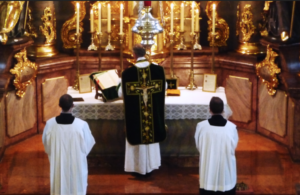 Until the 1960s, Catholics worshipped ad orientem, with priest and congregation facing the East during Mass. Originally Christians celebrated Mass before daybreak Sunday morning with the rising sun serving as a symbol of Christ’s resurrection (testified by Pliny the Younger’s letter to the Emperor Trajan in 112 A.D.).
The common liturgical direction toward the East honored the resurrection and anticipated the Lord’s coming in glory. The oldest Christian church discovered in the world (without a later structure built over it), the house church at Dura-Europos in Syria, dating from the early 200s, was found with its altar touching the wall, facing East. Churches were constructed throughout history in this same fashion, with the altar (whether against the wall or not) oriented toward the East.
Even though there were more exceptions to a strict interpretation of this geographical direction in recent times, priest and people still worshipped facing the Lord together throughout the entire history of Catholic worship. Services facing the people arose during the Reformation, because ministers were focused on speaking to and leading the congregation.
The priest during Catholic worship, however, acts in the person of Christ and leads the members of the Body in a common approach to the Father. The Mass does not focus on the people but seeks to give glory to the Father through Christ and in the Holy Spirit. The Mass is not about us ultimately but about coming into communion with God, worshipping him and being drawn into his life.
Why, then, did we change the direction of Catholic worship to face the people, called ad populum, in contrast to ad orientem? The Second Vatican Council did not mention this change and there is no official liturgical document from the 1960s that directed it. The thought following Vatican II’s constitution on the liturgy, Sacrosanctum Concilium, was that the Mass, which had been celebrated in an oft-inaudible Latin, should be more accessible to the people.
In the experimental period between the constitution in 1963 and the promulgation of the reformed Mass of Pope Paul VI in 1969, the posture of facing the people had already become standard as a kind of spontaneous reaction to the liturgical mood of greater transparency and accessibility.
It is truly amazing that a timeless practice of Christian worship, such as the posture of ad orientem, would be abandoned without the directives of a Council or even any deliberation from authoritative bodies. Over the last 50 years, it has become the absolute norm. At the same time, works such as Pope Benedict XVI’s Spirit of the Liturgy and Uwe Michael Lang’s Turning towards the Lord (both published by Ignatius Press) have pointed to the implications of this change for the way Catholics perceive the meaning of liturgy.
It appears to have become more human-centered rather than God-centered, indicating more of an enclosed circle than a transcendent action that draws us beyond the confines of the church. Inspired by these reflections, some priests have been seeking to recover the ad orientem posture. And not far behind that decision, controversy lurks.
Many congregations panic, thinking that the priest has “turned his back” on them. Others allege a return to a properly abandoned archaic way of doing things: “Father’s taking us back to the past.” Bishops will tell priests to desist, and two prominent archbishops have put restrictions on the practice just this last year in the United States.
Nothing compares, however, to the literal “liturgical war” that has erupted in India within the Syro-Malabar archeparchy of Ernakulam-Angamaly, rejecting the decision of the Church’s governing synod to introduce a uniform celebration of the liturgy with the Liturgy of the Word facing the people and the Liturgy of the Eucharist ad orientem.
While this decree was implemented in the rest of the Syro-Malabar Catholic Church in relative peace, protests from priests and the laity have led to the replacement of an archbishop and violent disruptions of liturgies and meetings in this one archeparchy. No resolution has been reached.
What is so controversial about ad orientem that would lead to restrictions by bishops and violent protests? Although Vatican II said nothing about changing the priest’s direction during Mass, ad orientem has become a symbol of more traditional liturgy, leading some to see it as voicing hesitation or even a rejection of the new liturgy.
If the post-Vatican II liturgical changes sought a greater openness to the world, increased intelligibility, accessibility, and transparency, then the return to ad orientem would seem to constitute an “about face.” For supporters, it would reorder the liturgy toward greater solemnity, transcendence, mystery and a common orientation toward God. Although there is nothing, other than custom, that connects the new order of the Mass intrinsically to celebrating Mass ad populum, some priests and bishops may feel threatened by an older and even ancient custom as challenging the established order.
The Church will have to navigate this important question in the coming decades. Will we return to this ancient practice, despite controversy, or retain the congregation-centered posture that has become the new norm?
The post Why is Ad Orientem (“facing East”) worship so controversial? appeared first on Defenders of the Catholic Faith.
Classic Lion’s Roar; Aslan is Never Far Away – Remember the Deeper Magic
“But what does it all mean?” asked Susan when they were somewhat calmer.
“It means,” said Aslan, “that though the Witch knew the Deep Magic, there is a magic deeper still which she did not know. Her knowledge goes back only to the dawn of Time.
But if she could have looked a little further back, into the stillness and the darkness before Time dawned, she would have read there a different incantation.
She would have known that when a willing victim who had committed no treachery was killed in a traitor’s stead, the Table would crack and Death itself would start working backwards.”
The Lion, The Witch and the Wardrobe
The post Classic Lion’s Roar; Aslan is Never Far Away – Remember the Deeper Magic appeared first on Defenders of the Catholic Faith.
February 10, 2023
Who is the Hunter? Who is the Hunted?
Bible Riddle #1: The hunter was killed, the prey were set free, the water was the lock and the rod was the key. Who was the hunter?
Bible Riddle #2:
It walked on earth,
It talked on earth,
on earth it knew no sin.
Its not in hell,
Its not on earth
And heaven won’t let it in.
(if you give up, visit Psalm 136:10-15 and Numbers 22:28)
The post Who is the Hunter? Who is the Hunted? appeared first on Defenders of the Catholic Faith.
Stephen K. Ray's Blog

- Stephen K. Ray's profile
- 27 followers

