
Stephen K. Ray's Blog, page 66
January 5, 2023
Via Dolorosa, Mass at Tomb, Western Wall, Patriarch
Our last full day, and it went flawlessly. Very early morning start with the Stations of the Cross and Mass at the Church of the Holy Sepulchre.
After a bit of free time, we took a group picture and then went to the Western Wall. We also visited the Patriarch of Jerusalem and had a wonderful time with him before coming back for dinner and farewells. Another great day!
The post Via Dolorosa, Mass at Tomb, Western Wall, Patriarch appeared first on Defenders of the Catholic Faith.


January 4, 2023
Did the Church Ever Support Slavery?
By Steve Weidenkopf September 18, 2017
[image error]Many years ago I attended a conference organized by a national Catholic organization on the topics of marriage and human sexuality. One of the speakers was a professor from Creighton University who, in the middle of his talk on contraception, launched into a long tangent about how the Church had never condemned slavery in the past, which “proved” that the Church had made a mistake, and so perhaps it’s teaching on contraception would be viewed as incorrect in the future (a viewpoint he agreed with).I did not get the opportunity at the conference to talk with this professor about his erroneous statements about the Church and slavery, so I emailed him and we engaged in a courteous exchange in which I pointed him in the direction of several papal condemnations of slavery, which he dismissed out of hand. He ignored the historical record because it did not fit with his agenda of changing Church teaching on contraception.
Sadly, this is not an uncommon tactic by those with an animus against the Church. Many believe, as this professor did, that the Church approved or at least tolerated slavery, especially of Africans and Native Americans in the New World. Scholars argued that the Church was either late in condemning slavery or actively supported it. But like many other historical myths about the Catholic Church, this one does not withstand scrutiny of the historical record.
The myth persists because there were individual Catholics who supported slavery or owned slaves. Scholars with an ax to grind use these examples as “proof” of the Church’s malfeasance without drawing the necessary distinction that what individual Catholics may do does not necessarily reflect the authoritative teaching of the Magisterium.
Moreover, scholars have routinely failed to distinguish between different types of slavery. The Church has consistently and constantly condemned the practice of “unjust servitude,” which usually entailed the enslavement of a certain race or for economic gain. But Western society since ancient times permitted just title servitude; that is, the involuntary servitude imposed on criminals or prisoners of war. Just title servitude was considered permissible as recently as 1949 when the Geneva Convention allowed nations at war to conscript prisoners of war for labor. In this case, the Church has always demanded humane treatment of slaves by their masters and even encouraged their emancipation. The failure to recognize these distinctions between types of servitude has led many scholars to declare falsely that the Church failed to condemn slavery.
The Church was born into a world where slavery was a lynchpin of society. Imperial Rome was built and sustained on the backs of slaves; the complete abolition of slavery in Rome was unthinkable and impractical. Despite societal acceptance of slavery, the Church made no distinction between slaves and freedmen in its membership. The equality of believers in a highly class-stratified society was one of the attractions that the Church held for the people of Rome.
Once Emperor Constantine legalized the Church in A.D. 313, its teachings influenced Roman laws and policies. Church funds were used by Christians to redeem slaves, especially prisoners of war. One former slave even rose to become pope (Callistus I) in the early third century! Still, slavery continued in Europe even after the collapse of imperial rule in the late fifth century, but as the Church’s influence increased the institution of slavery decreased until it was completely eradicated in Christendom.
Unfortunately, slavery returned to European society in the fifteenth century, with the conquest of the Canary Islands and the discovery of the New World. But from 1435 to 1890, a succession of popes condemned the slave trade and slavery in no uncertain terms. The first pope to do so was Eugenius IV (r. 1431-1447), who in his 1435 bull Sicut Dudum demanded that Christians free all enslaved natives of the Canary Islands within fifteen days; failure to do so would incur automatic excommunication. Thus, fifty-seven years before Columbus’s first voyage, the Roman pontiff unequivocally prohibited the enslavement of native peoples.
In 1537, Pope Paul III (r. 1534-1549) issued a bull, Sublimus Dei, which taught that native peoples were not to be enslaved. In 1591, Gregory XIV (r. 1590-1591) promulgated Cum Sicuti, which was addressed to the bishop of Manila in the Philippines and reiterated his predecessors’ prohibitions against enslaving native peoples. In the seventeenth century, Urban VIII (r. 1623-1644) promulgated Commissum Nobis (1639) in support of the Spanish king’s (Philip IV) edict prohibiting enslavement of the Indians in the New World.
The need for cheap and abundant labor in the colonies is what led to the African slave trade. This new form of bondage was also condemned by the popes, beginning with Innocent XI (r. 1676-1689). In 1741, Benedict XIV (r. 1740-1758) issued Immensa Pastorum, which reiterated that the penalty for enslaving Indians was excommunication. In 1839, Gregory XVI (r. 1831-1846) issued In Supremo to condemn the enslavement of Africans. Pope Leo XIII (r. 1878-1903) promulgated two bulls condemning slavery in 1888 and 1890.
Yet despite the many papal condemnations of slavery, European colonists continued to enslave Africans and New World natives until the nineteenth century. Papal denunciations of slavery were so harsh and so frequent that the colonial Spanish instituted a law forbidding the publication of papal documents in the colonies without prior royal approval.
It is ironic that the Church is falsely accused of either supporting slavery or failing to condemn it, when the wholesale enslavement of Christians by Muslims (estimated at one million people), especially the Ottoman Turks from the sixteenth to the eighteen century, is all but ignored. Finally, it is disingenuous to equate the immoral behavior of individual Catholics with official Church teaching. The fact that some Catholics owned slaves or participated in the slave trade is not an indictment of the Church, but rather an illustration that Catholics will sometimes ignore the clear teachings of the Church.
For more information on this and may other common anti-Catholic historical charges, see Steve Weidenkopf’s new book, The Real Story of Catholic History: Answering Twenty Centuries of Anti-Catholic Myths, available late September and available now for pre-order from Catholic Answers Press.
The post Did the Church Ever Support Slavery? appeared first on Defenders of the Catholic Faith.
Gethsemane Mass, Mount of Olives, Mount Zion, Upper Room and more
It’s always nice to start Mass at Gethsemane at 8 AM before any of the crowds begin to visit. Always very moving to be around the rock, which is a sweat drops of blood, and then to partake of his Body and Blood. Then I drive to the top of the Mount of Olives to visit the Church of the Paternoster. Hears where Jesus told his disciples to pray, and from where he ascended into heaven.
We had Shawarma sandwiches on a platform overlooking the city of Jerusalem before heading to Mount Zion. We first visited the Upper Room from which we get four sacraments. since the Church of the Dormition is closed for restoration, our next stop was Saint Peter in Gallicantu, where we saw the place Peter denied Christ, where Jesus was tried by the high priest, and where he was kept in prison over holy Thursday night.
We then stood in line to visit the Holy Sepulchre Tomb and then ate dinner at the Cheese & Wine Restaurant on the roof of the Notre Dame overlooking the city of Jerusalem.
The post Gethsemane Mass, Mount of Olives, Mount Zion, Upper Room and more appeared first on Defenders of the Catholic Faith.
January 3, 2023
Responding to an Eastern Orthodox Christian who challenged me about the Papacy on Catholic Answers Live😂
When I was last on Catholic Answers Live last week Constantine Regas called in to defend the Eastern Orthodox position against the Catholic Church’s teaching on Peter and the Primacy of Rome. Constantine’s words are in BLUE and my responses are in BLACK. I appreciated Constantine’s irenic tone and honest demeanor.
CONSTANTINE REGAS (CR): I called the “Catholic Answers Live” show last Monday to clarify the Orthodox position on authority in the Church.
STEVE RAY (SR): I remember Constantine. And the studio cut us off before we got very far in our conversation.
CR: My exact question was that, if Christ gave St Peter the Keys to the Kingdom, why isn’t the current Bishop of Antioch the head of the universal Church since St Peter was the founding bishop of that city several years before he became the bishop of Rome? Part of your response was that he was also the first bishop of Jerusalem. The Apostle James was Jerusalem’s first bishop.
SR: Jesus promised him the keys to Peter in Matthew 16:19. The Royal Steward steps up to his position of authority when appointed, especially to fill in for the King in his absence. Once Jesus ascended into heaven and the Holy Spirit fell Peter picked up those keys and exercised his authority on the day of Pentecost. From that point on we hear no words of the other Eleven. Except for Paul, none of the others have any recorded words in Acts. Peter is the Bishop, the Pope and the visible Head of the Church from that point.
In his massive history of the Church, Warren Carroll gives a very cogent outline of Peter’s movements. You can read this list here as I provided in my book Upon this Rock.
30 AD Death and Resurrection of Jesus
30-37 Peter head of the Church in Jerusalem
38-39 Peter’s Missionary journeys along Mediterranean Coast and Samaria
40-41 Peter in Antioch
42 Imprisonment in Jerusalem and departure to “another place.’
42-49 First sojourn to Rome
49 Expulsion from Rome by edict of Claudius
49-50 In Jerusalem for the Apostolic Council (Acts 15)
50–54 In Antioch, Bithynia, Pontus, Asia, and Cappadocia (or some of them)
54–57 Second sojourn in Rome; Gospel of Mark written under Peter’s direction
57–62 In Bithynia, Pontus, and Cappadocia (or some of them); Mark in Alexandria, Egypt
62–67 Third sojourn in Rome; canonical Epistles of Peter; Mark with Peter in Rome
67 Martyrdom in Rome and burial near the Necropolis at the Vatican
You say that the Apostle James was the first bishop of Jerusalem. If you referring to James the son of Zebedee, you are incorrect because he was killed by the sword about 42 AD as recorded in Acts 12:2. The James that became bishop of Jerusalem was James “the Lord’s brother” (Gal 1:19). He was referred to as James the Righteous. He became bishop of Jerusalem after Peter’s departure for Antioch around 40-41.
Doctor of the Church, St. John Chrysostom (an Eastern bishop) says, “‘And having spoken thus,’ the Evangelist declared, ‘he said, “Follow me.” ’ In these words He was once again referring indirectly to His solicitude for Peter and to the fact that He was on terms of intimate friendship with him. And, if someone should say: ‘How is it, then, that it was James who received the bishop’s chair in Jerusalem?’ I would make this reply: that Christ appointed this man [Peter], not merely to a chair, but as teacher of the world.” (John Chrysostom, Commentary on Saint John the Apostle and Evangelist: Homilies 48–88, trans. Thomas Aquinas Goggin, vol. 41, The Fathers of the Church (Washington, DC: The Catholic University of America Press, 1959), 473.)
Peter was the leader of Jerusalem for 10 years before going to Antioch for 2 years then ending up as the leader of the Church in Rome about 42 AD.
CR: The point I was making is that primacy of honor (not authority which rests with Christ alone) was given to the bishop of Rome because it was capital of the empire.
SR: Unfortunately, you are incorrect again. Never was the phrase “primacy of honor” used until after the Eastern churches broke away from Rome, took a new name (Orthodox) and used this phrase as a justification for rejecting the honorary and jurisdictional authority of Rome. One only needs to read history to find the Eastern churches in heresy for much of their existence and always depending on Rome to establish the truth of the faith and to appoint orthodox bishops in Eastern churches.
Rome was established as the See of Peter because Peter chose it to be. Jerusalem had become a backwater city after the destruction of Jerusalem by Titus and the 10th Legion. Yes, Rome was the capital of the Empire and the hub of the wheel (“all roads lead to Rome”). Peter and Paul established the Church of Rome by their blood and it was by their appointment, the See of Peter and the Head of the Church.
Of course, Jesus is the head of the Church. But he left his royal steward with the keys of the kingdom as a visible head of the Church and a source of unity. There is no contradiction here.
CR: The second canon of the Second Ecumenical Council A.D. 381 explains this clearly. After the capital was moved to Constantinople, primacy of honor became shared. Feel free to investigate.
SR: I see you do not provide the quote from the source you cite. It is easy to say a council said this or that, but proving it is quite another thing. And claiming the primacy was “shared” is an eastern idea and refuted by the facts of the first 1000 years of the Church. This I have made abundantly clear in my book Upon this Rock.
Yet in that very Council, in the beginning of the very next Cano it contradicts tour claim. Here is the except from that Canon of that Council:
Canon III
The Bishop of Constantinople, however, shall have the prerogative of honour after the Bishop of Rome; because Constantinople is New Rome.
Ancient Epitome of Canon III: The bishop of Constantinople is to be honoured next after the bishop of Rome.
CR: I also noticed that the above comment (among others) was edited out of yesterday’s rebroadcast.
SR: I am not aware of that, nor is that under my care. The sound techs at Catholic Answers Live handle what is posted in the podcast.
CR: One last point if I may: All the Eastern bishops can trace their authority back to one of the Apostles. The Vatican recognizes this and therefore acknowledges the validity of the Orthodox priesthood and sacraments.
SR: We have no argument here. That is why we consider the eastern churches to be legitimate churches. We don’t consider Protestants to be churches since they have lost the apostolic succession, which the Eastern Orthodox churches have maintained. However, that has nothing to do with the fact that Rome has the primacy both in honor and in jurisdiction. The Eastern churches are in schism and we all hope that one day there will again be unity.
St. Pope John Paul II said it best when he stated his desire that the Western and Eastern lungs be breathing together again in one united Body of Christ.
If you are interested in my thorough study on all of these matters, in which I interact a great deal with Orthodox theologians, I suggest you get my book referenced below.
I appreciate your irenic tone and honest discussion. God bless you my brother in Christ!
(Stephen K. Ray, Upon This Rock: St. Peter and the Primacy of Rome in Scripture and the Early Church, Modern Apologetics Library (San Francisco: Ignatius Press, 1999), 67.)
The post Responding to an Eastern Orthodox Christian who challenged me about the Papacy on Catholic Answers Live😂 appeared first on Defenders of the Catholic Faith.
The Fun Day! Jordan River, Jericho, Dead Sea, Camels and more
On this day people have a choice for a free day for the optional tour. The optional tour is always a very fun day, where we start at the Israel museum, and then go down the mountains of Jerusalem to the lowest place on the face of the earth in the Jordan Valley. We stop at the Jordan River to renew baptismal vows and pray the first luminous mystery. Everyone gets their feet wet.
Then to Jericho for lunch, and to see the Mount of Temptation and a sycamore tree (remember Zacchaeus? From there we shopped at an interesting store in Jericho that sells Hebron glass and other items that people really enjoy, including the Dead Sea skin cream products.
Then to swimming in the Dead Sea, which is always everyone’s favorite and then the next favorite is the camel rides before returning to Jerusalem for dinner, a free evening and bed at the Notre Dame.
The post The Fun Day! Jordan River, Jericho, Dead Sea, Camels and more appeared first on Defenders of the Catholic Faith.
January 2, 2023
Dancing in Bethlehem! Fun fun fun!
Dinner and dancing in Bethlehem with the local young Christians.
The post Dancing in Bethlehem! Fun fun fun! appeared first on Defenders of the Catholic Faith.
Final Judgment based on “Faith Alone’?
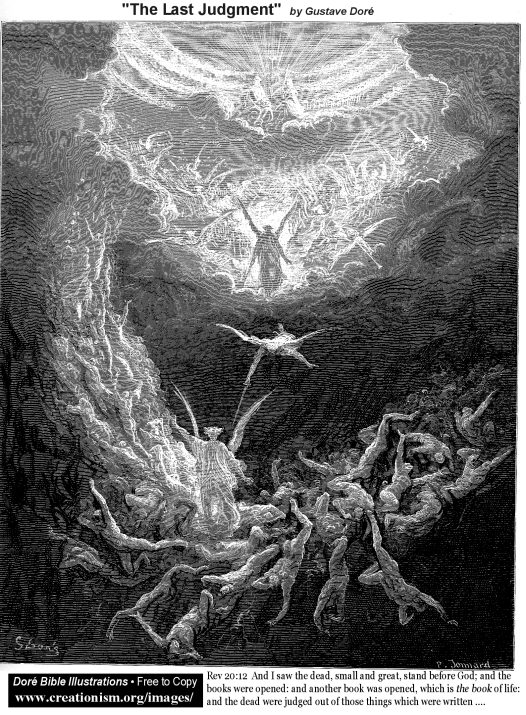
Final Judgment?
Dear Baptist Friend Jerry :
I had no intention of writing you again this soon but after having dinner with your brother — and seeing a copy of the silly Protestant booklet you gave him entitled Studies In Contrasts: The Doctrine of Salvation (by Herb Vander Lugt), I thought I’d drop you a short note.
I was not surprised, but I was again disappointed in the obvious dishonesty (or ignorance) of the author and the unfounded assumptions of the booklet — and your gullibility in believing this stuff. I decided to write a short note to ask you a few questions to see if you agree with me. . . .
For the rest of the letter, click here.
For many more such articles and letters, click here.
The post Final Judgment based on “Faith Alone’? appeared first on Defenders of the Catholic Faith.
All Day Bethlehem!
The bells of St. Xavier Church woke up Jerusalem this morning. We headed off down the Hebron Road to Bethlehem, the same road traveled by the patriarchs and prophets, kings in the Holy Family.
We entered through the wall into Bethlehem and took our group to the beautiful Olivewood store for the purchase of religious items. Fun was had by all including listening to the Our Father sung in Aramaic, the language of Jesus.
Then we went to Mass in a cave at Shepherds Field where the Angels announced the good news on that first Christmas Eve. From there we had Shawarma‘s sandwiches for lunch and visited the Church of the Nativity to touch the birthplace of Christ.
Following that we went to dinner at the Grotto Restaurant and had the Passover lamb and everyone danced. Dancing on separate video.
The post All Day Bethlehem! appeared first on Defenders of the Catholic Faith.
January 1, 2023
Seven Things Every Kid Needs to Hear
Thanks to my friend Patrick Madrid. Might I suggest you plan to tell your kids all of these things over the next week or two?

The post Seven Things Every Kid Needs to Hear appeared first on Defenders of the Catholic Faith.
Stephen K. Ray's Blog

- Stephen K. Ray's profile
- 27 followers

