Gretchen Rubin's Blog, page 31
January 14, 2021
Claire Messud: “I Do a Lot of Reading for Work But I Save for Bedtime the Books I Want to Read for Myself.”
Interview: Claire Messud
Claire Messud is the author of six novels, including The Emperor's Children (Amazon, Bookshop), The Woman Upstairs (Amazon, Bookshop), and The Burning Girl (Amazon, Bookshop).
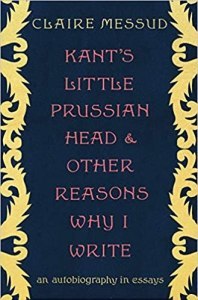
I recently read her latest book, Kant's Little Prussian Head and Other Reasons Why I Write: An Autobiography in Essays (Amazon, Bookshop). "A glimpse into a beloved novelist’s inner world, shaped by family, art, and literature." I love that subtitle; I love the idea of an autobiography told in essays.
I couldn't wait to talk to Claire about happiness, habits, and creativity.
Gretchen: What’s a simple activity or habit that consistently makes you happier, healthier, more productive, or more creative?
Claire: I see on your website, Gretchen, that your challenge for 2021 is 21 minutes of reading a day – and reading is, in fact, the habit that makes me happy. At bedtime every night, without fail, I do two things: I write just a few lines in my 5-year diary (I have a separate notebook for longer entries, in which I write irregularly) and I read about 15 or 20 minutes entirely for pleasure. I do a lot of reading for work – teaching and reviewing – but I save for bedtime each night the books that I want to read for myself.
What’s something you know now about happiness that you didn’t know when you were 18 years old?
When I was young, I didn’t believe in happy endings; I thought they were for fairy tales. But life has taught me that even in times of hardship and sorrow, there is beauty and joy – that’s grace, I think. And knowing that, I see beauty and joy and wonder all around me, all the time. A quote I love from one of my favorite authors, Albert Camus, expresses my experience: “In the midst of winter, I found there was, within me, an invincible summer.”
Have you ever managed to gain a challenging healthy habit – or to break an unhealthy habit? If so, how did you do it?
I by no means stick to it religiously, but I did learn the healthy habit of cutting out sweets, which (alas) I adore – thanks to Susan Peirce Thompson’s guidelines for ‘Bright Lines Eating’. It makes a huge difference to set out the evening before what you’ll eat the following day, and simply to stick to what you’ve planned. I’m an inveterate list-maker, so I already did this in other areas of life; but have found it very helpful in relation to food.
Would you describe yourself as an Upholder, a Questioner, a Rebel, or an Obliger?
Obliger!
Does anything tend to interfere with your ability to keep your healthy habits or your happiness? (e.g. travel, parties, email)
Yes, my commitments to other people, for one thing – family, colleagues, work responsibilities. And dastardly email too.
Is there a particular motto or saying that you’ve found very helpful? (e.g., I remind myself to “Be Gretchen.”)
Perhaps unexpectedly, my high school motto has been a guide all my life: “Dare to Be True." A good reminder. And the other adage I live by is a quotation from the medieval mystic nun, Julian of Norwich: “All shall be well and all shall be well and all manner of things shall be well.”
Has a book ever changed your life – if so, which one and why?
So many books have changed my life! Books as much as people have shaped my life, in fact. Just to pick one seems impossible. For starters, each of the books I write about in my book of essays – including Jane Bowles’ Two Serious Ladies (Amazon, Bookshop); or Kazuo Ishiguro’s Never Let Me Go (Amazon, Bookshop); or Magda Szabo’s The Door (Amazon, Bookshop) – changed my life; the essays try to explain why.
In your field, is there a common misconception that you’d like to correct?
Yes: it’s the idea that fiction should necessarily tell morally uplifting or exemplary stories. Thrillingly, fiction is an art form through which we can explore human experience in all its complexity and diversity. The subject of fiction is simply this: what it’s like to be alive on the planet; as George Eliot put it, it’s ‘the nearest thing to life’. And infinite stories have yet to be told.
Author photo by Ulf Anderson.


January 7, 2021
Tom Vanderbilt: My Fellow Beginners “Were Using This Process to…Expand Their Sense of Self…They Were Finding Magic in Small Acts of Reinvention.”
Interview: Tom Vanderbilt.
Tom Vanderbilt has written for many publications on the subjects of design, technology, science, and culture. He is a contributing editor of Wired (U.K.), Outside, and Artforum.
He's the author of a book that I love and have often given as a gift, Traffic: Why We Drive the Way We Do (and What It Says About Us) (Amazon, Bookshop), and also Survival City: Adventures Among the Ruins of Atomic America (Amazon, Bookshop).
A few years ago, in episode 143 of the Happier with Gretchen Rubin podcast, Elizabeth and I interviewed Tom Vanderbilt with his wife Jancee Dunn, because she had a new book called How Not To Hate Your Husband After Kids (Amazon, Bookshop). If you want to listen to that great interview, it's here.
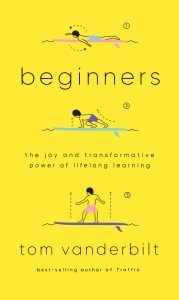
His new book is Beginners: The Joy and Transformative Power of Lifelong Learning (Amazon, Bookshop).
I couldn't wait to talk to Tom about happiness, habits, and human nature. And the joy of being a beginner.
Gretchen: What’s a simple activity or habit that consistently makes you happier, healthier, more productive, or more creative?
Tom: Singing.
Like many of us, I was always a sort of random, mindless singer — in the car, in the shower. But I decided, for Beginners, to really go about trying to learn it in a purposeful way. Of all the skills I tried to tackle, it’s my favorite, for many reasons. You can do it anywhere, you don’t need any extra equipment, and it’s a fascinating way to explore your own body and psyche. I’m convinced that humans were literally born to sing.
And, no matter what you think of your ability, singing just makes you feel good. It releases uplifting endorphins, tickles the all-important vagus nerve, modulates your breathing and lowers your blood pressure. Singing alone is great, but singing with people is really the special sauce — you get all those benefits I already listed, plus the positive buzz of literally working in harmony with others.
What’s something you know now about happiness that you didn’t know when you were 18 years old?
That I could actually be so happy at 52. Back then, I think I thought it was pretty much a downhill slope.
You’ve done fascinating research. What has surprised or intrigued you — or your readers — most?
I was intrigued by the research showing what learning new things, at almost any age, does for you cognitively. But what really struck me, as I met fellow beginners in the various pursuits I was trying to learn, was how transformative these activities seemed to be for them. They were using this process to try and help redefine or expand their sense of self, or looking to shed some painful past episode and forge a new path. They were finding magic in small acts of reinvention. They were letting their guards down in a big way, reveling in that all-important psychological trait known as “openness to experience.”
Have you ever managed to gain a challenging healthy habit — or to break an unhealthy habit? If so, how did you do it?
I like the advice from W. Timothy Gallwey in The Inner Game of Tennis (Amazon, Bookshop). “There is no need to fight old habits,” he says. “Start new ones instead.”
I think that moments of personal disruption — a new job, a new town — are important apertures in which to seek change. During the pandemic lockdown, for instance, I picked up yoga, something I’d always thought I was not interested in — in part because I was looking for something else that was physical that I could do inside. I now really find it beneficial, but without those changed circumstances, I’m not sure I would have turned to it. It took the interruption of my usual habits to form this new habit.
Would you describe yourself as an Upholder, a Questioner, a Rebel, or an Obliger?
According to the quiz, I’m a Rebel! I’d be a bit leery of describing myself that way — at least in terms of my dress or outward appearance — but it certainly makes sense in some ways. Anyone who quits their regular job for the no-safety-net insecurities of freelance writing, for example, as I did three decades ago, is already living somewhat outside the status quo.
Does anything tend to interfere with your ability to keep your healthy habits or your happiness? (e.g. travel, parties, email)
Writers, I think, are creatures of habit. When it’s just you and the screen, you guard that relationship zealously. I need to be at my desk, at 8 a.m., with a cup of coffee and some instrumental jazz in the background. That’s when all feels right with the world, and I can flow-state all the way until lunch. If I need to deal with some plumbing emergency at 8:34 a.m., for example, this totally throws me for the day. I’ll usually do administrative tasks — or go down a YouTube rabbit hole — the rest of the day and just start over the following morning.
Have you ever been hit by a lightning bolt, where you made a major change very suddenly, as a consequence of reading a book, a conversation with a friend, a milestone birthday, a health scare, etc.?
About ten years ago, I was working on a story for Outside about why cyclists and drivers sometimes seemed to have trouble sharing the road. For the story, I shadowed a guy who had what I thought was this insane bike commute — three hours from Westchester County to New York City (he didn’t do it every day).
He was more than a decade older than me, but on that ride, he crushed me. As I struggled to keep up, I thought: Wow, I want to be that guy when I get to his age. But I wasn’t going to get there the way I was living — I was probably going backwards. That day basically turned me into a hardcore cyclist.
You can call it an early midlife crisis, but there was something else going on. My daughter, our first child, had just been born. As a somewhat older parent, I realized I was going to have to step up my game, fitness-wise, to try and ensure I’d be there for her over the long haul. And in the end, it wasn’t only about fitness. Through cycling I’ve met some incredible people, had some amazing adventures, and in general have just had a more positive, forward-looking outlook. Training hard for some grueling event can make life’s daily challenges seem a bit easier.
Is there a particular motto or saying that you’ve found very helpful? (e.g., I remind myself to “Be Gretchen.”)
I’ve always liked the philosopher John Stuart Mill’s notion of how to achieve happiness: “Those only are happy (I thought) who have their minds fixed on some object other than their own happiness; on the happiness of others, on the improvement of mankind, even on some art or pursuit, followed not as a means, but as itself an ideal end.”
This was one of my guiding principles in Beginners: Don’t fixate on some new pursuit that you’re trying as a would-be passion or thing that it destined to make you happy; it may or may not be, but when you struggle with learning it, as you probably will, you might start to hate it. Just try things, and give yourself permission to be bad at those things, or to sometimes not even like them. As you plunge in, and stop thinking about it, you will likely, as Mill writes, “inhale happiness with the air you breathe.” In my case, with singing, that was a quite literal feeling.
[Gretchen: To hear my take on John Stuart Mill, read here.]

December 31, 2020
For New Year’s Resolutions, Instead of Focusing on What Works for You—Think About What Doesn’t Work For You.
Many people make New Year's resolutions, and many people get discouraged when they fail to keep their New Year's resolutions.
We often get advice about what we should try—but it's also useful to think about what we should not try.
We're all different, and different strategies work for different people. It's helpful to be able to identify, and then eliminate from consideration, strategies that probably won't work for us.
Often, we try to do something the "best" way, or the "right" way, or try to force ourselves to adopt a system that works well for someone else. But there's no magical, one-size-fits-all-solution for good habits or happiness.
Consider these points as they pertain to you:
The Four Tendencies
Consider my Four Tendencies personality profile, and whether you're an Upholder, Questioner, Obliger, or Rebel. (Don't know your Tendency? Take the free, quick quiz here—more than 3.2 million people have taken it!)
The Four Tendencies is a framework I developed to help you identify your personality profile, based on how you respond to expectations. Knowing your Tendency reveals how to make your life better (and other people’s lives better, too).)
Our Tendency shapes every aspect of our behavior, so understanding this framework lets us make better decisions, meet deadlines, suffer less stress and burnout, and engage more effectively. The Four Tendencies explain why we act and why we don’t act.
What tends NOT to work for each Tendency?
Upholders have less success when it's not clear what's expected, or when the rules are ambiguous. They can get anxious if they think they might be doing something "wrong" or if they're entering a situation where they don't know how to behave properly.
Questioners have less success when they don't understand exactly how or why they're doing something in a particular way. If they're not utterly convinced by an approach to healthy eating, say, or a fitness regimen, they can stall out. They need to think, "I'm following the most efficient, well-justified course of action, and I've customized it exactly to fit my needs."
Obligers need outer accountability. It's that simple. Not motivation, self-care, priorities, clarity, or purpose. They will not succeed if they do not have outer accountability.
Rebels have less success when they feel trapped, controlled, or chained. They tend to resist to-do lists, scheduling, oversight, check-ins, and any situation where someone is telling them what to do. There are always exceptions, because Rebels can do anything they want to do, but often those factors hurt their chances of achieving their aims.
For more ideas about using your Tendency to help you keep a New Year's resolution, read here.
Abstainer vs. Moderator
Abstainers tend to fail when they try to indulge a little in a strong temptation. One bite, one sip—then they want more, more, more. They do better when they avoid a temptation altogether. (I'm an abstainer, and I can have no cookies, or five cookies—but I can't have just one cookie.)
Moderators tend to fail when they try to avoid a temptation altogether, or when they follow all-or-nothing rules. They do better when they indulge a little bit, or sometimes. They have a few french fries, or half a brownie.
Owl vs. Lark
Owls tend to struggle when they try to tackle a challenge first thing in the morning. They're not at their more productive, energetic, and creative until later in the day.
Larks tend to struggle if they try to tackle a challenge in the evening. Usually, the later in the day it gets, the tougher time they'll have.
Novelty-lovers vs. Familiarity-lovers
Novelty-lovers tend to struggle when they feel stuck in a rut or bored by a routine that never changes. They do better when they mix things up, try new challenges, or explore new places; the novelty keeps them engaged and energetic.
Familiarity-lovers tend to struggle when they have to adapt too much to new situations, people, or places. They do better when they know what to expect and tackle a challenge in a familiar way in comfortable surroundings.
As you think back on your own experiences with good habits, bad habits, and New Year's resolutions, what hasn't worked for you—and why? Because of course, when we figure out what doesn't work, it's much easier to figure out what to try.
If you'd like to hear me tell the famous story of the Bed of Procrustes, and why it's relevant to New Year's resolutions, listen here.
As you're thinking about possible resolutions, reflect on your past. Looking back, was there a time when you had trouble keeping this resolution? Or when you did manage to keep it? The past holds important clues for the present—about how you might set yourself up for success.
We can all achieve our aims for ourselves, but we all must do it in the way that's right for us.

What I Read This Month: December 2020
For three years now, every Monday morning, I've posted a photo on my Facebook Page of the books I finished during the week, with the tag #GretchenRubinReads.
I get a big kick out of this weekly habit—it’s a way to shine a spotlight on all the terrific books that I’ve read.
As I write about in my book Better Than Before, for most of my life, my habit was to finish any book that I started. Finally, I realized that this approach meant that I spent time reading books that bored me, and I had less time for books that I truly enjoy. These days, I put down a book if I don’t feel like finishing it, so I have more time to do my favorite kinds of reading.
This habit means that if you see a book included in the #GretchenRubinReads photo, you know that I liked it well enough to read to the last page.
When I read books related to an area I’m researching for a writing project, I carefully read and take notes on the parts that interest me, and skim the parts that don’t. So I may list a book that I’ve partly read and partly skimmed. For me, that still “counts.”
If you’d like more ideas for habits to help you get more reading done, read this post or download my "Reading Better Than Before" worksheet.
You can also follow me on Goodreads where I track books I’ve read.
If you want to see what I read last month, the full list is here.
And join us for this year's new challenge: Read for 21 minutes every day in 2021!
The year of 2020 was a tough year, so as a treat, this 2021 challenge is a delightful challenge. If you read for 21 minutes per day for 365 days, that's 7,665 minutes, or almost 128 hours of reading. You can read a lot of books in 128 hours!
A surprising number of people, I've found, want to read more. But for various reasons, they struggle to get that reading done. #Read21in21 is meant to help form and strengthen the habit of reading.
December 2020 Reading:
Bad Feminist by Roxane Gay (Amazon, Bookshop) -- I really admire the work of Roxane Gay so am working my way through her writing. Great essays.
Men We Reaped by Jesmyn Ward (Amazon, Bookshop) -- Heartland Prize for non-fiction. Powerful, haunting memoir of a family and a neighborhood.
Memoirs of Hadrian by Marguerite Yourcenar (Amazon, Bookshop) -- This is the third time I've read this brilliant, thought-provoking novel; I love it so much. But it's funny: I love it, but I'm surprised that so many other people have loved it too. It's not the kind of book that I'd expect many people to want to read.
Winter by Ali Smith (Amazon, Bookshop) -- One of Smith's Seasonal Quartet novels. A family comes together in a large house in Cornwall for Christmas.
Brown White Black: An American Family at the Intersection of Race, Gender, Sexuality, and Religion by Nishta J. Mehra (Amazon, Bookshop) -- Fascinating essays about many complex subjects through the lens of one person's experience.
King and the Dragonflies by Kacen Callender (Amazon, Bookshop) -- National Book Award for Young People's Literature. Moving novel about a boy, his family, and the people around them.
Fun Home: A Family Tragicomic by Alison Bechdel (Amazon, Bookshop) -- Stonewall Book Award, Lambda Literary Award, GLAAD Media Award. I loved this book. I've been meaning to read it for years.
Kant's Little Prussian Head and Other Reasons Why I Write: An Autobiography in Essays by Claire Messud (Amazon, Bookshop) -- Very thought-provoking essays from the transcendent to the very personal (dogs).
Even The Stars Look Lonesome by Maya Angelou (Amazon, Bookshop) -- this book is described as a collection of "wisdom essays," which is a satisfyingly cogent way to characterize it. I do love a wisdom essay.
The Botany of Desire: A Plant's-Eye View of the World by Michael Pollan (Amazon, Bookshop) -- Borders Original Voices Award. I love the work of Michael Pollan, and his accounts of the apple, the rose, marijuana, and the potato are fascinating. I see the world in a new way.
Here for It; Or, How to Save Your Soul in America: Essays by R. Eric Thomas (Amazon, Bookshop) -- Once I picked up this book, I couldn't put it down. Thoughtful, funny, very compelling.
Perennial Seller: The Art of Making and Marketing Work That Lasts by Ryan Holiday (Amazon, Bookshop) -- someone told me that this was one of the best books they'd ever read about how to engage with an audience, so I had to read it. Practical, very useful. I did several of the exercises to help clarify my thinking about my next book project.
Are You My Mother? A Comic Drama by Alison Bechdel (Amazon, Bookshop) -- I loved Bechdel's Fun Home (see above), which focuses on her relationship with her father, so I couldn't wait to read this graphic novel, which focuses on her relationship with her mother.

December 29, 2020
Want to Master an Important Habit in 2021? Here’s an Important Clue About How to Be Successful.
2021 is just around the corner. Maybe you're planning your New Year's resolutions, maybe you're making a "21 for 21" list, maybe you're identifying your one-word theme for the year. (I'm doing all these things, by the way.)
Or maybe you're starting to think about changing an important habit. That's a worthy goal.
Habits are the invisible architecture of daily life. We repeat about 40 percent of our behavior almost daily, so our habits shape our existence, and our future. If we change our habits, we change our lives; if we cultivate habits that are good for us, we're far more likely to be happier, healthier, more productive, and more creative.
To change a habit, it's important to set ourselves up for success. I think that often, the reason that people fail to master a habit is because they're using an approach that, sure, works well for other people, but not for them.
Someone who's an abstainer tries to be a moderator.
Someone who's an abundance-lover tries to assume the habits of a simplicity-lover.
Someone who's a night person tries to wake up with the morning people.
There's no magic, one-size-fits-all solution for mastering habits. You're far more likely to succeed when you change a habit in a way that's right for you.
Which leads to the question...how do you know what's right for you?
Here's an important, helpful clue: ask yourself, "Is there a time in the past when I succeeded with this habit?" You can learn a lot from your earlier successes.
When I was writing Better Than Before, my book about habit change, I realized that solutions from the past often suggest solutions for the present.
For instance, I have a friend who, for eight years, went walking almost every morning with a neighbor. Then the neighbor moved away, and my friend stopped walking. The lesson: she needed accountability. (The Strategy of Accountability)
Another friend, a longtime smoker, kicked the habit the day he found out that he and his wife had a baby on the way. He thought, "I'm a father now. No more smoking." The lesson: his behavior changed when his identity changed. (The Strategy of Identity)
Another friend had to pack up her elderly parents' belongings so they could move to a smaller place. To occupy the hours as she worked, she got the audio-book of Stephen King's The Stand (Amazon, Bookshop). She was so riveted by the book that she finished the project days ahead of schedule. The lesson: she should pair an activity that she had to do (like packing) with an activity she wanted to do (like listening to an audio-book). (The Strategy of Pairing)
So ask yourself, "When did I do well in the past?" Was there a time when you ate healthfully, exercised regularly, read a lot, played the guitar, saw friends, spent time in nature? What's different now, and what's the same?
As you reflect on your life, and to your past successes, you may find it difficult to tease out the aspect of a particular situation made it easier—or harder—to master a habit. If you're having trouble pinpointing the key element, consider my list of the 21 Strategies for Habit Change.
Now, you may think, "Twenty-one strategies! That's overwhelming." Yes, 21 may seem like a lot, but it's actually helpful, because you can see which ones work for you, and which ones don't. For instance, if you're a Rebel, you're not likely to use the Strategy of Scheduling, but the Strategy of Identity would work well. Or if you're an Obliger, the Strategy of Clarity will be much less important than Accountability. It's important to know ourselves.
In fact, the first two Strategies relate to Self-Knowledge...
Self-Knowledge
The Four Tendencies: To change your habits, you have to know yourself, and in particular, your Tendency. (Don't know if you're an Upholder, Questioner, Obliger, or Rebel? Take the free, quick quiz here. More than 3.2 million people have taken the quiz.)
Distinctions: Knowing yourself is so important that it's not enough to know your Tendency, you must also recognize your Distinctions. (For instance, are you a Marathoner or Sprinter? Under-buyer or over-buyer? Finisher or Opener? Novelty-lover or Familiarity-lover?)
Pillars of Habits
Monitoring: You manage what you monitor, so find a way to monitor whatever matters.
Foundation: First things first, so begin by making sure to get enough sleep, eat and drink right, move, and un-clutter.
Scheduling: If it’s on the calendar, it happens.
Accountability: You do better when you know someone's watching—even if you're the one doing the watching.
The Best Time to Begin
First Steps: It's enough to begin; if you're ready, begin now.
Clean Slate: Temporary becomes permanent, so start the way you want to continue.
Lightning Bolt: A single idea can change the habits of a lifetime, overnight. (Enormously powerful, but hard to invoke on command.)
Desire, Ease, and Excuses
Abstaining: For some of us, moderation is too tough; it's easier to give up something altogether. (Works very well for some people, and not at all for others.)
Convenience: Make it easy to do right and hard to go wrong.
Inconvenience: Change your surroundings, not yourself.
Safeguards: Plan to fail.
Loophole-Spotting: Don't kid yourself. (The funniest strategy. I love collecting loopholes.)
Distraction: Wait fifteen minutes.
Reward: The reward for a good habit is the good habit, and that's the reward to give yourself. (The most misunderstood strategy.)
Treats: It's easier to ask more of yourself when you're giving more to yourself. (The most fun strategy.)
Pairing: Only do X when you're doing Y. (Simple but surprisingly effective.)
Unique, Just like Everyone Else
Clarity: The clearer you are about what you want, the more likely you are to stick to your habits.
Identity: Your habits reflect your identity, so if you struggle to change a particular habit, re-think your identity.
Other People: Your habits rub off on other people, and their habits rub off on you.
So as you think about what you'd like to achieve in the future, think back to what you achieved in the past—and try to recreate the circumstances that allowed you to succeed.
If you've tried and failed in the past, if you've broken countless New Year's resolutions, don't beat yourself up! Don't get discouraged. There are so many ways that we can achieve our aims, and you may be trying strategies that just don't work for you.
We can all achieve our aims, but we all need to do so in the way that's right for us.
What's an example of when you did a good job of mastering your habits in the past? What clues does this memory hold for you now?
Want my free Checklist for Habit Change? Or my Habits Manifesto? They're here.
Want to join a community to help you take next steps toward your aims? Join my online video course The Happiness Project Experience and build a happier, healthier life with support and accountability from other course participants.

December 22, 2020
Join Us to Read for 21 Minutes Every Day in 2021: #Read21in21!
I think a lot about human nature, and how we can be happier, healthier, more productive, and more creative—which has led me to think a lot about habits.
Habits are the invisible architecture of everyday life. If we have habits that are good for us, we're far more likely to be happier; if we have habits that are bad for us, we'll find it tougher to be happy.
Last year, on the Happier podcast, Elizabeth and I challenged ourselves and listeners to "Walk 20 in 20," i.e., to walk for 20 minutes every day in 2020. Research shows why this habit would add so much to our happiness and health.
Listeners have told us about the extraordinary benefits they've received from this daily walk. It's exciting to hear how much good can come from this simple, consistent act.
So for 2021, we decided to propose a new habit to boost our happiness.
Drum roll for the 2021 challenge...Read for 21 minutes every day in 2021.
The year of 2020 was a tough year, so as a treat, this 2021 challenge is a delightful challenge!
Research shows that reading is good for us: it benefits mental health, sharpens the brain, makes us more empathetic, helps us learn, increases our intolerance for uncertainty (particularly useful these days).
But to be honest, while I'm gratified to know that my favorite activity is good for me, I don't really care. I read because it's fun. It's more fun than practically anything else.
If you read for 21 minutes per day for 365 days, that's 7,665 minutes, or almost 128 hours of reading. You can read a lot of books in 128 hours!
A surprising number of people, I've found, want to read more. But for various reasons, they struggle to get that reading done. #Read21in21 is meant to help form and strengthen the habit of reading.
As you think about this challenge, my book Better Than Before might be useful. It explores the 21 strategies we can use to build our habits. Sometimes people tell me, "Twenty-one is too many! Give me the three big ones!" But different strategies work for different people, so consider the menu of options and choose the strategies that work for you.
For instance, I describe how to use the Strategy of Pairing, the Strategy of Convenience, the Strategy of Scheduling, the Strategy of Accountability, the Strategy of Monitoring, and the Strategy of Identity.
To make habit of reading easier, I've created a one-page “Checklist for Habit Change” that lists all the strategies that you can use to create this habit. You very well might use many strategies in combination—which is easier than it sounds.
To download the checklist, visit this page and scroll down to "Better Than Before."
You may also want to take a look at my one-pager "Tips for Reading Better Than Before," which you can find on the same page.
A word of warning! The Strategy of Pairing (see above) is very powerful. Don't launch a negative pairing by thinking, "Oh, I'll grab a few cookies to eat while I read." Enjoy the cookies if you want, but don't tie them to reading. You might very well pair reading and snacking in a way that wouldn't be helpful. If you want a little taste of something, try a cup of tea or coffee. Or my favorite, a Cinnamon Icebreaker Mint.
If you're struggling to form a habit, and to learn which of the 21 strategies will work best for you, my book The Four Tendencies can help you figure out the approach that's most likely to work. If you don't yet know if you're an Upholder, Questioner, Obliger, or Rebel, take the quick, free quiz here. (More than 3.2 million people have taken this quiz!)
For instance, if you're an Obliger, you might benefit from joining a book group, to get that all-important accountability. Or you might tell your children that you're going to read the books that they're reading for school. And of course, joining this challenge is itself a way to get accountability.
If you're discouraged because you've tried and failed in the past to master an important habit, don't worry. There's nothing wrong with you. You probably just set things up in a way that doesn't suit you. Answers and solutions exist! It turns out that it's not that hard to change a habit, when you do it in the way that's right for you.
You can also join my free app, the Better app—I've set up a reading group within the app. You can share tips, gain enthusiasm, and get accountability from other people who are doing #Read21in21.
Speaking of which, use the hashtag #Read21in21 to post from your daily walk on social media. As the Strategy of Other People explains, we pick up habits (for better or worse) from other people, so it's helpful to feel like we're joining with others. And if you're reading a book you love, say so! Word of mouth is the best.
And if, like many people, you like using the "Don't break the chain" approach, I created a "Read 21 in '21" one-pager that lets you cross off every day you walk. You can download it here. But with "Don't break the chain," remember—while we don't want to break the chain, if we do break the chain, it's not a big deal—we can just start back up the next day. It's one of my habit aphorisms: What we do most days matters more than what we do once in a while.
As you think about your #Read21in21, try to find ways to make it easier or more convenient to read.
You might...
improve your lighting with a reading lamp or a light that clips onto your book for reading in bed
get a library card
rearrange your space to create a more inviting area for reading
buy a notebook where you can log the books you've read—a real feeling of satisfaction
buy yourself stickers to mark each book or each month completed
upgrade your earbuds
upgrade your e-reading device
borrow a bunch of books from a friend
keep a running list of books you want to read -- to do a lot of reading, it helps always to have an enticing book waiting for you
join or start a book group
delete a time-sucking app from your phone and replace it with an e-reader app
Pay attention to what books you enjoy! It may not be what you expect. For instance, a lot of people like mysteries and thrillers, but I'm not a big fan. On the other hand, I read a huge amount of children's literature. Maybe you've never quite noticed that you love fantasy, sci-fi, memoirs, essays, science, history.
Maybe there's a subject that you're interested in, but you've never looked to see if there's a book about it. Nothing is more fun than learning a lot about a subject or person that fascinates you.
Maybe you want to tie your daily reading to a transcendent value. Now more than ever, many people want to educate themselves on issues of racial justice, so you might choose books that explore that important subject. You might like to do daily spiritual readings, like reading the Bible, a daily meditation, or books related to a spiritual master. You might look for books to help you succeed in an important role, like being a good parent or a responsive boss.
A book can help you to enjoy something you love in a new way. If you love the Game of Thrones TV show, read the books (Amazon, Bookshop). If you love the Harry Potter books, listen to the audio-books. If you love the BBC mini-series Brideshead Revisited, read the book (Amazon, Bookshop). If you love the movies Clueless or Emma, read the novel by Jane Austen (Amazon, Bookshop).
FAQ:
Does it count if I listen to an audio-book? Yes.
Does it count if I re-read a book that I've already read? Yes.
Does it count if I'm reading aloud to my children? Yes.
What if I'm reading picture books to a one-year-old? Yup, still counts.
Can I read for more than 21 minutes? Of course! That's even better!
Is there a "best" time of day to read? No. Figure out what works for you. Many people like to read before bed, but I have to say, this time doesn't work well for me. I'm too sleepy. I have a friend who wakes up at 5:00 a.m. to have an hour to read before he has to start getting ready for work.
Be creative! Maybe you want to read during your lunch hour, or when you get home from work, or as an afternoon break.
Can I quit a book before I've finished it? Well, some people do feel strongly that once they start a book, they're committed to finishing it. I used to feel that way, but I've changed my mind. Life is short, and there are too many wonderful books to read. Your call.
What should I read? Whatever you want! This is supposed to be fun! Remember, the more you enjoy reading, the more you'll read.
Can I break up the time, or do I need to read for 21 minutes straight? On the one hand, I'm a big believer in making habits manageable and attainable. On the other hand, I do think most people enjoy reading much more when they have a chance to sink into the experience. Reading a book in three-minute snatches won't be nearly as satisfying as reading in longer bursts. Do what works for you, but I'd keep that in mind.
Should I log the books I read? Many people get a powerful feeling of satisfaction from reviewing the list of the books they've read, so it's worth considering. I still remember filling out my "I'm a Bookworm" poster in grade school. These days, every week, I take a photo of the books I finished that week, as an easy way to keep a record. (If you want to see the books I've read, look here). The site Goodreads makes it easy to track the books you've read. You might use a notebook or index cards.
But if keeping a record feels like a chore, don't worry about it.
Where do I get reading ideas? There are so many terrific lists floating around! Look online, ask your friends, go to your favorite indie and look for the "Staff Picks." I can't resist a staff pick. I'm lucky because readers and listeners have suggested so many books to me, and I always follow up on recommendations. Word-of-mouth is the best way to discover books.
Imagine how great it will feel to get to the end of 2021 and think back on all the reading you did, 21 minutes a day, over the course of the year.
Let's do this! And share the books you've loved, to help other people get ideas for reading—more reading for all!
Remember: Whenever it is and wherever you are, there’s always a book waiting for you.

December 17, 2020
Spike Carlsen: “Being Outdoors, Coupled with the Meditative Churning of Pedals or Clomping of Feet, Primes My Creative Pump.”
Interview: Spike Carlsen.
Spike Carlsen is a longtime journalist and writer. He’s written for Men’s Health, The Wall Street Journal, Smithsonian, Make, Mother Earth News, and Fine Homebuilding among other publications, and he's the the author of the award-winning A Splintered History of Wood (Amazon, Bookshop), and five other books.
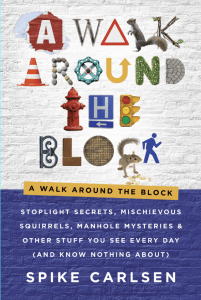
His latest book is A Walk Around the Block: Stoplight Secrets, Mischievous Squirrels, Sewers, Manhole Mysteries & Other Stuff You See Every Day (and Know Nothing About) (Amazon, Bookshop).
I couldn't wait to talk to Spike about happiness, human nature, and of course, walking.
Gretchen: What’s a simple activity or habit that consistently makes you happier, healthier, more productive, or more creative?
Spike: Walking and biking make me happier and physically energized 99% of the time. Being outdoors, coupled with the meditative churning of pedals or clomping of feet, primes my creative pump when I’m alone. I’ve “written” entire chapters in my head, then dashed home to get them on paper before they evaporated. If I’m walking or biking with my partner, Kat, or others, that same foot or pedal rhythm often helps steer the conversation in a much-needed direction.
Over 100 million Americans consider walking their main form of exercise. One study shows that “awe walking”—walking with your radar up to take a fresh look at nature, objects and moments—results in people feeling, happier and more socially connected. Those that focused on nature felt more upbeat after their walk than those that pondered politics or problems at home. My recent book, A Walk Around the Block, provides plenty of “awe” fodder for those wishing to appreciate the amazing world around them they often take for granted.
What’s something you know now about happiness that you didn’t know when you were 18 years old?
When I was 18 I was the hippiest hippie you ever did see. I bought into the whole culture—drugs, sex and rock and roll. I had countless friends and “far out” experiences. But I rarely felt happy.
Today I’m fortunate enough to have a handful of good friends with whom I can share my thoughts. On top of that, after decades of using alcohol and drugs to mask my depression, I began taking anti-depressants; once viewed as a sign of weakness, I now see them as a sign of strength. I’ve found anti-depressants, combined with exercise, simply level the playing field for me. Rather than starting the day with two feet embedded in the concrete, I can start it standing on solid ground. Medications don’t make me happier, they allow me to be happier.
You’ve done fascinating research. What has surprised or intrigued you—or your readers—most?
Two things: Most people—whether they’re sewage treatment plant workers, graffiti artists or snowplow drivers (all whom I interviewed for my recent book) —are, first of all, passionate and proud about what they do and, secondly, eager to share their stories. Though my recent book at face value, appears to be about “things,” it’s really about people; their triumphs and failures, their ingenuity and belly flops, their inner worlds which we rarely get to see.
One prime example of this passion is Bea Johnson of Zero Waste Home who I met while researching trash and recycling. She went from a life of conspicuous consumption to one where she managed to get her entire family’s yearly trash reduced to a point where it can fit into a quart jar. Am I going to do that? No. Am I going to head in that direction? Yes.
Would you describe yourself as an Upholder, a Questioner, a Rebel, or an Obliger?
I’m a Questioner with—what I guess might be—Rebel overtones. I like to know all the details before making a decision. As a writer I need to get the facts right, and getting the facts right involves digging, researching, asking the right questions, then taking all that information and writing something that’s informative, engaging, hopefully even inspirational. The process often involves “translating English into English”; finding a way of describing an idea where people go “Nowwwww I get it,” or “I already vaguely knew that—but this guy gave it shape; put the right words to it.”
I’d add to that, just as knowing your Tendency helps you engage more deeply with others, knowing about the world around you helps you engage in actions that can positively impact yourself, your family, your community and your world.
Does anything tend to interfere with your ability to keep your healthy habits or your happiness? (e.g. travel, parties, email)
I have nine granddaughters, all living within an hour’s drive. They’re a constant source of joy…to the point where I sometimes have trouble juggling the giggles with my work schedule. But I’d have it no other way.
And then there are Minnesota winters …
Have you ever been hit by a lightning bolt, where you made a major change very suddenly, as a consequence of reading a book, a conversation with a friend, a milestone birthday, a health scare, etc.?
I fractured my hip in a freak accident a few years ago; while they were doing an MRI of my hip they discovered cancer. Once I waded through all the tubes, surgeries, chemo treatments and grouchiness, I came to realize that health, family, and friends are all that matter. I’d heard this a jillion times growing up—this made me realize it’s true.
Is there a particular motto or saying that you’ve found very helpful? (e.g., I remind myself to “Be Gretchen.”)
It’s a jump ball between Margaret Mead’s statement, “Never doubt that a small group of thoughtful, committed citizens can change the world; indeed, it’s the only thing that ever has,” and a quote from a woman in the public- relations department of a water treatment plant, who said something to the effect, “Knowledge is power; and when you know more about how the world works, you make better decisions as you walk through it.”
We’re so immersed in national politics these days that we often forget how much we can accomplish on a local level; working from the ground up to make the world a better place.
Has a book ever changed your life—if so, which one and why?
Writers like Bill Bryson, John McPhee and Tracy Kidder, who can take seemingly blasé subjects like oranges or hiking and craft them into page turners, inspired me to become a writer.
But on a personal level, the most inspiring book just might be The Giving Tree by Shel Silverstein (Amazon, Bookshop). Here you have a tree that selflessly gives and gives and gives to a boy as he grows from toddler to old age. And then, when the tree has nothing left to give (spoiler alert), it offers itself up as a stump for sitting and pondering. How can you beat an allegory like that for parenting or living in the world?
In your field, is there a common misconception that you’d like to correct?
Friend and fellow writer, Michael Perry, once wrote “When I meet a dreamer with callouses I try to shut up and listen.” I love being a writer, and while some ideas appear almost magically, most of it boils down to discipline and work. There’s more to writing than writing. It’s researching, interviewing, rewriting, re-rewriting, throwing out stuff you’ve spent weeks working on. Then, after months of being an inverted hermit you need to transform yourself into a carnival barker trying to get the book out into the world.
It can be weird finding the right balance. That said, I repeat, I love writing.

December 15, 2020
If You Don’t Want to Make a New Year’s Resolution, Consider Writing Your “21 for 2021” List
Elizabeth and I are pulling together our annual "21 for 2021" list.
What is that, you ask? A "21 for 2021" list is a list of 21 concrete things we want to accomplish by the end of 2021.
We got this idea back in 2017, when our listener Mary created her own happiness project by listing 35 things she wanted to do in her 35th year. We decided to adapt this terrific idea for the new year.
This is the third year we've tried this approach. In episode 149, we talk about our "18 for 2018" lists; in episode 203, we discussed our "19 for 2019" lists; and in episode 255, we talk about our "20 for 2020" list.
Stay tuned for tomorrow's episode, in which we review our progress on our "20 for 2020" lists.
Now, why make a "21 for 2021" list at all?
Research shows that people who construct their goals in concrete terms are 50 percent more likely to feel confident they will attain their goals and 32 percent more likely to feel in control of their lives.
On so many levels, this year of 2020 has been extraordinarily challenging, so it's exciting to think ahead to the possibilities of 2021. Of course, it's a bit of a fiction to think that January 1 will bring a massive change, but the new year still presents an opportunity for reflection and renewal.
There's something fresh and fun about making a 21 for 2021 list. Some people (like me) enjoy New Year's resolutions, but many people (like Elizabeth) have bad associations with them.
Somehow, this approach makes it more pleasant to think about what we want for the new year—it feels more hopeful and helpful.
We’ve heard from so many listeners about their lists, many of whom have also had interesting twists on the idea. For example:
make a list of things that you'll stop doing
use your birthday instead of the calendar year, such as 30 by 30.
tailor it to single area of your life, like work, fun, or family life
create a list with others, such as a sweetheart or family, to tackle the items together
decorate your list
make a list that only includes things that are fun
use the number 21 within the list, such as "Read 21 books" or "Visit 21 diners"
make item #21 "Swap out one item on this list for something I'd rather do"
And of course, a person's Tendency tends to influence how they might construct or view their list:
Upholders tend to enjoy and succeed at this kind of exercise
Questioners will do it if it makes sense to them; they might resist the arbitrariness of using the number "21" (fine to pick a different number!), and they'll follow through only if an item continues to make sense to them
Obligers will need outer accountability for every item on the list -- even the things that are fun! Get your outer accountability, Obligers!
Rebels might list the things they could do, if they felt like it; or they might make a list and immediately cross certain things off
(Don't know if you're an Upholder, Questioner, Obliger, or Rebel? Take the free, quick quiz here. More than 3.2 million people have taken the quiz.)
We've had a huge response from listeners and readers about these lists, and I think that one reason that this approach resonates is that it seems more playful than the usual New Year's resolutions.
As I've studied happiness and habits, I'm very struck by how the same activity can be much more appealing—or not—depending on how we frame it, the vocabulary we use, and how it suits our individual nature, values, and preferences.
Would you rather "practice piano" or "play piano?" Would you rather "Turn out the light earlier" or "Get more restful sleep?" Would you rather "Give up sugar" or "Quit sugar" or "Cook for myself?"
Now, we may have to abandon this approach when 2067 rolls around! But 21 seems like a manageable number: long enough to allow for variety and a good mix, but not so long that it can't be printed on a single piece of paper.
It would be fun to cross every item off the list, but neither Elizabeth nor I have managed to do that yet.
And because of COVID-19, we both are ending 2020 with an unusually few numbers of completed items.
Nevertheless, I'm very glad we made the list. The key question is: Did making this list help us to be happier, healthier, more productive, or more creative by the year's end?
And it absolutely did—even if things didn't happen the way we expected.
Will you make a "21 for 2021 list?" I love to see people's lists—it's fascinating to see what people do with their list—so if you're so inclined, post it to #21for2021. We can get good ideas and encouragement for each other. (Plus Elizabeth and I have both cribbed items for ourselves off other people's lists.)
In January, on the Happier podcast, Elizabeth and I will share our 21 for 21 lists. I've had a great time figuring out what I want to include.
Sharing lists can be a great ice-breaking exercise. People's lists reveal a lot about interests, values, and aspirations—it's an interesting glimpse into someone's personality, but it's not so intimate that it feels inappropriate.
If you'd like a sheet where you can write your "21 for 2021" list neatly, download yours here.
Onward in 2021!

How Some Simple Changes in Habits Can Help You Through This Tough Time.
Right now, we're in the midst of the COVID-19 crisis—it has been going on for months, and it will keep going.
While everyone across the globe is affected, it's hitting people differently in different places. The crisis affects individuals very differently, too; people's fears and challenges vary dramatically. Wherever we are, we're all so grateful for the healthcare workers and all the essential workers who are doing such important work, so courageously, during this time.
I'm writing from my own experience, at this moment, in New York City.
Because I'm an Upholder, the anxiety and uncertainty of the pandemic tends to make me more rigid. I cling to my routines and my to-do list, because they give me a feeling of control. (Don't know if you're an Upholder, Questioner, Obliger, or Rebel? Take my Four Tendencies Quiz to find out where you fit in this personality framework. More than 3.2 million people have taken it!)
But for many people, the pandemic period has made it tougher to stick to their good habits. If that's your experience, here are some quick, easy suggestions to consider:
Trouble sleeping?
Set an alarm. If you have trouble getting yourself moving toward the bedroom, set a go-to-bed alarm on your phone to remind you to turn off the TV or the computer and head to bed.
Listen to a soothing podcast as you try to fall asleep; use the "sleep timer" so it shuts off after a certain amount of time. These days, I listen to episodes of one of my favorite podcasts, In Our Time: History. I don't worry about missing anything, because the next day, I just rewind until I get to the part of the discussion that I remember.
Get ready for bed well before you plan to turn off the light. I realized that sometimes, paradoxically, I felt too tired to get ready for bed, so I just stayed up later. Now I try to wash my face, put on my pajamas, and brush my teeth well before I plan to turn off the light.
More suggestions here.
Trouble getting yourself to exercise?
Walk for twenty minutes a day—or for 20201, consider joining our challenge to Walk21in21!
Use the Strategy of Pairing and listen to your favorite podcast or audio-book only when you're exercising.
If you're an Obliger, get outer accountability. If you're a Questioner, research to find the most efficient form of exercise. If you're an Upholder, put exercise on the calendar. If you're a Rebel, remind yourself, "This is what I want to do, what I feel like doing. I love to be outside, with the wind in my hair, biking around my neighborhood."
More suggestions here.
Trouble putting down your phone?
Set your phone to "grayscale." Easy, splashy, and effective.
Always have a good book to read, and consider replacing a "soul-sucking app" with your e-reader, if you read on your phone.
Use the Strategy of Inconvenience—during the times when you want to stay off your phone, put it in an inconvenient place so it's a pain to have to go get it.
More suggestions here.
Feeling lonely?
Schedule a weekly call with a friend or family member, so you don't have to plan and coordinate each time (you could also walk during these talks, win-win).
If you're part of a group, such as a book group, that hasn't been meeting in person, and you haven't yet met virtually, schedule a Zoom call—it's not perfect, but it's better than nothing.
Join an online community around a topic or interest—apart from social media. Working on something together is a great way to forge new relationships, even during this strange time. For instance, you could join The Happiness Project Experience 2021 and build a happier, healthier life with support from other course participants.
More suggestions here.
If you've been working on a habit during this strange time, what solutions and strategies have worked for you? We can all learn from each other.
If you want to think about habits to change in the new year, consider the "Essential Seven" to get inspiration.
It's astonishing to me how sometimes, a very small and easy change can make a huge difference in how successfully we can stick to a habit.
Have you thought about any habits that you want to make or break, going forward?

December 13, 2020
The Two Things Everyone Needs to Be Happy (Yes, everyone!)
I often talk about how there’s no magic, one-size-fits-all answer for boosting happiness, creativity, and maintaining healthy habits. And it’s true—except that there are two things that everyone needs to be happy.
After spending years studying and thinking about happiness, I really do believe that most of us can take simple steps that will boost our happiness. We can be happier now, within the course of our ordinary days.
You need two things to be happy:
1) Relationships. Anything we can do to deepen or broaden our relationships makes us happier.
2) Self-knowledge. We can build a happy life only on the foundation of our own nature, values, and interests, so we have to know ourselves. It’s very easy, however, to get distracted by what we wish were true, what we assume is true, or what other people want to be true about us. We really must push ourselves to be honest.
Unfortunately, while most of us know that relationships are the key to happiness, we’re not sure how to deepen our bonds with other people. And we’re puzzled about how to learn to know ourselves better – and how to use that knowledge to help us improve our habits.
That’s why I created “The Happiness Project Experience” video course. In the ten+ years since my bestselling book, The Happiness Project, was published, I’ve heard from thousands of people who want to be healthier, happier, more creative, and more purposeful about how they spend their time.
This video course gives structure and ideas to participants who want to create their own happiness projects. With twelve months of video lessons, live calls, expert interviews, and more, this course helps you identify—and keep—the resolutions that will bring more happiness to your life.
One of the key ideas of “The Happiness Project Experience” is that you can change your life without changing your life—you don’t need to spend a lot of time, energy, or money.
If you’re willing to spend a few hours a week to boost your happiness, 2021 could be the year that changes your life. Trade one hour a week that you might normally spend watching TV or scrolling on social media and invest in yourself instead. Registration is open now.
Beware of Drift
"Drift" is the decision we make by not deciding, or by making a decision that unleashes consequences for which we don’t take responsibility.
You go to medical school because both your parents are doctors. You get married because all your friends are getting married. You take a job because someone offers you that job. You want the respect of the people around you, or you want to avoid a fight or a bout of insecurity, or you don't know what else to do, so you take the path of least resistance.
One of the problems of drift is that we often try to deny we’re drifting. Do any of the statements below resonate with you?
I complain about my situation, but I don’t spend much time trying to figure out ways to make it better.
I fantasize that some catastrophe or upheaval will blow up my situation. I’ll break my leg or get transferred to another city.
There is something in my life about which I used to be passionate, but now I never allow.
I spend a lot of time daydreaming about a completely different life as an escape from what I’m doing now.
I feel like other people or processes are moving events forward, and I’m just passively carried along.
I find myself doing or getting something because the people around me are doing it or want it.
“The Happiness Project Experience” will help you identify what brings you joy, satisfaction, engagement, and growth. It will help you make and keep your resolutions to boost your happiness.
But don’t take it from me. Here’s what participants who took this course in previous years said:
“I was worried that I didn’t have enough time to do it. But Gretchen makes it easy to commit a little or a lot of time each month, depending on your bandwidth. Over the course of the year, I built new morning habits, lost weight, tightened up my exercise habits, strengthened friendships, and completed 14 of my “19 for 2019” list. Before the course, I was struggling with accountability and because of this course, now I have four new accountability partners!” - Jean Sundlof
“This course has been a great way to make sure I spend some time each month focusing on myself and my wellbeing. As a working mum, it's easy to spend all my spare time and energy on my children, but it has definitely made me happier and a better parent and wife to have this time to myself each week. It's also a great source of recommendations for further research and reading on how to invest in your own happiness and wellbeing. And it's great to have the support of the community while you do it! I would definitely recommend the course.” - Michelle Chandler
“This course really helped me get to know myself better and what REALLY makes me happy. Before I signed up, I didn’t feel like I was struggling with anything. But, now that I look back and compare myself now to where I was at the beginning of 2019, I’m living a better life. This course helped me have the courage to make a career change, solidify better eating, exercising, and sleeping habits, dejunk my house, spend more time outdoors, and partake of more joy in everyday life.” - Heather Rasband
“If you're a fan and follower of Gretchen Rubin, “The Happiness Project Experience” is a great way to work on your happiness habits. My favorite Gretchen saying is, “What you do everyday matters more than what you do once in awhile.” This course builds your everyday skills. I appreciated the monthly themes and the interviews with people connected to these themes. The “Ask Gretchen Anything” calls provided insights into how each Tendency approaches happiness.” - Rachel Stansberry
“Before the course I was doing happiness activities on my own, but after the course I feel like I am part of a community of kindred spirits who are in it together. I feel like I am living even more in an “atmosphere of growth” where I am continually motivated to try new resolutions.” - Diana Burgess
“This course has helped me to know what truly makes me happy. The themes of each month are perfect for exploring the many facets of a human life. I plan to take one of Gretchen's suggestions and spend 2020 going through the course again with the goal of solidifying the habits that increase my happiness.” - Therese A
Register now and you’ll immediately get access to video lessons and worksheets so that you can stop drifting and take concrete steps to change your habits, boost your happiness, and achieve your goals. If you join “The Happiness Project Experience,” at the end of 2021 you’ll know that you spent time focusing on these two things that everyone needs to be happier: relationships and self-knowledge. I’ll show you how to take small, meaningful steps in these key areas -- and your future self will thank you.