Michele Tracy Berger's Blog, page 64
May 3, 2015
Friendship and Travel for Two “Brauds” Abroad: Author Interview with Camille Armantrout
Camille Armantrout was born in 1954 on the East Coast, first born and only girl followed by five little brothers, which is where she got her sense of humor. She began keeping journals and corresponding with pen pals in grade school and has traveled the world with her soul mate, Bob.
Like so many who live in Chatham County, N.C, she is passionate about local farming and food cultures, sustainability and building community. I’ve been a friend of Camille’s, for many years, and a fan of her blog: ‘Plastic Farm Animals’ that threads together community news, personal reflection and travel stories. She and Bob host an annual ‘Hoppin’ John’ potluck party on New Year’s Day. They are greats host and I look forward to this event every year. This year at the party, I held in my hands the recent fruit of Camille’s labor, a co-authored book, Two Brauds Abroad: A Departure from Life as We Know It. Camille and her co-author Stephanie De La Garza document the maladies, epiphanies and tragedies of their collective wisdom gleaned from traveling the world and writing to each other about their discoveries. They loved the challenges of living abroad and inspire readers to go on their own adventures. Although I knew Camille blogged, I had no idea that her passion for writing was deep in her bones. I had to invite her here to learn more.
I am delighted to welcome Camille Armantrout to ‘The Practice of Creativity’.

Tell us about your new book, Two Brauds Abroad: A Departure from Life as We Know It. Why did you want to write this book?
My year and a half in Africa was epic. When I returned to the U.S. everyone was eager to hear about the trip, but would quickly become confused when I tried to sum up my experiences. Inevitably, I would end the attempt with “I could write a book…” and so I did.
My co-author Stephanie and I had discussed writing a travel book a few times. While I was in Ghana, she was experiencing her own travel adventure in Central America, having sold her house, cars and nearly everything else to move abroad. We thought our stories would inspire others to follow their dreams.
Stephanie came up with the title and I liked the alliteration. She chose the alternative spelling of braud, a word Urban Dictionary defines as “Fearless female; an adventurous, daring or independent woman.”
How did you get bitten by the ‘writing bug’? Did you always wish to become an author?
The writing bug bit me early on. My father was a writer and I began keeping a journal in grade school. I don’t think there’s been a day of my life when I didn’t write something. In the back of my mind, I always thought I would one day transition from writer to author, and now I’ve gone and done it.
What was your relationship with your co-author Stephanie before this book? What did you learn about each other in the process of writing Two Brauds Abroad?
Stephanie and I are longtime email buddies. We met in Nicaragua ten years ago when she came to stay at the lodge my husband, Bob and I were managing. We enjoyed each other’s company and have been corresponding ever since. Over the years, we have shared all aspects of our lives and know each other well.

Stephanie and Camille (right)
Interestingly, we are two very different people. I’ve been married for twenty years. Stephanie is sixteen years my junior and still playing the dating game. I’m a vegetarian and Steph dislikes pretty much all vegetables, she’s more willing to take risks than I am, I’m more of a morning person than she is and she’s an only child while I come from a large family.
As we plunged into our project, we were happy to find that we have similar work ethics and that our skill sets dovetailed nicely. I submerged myself in editing as she launched a comprehensive marketing plan. Stephanie discovered that I’m a perfectionist and I found out she has a compulsive, “Let’s do!” streak.
The second half of the book is about how someone can transform his or her self into a world traveler. Where does this person start?
Planning begins with a financial safety net. Decide how big your cushion needs to be and either start saving or begin liquidating assets. Next, check out the possibilities via the Caretaker Gazette, Help Exchange, World Wide Opportunities on Organic Farms (Wwoof) or similar resources. Pick a location and start reading up on the culture and climate.
It’s worth noting that our transformation tips are not limited to world travel. You can reinvent yourself right here at home with a career or other lifestyle change using the same tools we offer in part II of our book.
What’s on your bookshelf, next to your bed (or in your Kindle)? What are you reading right now?
I am reading George Monbiot’s Feral: Rewilding the Land, the Sea, and Human Life, Little Altars Everywhere by Rebecca Wells and have just finished Rin Tin Tin: The Life and the Legend by Susan Orlean.
What’s your best writing tip that you’d like to share?
Pay attention to your writing patterns. If you discover, as I did, that your words flow in the morning, clear your am calendar to take advantage of that creative burst. Keep pen and paper handy at all times, in your pocket or purse, on your bedside table, and in the car.
Camille Armantrout has lived and worked all over the world. She is usually traveling with her co-conspirator and husband, Bob. Camille has worked in kitchens, on construction sites, driven taxi and groomed race track thoroughbreds. She bakes for fun, trains horses, and writes about the world as she sees it, here.
Check out Two Brauds Abroad on Amazon!


April 30, 2015
Vision & Voice Poetry Project!

It’s the last day of National Poetry Month and I couldn’t let the day slip away without giving a shout out to my writing group buddy, Ashley Memory. This past Sunday, she attended one of the local events I look forward to all year-Vision and Voice Poetry Project hosted by the local gallery Joyful Jewel. During the month of March, writers are encouraged to visit this amazing gallery and choose a piece of art to write about (they sell everything from jewelry to paintings). Then the V&V event pairs up the writer to read his or her work and the artist to talk about the piece. I have participated in the past and have found great inspiration in all sorts of art objects. Ashley participated and you’ll see a link to her poem. I’ve learned so much from her keen sensibility and poetic ear.
 Originally posted on Ashley Memory:

 Yesterday, Sunday, April 26, I had the honor of reading a poem at the 4th Annual Vision & Voice Poetry Project at the Joyful Jewel in Pittsboro, a local art gallery specializing in original arts and crafts. Once every year, they open their doors to local poets who, in the style of poetry known as Ekphrasis, write a poem inspired by a piece of art. I chose as my inspiration the beautiful photograph of a snowy egret by Gerald Dukes (kindly held by local artist. D.G. Chandler). If you like, you may read my poem here.

Pictured above is the poet Candace Falloon reading a poem inspired by proprietor Mariah Wheeler’s (also pictured) lovely work of mixed media titled The Muse Calls.
A number of other local poets read, including Mary Barnard, Judith Fisher, Tim Keim, Judith Stanton, Patty Cole and Judy Hogan, who emceed the event. In addition…
View original 173 more words


April 26, 2015
A Poem for National Poetry Month: Here, Fortune Cookie
April has almost slid past me without a nod here to National Poetry Month. I want to correct this oversight. In honor of NPM, I am sharing a poem that was recently published in The Red Clay Review: The Literary & Arts Magazine of Central Carolina College. Every year, this literary journal solicits submissions for a themed issue. And the issue that my poem appears in is food themed. When I saw the call for submissions, I knew I wanted to submit something unique. Given that I live in the South, I figured there would be many excellent pieces extolling the wonders of Southern food traditions. I wanted to go in a different direction. So, I sat down to write about fortune cookies. A few years ago I became obsessed with fortune cookies and learning about their history. Fortune cookies are in many ways, a uniquely stylized American phenomenon (like U.S. “Chinese” food). In doing research, I discovered:
Fortune cookies are not Chinese in origin.*
General Tso’s famous chicken is based on a real life scholar-warrior: Zuo Zongtang (also spelled Tso Tsungtang…and “Tso” should be pronounced more along the lines of “Zuoh” or “Jaw”)
There are more than 40,000 Chinese restaurants in the U.S. That’s more than the number of McDonald’s, Burger Kings and KFC’s combined!
The Powerball held on March 30, 2005 had a record number of winners, across multiple states. And, the winning numbers were all traced back to numbers found on a fortune cookie. All of the winners had visited a local Chinese restaurant at some point before the Powerball and played the numbers found on a fortune cookie.
One of the largest fortune cookie factories on the West Coast is Peking Noodle, founded in 1922.
*these tidbits and more can be found in Jennifer 8. Lee’s entertaining and well-researched book, The Fortune Cookie Chronicles: Adventures in the World of Chinese Food.

I dumped out over fifty fortune cookie messages that, over the years, I had saved and began looking for ideas. Eventually, I came up with the poem below that I submitted. I like that it has a bit of an edge to it. My plan is to write several fortune cookie poems. I’ve already started work on the next one in the series.
Here, Fortune Cookie
Here, fortune cookie, here, sweet cookie
Jump into my mouth and fill me with your wisdom
I’ll listen this time, I promise
A new adventure awaits you this weekend
I thought getting a Brazilian would bring him back
Here, fortune cookie, sweet cookie
Tickle me with your crescent form
I’ll listen this time, I promise
To profit from good advice requires more wisdom than to give it
His wife didn’t understand how much I love him
Her accusing blue eyes follow me in my dreams
Here, fortune cookie, sweet cookie
Crack me open and fill me with destiny
I’ll listen this time, I promise
If you follow it, you realize that insatiable desires don’t lead to happiness
You were right
My married boss is pretty tricky
Here, fortune cookie, sweet cookie
Wait with me while I plot her demise
so we can be free
he’ll come to love me and we will come here
and order General Tso’s chicken and beer
and we will scoop you up, sweet cookie
our ritual complete
You are right
Happiness can be achieved by using your patience


April 19, 2015
Yes, Virginia, There Really is a Menopausal Superhero: Author Interview with Samantha Bryant
I first met Samantha Bryant online, last November, during the intense worldwide writing challenge known as National Novel Writing Month (NaNoWriMo). Novice and veteran writers alike try to complete a 50,000 word first draft of a novel in a month. This was my first NaNoWriMo and I was looking for local writers to connect with, who were also undertaking NaNoWriM0, during what promised to be an exhilarating and caffeine-laden month. By sheer chance, I ran across Samantha’s profile on the NaNoWriMo site and saw that we had a lot in common and that she only lived an hour away. We both like to read and write speculative fiction, are great fans of ‘The Magic Spreadsheet’ (a writing accountability tool), and are bloggers. Samantha’s wonderful blog is called ‘The Balancing Act’ and she routinely writes about being an educator, the craft of writing and being a mom. The other thing that I took notice of right away was that Samantha was coming out with her first novel with a fabulous premise—women who through experiencing menopause develop superhero abilities. I could be wrong, but I don’t think that the speculative fiction field has produced many menopausal superheroes. Menopause is such an important social, biological, cultural and even spiritual transformation for many women, yet it rarely receives prime time attention in fiction. In Samantha’s debut novel, Going Through the Change, four unrelated women experience menopause in a way that triggers superhuman capabilities. They must find out how to use their powers and why they have them. Sounds irresistible, right?
It’s been a blast getting to know Samantha and her writing. During NaNoWriMo, she was a kind and encouraging writing buddy. And, we both completed our NaNoWriMo drafts!
I am delighted to welcome Samantha Bryant to ‘The Practice of Creativity’.

Tell us about your new book Going Through the Change: A Menopausal Superhero Novel . What inspired this book?
I’m a long time comic book reader. My mom used to take Little Me to a bookshop on the avenue in my hometown where I could buy old comic books for a dime each and she could get mystery novels for a quarter. I was allowed to spend a whole dollar, so I’d get a lot of interesting reading that way! So, superheroes have been part of my imaginative landscape from the beginning.
Much more recently, through my library, I met a local writer, James Maxey, who was holding some craft and business of writing workshops. James wrote a superhero novel (Nobody Gets the Girl) and an even more awesome side-quel about the villains (Burn Baby Burn). Up until then, I didn’t know the “superhero novel” was a thing. I was so excited to learn that it’s a thriving subgenre!
I’d been writing a women’s fiction novel (unpublished as of yet: His Other Mother). I feel proud of the book, but finishing it was emotionally difficult. So, I promised myself that, if I finished that book, I could write something “fun” next. The actual idea sprang from a long, rambling conversation with my husband about the relationship between hormones and superpowers.
What is your biggest hope for Going Through the Change as it meets readers?
In my wildest fantasies, the book sells a bajillion copies and wins all the awards and I give up my day job and enable my husband do so, too, and we and our girls travel the world solving crimes and saving people like Nick and Nora Charles, but with less inebriation.
More realistically, I just hope I find some readers and they enjoy reading it as much as I enjoyed writing it. The thing I’ve always loved about science fiction and fantasy in all its forms is the way you can explore life issues without feeling as though you’re taking them seriously. At its best, it’s fun and thought-provoking at the same time. It’s emotionally true, even when you’re dealing with things that can’t possibly happen in real life, like flying women or women who can throw fire.
Through Linda, I got to explore issues of gender identity, racism, and what makes a strong marriage. Patricia let me find out what it might have been like to choose a single life in a powerhouse career instead of becoming a wife and mother. Writing Jessica taught me about inner strength and reinventing yourself when life throws you curve balls. Helen had a lot to say about regret and bitterness and how they can twist a person.
Writing this novel let me live inside each of these women. I love them all and they are all in me in some way. I hope my readers will come to love my superwomen the way I do.
Please tell us how you came to work with your publisher, Curiosity Quills Press.
This will be my first published novel, but it’s not the first one I wrote. When I finished Change, I had been playing submission tag (mostly I was “not it”) for a year and a half with my other novel. I’d gotten some nibbles, but no bites. In the process, I learned that I didn’t have the patience for large publishers. I’m okay with “no” for an answer, but I just wanted to get an answer sooner, so I could move on and try someone else if my book wasn’t a good fit.
So, for this book, I only looked at small, independent publishers. I started paying more attention in my online life to speculative fiction writers who were working with small presses. Matthew Graybosch, author of Without Bloodshed, and fellow user of Google+, had posted a few times about his publisher, Curiosity Quills.
So, I cyber-stalked them a little. I liked what I saw. They seemed to really love what they were doing. Their website had personality. They were transparent about what kind of deal I could expect from them if they accepted my work. So, I wrote up a query letter and sent some pages.
It was a really pleasant surprise how quickly things moved from there. Within a few days, I had a request for the full manuscript. A contract was in my in-box just a few days after that. Working with them has been lovely so far! All my questions are answered promptly and seriously and the entire community of Literary Marauders has been warm and welcoming.

How do story ideas usually come to you? Do you start with character, plot or conflict, etc.?
The best ideas seem to come from something that scares me a little or worries or upsets me. My first novel came about from my unreasonable fear that I would be hit by a car in the grocery store parking lot and that my infant daughter would be left alone. Going Through the Change stems from my anxieties surrounding doctors, going through menopause, and getting older. A short story I wrote recently is, in a way, about how much I don’t like gardening.
Usually, I have a vague idea about a scene and a sketchy outline of a character in mind and I sit down and start writing. I’m very much a discovery writer at first–I write to discover what the story is going to be. When it’s going well, it feels more like I’m channeling a story from some external source than like I’m making it up inside my own brain. I’m one of those writers who wants to kvetch about what her characters did to her today.
If you could be any superhero for a day, who would you be? Why?
I’m not very tall or very strong and am always frustrated by my lack of vertical reach, so I would probably love being Helen Parr (Elastigirl from The Incredibles) for a day. She’s also a great mom and manages, in the end, to balance superhero and family life. That’s quite a role model.
It could also be cool to be Buffy Summers of Buffy the Vampire Slayer. For one thing, Joss Whedon would write my dialogue. For another, I’d be preternaturally strong and fast and athletic. I wouldn’t want her love life though.
In my child’s heart, though, I’d probably be Red Sonja. She was my first superheroine love, after all-from those ten-cent comics days. Because she’s mostly naked all the time, I was sure I shouldn’t be allowed to read her, which, of course, made her all the more appealing. She’s fierce and unafraid, undeniably female and strong. A truly independent warrior.
What’s your best writing tip that you’d like to share?
The one thing that truly made a difference for me was committing to a daily writing habit. For me, I did that with Magic Spreadsheet, a gamification tool for writers created by Tony Pisculli, which awards points for meeting a daily minimum word count.
For many years, I struggled to write while meeting all the rest of my responsibilities as a teacher, wife, mother, dog-mom, sister, daughter, etc., etc., etc. I would get a few hours once a month or so, and spend half of them just trying to get back in the flow.
But, once I committed to writing at least 250 words every day, come hell or high-water, that problem disappeared. It’s not hard to find my way back into the story if I’ve only been away twenty-four hours. It made the time I had more productive. Over time, with practice, I became able to write more words in one hour than I used to write in a four or five hour session. I began to finish things. So there it is: write every day.
Samantha Bryant is a middle school Spanish teacher by day and novelist by night. She lives in Hillsborough, North Carolina with her husband, daughters and dog. Her secret superpower is finding lost things.
Connect with Samantha in multiple ways:
Her blog: http://samanthabryant.com
Author Facebook page: https://www.facebook.com/samanthadunawaybryant
Author’s page on Curiosity Quills: https://curiosityquills.com/authors/samantha-bryant/
Twitter: https://twitter.com/mirymom1
On Google+: https://plus.google.com/u/0/+SamanthaDunawayBryant/posts


April 12, 2015
A Letter to My Mom: Writing Territory Found
I just received my beautiful copy of A Letter to My Mom! It is a tribute to the women who shape us into the people we become.
My love letter to my courageous mother is next to letters from Suze Orman, Dr. Phil McGraw, Melissa Rivers, Lisa Ling, Dr. Jennifer Arnold and many other amazing sons and daughters. In this third installment of the A Letter to My series…(following A Letter to My Dog and A Letter to My Cat), over sixty contributors share letters that chronicle the love, gratitude, silliness, fun and even conflict that define mother and child relationships. I am honored to be part of this collection.

My writing teacher, Marjorie Hudson (author of Accidental Birds in the Carolinas) encourages students to ‘find their territory’, to explore the kinds of unique themes and challenges that only they can write about.
The relationship with my mother is definitely my territory. In 2013, I started exploring a snippet of my mother’s life which involved a great act of courage that changed the course of our lives. Since that time, I have continued thinking about the intersection of my life and hers. I am constantly surveying that rich and fertile ground. My mother is no longer living, so writing about her is one way that I can keep her memory alive.
When I saw the call for ‘A Letter to My Mom’, I decided to submit my very personal story. The editor and creator of the A Letter to My series, Lisa Erspamer and her team were amazing. They treated my narrative (and I assume all the others), with great care, respect and unabashed enthusiasm.
A Letter to My Mom is so inspiring and the layout of the book is beautiful. Each entry is accompanied by photos. It’s a great gift for Mother’s Day.
Join us on Twitter and spread gratitude to moms around the world #ALetterToMyMom
Also, check out a GREAT contest to thank readers: A Mother’s Day Spa Giveaway! You can win a $250 spa day to spend with your mom!
Want to write your own love letter to your mom? You can! They are looking for letters to post on the blog.
Find out more about the book here.


April 5, 2015
On Naming and Writing: Part 1
Dear You,
I rarely miss a post, but the last two weeks of travel, dealing with illness (myself and my dog’s), has kept me from you. Forgive me. I’ve missed you. I’m over my cold and Ginger, the pug, is on the road to recovery, too. Hope you enjoy this post.
***
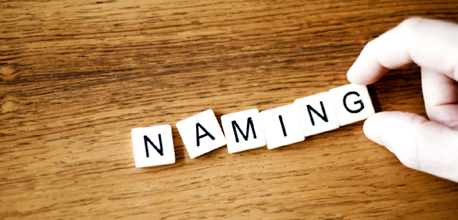
When we write we have to bring our whole selves to the page and not wish we had someone else’s life. We have to sweep away fantasies that don’t serve us. I’ve been thinking recently about my name and the names I’ve assumed at different stages on the writing path.
In my late teens, I chose the name ‘Aja Pennybone’, as a name that I would write under. This name seemed magical, bold and something that could house my deep desire to write. Now, I may one day still use this name, as I like it very much (and it is common for writers who write in multiple genres to assume different names). But, when I first came up with this name, it was to make up for a sense of lack about my own name. I used to look at my first and last name on the page, ‘Michele Berger’ and see it as inert, common, and definitely the opposite of magical. My name is not a writer’s name, I used to think. Aja Pennybone, now there’s a name! An intriguing famous writer’s name.
Later in graduate school I chose the name ‘Michele Instar’ for my creative work. At the time I was obsessed with transformation and the stages of butterfly development. An ‘instar’ is a developmental stage for an insect, a movement through a larval phase to sexual maturity. For some time, I sent out stories with this pen name.
When my mother was alive she often said that she predicted my personality and named me accordingly. She named me ‘Michele’ for the supposedly “lady-like part of me” and ‘Tracy’ for the “mischievous and wild child side.” She felt that by naming both those sides of me, it gave me some hope of living with the tension those two sides produced. As a budding feminist, I used to resent her emphasis on ‘lady-like’ as connected to my first name, as it struck me as a message about control and docility. And, I felt kind of neutral about Tracy. However, now, I see things a bit differently. I am seen as diplomatic (which feels much more gender neutral and generative than ‘lady-like), and I do have a great respect for good manners (a rapidly disappearing social commodity), and graciousness. And, I do now like Tracy and honor my rebellious spirit that keeps my creative fuel and curiosity stoked. Maybe my mother was on to something about my personality.
And, what about my last name, Berger? It was an enigma for me. I didn’t know my father well and didn’t know how to feel about his last name. Berger has German and Jewish roots and I still don’t know much about the genealogical history of my father’s peoples. Growing up, however, I often liked the surprise on some people’s faces when meeting me for the first time (especially in job interviews). They were not usually expecting an African American woman to show up with my name and it showed. My father’s legal name was William Creel Berger, but everybody called him ‘Troy’. Creel is an unusual name and has its origins in the 18th century as connected to baskets for catching fish. I still have no idea why people nicknamed my father ‘Troy’. Another mystery that I hope to uncover as I get to know his extended family.
By the end of graduate school, I started using my full name ‘Michele Tracy Berger’ for both academic and creative work. I don’t remember all the details, but somewhere during this time, I became quite impressed with the work of Linda Goodman, a famed astrologer. In one of her books, she ruminated on numerology and names. She talked about how there can be a type of power in using all of one’s given name. She offered codes to unlock the relationship between numbers and letters. I know that all sounds a bit hokey and ‘New-Agey’, but for some reason, when I played with writing my full name, it felt right. For months after, I looked for opportunities to sign my full name. Doing so gave me a strong sense of purpose and authority. I also noticed famous writers that I admired who had the ‘triple name’ thing going on including Jean Shindoa Bolen and Clarissa Pinkola Estes. As I started finishing work and seeing it in print, I enjoyed seeing my full name.
As writers, when we sit down to write, we often feel inadequate. We often believe that there are perfect writers and writing lives out there. Sometimes we believe that having a different name will make us a better writer, or somehow get us past the nitty-gritty cycle of work that includes writing, evaluating, revising, puttering, incubating, polishing, submitting, getting rejected, getting published and repeating. There are, however, no shortcuts in this cycle.
For me, coming home to my name and cherishing it was one of my first steps to casting off unhelpful ideas about the perfect writing life. I once believed that the name made the writer. Those assumed names though did power me with enough creative juice and fantasy to keep writing. That was a good thing. They served their purpose, but now I no longer need to hide behind them. I embrace all of who I am when I sit down to create and that means using my full given name. It’s good enough and so am I.
I’d love to hear about your use of pen names and imagined writing names. Have you tried them? If so, how do they make you feel? What do they do for you? How have you claimed your writing name?