Michele Tracy Berger's Blog, page 59
January 20, 2016
Affirmations-366Days#20
Affirmations-366Days#20: I believe in the worth of my writing.
For new readers, here’s why I’m committing to writing affirmations, about the creative process, during the next 366 days.



January 19, 2016
Affirmations-366Days#19
Affirmations-366Days#19: I appreciate and savor my creative self’s firework moments and subtle whispers.
For new readers, here’s why I’m committing to writing affirmations, about the creative process, during the next 366 days.


January 18, 2016
Affirmations-366Days#18
Affirmations-366Days#18-Even on challenging days, I remember that writing is not what I ‘have to do’ but what I ‘get to do’.
For new readers, here’s why I’m committing to writing affirmations, about the creative process, during the next 366 days.


Guest Post: The Art of Low Stakes Daily Writing and How It Can Transform Your Year
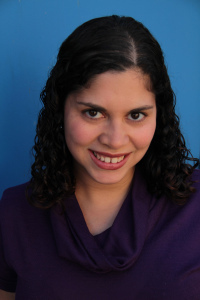
You’re in for a special treat today. I’ve asked friend and AROHO writing buddy, Li Yun Alvarado to share her wisdom about the power of what she calls ‘low stakes daily writing’. Her guidelines are so doable, practical and fun, you’ll want to try them right away.
When we met at AROHO this August, we bonded over the delights and dilemmas of navigating both an academic and creative writing life. As a recent PhD, Li Yun is doing just that with incredible insight and aplomb.
I’m delighted to welcome Li Yun Alvarado to The Practice of Creativity.
Li Yun Alvarado is the author of Words or Water (forthcoming) and Nuyorico, CA. A poet and scholar, her work has appeared or is forthcoming in New Madrid; Wise Latinas: Writers on Higher Education; The Acentos Review; and PMS Poemmemoirstory among others. In 2012, her work received an honorable mention for The Andrés Montoya Poetry Prize. She is currently the Senior Poetry Editor for Kweli Journal and is an alumna of VONA/Voices Writing Workshop and AROHO. She holds a BA in Spanish and sociology from Yale University and an MA and PhD in English from Fordham University. Li Yun is a native New Yorker living in Long Beach, California who takes frequent trips to Salinas, Puerto Rico to visit la familia. You can learn more about Li Yun and her work on Facebook and at www.liyunalvarado.com
“The Art of Low Stakes Daily Writing”
In October 2014, my dissertation committee and I settled in on a defense date: April 17, 2015. Finally, a light at the end of the long, dark tunnel that had been three years of research and writing appeared. There exists a line between ABD (all but dissertation) and PhD that remains a moving target until that defense date is set, but with the date on the calendar, the idea of “after my dissertation” went from an abstraction to a quickly approaching reality.
I knew I wanted “after” to include a shift toward prioritizing my creative work. I had never abandoned creative projects entirely, but while dissertating, I focused on concrete creative projects with short term deadlines. For example, creating my wedding website on Weebly and self-publishing my chapbook Nuyorico, CA were two of my creative outlets in 2013.
Still, I longed for a time when my creative writing projects could once again take center stage. As the end of my graduate student life approached, I imagined what shape my writing life might take.
~ ~ ~
I have often heard writers advise: “Write every day.”
In response, I’d often think:
“Yeah right. Easy for you to say famous / published / award-winning author.”
Or, the less snarky:
“That just doesn’t work for me.”
Or:
“I don’t have the discipline.”
What I learned while writing a dissertation was that academics toss around that same advice. If not “write every day,” they at least encourage, “write regularly” and “schedule your writing time.”
Even comic Jerry Seinfeld famously developed a daily writing strategy that involves crossing out the dates of a calendar in red and focusing on not breaking the chain of red Xs by writing every day.
The summer prior to my defense, eager to finish by the following May, I committed to a regular writing practice for the first time. Inspired by Joan Bolker’s advice in Writing Your Dissertation in Fifteen Minutes a Day, I worked from 7am – 9am every Monday through Friday that summer. Before breakfast, or e-mail, or Facebook, or anything else, I wrote. Something. Anything.
After two 45 minute writing cycles (or four 20 minute pomodoros), I ate breakfast then completed a few more writing sessions or called it quits depending on the day.
Did I really write every weekday all summer long? Probably not. OK, definitely not, but I wrote on more days than I didn’t. And I. Got. It. Done: full drafts of each chapter before I began teaching that fall.
~ ~ ~
Writing my dissertation gave me an unexpected gift: a regular writing practice.
I finally knew I was capable of developing a writing practice, but I also knew that the upcoming deadline (graduating by May 15) had fueled my discipline that summer.
For my life beyond the dissertation, I wanted to develop a writing practice that worked even when—especially when—there was no deadline. A way to feed my creative self that also gave me that satisfaction of accumulation that only comes from writing every day.
There were several considerations I took into account as I decided what kind of daily practice to begin:
* I decided the best way to transition from dissertating to writing creatively was to begin a new writing practice in January, three months before the defense.
* I also knew I wanted my daily writing to be a sliver of joy each day as opposed to a burden—something my dissertating days inevitably were at times.
* Finally, the poetic fatigue I experienced at the end of an April 30/30 poetry challenge in 2009 suggested that the unmanageable pace of “one poem a day” wouldn’t work for me, so that approach was out.
With all that in mind, I settled on what I call “Low Stakes Daily Writing.” I began on January 1st, 2015 and wrote (almost) every day in 2015!
Here are the Low Stakes Daily Writing guidelines I settled on:
Find a Fun Low Stakes Daily Writing Notebook
This step isn’t mandatory, but it supports the idea of a daily practice that is joyful or fun. My daily writing notebook actually found me. In a novelty store in Vegas on New Year’s Eve last year, my husband handed me a black 5 x 7 notebook saying, “This is for you.” On the cover? In gold stylized cursive letters, the words: “My F*cking Brilliant Ideas.”
Write at Least Once A Day
Simple: Write. Something. Anything. Every. Single. Day.
This “write anything” approach was in part inspired by Bolker, who insists, “Write anything, because writing is writing” (94) and “Writing is writing and if you can’t write your dissertation just continue writing—anything — to keep your muscles in shape, and to keep you from getting phobic” (94).
No Guilt Allowed
Miss a day? Write twice the next day. Try not to skip more than one day which should be easy because ANY writing in your notebook counts.
No Notebook? No Problem.
If the urge to write hits when I’m sans notebook, I write elsewhere then copy that entry back into my notebook later. My iPhone notepad is full of Low Stakes Daily Writing.
Low Stakes Daily Writing: One Piece of a Larger Writing Life
My Low Stakes Daily Writing was not the only writing I did on most days, but it was the only writing I had to do every day.
~ ~ ~
People are sometimes skeptical of my approach. They find it hard to believe that anything goes. That’s when I show them one of my favorite examples:
8/8/15
money money
money money
money money money
I was worried about money, so I wrote about money. With my worry on the page, I could let it go for the night and go to sleep.
“At least,” I consoled myself, “I wrote today.”
Similarly, at the end of last semester, I wrote:
12/8/15
Grading
Grading
Grading
Grading
That’s it. That counts. I’m not brilliant, or inspired, or awake enough every day to write something meaningful, and with Low Stakes Daily Writing I don’t have to be. Each day I connect with the page. Each day I promise a few moments—however brief—to my writing. To myself.
Other kinds of Low Stakes Daily Writing include:
– An automatic response to an article, blog post, book, poem, image, etc
– A list of words that come up while playing a word association with friends or family
– A letter
– A poem draft
– A list of words or phrases I hear on TV or in a movie
– A meditation on a current problem
– A stream of consciousness free-write
As you can see, the product doesn’t matter as much as the process. The act of sitting with the page is the point.
Low Stakes Daily Writing is low pressure and sometimes that is all I need to make room for something magical to come through. With the room to write crap (guilt-free), I can write first drafts and not worry about whether or not they’re any good — they’re not supposed to be good in here. This is my take on Anne Lamott’s “Shitty First Draft” approach to writing. I produce a lot. Then I sift through, find hidden gems, and craft them into something worth sharing later on.
And then there are those thrilling nights when the writing comes so easily, so powerfully, so spot on that I know, even as I’m writing, that I have one of those rare not-so-hidden gems on my hands. On those nights I lay my head down especially grateful for this daily practice.
The next day, I return to the page and I write something new.
~ ~ ~
Here’s what I’ve gained after a year of Low Stakes Daily Writing:
I have two and a quarter journals filled with writing to sift through for the seeds of new work.
I created a ritual. I write every day, usually right before bed. It is such a part of my routine that as I get into bed my husband will often ask, “Have you written today?” (I’ll keep him!)
Amidst all the random reflections, I have some solid first drafts that I otherwise might not have written.
A new publication. A poem that began as a draft in my Low Stakes Daily Writing journal was recently accepted for publication in New Madrid. That is the fastest I have taken a poem from draft to publication. The speed at which this particular poem found a home might be a fluke, but I suspect that if I hadn’t been in the practice of writing every day, I might not have written that poem at all. Therein lies the magic of writing every day: I created space for what might not have otherwise come through to emerge.
But most importantly, I connected with my creative self, honoring who I am as poet and writer, every single day of 2015!
As you enter 2016, I hope you’ll consider joining me with your own take on a Low Stakes Daily Writing practice. Happy New Year! And Happy Writing!


January 17, 2016
Affirmations-366Days#17-Do You Chronically Push Away Compliments about Your Creative Work?
Don’t turn away what life wants to give you. A huge connection exists between what you are willing to receive and what you actually get. I call this step “Accept All Compliments” because I have noticed a correlation between people’s unwillingness to receive the simplest things in life, while at the same time having some pretty big expectations. Your ability to receive something as simple as a compliment is significant. It signals loud and clear that you are ready to receive.
Amanda Owen, The Power of Receiving
Affirmations-366Days#17: I receive compliments about my creative work with grace and do not externally or internally refute them.
How good are you at accepting compliments about the creative work you share with the world? Do you push away compliments about your creative work? Do you tell yourself that the person giving you a compliment is ‘only being nice’ or saying these things to you because they couldn’t find ‘the real artist’ that they wanted to talk to? Or, do you say back to them, ‘Oh, it wasn’t my best work, here’s all the things that are wrong with it’? Or, ‘That journal my poem appears in has a pretty tiny readership, so it’s not such a big deal’. If you have been in this situation (as I have on numerous occasions), then you know that the giver of the compliment gives you a funny look when you push away their compliment and often shrugs. And, then an awkward pause ensues. You’ve completely confused them!
If you find yourself perpetually pushing away compliments about your creative projects, then it’s time to unlearn this habit!

Amanda Owen, author of The Power of Receiving: A Revolutionary Approach to Giving Yourself the Life You Want and Deserve, has thought a lot about the connection between being able to receive and the ability to manifest one’s goals. She suggests that pushing away compliments and refusing to accept them “sends the message loud and clear that we don’t want to be given to. And life cooperates by being less giving.” Reading her work several years ago helped me realize all the ways that I pushed away my good in not gracefully accepting compliments about my creative writing.
I was such a chronic ‘pusher away’ of compliments that I had to train myself to just say ‘thank you’ and stay quiet for at least 20 seconds before saying anything else. Then, I try to follow-up with: ‘I worked so hard on that piece, I really appreciate your acknowledgement’ (or something like that). If you are a chronic ‘pusher away’, try your version of the above and see how it makes you feel.
I also acknowledge that gender socialization often plays a role in this issue. I have found (as a coach, professor and member of various creative communities), that women more often tend to be dismissive of their talents and/or downplay their accomplishments.
We can practice receiving compliments differently. And, the benefits of receiving compliments about our creative work can make us better receivers in other parts of our lives, too.
To see my 2014 interview with the fabulous Amanda Owen, go here.
For my review of The Power of Receiving, go here.
Open Hands — Image by © Royalty-Free/Corbis


January 16, 2016
Affirmations-366Days#16
Affirmations-366Days#16: I protect and conserve my life energy for creative endeavors.
For new readers, here’s why I’m committing to writing affirmations, about the creative process, during the next 366 days.


January 15, 2016
Affirmations-366Days#15
Affirmations-366Days#15: I affirm that the energy I use to complain can be better utilized to create something I love.
For new readers, here’s why I’m committing to writing affirmations, about the creative process, during the next 366 days.


January 14, 2016
Affirmations-366Days#14
Affirmations-366Days#14: I love moving my creative work from the incubation stage to completion.
For new readers, here’s why I’m committing to writing affirmations, about the creative process, during the next 366 days.


January 13, 2016
Affirmations-366Days#13
Affirmations-366Days# 13: I understand that my body is a co-creator in the creative process. I invite my body to let me know what it needs to support my creative life.
For new readers, here’s why I’m committing to writing affirmations, about the creative process, during the next 366 days.


January 12, 2016
Affirmations-366Days#12 & Challenging What ‘Everyone Says’: Are You Following Bad Writing Advice?
Affirmations-366Days#12: I listen to all writing advice, but only take to heart what really works for me.
For new readers, here’s why I’m committing to writing affirmations, about the creative process, during the next 366 days.
Today’s affirmation is inspired by a panel that I was on over the weekend. I attended illogiCon, a local science fiction convention and moderated a panel called ‘Everyone Says: Bad Writing Advice’. The panelists wanted to discuss the fact that not all writing advice out there is good, or for everyone, even if it’s repeated in many books and how-to articles. I was looking forward to moderating it and it was truly a lively panel. Panelists included authors Mur Lafferty, Fraser Sherman, Josh Leone, Ada Milenkovic Brown and publisher In preparation for this panel, I also asked friends on Facebook and Twitter to talk with me about bad writing advice. Below are some highlights from these threads of conversation:
You should start writing by making an outline.
–Many of us learned this rule in grade school. This rule tends not to work well for nonlinear thinkers and/or people who think of themselves as discovery writers, meaning writers who write their way into a story first without a strong sense of plot. Most panelists agreed, however, that at some point in a project (for a novel, say after 10,000 words), it can be helpful to step back and make an outline. One panelist also suggested doing a reverse outline where you work backwards through a completed story to see if there any gaps or plot holes. I really like this idea. I also advocate using mindmaps instead of outlines, either as part of pre-writing or when you get stuck.
Write what you know.
–Beginning writers often hear this a lot. Most people balked at this concept as limiting. One of my Facebook friends said, “…writing what you know* is stifling and, for me at least, has led to lots of insecurity about whether or not I had the authority to tell stories that come ONLY from my imagination. That said, there is a lot to be said for research.”
There was a general consensus to write about what you love and/or are interested in. The passion for what you’re writing about will lead you to find out more on a topic.
Always cut your work by 10% (or 20% or 30%).
–I have heard this point made often—always cut your work by 10% before sending it out. One panelist offered a really important observation about this rule. Absolute adherence to this rule can stifle a writer’s style. This panelist explained that for years they tried to follow this rule only to realize that it made the work less rich and complex.
Always write in the same place and at the same time.
–We all agreed that creating a sense of rhythm through writing consistently helps writers. But, an uncritical adherence to this rule is highly impractical for most writers. As an astute observer on my Facebook thread commented: […This rule can] “lead to a lot of self-recriminations …energy better spent writing whenever the hell you can and choose to…this is not a clock punching endeavor. Regular writing yes. Factory clocks only if you love them.” Capture those ideas whenever and wherever you can.
Revise until it is perfect.
–This particular rule didn’t come up on the panel, but I thought I’d offer it here. I find that many writers internalize this rule in ways that can be immobilizing. Before sending one’s work out for publication, it is important to make it as strong as possible. However, often emerging writers lose sight about what makes their work strong, and so they never think anything is good enough or revised sufficiently. I believe a work is ready to be released when you’ve made it as strong as you can, left it to sit for a period of a reasonable period of time (e.g. days, weeks or even a few months), can’t find any more structural flaws with it, and have received positive feedback from trusted readers. Release it! If it gets rejected, that’s OK. It’s part of the process.
All the panelists acknowledged this central point—don’t slavishly follow any writing rule if it doesn’t work for you! Your writing needs are unique. Definitely learn from other writers, but make your writing practice work for you.
What;s your experience with writing advice that just didn’t work for you? I’d love to know.