Michele Tracy Berger's Blog, page 62
November 15, 2015
Writing about Craving and Surviving: Author Interview with Laurie Jean Cannady
Powerful. Dynamic. Tender. Truth-teller. In my first few interactions with Dr. Laurie Cannady, all these words went through my mind. We were suitemates this August at The Room of Her Own Foundation writing residency. We have several overlapping interests including academe, the health and well-being of African American girls and women and creative writing. Throughout the residency, we would stay up late into the night talking about books and life. I felt lucky that I got to spend so much time with her. I was thrilled to discover that Laurie’s new memoir Crave: Sojourn of a Hungry Soul was being published this year. I shared with her my observation that there are too few memoirs written by women of color. I believe it is vital that women of color write about the context of our lives. When she read, during her allotted three minutes provided for each participant, the audience was entranced by the rhythm and power of her words. It was an unforgettable reading, marked by a standing ovation.
Dr. Cannady has published an array of articles and essays on poverty in America, community and domestic violence, and women’s issues. She has also spoken against sexual assault in the military at West Point. Her new memoir, Crave: Sojourn of a Hungry Soul debuts in November with Etruscan Press. Dr. Cannady has as MFA from the Vermont College of Fine Arts.
I’m delighted to welcome Laurie Cannady to The Practice of Creativity.
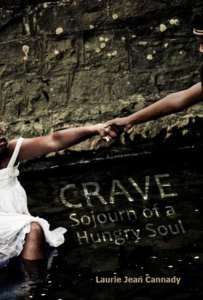
-Tell us about your new book Crave: Sojourn of a Hungry Soul. What inspired this book?
Crave: Sojourn of a Hungry Soul is a coming-of-age memoir that chronicles a young girl’s journey through abuse and impoverishment. The effusive narration descends into the depths of personal and sexual degradation, perpetual hunger for food, safety and survival. While moving through gritty exposés of poverty, abuse, and starvation, Crave renders a continuing search for sustenance that simply will not die.
-What is your biggest hope for Crave as it meets readers?
My hope is that it will resonate with those who, like myself, have had to journey through one difficult situation after another, those who don’t always feel like they have a tight enough grasp on hope, but they work toward a healing anyway because they know there is a way out of the mess.
-While you were writing Crave, were there authors that you mined for inspiration?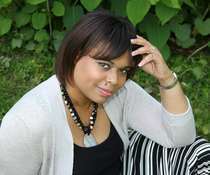
I read so many books while crafting Crave. The Glass Castle by Jeannette Walls served as a constant source of inspiration. I especially focused on the way in which her narrative moved across space and time. Rigoberto Gonzalez’s Butterfly Boy made me brave as I told my story and the stories of those who shared life with me. His honesty kept me honest and he demonstrated the skill it takes to weave a narrative that includes the voices of family members and friends. I revisited several times Frank McCourt’s Angela’s Ashes, studying his voice and the way in which he depicted the tragedies he and his family faced. His lyric voice made some of the most painful scenes palatable.
– How do you handle the moments when you have to write a painful scene?
Oftentimes, I’ll put on music, songs that remind me of the scene I’m writing. The process of writing painful scenes is especially meditative for me. I try to place myself back in that situation so that I can write from the POV of who I was then, not as the woman I am now. (That comes during the revision process.) I usually have to be alone and I need silence. During really tough scenes, I ask my husband to check in on me in about an hour or so, just to make sure I’m not going too far and too deep. There have been times that I just needed him to hold me after the writing. His embrace reminds me that I’m not in that situation anymore and I am in a safe place. There were some scenes where that writing seeped into my waking world or into my dreams. For that reason, I have people in my life with whom I can share my fears and sadness. Much like a child, “it takes a village” to raise a memoir!
-What’s next to your bed (or in your Kindle)? What are you reading now?
Full Catastrophe Living: Using the Wisdom of Your Body and Mind to Face Stress, Pain, and Illness by Jon Kabat-Zinn. While writing memoir, I think it’s important to practice self-care. Full Catastrophe Living not only reminds me of that, but it also gives me the tools to do so.
-What’s your best writing tip that you’d like to share?
Write a page every day, no matter what, and don’t be afraid to allow your narrative to reveal things to you. When I first began writing memoir, I thought I had to write everything, as accurately as I could remember, to some self-imposed end. It took years to realize that my narrative had its own end and its own way in which it wanted to be relayed. So, writing a page a day was a relief. I allowed the scenes to unfold as they pleased and once that writing was done, I was able to shape all that I had written into Crave.
Laurie Jean Cannady is a professor of English at Lock Haven University, where she spends much of her time encouraging students to realize their true potential. She is a consummate champion of women’s issues, veterans’ issues, and issues affecting underprivileged youth. Cannady resides in central Pennsylvania with Chico Cannady and their three children.
Find out more about Laurie Cannady here.
Checkout Crave’s amazing book trailer: https://www.youtube.com/watch?v=HFKPiUSQqBY#action=share


November 8, 2015
3 Strategies to Find Time for YOUR Creative Life: Poll Results
If you wish to live a self-directed life, you have to change your relationship to time.
–Marney Markidakis, author of Creating Time: Using Creativity to Reinvent the Clock and Reclaim Your Life
In July, I asked readers to take a one question poll and answer the following: What is the biggest obstacle you face in your creative life?
The overwhelming response was ‘finding consistent time to work on projects’. Time is always an issue for creative people.
What’s your story about time? Not the predictable one that you say on autopilot, but the one that is authentic.
We often tell a well-rehearsed story about how little time we have and why we can’t get to our creative work. I find that fear, lack of focus, unwillingness to prioritize (especially if it means we will disappoint someone), and procrastination keeps people locked into a story of ‘time scarcity’.
Here are some questions to help you dig underneath what is perhaps a familiar story:
-What’s something that you love that you never have time to do?
-What do you always make time for that you don’t want to do?
-Where is there ease and richness of time in your life?
-What kind of time does your creative life really need (e.g. daily creating time, dedicated weekend time once a month, a two week retreat)?
What needs to change about your allocation of time in order for your creative project to flourish?
Do you have models of creative people that you know (or have read about), that have inspired you by the way they use time?
These questions can bring to the surface thoughts and feelings about your experience of time and suggest new possibilities about how to use your time. As creative people, we must learn to manage our time and energy like a top level athlete. As author Marney Markidakis says in her wonderful book Creating Time, “the beast of time can never be fully tamed, but it can be disciplined, nourished, and cared for.”
Here are 3 ways to create more time:
1) Schedule it in. Yes, time for your creative project needs to be in your calendar.
Getting your creative projects to migrate from the bottom to the top of your to-do list is no easy feat. Ariel Gore makes this point in her witty book, How to Become a Famous Writer Before You’re Dead. She says that most of us believe that making time for creative work is selfish, so we put it at the end of our to-do lists:
“And then we kick ourselves because the novel isn’t written. We look down at our laps and blush when our writing teacher asks us if we got a chance to write this week. Of course we didn’t get a chance to write—it was the last thing on our list. We had a glass of wine with dinner. We got sleepy. I’m going to tell you something, and it’s something I want you to remember: No one ever does the last thing on their to-do list.”
I write every day. For me, writing every day keeps my momentum going. I typically do an hour of academic writing in the morning and an hour of creative work in the evening throughout the week. My academic writing is scheduled in my calendar. My creative work is scheduled in my calendar. It’s what keeps me sane.
If creating every day doesn’t work for you, find consistent periods of time that do and then schedule them into your calendar.
2) Develop a better reward system. Over the long journey of creating, producing good work becomes its own reward. However, for those of us just starting to pursue a creative path, may need motivation and encouragement to keep saying yes to our projects. Reward systems can be big or small and can be connected to time and/or output. This year is the first year that I have kept an active rewards list for meeting writing goals. About every few weeks, I’m checking that list to see what I have earned. The rewards list can keep me going through the really tough periods where writing doesn’t feel like its going well.
3) Work in smaller blocks of time. Creative people often pine for days of uninterrupted time, but as a coach, I’m often in the position of pointing out to clients that what time they have is not always used well. Creativity expert Susan Ariel Rainbow Kennedy (aka SARK) uses the concept of micromovements to break tasks into manageable segments of 5 seconds to 5 minutes. Very effective! She believes that creative people often assign themselves too big of a task. And, then when they don’t meet that often impossible task, their inner critics come leaping out to point out their lack of completion.
What can you do in smaller bursts of time?
You can do a writing prompt; draw/sketch, assemble your packets of seeds for the beautiful garden you are planning. She refers to micromovements as an ‘ignition system’. Once you are able to get yourself started, you can keep going after the short amount of time is up. Check out her books The Bodacious Book of Succulence and Make Your Creative Dreams Real for lots of information on micromovements technique.
Do you have some favorite ways to create time? I’d love to hear.


November 1, 2015
Baking Up a New Cozy Mystery Series: Author Interview with Karoline Barrett
Last November during National Novel Writing Month (NaNoWriMo), I took on the daunting but exhilarating task of writing a 50,000 word draft of a cozy mystery. I finished with a 50,000 word ‘baby’ draft that I loved. More recently, I’ve been revising that baby draft toward a real first draft. Cozy mysteries are ones that typically involve humor, an amateur sleuth and are set in an intimate social setting (usually a small town). They tend to downplay violence, sex and police procedure. As part of my research I’ve been reading a lot of cozies, paying attention to ingenious plotting, and keeping an eye out for new authors. I’m happy to have discovered the work of Karoline Barrett.
Karoline Barrett writes women’s fiction and cozy mysteries. Her first book, The Art of Being Rebekkah is women’s fiction. Her agent is the person who encouraged Karoline to write her first mystery as Karoline notes below. Like any good writer, she heeded her agent’s suggestion. Her new book Bun for Your Life (A Bread and Batter Mystery) is being published by Penguin this month.
I’m so happy to welcome Karoline Barrett to The Practice of Creativity!
Michele, thank you so much for having me on your blog. Appearing on blogs is one of my favorite things to do, and I had lots of fun answering all your questions! KB

–What inspired your new book, Bun for Your Life?
I love this question. My first novel, The Art of Being Rebekkah, is women’s fiction. When I finished that, I was floundering around, trying to think of what to write next. My agent asked me, “What do you like to read?” I replied, “Mysteries.” She then replied, “Why don’t you write one?” Then she tossed ideas at me, one of them being a hybrid pepper. From that, grew my premise for the first book in my Bread & Batter cozy mystery series, Bun for Your Life. Only, the pepper she talked about turned into apples!
-Tell us about your sleuth, Molly Tyler. What’s she like?
Molly owns a bakery with her best friend, Olivia. Molly’s intuitive, funny, an animal lover, and she’s partial to puzzle solving-hence her love of solving mysteries! It doesn’t hurt that she’s a little bit nosy as well. She loves Destiny (most of the time), the small upstate New York town she grew up in, and is devoted to her family and friends. Last, but not least, she certainly wouldn’t mind having a special man in her life to make her forget about her feelings for her ex-husband! Maybe the bachelor auction in Bun For Your Life will introduce her to a new man!
–Did you always want to be a writer?
Off and on. I was always a reader, but I didn’t get serious about writing until I was older.
–What’s been your journey to published author?
I began writing short stories, which were published. Then decided I wanted to write a novel. My first novel started off as a short story. Once I finished it, I began querying agents. I got a lot of requests for partials and fulls, but no takers. I was ecstatic when Fran Black of Literary Counsel signed me. She was my 121st query!
–What does your writing practice look like?
Quite messy at times! I work full-time in addition to writing, so even though I have a schedule, I don’t always stick to it! I have a little office at home, which is my writing room, so I can retreat and leave my husband happily watching TV. Most of my writing is done in the evening, which is hard as I am not an evening person, and on the weekends.
-What starts you writing a new story?
Since I’m working on a mystery series right now, the main characters and setting are already in place. I come up with a story, bad guy (or girl), the crime, some new secondary characters, a secondary plot, and throw in as much humor and conflict as I can.
-What’s your best writing tip that you’d like to share?
Just one? That’s hard! I’d have to say, Don’t get bogged down with self-doubt, just write!
Karoline lives in a small Connecticut town with her husband. When she’s not writing, she loves reading, the beach, traveling, and her family.
Visit her at http://www.karolinebarrett.com/


October 11, 2015
The Thrill of Writing about Diplomacy, Global Feminism, and Being an Ambassador’s Wife: Author Interview with Jennifer Steil
One of the most amazing things about attending The Room of Her Own Foundation writing residency, in August, is that I got to meet extraordinary women writers. Before attending the retreat, the organizers set up a private Facebook group so that participants would have a chance to connect. And, connect we did. I noticed Jennifer Steil right away. She seemed charming, funny, helpful (often answering questions about hiking in the desert, acclimatizing to the altitude of Ghost Ranch, New Mexico, etc.), and passionate about writing. I saw the cover of her new book, The Ambassador’s Wife and was immediately intrigued. I love thrillers. At the retreat, I discovered that Jennifer possessed all of the above qualities and was so much fun to be around. And, she was also a great encourager, generous with her time and an enthusiastic hiker.
Jennifer Steil has lived an interesting life. She’s been kidnapped once, has traveled extensively and has authored The Ambassador’s Wife, a novel that is currently being adapted for a limited TV series. Anne Hathaway has signed on to play the starring role.
She is an award-winning American writer, journalist, and actor currently living in La Paz, Bolivia. Her first book, The Woman Who Fell From the Sky (Broadway Books, 2010) is a memoir about her adventures as editor of the Yemen Observer newspaper in Sana’a. The book received accolades in The New York Times, Newsweek, and the Sydney Morning Herald among other publications. The Minneapolis Star-Tribune called it one of the best travel books of the year in 2010, and Elle magazine awarded it their Readers’ Prize.
Jennifer’s second book and debut novel, The Ambassador’s Wife, was published by Doubleday this summer and is receiving rave reviews. Marie Claire named it one of the ‘9 Buzziest Books to Read This Summer’. The Ambassador’s Wife won the 2013 William Faulkner-William Wisdom Creative Writing Competition Best Novel award.

Jennifer has lived abroad since she moved to Yemen in 2006 to become the editor-in-chief of the Yemen Observer. After four years in Yemen and four months in Jordan, she and her husband Tim Torlot and daughter Theadora Celeste moved to London. She moved to Bolivia with her family in September 2012.
Her work has appeared in the World Policy Journal, Vogue UK, The Washington Times, Die Welt, The Week, Yahoo Travel, and The Rumpus.
I’m delighted to welcome Jennifer Steil to The Practice of Creativity.
Tell us about what inspired you to write The Ambassador’s Wife?
Well, I suppose the fact that I am an ambassador’s wife is partly to blame for the inspiration! But if I may backtrack for a bit of context? My first book was a very different kind of book, a memoir about the experience of running a newspaper in Sana’a Yemen and the wild journey I took with my Yemeni reporters. That first year in Yemen was the most challenging, hilarious, and rewarding year of my life. Writing my first book, The Woman Who Fell From the Sky, felt very much like a continuation of my journalism career. Though it was the longest story I had ever published, I was just as exacting in my research. Al Qaeda experts read my pages on Al Qaeda, Arabists reviewed my transliterations, and I triple-checked all statistics and quotes.
By the time I had written the 79th draft of that book, I was pretty tired of telling the unvarnished truth. I wanted the freedom to fabricate. Also, I had just moved in with the man who is now my husband, who was then the British ambassador to Yemen. I went from living alone in the old city of Sana’a to living with Tim in a vast gated mansion we could not leave without bodyguards. We traveled in armored cars, had hostage negotiators in our guest bedrooms, and regularly dined with the foreign minister. It was surreal. Over our four years there I heard a thousand and one stories I was dying to use in a book. Only because I didn’t want to wreck my husband’s career so early in our relationship, I thought I had better fictionalize everything. I could place an entirely fictional narrative in our odd and fascinating context.

The result is my new novel, The Ambassador’s Wife. Anyone who knows me will recognize certain autobiographical details. Like me, my character Miranda is an American married to a British ambassador. She is a vegetarian obsessed with exercise. And she has trouble keeping her mouth shut. But the rest is all made up! Miranda is an artist, a talented painter. I cannot draw or paint. She comes from Seattle, I was born in Boston. She is an only child, I have a sister. I have also never nursed a stranger’s child, been kidnapped for a prolonged period, or put my husband and students in danger.
There were a number of inspirations for the book. The opening scene, in which Miranda is kidnapped while hiking in the fictional country of Mazrooq, is based on my experience being taken hostage in Yemen. It happened in nearly the same way, though of course with a (happily for me) different outcome.
I was also thinking a lot about parenthood, as I had just given birth to my daughter when I began writing the book. I wondered what would happen if one parent wanted to adopt and the other didn’t, and then a child was dropped into their lives. What would happen? Which bonds would win out?
The more I wrote, the more issues came up. I have spent a great deal of time pondering the hazards of westerners trying to transplant their culture in radically difference countries. This is a key issues in the novel. While Miranda has the best of intentions in teaching a group of Muslim women to be artists, she ultimately places her students in danger. Her passion for her work and her white savior complex blind her. I also became interested in hostage negotiations, diplomatic crises, and the role of artistic expression in societies.
I also wanted to explore the power of Muslim women. Westerners often view Muslim women as powerless. I wanted to reveal some of the ways these women do have power. They have the power of their connections with family, with each other, power in the anonymity of their dress. It is the Muslim women who propel the plot of The Ambassador’s Wife. The ambassador ends up being the least powerful person in the book.
What’s been the most surprising aspect of being a published novelist?
Hate mail. I found it so shocking when I got my first hate email after publishing my first book that I couldn’t eat. I take everything personally, even notes from people who are clearly insane. I wasn’t prepared for the attacks. And the people who sent me hate mail after my first book came out took issue with me as a human being rather than with the book itself. That can be hard to take. And might be another reason I turned to fiction. At least with fiction perhaps people are more likely to attack the book than the author. Though I haven’t gotten any hate mail since The Ambassador’s Wife came out. Who knows what will come!
When I sold my first book, I had dinner with my friend Tom, who helped me find my (brilliant) agent. “You think your whole life will change when you publish a book,” he told me. “But it won’t. You’ll be amazed by how little it changes.” This is true. Publishing a book isn’t like starring in a film; you aren’t suddenly hounded by paparazzi and you don’t usually become an instant household name. You still have to get up in the morning and make your family breakfast, dress your daughter, and then go back to your keyboard and do the work. Keep doing the work.
I read in your bio that in 2012 you were a finalist for the William Faulkner-William Wisdom Creative Writing Competition Best Novel award. And, the next year, you won this award. Can you say something about what you learned about revising the novel between those two years? And, what gave you the determination to submit again?
Yes, I owe a lot to Rosemary James, who runs that contest! The first year I entered my novel, it had an obscure Italian name and was only half-finished. I entered it in the Novel-in-Progress category. By the time the contest rolled around again, I had completed the book and revised it several times. Largely thanks to editing from my agent and others, it had grown and changed immensely, so I entered it in the Novel contest. This is how the revision process goes for me. 1) I write what I think is a brilliant draft. I then rewrite it four or five times before submitting it to my agent. 2) My agent says that while this will someday be a brilliant draft, it isn’t there yet. She asks me questions, points out problems with the story and characters, and sends me back to work. 3) We do this a few more times. 4) We give the book to my editor, who asks questions, points out problems, and sends me back to work. 5) We do this a few more times. Each rewrite gets me to a new level. And I don’t think I could get there on my own. My editor and agent are essential. They drive me to produce better work. There are many days where I feel like I will vomit if I have to rewrite one more time. But I do it anyway.
I am a big fan of entering contests. If you don’t enter you can’t win. I try not to keep track of which contests I enter, so that when I win something it’s a happy surprise. But at this point in my career, rejections don’t bother me too much. Everyone gets rejected from literary magazines, even brilliant writers. Everyone gets rejected from a writing residency at some point. When I was an actor I read a book that said actors usually receive about 50 Nos for every Yes. “So go out there and collect your 50 Nos,” it said. So you can get to the Yes. I have collected a lot of Nos—and gotten to some Yeses.
Your novel explores global feminist ideas in some fresh and complex ways. Can you tell us about some of the tensions and contractions you played with in The Ambassador’s Wife?
When I first moved to Yemen in 2006, I met a Maltese woman at a dinner party who was raging against western feminists who came to Yemen with naïve ideas about how to “free the women.” You cannot simply take our western ideas about feminism and force them onto Yemeni women. (Or anyone else). You need to consider the context of these women’s lives. What kinds of things will actually help them and make their lives better/easier, and which things might just get them killed? You have to start with a basic respect for the culture, and an interest in learning all you can about it. Only armed with that knowledge can you begin to help anyone who lives in a very different world.
I lived in Yemen for four years, and spent time in Jordan, Lebanon, Egypt, and the UAE. While running the Yemen Observer newspaper I became very close to my reporters, particularly the women. They taught me so much about their world, their limits, their aspirations. I let them tell me what they needed from me. I also discovered a lot about the things I take for granted in my own life.
One day when I was on my way to work, my taxicab driver began masturbating at the wheel. Horrified, I leapt out of the moving car in the middle of an intersection. I was in tears by the time I got to the office. But when I told my female reporters what had happened, they shrugged. “Oh yes, that happens all the time to us,” they said. “That is just what men are like.” There was a lot of information about the culture in that response.
My female reporters were the inspiration for the artists Miranda mentors. From them I learned how important their families were. That they would never move away from Yemen because they couldn’t imagine living far from their mother or sister or cousins. We Americans move around so much we assume that switching homes is an easy thing. But it isn’t for many people. It isn’t easy at all. This is another thing Miranda fails to understand. She sees a brilliant future for her star pupil Tazkia, but this future could only happen outside of Mazrooq, and Tazkia has no desire to leave her home.
Clearly, I could go on.
What three living writers would you want at a dinner party you were hosting? And why?
Oooh, Elena Ferrante! Because then I would find out who she really is! I am dying to know her entire life story and how much of her books is true and what her writing process is like. Oh, I could question her for days! Definitely Elena.
Caitlin Moran, because she just lets it all hang out. I love people who have no filter, who just say and do whatever the hell they want. She seems fearless to me, and fearless is good at a dinner party! Keeps things interesting.
Chimamanda Ngozi Adichie, because she would call all of us on our bullshit.
What guidance can you give aspiring novelists?
There is no better training for becoming a writer—of fiction or nonfiction—than journalism. Reporters must write every single day, they must write to deadline and to word count, and they learn more about the world with every story. You will develop empathy for people very different from you. You will visit neighborhoods you would not ordinarily explore. You will do things that scare you. What could be better? I say skip the MFA (you don’t want to be in debt the rest of your life) and get a job at a small paper. You will learn which details are essential to your story and which are not. Your writing will improve with daily use. And you will, if you are any good, provide a useful service to the world.
Would you share with us your best writing tip?
Go away. Go far, far away. The best thing any writer could do for herself is to go out into the world and have adventures that will give her something to write about. Take risks. Go to difficult places and do impossible things. If you want a guaranteed fantastic story, give up a comfortable life and move to the most difficult country in the world. Stories will find you. In abundance. Of course, if you already have an uncomfortable and crazy life where you are, you’re all set!
Jennifer Steil completed an MFA in creative writing/fiction at Sarah Lawrence College and an MS in Journalism at the Columbia University Graduate School of Journalism.
Since 1997, she has worked as a reporter, writer, and editor for newspapers and magazines in the US and abroad, while continuing to perform when in a country where it is legal to do so. In 2001, she helped to launch The Week magazine in the US, and worked there for five and a half years, writing the science, health, theater, art, and travel pages.
To find out more about Jennifer and how to purchase The Ambassador’s Wife, visit her website.


October 4, 2015
Autumn Inspirations for Your Creative Life: Writing Prompts
Have you noticed a slight chill in the air? Have you been marveling at the changing colors of the leaves? Have you started to think about unpacking your fall sweaters?
Autumn is here and it requests our attention. At each change of season, I turn to Seasons of Grace: The Life-Giving Practice of Gratitude by Alan Jones and John O’Neil. Seasons of Grace traces gratitude through the metaphor of the four seasons, encouraging readers to practice gratitude in new ways. It’s a remarkable book that has taught me so much about the power of gratitude as a foundational practice.
I have found that gratitude is a creativity enhancer. The more that we can cultivate gratitude, the more we can withstand the ups and downs, the boons and dry spells of a creative life.

They begin their chapter on autumn in this way:
“The fruits of the harvest are gathered and stored. The trees shed their leaves and reveal their true forms. The days grow shorter and darker, reminding us of how brief our time on earth really is. It’s autumn: a season for reflecting on what it means to be truly alive, and for giving thanks for the gifts an authentic life bestows.
It’s no coincidence that autumn and authenticity are linguistic cousins. Both share the Latin root aut-, meaning “to increase or grow.” Autumn brings the harvest bounty: the earth’s increase. Authenticity brings the reward of increased self-knowledge and awareness, of a life augmented (another word cousin!) through integrity. As autumn represents the ripening of the crops, so authenticity represents the coming into maturity of our characters. The link is gratitude, which allows us to ground ourselves in humility and recognize our authentic nature. When we live gratefully, we become more truly ourselves.”

Autumn presents us with an opportunity to reflect on our inner and outer harvests. Here are some writing prompts to feed your creative impulses as you explore the gifts of fall:
-Look at the following two words—autumn and authenticity. What connections between these two words do you sense?
-What’s most authentic in your creative work right now?
-When do you feel the most authentic? Alone? With others? At work? In nature?
-Write about the gifts from summer. What came to fruition? What didn’t? What are you letting go of for fall?
-What is your creative bounty?
-Finish the sentence: If I were living more authentically, I would…
-What are the 10 things you’re grateful for right now?
-Explore the list of seasonal words and phrases below. Pick one or two words or phrases that carry the most energy for you and free write about them for 5 minutes. Then choose one or two words or phrases that carry the least energy for you and free write about them for 5 minutes.
I’d love to hear your reflections on any of these prompts!
Seasonal Words and Phrases
Inner and Outer Harvest
Fruit
Light and Shadow
Waning light
Yearning
The out breath
The in breath
Change of color
Change of form
Surrender
Yield
Journey
Marvel
Inner equinox
Wheel of seasons
Going Within
Cyclical
Spreading
Season of preparation
Fallen Leaves
Opening
Closing
Balance
Turning
Radiate
Joyful completion
Roots
Autumn Light
Abundant core
Living in gratitude
Deepening
Mellowing
Maturing
Bountiful
The harvest is stored
Labor
Lady of the Sunset
Blessing
Harvest Moon
Revision
Practice
Letting Go
Seasonal Change
Ripening into autumn
Gathering and storing
Bird migrations
Wonder and Awe
Winds of Change


September 20, 2015
Who Is In Your ‘Envy Hall of Fame’?: Envy and Jealousy as part of the Creative Process
Envy is a vocational hazard for most writers. It festers in one’s mind, distracting one from one’s own work, at its most virulent even capable of rousing the sufferer from sleep to brood over another’s triumph.–Bonnie Friedman, ‘Envy, The Writer’s Disease’ in Writing Past Dark
What role does envy and/or jealousy play in your creative life? It’s an important question that we often wish to avoid. For a long time I struggled with the sting of persistent feelings of envy and jealousy toward other writers and creative folk. I felt I was the only one. And, for many years I felt ashamed of my feelings and kept silent about them. As a culture, we rarely seem to acknowledge envy and jealousy in a healthy way.
Two writers have recently provided excellent discussions on envy:
All creative people have to contend with feelings of envy. The question writer David Ebenbach asks is: Can we push with envy instead of against it? He calls his approach envy jujitsu.
Nina Badzin through her advice column on the HerStories Project tackles a question about envy, friendship and success.*
Years ago, when I came across the musings on jealousy by creativity author Susan Ariel Rainbow Kennedy (SARK) in her book, The Bodacious Book of Succulence, I felt seen and witnessed:
“I wish we would all have more clear, truthful, jealous outbursts. We all feel jealousy. I feel it often, about both odd and common things…Jealousy only points the way towards where we might like to go. It is a gift (an oddly wrapped gift)…Practice saying loudly and firmly I AM SO JEALOUS.”
She notes that most of us believe that we’re inferior if we feel jealous yet when “jealousy is shared consciously when felt, its power disappears”. She also says we try to protect others from being jealous of us by sometimes denying our own good fortune. And that our silence and a sense of scarcity is what “feeds” jealously. Agreed!
This brings me to the ‘Envy Hall of Fame’ exercise. I came up with the exercise, many years ago, in the midst of doing a 40-day yoga practice for anger, grudge holding and jealousy. I came to realize that intense envy and jealousy are often our inner critics’ favorite weapons.
The idea is simple—write or collage your ‘Envy Hall of Fame’ and then move on!
Writing and/or making a collage of folks that one is truly envious of can be therapeutic and can help redirect our inner critics. And, once you release that energy, you can move on. It’s not like you’re never going to feel those feelings ever again, you will, but your inner critics can’t beat you up in the same way.
Over the years I’ve found the best antidote for envy and jealousy is good self-care, a return to my own creative work and creative community. The work waits for us in all its possibilities and imperfections, to be settled into and explored.
Do you admit to your envy and jealousy? Do you write about it? Confide in friends? If you were going to create an Envy Hall of Fame, who would be in it?
*I found these two wonderful authors through the incredible ‘Practicing Writing’ blog maintained by Erika Dreifus. An excellent resource for writers!


September 13, 2015
Mother and Daughter Secrets and Our Creative Work
I’m sharing more about the magic of the AROHO writing retreat that happened almost one month ago. In the afternoons during the AROHO writing retreat, participants got to hear various writers discuss and riff off of the touchstone books thematically guiding the retreat: Virginia Woolf’s Orlando and Maxine Hong Kingston’s The Woman Warrior. The Woman Warrior at its core is about mother and daughter relationships and secrets. The presenters provided insights, read creative work, shared scholarly essays, tributes and everything in between when talking about these two texts. One of the speakers was Tania Pryputniewicz, a poet, who also writes a lot about motherhood and the creative process. She shared with us an incredibly powerful exercise designed to help us reflect on the nature of the secrets our mothers kept and secrets we’ve kept from them. I am re-blogging her wonderful post where she elaborates on her relationship to The Woman Warrior and shares this exercise in full. She is also calling for guests posts based on her exercise.
Mothers and Daughters: Secret Catharsis in Woman Warrior (and a Secret Door Writing Exercise for You)
“You must not tell anyone,” my mother said, “what I am about to tell you.” So opens Maxine Hong Kingston’s The Woman Warrior, from the first section of the book, titled, “No Name Woman.” So begins the re-telling of a family secret, where the story of the No Name Aunt moves out to haunt a much wider audience of mothers and daughters. The irony is not lost on us that the narrator, at the outset, in sentence one, is engaged in the act of disobeying her mother.
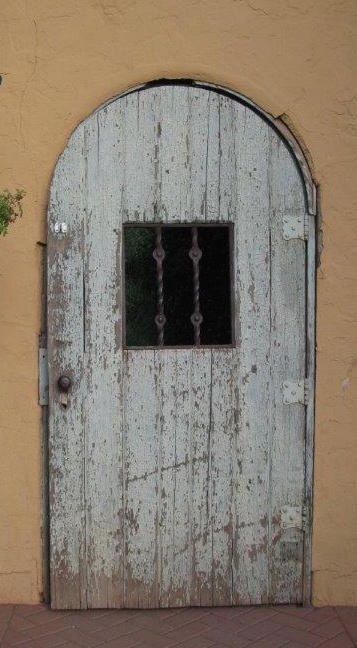
Many of us would agree that mother/daughter relationships are at one time or another fraught with complicated emotional, psychological narratives and emotional withholdings. But these same complications often come with hidden gifts.
read the full post here


August 24, 2015
Literary and Creative Mentors: Who are Yours?
I’ve been thinking about literary mentorship. I have just gotten back from the incredible Room of Her Own Foundation’s week long writing retreat held at Ghost Ranch in New Mexico.

A Room of Her Own’s mission is: To inspire, fund, and champion works of art and literature by women.
Over 100 women: poets, playwrights, fiction writers, essayists, etc., gathered in the desert to write and dream together and to build literary community. It was a thrilling and rare opportunity!
I suspect over the coming weeks, all the bits of wisdom that I gained will pour out of me. Right now, however, I am still digesting one particular experience that yielded up unexpected insight.
Besides the week long master classes that met for three hours a day, participants could also take a one time only ‘Studio Hour’, held for an hour in the morning. The Studio Hours offered sessions on writing development, performance, and the writing life. I decided to check out Dr. Li Yun Alvarado’s Studio Hour on ‘Womentorship’. This session was designed to explore and celebrate “the women mentors who’ve helped pave our way.”
Dr. Alvarado had quotes from the edited volume, Women Poets on Mentorship: Efforts and Affections printed out on large pieces of paper, placed around the room. We were encouraged to take one that resonated with us.
I chose:
Jennifer Moxley on Susan Howe:
“I was not mentored by Susan Howe, but I was mentored by her writing, and through this ‘invisible company’ I learned a great deal. I suppose I could have a similar ‘library apprenticeship’ with any number of dead women writers, but I have no doubt that the fact that Howe was living and trying to make sense of being a woman poet at the same time that I was greatly increased the meaningfulness of her advice. I replied to her letter, perhaps too quickly or with too much enthusiasm. I never heard from her again. The thrill of engaging an older poet as countless male writers had done was followed by disappointment and self-doubt when the correspondence did not ‘take.’ I was hurt at the time, but thinking about it now, I’m thankful that Howe refused my overture. The message I gleaned from her reticence has been crucial to sustaining my artistic life: to survive you must insist on your own vision in defiance of both style and the silence of others. An important lesson for any writer, but particularly for a woman” (131).
After we chose our quotes we were handed a strip of colored paper with a prompt and encouraged to write for about twenty minutes.
Here’s the prompt I received: Describe your first encounter with a mentor, a potential womentor, and/or the work of a womentor. Do your best to ONLY DESCRIBE the encounter, voiding commentary about or analysis of the encounter. Simply paint a picture of the moment.
I sat down eager, thinking the words would come easy. I started reflecting on the first person (besides my mother) who showed any interest in my writing. She was a high school teacher and I wrote in her English class a long narrative poem that had a speculative fiction element to it. I don’t even know if I still have the poem, but I remember working on it for weeks. It was the first long form creative writing I ever attempted. I had just started reading fantasy fiction and wanted to enter into that world. I remember her being kind and encouraging to me. I remember she would ask me about writing for many months after that and suggest books that I could read. She treated me as if I was already a writer and a part of a special club.
And, then much to my surprise, I couldn’t recall having another female (or male) mentor for my writing life until five years ago. I’ve had wonderful teachers, cheerleaders, encouragers, supporters and fans along the way. But, in writing this prompt, I it became really clear to me that I didn’t have a literary mentor, in the full sense of the word until recently. A literary mentor is someone who not only teaches you about craft and the writing life and reads your work, but also shares information about the bewildering world of publishing, introduces you to people, and perhaps nominates you for fellowships and writing residencies. A literary mentor is someone invested in your inner creative live in a deep and profound way.
It seems strange that I hadn’t realized I had been missing a mentor before now. Still, it came as a revelation, one that made me angry and then sad. I think the sadness stemmed from the fact that I am a professor (in women’s studies) and I love to mentor students and am good at it. It is a unique kind of emotional labor. Although the work of mentoring is not easy, it is something I gravitate to.
I think at one point in my life I yearned for a kind of mentoring intimacy that wasn’t available for my creative life. When the group reconvened, we discussed our varied experiences with mentoring. Although I understand that lots of writers are never deeply mentored, it still felt important for me to acknowledge a powerful absence that shaped a good chunk of my writing life.
I am profoundly grateful that a mentoring relationship evolved with my primary writing teacher over the past five years. Although I have thanked her often and publicly, and acknowledged that she saved my writing life, I sent her an email yesterday telling her how much I appreciated her. I met her when I was 41 and I probably would have stopped writing if I hadn’t met her when I did.
What’s been your experience with mentors, especially female ones? Have you had a female mentor that supports your creative life? How did that relationship evolve?
To help you percolate ideas, you may want to try writing any of these prompts that Dr. Alvarado provided:
-Brainstorm a list of potential metaphors that could be applied to you, to your womentor and/or to your womentoring relationship. Now use that metaphor or metaphors as a central element in a poem, a series of poems, or a narrative piece of fiction or nonfiction
-Write a letter from your mentor to you.
-Write a poem or series of poems with the title ‘Womentorship’


August 9, 2015
5 Tips to Make the Most of a Writing Residency
Tomorrow, I leave for A Room of Her Own Foundation’s week long writing residency which is being held in Abiquiú, New Mexico at the amazing venue known as Ghost Ranch.

A Room of Her Own’s nonprofit mission is: To inspire, fund, and champion works of art and literature by women. They host one of only about five or so writing residencies, in the country, exclusively for women.
It is a competitive residency and I am thrilled that I was accepted. There will be over 100 women writers attending (emerging writers to well established authors like Janet Fitch and Tayari Jones!), and I will get to take master classes and workshops with a range of amazing writers including Elizabeth L. Silver, Mary Johnson and Cynthia Leitich Smith. We will also spend our evenings discussing the retreat theme ‘Writing Against the Current’ which is a focus on Virginia Woolf’s novel, Orlando and Maxine Hong Kingston’s novel, Woman Warrior–and Kingston will be there in residence!
Another honor is that I will also be a ‘studio leader’ presenting a one hour version of my popular workshop: ‘Tone Your Creative Core: 5 Secrets for Artists’. This workshop offers strategies in areas where most creative people struggle: time, abundance and prosperity, feeling worthy to create and goal-setting. I’m delighted to explore these issues with women writers.
Writing residencies are structured in various ways. Some provide room, board and solitude, offering uninterrupted time to write with no other requirements. Others, like AROHO are much more interactive, including: providing intensive workshops (sharing and critiquing other participants’ work), hosting nightly receptions and readings, offering craft lectures, and encouraging networking and collaboration. I’ve known writers who have attended each type of residency. We often think the hardest part is getting accepted to one, but this isn’t the whole picture.
I’ve spent the last few months preparing for this incredible opportunity and have noticed that although there are a number of wonderful posts about why one should apply to a writing residency (see Jennifer Chen’s musings), and where to apply for one (here’s a great list from ‘The Write Life’), there is almost no discussion about preparing for the residency and making the most of it while there. Besides of course, to write.
Making the most of one’s residency means giving some thought to hidden challenges.
I’ve seen writers come back from a residency deflated because they had set unrealistic writing goals. Most folks are exhausted by the time they get to attend a writing residency. They’ve been juggling work, family responsibilities, community commitments, etc., often at a frenzied place. It can take a few days, during the residency, to decompress and reconnect to deep creative work. I’ve also known writers whose inner critics got the best of them and consequently didn’t get as much writing done. Or they got so intimidated by the other writers and instructors that they weren’t able to make enduring connections or contacts.
Here’s my five tips for making the most of a residency:
Make Your Goals Inspiring, Not Exhausting
Setting unclear or overly ambitious goals during a residency can lead to a big letdown. Writing residencies are also about allowing inspiration and spontaneity, so being flexible with goals can allow for more enjoyment as the writing process unfolds.
For most of the week, I’ll be taking a master class on ‘Emerging Heroes: Diversity in Young Adult Fiction’ with Cynthia Leitich Smith. I know little about writing young adult fiction and am super excited about stretching myself as a writer. Consequently, given the intensity of learning a new field, getting and giving feedback on others’ writing and the possibility having to work on prompts that Cynthia may assign outside of the workshop, I’m keeping my writing goals modest. From the schedule, it looks like I’ll have a daily 2-3 hours of individual writing time. I’m shooting for 10-20 pages a day of writing. That feels doable. I’ll also allow myself to create fresh material as well as work on current projects.
Give Yourself Permission to Embody Being the Writer of Your Dreams
Writing residencies present an opportunity to practice being a writer in public. Often aspiring writers write behind closed doors and without many opportunities to get publicly affirmed about their writing efforts. This is the time to revel in one’s writing identity. I’m going to take every opportunity to walk, dress and act like I am the writer of my dreams. I’m wrapping myself in an inner shawl of ‘deservingness’. I am holding the intention to attend every nightly reception and meet a few new people. I also hope to meet newly published authors that I’ll want to invite for an author interview for the blog.
Do an Inner Critic Check
Visual artist, Beverly McIver once said at a professional development workshop for artists, “Feeling worthy is a learned behavior.” Inner critics can make themselves known during a residency and derail us. In various posts, I’ve discussed some of the more common inner critics including the comparer, the pusher, the judger, the imposter, the procrastinator and the perfectionist. Inner critics inspire fear, judgement, dread and envy toward our writing selves and writing lives. Spending some time addressing inner critics (and assigning them new jobs where possible), before and during the residency can help quiet draining mental chatter and quell anxiety.
Polish Your Social Media Profile
Social media is often where people will find you first. I’m hoping to make strong connections while I’m at AROHO. I’ve already started to look up some of the people in my master class and have enjoyed learning about them through their social media sites. In the past month, I’ve spent some time updating my bio across my social media sites and beefing up my author Facebook page. You never know when someone is going to look up after making a connection, so it’s important that they can find you. A that what they find out about you inspires and draws them in.
Practice Communicating about Your Work
What is your work like? What are you working on? These are the essential questions to consider when talking about one’s work. Do you have an elevator pitch? Many writers (and artists in general) tend to avoid communicating about their work or freeze up when they do talk about their work. Given the time and emotional investment we have made for our creative pursuits, communicating about it is necessary and part of the creative process. I’ve been practicing my brief elevator pitch and look forward to using it.
Here’s great advice on elevator pitches from the Artist’s Tools Handbook from Creative Capital:
In theater, a rule of thumb is that, for every minute of stage time in a play, you need an hour of rehearsal time–and that’s when the script is already written. So think about spending at least an hour on this. Don’t just repeat your pitch 60 times; it’s more a measure of how long you should concentrate to get something good.
If you have tips to share about your experience at a residency and how you made the most of it, I’d love to hear them.
Photo credit: “Ghost Ranch redrock cliffs, clouds” by Larry Lamsa


July 26, 2015
Do You Face Obstacles in Your Creative Life? If So, I’d Love to Know About Them
Hi! This summer I’ve been thinking about my blog and you, dear reader. And, how I can serve you even better.
In 2009, I began this blog. I wanted a place that I could share insights about how people can practice their creativity ‘smackdab’ in the middle of their life. What a journey it’s been!
By 2010 I was an enthusiastic though inconsistent blogger. In 2011, I made a promise to myself to posting once a week. This commitment transformed my experience of blogging and writing generally. And, I have loved every minute of it. I’ve enjoyed conducting interviews with creative professionals and sharing them here. I’ve loved connecting with other bloggers and folks on the creative path (i.e. you!).
So, this brings me to a request. Moving forward, I want to continue to write about creativity and what is of most interest to you. Therefore, I’ve developed a fun, one question poll to find out what you might be wrestling with in your creative life. Would you take a minute and fill it out?
Thanks in advance! Thanks for your support and engagement over these many years.
And, feel free to drop me a line here, or at mtb@creativetickle.com if there are specific topics you’d like me to explore.
Take Our Poll