
Sarb Johal's Blog, page 7
March 2, 2021
6 Tips to Help You Stick to Alert Level Guidance
In conditions of uncertainty, or when we are not entirely sure how to act or what to think, we look to others for cues on what we should be doing.
This is where we all need to act as leaders.To practise physical distancing, to wear a mask if we can. To wash our hands. To keep using the QR code scanner app at all times. To remain kind and courteous to others, even though this current alert level change might be a big inconvenience in our lives with big consequences too.
Remember that the goal is the return to some kind of normal living, bar the international travel, as soon as possible and this is only going to happen if we all play our part.
Unfortunately, looking to others can also play out in the opposite direction to our goals. The more we witness people breaking the rules and regulations with little perceived cost, the more likely it is that we will also be tempted to breach rules and regulations: If everyone else is doing it, why can’t I do it too?
Be realistic and intentional about what you need to do to play your part. Work hard on your wellbeing.
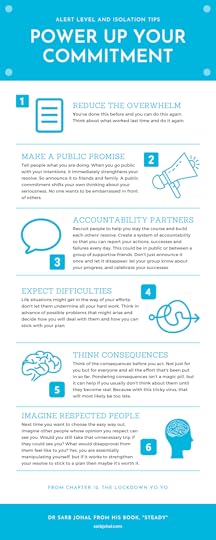
We can still be civil, adopt the appropriate manners for our situation, and wait it out.Here’s my infographic on how you can strengthen you resolve when uncertainty re-appears and we need to make a re-commitment to keeping each other safe.
For much more content like this, see my book “Steady: Keeping Calm in a World Gone Viral” – out now.
The post 6 Tips to Help You Stick to Alert Level Guidance appeared first on Sarb Johal.


March 1, 2021
Remember the Canterbury Earthquake Rollercoaster? Covid19 is a Rollercoaster too
I remember back to when I first started pushing back in Central Government on NZ on the idea that the Canterbury Earthquake recovery would be done in 2 years. This was the conversation that was happening in rooms in which I was being asked to provide advice, and appearing in documents too.
One of the hardest but most effective changes I managed to influence at a strategic level was pushing out this narrative to a 5-10 year window, possibly stretching out to decades. This was reflected when I was extensively interviewed for the Paua Productions’ trio of earthquake documentaries in 2013. I close the documentary episode calling attention to the lengthy time frame, and that he journey that was likely to be taken would not be straightforward.
I remember the Allright? campaign’s Canterbury Rollercoaster narrative that was being developed at the time too, or shortly afterwards, articulating the experiences that residents were reporting about their journey through unpredictable earthquakes.
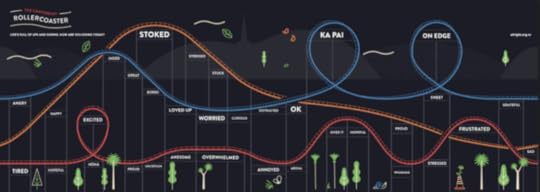
I think we should be doing this again to give voice to all those experiences, and to start to plot out the challenges we have yet to face. For example, even though we have done well so far in New Zealand, there are challenges in ensuring that we keep going as further challenges and communities see cases start to emerge through transmission of new variants of the virus. Even though the vaccine campaign in New Zealand is only just beginning, we are already seeing challenges to this from how this vaccine responds how new variants might evade the immunological defences that are initiated and bolstered through vaccination, meaning that these vaccines will most likely have to be tweaked. This then sets up new challenges about how we deal with those who are yet to be vaccinated, and those who are already vaccinated, but who may now have sub-optimal responses to different, and possibly more frequently encountered variants of the coronavirus behind the current pandemic.
Our Covid19 journey is by no means over. We have entered a new stage.Just as the vaccine has evolved, so will our messaging, the messages we try to communicate, and how we communicate them.
The virus has evolved quickly. We need to be just as nimble. It could be argued that right now we are playing catch-up. So we need to do this, quickly, and effectively. I have argued that low-risk does not mean no-risk. This is a key communication challenge now.
Calm analysis holds the key.Not knee-jerk reactions to ‘lock ’em up’. But a careful recalibration of the balance between structure and empathy is required.
What kind of structure is now needed? Apparently there are new categories such as “casual-plus” – technical terms that have been used in the health arena, but I wonder how these are understood more widely by communities.
And what about empathy? Empathy for whom? Empathy for those who have not adhered to isolation requirements and are now getting lashed on social media? Empathy for those whose lives have been turned upside down once again, being thrown into the latest loop of the emotion roller-coaster?
Have we got this balance of empathies right?I’ll be writing a series of articles over the next few days about Covid19 messages, messaging, messengers, and more. Be sure to check back often to read more.
The post Remember the Canterbury Earthquake Rollercoaster? Covid19 is a Rollercoaster too appeared first on Sarb Johal.
February 27, 2021
How Quickly can the UK Variant of the Coronavirus Spread in a School Environment?
The latest Auckland outbreak and the associated Level 3 restrictions can give us a clue as to just how transmissible the UK variant of the coronavirus can be in a school environment.
This concerns me.
The big bang approach to schools re-opening in England on March 8 was first going to be supported with mandatory masking – but this measure was rapidly back-pedalled and its clear that this is going to be option. This is troubling. Not only will mixing with relatively low levels of precautionary measures be applied, but the wider population are starting to show signs of lowering their guard as the vaccine rollout continues. Hotspots of new infection are being detected. The vaccine is being perceived as a solution rather than as an additional protective measure. As I blogged earlier, low risk is not no risk.
Take care out there.
The post How Quickly can the UK Variant of the Coronavirus Spread in a School Environment? appeared first on Sarb Johal.
Low Risk Does Not Mean No Risk: This is the Comms Challenge Now
This is the coronavirus comms challenge now.
Anger directed against what is essentially a highly mobile, adaptive and close to inanimate object whose sole purpose of being is to replicate itself quickly and widely doesn’t really make sense.
So we direct our ire towards the unwitting hosts of the virus and those agencies and leaders who are tasked to protect us. It’s understandable. No one welcomes this fresh injection of uncertainty into the mix, especially where it looks like it could have been avoidable.
What we need to remember here is that ‘low risk’ does not mean ‘no risk’.
This is the key task for fresh communications in this new risk environment.Because as the new coronavirus variants affect communities who are used to implementing a tried and tested system to guard against a virus with important differences compared to the original virus, what worked previously may not work so well now.
We need flexibility – not just for those who protect and advise us, but by consumers of that information and advice our communities too. And that includes me and you. We need to be more adept at refreshing our behaviours to make sure we are adhering to the latest advice, and to act with those extra precautions, even when it looks like the threat isn’t there. And doing it consistently. Again and again.
Because that’s our kryptonite as humans: where the threat is invisible, and where it has a long lag time before we can detect its presence through tests or symptoms, we discount the risk until we can ‘see’ it – when it is already spreading in our communities. Just look at how QR code scanning goes up massively after we detect a case in the community. The problem is, this may be too late.
Here’s the additional problem: when we are in an environment which is giving us multiple indicators that there is nothing to worry about here, for example, if we have tested negative multiple times, or we are living in a family bubble where everyone is testing negative, and no-one has symptoms, we can see how people may discount any risk from ‘low risk’ to ‘no risk’.
Add to that the pressure of living in financially precarious circumstances where every paid shift of work makes a difference, and where you are competing for those work shifts with others who are also in precarious circumstances and you can see how the pressure to see your situation as ‘no risk’ adds up. Add into this mix a possibly difficult manager / organisational setting where not being at work means you’re less likely to get future work, and what would you do?
If you even so much as pause before your answer, there’s some processing of a dilemma going on for you that affords you some insight into what may be happening.
Support people to see ‘low risk’ as genuine risk.It’s human to discount low risk where we can see no sign of the virus, to give us permission to just carry on as before.
If you have ever not bothered washing your hands, or put a mask on, or not bothered to physically distance, or not scanned or kept a record of your movements, are you on a continuum of minimising ‘low risk’ to ‘no risk’ too?
In this increased threat environment, the entire ‘team of 5 million’ need to pull together once again, especially those who are carrying the much of the burden in Auckland.
Leaders need to provide better communications to businesses and community leaders about the structural financial support that is available. The information is out there, but it’s clearly not cutting through. Understanding that dealing with finances in the here-and-now is critical, but it’s also future income potential once the immediate isolation period is over that is also at stake.
And for those being asked to isolate, I’m sure that the advice given is there to protect yourself and others in order to cause the least disturbance as possible to you and your community. Perhaps the way forward is to increase the number of checks being made by public health staff / social workers with those affected families , to ensure that any additional needs are being met, and to keep an eye out on how isolations are progressing. I know everyone is doing their best, but those face-to-face checks may need to be stepped up.
The post Low Risk Does Not Mean No Risk: This is the Comms Challenge Now appeared first on Sarb Johal.
Fresh Uncertainty Means Level 3 Again in Auckland
The situation explained at the 9pm conference is dynamic and very difficult, with Auckland being plunged into a high level of uncertainty again. Our sense of psychological safety is being challenged from multiple directions – not only by the potential spread of the virus that is being actively tested and traced, but also through people breaching advice to self-isolate.
The reasons for these breaches seem to be complex and we certainly need to understand this to ensure it doesn’t happen again. We also need to be cautious not to set-up a vindictive, toxic environment where people start to become reluctant to come towards for testing for fear of exposure to social media backlash or worse.
Nevertheless, the collective trust and effectiveness of the whole community following advice is under pressure. There may now need to be consideration about stronger enforcement action. But this needs to be carefully calibrated to ensure that people do not stop presenting with symptoms or potential situations of virus exposure or transmission.
The 7 days (at least) of Level 3 in Auckland will give some space to consider what happens next, balancing all these interests. No one wants to be in this situation. But it’s important that we consider all angles carefully in this coming period, weighing community public health with particular individual freedoms in a global pandemic.
The post Fresh Uncertainty Means Level 3 Again in Auckland appeared first on Sarb Johal.
February 26, 2021
Words Matter: How Communication Becomes Critical in Tackling Covid-19
The post Words Matter: How Communication Becomes Critical in Tackling Covid-19 appeared first on Sarb Johal.
SPOTTED! My book out in the wild: Have you seen it too?
It’s been over a month that by book Steady has been out, but it still gives me a kick seeing it out in shops, or people posting photos of where they’ve seen it, and when it’s arrived with them, or where they’ve bought it from.
Have you seen my book yet?If so, be sure to drop me a line, and a photo too.
You know what they say – post photos or it didn’t happen! [image error] [image error]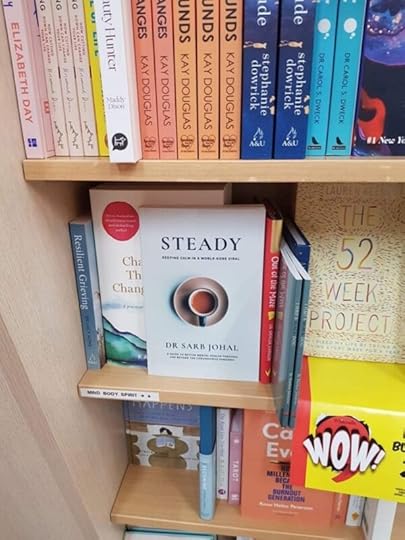 [image error] [image error] [image error]
The post SPOTTED! My book out in the wild: Have you seen it too? appeared first on Sarb Johal.
Cover Story for The Business Influencer Magazine
Really pleased to be featured as a cover story in the new issue of The Business Influencer magazine in the UK: “Lessons from New Zealand for the World.”
“Most people have been looking for a clean break from the trials of 2020. The advent of safe and approved vaccines have given many hope that the worst may be over. However, now that we are well into 2021, it’s clear that the increased uncertainty we have been experiencing is far from over. And the World Health Organisation has indicated that, at a global level, the number of deaths attributable to the pandemic may be even higher in 2021 than in 2020.
“All this uncertainty has implications for so many areas of our lives. Pressing questions such as: how can we keep ourselves and our loved ones safe? How do I run my business now? When will international travel start to become easier again? What does the future hold for my family, my business, our country, our international community? How can I secure an income that enables me to live above the breadline? How can I ever prosper again? Even though the vaccine is being rolled out in countries across the planet, various bottlenecks in policy, production, vaccine hesitancy, and sheer capacity to get needles into arms means that the time we will most likely be living through this pandemic for longer than our most optimistic hopes.”
Check out the full story here.
The post Cover Story for The Business Influencer Magazine appeared first on Sarb Johal.
February 23, 2021
“Steady” audiobook now available globally to buy
I’m so please to announce that my audiobook of “Steady, Keeping Calm in a World Gone Viral” is now GLOBALLY AVAILABLE.
And it’s also amazing to announce that the vocal artist I invited to partner with my on the project – Daniel Henning – has just been announced as a finalist in the Audie Awards (the Oscars of audiobooks).
Just to give you an idea of the quality of the experience that you can expect, fellow finalists this year also include Carey Mulligan, Laurence Fishburne, Jeff Daniels, Guillermo del Toro, Mindy Kaling, Alicia Keys and Kevin Bacon.
Here’s the links where you can get it.The list will grow as more outlets make their links available:
The post “Steady” audiobook now available globally to buy appeared first on Sarb Johal.
February 16, 2021
Alert Level Flexibility is the Key: That Means Down as Well as Up
The New Zealand Government has this afternoon taken the decision to lower the Alert Level of the Auckland Region to Level 2, and down to Level 1 in the rest of the country from later tonight. Auckland’s Level 2 will be reviewed further on Monday.
Many people will be relieved.The fact that most children will be able to go back to school, and people can head back to as much of their routines as will work under Level 2 will be welcomed.
However, for some there will be lingering worries.Is this really the right move? What if the tests that we are waiting for indicate that there are more positive cases?
The Government has judged that the conditions are controlled enough for them to be confident that even if new cases emerge, there is a high chance that they will be linked to known cases, and that control measures already in place will be enough to manage this outbreak. Given this judgement on health advice, they have used the flexibility in the Alert Level system to enable as much of a return to normal life as possible.
This flexibility is crucial.The danger is when we are faced with threat that we become rigid and react based on emotions, rather than a dispassionate assessment of the facts. And though the conditions surrounding this decision can be interpreted differently, and that these may be contested, the decision has been made.
For those who are fearful, this Alert level move will be challenging. It will require all in Auckland to truly act in accordance to the Guidance of Level 2 behaviours, and not skip back to Level 1.
Level 2 means Level 2. Resist the urge to act as if this is all over.The threat is judged to have lessened but not vanished.
If you are unwell:
If you’re sick, stay home. Do not go to work or school. Do not socialise.
If you have cold, flu or COVID-19 symptoms, call your doctor or Healthline and get advice about being tested.
If you have been told to self-isolate you legally must do so immediately.
It’s important that you use basic hygiene measures, including washing your hands, coughing or sneezing into your elbow and cleaning surfaces.
Use the QR code scanning appYou should keep track of where you’ve been and who you’ve seen. This helps with rapid contact tracing if it’s required.
Keep your distance when outside your home. You should keep a distance of at least: 2 metres in public and in retail stores, like supermarkets and clothes shops, and 1 metre in most other places like workplaces, cafes, restaurants and gyms.
At Alert Level 2 the risk of COVID-19 being present in the community is higher.
You legally must wear a face covering on public transport and on domestic flights and are encouraged to wear face coverings in situations where physical distancing is not possible, like in shops.
Go well out there and stay safe.
The post Alert Level Flexibility is the Key: That Means Down as Well as Up appeared first on Sarb Johal.



![[image error]](https://sarbjohal.com/wp-content/uploads/2021/02/IMG_2924.heic)