Sarb Johal's Blog, page 6
May 31, 2021
Steady now FREE to read on Kindle Unlimited – Please Share!
And although I’m busy doing what I love, the ‘making a living’ thing is proving to be a quite the challenge to crack.
I’ve discovered that I love writing. Not academic writing: I can do it, but I wouldn’t describe my relationship with that as love. What I mean is writing columns, blogs, and now books. And this is all about trying to bring my experience and analysis to shine a light on problems that people are experiencing, and helping them to develop solutions.
Balancing this love with actually getting paid is hard. And I’m still working at it. But it will not stop me from sharing my work.
And I really need your help here too.
For the next 3 months, I’ve made my book, Steady, free to read on Amazon Kindle Unlimited.This is a way that you can subscribe to Amazon books and choose from an enormous selection of books to read for a monthly fee.
But here’s the glorious news if you haven’t tried Kindle Unlimited before:
You can get a free trial of Kindle UnlimitedWith the recent outbreak in Victoria, Australia, Covid-19 case numbers on the rise in the UK again, and Dr Fauci warning the USA that they are not through the coronavirus pandemic yet, I hope my book is useful to many.
So, please share the link below so that people can read my book FOR FREE on Kindle Unlimited.
Make use of the link yourself. And if you could leave a review on Amazon / Goodreads as a thank you, I’d very much appreciate that.
Remember, this is a trial to see how this goes for the next 3 months.
This FREE offer won’t last forever.So please share it on with those who you think might benefit from reading it.
Thank you.
The post Steady now FREE to read on Kindle Unlimited – Please Share! appeared first on Sarb Johal.


May 27, 2021
MY NEW BOOK! The Little Book of Sleep is here
My new book is here and it will help you to SLEEP EASY again.
The Little Book of Sleep is a quick read, and absolutely PACKED full of tips.
Find out how you’re RUINING your sleep. I know that my sleep was not good – and it was one of the reasons why I wrote this book. Once I sat down and looked at the evidence about how I was sabotaging my own sleep, I took action and saw IMMEDIATE results.
Over the past two months, my deep sleep has been TRANSFORMED. Here’s what happened…
Studies have shown that an adult requires 1.5 – 1.8 hours deep sleep per night. Most people spend 10-30% of their sleep time in deep mode. I have been getting an average of 3 hours deep sleep every night: a HUGE 37%!
In The Little Book of Sleep I’ll SHARE what you need to MAXIMISE your chances of a great night’s sleep.
Get ANSWERS to the most popular questions people like you are asking about on Google, Youtube and Amazon.
This book is for you if you are wondering:How important is sleep?How can you sleep better?How can you sleep better after drinking alcohol?How much sleep do you really need?How can you sleep less?How can you sleep faster?Can meditation help you sleep better?How can you sleep better in the summer?How can you sleep if you have anxiety?The Little Book of Sleep is full of simple actionable advice for anyone wanting to learn how to get better sleep.
And it’s AVAILABLE NOW on Amazon.
The post MY NEW BOOK! The Little Book of Sleep is here appeared first on Sarb Johal.
May 25, 2021
Better Safe Than Sorry
The news that the vaccine timetable for those in Group 4 – most of the New Zealand population – has slipped from July to the ‘end of July’ is concerning enough on its own.
But now we also see that there is a small outbreak of Covid-19 cases in Melbourne, which authorities are scrambling to discover more about.
We will know more in just a few hours.That we have a window in New Zealand where vaccination of the population will not be at a high level of Covid-19 vaccine coverage is a challenge. This window has most likely just got larger – or at least has changed shape, and not to our advantage. Pair this with what is going on across the Tasman, and also in the region, with increased number of cases in countries that have done relatively well in terms of their response to the pandemic – Singapore and Taiwan – and this is good reason for unease.
Even though this window of vulnerability is clear, and despite our borders remaining largely closed, accidents happen. We know the virus can escape from MIQ. We know that the flow of people traveling through the trans-taxman bubble can be turned on and off. But if cases have been undetected over the other side of the Tasman for a week, the shutting off the flow of people – who may incubate the virus – may be too little, too late.
This is all the more reason for New Zealanders to take extra, not fewer precautions in their daily lives until we have better vaccine coverage and protection for the vast majority of the population. Yet, when I see buses in Wellington, perhaps 5-10% are masked. And this a generous estimate. People are attributing their sniffles to winter colds and letting them pass, without thinking that a Covid-19 test is in order.
Case numbers are growing again across many places in South East Asia. India is nowhere near under control yet. New Zealanders are in a bubble, a cocoon of Covid-19 invulnerability, which may pop in a way that means that when we finally decide to increase our personal safety behaviours, it may be too late.
We need to adhere to public safety measures now.
Better safe now than sorry later.The post Better Safe Than Sorry appeared first on Sarb Johal.
May 21, 2021
I’ve been busy trying not to be busy. It’s working. Here’s why.
Around the end of March, I figured out that I was working too much.
I’d lost my vitality. My mojo was missing.It had been going on for a while – about 14 months – but I identified that I needed to scale down, and take this seriously.
So why now, after what has been an immense year? Here’s a few reasons.
I had gained almost 10kg in the past year. And I was still gaining. As well as making me feel sluggish and terrible, it was becoming a health risk.My sleep was terrible – and even if I did sleep, I didn’t feel refreshed when I woke. And yes, we have young children, but it was getting worse.I was working a lot of weekends and evenings trying to keep up with consultancy work, making YouTube videos and stay on top of writing blogs, social media and promoting my book too.I was finding hard to make time to even spend five days off with my family in the school holidaysI wasn’t spending enough fun time with my family. Or my friends. Or even myself.I found it hard to do even 5 push-ups.I was feeling overwhelmed and burdened with a sense of responsibility for everything from earning enough for us as a family to pay the mortgage and eat, to providing advice for the Covid-19 response and recovery.When I put all this together, I didn’t like what I was seeing. So, I resolved to do something about it.
Here’s some of the stuff I’ve been doing.
Started intermittent fasting again, tracking using the Zero appUsed the second hand spin bike I boughtSigned up to the Apple Fitness+ App and use it regularlyCycling between cardio, HIIT and strength training for 30-60 minutes per day.Going out for 30 minute walksStarted going to bed earlierVery limited evening and weekend workingTook five days off with my familyStarted turning down work and media opportunities that didn’t fit in with my core purpose. Or was needed too quickly, at strange times, or that took me too far away from what I was already doing. I find it hard to re-focus once I’ve been distracted in this wayEating more healthily, with more protein, good fats, and finishing eating by 7pm latest.All in all, it’s been going really, really well. Even after a bout of norovirus that steadily made its way through our whole family – not a pleasant week, I can tell you. I’ve lost 8kg in about 6 weeks, and my clothes have started fitting me much better again. I’m spending more quality time with my wife and our children, and my work is still fine. I’ve just dropped things that weren’t working for me anymore, and have doubled down on the stuff I’m loving doing – like writing. And you know what? I’m going to write about all this. Not in a driven, short deadline driven way, but in a way that perhaps people like me – who have families and in their early 50s (or a bit younger or a bit older, who find themselves with busy desk-jobs, full diaries, and slowing metabolisms) to try to find a way out of a slow decline to feeling bad, and just walking through life with a sense of purpose and vitality. To rediscover their mojo.
Because, for a while there, I’d lost mine.
If this resonates with you, I’d love to hear from you – drop me a comment below and let’s talk.
The post I’ve been busy trying not to be busy. It’s working. Here’s why. appeared first on Sarb Johal.
March 28, 2021
We Need a Better National Mental Health System
We need a better National Mental Health System. Alongside stronger regulation and governance, we especially need a body that can commission services to better mental health standards, and to help develop a workforce better able to serve New Zealanders. To do this, we need a better standards framework alongside a workforce development strategy to meet these standards.

Better Standards
There are welcome developments in He Ara Oranga : the report of the Government Inquiry into Mental Health and Addiction. The inclusion of voices of those with lived experience is an important development. However, the report is light on the role of the established and developing evidence-base and how services are commissioned.
When mental health workers try to help people, often they generate new solutions or ways of working where best-practice guidelines already exist. This may be driven by several factors, including a lack of awareness or viable options or resource constraints. Often, it can be impelled by the idea that each and every geographical district is distinctly different and needs to do things their own way. Although there are definite advantages to locally-tailored solutions, we cannot afford to remake the wheel every time a knowledgeable member of staff leaves, or a new provider wins the contract to deliver a service.
How should we intervene to align professional standards and guidelines across the country to deliver better outcomes based on effective best-practice on well–researched protocols from across the globe?
In the UK, The National Institute for Health and Care Excellence (NICE) is an executive non-departmental public body of the Department of Health. NICE was established in an attempt to end the so-called postcode lottery of healthcare in England and Wales, where treatments that were available depended upon the NHS Health Authority area in which the patient happened to live, but it has since acquired a high reputation internationally as a role model for the development of clinical guidelines.
NICE publishes guidelines in four areas including clinical practice: guidance on the appropriate treatment and care of people with specific diseases and conditions. These appraisals are based primarily on evaluations of efficacy and cost–effectiveness in various circumstances. NICE also provides a service called Clinical Knowledge Summaries which provides primary care practitioners with a readily accessible summary of the current evidence base and practical guidance – extremely important to keep all stakeholders informed with best practice.
How would this work in New Zealand?The New Zealand Guidelines Group was an independent, not-for-profit organisation, set up in 1999 to promote the use of evidence in the delivery of health and disability services. The NZGG went into ‘voluntary liquidation’ in mid-2012. We could look at re-constituting a similar body. However, we are fortunate in that we already have an existing operations model which could be used as a proto-template for this body: PHARMAC.
PHARMAC makes its decisions around medicines through their Factors for Consideration. These Factors cover four dimensions: need, health benefits, costs and savings, and suitability. I don’t think it is a huge leap to apply a combination of the NICE and PHARMAC models to mental health care in New Zealand. We have too many ad-hoc decisions meaning that funding doesn’t necessarily flow to the right treatment protocols, and people aren’t getting access to the best treatments for their conditions. We can do better than this, and models exist to help us deliver this.
A commissioning structure that works more closely with the centre can also take advantage of closer coordination with those agencies that have influence on social determinants such as housing, meaningful and adequately paid employment and education that influence mental health.

Workforce Development
We have a workforce with varying levels of training all over New Zealand. One of the issues that I have talked with people about is that this results in a lack of confidence in the consistency of quality of the services offered in the mental health sector. Furthermore, because of the lack of nationally agreed standards and what services should be commissioned to improve mental health and wellbeing outcomes, there is a lack of drive and curriculum base upon which to train our social and mental health and wellbeing care workers, volunteers and other providers.
If we don’t know what we are training for, is it any wonder that providers may feel under-prepared, and community members start to lack confidence in the competence of those providers?
We should aim to support the development of the workforce in accordance with the approaches, methods and techniques recommended for various disorders and outcomes by a NZ-equivalent of NICE. This would mean working with training programmes such as medical training providers, clinical psychology, nursing, social work, psychotherapy and counselling, and community development making sure that they are delivering training according to a skills and knowledge framework developed by this NZ body.
Service users can then be confident that they are getting the best treatment that exists and is available in New Zealand, delivered to transparent best-practice protocols and treatment recommendations.
Part of the reform work for mental health services is underway. Much of how we decide which services will be commissioned about the workforce will be trained to ensure equity of access for all New Zealanders is yet to be finalised.
I believe that a focus on a National Mental Health System will bring a much needed focus on better nationally agreed standards for intervention, improved commissioning for services in line with these standards, and a workforce trained to be able to meet them.
The post We Need a Better National Mental Health System appeared first on Sarb Johal.
[SOLUTION] If you’ve tried to order my paperback book from Amazon and you’ve been told its not available, here’s why
If you’ve ordered my paperback book from Amazon, especially in the UK and have been told it’s out of stock,
I can only apologise.To be honest, I’m bewildered, confused and more than a little annoyed.
I suspect this is a combination of incompetence on the part of IngramSpark (who is my printer and supplier internationally), and strong-arm tactics by Amazon trying to force me to use them instead.
So, I’ve had to cave in and accept lower margins and sell through the Amazon Paperback system too. I know this isn’t ideal but please re-order if you can. I’m not happy about this situation, and I can understand it if you’re not prepared to support Amazon in this behaviour. But the danger is that I also lose out in orders – and I really need them. I’m already thousands of dollars in the red publishing this book on my own. This really was the last thing I needed
I’d appreciate your support.
Thanks for your order.Here are the links below to order the paperback.
* USA: https://amzn.to/3nKuzt9
* UK: https://amzn.to/37GyeCB
* Canada: https://www.amazon.ca/dp/0995146101
* Australia: https://www.amazon.com.au/dp/0995146101
* Singapore: https://www.amazon.sg/dp/0995146101
* India: https://www.amazon.in/dp/0995146101
* Germany: https://www.amazon.de/dp/0995146101
* Spain: https://www.amazon.es/dp/0995146101
* Italy: https://www.amazon.it/dp/0995146101
* Japan: https://www.amazon.co.jp/dp/0995146101
* Mexico: https://www.amazon.com.mx/dp/0995146101
* Turkey: https://www.amazon.com.tr/dp/0995146101
* UAE: https://www.amazon.ae/dp/0995146101
* France: https://www.amazon.fr/dp/0995146101
* Netherlands: https://www.amazon.nl/dp/0995146101
* Sweden: https://www.amazon.se/dp/0995146101
The post [SOLUTION] If you’ve tried to order my paperback book from Amazon and you’ve been told its not available, here’s why appeared first on Sarb Johal.
March 16, 2021
Preparing for Covid-19 in the Community When Borders Start to Re-Open
Let’s imagine that we have a vaccination campaign that has gone really well in New Zealand, with a high proportion of the population receiving the Pfizer / BioNTech jab. As more people get vaccinated, community protection also increases.
Let’s also imagine that, globally, numbers of cases of Covid-19 have fallen dramatically, but pandemic coronavirus variants still circulate freely around the world.
Can we still maintain an elimination strategy in New Zealand as we open our borders?It’s looking unlikely. In fact, what we might need to think about is a higher number of cases of Covid-19 in the community than we have been used to seeing until now.
Even if we require vaccination for visitors to New Zealand, this gives visitors a high level of Covid-19 protection, but it is not perfect. It varies between vaccines and variants of the virus, perhaps for how it affects onward transmission too. Although data are becoming available, we still don’t know enough about this.
It’s possible that we will have visitors who end up testing positive for Covid-19 in the community. And even if we have high levels of vaccine uptake, and good community protection in New Zealand, it’s highly likely that we will also need to keep and increase the use of behavioural methods – distancing, masking, reducing numbers of people meeting indoors – in reducing risk of exposure to Covid-19 infection when community outbreaks are detected.
How we think about these outbreaks is likely to change.Testing methods and contact tracing are likely to evolve and improve, as will the Alert Level system that has served us very well until now.
But as we move into a future where we may see more imported cases of Covid-19 in the community, we will need to plan how we contain these outbreaks, and encourage people to continue to maintain physical distance, wash our hands, and use masks where appropriate according to local conditions and risk of infection.
The more people take up the vaccine, the better. This work continues. But as we transition into a world where international travellers eventually come into New Zealand and move around again, alongside the continuing vaccine campaign as an additional layer of protection, we will need to deploy all our behavioural methods of reducing our risk of infection.
Vaccines alone won’t protect us when we re-open our borders. Not for some time to come.
The post Preparing for Covid-19 in the Community When Borders Start to Re-Open appeared first on Sarb Johal.
March 10, 2021
Exiting Covid-19: Changing our relationship with the future
In my lengthy blog post yesterday, I talked about what the exit narrative for New Zealand may look like now we know more about the vaccination strategy.
Thinking further about this, what I’ve realised is that the task is about changing New Zealanders’ relationship with the future.
Let me explain.When the pandemic started, it disrupted our present. First slowly, but then this sped up to a point where we needed to take swift and massive action. This also rapidly spread to our future. It became foggy and uncertain. Even for those with the most precarious of lives, things most likely got worse.
This uncertainty also came along with fear of the unknown. What was going to happen? Were we going to die? Were our families going to die? How would we survive if the virus threatened our businesses and jobs?
This fear manifested itself in the anxiety many felt about their futures.
I’ve long argued that structure and empathy have been very helpful in guiding us through the pandemic so far. Structure has helped to increase predictability and to contain this fear. But there has always been a sense of a “holding pattern”, until we developed technologies such as vaccines and medical treatments that turned the tide in humanity’s favour.
This moment is here. It’s unfolding now. There will be jolts, bumps, and mis-steps. But where there was massive uncertainty, the unpredictable gaps in our futures are now starting to be filled in.
Our relationship with the future is changing. We need to articulate this better.If they are well-deployed, vaccines have the potential to dispel fear and to increase our sense of hope. A cautious and pragmatic hope at first, but hope nonetheless.
And with hope, comes vision, motivation and desire for our futures, as opposed to this fear of the unknown.
Positive communications focusing on the benefits that vaccines can give us can go hand-in-hand with continued messages about how we carry on safeguarding each other if the risk of community spread of Covid-19 arises again.
Make no mistake, the unknowns are still out there. And for many, positive communications about vaccine benefits will need to be measured against policy gaps about how people bridge the gaps between sufficient vaccine coverage of the population, and what happens next for border openings and other re-engagement with whatever a more usual life might look like.
So, changing our relationship with the future from fear to one of pragmatic hope is the task at hand, and continued messaging about how we collectively safeguard communities against risk of uncontrolled Covid-19 infection as we move towards effective vaccine coverage.
One issue that will dominate public conversation will be about how we assist those with problems of living as we move towards this future. Mental health services alone can’t fix lack of money, or people worrying about debt and their businesses failing.
This is another challenge. And it needs to be met quickly.
More about that in an upcoming blog.
The post Exiting Covid-19: Changing our relationship with the future appeared first on Sarb Johal.
March 9, 2021
Now that the Vaccine Pathway is Clearer, What is the Exit Narrative?
This psychologically-informed post offers suggestions for reframing the current narrative for strategic, high level Covid-19 communications. My analysis describes the current successful minority influence approach, but also the risks of continuing along this path.
I propose moving from a story of safeguarding to a narrative of the potential benefits that are unlocked through vaccine uptake and continued public health measure adherence.
This is all my own personal point of view and analysis of what’s happened so far, and where I think we could be going in terms of an effective pandemic exit strategy.
Let me start by assuming that the end-state public health objectives are effective herd immunity, widespread uptake of Pfizer / BioNTech vaccination programme, and acceptance for the need of yearly booster vaccinations to sustain this.
The future is uncertain, but what is certain is that we can make sense of the future through our ‘antenarratives’. Antenarrative is the process by which retrospective narrative (what has been used to make sense of where we are right now, e.g. the team of 5 million) is linked to living stories (our current experience, which is in between community outbreaks and moving towards a widespread vaccination programme).
New Zealand made an early decision to make sense of and stabilise the nation’s experience of uncertainty through tracking along an ‘antenarrative’ along the lines of “change is constant and we must follow the data in future”, reflected in alert level changes, public health measures associated with this, alongside economic and wider supports.
This narrative story of the “team of 5 million” has got us so far. This has been a narrative of normalising change. However, there is an increasing risk that this narrative is now being perceived as stale and outdated, as the situation is not as dynamic as it once was.
What is the alternative to this narrative, and where does any potential narrative lead us, given the current situation of low levels of risk of community spread, and mass vaccination commencing in 3-4 months from now?
An alternative antenarrative might now start to reduce some of the resurgent uncertainty about what happens next, creating a narrative about anticipated benefits of new measures taken by the Government, and where this may lead us.
This then requires a stronger change in emphasis from risks of not adhering to or accepting public health measures including vaccines, to potential benefits that are unlocked through vaccine uptake and continued public health measure adherence in the future.
This is ‘prospective sensemaking,’ a calculated bet on the future with plausible strategic storytelling that can adapt to unexpected roadblocks.
New Zealand can tell this exit story in terms of both ‘normalised change’ initiatives including comparison with other comparable countries in the world and how well we are doing on many different measures of successful management of the pandemic, and ‘anticipated benefits’ for individuals, families and communities, as well as to the national economy.
Telling the NZ exit story of the pandemic and what needs to happen to get there becomes a story of pragmatic hope, drawing a clear picture of what life might look like post-2021.

What level of buy-in would be needed to carry an ‘unlock New Zealand’ exit narrative?
What level of buy-in would be needed to effectively carry this story to promote helpful behaviour change and adherence through the period where risks become lower as key workers and communities are vaccinated, and as vaccines become more widely available for all communities?
In trying to understand what is happening with physical distancing, mask wearing on public transport, hand washing, and scanning in, it’s worth asking this question to understand our behaviour, and why this appears to be falling way (e.g. scanning in only after cases appear): what’s our level of buy-in?
There appear to be three levels of buy-in that have been identified by psychologists.
First, there is compliance, which is the most surface level of buy-in. This is when a person may agree in public with a group of people, but the person privately disagrees with the group’s viewpoint or behaviour. The individual changes their views, but it is a temporary change. Here we can see the power of social norms – everyone seems to be scanning in, so I’ll do it too. Perhaps this is also what is going on when we see big reductions in QR code scanning behaviour after Alert Levels fall back down again. The privately held view that this is necessary now starts to dominate, and is a widely held enough view that the social norm effect disappears, because enough people have changed their behaviour to non-scanners that the power of seeing lots of people around you using QR codes is no longer there to nudge you to alter your behaviour.
Second, we have identification. This is where someone conforms to the demands of a social role in society, e.g. teacher, police officer, or politician. This compliance extends over several aspects of their behaviour, but there is no change to their internal personal opinion. We may see behaviour appear in private that would not be permissible or would be socially frowned upon when a person is ‘in-role’. This underlies the success of the ‘team of 5 million’ narrative and extended membership of this social role.
Third, and a deeper level of buy-in is what is known as internalisation. This is where we publicly change our behaviour to fit in with wider social norms, and in addition we agree with the group beliefs privately too. Perhaps an example of this is how we behaved during the initial phases of the pandemic in New Zealand, where we saw widespread (but not universal) changes in behaviour in order to keep others and ourselves safe. For a large majority, this has remained their default behaviour as it has been internalised.
Is it necessary to achieve internalisation for an exit phase from the pandemic? Possibly not. Read on.
What kind of social influence is effective to promote buy-in to behaviours that keep us safe?
Normative social influence is where a person conforms to fit in with the group because they don’t want to appear foolish or be left out. Normative social influence is usually associated with compliance, where a person changes their public behaviour but not their private beliefs.
For example, a person may feel obliged to scan in or wear a mask on public transport because most other people appear to be doing the same. Normative social influence tends to lead to compliance because the person scans-in or wears a mask just for show but deep down they don’t wish to do so. This means any change of behaviour is temporary and reverts once social pressure eases. The level of buy-in is likely to be public performance only at a level of compliance.
Informational social influence is where a person conforms because they have a desire to be right, and look to others who they believe may have more information. This type of conformity occurs when a person is unsure of a situation or lacks knowledge and is associated with internalisation. However, people looking for information on how or what to do to be ‘right’ will look to their own trusted sources, both online and offline, in order to gather information, especially when unsure. Social proof online then complicates this process, because what is seen to be right might not objectively be correct.
What gives rise to more independent behaviour where people are not amenable to social influence?
Independent behaviour is a term that’s used by psychologists to describe behaviour that seems not to be influenced by other people. This happens when a person resists pressure to buy-in through social norms.
If one’s level of buy-in is only at the level of compliance, it’s more likely that just one other ‘dissident’ leads to a reduction in compliance behaviour. It’s thought that this is experienced as social support, making people feel more confident in their own privately held opinion, and more confident in rejecting the majority position. Think of this as explaining why behaviour can change rapidly once we start to see others behaving in ways that bolster our own opinion, and when we are only performing safety behaviours because everyone else seems to be doing the same. When people around us stop using the Covid-19 Tracer app to check in, it’s easy for this cessation behaviour to spread rapidly, if one’s motivation to use the app is only at the compliance level of buy-in.

Effective minority influence: The Elimination Strategy is a story of social change
This is a powerful change agent under certain conditions, and possibly why compliance with New Zealand’s elimination strategy and public health measures has been successful so far.
Minority influence occurs when a small group (minority) influences the opinion of a much larger group (majority). This can happen when the minority behaves in the following ways.
Being consistent and unchanging in a view is more likely to influence the majority than if a minority is inconsistent and chops and changes their mind. There are two different types of consistency to note: (a) diachronic consistency – i.e. consistency over time – the majority sticks to its guns, doesn’t modify its views, and (b) synchronic consistency – i.e. consistency between its members – all members agree and back each other up.
This consistency seems to be important because when confronted with a consistent opposition, members of the majority will sit up, take notice, and rethink their position. A consistent minority also disrupts established norms and creates uncertainty, doubt and conflict. This can lead to the majority taking the minority view seriously. The majority will therefore be more likely to question their own views.
Commitment is another important characteristic that can extend minority influence. When the majority is confronted with someone with self-confidence and dedication to take a popular stand and refuses to back down, they may assume that he or she has a point, regardless of any objective evidence.
However, though consistency is important, flexibility also seems to be a key factor in how minorities influence majorities. Some researchers argue that the key is how the majority interprets consistency. If the consistent minority are seen as inflexible, rigid, uncompromising and dogmatic, they will be unlikely to change the views of the majority. However, if they appear flexible and compromising, they are likely to be seen as less extreme, as more moderate, cooperative and reasonable. As a result, they will have a better chance of changing majority views.

Implications for an evolved messaging campaign
The public health messaging campaign in New Zealand successfully transitioned from a minority-held elimination strategy view to convince the majority their point of view through a process of social change.
However, public messaging is now being called into question in a few different ways. This ranges from from microscopic examination of consistency between communications received by individuals trying to establish presence of Covid-19, and advice issued how how to manage any particular case, to strategic concerns about the framing of the New Zealand’s strategy for how we exit this phase of the pandemic when community-wide vaccinations are some time away.
TLDR; Here’s my recommendations:In line with a developing narrative of foregrounding potential benefits that are unlocked through vaccine uptake and public health measure adherence in the future, possible messaging includes concepts such as “unlocking borders” as a counterpoint to lockdowns, as well as “Unlocking our future”, for communities, not just individuals. People can protect others who may not be able to take a vaccine through their own uptake. This can also have benefits for the whole community for years to come. This more community-based focus can mirror some of the learning from smoking cessation campaigns, where the people who accrue benefits are not just the smokers themselves, but their wider family and community.
Principles of successful minority influence campaign to carry forwards:
Continue to practice consistency, commitment and flexibility in delivery to demonstrate moderation, cooperation and reasonableness (so long as it does not compromise public health objectives)
In terms of level of buy-in, internalisation is not required: continue encouraging people to adopt a social role that plays to a level of identification with the ‘team of 5 million’ or some iteration of this that may be developed for an ‘unlocking New Zealand’ focused messaging campaign.
The post Now that the Vaccine Pathway is Clearer, What is the Exit Narrative? appeared first on Sarb Johal.
March 4, 2021
New Zealand: Multiple Hazards, Multiple Uncertainties
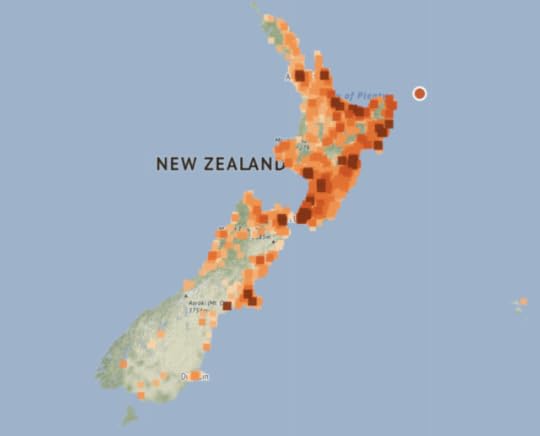
The two earthquakes overnight offshore are likely to have woken many people up, who then had trouble getting back to sleep, or who had to evacuate because they lived in a potential tsunami-risk area. Or perhaps they had kids who were frightened and couldn’t get back to sleep. Or maybe you slept through the whole thing – you’d be lucky though, because they do appear to have been pretty widely felt, with multiple aftershocks. Here’s the 2.27am quake felt report map. The darker the colour, the more extreme was the shaking that was experienced.
As I type this blog, my twitterfeed tells me that there has been another large earthquake, with what looks like another tsunami advisory issued.
It’s a sharp reminder that in New Zealand, we live in a land filled with multiple hazards, with multiple overlapping uncertainties.And this can take its toll when it feels like everything is happening at once.
Some of these are natural hazards, like the earthquakes last night and all we have experienced over the last decade and longer. Others have a large natural component too, but with contributions through human activity to a greater or lesser extent, e.g. climate change and arguably the coronavirus pandemic. And we also face other human activity which pose a real and present danger, e.g. the recent arrests connected with activity designed to cause terror on the anniversary of the Christchurch mosque attacks later this month.
The Sunday Star-Times published an extract from my book on ‘The Trouble with Uncertainty’. Right now, you might find this useful to read to make sense of some of the feelings you might be experiencing, and again later today when Cabinet meets to decide the Alert Level settings for New Zealand as we deal with the latest pandemic cluster.
Here’s a short excerpt:
“When your brain is constantly responding as if you are in imminent danger, it’s very hard to do anything else. Your brain is focused on staying alive and you simply don’t have the mental space or resources necessary for creative problem-solving and strategic thinking. These activities that are so crucial in a crisis get demoted to ‘nice-to-have-once-I-survive-this-threat’ status. Your brain doesn’t particularly care where you’re headed, it just wants to deal with the threat – and it’s exhausting.”
Read that article here. And you can get my book here, here, and here.
The post New Zealand: Multiple Hazards, Multiple Uncertainties appeared first on Sarb Johal.