Renee Robinson's Blog, page 24
June 27, 2013
Octopus Rides Dolphin Penis

http://a57.foxnews.com/global.
Article:
Octopus Hitches Ride on Dolphin’s Genitals
Stephanie Pappas, LiveScience Senior Writer
Octopus JOYRIDE
An octopus got the joyride of its life last week when it somehow became stuck on the belly of a bottlenose dolphin in the Ionian Sea. More specifically, the tentacled sea creature had a seat on the dolphin’s genital slit.
Researchers with the Ionian Dolphin Project, part of the Tethys Research Institute, were observing a foursome of dolphins near the island of Kalamos off the west coast of Greece. Suddenly, one of the dolphins leapt out of the water with something strange dangling from its stomach. It wasn’t until the researchers examined their photos of the leap that they realized the unidentified object was an octopus.
The tentacled hitchhiker was attached to the dolphin’s genital slit. Photographer Joan Gonzalvo isn’t sure what the octopus was up to, though he told New Scientist that perhaps the dolphin tried to eat the octopus and the animal lodged itself along the dolphin’s genital slit to escape.
. After shaking the octopus loose, the dolphin continued to swim with no signs of discomfort, he added.
Whatever the cause of the strange conjunction, octopuses are wily creatures. Many species can change not only their color, but their texture, to mimic specific objects and hide from predators. The Atlanticlongarmoctopus can even take this camouflage mobile: This species gathers its legs up and swims like a flounder, looking more like a fish than an eight-armed mollusk.
Dolphins are no slouches in the intelligence department, either. They live in complex social groups, and their unique whistles may tell other pods of dolphins exactly who they are. One group of Brazilian dolphins even joins forces with fishermen to drive mullet toward waiting nets. As a reward , the dolphins get to share in the fishy spoils.
source: http://www.livescience.com
(wow…I can think of a several jokes here…..a shame all of them are not clean enough for my blog…..Heehee…Nae
Filed under: humor, Nae's Nest, nature, News Article, photography, Renee Robinson Tagged: dolphin genitals, octopus, octopus attached to dolphin penis, penis








Seeking His Touch

https://encrypted-tbn3.gstatic.com/images?
The smoke rises up
The flames begin to dance
Softly she sleeps
All pray for a chance
Prayers rising up
Toward the light
Seeking the healing hands
Of God’s touch tonight
She came here on loan
God is calling her home
Prayers rising up
Softly she moans
In need of the healing touch
Of the Master’s hand
Just one touch
May she arise
May she stand
Renee Robinson
Filed under: by Renee Robinson,






The Night My Husband Killed Me eBook: Kathleen Hewtson: Amazon.fr: Boutique Kindle
See on Scoop.it – Shadows & Flames Book Net phoenixwriter.spruz.com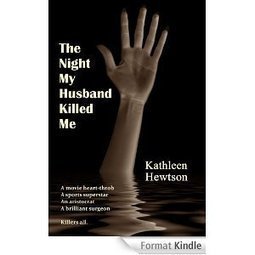
The Night My Husband Killed Me eBook: Kathleen Hewtson: Amazon.fr: Boutique Kindle (The Night My Husband Killed Me – Today’s Deal Price is $2.99!
See on www.amazon.fr
Filed under: My Poetry







Best British Fantasy 2013
See on Scoop.it – Shadows & Flames Book Net phoenixwriter.spruz.com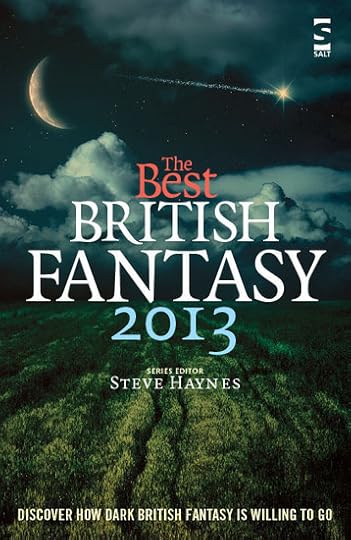
THE BEST BRITISH FANTASY 2013 is now out! The collection includes my story The Complex, first printed in Interzone last year. Salt Publishing describes the collection: “From the post-apocalyptic Am…
See on ejswift.co.uk
Filed under: My Poetry







Amused By Books: Get Ready for Summer Giveaway from Jane Porter
See on Scoop.it – Shadows & Flames Book Net phoenixwriter.spruz.com
Amused By Books: Get Ready for Summer Giveaway from Jane Porter http://t.co/zSPheLBkj1
See on www.amusedbybooks.com
Filed under: My Poetry







Book News: Taksim Book Club, Teen-age Memoir – New Yorker (blog)
See on Scoop.it – Shadows & Flames Book Net phoenixwriter.spruz.com
New Yorker (blog)
Book News: Taksim Book Club, Teen-age Memoir
New Yorker (blog)
The “Standing Man” of Taksim Square has inspired protesters in Turkey to form a book club in which members stand silently reading books.
See on www.newyorker.com
Filed under: My Poetry







O’Reilly 10 本新书免费读 — LinuxTOY
See on Scoop.it – Shadows & Flames Book Net phoenixwriter.spruz.com
O’Reilly 10 本新书免费读 http://t.co/cTcWSGVjFd
See on linuxtoy.org
Filed under: My Poetry







New Releases
See on Scoop.it – Shadows & Flames Book Net phoenixwriter.spruz.com
Enjoy browsing and check back often for new titles. (#books See what’s new–New Releases – Word Branch Publishing http://t.co/uScv6jybSv)
See on wordbranch.com
Filed under: My Poetry







June 26, 2013
Book Launch
From www.smashwords.com - Today, 9:12 AM
In Renee Robinson’s poetry collection, The Color of The Wind,the author battles colon cancer.
Death can be a celestial transition into a new realm.
Renee Robinson‘s insight:
I am dying. I am in the final stages of metastatic colon cancer. I have just finished my 26th round of chemotherapy. At this point, chemo will most likely not save my life, but prolong it.
Have you ever wondered what you would do with your life if you knew when it was about to end? It is a unique place to be in and it really isn’t that bad.
Like everyone else, I do not want to die. In fact, the next “I want” on my To-Do List, is to meet and enjoy my grandchildren. However, in all likelihood, this will not transpire.
For years, I have quietly planned how I would hold my grandchildren and tell stories about their daddy as a child.
Obviously it is not my time to be a grandmother, instead it is my time to write. It is my time to write the memories of my heart that my grandchildren may enjoy and pass on. It is my time to face death and allow my thoughts and emotions to pour out that I may help the next person who is about to turn the last page.
Life is ever-changing. It is what we make of it. Though I have no control of when my life will end, I can paint my words out on a canvas. I can show my love for my family with each stroke. Life is temporary. Memories, like words, live on.
Also Check out: For a complete list of books by Renee Robinson go to www.amazon.com/author/reneerobinson and
https://www.smashwords.com/profile/view/phoenixwriter
Filed under: Art, by Renee Robinson, dark poetry and stories, Death, inspiration, love poems/songs, My Poetry, Nae's Nest, Spirituality/Reigion Tagged: Amazon, book launch,






Are You In Right Mind?

http://plentyofcolour.com/wordpress/wp-
Left Brain vs Right Brain
Understanding the Myth and Reality of Left Brain and Right Brain Dominance
By Kendra Cherry, About.com Guide
Have you ever heard people say that they tend to be more of a right-brain or left-brain thinker? From books to television programs, you’ve probably heard the phrase mentioned numerous times or perhaps you’ve even taken an online test to determine which type best describes you.
What Is Left Brain – Right Brain Theory?
According to the theory of left-brain or right-brain dominance, each side of the brain controls different types of thinking. Additionally, people are said to prefer one type of thinking over the other. For example, a person who is “left-brained” is often said to be more logical, analytical and objective, while a person who is “right-brained” is said to be more intuitive, thoughtful and subjective.
In psychology, the theory is based on what is known as the lateralization of brain function. So does one side of the brain really control specific functions? Are people either left-brained or right-brained? Like many popular psychology myths, this one has a basis in fact that has been dramatically distorted and exaggerated.
The right brain-left brain theory grew out of the work of Roger W. Sperry, who was awarded the Nobel Prize in 1981. While studying the effects of epilepsy, Sperry discovered that cutting the corpus collosum (the structure that connects the two hemispheres of the brain) could reduce or eliminate seizures.
However, these patients also experienced other symptoms after the communication pathwaybetween the two sides of the brain was cut. For example, many split-brain patients found themselves unable to name objects that were processed by the right side of the brain, but were able to name objects that were processed by the left-side of the brain. Based on this information, Sperry suggested that language was controlled by the left-side of the brain.
Later research has shown that the brain is not nearly as dichotomous as once thought. For example, recent research has shown that abilities in subjects such as math are actually strongest when both halves of the brain work together.
The Right Brain
According to the left-brain, right-brain dominance theory, the right side of the brain is best at expressive and creative tasks. Some of the abilities that are popularly associated with the right side of the brain include:
Recognizing faces
Expressing emotions
Music
Reading emotions
Color
Images
Intuition
Creativity
The Left Brain
The left-side of the brain is considered to be adept at tasks that involve logic, language and analytical thinking. The left-brain is often described as being better at:
Language
Logic
Critical thinking
Numbers
Reasoning
The Uses of Right-Brain, Left-Brain Theory
While often over-generalized and overstated by popular psychology and self-help texts, understanding your strengths and weaknesses in certain areas can help you develop better ways to learn and study. For example, students who have a difficult time following verbal instructions (often cited as a right-brain characteristic) can benefit from writing down directions and developing better organizational skills.
By Judith A. Albright
Are you one of those people who are convinced you don’t have a creative bone in your body? If so, this will come as a pleasant surprise: we all came into this world hard wired to be creative! How creative we actually are has less to do with talent or ability than it does, interest, choice, opportunity and circumstance.
Creative self-expression is a vital part of our psychological makeup and it is a vital part of self-actualization, which if you remember Abraham Maslow’s famous pyramid, is right at the top. While much of the lower part of the pyramid is focused on physical needs and well being, as people progress up through the various levels their needs become increasingly psychological and social. Self-actualization is the final level of psychological development, and it cannot be fully achieved until all other basic and mental needs have been met. From Maslow’s perspective, self-actualization (and its intrinsic need for creativity) is the ultimate goal and motive for life itself.
Our need for self-expression, even our craving for it, begins at birth. The human urge is nearly as strong as the need to survive and procreate our species. Even our primitive early ancestors were aware of this. For example, once they mastered the basic skill of creating cooking pots they began to decorate them. A plain cooking pot works just as well as an ornately decorated one, so what was their motivation to enhance the surface of an every day functional item? They didn’t need one—they simply were honoring their need for decoration and creative expression.
How can we define creativity?
Is it drawing and painting? Making pottery? Quilt making? Knitting? Cooking? Building a building? Designing a landscape? Decorating a cake? Sewing? Crafts? Making furniture? Writing? Composing a poem or song? Planting a garden? Creativity is all of these and none of these. These activities are simply actions that are the result of creative thinking, but none of them are creativity itself.
Creativity is not any particular activity: it is a point of view and a different way of looking at the world.
Being creative means:
Exercising our imagination
Encouraging the flow of ideas
Keeping a flexible and open mind
Recognizing options
Learning to look at old things in new ways
Allowing ourselves to be playful
While creative expression may be one of our most basic human needs, that side of us is fragile and easily damaged. It does not take many unkind remarks or much ridicule to destroy our self-confidence and shut us down. Too many people have suffered scorn for their attempts at originality and self-expression. Throughout life we constantly encounter people who are dedicated to cutting us down and it starts early. Fear of judgment can be crippling, and is a real hurdle that many adults have to get over if they are to successfully rediscover and express their naturally creative nature.
Society as a whole doesn’t quite know what to do with anyone who doesn’t fit the norm, and does everything possible to blend everyone into vanilla pudding. Like a jack in the box, those who dare to go against the tried and true often risk being pounded back down every time they dare to raise their heads. Many of us experienced this as children. We were not encouraged at home to express our originality or think of ourselves as creative beings because the emphasis was on practicality and doing something “useful” with both our time and ourselves.
At school our creativity was also likely to have been stifled by a system that was often too narrow to tolerate or appreciate those children who thought outside the box. We were simply expected to fit into the education system, whether or not the education system fits us. Many of us were told we’d never amount to anything because we were dreamers or we had “too much imagination,” which helped engender the idea that being imaginative and creative is something bad. When our ideas did not fit into or went against the traditional way of thinking they were often pooh-poohed, resulting in our feeling diminished and even humiliated. Thus we learned to stay quiet and not voice our ideas or try to do things differently for fear of being put down or shamed.
It takes a brave soul to pursue creative activities that have historically had little value in our culture. For over a century Americans have been conditioned by society and even our educational systems to believe that activities such as art and music and doing things with our hands carry little value. This idea is still being perpetuated today by school districts and budget minded school boards who are quick to scrap visual and performing arts programs in favor of a core curriculum that heavily emphasizes science and math and little else.
It is ironic that at a time when Corporate America highly values and seeks creative thinkers, our children (and we) are being forced to live in a “half brained” world—one in which many if not all activities that encourage and promote creative thinking are being eliminated from our educational systems. The right brain is the big picture, creative part of the human mind, yet most everything we encounter in every day living is geared toward left brain, linear thinking. Thus if we are ever to live in a “whole brained state” and reach any level of self actualization, we are going to have to make an effort to do it on our own and we may need a little help. Find someone who can teach and/or mentor you—the destination will be well worth the journey.

http://files.coloribus.com/files/adsarchive/part
Filed under: inspiration, Nae's Nest, News Article, Renee Robinson Tagged: Albert Einstein, creative thinking, education system, imagination, right brained, science and math