Mari K. Eder's Blog, page 3
November 10, 2024
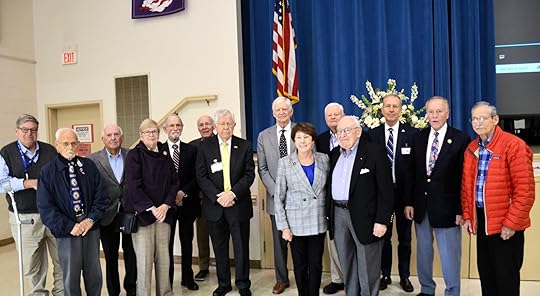
Photos from the Trinity United Methodist Church 2024 Veterans Day Presentation
 @media screen and (min-width: 768px){.stk-ab38758 {flex:var(--stk-flex-grow, 1) 1 calc(40% - var(--stk-column-gap, 0px) * 1 / 2 ) !important;}}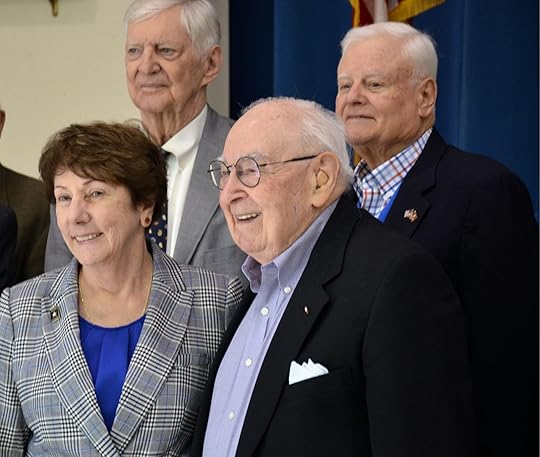
The post Photos from the Trinity United Methodist Church 2024 Veterans Day Presentation appeared first on Benson's ReView.


November 7, 2024
Anniversaries

In Sisterhood of Spies, her 1998 memoir about the women who served with the Office of Strategic Services (OSS) during WWII, Betty McIntosh highlighted several events in her recent recollections of her time with the new intelligence agency. She commented, “Sometimes a bright light will flash across the dark corridors of memory.”
Three events in particular stood out to her from one particularly significant year, 1994.
First, she recounted the lowering of the flag at the former OSS Headquarters, a government office building known as the “E Street Complex” on Observatory Hill.
It was beside the State Department and across from the Kennedy Center. This facility served as the wartime headquarters of the OSS. Betty served there briefly before being assigned overseas.
Following the war, it was a Central Intelligence facility, used for planning covert operations. The Agency ceased using the Foggy Bottom location in 1961 but it wasn’t finally closed as a CIA site until 1997.
.stk-0449242 {background-color:var(--stk-global-color-14950, #273891) !important;}.stk-0449242:before{background-color:var(--stk-global-color-14950, #273891) !important;}.stk-c099d8b {margin-bottom:0px !important;}.stk-c099d8b .stk-img-wrapper{width:450px !important;}
But as Betty recalled, the American flag was lowered and then Director of the CIA, the Hon. R. James Woolsey presented the flag to Betty.
She accepted it on behalf of the late OSS Director and Betty’s mentor, Maj. Gen. William J. Donovan and the more than 21,000 men and women of the OSS. It brought back a flood of memories, those young men and women Betty served with, that “undisciplined collection of volunteers” she called them, casual in their wear of the uniform and even more casual in their understanding of military courtesies and the chain of command.
But those were the times of her life and she held those memories close.
.stk-aaa21c4 {background-color:var(--stk-global-color-14950, #273891) !important;}.stk-aaa21c4:before{background-color:var(--stk-global-color-14950, #273891) !important;}.stk-3f0423d {margin-bottom:2px !important;}.stk-3f0423d .stk-img-wrapper{width:774px !important;height:346px !important;}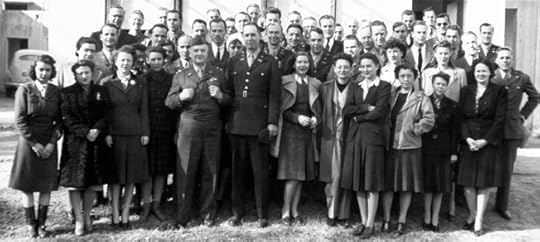
Maj. Gen. Donovan visiting Betty’s OSS detachment in Burma.
She also vividly recalled that the 50th anniversary of D-Day took place in 1994.
Just days earlier, Betty was at Arlington National Cemetery where she was privileged to introduce President Bill Clinton where he laid a wreath at the Tomb of the Unknowns. There were about fifteen OSS veterans there that day as well.
Betty commented that their wartime experiences were ones she could never forget. She also noted that so many of her former colleagues were buried there, among them Maj. Gen. Donovan and her former husband, Col. Richard Heppner, head of the OSS office in China.
In August 1994, Betty was part of the U.S. delegation in Czechoslovakia to commemorate the fiftieth anniversary of the Slovak uprising against Germany.
The ceremony was led by the U.S. Ambassador to the United Nations, the Honorable Madeleine Albright. Ambassador Albright, who was returning to the part of the world where she was born, honored the outnumbered Czech and Slovak partisans who fought six Nazi divisions in the war, until they were forced back in a rout. With them were members of an OSS team, later captured and killed.
The sound of taps being played that day stayed with Betty for the rest of her life.
Just three years later, in 1997, NATO offered membership to Poland, Hungary, and the Czech Republic.
Speaking to the people of Prague, Albright said of the journey ahead, “You were the passion of my parents. You are the land of my birth. And now you and I, my nation and yours, will build and defend a new Europe together. God bless you.”
Words to remember today.
Enjoyed this post? Get my newsletter delivered to your inbox so you don’t miss the next one! I send out one mailing a month most months and promise zero spam.
The post Anniversaries appeared first on Benson's ReView.
October 22, 2024
October 1, 2024
The Cemetery in the Fall
It is long past time for me to visit Arlington National Cemetery again. I have many friends there and haven’t been back there in way too long. We have much to talk about.
I want to see friends from my days at the Pentagon, a Navy friend from CHINFO, my former leader at the Army War College Foundation, and so many more.
I want to make my way to the gravesite of USMC Maj. Megan M. McClung, and pay my respects to this Public Affairs Officer. Hearing her story again several months ago at the Defense Department’s Public Affairs School (DINFOS) was a humbling reminder of her sacrifice.
Following a break in service, she returned to active duty with the 1 Marine Expeditionary Force in Iraq in 2006. She was the chief Public Affairs Officer in Al Anbar Province. In December, in the final month of her second year-long deployment, she was escorting a Newsweek journalist when she was killed by an IED.
The first female Naval Academy graduate and first Marine Corps officer to be killed in Iraq, her headstone bears her legendary logo: “Be Bold. Be Brief. Be Gone.”
.stk-0449242{background-color:var(--stk-global-color-14950,#273891) !important}.stk-0449242:before{background-color:var(--stk-global-color-14950,#273891) !important}.stk-c099d8b{margin-bottom:0px !important}.stk-c099d8b .stk-img-wrapper{width:450px !important}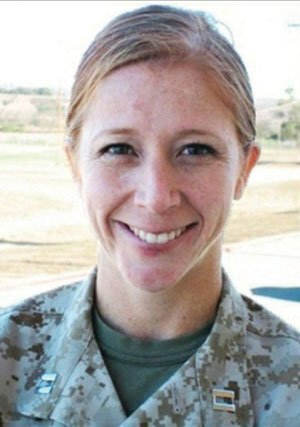
So many of my former colleagues have likewise moved on, heading to that final assignment. It is a sharp reminder for all of us that our time here is brief.
I also want to visit the gravesites of the fourteen members of the 6888 Central Postal Directory Battalion who have been laid to rest in Arlington. These women were all World War II veterans of service overseas in the only all-female, all-Black unit to deploy during the war.
Their service was critical to the morale of service members engaged in the fight from Normandy to Germany during the war’s long closing days. They solved a years-long major morale issue when they got the mail moving again, and service members were able to hear from their families once more.
Fourteen known 6888 veterans are buried at Arlington National Cemetery. According to the Cemetery’s website, these are the veterans who were laid to rest there.
.stk-2acde3c{padding-top:0px !important;padding-right:0px !important;padding-bottom:0px !important;padding-left:0px !important;margin-bottom:1% !important;margin-left:3% !important;--stk-icon-list-marker-color:var(--stk-global-color-14950,#273891) !important}Gatha Louise Amos — Section 67, Grave 1603Catherine Louise Bowie — Section 54, Grave 1432Hortense Pollard Cole — Columbarium Court 7, Section NN, Column 19, Niche 1Lila Virginia Burt Dale — Section 68, Grave 1308Allie Harshaw — Section 64, Grave 5494Margaret Y. Jackson — Columbarium Court 8, Section PP, Column 23, Niche 1Margaret Ellen Barnes Jones — Columbarium Court 6, Section N1, Column 14, Niche 3Annie B. Jordan — Section 3, Grave 4353-BWillia G. Knighton — Section 64, Grave 6306Mary Louise Peterson — Section 66, Grave 1657Ardella C. Pitts — Section 59, Grave 1762Mary Crawford Ragland — Columbarium Court 7, Section PP, Column 2, Niche 5Bessie Lee Robinson — Section 43, Grave 887Blanche L. Scott — Section 64, Grave 2962The unit’s commander is not buried at Arlington. Lt. Col. Charity Adams Early lies with her husband, Stanley Earley, at Woodland Cemetery and Arboretum in Dayton, Ohio. Her legacy, as well as that of her trailblazing unit, continues to grow.
.stk-aaa21c4{background-color:var(--stk-global-color-14950,#273891) !important}.stk-aaa21c4:before{background-color:var(--stk-global-color-14950,#273891) !important}.stk-3f0423d{margin-bottom:2px !important}.stk-3f0423d .stk-img-wrapper{width:450px !important}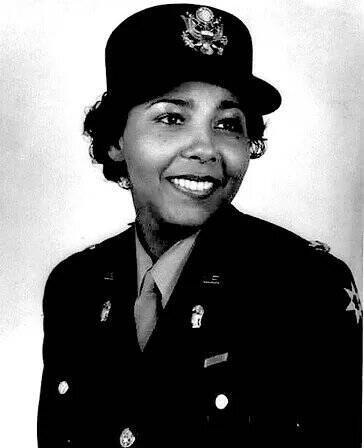
I need to visit Maj. Stephanie Czech Rader’s grave in Section 11 again. She served undercover as a counterintelligence agent with the Office of Strategic Services (OSS) in 1945-46.
She never talked about her dangerous assignment in Warsaw, but she made a difference in our diplomatic relations following the war.
.stk-44f4380{background-color:var(--stk-global-color-14950,#273891) !important}.stk-44f4380:before{background-color:var(--stk-global-color-14950,#273891) !important}.stk-ddb50a1{margin-bottom:0px !important}.stk-ddb50a1 .stk-img-wrapper{width:600px !important}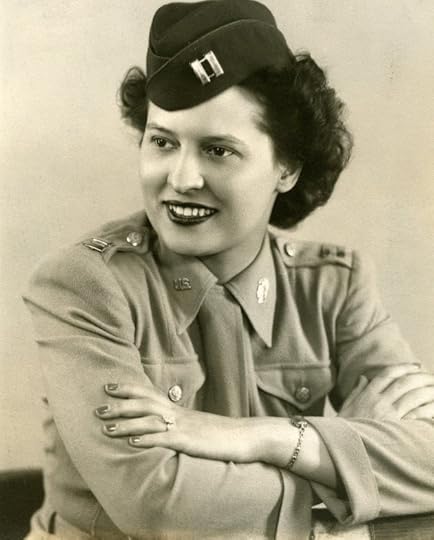
Then there’s the WASP.
A couple of years ago, I was fortunate to meet Erin Miller, granddaughter of WASP pilot Eliane Danforth Harmon. Her final request was to be buried at Arlington, but the WASP pilots were not recognized as veterans.
Erin Miller took her grandmother’s request as her own mission and fought relentlessly for the WASP veterans to receive the honor they deserved. It was a struggle that involved Congress and the President, but in the end, the WASP prevailed.
I want to visit the final resting place of WASP Elaine Harmon and Mildred Rexroat. Both are resting in Court 9 of the Columbarium. I’m certain I will find many of them and their colleagues there.
.stk-e034171{margin-bottom:0px !important}.stk-e034171 .stk-img-wrapper{width:600px !important}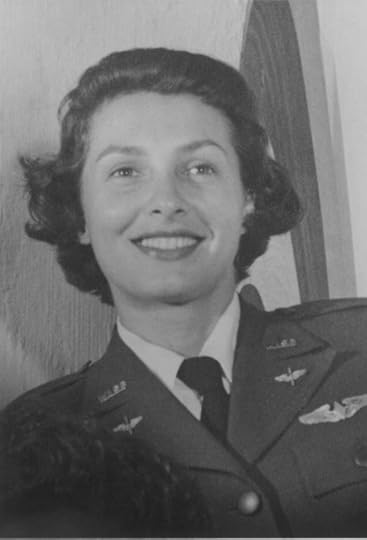
There are so many trailblazing veterans to visit and so many incredible stories to tell. And why wait for Veterans Day in November, the Thanksgiving holiday weekend, or Wreaths Across America in December?
Visit them now when the cemetery is quieter, before the national events that bring in crowds. After all, it is a family cemetery, too, and for all of us who are veterans, we are there to visit family.
Enjoyed this post? Get my newsletter delivered to your inbox so you don’t miss the next one! I send out one mailing a month most months and promise zero spam.
The post The Cemetery in the Fall appeared first on Benson's ReView.
September 3, 2024
Going For Gold
Watching so much of the Olympics in August was a wonderful way to celebrate the ways in which people find and groom their specialized and particular skills to the very height of competitive excellence.
Seeing how hard world-class athletes work to maintain their precarious competitive edge made me think about all those athletes who, over eighty years ago, found their hopes dashed by war.
The Olympics in 1940 were canceled. So were the Olympics in 1944. For many, their Olympic dreams never materialized again. Some were called to serve during those long years; others died during the conflict. Still more felt they were no longer competitive twelve years later when the games resumed again in 1948.
They were known as the “Games of Redemption.” But for many, their chance at Olympic greatness was gone.
One athlete, in particular, felt the sting of that first cancelation harshly. Her name was Gretchen Fraser, and she felt certain her time would never come again.
Gretchen Kunigk was born in Tacoma, Washington, but she didn’t learn to ski until she was fifteen. She loved the rush of the downhill and trademark pigtails flying and would ski all out.
In 1938, she met her future husband, Don Fraser, while they were on their way to an international ski race in Sun Valley, Idaho. Gretchen and Don married in 1939, and both made the 1940 U.S. ski team. But then their plans fell apart. The games were canceled.
Don joined the Navy, and when the Sun Valley Resort closed in 1942, Gretchen was at loose ends. The resort later became a convalescent hospital for injured Marine and Navy veterans.
Gretchen spent the remainder of the war years teaching the veterans how to ski. In the summers, she taught swimming and horseback riding but didn’t have much time to train or hone her skills.

Finally, Don was home, and the war ended. He encouraged her to keep training, and by 1948, she made the team. No one thought she had much of a chance, though.
After all, no American athlete had ever won a medal in a winter event.

But she won, leaving many in the crowd watching the slalom events that day in St. Moritz, wondering, “Who was that?” Most considered her “too old, too American, too inexperienced.”
Regardless of public opinion, she had that competitive spirit and drive. And she knew what she was capable of. Many people have since speculated that she should have had a much longer career but was denied unfairly by the times. She could have competed in at least two more Olympics.
However, Gretchen retired from Olympic competition after the 1948 games, never having the opportunity to compete again.
Many athletes today can compete in not one or two but multiple Olympics. Gretchen was more practical about her win and its meaning.
“After all,” she said, “It’s great to win a medal but it is what you do with it afterward—how you use that medal to impact the world—that is even more important.”
She lived that belief, coaching and mentoring the next generation of championship skiers and always focusing on the importance of rehabilitation.
.stk-44f4380{background-color:var(--stk-global-color-14950,#273891) !important}.stk-44f4380:before{background-color:var(--stk-global-color-14950,#273891) !important}.stk-ddb50a1{margin-bottom:0px !important}.stk-ddb50a1 .stk-img-wrapper{width:600px !important}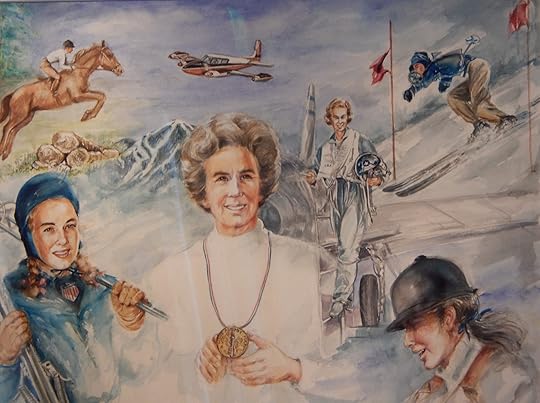
Enjoyed this post? Get my newsletter delivered to your inbox so you don’t miss the next one! I send out one mailing a month most months and promise zero spam.
The post Going For Gold appeared first on Benson's ReView.
August 6, 2024
The Torchbearer of Freedom
I’ve been rereading some of the information on the incredible Mary Barraco and I continue to learn more about her remarkable penchant for giving back in her later years. While she fought with the resistance in Belgium during World War II, was imprisoned and tortured, her fiancé killed by the Nazis, she never gave up hope. Even when released from the Gestapo prison, she continued to fight, refusing to be cowed by the oppressors
.stk-0449242{background-color:var(--stk-global-color-14950,#273891) !important}.stk-0449242:before{background-color:var(--stk-global-color-14950,#273891) !important}.stk-c099d8b{margin-bottom:0px !important}.stk-c099d8b .stk-img-wrapper{width:450px !important}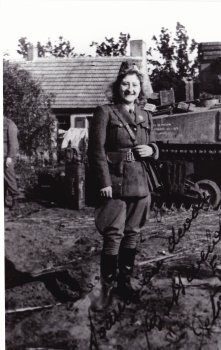
Following her time in prison, Mary Sigillo served as a liaison officer for the Canadian Forces in Belgium.
Mary returned home to Massachusetts but later moved to Virginia Beach, Virginia and began to speak out about her experiences and how important it is to never forget how important our freedoms are. She would say, “For me to live free I had to forgive. But I’m not going to let anyone forget.”
.stk-aaa21c4{background-color:var(--stk-global-color-14950,#273891) !important}.stk-aaa21c4:before{background-color:var(--stk-global-color-14950,#273891) !important}.stk-3f0423d{margin-bottom:2px !important}.stk-3f0423d .stk-img-wrapper{width:450px !important}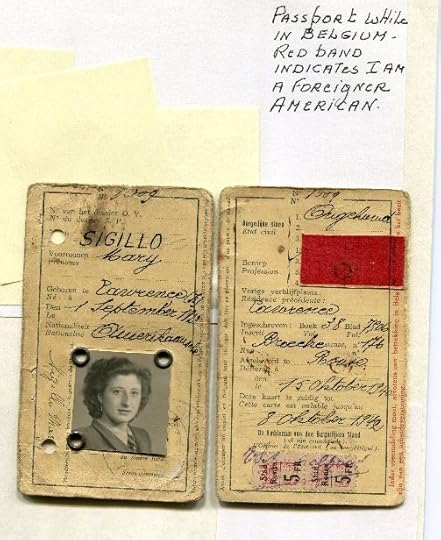
She never stopped living that promise. During the Vietnam War, she created “United We Stand,” a national letter writing campaign for POW/MIA soldiers. She worked on political campaigns and began to speak out more broadly about her convictions. In 1982 she spoke at the Army’s Noncommissioned Officers Association (NCOA) Annual Convention in San Antonio. As a result of that visit NCOA established the Mary S. Barraco scholarship. In 2012l, U.S. Navy sailors sponsored a surprise party in Norfolk for her 89th birthday. Everywhere she went, spoke and connected with people, she left them feeling inspired and grateful for their own freedoms. A play, The Torchbearer of Freedom, was written about her life. There are numerous other videos and clips of news coverage of her life on YouTube.
.stk-44f4380{background-color:var(--stk-global-color-14950,#273891) !important}.stk-44f4380:before{background-color:var(--stk-global-color-14950,#273891) !important}.stk-ddb50a1{margin-bottom:0px !important}.stk-ddb50a1 .stk-img-wrapper{width:600px !important}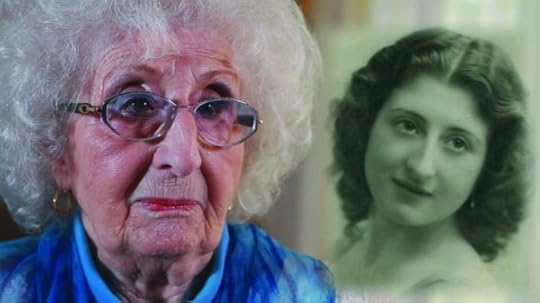
In 2015 she spoke at the National D-Day Memorial in Bedford, VA. The Memorial still recalls her important words that day. Mary stated that she knew “to many people what happened that long ago is past history but for those of us who lived through it all, that was yesterday, it is today, and if we do not remember, it will be tomorrow.”
She also received international recognition and national awards. The King of Belgium knighted her in 2004, giving her the title of Dame. And she was among just a handful of Americans to be recognized by the National Society of the Daughters of the American Revolution (NSDAR).
While the DAR provides for a number of awards related to patriotism, the most prestigious is the Medal of Honor. It is presented annually to those who display exceptional leadership, trustworthiness, service and patriotism. Past awardees include former First Ladies Rosalynn Carter and Barbara Busch, Tom Brokaw and Trace Adkins to name a few.
.stk-205c839{background-color:var(--stk-global-color-14950,#273891) !important}.stk-205c839:before{background-color:var(--stk-global-color-14950,#273891) !important}.stk-43aad13{margin-bottom:0px !important}.stk-43aad13 .stk-img-wrapper{width:450px !important}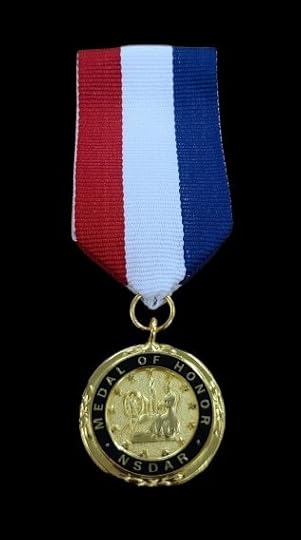
When Mary Barraco passed away in 2019, she donated many of her scrapbooks and other items to the Holocaust Museum in Richmond Virginia. The United Jewish Federation of Tidewater, which had recognized herÍ with their Righteous Gentile Award, held onto those precious documents throughout the COVID pandemic, then presented them to the Museum. A number of them are on display today.
C’est lorsque’on a perdu la liberté que l’on en connait le prix.
It is only after we have lost our freedom, we appreciate it’s value.
Enjoyed this post? Get my newsletter delivered to your inbox so you don’t miss the next one! I send out one mailing a month most months and promise zero spam.
The post The Torchbearer of Freedom appeared first on Benson's ReView.
July 2, 2024
Then and Now
Schools tend to teach history in Blocks—the Great Depression, the Revolutionary War era, The Gilded Age, and more.
These artificial boundaries distract us from one of the greatest lessons we can possibly learn from history—the trends, tides of change, and how evolving times in economies, culture, and society as a whole—are one long and enduring progression of time.
Recently I read that American’s attention spans are growing ever shorter. In 2004, the average attention span was a brief 2.5 minutes. In 2024, it is 47 seconds.
This inability to concentrate or absorb information makes it even more difficult to understand the compressed sound bites of today’s news. We have no context for why things happen, simply that they do. Major events, crises, and even catastrophes rise and fall in our consciousness like sharp pinpoints, then quickly fade.
We don’t realize a culmination of action, a resolution, or even a satisfying finish to any story. Major events appear to exist in isolation.
That is one reason, among so many, why the study of history is so very important. History teaches trends, cause and effect, and perhaps even more importantly, that those who came before us faced many of the same issues we face today. They were just average people, who found themselves in extraordinary situations. And they stepped up.
Thankfully teachers are stepping up today to make a difference too—connecting the threads of the past to help young people understand how we came to be where we are today. Numbers of them are working to involve young people through capturing their curiosity and their imaginations—to discover not only events and trends but the people who changed their world. And ours.
.stk-0449242{background-color:var(--stk-global-color-14950,#273891) !important}.stk-0449242:before{background-color:var(--stk-global-color-14950,#273891) !important}.stk-c099d8b{margin-bottom:0px !important}.stk-c099d8b .stk-img-wrapper{width:100% !important}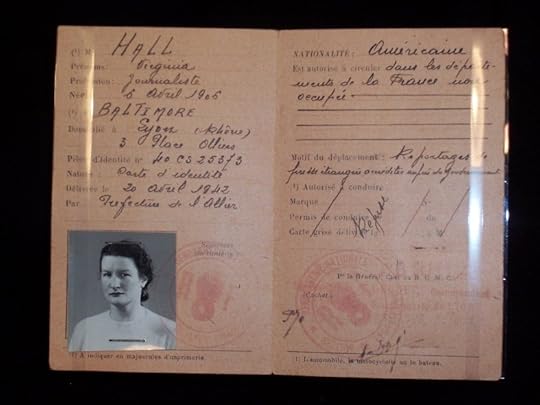
.
Recently a high school student wrote to me on my website asking if I would talk with her about one of the women in my book, Virginia Hall.
She was intrigued by Hall’s career with the Special Operations Executive (SOE) in World War II and then with the Office of Strategic Services (OSS). Hall served in France and trained and led French resistance fighters in efforts to slow and disrupt Nazi efforts to reinforce operations in the north of France, particularly following D-Day in 1944.
It was a pleasure to speak with her. She had nearly all of the books written about Virginia Hall (there are at least six) and had built a website detailing Hall’s exploits during the war. The website will be entered in a national-level contest – History Day.
.stk-aaa21c4{background-color:var(--stk-global-color-14950,#273891) !important}.stk-aaa21c4:before{background-color:var(--stk-global-color-14950,#273891) !important}.stk-3f0423d{margin-bottom:2px !important}.stk-3f0423d .stk-img-wrapper{width:100% !important}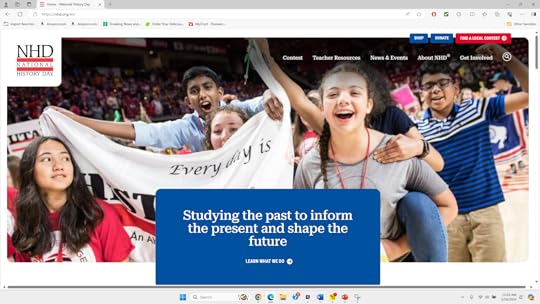
This is but one example of ways in which new generations can find ways to engage with history. Many patriotic organizations such as the National Society of the Daughters of the American Revolution (DAR), the American Legion, and more sponsor essay contests about history. Others grant scholarships.
It is reassuring to learn that new generations are interested in learning more about history. Because we need all the stories of how events unfolded, how every person who lived during a certain period in history was affected and changed by those world events, and what they did to create change, improve the lives of others and make a difference.
Ordinary people doing extraordinary things. Our next generations can do that too.
Enjoyed this post? Get my newsletter delivered to your inbox so you don’t miss the next one! I send out one mailing a month most months and promise zero spam.
The post Then and Now appeared first on Benson's ReView.
June 4, 2024
Donut Dollie
The morale-boosting ‘donut dollies got their start in the trenches of World War I. Beginning in 1917, women volunteered to deploy with the Salvation Army to the battlefields of France, giving American soldiers a taste of home.
.stk-0449242{background-color:var(--stk-global-color-14950,#273891) !important}.stk-0449242:before{background-color:var(--stk-global-color-14950,#273891) !important}.stk-c099d8b{margin-bottom:0px !important}.stk-c099d8b .stk-img-wrapper{width:46% !important;height:635px !important}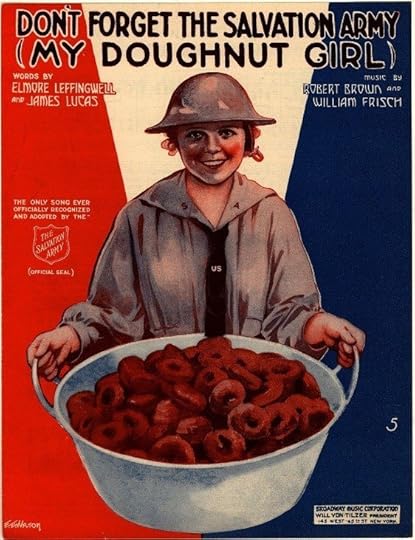
.
In World War II, they volunteered for duty again.
This time, the requirements were more stringent. The Red Cross Donut Dollies had to be at least 25 years old, college graduates, and present letters of recommendation in order to be selected. They also had to have wholesome personalities, “the girl next door” type.
Once on board, they had to undergo training, enough to understand Army units, terminology, and missions. They also had to accept the standards for dress while wearing the Red Cross blue uniform: no bright nail polish or garish makeup, no earrings or hair combs, and they needed to be physically fit. Then, they were sent overseas to run the “Red Cross Clubmobiles.”
These portable lounges were outfitted with space for soldiers to relax and forget about the war, even if just for a few moments.
Besides fresh donuts, the Clubmobiles boasted magazines and newspapers, gum and cigarettes, and music. The traveling lounges were so popular it was sometimes hard to keep up with the demand—for time, space, and donuts. According to one report in 1944, over 200 women had served over 4.6 million donuts by then.
Donut Dollies reappeared in Korea; about 900 served in South Korea from 1953 to 1973. They served locally baked donuts this time, but the morale-boosting function didn’t change.
Fewer were deployed during the Vietnam conflict. From 1962 to 1973, 627 were on duty with the Red Cross, but by this time, their role was less about the donuts and more about the need to provide soldiers with a respite away from the front lines.
Their focus on recreation included ping-pong tournaments, shooting pool, and even sing-alongs. But they were also there to provide an ear, talk about home, and share some happy memories.
In every conflict, the Donut Dollies were often exposed to the dangers of the battlefield. In Vietnam, some were gassed, had to endure rocket attacks on the bases where they served, and worry about enemy snipers. While nurses were there to care for the physical wounds, the Donut Dollies were concerned with the mental health of troops—their morale and mental well-being.
One of those young women who volunteered in Vietnam was Diane Zettervall. While still in college, she was thinking about the Peace Corps but decided to serve with the Red Cross instead. She started in the spring of 1969 and later recalled that during her first night in Vietnam, she was at a recreation center when there was a loud explosion caused by a carelessly tossed cigarette. She also spent several long nights in a foxhole.
Later, Diane was with the 101st Airborne Division at their base, Camp Eagle (the 101st is known as the ‘Screaming Eagles’) There she met her future husband, Ben Thornal, a helicopter pilot. When I met Diane in March of 2024, they had been married nearly fifty-four years.
.stk-aaa21c4{background-color:var(--stk-global-color-14950,#273891) !important}.stk-aaa21c4:before{background-color:var(--stk-global-color-14950,#273891) !important}.stk-3f0423d{margin-bottom:2px !important}.stk-3f0423d .stk-img-wrapper{width:59% !important;height:499px !important}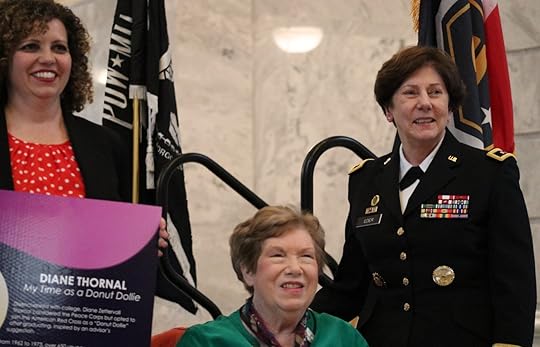
At the Donut Dollies reunion in 1993, Diane picked up a t-shirt that she thought perfectly summed up her role: “A touch of home in a combat zone. A smiling face at a bleak fire base. The illusion of calm in Vietnam.”
God bless them all for what they did to remind our soldiers they weren’t forgotten. Their service in the middle of combat zones, comforting the lonely and the lost, cannot be forgotten either.
.stk-8d2760a{background-color:var(--stk-global-color-14950,#273891) !important}.stk-8d2760a:before{background-color:var(--stk-global-color-14950,#273891) !important}Enjoyed this post? Get my newsletter delivered to your inbox so you don’t miss the next one! I send out one mailing a month most months and promise zero spam.
The post Donut Dollie appeared first on Benson's ReView.
May 2, 2024
A Riveting Tale of Women Vets
In November 2021, I was invited to participate in the American Veterans Center (AVC) Veterans Conference & Honors.
This was the 24th annual event, which is comprised of a conference, a youth leadership summit, and a major event to commemorate Veteran’s Day. “American Valor: A Salute to Our Heroes.”
.stk-0449242{background-color:var(--stk-global-color-14950,#273891) !important}.stk-0449242:before{background-color:var(--stk-global-color-14950,#273891) !important}.stk-c099d8b{margin-bottom:0px !important}.stk-c099d8b .stk-img-wrapper{width:80% !important}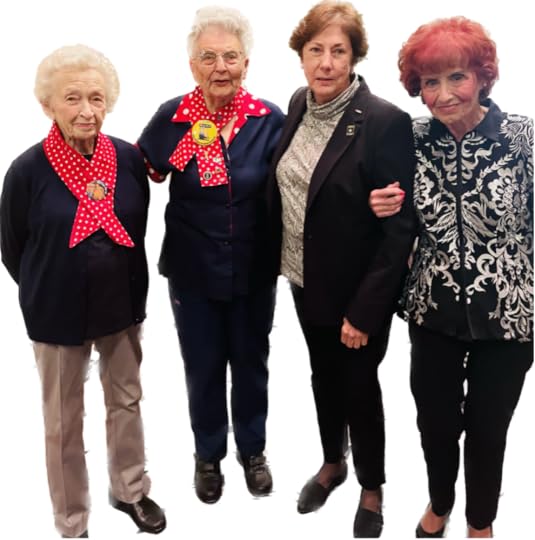
L-R Earline Gaither, Mae Krier, MK Eder, Elinor Otto – at the American Veterans Conference in Washington, D.C.
While various events associated with the AVC’s conference took place at locations across the nation’s capitol, I was privileged to take part in the Speaker Sessions, held at the Omni Shoreham Hotel.
My role was to serve as a panel moderator for a special group of ladies. This was the “We Can Do It!” panel, featuring three of America’s own ‘Rosie The Riveters. These feisty women were:
Earline Gaither. Earline grew up in Mississippi and built B-24 Liberators at the Willow Run Bomber Plant in Ypsilanti, Michigan.
Mae Krier. Mae built B-17 and B-29 bombers in Seattle from 1943-1945. She played a major role in advocating for the ‘Rosie the Riveter’ Congressional Gold Medal Act, passed in 2020. When Covid attacked America in 2020, she swung into action, sewing thousands of ‘Rosie the Riveter’-themed masks for distribution around the world.
Elinor Otto. Elinor built planes starting in 1942. She enjoyed the work and, following the war, returned to a C-17 factory in Long Beach, CA. She worked the assembly line until the age of 1995 and refused to say she was retired. “I was laid off!” she would exclaim.
It was a pleasure to listen to these three women talk about their experiences and the pride they took in the work they did.
All three of them were a little bit hard of hearing, but none wanted to wear hearing aids for their time on stage. They might not have heard all of my questions, but they didn’t need any encouragement to talk.
They told stories of their efforts, how women could crawl far into a plane’s wingspan to wield that rivet gun, securing those rivets into place. Elinor reported how when the song “Rosie the Riveter” was released in 1943, she and her fellow Rosies would play the record for motivation – to get them ‘razzed up’ to go to work on the factory floor.
Earline didn’t wield a rivet gun. She worked the ‘finishing line,’ making certain the completed plane was ready to go. She oiled the guns, installed the flying instructions manual and the window curtains for night flying.
Earline was one of the youngest Rosies on the line. She’d married at sixteen and she and her husband (who had a medical condition so he was ineligible to serve in uniform) both worked in the factory in Ypsilanti.
.stk-aaa21c4{background-color:var(--stk-global-color-14950,#273891) !important}.stk-aaa21c4:before{background-color:var(--stk-global-color-14950,#273891) !important}.stk-3f0423d{margin-bottom:2px !important}.stk-3f0423d .stk-img-wrapper{width:59% !important;height:499px !important}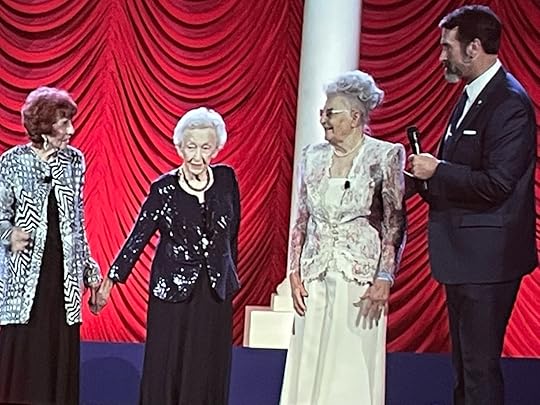
Elinor, Earline, and Mae talk with host Rob Riggle, at the American Valor Salute on Sept 11, 2021.
In fact, women who worked on ships or in other types of factories associated with the production of war materials all called themselves Rosies.
By the end of the war, American industry had produced about 300,000 airplanes, 100,000 tanks, 90,000 ships and 44 billion rounds of ammunition. This is what the Rosies were part of—the American ‘Arsenal of Democracy.’
Mae Krier was a Boeing employee during the war. She started out in 1943 as a summer worker but loved it so much that she stayed. Mae has continued to serve – as an advocate for the “Rosie” can do spirit—that American idea of service and ‘get ‘er done!”
When the war ended thousands were suddenly laid off. Their service ended but their pride never did.
Today, the company RRiveter makes bags and purses, primarily by military spouses, from all across the country. One is now named “The Otto,” in honor of Elinor. She was also recognized by the Air Force Association, the first civilian to receive their Lifetime Achievement Award.
Elinor passed away in November 2023. “When I go to heaven, I hope God keeps me busy,” she would say. I’m certain that she is.
.stk-8d2760a{background-color:var(--stk-global-color-14950,#273891) !important}.stk-8d2760a:before{background-color:var(--stk-global-color-14950,#273891) !important}.stk-5dc5869{margin-bottom:2px !important}.stk-5dc5869 .stk-img-wrapper{width:59% !important}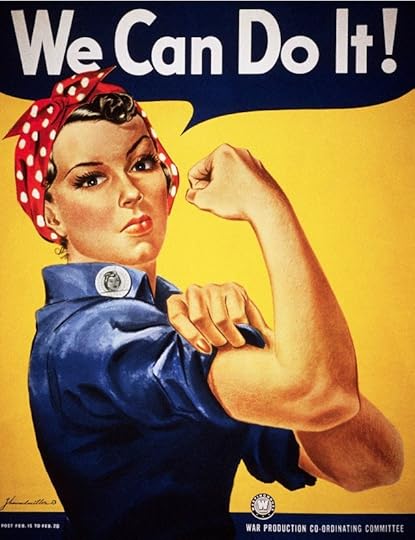
Enjoyed this post? Get my newsletter delivered to your inbox so you don’t miss the next one! I send out one mailing a month most months and promise zero spam.
The post A Riveting Tale of Women Vets appeared first on Benson's ReView.
April 2, 2024
Investigating the Bund
In perhaps the most dangerous assignment of her career with the New York Police Department, Mae Foley was assigned to go undercover and pretend to be a Nazi sympathizer.
She reluctantly agreed.
After all, she’d just spent two years babysitting the 40+ unwilling witnesses in the Lucky Luciano mob trial and the follow-on trial for Jimmy Hines.
It was 1938 and she needed a break.
But then she reckoned, this assignment in its own peculiar way, could actually be something of a break too. So there she was, her shield and duty weapon safely tucked away in her bedroom dresser drawer, heading into Manhattan for a monthly meeting of the German-American Bund.
She attended all their meetings, feigning interest in the group’s goals of supporting Hitler’s policies in the U.S. and pretending enthusiastic support for their activities to grow membership – from summer camps for children (indoctrinating Hitler youth) to parades, rallies, and marches in the street.
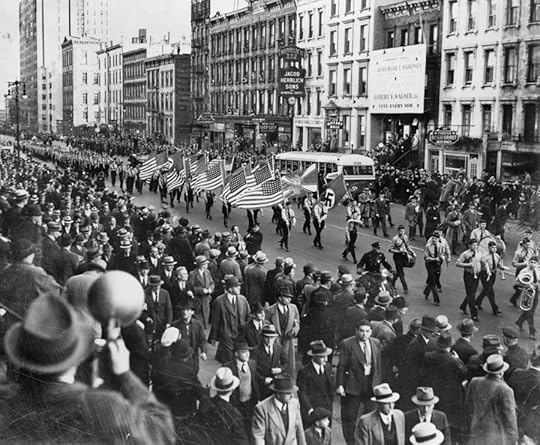
A Bund parade in New York
Mae couldn’t go near the station house. But she reported weekly to her captain at the 108th Precinct sharing her intel about the group’s plans and stated goals.
This effort reflected a change in thinking by the executives downtown.
Why wait for something to go bad and be taken by surprise on the streets when violence erupted? It was better to have someone on the inside who could report back and provide a heads up on the Bund’s plans.
Her views on the assignment were fairly straightforward, until a big event emerged on the horizon.
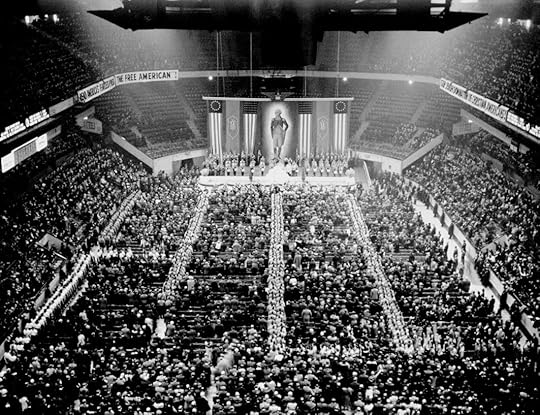
The leader of the Bund, Fritz Kuhn, announced his plan for a uniquely American event, a salute to George Washington on February 20, 1939.
But just as Mae feared it wasn’t about Washington at all. It was about the Nazi party.
When the crowd of 22,000 began to chant “Free America! Free America” Mae began to shudder.
She did all this undercover spy work with no training whatsoever.
But that was mostly true of Mae’s entire career as a policewoman with the NYPD. She learned as she went along, writing the book as she went. She knew instinctively what to look out for, what was significant to report and what wasn’t. And once she learned that Fritz Kuhn had a mistress, that opened up another door for the experienced investigator.
Mae remained undercover until long after Kuhn was arrested and put on trial. The movement continued too.
As America entered into World War II, fear of Nazi infiltrators and spies were a top concern of both the FBI and the Office of Strategic Services (OSS).
While the Bund was officially dissolved in 1941, German infiltrators, spies, and sympathizers were still active throughout the war.
Young Betty MacDonald learned that when she joined the OSS in the winter of 1943. Weeks later, learning she was about to be deployed overseas, she learned she’d first need to complete a 3-week training course in the necessary field craft she would need as an operative.
While Betty was assigned to Morale Operations, doing work in propaganda and deception operations, she knew she needed work in areas such as interrogation, tailing, opinion sampling and residence search.
Week one put her skills to the test.
Betty had been a newspaper reporter prior to joining the OSS and she thought she would be good as an interviewer.
Her task during that first training week, find out people’s opinions on the German-American Bund.
She made up initial story, pretending to search for a family friend. But then she couldn’t figure out how to make the transition to a different topic and ask her required question. It was: “Is it fair to ask German-American Bund members to bear arms against their mother country?”
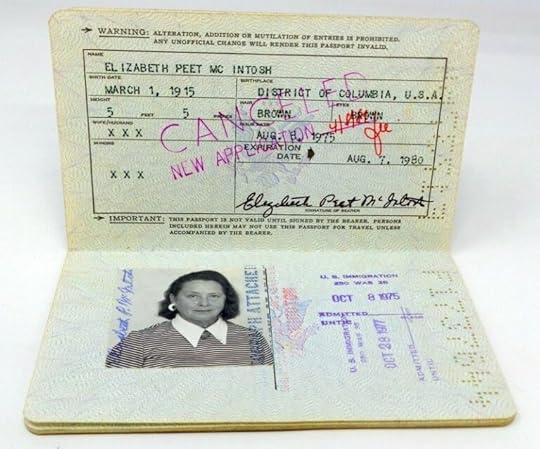
Betty just couldn’t get there. And the instructors told her they hoped she would never have to go undercover.
She had a face like an open sandwich. No guile whatsoever.
But later, once she was in India and then in China, she found that she could do whatever it took to get the job done.
They all did.
Enjoyed this post? Get my newsletter delivered to your inbox so you don’t miss the next one! I send out one mailing a month most months and promise zero spam.
The post Investigating the Bund appeared first on Benson's ReView.