David Weller's Blog, page 8
November 5, 2019
How Do You Check Your Learners are Learning?

How will you know your students are learning?
If your plan goes perfectly, it’s still possible that they don’t learn a thing.
Smiles, student activity, student confidence and engagement - none of these mean students are actually learning.
When you’re planning, think about what evidence you’ll need to see or hear that the le...


October 29, 2019
What is Test-Teach-Test?
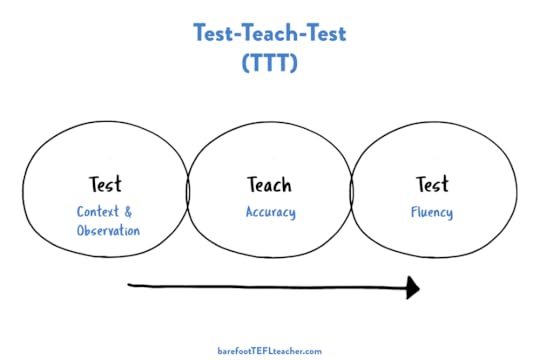
Test, Teach, Test is a method of structuring your lessons.
Like Presentation, Practice, Production and Task-based Learning, there are three stages for this methodology.
Test (1)This first ‘test’ stage should introduce the context, and give the learners a chance to do a task or activity.
This can be anything where they have t...
October 21, 2019
How to Use 'Gaps' in Communicative Activities
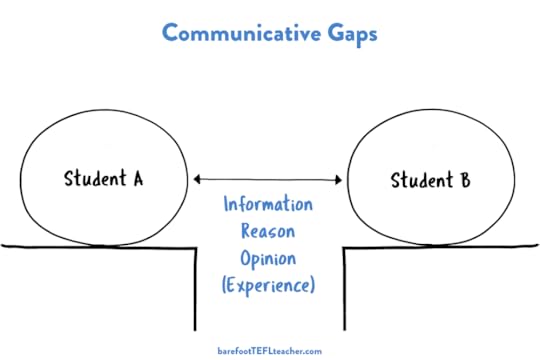
Students need to have a reason to communicate. Sure, they’ll talk if you tell them to (“discuss the topic with your partner!”) but it won’t be as engaging without a reason. It won't be 'genuine communication'.
To make an activity resemble real life, you need a 'gap'.
So what is a gap? A gap is missing information - somethin...
October 15, 2019
What is Task-Based Learning?
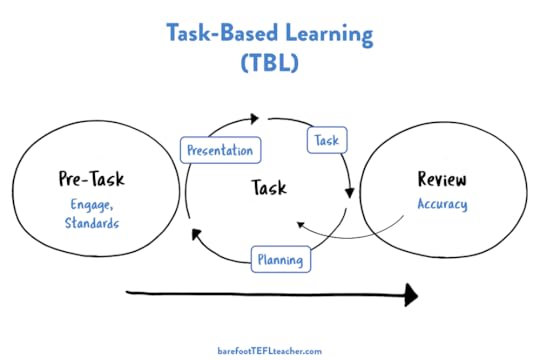
Task-Based Learning (TBL) is a lesson structure, a method of sequencing activities in your lessons.
Sometimes called ‘Task-Based Language Teaching’, TBL lessons students solve a task that involves an authentic use of language, rather than completing simple language questions about grammar or vocabulary.
Task-Based Learning ...
October 8, 2019
Teaching is Decision-Making
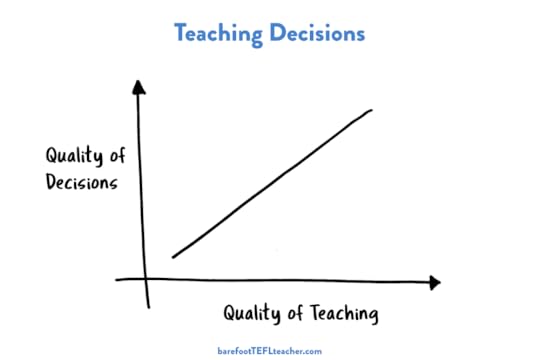
Teaching is a series of decisions we make to help students learn. Some decisions are made by the syllabus or school, but the majority are made by us, the teachers.
We make a huge number of decisions every day, with some researchers reporting that teachers make 0.7 decisions per minute during interactive teaching (Borko et ...
May 28, 2019
Book: Lesson Planning for Language Teachers
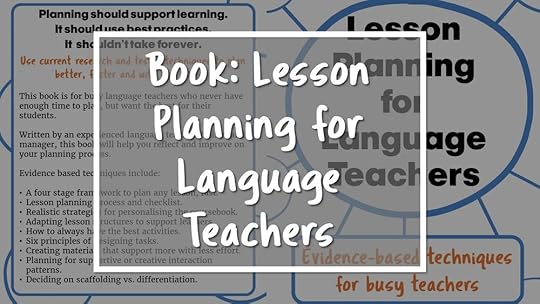
So this isn’t actually a review, but rather an announcement.
I’ve completed my first book, called (you guessed it) ‘Lesson Planning for Language Teachers - Evidence Based Techniques for Busy Teachers’.
Why A Book?I noticed that some of the most visited pages on this site are the Lesson Planning pages. So it was clear that f...
May 21, 2019
The Four Types of Classroom Context
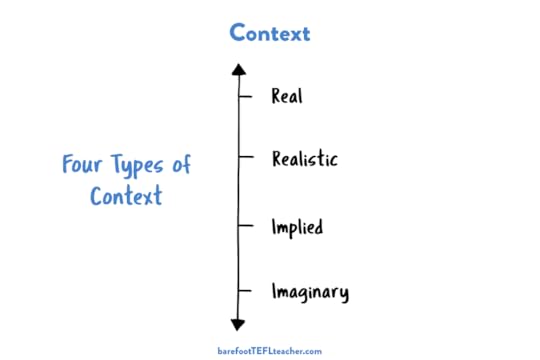
Don’t fall into the trap of always choosing a realistic context.
Yes, it’s easier to pick (you just think about a situation from real life), but it gets boring for you and your students.
I have a friend who describes this as the ‘tyranny of context’, and he’s not wrong.
I would argue that there are four kinds of context. I...
April 7, 2019
IATEFL 2019 One-Sentence Summaries

What a great conference!
Many thanks to all the volunteers and staff, who were friendly, professional and essential.
You may have noticed that there’s no ‘Day 4’ review, unlike Day 1, Day 2 and Day 3. I had to travel back home on Friday, and missed the final day’s sessions. I’ll catch up with Day 4’s sessions (and all the ...
April 5, 2019
IATEFL 2019 Day 3 - Review

Another day, another round of IATEFL sessions! The first was the plenary:
Under one roof: considerations on integrating content and languageby Aleksandra ZaparuchaA great talk about ‘content and language integrated learning’ (CLIL). CLIL is technically “to be used in any situation where non-linguistic content is merged wi...