David Weller's Blog, page 2
August 9, 2025
How to Teach Listening, Step-by-Step
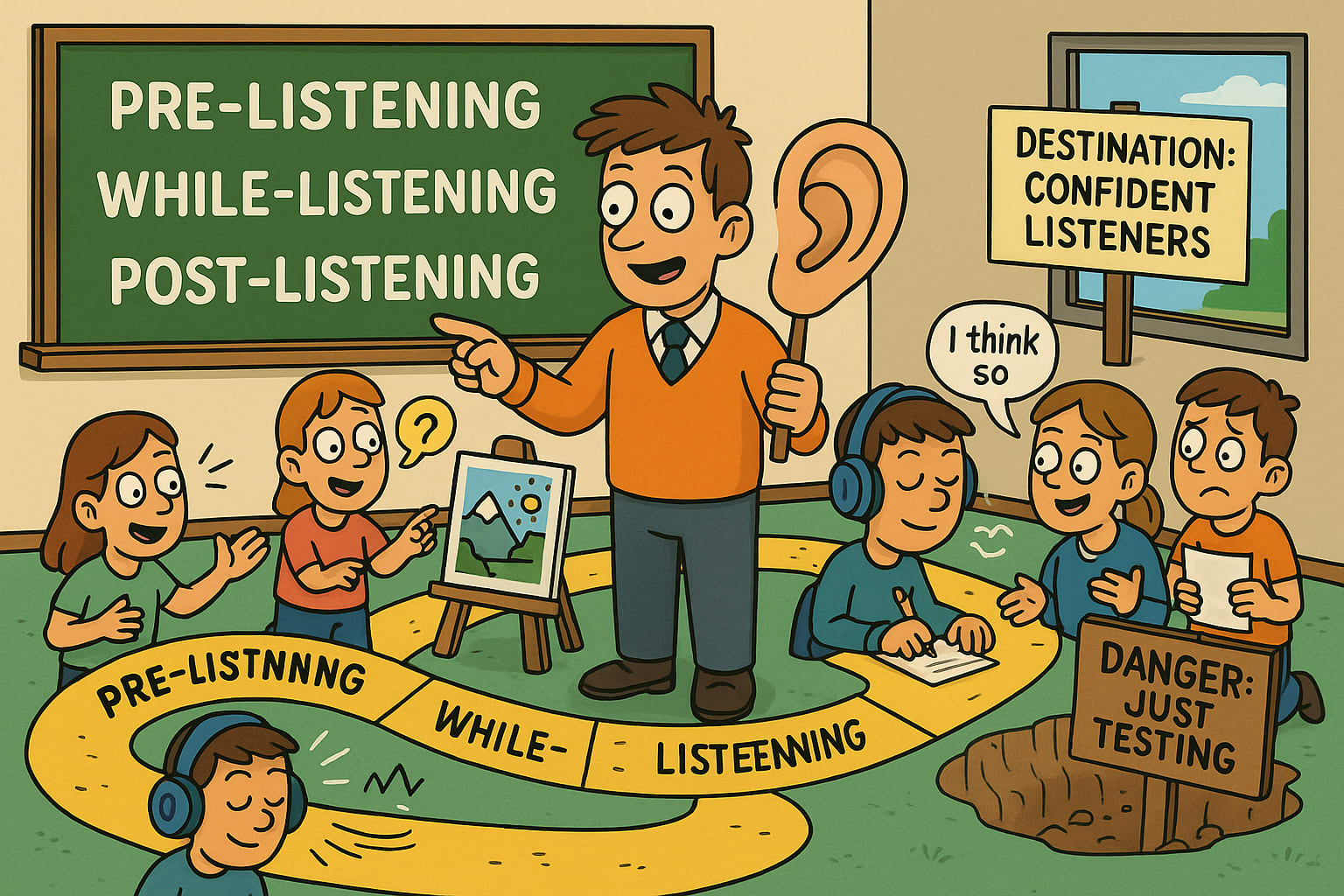
Listening is one of the most important yet overlooked skills in language learning.
Too often, listening lessons end up being nothing more than comprehension tests. Students are told “listen and answer these questions” — and when they get answers wrong, they’re left feeling frustrated instead of better prepared for real-life communication. This approach misses the point: listening is a skill you can teach, not just assess.
In this article, we’ll look at how to turn your listening lessons into skill...


August 2, 2025
How to Teach Writing, Step-by-Step
Writing is the most neglected skill in many classrooms.
Teachers avoid it because it’s hard to plan, even harder to mark, and students often hate it. There’s pressure to make students write fluently and accurately, but without clear guidance or enthusiasm, the results can be disappointing.
But writing doesn’t have to be painful - for you or them. This guide will walk you through a step-by-step approach to making writing lessons practical, structured and surprisingly enjoyable. You'll also discover...
July 26, 2025
How to Survive Reverse Culture Shock

Coming home can be harder than leaving.
You expect to feel comfortable, relaxed, even excited. But instead, you feel disconnected, flat, maybe even lost. That’s reverse culture shock. And if you’ve been teaching abroad, it’s more common than you think.
This article will help you understand what reverse culture shock is, why it happens, and how to get through it with your sanity (and sense of humour) intact.
What is reverse culture shock?You don’t feel like you belong - in the place you’re supposed ...
July 19, 2025
How to Teach Speaking: A Step-by-Step Guide
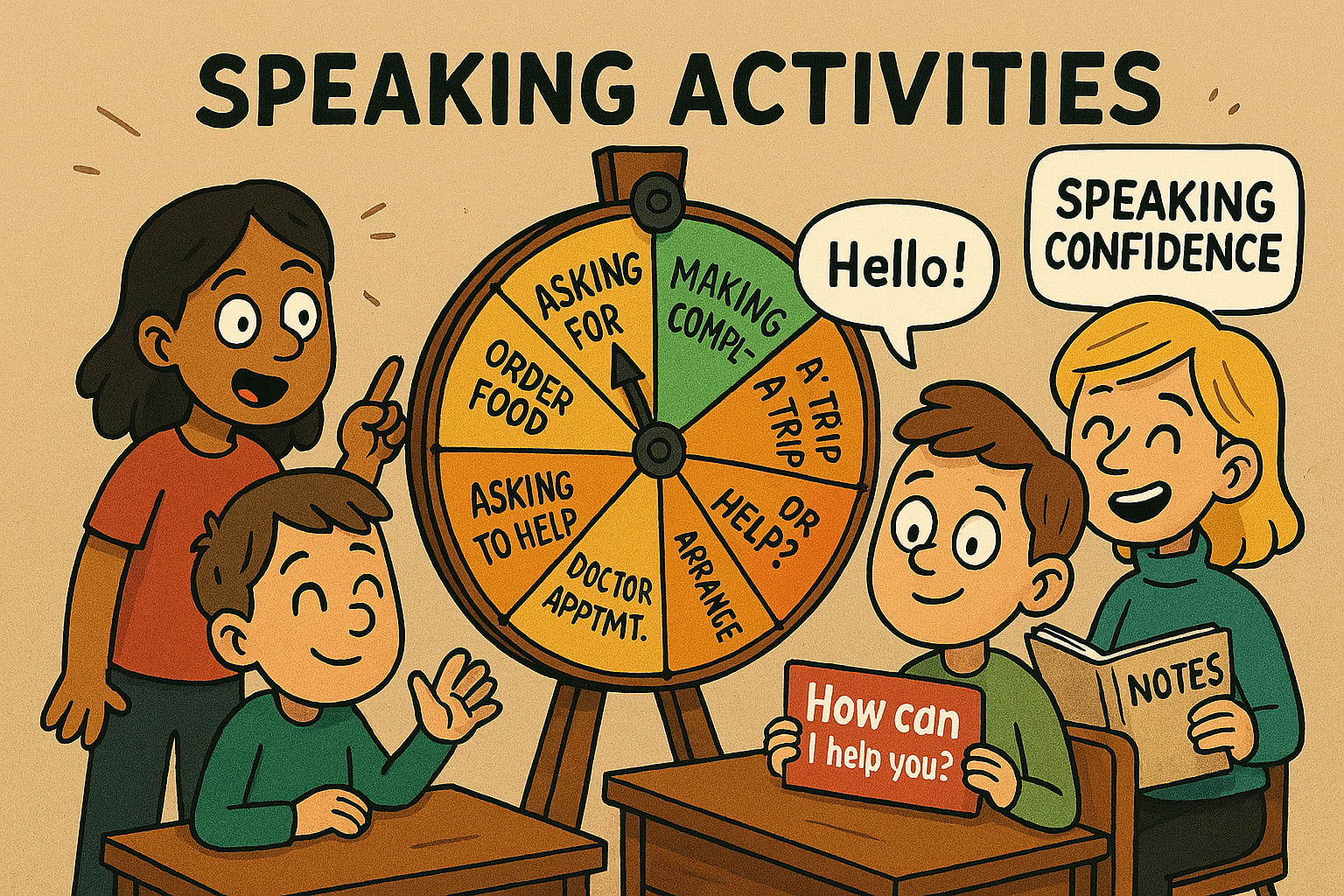
Speaking is often the most desired yet most difficult skill to teach in the language classroom. Many teachers set up a speaking activity, only to be met with awkward silence or three-word exchanges. It doesn’t have to be that way.
This article will give you a step-by-step guide to planning speaking lessons that actually get students talking, participating, and improving. You’ll learn how to create purpose, build confidence, and use AI to make your life easier.
Let’s fix speaking.
What is ‘speaking’...July 12, 2025
How to Teach Grammar (Without Boring Everyone to Death)
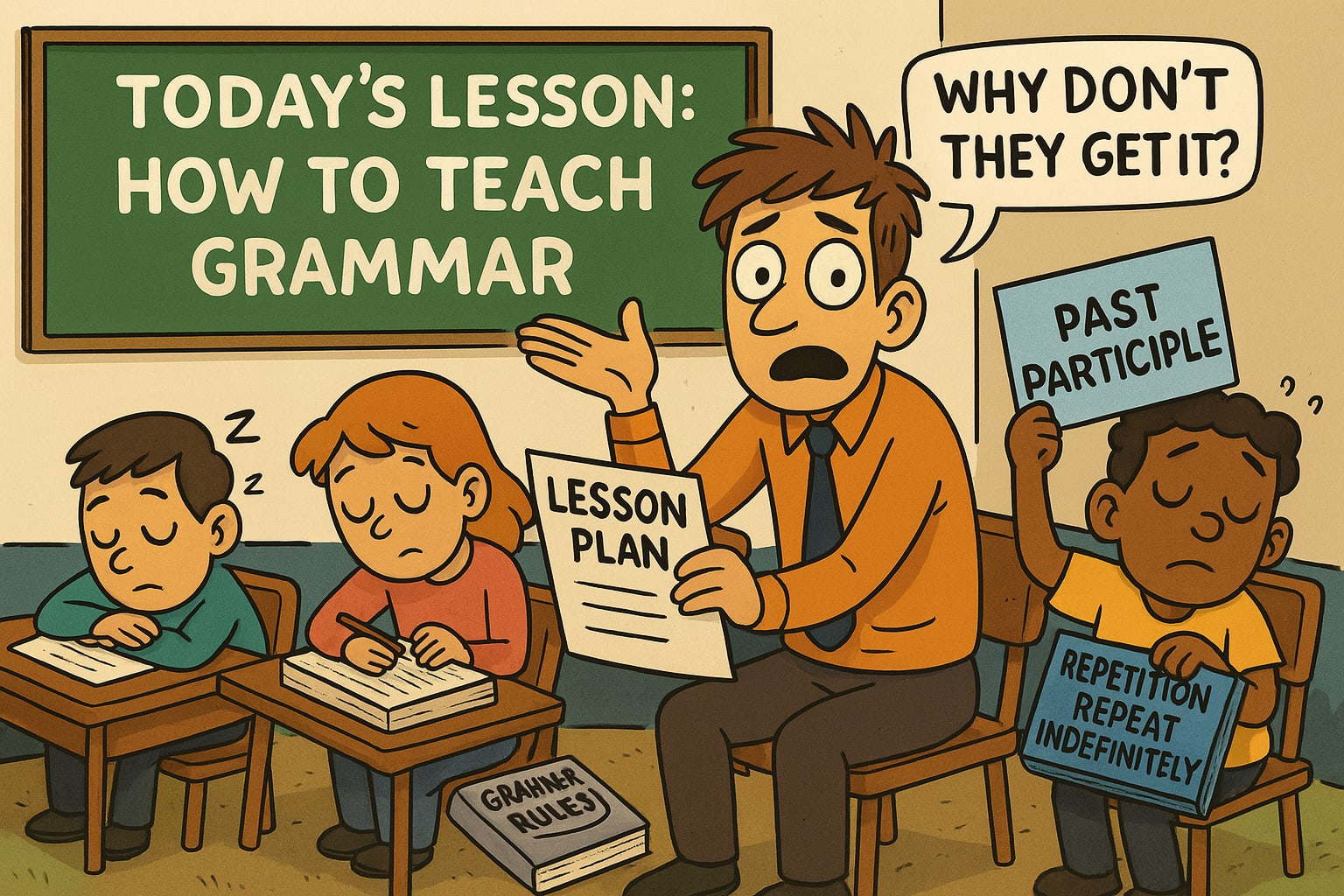
Grammar doesn’t have to be dry or confusing.
Yet most of us were taught to teach grammar like we’re prepping students for a court case - lots of rules, technical terms, and little context. The result? Students either nod along while secretly zoning out, or they memorise a rule they’ll forget tomorrow.
Let’s change that.
This article will show you how to teach grammar in a way that actually works. No grammar lectures. No tears. Just practical steps that’ll help your students understand, use, and eve...
July 5, 2025
Learning Design for TEFL
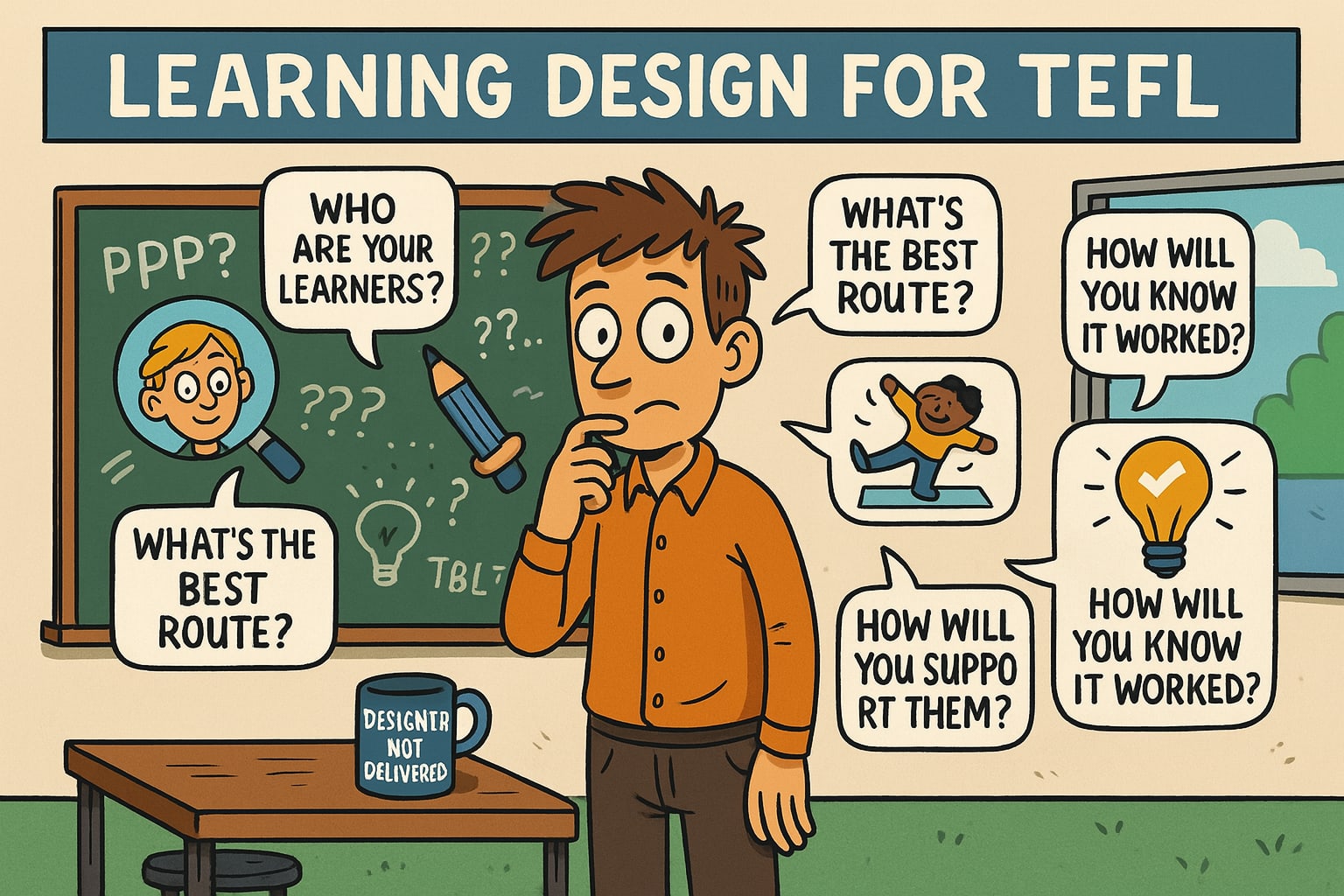
The success of a lesson isn’t about flashy tech or perfect grammar explanations. It’s largely about learning design.
And yet most TEFL teachers never get taught how to design learning. We get handed a coursebook and told to teach two pages per class. Maybe we were shown how to write aims or plan an activity - but no one explained why certain lessons flow and others flop.
Let’s fix that.
In this article, we’ll walk through what learning design actually means, why it matters, and how you can use it t...
June 28, 2025
Presentation, Practice, Production Common Mistakes
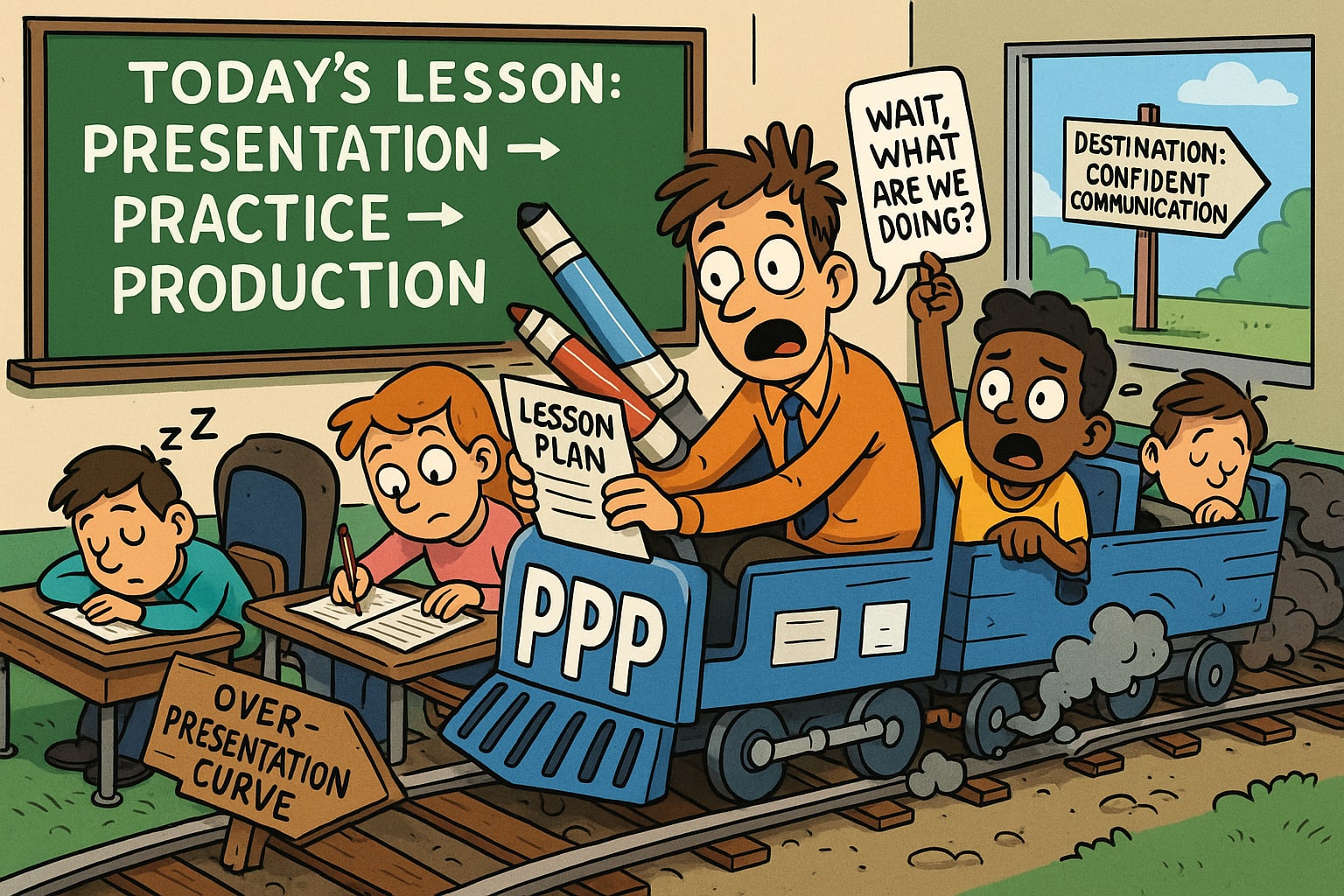
PPP isn’t broken, just often misused.
You plan your lessons. You follow the framework. And yet - students glaze over halfway through, or you run out of time before they’ve really used the language.
Sound familiar?
PPP has structure, but it also has traps. And it’s these hidden missteps - timing, flow, feedback - can trip up even experienced teachers.
The good news? They’re easy to fix once you know what to look for.
This article will walk you through the common pitfalls, the quick wins, and leave ...
June 21, 2025
Whoever Does the Thinking Gets the Language
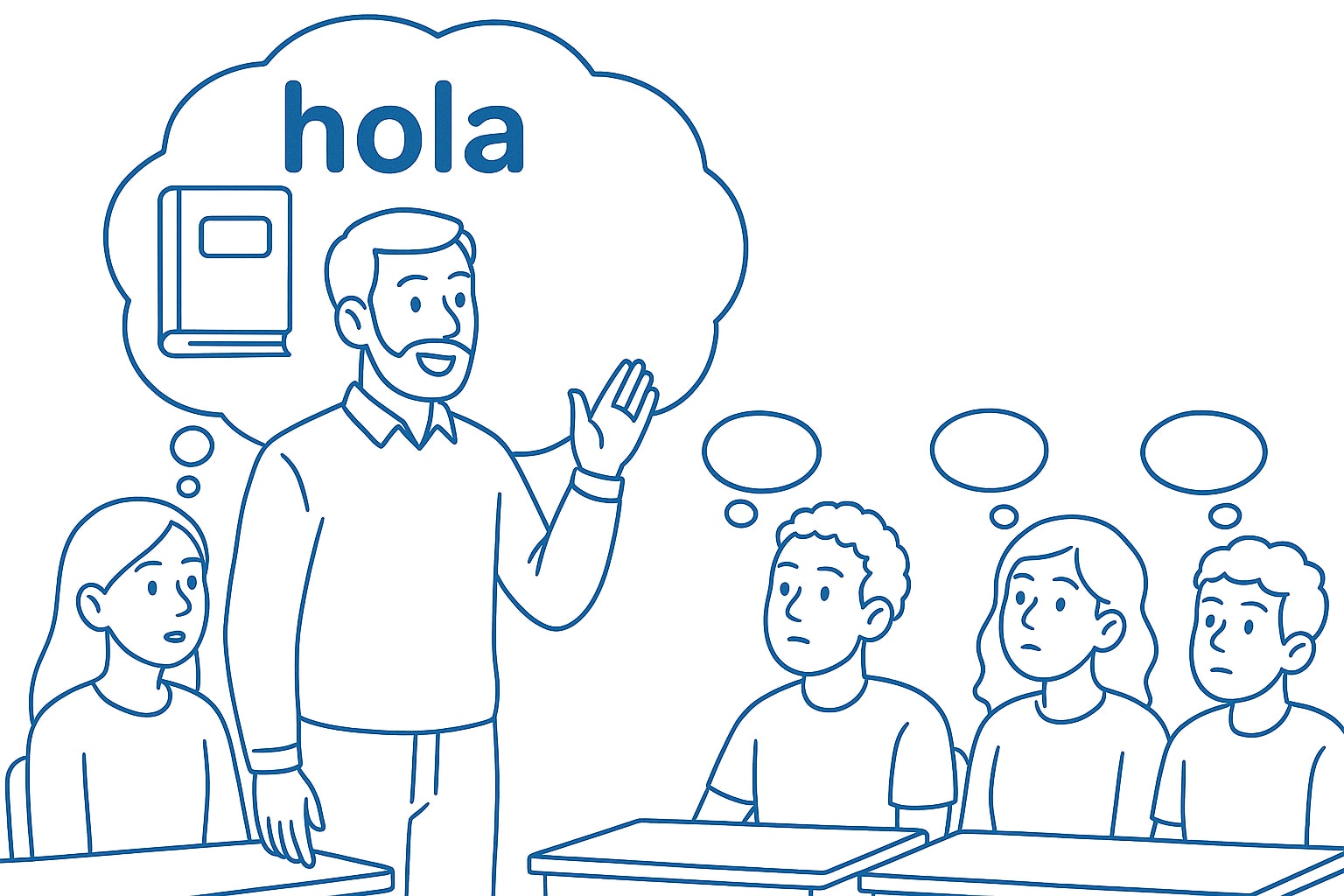
Teaching a language can feel like pouring knowledge into empty cups. But language doesn’t work like that. You can explain grammar rules perfectly and still get blank stares the next day. Why?
Because in language learning, the person who does the mental work - processing meaning, noticing patterns, trying to produce it- is the one who acquires the language.
If you’re doing the thinking, your students aren’t doing the learning.
This article looks at how to shift cognitive work back where it belongs, ...
June 14, 2025
Project-, Inquiry-, & Task-Based Learning
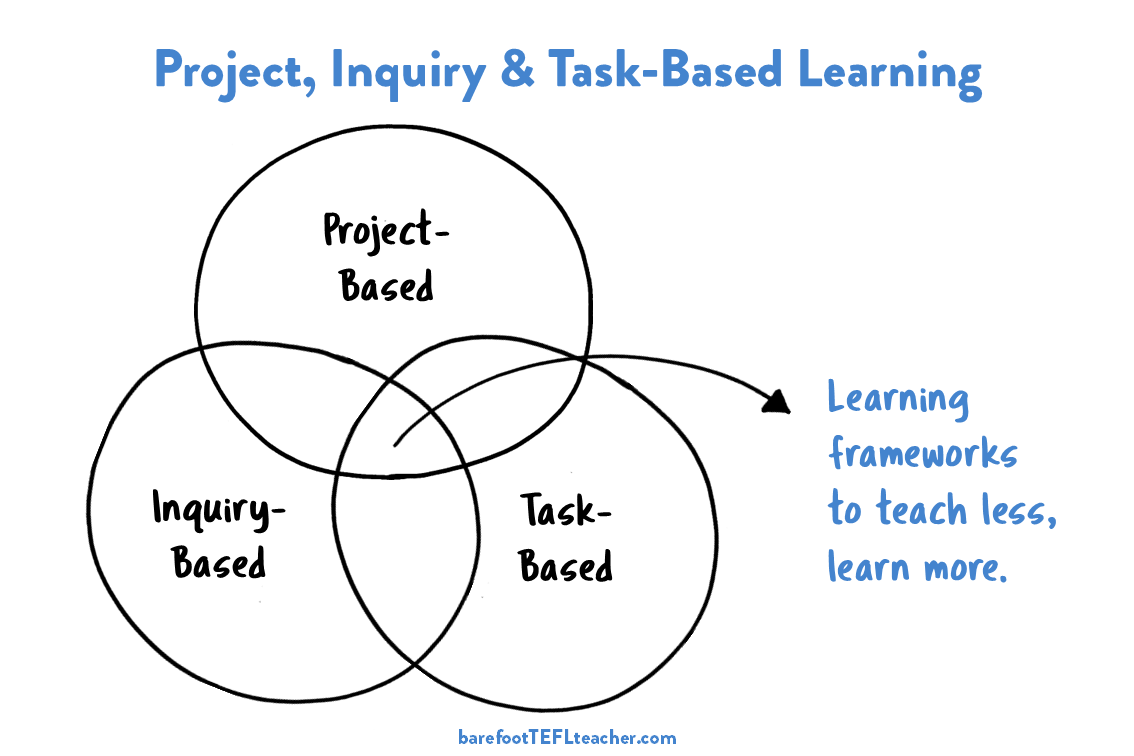
Heard of PBL, IBL or TBL but still not sure which one is right for your lesson? You’re not alone. These approaches pop up in training sessions, articles and workshops, often surrounded by academic jargon and diagrams with more arrows than a Game of Thrones battle plan.
Let’s cut through the noise.
In this article, I’ll walk you through what each framework actually is, show you what it looks like in a real TEFL classroom, and give you a simple way to help you pick the right one for your next lesson...
June 7, 2025
Can Alcohol Improve Language Fluency?
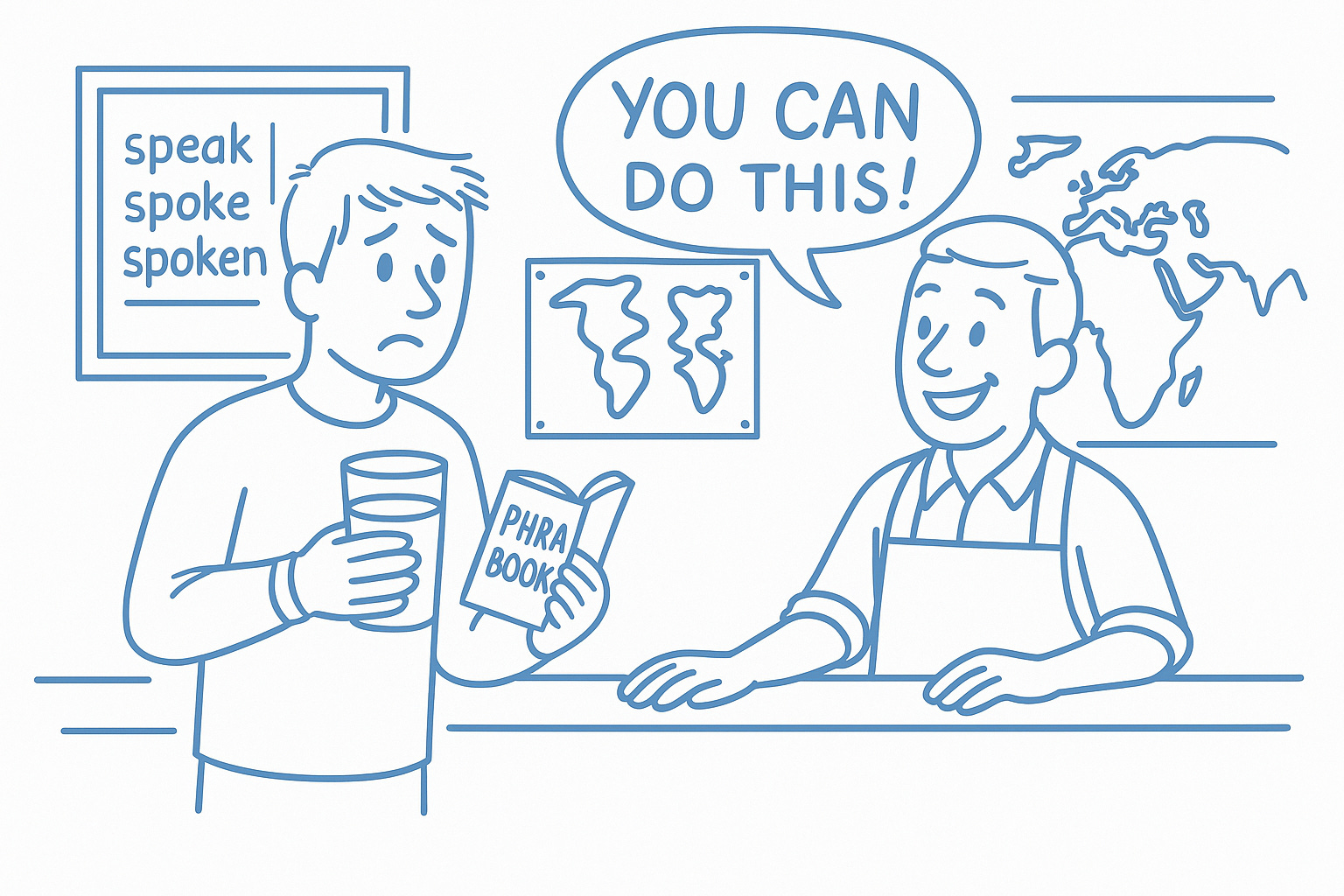
After two and a half beers, I feel borderline fluent in Chinese.
My tones improve. My words flow. I even gesture like a native. It’s like someone unlocked the language settings in my brain.
One sip more… and it all collapses. Slurred grammar. Rogue tones. A conversational car crash.
I’ve always joked about this effect. Turns out, someone’s studied it - and the findings are fascinating (and a bit dangerous).
What the research saysFifty German students, all learning Dutch, were split into two groups....