Jacob Robinson's Blog, page 21
July 19, 2021
Effective versus Efficient

I like dichotomies. There are a lot of them out there, and most are pretty damn accurate. A couple of weeks ago I talked about structure-seeking versus structure-averse, now I’ll be talking about a split that’s somewhat similar yet also very different: effective versus efficient.
Read the following line: “Move fast and break things.”
Some of you may recognize it as Facebook’s long-term production motto. People tend to have one or the other reaction to it: either they agree, or they abhor even the notion of it.
Disregarding Facebook’s shaky operational history, plenty of businesses, organizations, and artists take on a similar approach. I refer to this strategy as being efficient — doing the most with the smallest amount of work, making procedural MVPs rather than a fully finished project, being willing to leave some stones unturned in favor of getting product out the door in the first place. As most of you can probably tell, it’s the strategy I use. I skim on things like editing, SEO, etc. in favor of producing reasonably insightful content at a quick enough pace.
On the opposite end, there’s the perfectionists. The people who believe that leaving stones unturned is a borderline sin. They prefer spending thousands of hours on their work, on deep study sessions, on taking copious notes and looking into every fine detail. They prefer to be effective.
Honestly, I don’t know how the effective half lives. I’m sure they’d say the same thing about me. I also acknowledge that, like our discussion on structure, this isn’t a particularly new principle. The debate on perfectionism has existed for centuries, though I’d like to think that people don’t put as much emphasis on the differences between these two groups specifically.



July 12, 2021
On Being You

You’d think at first glance that being yourself is an easy topic that all of us could master. The truth is a little bit more complicated.
For the most part how we act isn’t actually who we are, but rather a facade generated by things like heuristic thinking [See: The Prestige Myth] and social gaming [See: Theory of Social Games]. We know with just a little bit of introspection who we want to be, what we want to do, how we want to act — but this perspective is obfuscated by mindset, social rules, and understandings of “how you ought to be”. Many times the person who wants to be an artist doesn’t, because it doesn’t make any money (social pressure), so they become a business consultant (prestige heuristic) and end up working 100 hours a week, ignoring art because “they’ll do it when they have free time” (fixed mindset). Many such cases.
We follow these ideals because we believe that there is an inherent “risk” with being ourselves. But what risk is there? Why is there such a strange blindness towards making art for the sake of art, and not as an occupation? What is with our insistence that the only jobs worth fighting for are the ones that give the lowest amount of value? Why do we stop ourselves from doing things now, as opposed to later?
It is likely because we become paralyzed. It is the greatest fear of all people, that they have infinitely-many decisions but only one life. In the parlance of the 2010s, YOLO — except in this case YOLO is less of a fun bit and more of a crippling existential realization. You only live once, and if you live wrong then you’ve failed. In the words of Richard Feynman: “You only live one life, and you make all your mistakes, and you learn what not to do, and that’s the end of you.”.
But why think that there is a better path beyond aligning yourself to your own interests? Don’t you know how to make yourself the most happy? Perhaps not in every case — those who haven’t done much introspection probably don’t know the answer off the top of their head. But what’s wrong with experimenting, with finding out the answer?
I would say that dabbling from one thing to the other for the sake of dabbling is bad. I would say dabbling with a purpose in mind — to find out who you are — is much different. Our society rewards people for having it all figured out from the beginning. In reality, no one has it all figured out from the beginning. We all lose this game! The only way to win is to shed off this societal conscience and go and do what you damn well please. Have a plan — have a backup plan as well — but don’t wait. Just do it.
One last thing. People stuck in the loop don’t like people who stray out of it. It’s why you see articles like “You shouldn’t write a book” or “Living freelance is near impossible” or “Entrepreneurship is stupid and you should feel stupid for thinking you can do that”. Are they wrong? Well, no. Not really. But pay attention — very close attention — to how they’re defining their words. When they tell you not to write a book, they’re saying it’s because it doesn’t make any money. But are you writing a book to be rich, or are you writing a book because you always wanted to? They complain that the destination is impossible. But is the destination what you want? Or does being you really have to do with living in the journey?
July 5, 2021
Conscience Questions, Unchristianized Edition

A while back I found a link to a website which described 99 Questions to Complete Your Examination of Conscience. I thought the wide majority of the questions were rather insightful regardless of whether you were Catholic or not. I’ve decided to go through and repurpose the ones I found the most fitting to the everyday person, rephrasing them to be more friendly to even the atheists among us.
Have I been ungrateful to life for its benefits?Am I open to the flow of life?
Do I rely solely on myself and not on external events?
Have I abandoned myself?
Have I been faithful to myself?
Am I unwilling to turn away from anything that is morally wrong in my soul?
Have I blamed someone or something else for my failure, carelessly, in anger, or surprise?
Have I cursed myself or others?
Have I called down evil upon anyone or anything? (Not literally hexes. More like, “I hope X gets in a car accident”. Something like that)
Did I get angry with my life?
Have I angered others unreasonably?
Have I broken a vow made to someone?
Have I murmured or complained about life?
Have I been willfully distracted?
Do I distract others?
Have I done unnecessary work?
Have I disobeyed, insulted, or shown disrespect to others?
Did I neglect my duties to my husband, wife, children or parents?
Did I neglect to give a good example to my family?
Am I disrespectful, impolite, or discourteous toward my family?
Have I failed to meet my children’s physical, emotional, and educational needs?
Did I fail to actively take an interest in the education and formation of my children?
Did I cause tension and fights in my family?
Did I care for my aged and infirm relatives?
Did I kill or physically injure anyone?
Have I entertained thoughts of suicide, desired to commit suicide, or attempted suicide? (I know that traditionally Catholics have looked at suicide as a sort of sin/stain against God. I think the logic there is less to be angry at depressed people and more to just convince people not to commit suicide. I would think of this question the same way — not as a sin, but moreso “Do I need help?”)
Have I placed others in harm’s way?
Have I failed to help someone in danger or in need?
Do I drink or smoke excessively or abuse prescribed drugs?
Do I deliberately harbor unkind and revengeful thoughts about others?
Have I taken revenge?
Have I used harsh or abusive language toward others?
Have I spread gloom through my words and actions?
Is there anyone with whom I refuse to speak, or against whom I bear a grudge?
Have I taken pleasure in anyone’s misfortunes?
Have I led others into sin? (Sin in this case you can say is just morally wrong actions)
Have I willfully entertained impure thoughts or desires? (Once again, morally wrong stuff. I don’t care if you go fully horny mode once in a while, and honestly God probably doesn’t care either.)
Did I respect all members of the opposite sex, or have I objectified them?
Have I read, listened to, or viewed impure things? (Porn is scientifically bad for you!)
Have I succumbed to occasions of impurity? (Jerk off in moderation!)
Have I stolen money or property?
Have I cheated?
Have I failed to make restitution for what I stole?
Have I intentionally damaged property?
Have I accepted or bought stolen property?
Have I helped someone steal?
Am I dishonest in my business dealings?
Do I gamble excessively?
Have I borrowed without permission? (I.e. stolen with the intent of giving back)
Have I failed to return things borrowed?
Did I waste time at work, school or at home?
Have I cheated myself of an honest day’s work?
Have I refused or neglected to help anyone in urgent need?
Have I lied deliberately?
Have I deliberately misled or deceived anyone?
Did I gossip or reveal others’ faults?
Have I failed to keep promises or oaths?
Have I signed false documents?
Have I failed to prevent the defamation of another’s character?
Have I revealed secrets and betrayed trust?
Do I make false judgments and harbor false suspicions?
Have I failed to forgive someone or held a grudge?
Have I failed to apologize or make amends?
Did I fail to keep secret what should be confidential?
Have I disclosed another’s sins without serious reason? (Like before, sins = things they did that were bad)
Am I greedy or selfish?
Am I envious of someone’s possessions, talents, or blessings?
Do I indulge in self-pity?
Am I proud, vain, or desire to be praised?
Have I exaggerated my success?
Have I minimized or made excuses for my failures?
Have I measured my charity by what others have given, rather than my ability to give?
June 28, 2021
Post-Truth, Revisited

On July 22nd, 2019, I published an article called Living in a Post-Truth World. A lot has happened since that post — I wanted to revisit it here to see how much still applies, and how much I ended up getting wrong.
The basic trends the article insisted on still ring true. We are living post-truth, and since my article many other people have written posts and books about this (I wasn’t the first person to write about this, but rather the topic has gained steam significantly). Deep fakes are getting more powerful, and more common. News media is becoming more extreme, and more fractured. But the reaction to this trend has been, needless to say, interesting.
In my original article the only probable reaction I do mention is that we will need to develop better methods of counteracting fake news and deep fakes. In reality, this was a rather weak suggestion — fake content works on a flywheel the same way hacking does. You build a better defense? Then we’ll build a better attack. Etc, etc, etc.
The reaction I didn’t see coming was that of the public. People got more skeptical. Like, a lot more skeptical. People began calling out content more often for being fake, doctored, slanted, or what have you. But here’s where it gets interesting. People aren’t just calling out the deep fakes and extremist content — they’re calling out everything. I’ve had multiple awkward conversations with friends where I will post an article from CNN or The New York Times, only for them to respond, “That’s biased!”. Fair enough, I think — so I respond with a straight drip from AP or Reuters instead. Once again, they respond: “That’s biased!”. At this point, I’m just confused. Though I suppose that in hindsight the logic is so mind numbingly obvious: in a post-truth word, nothing is true!
Of course, we can’t give our brains too much credit. A few weeks later my friend posts an article himself, coming from the New York Post. Ah, that’s the trick! You see, I told you people are better at pointing out fake content, but the extremism still stands. Right wing users point out fake content from the left wing with more accuracy, whereas left wing users point out fake content from the right with more accuracy. At the end of the day, Lady Confirmation Bias still wins. For now, at least. So finding “true” content now results in reading between the lines, looking at the dialog and seeing what’s garnered the least attention. That’s the one no one can poke a hole in — that’s the one that’s probably true.
There’s one last trend I find interesting. It is true that, at this point, every major news publication in the world has taken “a side” (with the exception of AP and Reuters, contrary to popular belief). People are starting to become cognizant of this. Big pundits like Balaji Srinivasan have begun telling people to shrug off the chains of news media entirely. People are beginning to listen. Where do you go when there’s no news media, though?
For a long time there was no good answer to this. And the media used this to their advantage. “Killing us off means killing truth!” they declared. Well, now truth is already dead — media or not. So that’s not a particularly great excuse. The result of finding truth now has been rather strange: it’s the place where not so long ago people said it was the place to never find truth: the aggregate.
That’s right: personal newsletters, private bloggers, the Twitter community. News is now faster, and more accurate, from these sources than from traditional sources. How is this possible? Like I said, it involves reading between the lines.
Get Person A’s news on Event X. Then read Person B’s news — news that is diametrically opposed, yet still about Event X. Well, A mentioned so-and-so about X, but B didn’t. Maybe it’s not true then. However, both A and B mentioned this about X. They gave their opinions, but throw that part out — no one cares about their opinions, anyway. You get a bunch of people in a room, all with different opinions, and get them to fight each other, and truth comes out. You find it in the aggregate. The next step then is getting people to listen to that, as opposed to their own side.
June 21, 2021
Those Who Make, And Those Who Work

I’ve come to the conclusion that there are two types of people in this world, two that are often ignorant of the other’s existence. They are the structure-seeking, and the structure-averse — those who make, and those who work.
The names are somewhat misleading. They may remind you of “risk-seeking” and “risk-averse”, though the truth tends to be that those who are risk-averse are structure-seeking and those who are risk-seeking are structure-averse. This might give you the idea that the concepts are opposites, but even that isn’t true. We’ll get to why that is.
Before that, let’s define structure-seekers and structure-averse(ers?) by playing a quick game of word association.
Structure-seekers are accountants, prestige-chasers, graduate students, good in school, believe in authority, logical, academic, and to some extent, bureaucratic. They prefer structure — institutions, plans, organization, black-and-white.
Those who are structure-averse are creative, entrepreneurial, think outside the box, are artists, entrepreneurs, think big, hate authority, do poorly in school (unless it’s a subject they’re interested in), and believe in independence. They are averse to structure — they think rules exist to be broken and thrive in the grey area.
Now, hearing these definitions, you should realize that these definitions are not new. This is the left- and right- brain of American parlance, the kapha and vata in Hinduism, and the upstanding citizens and dangerous criminals of China. Jokes aside, at this point you’re probably wondering what it is that I’m telling you that’s new. Haven’t you heard this story a million times already?
Well, the truth is that these traditional definitions are close — but they don’t go all the way. Take two people, one a physicist and the other an author. Which one is structure-seeking, and which one is structure-averse?
The answer is that I tricked you. It’s impossible to tell, because structure-seeking and structure-aversion isn’t correlated to something as simple as an occupation. You can have a physicist who feels safe within the confines of the university, who publishes papers in order to get tenure, who prefers to teach classes than be on sabbaticals. This person would be structure-seeking. On the other hand, you can have Einstein. Hopefully you see the stark difference.
Same goes for authors. Even something as specific as authors of fiction aren’t necessarily assumed to all be structure-averse. Joyce Carol Oates is a fiction writer, yet she thrives on structure. Born out of academia, she prefers the theory and rules of writing when making stories. Contrast that with William Burroughs, who sees the traditional literary theory with rancor and derision. Two similar people, two very different philosophies.
And, as I’ve mentioned, we can’t rely on definitions of risk, either. In fact, you could make a pretty decent matrix of people who fit risk on one axis and structure on the author. A risk-averse structure-averse person may be a part time entrepreneur, whereas a risk-seeking structure-seeking person might be someone vying for a job in an investment bank. You can think of similar examples for the other two cells of the matrix.
The final point I’ll make here is the ignorance we can have when it comes to acknowledging that the opposite side exists. Those who are structure-averse live in the bubble of “it’s time to build” and “maker’s schedule, manager’s schedule”. Those who are structure-seeking see entrepreneurs and artists and make complaints such as “it will never work” and “remember the odds!”. My structure-seeking girlfriend remarks in confusion and horror when I tell her about the ideas of side hustles and creator economy, even though these concepts are practically second nature to me by this point. I think we can learn a lot from one another when we recognize that both of these sides exist, and that neither is particularly better or worse than the other.
June 14, 2021
The Unluckiest Man Alive

Forgive me for the structure of this post. The truth is, I have no idea where this post will go. In this text I am going to generate a thought experiment, a thought experiment that we’ll both see the answer to in real time. The answer may be disappointing, or it may be enlightening. The only way is to experiment and find out.
I don’t particularly believe in luck. I think it’s too simple of an idea. Luck, by definition, is a series of probabilities in which are so obfuscated we don’t really know what happened. When a group of entrepreneurs IPO their billion dollar company, they are “lucky” — not that they just magically won, but that there was a series of probabilistic events — market shifts, consumer changes, VC decisions — that went in their favor.
Of course, if you accept this definition, you quickly see that there are ways to “game” luck. The way to game luck is this: 1) reveal the probability events, and 2) load the probability events in your favor. You can’t do this with everything — for example, if you hacked the slot machines at Caesar’s Palace, you’d be arrested and permanently banned from the city of Las Vegas. But most problems in life aren’t that simple. Going back to our entrepreneur problem, how can we “game” our example events?
Well, we can find market shifts and use that to create a company that would work. We can market to consumers and convince them that they want our product. We can influence VCs into believing that they want to fund our company. These examples are not luck — they are skill. Heavy skill, but skill nonetheless.
Alright, let’s get to our experiment. Perhaps no part of luck traumatizes us more than luck’s relationship with success. We are set to believe that, without luck, there is no success. That every successful event requires at least a tad bit of luck. Of course, as luck skeptics, our hypothesis is that there exists a success event which does not involve luck. The corresponding null hypothesis is that all events in the set of success events require luck.
We define a “success event” by achievement of a life-term goal. To keep our example easy we will use one, which is “owning a house”. Skill is defined by observable knowledge, luck is defined by unobservable knowledge. Actors can use skill to “observe” previously unobserved knowledge, i.e. reducing luck.
The first luck event, of course, is The Great Lottery — where you are born, and in what condition. I concede to this event, though I also will argue that it does not necessarily count — this event happens pre-actor, and thus cannot be observed. We need luck and skill to be on equal ground before we can start our experiment.
Let’s say our actor starts off not great — they are born in a poorer region in the Great Unknown. There are a wide amount of factors this Lottery entitles to us: our gender, our skin color, our ability, our family. Since we are unlucky, these will all be against our favor: we are in a discriminated gender and skin color, with poor ability and a not-so-wonderful family life.
We begin by observing our traits, and observing their status — i.e. of “poor ability”, we know our ability and we also know it is poor. Family life is the weakest link — we can escape this hurdle. We cannot escape physical traits (gender, skin) nor ability. The question then becomes: can we work these off?
Now things get tricky. We are barred from education, and most employers will not accept us. We can educate ourselves and work on our own, but it will be much harder and we will fall behind compared to others. Fortunately our success event does not require comparatives (we only need one success to reject the null!). Let’s say that educating ourselves improves our ability (in many states of being it does) and let’s use that “most” to our advantage and say we do get a job. Here, we’re unlucky again — our rate of learning is very slow, and our work pays diminutive wages.
Before we continue in solving this next problem, I want to make a small digression. I am going to make another concession, and this time my concession will be much more powerful than that of The Great Lottery. I am going to say that having the motivation, or mindset, to improve is lucky. In fact, I would say this single assumption is the corkscrew that throws the whole thing off-kilter. If we have no motivation to improve, then it’s all luck to us — we can’t do anything, and we can only accept life. The unfortunate truth is that this is what happens to most people. If we all had the “improvement” mindset, then all of us would reach our success events. But we don’t. And I don’t believe there is a way to get people to see this mindset other than a probabilistic event. You just get it, or you don’t. You don’t learn to get it, because you don’t learn in the first place. It’s the fundamental block.
Once again, I will argue that this concession doesn’t automatically end our experiment. Mindset is an odd case, since it is outside what we traditionally deem as “luck”. People think you become lucky to make a million dollars, or found a successful company, or become a published author. These events I don’t think are lucky. Yet you don’t see anyone (besides me) saying, “oh, he’s lucky because his brain found out how to improve”. And since this is primarily a colloquial argument, I’ll say that fact allows us to keep going.
Alright, so we’re improving, but it’s very slow. Fortunately for us, the returns of education compound exponentially. This is because education benefits from network effects — scopes of learning are “networked”, meaning that learning one subject connects to various others. This is the fundamental idea behind mental models, among other things.
We also know that education correlates positively with work, and work correlates positively with money. There’s two ways that better education can mean better work: the most common is that being better educated leads to quicker promotions, increasing returns from work linearly. The second method (and more likely in our case, since we assumed a barrier to promotion) is that being better educated leads to entrepreneurial activity, increasing returns from work exponentially. This leads us to our last obstacle: can we build a business without luck?
To start off, zero-to-ones are out of the picture. The amount of background knowledge and probability estimates required to successfully pull off a billion dollar company is just too much. It isn’t luck, per say, but it might as well be. Good for us then that we choose our success event to be owning a house, which only requires a few hundred thousand.
In this case, an income generator will suffice. It won’t break any barriers, but you don’t need to — you just need something people will buy. With enough education, we can assume that an idea will come. When it comes to convincing people to buy things — this requires sales and marketing learning, which doesn’t require any luck to gain. We won’t use funding, since we probably wouldn’t have access to it anyway — because of this the path will take quite some time, but it’s nothing but time that we have. Eventually using this method we can build up enough cash to buy our house and achieve our success event, no strings attached.
Obviously this is one example for one event. It’s not a particularly practical example, either — but the idea is that with this base case we can extrapolate to whatever specific details we want and find that, yes, there are success events which do not require luck. You can be successful and not lucky.
I also want to connect this with a simpler idea, one that probably could have made this post a lot shorter. Instead of going through all the hoops of describing the unlucky life, I could have just chosen a different success event. What about being happy? Well, that doesn’t require luck. Perhaps it still requires the concession of the Mindset Problem, but if you have the mindset to learn then the problem is finished. Find happiness — you don’t need any external force to figure that out. I’m not saying it’s an easy problem, I’m just saying that even the unluckiest man alive could do it.
June 7, 2021
The Prestige Myth: Providing Structure to Structureless Forms

Prestige is something that tempts us all. A good job, a good house, a good car — they are signals, signals to others that we’ve seen success and we know what we’re doing. But how did they originate, and why have we become so addicted to them?
The answer, I believe, lies in existentialism.
Alright, stay with me here. Existentialism primarily derives itself from the idea of the crippling nature of human existence. In other words, the fact that we have an infinitely many series of decisions to make throughout our lives generates stress beyond a doubt.
Heuristics help us with these infinitely many decisions. It cuts down the workload and allows us to make decisions that are “good enough”, which is good enough. Prestige, in this way, is a heuristic. If you must grapple with the questions of “What is success?” and “What is happiness?”, it is going to take you a lot more time to come up with a solid answer rather than if you just accepted that “Success is owning a Porsche” or “Happiness is having a job at McKinsey”. A hunt for prestige is what allows us to find easy answers to the big decisions. Prestige is not inherently bad, but it can leave some people disappointed when they find out the answer isn’t there.
Prestige provides structure to structureless forms. The infinitely many decisions, the answers to these big questions, are inherently without form. They are relative, differing from person to person. A true answer is a lot harder to define than most people give credit for. It is also personal — you cannot find yourself by finding God. God and the church may help you, but you are ultimately in it alone.
Structureless things are scary. Uncertainty is scary because chaos may be hiding underneath it. Adding a light to the darkness, adding structure to structurelessness, helps reduce the fear. If you see that investment bankers make a lot of money and live in mansions with fine cars, then you know that ought to be the answer to your problem.
So, why is prestige a myth? Because, obviously, that statement I just made isn’t true. Investment bankers aren’t happy, most of the time. Happiness is not having a job at McKinsey. Success is not owning a Porsche. The myth is in the fact that prestige is a truth, rather than a heuristic. If you acknowledge its existence as a heuristic, then there is nothing to fear. You just can’t get too caught up in it.
May 31, 2021
Momentum, and the Value of Cold Showers

After going back and forth with it for some time, I recently got back into taking cold showers in the morning. On one hand, they’re unpleasant. On the other, they have a variety of health benefits, both physical and mental. But perhaps no benefit of cold showers I find bigger than that of momentum.
The idea of momentum is described well in William McRaven’s book Make Your Bed. It’s one of those books that I haven’t read but I know so much about that I might as well have read it. The example McRaven uses here, of course, is making your bed — making the bed is a very simple task which opens up the day on a “winning streak”, making you more motivated to take on the other parts of the day. This is the principle of momentum — if you start small and snowball your way through the day, you’ll be a lot more productive than you would be otherwise.
Cold showers are perhaps a slightly more intense variant of McRaven’s idea. It takes a lot more effort to sit in a cold shower than it does to make a bed. Because of this I think I would recommend starting with his strategy, but I also believe that cold showers essentially emulate the “end game” of this idea. It’s a painful (albeit not extremely so) task that has the potential of great benefits for you. Take that analogy and apply it elsewhere: getting exercise, studying for a test, applying for jobs. But a cold shower is the most fundamental building block to it.
That’s why I think cold showers are great for momentum on “pain and gain” tasks, tasks where the momentum of making your bed may not be enough. I find going straight from a cold shower to exercise much easier than stumbling out of bed, putting the sheets on, and going right into pushups. But, cold showers or no, I still think the idea of building momentum to start the day is something everyone should think about.
May 24, 2021
Honor and Glory
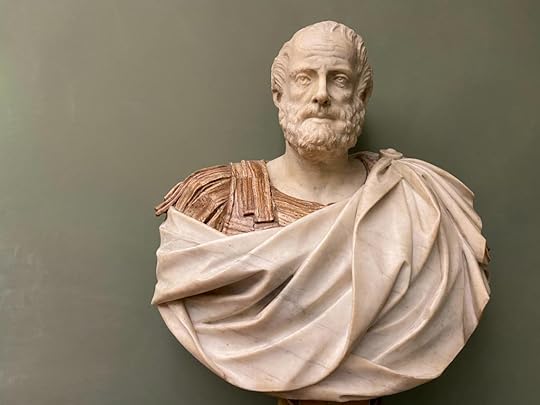
Honor and glory are seen now as archaic concepts from history. But if honor and glory still exists now, what does it look like?
I think honor is the easier nut here to crack first. People still, to this day, talk about “the right thing to do” — in other words, the honorable thing to do. Honor can be described by principles of justice and virtue that propel ourselves in our lives. We might have a different idea of justice and virtue in 2021 as opposed to the times of Greeks and Trojans, but the principle still applies. Easy enough.
But what about glory? What does glory even mean? The traditional definition involves “glory in battle” — in other words, whoever kills and pillages the most. Hardly adds up to that honor definition we mentioned earlier.
But if we put a magnifying lens over the context, we can understand that there may still be a place for glory in the modern world. Glory in the context of battle might mean skill in warfare, but the heart of glory involves fighting for a cause greater than yourself. For example, glory for Greeks was less about whoever was able to steal the gold candelabra from the burned-down village, and more about protecting Greece from barbarians. If we take this idea — fighting for a cause greater than yourself — it sure sounds a lot closer to the honor definition we had.
So maybe there’s still a place for honor and glory in our time and place. Maybe our focus on justice and of things greater than ourselves show that we’re more like our ancestors than we thought. Maybe the ideas of the past are less “archaic” than we always assume.

May 17, 2021
Faulty Mental Models

We talk a lot about what mental models work. But what about which ones don’t?
I think both examples and counterexamples can help us a lot when learning a concept. That way we cannot just learn what to do, but what not to do — it gives us a more narrow set of frameworks to operate in. When I think of what mental models don’t work, three come to mind.
Fixed MindsetDuh. I talk a lot about the importance of mindset on this blog, so it’s natural for the first thing I mention here to be poor mindset, more specifically fixed mindset. Fixed mindset is a poor mental model because it causes your motivation to diminish while giving you bad reasons to stop pursuing something. A better mental model is the growth mindset, which helps to keep motivation up on most things as well as reducing demoralization when stopping things that aren’t working.
Giving the BlameThis one is a little bit tricky. I’ve seen this described as a good mental model in some places, with the argument that taking the blame on things too much causes you to lose reputation. The argument for taking the blame is more moral, saying that “it’s what a good leader ought to do”. The reason I think giving the blame is a bad idea is not just for moral reasons, but practical ones as well — people who you assign the blame to will no longer want to work with you. You do it long enough, and you’re gonna run out of people to work with. The way I answer this model is this: When the stakes are small, take the blame. When the stakes are large, hide the blame — regardless of who did it.
Cognitive DissonanceThis is my last one (for now) and is probably the one that trips people up the most: that is, how to handle cognitive dissonance. If you have two conflicting ideas in your head, the logical, good mental model is to take the one that’s the most rational. That’s a lot easier in theory than in practice. So, let’s focus on the faulty mental model instead — hopefully that will clear things up for us. The faulty mental model is to immediately shut out the new idea and keep the old one, without considering the new idea. If we just focus some time on weighing each idea individually, we can more easily reach the solid mental model of picking the rational idea.