Jacob Robinson's Blog, page 22
May 10, 2021
The Mythical Self
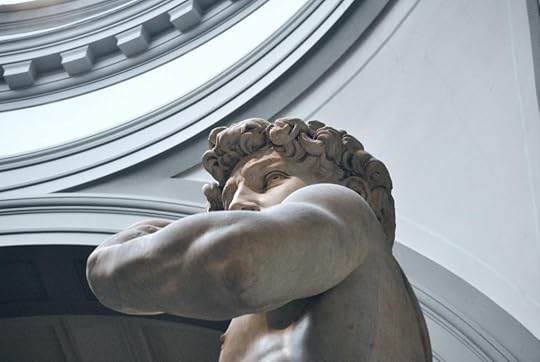 Photo by Delia Giandeini on Unsplash
The author Nassim Taleb describes the narrative fallacy as a belief that there is a story in everything, even though there is not. While the narrative fallacy can hurt you in some cases, it can also be used to your advantage.
When people see narrative in their surroundings, it means they see narrative in you as well. You can be the “quiet” character, or the obnoxious one, or the leader, or the rebel, etc. etc. Of course, as that character, you have the power to shape it as you wish.
My favorite description of this idea of the narrative or mythical self plays across the laws listed in Robert Greene’s The 48 Laws of Power. Here are some laws that particularly ring to the mythical self idea:
Conceal Your Intentions: Changing context to fit your narrativeWin Through Your Actions, Never Through Argument: Make people witness a character, not just hear it speakUse Absence To Increase Your Respect and Honor: Show up at the right times to give yourself a mythical entranceCultivate an Air of Unpredictability: Unpredictability in narrative keeps people investedMake Your Accomplishments Seem Effortless: Changing context to fit your narrative (again)Play to People’s Fantasies: This is the most straight-forward definition. Create a narrative for yourself that people are invested in learning more about. Act Like a King to be Treated As One: Build a character of a king and people shall will it into existenceCreate Compelling Spectacles: Storyline “events” that keep people interestedThink as You Like but Behave Like Others: Once more, changing context to fit your narrativeNever Appear Too Perfect: A hedge if you fail on narrative structureObviously it’s a lot of work to constantly weave a story about yourself. For most daily occurrences, it doesn’t matter — all you have to do is once in a while. Think Tom Brady coming back against the Atlanta Falcons, or Napoleon coming to the French shore from his exile, or Julius Caesar saying “Et tu, Brutus?” moments before his demise. None of these events actually have any mythical nature to them. But that doesn’t mean you can’t make it seem that way.



May 3, 2021
Biases Against Consistency
A surprising amount of success can be chalked up to showing up, each and every day. So why do we not acknowledge it?
It’s easy to look at statistics and assume that something is impossible. My personal favorite is business success rates. On average, survival of businesses is very poor — most die within the first year, and the survival rate only gets worse as time goes on.
Of course, that’s of businesses. You aren’t a business, you’re a person trying to start a business. When you look at the people who run the longest lasting companies, you realize that these are also the people with the most experience of failure — that is, they made probably 3 to 4 of those first year companies before they made one that lasted ten years and beyond.
Let me go back to my original statement: the biases against consistency. We are biased because we aren’t seeing the picture in the way the picture is meant to be seen. When we focus on survival of businesses, we fail to see the experience of the owners. When we focus on the success of books, we fail to see the productivity of the authors. There’s a lot more to the game than just “luck”, even though luck does play a factor. In reality, luck is just all those little pieces we don’t quite understand.
April 26, 2021
Immortality
In this post, I’ll be talking about immortality. No, not biological immortality — but something I believe to be just as good, if not better.
As the owner of a longevity startup, you might expect me to believe that immortality is possible — that we can really live an infinitely long time. But I think that as a practical matter, immortality like that is impossible. Moreover, I don’t think anyone really wants to live that long anyway.
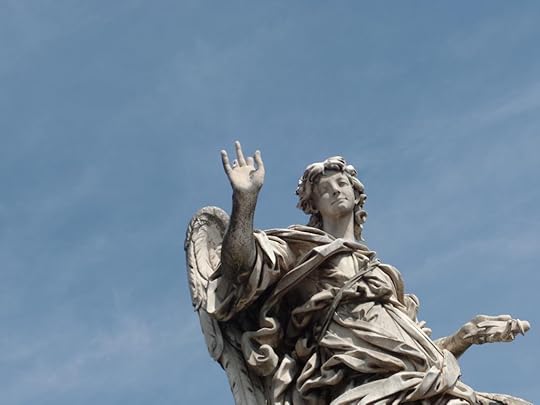
But what about other forms of immortality? Take Julius Caesar, for instance. Caesar was born around 100 BCE, yet we’re still talking about him around 2,100 years later. His books and depictions and appearance is still well known to us to this day. Can that be considered a form of immortality — living in the culture of humanity?
Skeptics would argue that the heat death of the universe means that all things are impermanent, yadda yadda… but I think this viewpoint misses the more simple reality of our nature. We want to be remembered by other human beings. We want to leave a legacy — preferably a good one — and we want to be ingrained into the culture for years to come.
But consider this caveat. We know Julius Caesar, but do we really know him? That is, can we assume that our depictions of Julius Caesar now match up to how Julius Caesar really lived?
Anyone who’s ever played a game of Telephone knows how scrambled a message can get when relayed through a group of ten or so people. Now imagine the same message going through billions of people, over the course of thousands of years. It’s likely that, even with our close attention to history, the Julius Caesar we know is not even close to the Julius Caesar he was.
So, if we brought Julius Caesar to the modern day, it’s likely that he’d look around and be very frustrated with any inaccuracies people might portray of him. And, it’s likely you would be too, if you’re given immortality like him. But that’s the rule — all things eventually decay, no matter how hard you try to stop it.
 Subscribe here!
April 19, 2021
Taste is Not Tech
 Photo by Davide Cantelli on Unsplash
Technology tends to have a remarkably short half-life. New innovations are made almost on a daily basis. So how do you protect yourself against the time decay of tech? Well, you focus on something else — taste.
You might think I mean taste figuratively. To an extent, I do — but the perfect example of what I mean by taste is quite literal.
Some of the oldest companies in the world revolve around food. Coca Cola, The Dole Company… there is something about taste that doesn’t change all that much. Certainly there are innovations in food production — new chemicals that enhance taste, new agricultural methods that improve crop yield — but the product never really changes. There isn’t a new version of a Coke every year, unlike an iPhone or a Google update. Things stay relatively stable.
We can see this in other industries as well. Not including financial companies (which can last a very long time, but are typically that way based on their ties to the government), other long lasting companies find themselves in cultural sectors, such as entertainment. While culture does change, the long-term trends can last quite a long time (as opposed to basic fads, or lord forbid fashion changes).
That’s not to say that technology companies aren’t worth investing into — the average lifespan of a tech company is more than enough to last its founder’s lifetime. But there might be something interesting in looking at more inherent patterns.
April 12, 2021
Making Mistakes, Post-Internet
 Photo by whoislimos on Unsplash
In the internet age, widespread witch hunting and social media monitoring makes it less and less likely to recover from even a simple mistake. Or does it?
A few posts ago, I wrote about the chances of your post eventually becoming fodder for the next great internet witch hunt. However, in that post I was only considering the chances of something perfectly tasteful now to become distasteful in the later future. To be honest, the chances of that are slim. It’s much more likely for you to write something distasteful as a foible, and see no end to it.
It’s a complicated problem. More eyes and less information means less forgiveness. If you’re a particularly popular person, then you’ll likely get disparaged even if you apologize. Hell, even if you’re not a popular person, it may still happen to you.
That being said, you know what they say about twice as bright fires: they burn twice as short. It seems like once these witch hunts take hold, they don’t take hold for long, and the anteceding events fill more with sympathy of the victims rather than further social ostracizing.
Now, I’m not saying this to excuse the internet witch hunt — shame economy is real, and there really ought to be some enforcement against it. But I believe that, if you make fall into the trap of making mistakes post internet, you won’t be killed — and perhaps it’ll make you stronger.
Subscribe here!
April 5, 2021
A Recap on my 2020 Politics Posts
 Photo by Donald Teel on Unsplash
Around September, I made a series of political posts in the run up to the 2020 election as to my thoughts on the outcome and future of US politics. Now that the election is all said and done, I want to return to these posts and recap.
Perhaps the most notable blunder on my part is predicting Trump over Biden (probably for the better). Apparently, my media theory had one caveat — negative press can be a damning thing. I thought that since most of 2016’s coverage of Trump was negative, that it wouldn’t affect him — but 2020 was even more damning, and it seemed to cross over just enough to kill Trump’s chances. Still, I believe the media theory would work as a ‘good enough’ prediction engine — it just won’t win every time.
On the other hand, I believe the chances for positive nationalism is now much higher. It’s clear that Trump’s form of nationalism was toxic, preferring certain identity groups over others. Now, it seems like we can go back to the true definition of ‘the soul of the nation’, with the help of both liberal and conservative viewpoints. I wouldn’t be surprised if Trump’s core base stays upset for a few years after, though.
Speaking of identity groups, I think this will be the most interesting trend to follow in the next few years. It is pretty clear that the election served more as people wanting Trump to lose rather than wanting Biden to win. Now that Biden is president, the focus moves to him — and it’s very clear that the Democrats still haven’t learned to come together. Progressives are still in conflict with moderates, a battle that may come to high stakes in future elections. The Democrats now have control of the government — the question has become whether or not they’ll keep it.
March 29, 2021
Free to Play Models for SaaS Services
 Photo by SCREEN POST on Unsplash
A while back I was checking out some models that free to play games used to gain revenue. I realized that, to an extent, virtually all these models could be used for apps — but no one was trying it.
Premium SubscriptionsI’ll start this list off with the one free to play model I have seen software use. In reality, subscriptions are prevalent all across software — games or not. The reasons behind this are pretty clear — they’re very easy to implement, and provide a stable source of revenue. The one downside is that sometimes people just don’t want to give money monthly to something that they only use sporadically — this can be a bad thing for both games and apps alike.
Energy BarsNo, I’m not talking about Clif. Have you ever played a game like Candy Crush, and notice that you can only do a certain set of actions in a given time? In free to play games, this is called the energy bar. It’s purpose serves two-fold — to some users, it manages the amount of time they’re on an app so that they aren’t playing it constantly. However, others who insist on playing longer can pay to extend their energy bars. A similar approach could be used for apps that involve active participation. However, make sure your energy bars are long enough that you aren’t upsetting large amounts of users by cutting their experiences short!
Premium CurrencyA premium currency in video game terms is a currency that can traditionally only be obtained by purchase, and allows you to exchange it for a small subset of items that boost your in-game experience. Technically, premium currency models are in use in SaaS apps already. For example, AWS uses credits which you can use to buy more time on their servers. I have a feeling that premium currencies will probably be the next big item that is used universally across all of software, as they remove the issue for people who use apps sporadically (they can buy the currency any time they wish).
Cosmetic ItemsOkay, this one might sound weird — but hear me out. The purpose of cosmetic items in free to play games is to give premium users worthwhile items without providing them any distinct advantage over free to play users. If you let premium users buy items that made them significantly more powerful than free to play users, then free to play users would become upset and leave en-masse. The translation of this concept to SaaS apps might involve giving premium users added benefits that don’t necessarily exclude free users from the full experience. Think bonus content, rather than unlocking content.
Loot BoxesLoot boxes are highly controversial, and are already being subjected to a lot of regulation — it’s for this reason that I list them last. Still, loot boxes are certainly worth mentioning if only for their massive success as a revenue component. Loot boxes are a form of gambling that is legal because they a) do not involve direct purchases (they have their own currency you use to get them, and that currency can be obtained for free) and b) they are transparent on the probabilities of you receiving certain items. Technically, you could use this as a method of giving out the “premium currency” or “cosmetic items” that I mentioned earlier, or some other added bonus that is tied to the app (just make sure they aren’t physical items — those still count as gambling!).
March 22, 2021
Art as Inspiration, Art as Education
 Photo by Alexander Schimmeck on Unsplash
There are many different structures to art, whether it be music, film, games, or otherwise. But to an artist, each art form can have its own use — either as inspiration, or as education.
First, some background on me: in addition to writing my thoughts down on the internet and making products at random, I’m also a writer. Since I’m a writer, I need to gather a lot of information to hone my craft. Of course, studying an art is a lot different from studying something like a hard science. You might be able to take a course or read a textbook to learn something like mathematics or electrical engineering, but the same cannot be done for art (Some will try to convince you otherwise — do not trust them). So, how do you get better at art, then?
The first step is to learn by education. See what the masters before you have done. You can’t learn from masters by taking a course — you have to dive into them. If you’re an artist, try to sketch out pictures by your favorite artists by yourself. If you’re a musician, try to deconstruct the beatmaking and instrumentals used by your favorite musicians. The same can be said for virtually all other art forms. For me, I try to read widely — both fiction and non-fiction — to get a grasp about what works and what doesn’t.
Then, there’s art by inspiration. You ever heard of the phrase ‘Great Artists Steal’? Well, while I think the phrase itself is a little too aggressive, there is some truth to it. Artists build off of other artists. The best art is made by artists who saw the works of others and thought, ‘This is good, but it would be BETTER if…’
I have a google doc that catalogs every paragraph I’ve read in a book that’s ever made me go “Damn, that’s good writing”. You can make an equivalent catalog for your art form of choice, just make sure they’re short enough to really reap the quality. If you’re into movies, you might grab a scene that makes you go “Damn, that’s good direction”. If you’re into games, you can grab a level or sequence that makes you go “Damn, that’s good design”. Etc., etc.
So I hope based on this you’ve realized that there’s some good purpose to art beyond just using it for entertainment. I’d also recommend that everyone do this practice, even if you aren’t an artist. There’s nothing to lose by expanding your creativity.
March 15, 2021
The Crazies, Part II
 Photo by Anna Atkins on Unsplash
“If I cared about everyone, I’d go crazy myself.” Here’s the story of how we deal with mental illness in the Internet Age — this time, we’ll be focusing on those who create the content themselves.
In Part I, we talked a little bit about passive voices of mental disorder on the internet. To be fair, these people aren’t all that much, except to the people they interact with. And more often than not, they’re interacting with the content creators.
I’ve heard a few stories creators have had about their experiences with the crazies, and I’m surprised how common it actually is. For many mental disorders — especially developed schizophrenia — there are ‘triggers’ which cause people to attach to certain figures of interest. Often, these figures are real people — celebrities, typically. Now in a post Internet world, the fixation moves on to Youtubers and live streamers, many of whom are young and inexperienced themselves and don’t have PR assistants who filter out any of the strange unsolicited ramblings by the mentally ill.
Unsurprisingly, being targeted by the crazies generates mental unease for the creators themselves. Obviously this is at no real fault of the crazies, but speaks rather to a societal issue of abandoning these persons to act this way in the first place. In a perfect world, the crazies wouldn’t be crazy — they would be treated, living normal lives, and most of us wouldn’t even be able to tell the difference. But we don’t live in that perfect world, at least not yet.
My final topic on the crazies is the one I’ve probably been the most obsessed with, and the one I find most nuanced — when the crazies become content creators themselves. There are many, many famous examples of this — from Time Cube to Terry A. Davis, and Chris-Chan to The Final Fantasy House (as you can tell, Fredrik Knudsen does some great content on this exact topic — though he tends to focus more on the facts of the case and less on the psychological matters). The dynamic between normal viewers and a mentally ill creator are, what you might imagine, interesting. Sometimes, the crazie is vilified and treated as a joke. Other times, the audience encourages the behavior and causes the mental illness to proliferate. However, most interestingly, something else develops across all cases: the audience member begins to build a bond with the crazie, and begins to have the crazie become a target of fixation for the audience themselves. In a sort of reversal of roles, an average person can become obsessed with one of these mentally ill content creators, actively checking up on them, learning more about their lives, becoming concerned about their health — and it’s common. Very common. How else do you think there’s a market for Knudsen’s 2+ hour long videos?
In a way, this obsession harkens back to the obsession with serial killers and their psychopathy. But unlike them, we do not ask why they did it in horror, but rather with curiosity — a prodding that begins as the laughing off of something strange, something unnatural, but eventually grows into an irritation within the mind, the obsession to find out more about this person’s strange behavior. Unsurprisingly, crazies are attracted to crazies who are content creators. But there is an obsession we all have with what is unnatural.
The internet is still in its infancy, and its relationship with the mentally ill will certainly develop more over time. I hope that it develops for the better, but only time will tell.
March 8, 2021
Aggregation and Decoupling
 Photo by Tim Gouw on Unsplash
In the business cycle, companies grow and stagnate. Similarly, on a macro-level, they aggregate and decouple.
I’ve already talked extensively on the micro lifecycle of a business, so I won’t spend too much time discussing it here. Rather, I’ll assume you read that post and go into the macro theory.
This theory I consider macro because it involves firms interacting with others firms, either via M&A or product differentiation, most likely a combination of both. Firms in the growth phase tend to also be in the aggregation phase. Take Google, for example — a company that began in search engine and advertising at its start has now gone on to take up email, geography, videos, group chats, and word processing, just to name a few. Corporations, insistent that they keep up growth, become unsatisfied with their original market and seek to expand and conquer.
But it never ends in world domination. In the slow decline phase, companies begin to decouple. This doesn’t literally mean sell off assets (though it could), but rather the vulture-picking of products by faster growing startups. Think of the famous picture of Craigslist’s front page, showing off all the companies that grabbed up pieces of the portfolio.
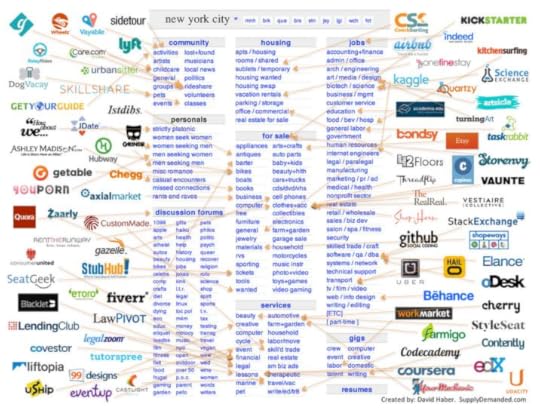
There’s a few lessons that could be learned from this. One might be that constant expansion is fruitless, because it eventually involves going back to zero. But I would say it’s a bit more nuanced than that — really, it’s based on how high you want to go, and when. You can make a million dollar company that lasts decades, or a billion dollar company that lasts years. Both have different payoffs, and different disadvantages.
Join my email list
By clicking submit, you agree to share your email address with the site owner and Mailchimp to receive marketing, updates, and other emails from the site owner. Use the unsubscribe link in those emails to opt out at any time.
Processing… Success! You're on the list. Whoops! There was an error and we couldn't process your subscription. Please reload the page and try again.