Federica Lupis's Blog, page 5
July 21, 2022
Drops vs Duolingo. What is the best app to learn a language?
By Federica Lupis, ,https://www.federicalupis.com/
One Sunday morning, I was making breakfast while my kittens purred and rubbed against my legs. All of a sudden, I heard a female voice in the distance saying ‘Ciao come stai? (Hello, how are you?)’ and a man replying, ‘Bene grazie e tu? (I’m fine, thanks and you?)’
Intrigued by the presence of Italian speakers in my neighbourhood, I headed towards the front of the house to see if I could take a sneak peek.
‘Ho fame (I’m hungry)’, the man said as I tiptoed across the hallway so as not to wake up Ash.
‘Cibo spazzatura (Junk food)’ the woman replied.
‘She doesn’t mince her words!’, I thought as I covered my mouth with my hands not to burst out laughing. What were they talking about? Was she suggesting they get delicious greasy fries and chicken, or was she against it; but above all, why was she so blunt?
From the blurred windowpanes next to the front door, I couldn’t see anything. The bedroom windows would have been a much better lookout, and while I didn’t want to wake up Ash, my curiosity had to be satisfied.
I slowly opened the door, thinking I would find Ash slumped on the bed in the middle of a dream. Instead, I found him wide awake, talking to the ‘Italian woman’!
‘Buongiorno!’ ‘Ciao gattini! (Hi kittens!)’, Ash said confidently as Cosmo and Killua jumped onto the bed to greet him.
‘Chi è questa? Che vuole? (Who is this? What does she want?)’ I said, pretending to be jealous.
‘This is Drops! My new language app. It’s great! You should try it!’
As a strong supporter of Duolingo, I didn’t think I could find anything better, but in the end, Ash convinced me to give it a try.
If you want to find out about my experience with the blunt Italian woman, read on. Today, I’ll compare the Duolingo App to the Drops App.
Enjoy!
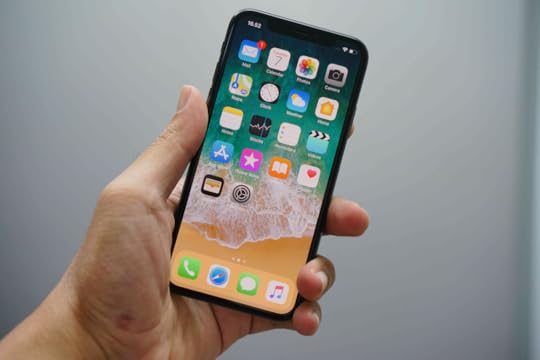
Photo by Bagus Hernawan on Unsplash
1. Free vs paid version
Duolingo is one of the most popular language-learning apps. It was initially launched in 2011 and currently offers 41 languages, including High Valyrian, the fictional language of the city Valyria on the TV show Game of Thrones.
Drops was released a little later, in 2015, and in recent years it has become increasingly popular among language learners. It offers over 45 languages, and like Duolingo, this includes endangered ones.
Both apps have free and paid versions.
The Duolingo premium app offers:
No ads. Unlimited Hearts. In the free version, if you make more than 5 mistakes (represented by hearts), you will have to take a break until your hearts refill (5 hours for 1 heart, 25 hours for 5 hearts) or use the gems you have earned by using the app to pay for them. With the app’s premium version, you will have access to unlimited hearts, so mistakes won’t slow you down.The Drops Premium subscription offers:
An ad-free experience. Unlimited time within the app. The free version allows 5 minutes of gameplay every 10 hours. The ability to select any topic at any time. In the free version, access is limited, and it is necessary to complete a unit, before you can access the next one.As you can see, the main difference between Duolingo and Drops is that:
With the free Duolingo app, you can continue learning as long as you have at least one heart. With the free Drops app, you can practice for 5 minutes every 10 hours. No matter what version you use, Duolingo allows you to advance to the next topic only after completing the previous one. Alternatively, you can take a skill test to jump to the next level. With the premium Drops app, you can navigate between topics without being restricted.In my case, the free apps limit (5 minutes/hearts) is irrelevant because I usually spend 5 minutes on Drops, and 5 hearts on Duolingo are enough to complete a lesson. However, if I had to choose between the premium versions, I would probably opt for Drops (sorry, Duolingo, I have betrayed you!) because it lets you select any topic without having to take a test.
Some people get excited at the idea of taking a test and proving their skills. Me? I run the other way!
So, it comes down to personal preference: do you prefer a time or a mistake limit? Do you want to be able to access any topic at any time? Would you mind taking a test?
My score for this section:
Duolingo 4.5/5
Drops 5/5
2. Gaming experience vs visual learners.
It is no coincidence that Duolingo has become one of the most popular language-learning apps. The interface is beautifully designed with animated characters cheering for you while you do your best not to lose a single heart.
When you reach the end of the lesson, you get points that determine your position on the leader board, where you compete with other language learners to be promoted to the next league.
If you have a competitive spirit, Duolingo can give you a good adrenaline rush and motivate you not only to practise but also to do well.
Drops design is minimalist yet surprisingly effective.
While Duolingo focuses on translation and sentence building, Drops is based on association. Every word comes with a picture, and you’ll learn it by going through various exercises, such as multiple-choice, spelling games and match-ups.
I didn’t think I was a visual learner, but after just one session, I could recall Japanese words I hadn’t used before.
If you are a visual learner and like keeping things simple, Drops is definitively the way to go!
My score for this session (because I think Duolingo motivates you a bit more):
Duolingo 5/5
Drops 4.5/5
3. The verdict
By now, I can see Ash popping a bottle of champagne. Drops and Duolingo are both sitting at 9.5/10, which means that his app is as good as mine, but… I haven’t discussed my last point yet:
What is the best app for learning a foreign language?
I am more of a traditional learner, and for me learning a language means understanding its structure. I may remember thousands of words, but do I know how to put them together?
To me, Duolingo is a master at this. It helps you learn vocabulary and shows you how to use it in a sentence.
Duolingo gets 5/5, and it’s now ahead!
I usually discard apps like Drops that focus on vocabulary or short sentences. I don’t see the point of learning a language this way. So, I score Drops 0/5.
No, wait! That was before I tried it!
Drops honestly blew my mind. I thought this app would make me repeat some random words that I would forget the next day. Instead, weeks later, I can still remember the Japanese words I learned.
The guys who designed this app obviously put a lot of thought into the learning process and managed to create a product that really makes a difference. That’s why I score Drops… 5/5!
So there you have it. After years of loyalty to Duolingo, I found another language app that is just as good. I now use them together: Duolingo for language structure and Drops for vocabulary building.
These apps complement each other and will be an invaluable asset on your path to learning a language.
~ ~ ~
To sum up:
The free Duolingo and Drops apps are a good option, but if you want an ad-free experience and no limit on the number of mistakes you can make or the amount of time you can spend on them, premium subscriptions are worth a try. Duolingo encourages language learning by offering a gaming experience to its users, while Drops delivers a flawless experience for visual learners. Duolingo is best to learn language structure while Drops for vocabulary building. Use them together for the best results!And with this short overview, we’re done for today!
Thanks for reading!
I’ll catch you all next time.
If you enjoyed my article, you can discover my tried and tested language learning strategies in my books:
Fluent On The First Try Why You're Not Fluent and How To Fix Itand here are this month's book offers:
,Have an Unforgettable Summer! With These Amazing Books! ,Kyara e l’anello degli antenati by Saveria Parisi, Italian book. ,The ABCS of Amazon Self-Publishing: a beginner's guideThis newsletter was brought to you by EsoutacheCreations, one of a kind Jewellery. Handmade in Italy with love.
Go to the Italian version.
To read my previous article click below:


June 28, 2022
Is it worth learning a language abroad?
By Federica Lupis, ,https://www.federicalupis.com/
During my fourth year of high school, I was offered the opportunity to join an internship in Bourbon Lancy, France.
The moment my parents gave me the green light to go, I was over the moon. At the time, I had limited speaking skills in French and was convinced that going abroad was what I needed to become fluent.
The first week in France was far from what I had imagined. At work, I sat at the computer all day, preparing the advertisement for Bourbon Lancy’s thermal baths. At home, I spoke Italian with my classmates with whom I shared the house.
I thought the internship was a total disaster and I was disappointed that, while working for the thermal baths, I didn’t even have a chance to try them! – as if it were a condition to accept the job…
My experience made me question the point of learning a language abroad. If working with a foreign language didn’t help, I thought language courses would be even less useful.
Obviously, I was wrong. With a few tweaks, my internship turned out to be very productive and taught me a lesson that influenced the way I approach and teach foreign languages.
Today, we’ll see how you can make the most of learning a language abroad.

Photo by Guilherme Stecanella on Unsplash
The more you use the foreign language, the better.
It may seem obvious, but the first thing to do if you want to learn a foreign language abroad is to minimise the use of your own language.
For example, if you decide to enrol in a language course in another country, it is important that you speak to everyone in the language you are learning, including your classmates or the people you share your accommodation with.
In my case, after a week complaining about the internship, I decided to take things into my own hands. I realised that by speaking Italian, I was wasting an opportunity, so I asked my classmates if they were happy to speak French among us. Some of them accepted, and even though we didn’t speak French all the time, we learned a lot of vocabulary and got better at conversation.
Hang out with the locals
When we go abroad, we tend to stick with people from our country. Whether we signed up for a language course, are doing an internship or moved abroad, speaking our native language makes us feel safe and in control.
Unfortunately, this doesn’t help with our progress. When we learn a language in a foreign country, we need to cut ties with familiar things and get out there.
Hanging out with the locals can be as easy as going to a cafe or library by yourself. Ask for the best cake on the menu or the latest books, and I’m sure this will be the perfect start to a conversation in the foreign language.
If you’re more adventurous, you can visit Meetup.com and meet the locals in your area. This platform was created to allow people with the same interests, hobbies, and professions to get together. Wouldn’t it be great to discuss something you are passionate about in a foreign language?
Be realistic
Before leaving for my internship in France, I thought that after a week of work, I would speak flawless French. The reality was that when I went back home, I had improved, but I wasn’t fluent.
The fact that I started speaking French at home, realised that I was allowed to talk to my French colleagues in between jobs, and started hanging out with the locals definitively helped me improve, but not as much as I was expecting.
An experience abroad is sometimes a disappointment because we expect too much of ourselves or believe the urban legend that it is possible to become fluent in a month.
Setting small goals will help us enjoy learning a language abroad, and if we achieve more than we expected, so be it!
~ ~ ~
To sum up, if you decide to learn a language abroad:
Use the foreign language as much as possible, including with your classmates or the people you share your accommodation with. Hang out with the locals to reduce the chances of using your language and make more progress in a foreign language. Be realistic about the outcome of your experience. Small goals are the way to go.Thanks for reading!
I’ll catch you all next month.
Before you go, don’t forget to check out this month's book offers:
,Hey You! Fancy some Great Books? Kyara e l’anello degli antenati by Saveria Parisi, Italian book. Christians Fiction and Nonfiction sales Memoirs of a Doctor: an extraordinary journey of faithThis newsletter was brought to you by ,EsoutacheCreations, one of a kind Jewellery. Handmade in Italy with love.
Go to the Italian version.
To read my previous article click below:
What can I do when I don’t know a word in a foreign language?
May 28, 2022
What can I do when I don’t know a word in a foreign language?
Last week, I went to Sushi Train with a friend. We tried a delicious dish sprinkled with a white vegetable, but we couldn’t figure out what it was.
‘What is it?’ Cristina asked me with her eyes wide open.
“No idea!’, I said. ‘Let’s ask.’
In case you’re not familiar with Sushi Train, this franchise springs from one of the greatest ideas of 1950s’ Japan. It’s a rotation sushi bar system where fresh sushi moves along a conveyor belt and customers help themselves as chefs prepare a variety of succulent dishes right in front of them.
As a young chef was about to drop one of my favourite dishes on the conveyor belt, the Salmon Volcano Ship Aburi, I had to make a hard choice between appeasing my rumbling stomach and satisfying my curiosity.
‘Excuse me’ I said as I was staring at the Volcano Ship sailing away, ‘What’s the vegetable on this dish?’
The young man hesitated, then murmured ‘It’s white carrot’, bowed, and left in haste.
I looked at my friend, confused. ‘White carrot?’, I repeated as my brain was scanning its vegetable database to find a match.
‘I think he meant white radish’ Cristina said, solving the mystery.
Meanwhile, the young man returned to our booth to apologise ‘I’m sorry, I meant white radish’, he said as a slight blush covered his cheeks.
‘No worries! Thank you!’ Cristina and I said with a smile.
After discovering the identity of the mysterious vegetable, the evening continued with a mountain of sushi. We ate so much that in the end we found it hard to budge!
On my way home, the white carrot came back to me. ‘That guy was smart’ I thought. ‘He didn’t know how to say radish in English, but he found a way around it’.
And that’s how I came up with the idea for this newsletter. Today, we will talk about the strategies you can use when you don’t know a word in a foreign language.
Enjoy!

Photo by Ben White on Unsplash
1. Can you use something similar?
The first strategy to fill in the gaps when you don’t know a word is to go through your wealth of knowledge. Can you replace the word you want to use with another word that has the same meaning?
For example, according to a BBC article, there are about 3,000 words in British English for ‘being drunk’. While not all words have as many synonyms, it is often possible to find a word that has the same or a similar meaning.
The English word ‘suitable’, for instance, may be hard to recall for someone whose English is not their first language. ‘Good’ would be a much easier alternative, and synonym.
Using the word ‘suitable’ may indicate a better mastery of the language, but for the purpose of communication does it really matter how ‘polished’ your language is?
2. What about a definition?
One of my first jobs in Australia was in a deli where I was surrounded by delicious Italian cold meats. (My mouth is watering just thinking about it…)
After a few hours on the job, I realised that I didn’t know how to say ‘slicer’, so I asked my colleague who casually said: ‘You mean the machine you use to cut the ham? I have no idea!’
Her reply opened a new world to me. Until then, I had been panicking about not knowing every single English word, but since that day, I’ve become much more relaxed.
Without knowing it, my colleague had just given me a strategy for dealing with most words I don't know in a foreign language.
Let’s go back to the slicer. My colleague didn’t know the English word for it, but she knew that a slicer is a machine and that it’s used to cut ham.
If you look up the definition of ‘slicer’ in any dictionary, you will see that my colleague used something very similar. And we can do the same with any word!
Whenever there is a word in a foreign language that you don’t know, you can use a definition instead of the actual word. For example, if you don’t know how to say ‘bottle opener’ in a foreign language, you could say ‘the thing you use to open bottles’.
With practice, you will learn more vocabulary. In the meantime, this strategy will make your life easier.
3. Just ask!
When we speak a foreign language, we often refrain from asking how to say something because we don’t want to bother other people or, even worse, look silly.
I’ve said many times that neither native speakers nor fluent people know all the words of a language, but if you still hesitate to ask for help, think about this:
Would it be easier to communicate if you asked someone how to say something and moved on, or if you didn’t say much because you don’t know some words? In what scenario would you learn the most and feel more confident about speaking?
Asking how to say something in a foreign language doesn’t mean that we are annoying or silly; it just means that we are learning. So, if you can’t find a synonym or a definition for a word, just ask. There’s no reason not to do so!
~ ~ ~
To summarise:
1. In most cases, we can replace a word that we don’t know with a synonym.
2. In others, we can use a definition.
3. When the above strategies don’t work, just ask and move on. You will enjoy the learning process and learn more!
Thanks for reading!
I’ll catch you all next month!
Do you want to discover more language learning strategies?
,Click on the links below to ,check out my books on Amazon Australia!
Fluent On The First Try Why You’re Not Fluent and How To Fix ItFor the LINK TO ALL OTHER AMAZON MARKETS, click ,HERE.
Before you go, don’t forget to check out this month's book offers:
Brace Up and Get Ready for these Amazing Books! Kyara e l’anello degli antenati by Saveria Parisi , Italian book. Memoirs of a Doctor: an extraordinary journey of faith , by Dr Andrew C S KohThis newsletter was brought to you by ,NN Occupational Health, Experts in Pre-Employment Screening.
Go to the Italian version.
To read my previous article click below:
How to find the best Internet resources for learning a language
May 3, 2022
How to find the best Internet resources for learning a language
Last week, I was searching for Spanish exercises on the Internet. After a bit of research, I found a comprehension exercise and started reading it to make sure I could use it with my students.
The exercises seemed good, they included a multiple-choice quiz, some questions, and a section of useful vocabulary for those interested in exploring the topic more.
As I was about to print the comprehension, I quickly skimmed through the vocabulary.
‘Pechuga? Pechuga what?’, I said, breaking the silence that reigned in the study until a few seconds before.
‘Mmm?’ Vanessa said as if she had just woken up from a dream.
‘Pechuga’ I repeated ‘Pechuga doesn’t mean chest*. Who wrote this?’
(*To my knowledge, the word pechuga can be used colloquially to refer to a woman’s breast but it can be offensive depending on the circumstances.)
‘Are you okay?’ my friend asked, visibly concerned.
In short, the comprehension was about a doctor’s appointment and the vocabulary section listed additional body parts in Spanish. Under ‘chest’ there was pechuga (bird breast) a word that is widely used in the kitchen for ‘chicken breast’ (pechuga de pollo).
‘Why are you getting so fired up? It’s just an oversight…’ Vanessa said. ‘Some people will go to the doctor and ask them to look at their bird chest. It’s funny, isn’t it?’
‘I guess…’ I said, taking a deep breath, trying to regain control of my ‘teaching spirit’. After all, the comprehension and the exercises were good. I just had to make sure there were no other ‘oversights’.
Meanwhile, Vanessa had begun to stage a conversation between a chicken and a doctor. I laughed so hard that I ended up being grateful for finding that comprehension.
In honour of the Spanish chicken breast, this week we will see how to choose the best Internet resources for learning a language.

Photo by William Moreland on Unsplash
1. Who are you dealing with?
These days we have become increasingly dependent on reviews. It would be fun to just walk into a restaurant, but the reality is that most of the time we want to be sure the food is going to be excellent before we even try it.
Unfortunately, the same doesn’t apply to the information we seek on the Internet. Sometimes, we get information from unreliable sources and don’t question its validity.
The reason may be that finding reviews for a website isn’t as fast as opening Google and checking a star rating. With a language learning website, for example, we need to do research and visit many other websites before we can tell if it’s worth our time.
You’ll have to ask yourself:
Is this website recommended by many people on the Internet?
Who created the resources?
Can I trust that the information provided will be accurate and up-to-date?
The good news is that once you’ve done your due diligence, you will have a source of information that you can use in the long term. So your time investment will pay off.
2. Just because mayonnaise is good, it doesn’t mean you can put it on everything.
One night, at a birthday party, I was having a chat with one of the girls there. We were having a lot of fun until she said: ‘You should come to our housewarming so you can try my mayonnaise pasta’.
I paused for a second then shook my head convinced I had misunderstood.
‘Your pasta?’, I said.
‘Yes! I make a great mayonnaise sauce. You should try it!’
I spent the next half hour shaking my head and laughing at the idea of eating pasta covered in mayonnaise.
When it comes to food, I know I can be close-minded, but my point was that just because mayonnaise is good, it doesn’t mean you can put it on everything.
The same goes for language learning websites. Just because a website is great at explaining grammar, it doesn’t mean it will be as good at presenting vocabulary.
I’ve made this mistake before and limited my progress until I realized I needed to expand my horizons.
Once you get a good grammar website, don’t forget to find great vocabulary and listening resources. It will help you speed up your progress.
3. Keep up with the times.
Illecebrous, groovy, pismire … when was the last time you heard these words?
(By the way, while looking for outdated English words, I found ‘vomitorium’ and loved the explanation “A vomitorium is not a room in which ancient Romans would throw up halfway through a banquet in order to make room for the next course. That’s a myth. A vomitorium is simply a passage by which you can exit a building, usually a theatre.” Good to know ^_^)
Languages change over time and old words are left behind to make room for new ones.
Do you know any recent words that have become part of the foreign language that you’re learning?
Once you have your grammar, vocabulary and listening covered, it’s a good idea to find a reputable website that focuses exclusively on recent words.
In terms of new Italian words, for example, the Accademia della Crusca, the society of scholars of Italian linguistics and philology, has a dedicated page.
I quickly scrolled down the page and saw ‘influencer’ is now a common word in Italian.
While hoping that this word will soon disappear from the face of the Earth, I can confirm that it is a common word in Italian and is often used in conversations and in the media.
Staying up to date with new words will help you with using and understanding a language so don't underestimate this aspect!
~ ~ ~
To sum up:
Before you start using a website to learn a language, check if it’s trustworthy. Sometimes it’s best to use different websites for different aspects of a language Find a website that helps you keep up with recent words (and don’t misunderstand the word ‘vomitorium’).Thanks for reading! It’s always a privilege to share my stories with you!
Before you go, don’t forget to check out this month's book offers:
Hurry! These Great Books are Waiting for You! ,Kyara e l’anello degli antenati by Saveria Parisi, Italian book. The Mindset of Home GardeningThis newsletter was brought to you by ,EsoutacheCreations, one of a kind Jewellery. Handmade in Italy with love.
Go to the Italian version.
To read my previous article, click below:
April 3, 2022
Should I get rid of my accent?
Last week, while I was at work, I got a call from someone who wanted to speak to my boss.
‘X is not available at the moment. How can I help?’ I said.
‘I didn’t understand a word of what you said’, was the reply.
‘I must have spoken too fast’, I thought to myself, so I repeated what I had just said more slowly.
‘I’m sorry, I just can’t understand you’, the guy insisted.
‘Can you please call us back in half an hour? My colleague will be back, and she will be able to assist you.’
‘Sure, thank you for your help. Goodbye’.
After hanging up, I stood there for five minutes, thinking about what had just happened. People usually understand me well. I know I have an accent, but I don’t think it’s so strong that people can’t understand what I say.

Photo by Juan Rumimpunu on Unsplash
Fast forward a week, Ash comes back from work to find me repeating English words in front of a BBC YouTube video.
‘What are you doing?’ he asked, tilting his head.
‘I’m trying to improve my pronunciation. I’m not very good with the Schwa sound.’
‘The ‘sha’ what?’
‘The Schwa sound’. You know, like ‘a cup of tea’. That’s where ‘a cuppa’ comes from’.’
‘Are you feeling okay? We’re in Australia, mate! Why would you want to sound like the Queen?’
‘Then what do I do? People can’t understand me when I speak English’.
‘Since when? People can understand you very well. Did something happen?’ he asked with his usual wisdom.
As I told my story, Ash stood there with the biggest smile on his face.
‘That guy was just a ****’ (you can do an extra Wordle today), he laughed. ‘How could he not understand that your boss wasn’t there and then immediately get the message that he could give you a call back to talk to someone else?’
‘I didn’t think about that’, I said with a sullen expression. ‘But why?’
‘People have all sorts of reasons. You should never let them affect you. There’s no right English accent anyway. Australian, American, British, Canadian… and who knows how many other varieties… are you telling me that only one of them is correct? And do you personally believe that people should get rid of their accents?’
Ash was right. There’s absolutely nothing wrong with having an accent. In this article, we’ll see why!
Old habits are hard to break.
When we learn how to speak as babies, we learn how to move our mouths to reproduce specific sounds. You may not have noticed this, but things like the position of the lips and tongue and the vibration of the vocal cords affect sounds.
When we learn a foreign language, we have to learn a new way of reproducing some sounds. To give you an example, the Italian rolled ‘r’, the nightmare of so many learners, is pronounced by placing the tongue in the same position as the English letter ‘l’.
Do you realise how crazy this is?
Of course, it’s hard to learn the pronunciation of a foreign language! We can’t just snap our fingers and tell our brain, ‘By the way, the letter ‘r’ is no longer coming from the back of my throat. Now, move my tongue to the front of the palate, just like for the letter ‘l’’.
You can imagine that you will encounter strong resistance, and your brain will push you towards what you’re used to doing.
The best way to retrain your brain would be to sign up for an accent reduction course, but even then, you can’t be sure you’ll get rid of your accent. Plus, would you rather spend time using the language and learning more exciting things or invest time and money trying to sound like a native speaker with no guarantee of success? It seems like a pretty easy choice to me…
Different doesn’t mean wrong.
On my first visit to London, my friend and I met a group of soccer fans in a pub. Their energy was contagious, and talking to them was a lot of fun. I must admit I didn’t fully understand what they were saying, but it didn’t matter. All I cared about was that they were a happy bunch.
At some point, one of them asked where we came from. We talked a little about Italy, and then I asked the same question in turn.
‘Isn’t it obvious?’ one of the guys asked, raising his beer.
‘I don’t know… Lebanon?’ I said, thinking I couldn’t be too far.
It must have been the biggest laugh I’ve ever heard…
‘We’re Scottish!’ the guy said with a big smile.
I was astonished. Their accent was so different from what I was used to that I thought they came from the other side of the world. Instead, they were UK’s neighbours.
That was the first time I realised that even speakers of the same language have an accent, and it doesn’t just happen with English; it happens with all languages. For example, I can easily spot if an Italian native speaker comes from the north, the centre, or the south of Italy. In most cases, I can even tell the region…
Think about your country. Is the language the same all over it, or does the accent change depending on the area where it’s spoken?
I’m sure it’s different. So why should learners of a foreign language try to learn the ‘perfect’ accent when it doesn’t exist?
As long as people understand what you’re saying, there’s nothing wrong with having an accent! Which brings me to my final point…
Unique is more exciting than ‘normal’.
Writing about accents made me think of a conversation I had with a customer while working as a waitress here in Australia.
‘Your English is very good’, he said.
‘Thanks, but I still have a long way to go before I can get rid of my accent’, I replied.
‘What? Get rid of your accent? And why would you do that?’ the customer asked, surprised.
‘I want to sound like an English native speaker’, I said as if it was obvious.
‘Please, promise me you’ll never do that. Your accent makes you unique. It’s part of who you are’, the customer continued with a serious face.
‘Okay…’ I muttered while I imagined myself speaking with impeccable pronunciation.
Almost ten years have passed since that conversation, and only now do I understand what that customer meant.
,Your accent makes you unique not only because no one else will ever have the same accent as you but also because it tells a story that will help you connect with other people.
‘Where are you from? How is your country? Why are you here?’ were often the beginning of a beautiful story for me.
Where will your accent take you?
~ ~ ~
To sum up:
It is better to spend time using a foreign language and learning exciting things than investing time and money in trying to sound like a native speaker with no guarantee of success. There is nothing wrong with having an accent. Speakers of the same language have different accents. Your accent is part of who you are. Own it!Thanks for reading!
I’ll catch you all next month.
This newsletter was brought to you by ,EsoutacheCreations, one of a kind Jewellery. Handmade in Italy with love.
Before you go, don’t forget to check out this month's book offers:
· It’s Book Frenzy! Don’t miss out on these Amazing Books!
· ,Kyara e l’anello degli antenati by Saveria Parisi, Italian book.
Go to the Italian version.
To read my previous article, click below:
Does your personality change when you speak a foreign language?
February 28, 2022
Does your personality change when you speak a foreign language?
My thoughts and prayers are with T he People of Ukraine . To donate, please visit the
International Committee of the Red Cross, here .
My last trip before the pandemic was to Cuba. I always dreamed of travelling there, and as I entered Havana in one of those vintage cars you see in the movies, I was amazed by the reality I saw around me. It wasn’t all roses, but I could feel the magic of history coming back to life.
When Ash and I started a city tour a few hours later, I got the chance to speak Spanish to our guide, Ernesto. I was so happy to be in Cuba and to be able to speak a foreign language that I didn’t mind going back and forth between English and Spanish to make sure my partner was involved.
By lunchtime, I couldn’t wait to take a break from translating, but halfway through the meal, a French couple started making conversation. I couldn’t help myself and started speaking French with Gabrielle while Ash spoke English with Thomas.
That night, when we got to the hotel, Ash asked me: “What was that about? Today at the restaurant?”
I thought I probably went too far. I should have spoken English, at least at lunch:
“I’m sorry, I didn’t mean to be rude.”
“Sorry? What for?” Ash said, confused.
“About speaking French at lunch. I only thought of myself.”
Ash laughed: “No, no, no. It’s not about that. I had already noticed that when you speak Spanish and Italian, your personality changes, but today when you spoke French, you were like a different person. You went from Anna Faris to Nicole Kidman in the blink of an eye.”
I was confused. Ash had just compared me to the funny actress from Scary Movie and then to the sophisticated actress from Eyes Wide Shut: “What do you mean?” I smiled.
“When you speak Italian and Spanish, you’re more open, I would even say euphoric. When you speak French, you become calm and collected as if you were walking the red carpet”.
That night we laughed a lot. Ash asked me to repeat the same sentence in different languages, and then he tried to show me what he meant by imitating me. It was a lot of fun!
Until then, I wasn’t aware that speaking a foreign language could affect our personality. I’ve done some research, and it looks like it’s not as rare as I thought.
Would you like to find out if your personality changes too? Read on!

1. Ask yourself
Think about when you speak your first language. What adjectives describe you best? Are you introverted? Charismatic? Diplomatic?
Now think about when you speak a foreign language. Would you still choose the same words?
I bet you’ve found that at least one of your personality traits changes! And you’re not alone!
According to research, the way we perceive the culture associated with a given language can affect our behaviour.
For example, I think Spanish-speaking countries are the place for partying (fiesta!), which may have something to do with me looking more excited when I speak Spanish.
What do you think about the country where your foreign language is spoken? Your opinion definitely has an impact on the way you behave while speaking a foreign language.
As a Czech proverb says: ‘Learn a new language and get a new soul’.
2. Do an experiment
For the purpose of this experiment, you’ll need a movie/TV show that you have seen in the past whose audio is available in your language and the language that you’re learning.
First, play a scene where there is a main character in your language, then re-play the same scene in the foreign language.
Does the main character’s personality seem the same to you?
If you feel that something is different, this is a good indication of how you perceive your culture compared to the culture of the foreign language, which may be why when you speak the foreign language, you act differently.
This happened to me when I watched Money Heist in Spanish and then re-watched it in English with Ash. Halfway through the first episode, I realized that the protagonists looked different just because they spoke another language.
It may seem nonsense, but you’ll understand what I mean once you try it.
3. Rock the party!
My last point is for those who believe I simply suffer (or benefit ^_^) from a Split personality.
Perhaps, the personality of someone who speaks a foreign language never changes. It is possible that we use a foreign language to let ourselves go and own those personality traits we’ve always wanted to have.
If that’s the case, wouldn’t it be fun to try it? Speaking a foreign language could be as good as having a glass of wine and rocking the party!
~ ~ ~
To sum up:
· The way we perceive the culture associated with a particular language can affect our behaviour
· You can use a movie to discover how you perceive your culture in relation to the culture of the foreign language
· Speaking a foreign language can be as fun as having a glass of wine!
Thanks for reading!
I’ll catch you all next month.
This newsletter was brought to you by ,EsoutacheCreations, one of a kind Jewellery. Handmade in Italy with love.
Before you go, don’t forget to check out this month's book offers:
· The Booklist that Everyone is Talking About? Discover it NOW!
· Kyara e l’anello degli antenati by Saveria Parisi
· Be Still My Anxious Heart by Vida Li Sik
Go to the Italian version.
To read my previous article, click below:
January 31, 2022
What shall I do when I can’t stick to my plan?
After Christmas, I sat down with my partner Ash and said: “We need to talk”. His face turned pale as if I were about to drop a bombshell: “What’s going on? Are you okay?”
I was so caught up in my thoughts that I didn’t realize what I had just said. “I mean… I need to talk. To someone. I feel like a scam”.
His facial expression immediately relaxed: “You? A scam? Why?”, he laughed.
“I haven’t worked on my new book for a month. Not even once. I go around telling people what they should do to learn a language but then I can’t apply my own advice to my life”.
With his usual calm and kindness, Ash immediately made me feel better: “You know… it takes a little bit more to be a scam… You just had a very busy month. S***T happens… Instead of feeling sad because you couldn’t stick to your plan, why don’t you share your experience on your blog? I’m sure it will help your readers”.
So be it, thanks Ash! This month, I’ll talk about the steps we can take when we are unable to stick to a language learning plan.
Enjoy!

Photo by Camylla Battani on Unsplash
1. Talk to someone
As we get older, we tend to keep things to ourselves because we don’t want to be a burden to other people.
In my case, I considered my “problem” so silly that it wasn’t worth discussing with my friends or partner.
The reality is that sometimes we need to talk to someone, no matter how irrelevant the issue seems to be.
If you can’t dedicate much time to a foreign language and feel bad about it, ring a friend, talk to a fellow student, or give your teacher a call (you have my number, my dear students!) You’ll soon realise that your problem is not as silly as you thought.
We all go through phases where we feel overwhelmed. Talking about it will help you feel better and find a solution.
2. Be proactive
Whether it’s learning a language or clearing out a garage that has been collecting knick knacks since 1995, there’s only one thing that will make us feel better about not being able to stick to our plan and that is, doing something about it.
If you haven’t practiced a foreign language as much as you would have liked, sit down and do something as soon as you think about it. I mean it! Google an article, watch a YouTube video or open Duolingo and use the foreign language.
It will be like giving a lollipop to a child. You will immediately feel better and realize that you don’t need to sit at your desk to improve your skills. You can do it in small doses, whenever it comes to your mind.
3. Give yourself a break
I once heard a line in a movie that went something like this: “What do you think a husband does when his wife praises him for the things he does around the house? He does more!”
I wish I could remember this every time I beat myself up for not doing “what I think I am supposed to do”.
If we can’t stick to our language learning plan and start pointing out everything that is wrong with what we are doing, we’re going to do less and less.
Who wants to learn a language when their inner voice is constantly slamming them for not being ‘perfect’?!
It’s time we give ourselves a break and start looking at what we are doing right.
In the same way that we encourage other people when they’re not happy with themselves, we should be kind and understanding to ourselves.
If we read a book in the foreign language for five minutes but then fall prey to The Witcher on Netflix, let’s focus on the fact that we did something. Let’s not blame ourselves or Henry Cavill for our supposed failure. Let’s celebrate our achievements and bring about more!
~ ~ ~
To sum up, when you can’t dedicate a lot of time to a language:
1. Talk to someone. It will make you feel better and may help you find a solution to your problem.
2. Stop thinking about it and do something already. Action is the best medicine.
3. Encourage and praise yourself as you would do with anyone else. Beating yourself up is never a good strategy.
Thanks for reading! I’ll catch you all next month!
Before you go, don’t forget to check out this month's book offers:
,Click Here! And Discover Amazing Books! Kyara e l’anello degli antenati by Saveria ParisiThis newsletter was brought to you by ,NN Occupational Health, Experts in Pre-Employment Screening.
Go to the Italian version.
To read my previous article click below:
New Year’s Resolutions for Language Learners
January 1, 2022
New Year’s Resolutions for Language Learners
I love Christmas. I’m not into the tree-gifts-decorations thing, but I like seeing how it puts everyone in a good mood.
The cashier who used to bag your groceries with robotic movements now looks at you as if you were a superstar. The driver who was ready to jump out of the car if you took ‘their’ spot now smiles at you as you park. Even the neighbour’s dog who sang his serenade at the most inconvenient times has stopped barking.
Everyone is happy, you can feel it in the air, and you get sucked into this vortex whether you like it or not.
I guess for some people, the idea of taking a break from work (or having to deal with fewer customers) is as good as winning the lottery. Students forget about their exams; children can anticipate the joy of tearing the wrapping paper as their grandparents watch them with full hearts. It’s like a parade of the best feelings humans have to offer.
After Christmas, with our bellies full of panettone, pavlova or whatever the traditional dessert of your country is, we embrace the euphoria of a new year coming.
Who cares if we bought a gym membership that we never used? What’s the problem if the diary we got to stop procrastinating was left untouched on our desk? And the spare room we were supposed to tidy up? Well, we can always close the door and forget about it!
It’s time for a fresh start! We can unleash our wildest dreams and imagine that the most exciting future is yet to come.
I hope by now, you feel the excitement of having New Year’s resolutions (or ‘revolutions’, as I called them while talking to my partner Ash).
Today, we’ll talk about the most enticing – and realistic – New Year’s resolutions for language learners.
Enjoy!

Photo by Hello I'm Nik on Unsplash
1. Be a Tortoise
Remember ‘slow but steady wins the race’ from Aesop’s tale ‘The Hare and the Tortoise’? When it comes to language learning, we often try to be the hare who tries to get things done quickly but burns out before the finish line.
The truth is, we can’t become fluent in a language in three months unless we have nothing else to do.
What if we decide to be a tortoise this year?
Let’s set aside 10 minutes a day to do something to improve our language skills. Let’s build a routine and improve gradually and with patience. Let’s be the tortoise that beat the hare!
I can guarantee that this attitude will make you feel a lot more positive about language learning.
2. Scene 1, Take 1, and…action!
Have you ever listened to a recording of your voice in the foreign language? Chances are you haven’t, and it’s time to do it!
Make 2022 the year you finally recorded yourself speaking a foreign language! Pick up your phone, talk about anything and then listen to your voice again and again.
This is a great way to polish your pronunciation and notice what you’re struggling with. Can’t you think of the words? Are you playing eenie meenie, miney moe with tenses and pronouns? What’s stopping you from speaking?
Do this exercise regularly, and I promise you’ll make progress faster.
3. Where’s Rome again?
I met people who stopped learning a language because it became a chore. They got so absorbed by grammar and the idea of becoming a flawless speaker that they forgot why they were learning a language in the first place. They could tell me the conjugations of verbs in the blink of an eye but had little to say about the country where the language was spoken.
Why are you learning a foreign language? I guess part of the reason is that you get fired up when you think about the country where it’s spoken. Maybe it’s the lifestyle, the food, the history, the music… It could be anything, but it is because of that ‘anything’ that you are learning a foreign language.
This year, find ‘the fire in yourself’ and make sure it becomes an essential part of learning a language.
If you’re learning Spanish and love Spanish singers, fill the house with Spanish music as you’re tidying up. If you are an avid painter learning Dutch, immerse yourself in the history of new and old Dutch artists. If you’re learning Italian and love Italian food, watch Italian chefs teach their recipes and share your creations with your loved ones.
Bring the passion back into language learning!
~ ~ ~
To sum up, here are my top three tips for this year:
· Practice regularly and be patient.
· Discover your voice in the foreign language and use your recordings to improve.
· Get your mojo back. Make language learning fun!
Thanks for reading!
I hope you had a great break!
See you next month.
Before you go, don’t forget to check out this month's book offers:
,Start the New Year with a Bang! With these Great books! ,Kyara e l’anello degli antenati by Saveria Parisi ,“Potent: Improve Your Website with Powerful Copywriting” by Vanessa Jones ,“Devotionals For Women 31 Days to Deeper Faith” by Vida Li Sik ,The Mindset of Crisis Management: Caring for Yourself and Others During Times of CrisisThis newsletter was brought to you by ,NN Occupational Health, Experts in Pre-Employment Screening.
Go to the Italian version.
To read my previous article click below:
December 3, 2021
Interview with Nyuz, the guru of language learning.
If last week you had told me that I was going to write about my interview with one of the hottest celebrities out there, I would have laughed at you.
It all started as a joke. I contacted Nyuz’s manager with no hope of getting an answer, but then the miracle happened. I got a call confirming the date and time of our meeting.
Here are the highlights of the conversation I had with Miss Nyuz Letter, the guru of language learning.
Enjoy!

Photo by krakenimages on Unsplash
Nuyz, first of all, congratulations on making it big! You’ve become an inspiration to many people around the globe. Can you tell us more about how you started?
To be honest, it was totally unexpected. My friends asked me what language they should learn in the new year, so I posted a video on social media where I told them to pick something they loved. My answer went viral as if I said something incredible… when it’s just common sense to me. If you don’t like it, don’t do it!
I remember that video, it was pretty good.
Okay, so you went viral and started a blog on language learning, but how did you keep creating great content? Where did you find the inspiration?
I have tried to be helpful and to answer the most common questions. For example, I know that some people would like to learn a language on their own, but based on my experience, I can say that it would be extremely difficult without a lot of self-discipline. I think the people who follow me appreciate my honesty and practical advice.
I agree. As for me, I found your article on private and group classes very helpful. Can you tell us about your experience?
Look... I’ve tried both of them and they both have their good and bad sides. I can tell you that when it was just me and my teacher, the lessons were more tailored to my needs. As part of a group, on the other hand, I worked harder because I didn’t want to fall behind. It really depends on your personality. There’s no right or wrong.
That’s true. As you said in your article, trying them both is probably the best way to choose.
Now… Suppose you can travel back in time, before you start learning languages, and give yourself some advice. What would it be? Is there something you wish you had known that you would like to share with us?
Oh! Lots of things, but I’ll only tell you three, or we’ll have to stay here until tomorrow.
That’s not a problem for me!
Haha! I don’t think my manager would be happy… Anyway…
Number one: stop worrying about making mistakes. This is how we all learn.
Number two: stop trying to learn grammar to perfection and hope that one day it will make you speak fluently. If you don’t practice conversation, you’ll never improve.
Number three: you are never too old to learn a language. We have 100-year-old people skydiving. Why should you be too old to learn a language?
I know it may sound harsh, but I’m the first to put limitations on myself and hopefully saying these things out loud will affect me positively too.
I think many people can relate to this. Sometimes, our beliefs can prevent us from making progress.
Now, the million-dollar question. How long does it take to learn a language?
A month, according to the smartasses trying to sell you their magic products.
For me? It depends on how regularly you can spend time learning a language and the variety of activities you choose.
For example, if you do something every day, you can reach a good level within a year, but then it depends on what you do during that time. Do you do grammar exercises all the time or also practice conversation, reading books and watching movies? It’s all in the balance, I’d say.
Any chance you can be more specific? For example, suppose I want to learn Spanish. How long will it take?
If you want data, you should go to the Foreign Service Institute’s website where you will find a timeframe for over 60 languages. Just don’t take it too literally, it’s more of a guideline.
Yeah, that makes sense. Their data doesn’t take all variables into account. For example, many people have a very busy schedule. What do you recommend in this case? How can they find more time to learn a language?
Two words. Downtime and multitasking.
Whenever you are commuting or waiting for an appointment, you should do something with the foreign language, whether it’s listening to a podcast or doing crosswords.
And when you do something around the house, like cooking or cleaning, you should do the same.
You’ll realise that you don’t have to make more time to learn a language, you just need to make the most out of what you already have.
That makes me feel better. Now I think I have a better chance of interviewing Miyazaki in Japanese one day, haha!
I remember, at one point, you met a guy who asked if learning languages would become obsolete one day. Tell me more about it.
Well, I was at this party, and a guy asked me if I thought technology, like microchips, you know, would replace language learning altogether.
The short answer is no. I don’t think it will happen, at least, not in the foreseeable future. Machines cannot translate emotions. If one day they started doing it, I think we’d be living in ‘Apocalypse Now: Men vs Machines’. I hope it never happens.
I hope not too!
And now we come to one of my favourite topics: learning a language in your sleep. Do you think it’s possible?
There’s research out there that suggests it is indeed possible. I’ve tried… and failed miserably, but that doesn’t mean it’s not possible.
After I posted my article on this topic, a friend reached out to me and told me he tried this strategy at university and had good results with it.
You never know… it could be like one of those grandma’s remedies you refused to believe until you tried it!
I must confess that I tried too and failed, but I invite those who have been successful with this strategy to contact me for an interview. Maybe you should give me your friend’s number.
I’m sure he’d love talking to you! Now, let me ask you a question.
Oh, wow. I wasn’t prepared for this. The celebrity interviewing the interviewer. I hope I will not disappoint you.
Don’t worry, it’s a simple question. Do you think that someone can tell you if you can or can’t learn a language?
I know this one! I remember the article. People can say what they want, but ultimately, it’s up to you and what you believe!
You read my article!
Of course, I did. I’m one of your biggest fans!
That’s sweet!
Now, if you’ll allow it, I’ll take back the lead. Our time is almost up, and I still have a few questions.
Sure.
Most students wonder why it’s easier to understand a language than to speak it. What’s your take on this topic?
It’s because we do everything but speaking the language.
I’m guilty of it myself.
Doing grammar exercises, watching movies and using apps is much safer than speaking Japanese to a friend and risking making a fool of myself.
But at some point, you have to let go of your fears and jump into the unknown.
If you only work on understanding the language, you’ll get good at understanding the language. If you work on speaking the language, you’ll get good at speaking the language. It’s that simple.
I should post it on my bedroom’s wall… maybe it would encourage me to talk more!
One of the topics you discussed that surprised me the most was the Pareto Principle. Is it true that you can become fluent in a language with 20% of the effort?
To be honest, the proportion doesn’t really matter. The idea is that we can achieve our goal with way less effort.
For example, by focusing on the most common words and the most effective strategies, we can save a lot of time!
That’s true. So many times, I try to remember words that I would only use in a formal meeting and then I stop and remind myself that I just want to travel to Japan . I don’t want to meet the Prime Minister, even if it would be cool!
Okay, Nyuz… Almost time to say goodbye. Do you have a final message for our readers?
Mmm… Let me think… probably “Care less and talk more!”
Unless you’re trying to get a job at the United Nations, nobody cares if you use the wrong tense when ordering your drink!
Haha! You should print some “Care less and talk more!” T-shirts! I’m sure they would sell out!
The time has come to say goodbye. Thanks for sharing your advice with us Nyuz. Can’t wait to hear more from you in the new year!
And thank YOU, my precious reader, for sharing this year with me.
I hope my Nyuz Letter has helped you progress in your quest to learn a new language!
Merry Christmas and Happy New Year to you and your loved ones!
See you next year!
Federica
Before you go, don’t forget to check out this month's book offers:
Treat Yourself to These Amazing Books!
Kyara e l'Anello degli Antenati by Saveria Parisi - ITALIAN version
Joy Has Come Home by Dunstan Stober
This newsletter was brought to you by EsoutacheCreations, one of a kind Jewellery. Handmade in Italy with love.

Thank you! Go to the Italian version.
To read my previous article click on the link below:
November 3, 2021
The Pareto Principle in language learning
Recently, there has been a lot of hype about the Netflix series ‘Clickbait’. In case you haven’t seen it, it’s about a seemingly perfect husband and brother who is kidnapped and filmed while holding a sign: ‘I killed a woman’.
To make things more interesting, the video is posted on YouTube with a warning: ‘When the video reaches 5 million views, this guy dies’. Obviously, everyone watches it, without worrying about the consequences.
I wish I could tell you I haven’t watched this series, but, unfortunately, I’m part of the audience that has binge-watched it in a couple of nights.
When I got to the end, I felt like I had just opened an ad, cleverly designed to intrigue people. You know, like the ones coming up on your feed that you just can’t resist; you have to read them, or you risk missing out on the secrets of the world!
I had been ‘clickbaited’ and the best part is that whoever created the show had warned me in the title. I found it quite funny, and I appreciated the story more once I had this realisation.
The day after finishing the series, I was trying to decide the topic for my next newsletter, and I started thinking: was there a moment when I clicked on an article about language learning and feared that I had just taken the bait?
The answer is yes, and it was about the Pareto Principle!
To find out if it was a clickbait or not, you’ll need to get to the end of this article. Haha!
Enjoy!

Photo by Austin Distel on Unsplash
What is the Pareto Principle and who is this Mr Pareto?
At the beginning of the twentieth century, an Italian economist, Vilfredo Pareto, noted that about 80% of the land in Italy was owned by 20% of the population. He conducted several surveys and found that a similar distribution was true for other countries.
About forty years later, Dr. Joseph Juran applied this idea to business quality control by showing that 80% of product defects were caused by 20% of the problems in manufacturing methods. It was him who coined the term ‘Pareto principle’ which quickly spread to other fields such as engineering, sport, health and… learning!
To put it simply, the Pareto Principle states that 80% of the results come from 20% of the effort. For instance:
· 20% of social media posts generate 80% of traffic
· 20% of the marketing efforts represent 80% of results
· 20% of a company’s products represent 80% of sales.
If we consider the Pareto Principle in terms of language learning, you can see how it would get the interest of many students.
What if I told you that you could become fluent in a language, with only 20% of the effort? I’m sure many would give it a try… but does it really work?
Let’s see!
Pareto and vocabulary
If 80% of the results come from 20% of the effort, instead of trying to learn as many words as possible, we should focus on the most common ones.
For example, the term ‘scandal’ often appears in the newspapers, but I suspect that knowing its equivalent in the foreign language won’t be of the utmost importance when travelling abroad for a holiday.
Suppose you start a conversation with a waiter at the restaurant. Would you ever bring up scandals? Sure, anything can happen, but it’s highly unlikely.
Most people, myself included, agree that around 2,000 - 3,000 of the most frequently used words is all we need for everyday conversations. So instead of trying to memorise all the foreign words we come across, we should stop for a second and think:
In what situation will I use the foreign language? How likely is it that I will use these words?
This process will help us build a solid vocabulary knowledge and save the time it would have taken us to learn irrelevant words.
Pareto and learning strategies
Another way to achieve 80% of the results from 20% of the effort is to use the learning strategies that work best for you.
It may seem obvious, but at some point, we all fall into the trap of habit.
To give you an example, when I started to learn Japanese, I chose a grammar book like any diligent student would. It took me a while to realise that the world had moved on and it was time to embrace new strategies like Anki, a spaced repetition software.
Have you tried new language learning websites and apps lately? What about bilingual books or movies with double subtitles?
Trying new strategies may take some time, but once you find the most effective ones, your initial effort will pay off with great results.
Don’t forget to have fun
Learning a foreign language is not a question of numbers. It should bring you joy and a sense of accomplishment.
If trying to optimize your learning habits brings you pain and sleepiness, forget about Pareto and his numbers.
A strategy may not be the most effective, but it may make you feel good and help you progress faster. Our emotions play an important role in learning, and it is not a good idea to sacrifice them for efficiency.
When we enjoy the learning process, we usually learn much better; so don’t forget to have fun while learning a language!
The Pareto Principle. What’s the verdict?
Mr Juran, the man behind the Pareto Principle, was a smart guy. He understood that we can reach our objective with much less effort. It’s just a matter of being more efficient.
In terms of language learning, the biggest takeaway is that learning the most frequent words and using better strategies will save us time. However, this shouldn’t happen at the expense of our enjoyment.
Does this mean that Pareto’s 80/20 split is correct? I have no idea. I’ve tried to work it out, but I think there are too many variables, and I don’t have enough sympathy for Maths to make the effort.
In any case, the proportion doesn’t really matter. What matters is that we can achieve the result we want, i.e. to master a foreign language, with much less effort than we thought.
So full marks for Team Pareto, it didn’t feel like a clickbait after all!
Thanks for reading.
See you next month!
Before you go, don’t forget to check out this month's book offers:
· These Hidden Gems are waiting for YOU! Discover them Now!
· Joy has come home by Dunstan Stober
This newsletter was brought to you by Saveria Parisi, author of the Italian fantasy book ‘Kyara e l’anello degli antenati’. Second and final chapter out soon. Stay tuned here.

Thank you! Go to the Italian version.
To read my previous article click on the link below: