Federica Lupis's Blog, page 4
April 30, 2023
Italian filler words
Part One
Fillers words are words that ‘fill in’ silence when people are speaking. They are very common in informal language, and they come in handy when you’re thinking about what to say next.
Today we’ll learn the most common Italian filler words.

Photo by Brooke Lark on Unsplash
1. Allora = so, then
Allora, dove volete andare stasera? – So where do you want to go tonight?
A: Non ho voglia di andare al cinema. B: Ok allora andiamo in spiaggia!
A: I don't feel like going to the cinema. B: Ok then let's go to the beach!
2. Bene = ok, well
- A: Abbiamo finito. B: Bene, allora vado. – A: We're done. B: Well, then I'll go.
- Bene, almeno abbiamo finito di fare le valigie – Well, at least we're done packing.
3. Be’, beh = well
Beh, è sempre meglio controllare – Well, it's always best to check.
Beh? Che cosa aspetti? – Well? What are you waiting for?
4. Boh = I don’t know, no idea, don’t ask me
A: Ma che fine ha fatto Stephanie? B: Boh, e che ne so! – A: But what happened to Stephanie? B: No idea, how should I know!
A: Pensi che ce la faremo a vedere la città in tre giorni? B: Boh, ci possiamo provare. – A: Do you think we will be able to see the city in three days? B: Dunno, we can try.
5. Che dire = what else is there to say, what can I/we say.
Che dire, spero di rivederti presto! – What can I say, hope to see you again soon!
6. Cioè = that is (to say), namely, I mean
‘Cioè’ can be compared to the English words 'like'/'I mean'. Overusing this word is often synonymous with poor language proficiency, so it's best not to overuse it.
- Cioè… senza pasta il pranzo non ha senso – That is to say… without pasta, lunch is meaningless.
- Hai bisogno di una guida per vedere bene Torino… e cioè io! – You need a guide to see Turin well… namely me!
- Cioè, cosa si aspettava? – I mean, what was he expecting?
7. Comunque = anyway, in any case
Comunque, sono contenta di avervi conosciuto e spero che veniate a trovarmi in Italia! – Anyway, I'm glad we met and I hope you’ll come visit me in Italy!
8. DAI: don’t worry, come on!
Dai, vedrai che andrà tutto bene – Don’t worry… everything will be all right.
Dai, andiamo a vedere un film dell’orrore! – Come on, let's go see a horror movie!
9. Diciamo (solo) che, ti/vi dico solo che = let’s say that, let’s just say
A: Ti sei divertita ieri sera? B: Diciamo che è stata un’esperienza interessante … – A: Did you have fun last night? B: Let's say it was an interesting experience...
A: Allora? Com’è andata? B: Ti dico solo che più di cento persone mi hanno già contattato per partecipare al mio seminario! – A: So? How did you go? B: Let’s just say that more than a hundred people have already contacted me to attend my seminar!
10. Dunque = so
Dunque? Cosa ti ha detto? – So? What did he tell you?
Dunque... dove eravamo rimasti? – So… where did we leave off?
'Allora’ can be used instead of ‘dunque’ with the same meaning.
~ ~ ~
Thanks for reading, I'll see you all next month!
If you enjoyed my article, you can discover my tried and tested language learning strategies in my books:
· ,Why You're Not Fluent and How To Fix It
and here are this month's book offers:
Hurry! These Great Books are Waiting for You! Kyara e l'Anello degli Antenati by Saveria Parisi - ITALIAN version Kyara e i Guerrieri di Pietra by Saveria Parisi – ITALIAN versionThis newsletter was brought to you by EsoutacheCreations, one of a kind Jewellery. Handmade in Italy with love.
Go to the Italian version.
To read my previous article, click below:


April 4, 2023
Italian False Friends
By Federica Lupis, ,,,https://www.federicalupis.com/
,Author of ",,,Fluent On The First Try" and ",,,Why You're Not Fluent and How To Fix It"
,Language trainer, interpreter and translator.

Photo by ,,Allef Vinicius on ,Unsplash
Part Two
False friends are words whose spelling or pronunciation is similar to a word in one's native language but whose meaning is different.
In this article, you'll find the most common Italian false friends.
Enjoy!
MAGAZZINO vs MAGAZINE
Magazzino = warehouse
Magazine = rivista
Amazon ha magazzini dappertutto.
Amazon has warehouses everywhere.
Mi sono abbonata alla rivista Focus perché pubblica sempre articoli interessanti.
I subscribed to Focus magazine because it always publishes interesting articles.
MORBIDO vs MORBID
Morbido = soft
Morbid = morboso
Questo cuscino è durissimo. Avete un cuscino più morbido?
This pillow is very hard. Do you have a softer pillow?
La gelosia è inutile e se diventa morbosa è pericolosa.
Jealousy is useless and if it becomes morbid it is dangerous.
NOIOSO vs NOISY
Noioso = boring
Noisy = rumoroso
Noise = rumore
A molte persone piacciono i libri di Emily Bronte, Charlotte Bronte e Jane Austen. Io li trovo noiosi.
Many people like books by Emily Bronte, Charlotte Bronte and Jane Austen. I find them boring.
Non riesco a dormire perché i ragazzi nella stanza accanto alla mia sono molto rumorosi. Avete una stanza più tranquilla?
I can't sleep because the guys next door are very noisy. Do you have a quieter room?
Sono andata da Harvey Norman e ho chiesto al commesso se il frigorifero che volevo comprare faceva rumore. La risposta del commesso è stata impagabile: “Tutti i frigoriferi fanno rumore”.
I went to Harvey Norman and asked the shop assistant if the fridge I wanted to buy was noisy. The salesman's answer was priceless: ‘All fridges make noise’.
PARENTI vs PARENTS
Parenti = relatives
Parents = genitori
Ho molti parenti che vivono nel nord e nel sud d’Italia.
I have many relatives who live in northern and southern Italy.
I miei genitori sono in Italia, ma li sento tutti i giorni su WhatsApp.
My parents are in Italy, but I talk to them on WhatsApp every day.
PRESERVATIVO vs PRESERVATIVE
Preservativo = contraceptive, condom
Preservative = conservante
Il primo preservativo è stato inventato nel 1855.
The first condom was invented in 1855.
Cerco di evitare i cibi ricchi di conservanti.
I try to avoid foods rich in preservatives.
PRETENDERE vs TO PRETEND
Pretendere = to expect
To pretend = fare finta, fingere
Pretendi troppo da te stesso.
You expect too much of yourself.
Facciamo finta di essere in italia. Come chiederesti indicazioni a un passante?
Let's pretend we're in Italy. How would you ask a passer-by for directions?
RUMORE vs RUMOUR
Rumore = noise, sound
Rumour = pettegolezzo, diceria
C'è troppo rumore qui. Non riesco a concentrarmi.
There is too much noise in here. I cannot concentrate.
Era solo una diceria.
It was just a rumour.
STAMPA vs STAMP
Stampa = press, printing, publishing
Stamp = francobollo
Perché la stampa parla sempre dei reali?
Why is the press always talking about the royals?
Vorrei cinque francobolli per favore.
I’d like five stamps, please.
TERRIFICANTE vs TERRIFIC
Terrificante = terrifying
Terrific = fantastic
La previsione del continuo aumento delle temperature è terrificante.
The prediction of continued rising temperatures is terrifying.
Fantastico!
That's terrific!
You look terrific!
Stai benissimo! (Be careful not to say: ‘Sei terrificante’!)
~ ~ ~
BONUS
The following words are not false friends, but as I was writing this article, they kept popping into my mind, so I decided to include them.
RIDICOLOUS = RIDICOLO
I ragazzi australiani indossano spesso magliette ridicole alle cene di Natale.
Australian guys often wear ridiculous shirts to Christmas dinners.
SERIOUS = SERIO
Che faccia seria! È successo qualcosa?
What a serious expression! Did something happen?
Thanks for reading, I'll see you all next month!
If you enjoyed my article, you can discover my tried and tested language learning strategies in my books:
· ,Why You're Not Fluent and How To Fix It
and here are this month's book offers:
Looking for Great Books? Discover the Best Now! Kyara e l'Anello degli Antenati by Saveria Parisi - ITALIAN version Kyara e i Guerrieri di Pietra by Saveria Parisi – ITALIAN version ,Startup Mindset: Help Me Start a Business, by Pete MoonThis newsletter was brought to you by ,EsoutacheCreations, one of a kind Jewellery. ,Handmade in Italy with love.
Go to the ,Italian version.
To read my previous article, click below:
February 24, 2023
Italian False Friends
By Federica Lupis, ,,https://www.federicalupis.com/
Part One
False friends are words whose spelling or pronunciation is similar to a word in one's native language but whose meaning is different.
In this article, you'll find the most common Italian false friends.
Enjoy!

Photo by Keiteu Ko on Unsplash
ANNOIARSI vs TO ANNOY
Annoiarsi = to be bored
To annoy = infastidire, dare fastidio, irritare
Quando non ho niente da fare, mi annoio.
When I have nothing to do, I get bored.
Le persone che si lamentano sempre mi infastidiscono.
People who always complain annoy me.
ARGOMENTO vs ARGUMENT
Argomento = topic
Argument = discussione, litigio
Qual è l'argomento di oggi?
What's today's topic?
Generalmente, è meglio non parlare di politica e religione per evitare discussioni.
In general, it is better not to talk about politics and religion to avoid arguments.
ATTENDERE vs TO ATTEND
Attendere = to wait
To attend = andare a, partecipare a, frequentare
Attenda in linea per favore
Hold the line, please/Please wait
Parteciperai alla cerimonia?
Will you attend the ceremony?
AVVERTIMENTO vs ADVERTISEMENT
Avvertimento = warning
Advertisement = pubblicità
If you watch Italian crime series, you will often hear this:
Questo è l’ultimo avvertimento. Mettiti in ginocchio, e metti le mani sulla testa.
This is the last warning. Get on your knees, and put your hands on your head.
Non guardo più la televisione perché c’è troppa pubblicità. Preferisco i servizi di streaming in abbonamento.
I no longer watch television because there is too much advertising. I prefer subscription streaming services.
DELUSIONE vs DELUSION
Delusione = disappointment
Delusion = illusione, allucinazione
Essere delusi = to be disappointed
Quando il governo fa continui tagli all'istruzione, la delusione dei giovani cresce.
When the government makes continuous cuts in education, the disappointment of young people grows.
Non sono arrabbiato, sono deluso.
I’m not angry, I’m disappointed.
Quell'uomo malvagio vive nell'illusione di essere uno dei più grandi politici americani.
That evil man lives under the delusion that he is one of America's greatest politicians.
ECCITATO vs EXCITED
Not long ago, I had a chat with my sister about the word 'eccitato'.
To me, 'eccitato' means 'sexually excited' and I've never used this word to express my excitement about a trip or seeing a friend.
My sister agreed with me. To say: ‘I'm excited’, Italians generally use ‘sono entusiasta’ or ‘non vedo l'ora di’, but she pointed out to me that some dictionaries include ‘eccitato’ in their translations of ‘excited’.
I'm not sure if this is the result of the influence of the English language on the Italian language, but my eyes popped out when somebody told me 'Sono eccitato di vedere mia madre’. It took my brain a second to figure out that they meant ‘Non vedo l'ora di vedere mia madre’.
A quick search on the Accademia della Crusca’s dictionary shows some literary examples of the word ‘eccitato’ with the meaning of ‘excited’, but nothing from everyday language, so I decided to stick to my position and suggest you translate ‘excited’ with ‘non vedo l'ora di/sono entusiasta’.
Come ti senti? Sono entusiasta!
How do you feel? I am excited!
Non vedo l’ora di andare in Egitto!
I'm excited to go to Egypt!
EVENTUALMENTE vs EVENTUALLY
Eventualmente = if need be, if necessary, possibly
Eventually = alla fine
Eventualmente, potete farvi aiutare dall’addetto alla ricezione.
If need be, you can ask the receptionist to help you.
Alla fine, ha deciso di trasferirsi in Italia.
Eventually, he/she decided to move to Italy.
FATTORIA vs FACTORY
Fattoria = farm
Factory = fabbrica
Mio genero lavora in una fattoria.
My son-in-law works in a farm.
Mio suocero lavorava in fabbrica.
My father-in-law worked in a factory.
GROSSO vs. GROSS
Grosso = big
Gross = disgustoso, schifoso
Il pacchetto è troppo grande. Non entra nel baule.
The package is too big. It doesn’t fit in the trunk.
È disgustoso/Che schifo!
That’s gross!
LIBRERIA vs LIBRARY
Libreria = bookstore
Library = biblioteca
Ho comprato un libro in libreria.
I bought a book at the bookstore.
Ho fatto la tessera della biblioteca così posso leggere tutti i libri che voglio.
I got a library card so I can read as many books as I want.
~ ~ ~
Thanks for reading, I'll see you all next month!
If you enjoyed my article, you can discover my tried and tested language learning strategies in my books:
· ,Why You're Not Fluent and How To Fix It
and here are this month's book offers:
The Booklist that Everyone is Talking About? Discover it NOW! Kyara e l'Anello degli Antenati by Saveria Parisi - ITALIAN version Kyara e i Guerrieri di Pietra by Saveria Parisi – ITALIAN versionThis newsletter was brought to you by Saveria Parisi, author of the Italian fantasy series: ‘Kyara e l'Anello degli Antenati’ and ‘Kyara e i Guerrieri di Pietra’.
Go to the ,Italian version.
To read my previous article, click below:
What is the difference between ‘pensare di’ and ‘pensare a’?
February 6, 2023
Welcome to my blog!
To see the full list of articles on how to learn any language, click here.

February 1, 2023
What is the difference between ‘pensare di’ and ‘pensare a’?
By Federica Lupis, ,https://www.federicalupis.com/
After writing two books on how to learn a foreign language and two years of blog posts on the same topic, I have decided to start a blog on the most difficult aspects of learning Italian.
From today on, I will give you some hot tips on how you can refine your knowledge of this beautiful Romance language.
Enjoy!

Photo by Dex Ezekiel on Unsplash
What is the difference between ‘pensare di’ and ‘pensare a’?
Prepositions are one of the most difficult aspects of learning Italian. My students often ask me what preposition (e.g., ‘a’ vs ‘di’) should follow a given verb (a word describing an action, state, or circumstance like ‘to eat’, ‘to be’ and ‘to happen’).
Today you will learn how to use the verb ‘pensare’ (to think).
‘Pensare a’ means ‘to think of/about someone/something’.
For example:
· Quando vedo le onde del mare, penso a mia madre. Nuotare le piace tantissimo.
When I see the sea waves, I think of my mother. She loves swimming.
· I giovani d’oggi pensano spesso al futuro. Molti di loro sono preoccupati per l’ambiente e per l’instabilità geopolitica.
Young people today often think about the future. Many of them are concerned about the environment and geopolitical instability.
Note:
You will have to choose between simple (‘a’) and articulated prepositions (al, alla, agli etc…).
As a general rule, simple prepositions are used with:
· proper names (e.g., Penso a Mark – I think about Mark)
· singular nouns indicating family relations, preceded by a possessive adjective (e.g., Penso a mio zio – I think about my uncle).
· cities, e.g., Penso a Roma – I’m thinking about Rome.
In all other cases, you will likely need to use an articulated preposition. (I say ‘likely’ because as you know in Italian there are as many grammar rules as there are exceptions).
Pensare di + verb means ‘to think about doing something’.
· Pensano di raggiungerci domani. Oggi hanno troppe faccende da sbrigare a casa.
They plan to join us tomorrow. Today they have too many chores to do at home.
· Pensi di iscriverti al corso di informatica? Io ho deciso di iscrivermi. Sono una frana e litigo continuamente con il mio computer.
Do you think you will enrol in the IT course? I have decided to sign up. I am terrible at it, and I constantly fight with my computer.
What about pensare + a + verb?
Pensare + a + verb may be a not so kind invitation to worry about what you have to do and let the other person do the rest.
Imagine you’re travelling in Italy with a friend. Your friend is driving a car while you are giving them directions. After the 5th time your friend tells you that you are going the wrong way, you may turn around and say: “Pensa a guidare, che al resto ci penso io” – You worry about driving, I take care of the rest.
(I advise you not to use this phrase if your friend speaks Italian and you are travelling on a lost road in the middle of nowhere… You could end up hitchhiking!)
Depending on the context and the tone of the voice, ‘pensare + a + verb’ may be ironic or a way to joke with someone.
For example, when I lived with my sister, we always joked about who was going to clean the bathroom.
When it was my turn, I used to say:
· Non hai bisogno di una mano in cucina?
Don’t you need a hand in the kitchen?
And my sister replied:
· Tu pensa a pulire il bagno che alla cucina ci penso io!
You think about cleaning the bathroom, I'll take care of the kitchen!
And this was clearly a way of teasing each other.
To sum up:
‘Pensare a’ means ‘to think of/about someone/something’ 'Pensare di + verb' means 'to think about doing something' 'Pensare + a + verb' can be a not so kind invitation to worry about what you have to do and let the other person do the rest or a way of joking.Thanks for reading.
I’ll catch you all next month!
If you enjoyed my article, you can discover my tried and tested language learning strategies in my books:
· Fluent On The First Try
· Why You're Not Fluent and How To Fix It
and here are this month's book offers:
• Click Here! And Discover Amazing Books!
• Kyara e l'Anello degli Antenati by Saveria Parisi - ITALIAN version
• Kyara e i Guerrieri di Pietra by Saveria Parisi – ITALIAN version
This newsletter was brought to you by Saveria Parisi, author of the Italian fantasy series:
‘Kyara e l'Anello degli Antenati’ and ‘Kyara e i Guerrieri di Pietra’.


Go to the Italian version.
To read my previous article, click below:
December 3, 2022
Interview with Nyuz, the Guru of Language Learning.
By Federica Lupis, ,https://www.federicalupis.com/
For the second year in a row, I had the chance to interview Miss Nyuz Letter, the guru of language learning.
Here are the highlights of our conversation. Enjoy!

Photo by ,krakenimages on ,Unsplash
Nyuz! Thanks for coming back! How have you been?
Busy, but full of energy! After three years, I finally saw my family in Italy, and I feel reborn!
That’s great to hear! I imagine you had lots to catch up on while having some great food and wine. I’m jealous!
Haha! I definitively had too much food and now Christmas is coming…If I don’t stop eating, I’ll be rolling like a ball soon!
Haha! Speaking of Christmas… I think most people are in a good mood right now. With the new year we can have a fresh start and are excited by our New Year's resolutions. Any advice on what learners should include on their list?
Just one. Be a Tortoise! I often see ads trying to sell the idea that you can become fluent in a few months and let me tell you… that’s impossible! Unless you have nothing else to do and you go into beast mode…
That’s so true. When we learn a language, we often become so impatient that we behave like a hare. We try to get things done quickly but then burn out and quit before the finish line…
Exactly. My advice for your New Year’s Resolution is to set aside 15 minutes a day to do something to improve your language skills. Build a routine and improve your abilities gradually and with patience. Be the tortoise that beats the hare!
I agree, but sometimes life gets in the way, and we can’t stick to our plan. What shall we do in this case?
Well… first of all, don’t be harsh on yourself. Stuff happens… If you can’t stick to your plan and start pointing out everything that is wrong with what you’re doing, you’re going to do less and less. Who wants to learn a language when their inner voice is constantly slamming them for not being ‘perfect’? Give yourself a break and start looking at what you are doing right!
Yes, I guess pointing out everything that is wrong is a dangerous path, because it could lead you to giving up learning a language, but what else can we do?
I think you need to be proactive. That’s the only thing that will make you feel better. If you haven’t practiced a foreign language as much as you would have liked, sit down and do something as soon as you think about it. I mean it! Read an article, watch a YouTube video or open Duolingo and use the foreign language. It will be like giving a lollipop to a child. You will immediately feel better and realize that you don’t need to sit at your desk for hours to improve your skills. You can do it in small doses, whenever it comes to your mind.
That’s true. Every time I don't stick to my plan, if I do something, no matter how small, I immediately feel better, and it gets me back into the rhythm and my learning routine.
Okay, now let’s move into a lighter topic. Last week I was at a party, and somebody asked me if I think that my personality changes when I speak a foreign language. What do you think?
I think that’s the case. My partner once told me that I went from Anna Faris, the funny actress from ,Scary Movie, to Nicole Kidman, the sophisticated actress from ,Eyes Wide Shut, when I switched between Spanish and French. Apparently, when I speak Spanish, I’m more open and euphoric. When I speak French, I become calm and collected as if I were walking the red carpet.
Hahaha! That’s hilarious! Why do you think is that?
There’s a lot of research pointing to the way we perceive the culture associated with a given language. Apparently, it can affect our behaviour. It’s something that I’ve started to notice in other people after my partner pointed it out.
So how can the readers know if they “benefit from a split personality”?
Well… first, they should think about when they speak their first language. What adjectives describe them best? Are they introverted? Charismatic? Diplomatic?
And then they should think about when they speak a foreign language. Would they still choose the same words? I bet they’ll find that at least one of their personality traits changes!
I totally agree. What about our accent when we speak a foreign language? Do you think we should get rid of it?
I’m curious. What do you think?
To me there’s no right accent. As long as people understand what you’re saying, that’s all that matters.
10 out of 10. I don’t have anything else to add to it.
Oh! You made me blush, but I shouldn’t get distracted. I still have a few questions before I let you go.
Shoot!
Okay. Many learners, including myself, struggle to talk because they panic when they don’t know a word. Is there a way around it?
For sure. First you should ask yourself if you can use another word with a close meaning. For example, someone who’s learning English may find it difficult to remember the word ‘suitable’. The word ‘good’ is a much easier alternative and synonym.
Using the word ‘suitable’ may indicate a better mastery of the language, but for the purpose of communication does it really matter how ‘polished’ your language is?
Yes and from your YouTube videos I’ve learnt that you can also use a definition instead of the word that you can’t remember. For example: “the machine you use to cut the ham” instead of “slicer”.
Maybe next year I should interview you!
Ops…I got excited, but it felt so good to find out that we have a way out when we’re short for words.
Okay, we’re approaching the end of the interview. I just have one more question that I think may help the readers with their plans for this summer. Do you think it’s worth learning a language abroad?
You kept the million-dollar question for the grand finale!
Look, it all depends on your choices. It’s as simple as that. If you go to Italy and speak English with your fellow classmates all the time, it will be hard to improve. You need to make a conscious effort to speak the foreign language outside the class, in everyday situations.
I understand what you mean, but if I’m travelling with my partner, it’s going to be hard.
Well… in that case, come up with ideas to hang out with the locals. It can be as easy as going to a cafe or library by yourself. Ask for the best cake on the menu or the latest books, and I’m sure this will be the perfect start to a conversation in the foreign language. If you’re more adventurous, you can visit Meetup.com and meet the locals in your area. This platform was created to allow people with the same interests, hobbies, and professions to get together. Wouldn’t it be great to discuss something you are passionate about in a foreign language?
It would be awesome! Thanks, Nyuz. You’re a rock star!
The time has come to say goodbye. Can’t wait to hear more from you in the new year!
And thank YOU, my precious reader, for sharing this year with me.
I hope my Nyuz Letter has helped you progress in your efforts to learn a new language!
Merry Christmas and Happy New Year to you and your loved ones!
See you next year!
Federica
If you enjoyed my article, you can discover my tried and tested language learning strategies in my books:
· ,Why You're Not Fluent and How To Fix It
and here are this month's book offers:
· It's Book Frenzy! Don't Miss out on these Amazing Books!
· Kyara e l'Anello degli Antenati by Saveria Parisi - ITALIAN version
· Startup Communication Skills: A Practical Handbook for Entrepreneurs by Pete Moon.
This newsletter was brought to you by ,EsoutacheCreations, one of a kind Jewellery. Handmade in Italy with love.
November 3, 2022
Language Learning Quotes
By Federica Lupis, ,https://www.federicalupis.com/
Author of ",Fluent On The First Try" and ",Why You're Not Fluent and How To Fix It"
Language trainer, interpreter and translator.
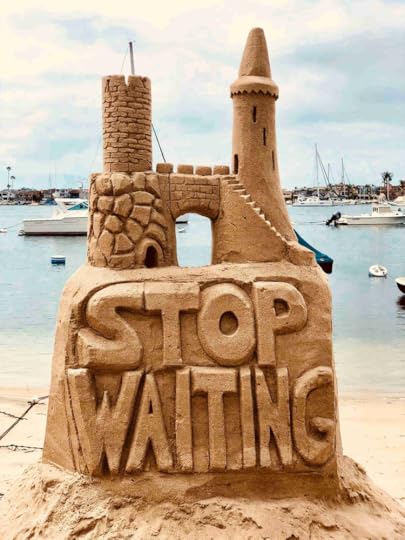
Photo by James Lee on Unsplash
The other day, my coffee maker went missing. I usually leave it on the kitchen bench near the stove, so I assumed my partner had moved it somewhere else.
I looked around, opened cupboards and drawers, even searched the pantry, but the object of my quest was nowhere to be seen.
After messaging Ash and coming up with the most absurd theories (maybe my kitties knocked the coffee maker off the stove and rolled it into their secret stash), I gave up. I accepted that for the first time in 15 years I would not have coffee after lunch.
With a sad look, I grabbed a chai tea bag from the pantry, turned on the kettle, and opened the fridge to get some milk.
It was at that point that I saw it.
My coffee maker was sitting on the middle shelf of my fridge, proud and shiny as usual.
For a second I thought I was hallucinating. The desire to have a coffee pushed me to see what I was looking for, but when I laid my hand on that stainless steel jewel, I realized it was real; somebody had put my coffee maker in the fridge.
As a detective, I retraced the events of that day:
1. At the time of the crime, there were only Federica and her cats in the house.
2. In her testimony, Federica said she was pretty sure she saw the coffee maker on the kitchen bench before lunch.
Halfway between amused and puzzled, I had to admit that I was the culprit… I prepared the coffee maker before lunch and for some reason, instead of placing it on the stove, I put it in the fridge.
Like many other people, I have a lot on my plate at the moment. The mystery of the coffee maker made me realize that I often feel exhausted and that I should probably take it more slowly.
That’s why this month, I’ve done something simple. Today, I’m going to share with you some inspirational quotes that helped me at different stages of my life. I hope they can inspire you and help you get closer to your desire of mastering a language.
Enjoy!
1. Don't wait. The time will never be just right. Start where you stand and work whatever tools you may have at your command and better tools will be found as you go along. Napoleon Hill
2. There is no chance, no destiny, no fate, that can circumvent, or hinder or control the firm resolve of a determined soul. Ella Wheeler Wilcox
3. People often say that motivation doesn't last. Well, neither does bathing - that's why we recommend it daily. Zig Ziglar
4. To be successful you must accept all challenges that come your way. You can’t just accept the ones you like. Mike Gafka
5. Courage is resistance to fear, mastery of fear – not absence of fear. Mark Twain
6. All progress takes place outside the comfort zone. Michael John Bobak
7. The only place success comes before work is in the dictionary. Vince Lombardi
8. I’ve missed more than 9,000 shots in my career. I’ve lost almost 300 games. Twenty-six times I’ve been trusted to take the game-winning shot and missed. I’ve failed over and over and over again in my life. And that is why I succeed. Michael Jordan
9. You can't connect the dots looking forward; you can only connect them looking backwards. So you have to trust that the dots will somehow connect in your future. You have to trust in something — your gut, destiny, life, karma, whatever. This approach has never let me down, and it has made all the difference in my life. Steve Jobs (You can watch his powerful speech here)
10. A different language is a different vision of life. Federico Fellini
11. To have another language is to possess a second soul. Charlemagne
12. If you talk to a man in a language he understands, that goes to his head. If you talk to him in his language, that goes to his heart. Nelson Mandela.
Thanks for reading!
I’ll catch you all next month
If you enjoyed my article, you can discover my tried and tested language learning strategies in my books:
· ,Why You're Not Fluent and How To Fix It
and here are this month's book offers:
· ,,These Hidden Gems are waiting for YOU! Discover them Now!
· ,Kyara e l’Anello degli Antenati by Saveria Parisi, Italian book.
· ,The Wolf Rider, by Merick N.H. Ulrik
· Cultivate Your Mental Toughness by Giuseppe Ferraro
· ,Guided Meditation to Happiness by Svetlana VA
· How to Find Happiness In Yourself by Svetlana VA
This newsletter was brought to you by Oksana Shendrik, mortgage broker, Australia-wide.
Go to the Italian version.
To read my previous article, click below:
Quotes about language learning
By Federica Lupis, https://www.federicalupis.com/
The other day, my coffee maker went missing. I usually leave it on the kitchen bench near the stove, so I assumed my partner had moved it somewhere else.
I looked around, opened cupboards and drawers, even searched the pantry, but the object of my quest was nowhere to be seen.
After messaging Ash and coming up with the most absurd theories (maybe my kitties knocked the coffee maker off the stove and rolled it into their secret stash), I gave up. I accepted that for the first time in 15 years I would not have coffee after lunch.
With a sad look, I grabbed a chai tea bag from the pantry, turned on the kettle, and opened the fridge to get some milk.
It was at that point that I saw it.
My coffee maker was sitting on the middle shelf of my fridge, proud and shiny as usual.
For a second I thought I was hallucinating. The desire to have a coffee pushed me to see what I was looking for, but when I laid my hand on that stainless steel jewel, I realized it was real; somebody had put my coffee maker in the fridge.
As a detective, I retraced the events of that day:
1. At the time of the crime, there were only Federica and her cats in the house.
2. In her testimony, Federica said she was pretty sure she saw the coffee maker on the kitchen bench before lunch.
Halfway between amused and puzzled, I had to admit that I was the culprit… I prepared the coffee maker before lunch and for some reason, instead of placing it on the stove, I put it in the fridge.
Like many other people, I have a lot on my plate at the moment. The mystery of the coffee maker made me realize that I often feel exhausted and that I should probably take it more slowly.
That’s why this month, I’ve done something simple. Today, I’m going to share with you some inspirational quotes that helped me at different stages of my life. I hope they can inspire you and help you get closer to your desire of mastering a language.
Enjoy!
Photo by James Lee on Unsplash
1. Don't wait. The time will never be just right. Start where you stand and work whatever tools you may have at your command and better tools will be found as you go along. Napoleon Hill
2. There is no chance, no destiny, no fate, that can circumvent, or hinder or control the firm resolve of a determined soul. Ella Wheeler Wilcox
3. People often say that motivation doesn't last. Well, neither does bathing - that's why we recommend it daily. Zig Ziglar
4. To be successful you must accept all challenges that come your way. You can’t just accept the ones you like. Mike Gafka
5. Courage is resistance to fear, mastery of fear – not absence of fear. Mark Twain
6. All progress takes place outside the comfort zone. Michael John Bobak
7. The only place success comes before work is in the dictionary. Vince Lombardi
8. I’ve missed more than 9,000 shots in my career. I’ve lost almost 300 games. Twenty-six times I’ve been trusted to take the game-winning shot and missed. I’ve failed over and over and over again in my life. And that is why I succeed. Michael Jordan
9. You can't connect the dots looking forward; you can only connect them looking backwards. So you have to trust that the dots will somehow connect in your future. You have to trust in something — your gut, destiny, life, karma, whatever. This approach has never let me down, and it has made all the difference in my life. Steve Jobs (You can watch his powerful speech here)
10. A different language is a different vision of life. Federico Fellini
11. To have another language is to possess a second soul. Charlemagne
12. If you talk to a man in a language he understands, that goes to his head. If you talk to him in his language, that goes to his heart. Nelson Mandela.
Thanks for reading!
I’ll catch you all next month
If you enjoyed my article, you can discover my tried and tested language learning strategies in my books:
· ,Why You're Not Fluent and How To Fix It
and here are this month's book offers:
· ,,These Hidden Gems are waiting for YOU! Discover them Now!
· ,Kyara e l’Anello degli Antenati by Saveria Parisi, Italian book.
· ,The Wolf Rider, by Merick N.H. Ulrik
This newsletter was brought to you by Oksana Shendrik, mortgage broker, Australia-wide.
Go to the Italian version.
To read my previous article, click below:
October 3, 2022
Interesting facts about languages
By Federica Lupis, ,https://www.federicalupis.com/
After three years of waiting, I was finally able to see my family and friends in Europe. I had a great time, and it was comforting to see so many people gathering and travelling.
On the way back to Australia, I connected my phone to the Internet, thinking I would only find messages wishing me a safe trip. To my surprise, there were several emails asking me where my next newsletter was…
I found it funny and thought that maybe I had passed on my passion for interesting facts to my readers.
Do you remember the unanswered question that closed my article last month? Today we’ll find out what’s the fastest spoken language in the world and much more!
Enjoy!
Photo by Karina Vorozheeva on Unsplash
1. The basics
Before getting into the hard stuff, let’s see if we can answer these ‘basic’ questions: what are the most spoken and the most learnt languages in the world?
According to ,this article, Chinese is the most spoken language in the world, with 1.3 billion native speakers, followed by Spanish (471 million native speakers) and English (370 million native speakers).
This may not come as a surprise, but do you know what other languages are in the top ten? Let’s have a look:
4. Hindi: 342 million native speakers
5. Arabic: 315 million native speakers
6. Portuguese: 232 million native speakers
7. Bengali: 229 million native speakers
8. Russian: 154 million native speakers
9. Japanese:126 million native speakers
10. Lahnda (Western Punjabi): 118 million native speakers
To be honest, I didn’t expect Japanese to be on this list, but its population of ,124 million, 98% of which is Japanese, makes this country number 11 in the world by population size. That’s huge, considering Japan is much smaller than the countries at the top of the list!
Before moving on to the next question, look at the list of languages above. Have you noticed that 7 out of 10 languages are Asian? Technically, six and a half because despite having 77% of its territory in Asia and 23% in Europe, Russia is part of both continents, making it a transcontinental country!
Now that we’ve had a look at the most spoken languages, let’s see if they match the most learnt languages in the world.
This question was hard to answer. The most reliable source I’ve found, ,The Washington Post, dates back to 2015, while the most recent, ,Duolingo, only focuses on Duolingo users.
I think the best way to go about this is to combine the data we have.
The Washington Post, 2015:
· English. Number of learners: 1.5 billion
· French. Number of learners: 82 million
· Chinese. Number of learners: 30 million
· Spanish. Number of learners: 14.5 million
· German. Number of learners: 14.5 million
· Italian. Number of learners: 8 million
· Japanese. Number of learners: 3 million
Duolingo, 2021. Top 10 languages, in order:
· English
· Spanish
· French
· German
· Japanese
· Italian
· Korean
· Chinese
· Russian
· Portuguese.
At first glance, not much seems to have changed: English remains the undisputed champion. Spanish, French and German are still going strong in the top positions, and Italian has kept its place at number six. However, if we take a better look, we will notice that Japanese and Korean are becoming increasingly popular, and Chinese seems to have lost ground.
This is likely due to the overwhelming success of Japanese and Korean entertainment, where movies, TV shows, video games, and K-Pop are attracting more and more people to Japanese and Korean culture and language.
If we compare Duolingo’s list with the most spoken languages in the world, we will see that 6 of the 10 most learnt languages are also the most spoken! This makes sense, but it’s worth mentioning that Duolingo has noticed a growing interest in under-studied languages. Perhaps, in 10 years, the ranking will be completely different!
2. There are about 70 whistled languages in the world.
I first heard of whistled languages when I came across Silbo Gomero (also known as el silbo, 'the whistle'), an ancient language made up entirely of whistles and spoken on the small Canary Island of La Gomera. This intrigued me, so I started doing research to find out if there were more whistled languages. It turns out there are about 70 whistled languages in the world! You can learn more in this article by the BBC, “The beautiful languages of the people who talk like birds”.
3. Africa is the land of click languages.
As the name suggests, click languages consist primarily of click sounds. They are exclusively found in Africa, and the only report of a click language outside of this continent is in Australia, where the indigenous people once spoke the Damin language. If you want to get a taste of these languages, check out this video, it’s fascinating!
4. There are about 300 sign languages in the world.
I naively thought there was only one universal sign language, but if you think about it, it makes sense that there are several. Sign languages have developed similarly to spoken languages in different parts of the world and with different features. For example, ‘hello’ in American sign language is different from ‘hello’ in Chinese sign language.
To make things easier, the IS or international sign language is used at international meetings and events and when travelling and socialising with people from other countries.
It would be great if IS was taught in school along with Esperanto so that everyone could communicate more easily.
5. Shakespeare created 1,700 new English words
We all know Shakespeare was a genius, so I wasn’t surprised when I found out that he created about 1,700 English words. Not all of them have survivedthe passing of time, but we still use some of them today. The website https://www.shakespeare.org.uk/ provides some interesting examples such as bedroom, fashionable, gossip, hurry and kissing. You can find more examples here.
6. What is the record number of languages spoken by one person?
When I read this question, I thought 10 would be the highest number of languages anyone could possibly speak. Obviously, I was wrong! Wikipedia has put together a detailed list of present and past polyglots, and many of them speak well over 10 languages. Sir John Bowring, a British political economist who lived between the 18th and 19th centuries, claimed to be able to speak about 100 languages. I wish I had a time machine just to travel back to his time and see him in action!
7. What’s the longest word in the world?
According to this article, methionylthreonylthreonylglutaminylalanyl…isoleucine, the largest known protein chemical name, is the longest word in the world. The ellipsis is not a typo; it’s just a way to shorten this 189,819-characters word.
Supercalifragilisticexpialidocious, from the movie Mary Poppins, only comes fourth.
8. There’s a language that only two people can speak.
Cryptophasia, from the Greek words crypto (‘secret’) and phasia (‘speech’), is a phenomenon that refers to a language developed by twins and understood only by them.
For example, the twins Grace and Virginia Kennedy grew up in California in the 70s but could not speak English for part of their childhood. At the age of 6, they spoke a language that no one else could understand, and it took a while for their parents and the specialists who assisted them to realise what was happening.
While the environment in which the Kennedy sisters grew up is believed to have impacted their speech development, it is now clear that twins can create a secret language, regardless of their circumstances.
Considering how hard it is to learn a language, I’m amazed that twins can create their own!
9. Onomatopoeia varies from country to country.
Onomatopoeia are words that derive from a sound associated with a thing or action, e.g., the meow of a cat.
I thought they were the same all over the world. Instead, they vary from country to country. I found out the hard way when I moved to Australia, and every time I used an onomatopoeia, most people didn’t understand me.
Here are some examples:
· English ‘choo choo’ vs Korean chik chik pok pok for the sound of a train.
· English ‘clap clap’ vs Arabic stah stah for clapping hands.
· English ‘chomp’ vs Japanese paku paku for the sound of eating.
They are quite different, right?
10. What’s the fastest spoken language in the world?
And finally… It’s time to reveal what’s the fastest spoken language in the world! I would have bet everything on Italian… but no, the undisputed winner is Japanese with 7.84 syllables per second. Spanish comes second, and Italian is only fifth after Basque and Finnish!
Admit you weren’t expecting it!
Luckily, English is number 11, so it should be a little easier to learn the world's number one international language!
And with this question, we’ve wrapped up the most interesting facts about foreign languages. I hope you had fun!
See you next month… with a new topic!
If you enjoyed my article, you can discover my tried and tested language learning strategies in my books:
· ,Why You're Not Fluent and How To Fix It
and here are this month's book offers:
· ,Looking For Great Books? Click Here!
· ,Kyara e l’anello degli antenati by Saveria Parisi, Italian book.
This newsletter was brought to you by EsoutacheCreations, one-of-a-kind Jewellery. ,Handmade in Italy with love.
Go to the ,Italian version.
To read my previous article, click below:
July 21, 2022
Interesting facts about languages
By Federica Lupis, ,https://www.federicalupis.com/
I love interesting facts, and I could spend hours on the Internet reading about them.
Did you know that:
· Polar bears are not white. (Their skin is black, and their fur looks white due to the way their sheer hairs reflect light.)
· Humans can’t lick their elbows. (I know you’re trying right now!)
· The earth is not actually round?! Don’t get excited, Flat Earthers! The earth isn’t round, but it’s not flat either! Technically, it’s an oblate spheroid.
Fun facts are so intriguing to me that I choose Libra over other brands because I can read interesting facts on the back of their products. At that time of the month when I would like to hibernate, they cheer me up and tell me more about the wonderful world we live in!
Do you know any fun facts about languages?
When I think about it, I don’t know many of them, and I think it’s time to learn more! This month we will be discussing some cool facts about languages.
Enjoy!

Photo by Ben White on Unsplash
The basics
Before I share with you some mind-blowing facts (at least I hope), let’s see if you can answer these ‘basic’ questions…
1. How many languages have ever existed? And how many languages are there today?
It is estimated that around 31,000 languages have ever existed. Today, fewer than 7,000 languages survive and some linguists believe that “between 50-90% of the current world languages will cease to exist in the next century”. Wow!
There are several reasons for this:
· Over time, natural disasters, colonization and wars have reduced, if not eliminated, entire communities of speakers.
· Many people abandoned their native language in favour of a language that would give them “social and economic advantages or to avoid discrimination”.
· Finally, globalization and the “pressure to adopt the common languages used in government, commerce, technology, entertainment, and diplomacy” accelerated the whole process.
The good news is that the Internet is contributing to the revival and preservation of many languages today. More resources are now available in endangered languages and their communities can communicate on the World Wide Web.
Think about Hawaiian, Māori, and Quechua. These languages were on the verge of extinction, but the number of native speakers is now on the rise.
Governments and the general public have become more aware of the importance of preserving languages, to the point that some extinct/near extinct languages, such as Cornish have been brought back to life. Yay!
How did you go with the questions? I had no idea that over 30,000 languages had ever existed and that made me even more excited about my research on interesting facts. Let’s see what I found out!
2. Where does the word alphabet come from?
When I read the answer to this question, I couldn’t believe I never thought about it. The word alphabet comes from the Greek letters alpha and beta. Alpha + Beta = Alphabet. It’s as simple as that.
3. Which languages have the shortest and the longest alphabets?
As shown on the Guinness World Record’s website, the Rotokas of central Bougainville Island, in Papua New Guinea, has the shortest alphabet with only 11 letters, while Khmer, in Cambodia, has the longest one with a staggering 74 letters. In case you’re wondering if this means that Khmer is harder to learn, the Internet seems to agree on this: Khmer is one of the hardest languages to learn, even more difficult than Mandarin and Japanese for Westerners! I really can’t imagine anything harder than these two Asian languages!
4. What’s the oldest written language?
I am obsessed with three things in life: dinosaurs, Ancient Egypt and boardgames and I didn’t even know that I had to thank the Sumerians for creating boardgames!
Not only did ancient Sumerians hold the record for the oldest written language (around 3100 BC), but they also discovered copper and the wheel and had their own numbering system! You can read more about these awesome guys here.
5. Which country has the most official languages?
The Bolivian constitution recognizes 37 official languages. I wonder if anyone in the country can speak or at least understand all of them!
6. Which countries have no official language?
I’ve found conflicting information on this, so I’ll only tell you about the ones I could verify: the USA, the United Kingdom and Australia. If this question came up in Articulate, I would have got it all wrong!
7. The word ‘synonym’ doesn’t have a synonym.
When I read this, I got really excited, but it didn’t last long. Within seconds the word ‘equivalent’ came to mind and the Thesaurus Dictionary seems to agree with me. There may be some words that don’t have synonyms – as this article suggests – but ‘synonym’ is not one of them.
In this case, the interesting fact was that interesting facts aren’t always correct.
8. Where does the word ‘mortgage’ come from?
At a time when all we hear about is inflation, interest rate hikes and rental affordability, I found this to be quite interesting.
The word mortgage comes from the French words mort and gage which respectively mean ‘death’ and ‘pledge’. No wonder banks don’t tell us about its origin!
9. What are ghost words?
Ghost words are not words that disappear as you read them or haunt you in your sleep. As the Cambridge Dictionary says, this expression refers to ‘a word in a dictionary that is not a real word and is usually there because of a mistake’.
One of the most interesting examples is the word ‘dord’ which was the result of a misunderstanding.
A chemistry editor made a note above the word ‘density’: D or d. This indicated that both capital and small ‘d’ could be an abbreviation for the word ‘density’. However, the next person who handled this entry thought ‘dord’ was a word for ‘density’, so it was added to the dictionary and stayed there for 13 years, from 1934 to 1947, before it was removed.
You can see the original word entry and find out why this seemingly obvious mistake wasn’t so obvious, in this article by Merriam Webster.
10. What is the most common letter in English?
At first, I thought this fact wasn’t interesting at all. Why would anyone want to know? But then I thought of Wordle and realised that millions of people might be eager to know the answer! Wordle enthusiasts, here are the top three letters in the Concise Oxford English Dictionary: E – 11.1607%, A – 8.4966% and R – 7.5809%. Happy Wordle!
11. How many fake languages are there?
When I think of ‘fake’ languages, my mind immediately goes to the Dothraki from the TV show Game of Thrones and the handsome actor Jason Momoa. However, ‘fake’ languages include much more than ‘fictional’ languages.
Artificial languages have been created for various purposes such as: facilitating international communication (e.g., Esperanto), social and political purposes (e.g., Láadan), experiments in machine learning and personal entertainment. For example, you may be familiar with Pig Latin, a secret language used by children to confuse people who don’t know the rules. Oday ouyay peaksay Igpay Atinlay? (Do you speak Pig Latin?)
Wikipedia describes over 150 constructed languages but makes it clear that due to their nature, it is extremely difficult to account for all of them.
If you are interested in reading more on this topic, Mr Richard Kennaway, a Senior Research Scientist, has done an amazing job documenting over 300 artificial languages here. His work may inspire you to create your own secret language to communicate with your friends!
12. What’s the most translated document in the history of humanity?
I knew the answer to this one, but I thought that Harry Potter might have overtaken the undisputed winner by now. That didn’t happen! The Bible is still the most translated book at over 700 languages! Even more impressive, parts of the Bible have been translated into 3,495 languages!
The second most translated book, The Little Prince by Saint Exupéry sits at 382 and the third one, Pinocchio by Carlo Collodi has been translated into 260 languages.
Sorry ,Potterheads, Harry Potter has ‘only’ been translated into over 80 languages. You’ve got some work to do!
~ ~ ~
To sum up… there are so many interesting facts about languages that I’ve decided to tell you more about it next month! Until then, see if you can guess this: What is the fastest spoken language in the world? And no, it’s not Italian!
Thanks for reading!
I’ll catch you all next month!
If you enjoyed my article, you can discover my tried and tested language learning strategies in my books:
· ,Why You're Not Fluent and How To Fix It
and here are this month's book offers:
· ,Act Fast! Don’t Miss Out on These Amazing Books!
· Kyara e l’anello degli antenati by Saveria Parisi, Italian book.
· ,The ABCS of Amazon Self-Publishing: a beginner's guide
This article was brought to you by ,,NN Occupational Health, experts in Pre-Employment Screening.
Go to the Italian version.
To read my previous article click below:
Drops vs Duolingo. What is the best app to learn a language?